The four-year cycle has ended, and a new order in cryptocurrency has arrived
 Core Viewpoint

 The author of this article, Ignas, cites Ray Dalio's "Changing World Order" model to analyze the "new order" that is forming in the cryptocurrency market by 2025. He believes that with large-scale capital rotation, increased market selectivity, the expanded role of stablecoins, and the rise of RWA, the crypto market is no longer what it used to be, and the Four-Year Cycle model is likely coming to an end.
Original Author: Ignas
Original Compiler: Luffy, Foresight News
I strongly agree with Ray Dalio's "Changing World Order" model, as it forces you to step out of a short-term perspective and look at the bigger picture. The same should apply to viewing cryptocurrencies; one should not be obsessed with daily dramas like "the daily fluctuations of a certain cryptocurrency," but rather focus on the long-term trend changes.
The current cryptocurrency industry is not only characterized by rapidly changing narratives, but the underlying order of the entire industry has also changed. The cryptocurrency market in 2025 will no longer resemble that of 2017 or 2021. Here is my interpretation of the "new order."
Large-scale Capital Rotation
The launch of Bitcoin spot ETFs is the first major turning point.
Just this month, the U.S. Securities and Exchange Commission (SEC) approved the "General Listing Standards for Exchange-Traded Products (ETPs)," which means that the approval speed for subsequent products will accelerate, and more cryptocurrency asset ETPs will soon enter the market. Grayscale has already submitted applications based on this new regulation.
Bitcoin ETFs have set the record for the most successful ETF issuance in history; although Ethereum ETFs started slowly, they have already surpassed billions of dollars in assets under management even during market downturns.

Since April 8, the inflow of funds into cryptocurrency spot ETFs has reached $34 billion, ranking first among all ETF categories, surpassing thematic ETFs, treasury ETFs, and even precious metal ETFs.
Buyers of crypto ETFs include pension funds, investment advisors, and banks. Today, cryptocurrencies are discussed alongside gold and the Nasdaq index in asset allocation.
The current assets under management for Bitcoin ETFs have reached $150 billion, accounting for over 6% of Bitcoin's total supply.

Ethereum ETFs account for 5.59% of Ethereum's total supply.

And all of this has happened in just over a year.
ETFs have become the main buyers of Bitcoin and Ethereum, shifting the holder structure of crypto assets from retail-dominated to institution-dominated. From my past analyses, it is evident that whales are continuously accumulating, while retail investors are selling.

More critically, old whales are selling their assets to new whales.

The holder structure is undergoing a rotation: investors who believe in the four-year cycle are selling, expecting historical scripts to repeat, but the current market is undergoing entirely different changes.
Retail investors who bought at low levels are selling their assets to ETFs and institutional investors. This "retail to institutional" transfer not only raises the cost basis of crypto assets but also solidifies the price floor for future cycles; new institutional holders will not sell off for small profits.

https://x.com/DefiIgnas/status/1970051841711894981
This is the large-scale capital rotation in cryptocurrencies: crypto assets are shifting from speculative retail hands to long-term institutional hands.
The introduction of general listing standards will open the next phase of this rotation.

In 2019, similar general rules in the U.S. stock market tripled the issuance of ETFs. The cryptocurrency sector is expected to replicate this trend: a large number of ETFs targeting assets like SOL, HYPE, XRP, DOGE, etc., will emerge, providing ample exit liquidity for retail investors.
The biggest question remains: can institutional buying power offset retail selling?
If the macro environment remains stable, I believe that those investors currently selling due to their belief in the four-year cycle will ultimately have to buy back their assets at higher prices.
The End of the Era of Universal Bull Markets
In past cryptocurrency bull markets, assets often "rise together." Bitcoin rises first, followed by Ethereum, and finally, other assets experience a universal bull run. The reason small-cap coins can surge is that liquidity flows down the risk curve.
But this time is different; not all tokens will rise in sync.
The current crypto market has millions of tokens, with new tokens launching daily on platforms like pump.fun, as "creators" continuously shift market attention from old tokens to their newly issued meme coins. The supply of tokens has surged, but retail attention has not increased in tandem.
Since the cost of issuing new tokens is almost zero, liquidity is dispersed across a vast number of assets.
In the past, tokens with "low circulation and high fully diluted valuation (FDV)" were highly sought after, but now retail investors have learned their lesson and prefer tokens that "can create value or at least have strong cultural influence."
Ansem's viewpoint is quite reasonable: the pure speculative frenzy has peaked. The new mainstream today is revenue-supported; only those with revenue-generating capabilities can achieve sustainable development. Applications that have product-market fit (PMF) and can generate fees will thrive, while others will struggle.

https://x.com/blknoiz 06/status/1970107553079079341
Two things stand out: users are paying high fees for speculation, and the efficiency of blockchain compared to traditional finance. The former has peaked, while the latter still has room for growth.
Murad added a point that Ansem might have overlooked: tokens that can still surge today are often "newly launched, uniquely structured, and not yet understood," but they need to be supported by a community with strong conviction. I personally enjoy such novelties (like my iPhone Air).

https://x.com/MustStopMurad/status/1970588655069622440
Cultural significance is key to a token's survival or demise. A clear mission, even if initially seems unrealistic, can sustain community vitality until user adoption creates a snowball effect. Pudgy Penguins, Punk NFTs, and some meme coins fall into this category.
However, not all novelties will survive. Cases like Runes and ERC-404 have made me realize how quickly novelty can fade. Many narratives may vanish before reaching critical scale.
By synthesizing these points, one can understand the logic of the new order. Revenue filters out unreliable projects, while culture carries misunderstood elements.
Both are equally important, but their pathways of influence differ. The ultimate winners will be the few tokens that possess both revenue-generating capabilities and cultural influence.
The Stablecoin Order Grants Credibility to Cryptocurrencies
In the early days, traders held USDT or USDC solely to purchase Bitcoin and altcoins. At that time, inflows of stablecoins usually indicated bullish sentiment, as funds would ultimately convert into spot buying, with 80% to 100% of stablecoin inflows being used to purchase crypto assets.
Today, this logic has changed.
The uses of stablecoins have expanded to scenarios such as "lending, payments, yield generation, asset vault management, and airdrop arbitrage," with some funds no longer flowing into Bitcoin or Ethereum spot markets, but still injecting vitality into the entire crypto system: increased trading volume on layer 1 (L1) and layer 2 (L2) blockchains, enhanced liquidity on decentralized exchanges (DEX), revenue growth in lending markets like Fluid and Aave, and deepening of the entire ecosystem's currency market.
Payment-oriented layer 1 blockchains are the latest trend:
- Tempo, jointly launched by Stripe and Paradigm, is designed for high-throughput stablecoin payments, supporting Ethereum Virtual Machine (EVM) tools and featuring native stablecoin automated market makers (AMMs);
- Plasma is a Tether-supported L1 designed specifically for USDT, equipped with new banking features and payment cards aimed at emerging markets.
These blockchains are pushing stablecoins away from trading attributes and integrating them into the real economy, bringing us back to the narrative of blockchain being used for payments.
What impact might this have (to be honest, I'm still uncertain):
- Tempo: Stripe has a vast distribution network, which helps in the adoption of cryptocurrencies but may bypass the spot demand for Bitcoin or Ethereum. Tempo could ultimately become the PayPal of the crypto space, with massive capital flows but limited value transmission to public chains like Ethereum. What remains unclear is whether Tempo will issue a token (I believe it will) and how much fee revenue will flow back into cryptocurrencies;
- Plasma: Tether has already dominated the stablecoin issuance space. Through the integration of "public chain + issuer + application," Plasma could capture a large amount of payment demand from emerging markets into a closed ecosystem, competing with the open internet advocated by Ethereum and Solana. This has sparked a USDT default public chain war, with participants including Solana, Tron, and Ethereum L2. Among them, Tron faces the highest risk of loss, while Ethereum is not primarily positioned for payments. However, if projects like Aave choose to deploy on Plasma, it would pose a significant risk to Ethereum;
- Base: The "savior" of Ethereum L2. Coinbase and Base are promoting stablecoin payments and USDC yield products through the Base application, continuously generating fee revenue for Ethereum and DeFi protocols. Although the ecosystem remains fragmented, the competitive landscape will further drive liquidity dispersion.
Regulation is also aligning with this trend. The "GENIUS Act" is pushing countries worldwide to follow suit with stablecoin regulation; the U.S. Commodity Futures Trading Commission (CFTC) recently allowed stablecoins to be used as tokenized collateral for derivatives, adding capital market demand beyond payment needs.

https://x.com/iampaulgrewal/status/1970581821177111034
Overall, stablecoins and stablecoin-focused new public chains are granting credibility to cryptocurrencies.
Cryptocurrencies are no longer just speculative casinos but have gained geopolitical significance. Although speculation remains the primary use, stablecoins have become the second-largest application scenario in the crypto industry.
The future winners will be those who can capture stablecoin capital flows and convert them into sticky users and cash flow for public chains and applications. The biggest unknown now is whether new L1s like Tempo and Plasma can become leaders in value locking within the ecosystem or if Ethereum, Solana, L2, and Tron can successfully counterattack.
The next major trading opportunity will come with the launch of the Plasma mainnet (on September 25).
Digital Asset Trust (DAT): A New Leverage and IPO Alternative for Non-ETF Tokens
The Digital Asset Trust (DAT) concerns me.
In every bull market, we find new ways to leverage and push token prices higher. This method allows price increases to far exceed those from spot purchases, but the deleveraging process is always brutal. During the FTX collapse, forced selling triggered by centralized finance (CeFi) leverage destroyed the entire market.
In this cycle, leverage risks may come from DAT: if DAT issues stocks at a premium, borrows funds, and invests in tokens, it will amplify upward gains; however, once market sentiment turns, the same structure will exacerbate downward movements.
Forced redemptions or halted stock buybacks could trigger massive selling pressure. Therefore, while DAT has broadened access to crypto assets and brought in institutional funds, it has also added a new layer of systemic risk to the market.
Recently, there have been cases where market net asset value (mNAV) > 1. Simply put, DAT distributes Ethereum to shareholders, who are likely to sell these Ethereum. Even with a quasi-airdrop operation, the trading price of BTCS (a certain DAT token) is only 0.74 times its market net asset value, which is not optimistic.

https://x.com/DefiIgnas/status/1958867508456194204
On the other hand, DAT has also built a new bridge between token economies and the stock market.
As Ethena's founder G said, "One concern I have is that we have exhausted 'crypto-native capital' and cannot push altcoins to the peaks of the previous cycle. Comparing the total market cap peaks of altcoins in Q4 2021 and Q4 2024, the two are not far apart (both slightly below $1.2 trillion); if we exclude inflation factors, the peaks of the two cycles are almost identical. This may be the maximum amount of capital that global retail investors can invest in 'conceptual assets.'"
This is where the importance of DAT lies.
Retail capital may have reached its limit, but tokens with real businesses, real revenues, and real users can now tap into a much larger stock market. Compared to the global stock market, the entire altcoin market is merely a fraction, and DAT has opened a door for new capital to flow into the crypto space.
Moreover, since a few altcoin teams possess the expertise to issue DAT, DAT can refocus market attention from millions of tokens back to a few key assets.
Another point G made is that asset net value premium arbitrage is not important… this is actually a bullish signal.

https://x.com/gdog 97_/status/1948671788747300932
Except for Michael Saylor (founder of MicroStrategy), most DATs struggle to maintain long-term net value premiums. The true value of DAT lies not in the premium game but in access channels; even if it can only maintain a 1:1 net value and stable capital inflows, it is better than being completely unable to access the stock market.
ENA and even SOL's DAT have sparked controversy, being accused of being "tools for venture capital cash-outs."
The risks of ENA are particularly pronounced, with substantial venture capital holdings behind it. However, considering the capital mismatch issue where private equity venture capital far exceeds secondary market liquidity, DAT is actually a bullish signal: venture capital can exit through DAT and reallocate funds to other crypto assets.
This is crucial; in this cycle, venture capital has suffered heavy losses due to being unable to exit their portfolios. If they can achieve exits and gain new liquidity through DAT, they can re-fund innovative projects in the crypto industry, pushing the industry forward.

Overall, DAT is beneficial for the entire crypto industry, especially for tokens that cannot go public through ETFs. It allows projects like Aave, Fluid, and Hype, which have real users and revenues, to transfer their asset exposure to the stock market.
Admittedly, many DATs will ultimately fail and pose spillover risks to the market, but they also provide an IPO-like exit path for initial coin offerings (ICOs).
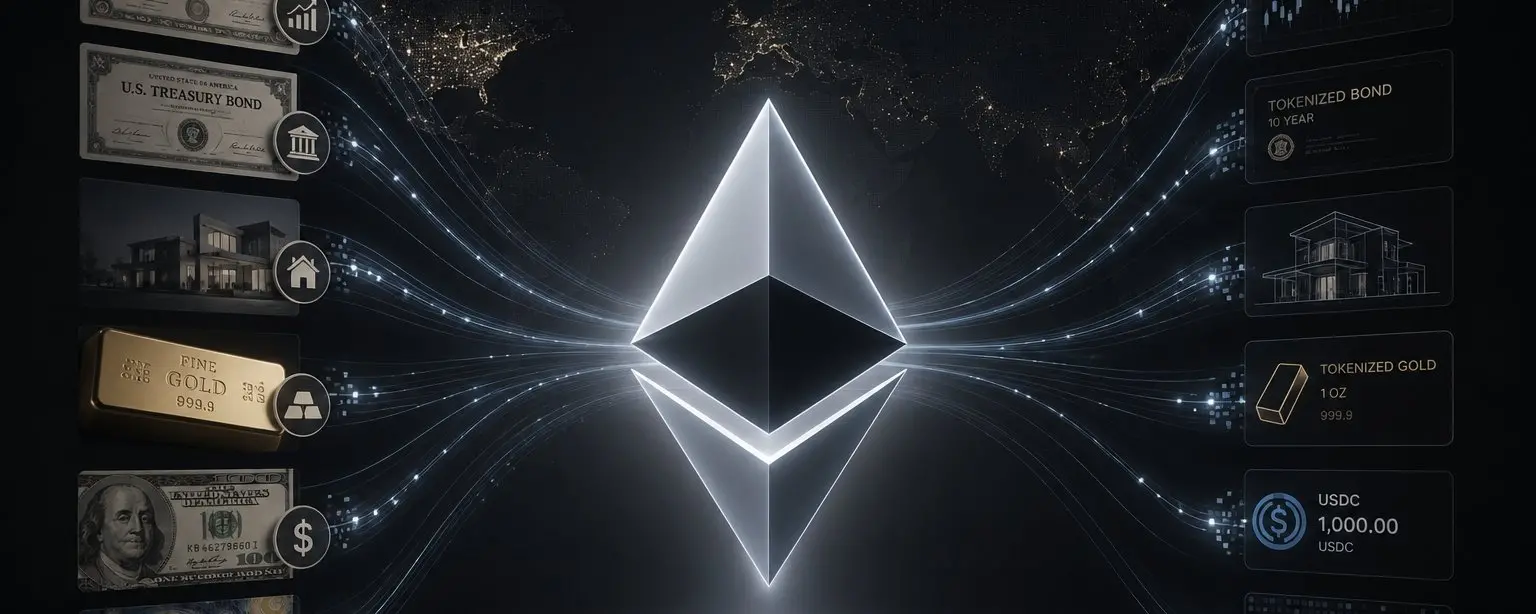
The Revolution of Real Asset Tokenization (RWA): On-chain Financial Living Becomes Possible
The RWA market has just surpassed $30 billion, growing nearly 9% in just one month, and the growth curve continues to rise.

Today, government bonds, credit, commodities, and private equity have all been tokenized, and the escape velocity is rapidly increasing.
RWA brings the global economy onto the blockchain, leading to some significant transformations:
- In the past, investors had to convert crypto assets into fiat currency to purchase stocks or bonds; now, they can operate entirely on-chain, holding Bitcoin or stablecoins, directly converting them into on-chain government bonds or stocks, and controlling their assets (self-custody);
- Decentralized finance (DeFi) has broken free from Ponzi schemes, bringing new revenue sources to DeFi and L1/L2 infrastructure;
Aave's Horizon protocol allows users to deposit tokenized assets of the S&P 500 index and use them as collateral for loans. Although the current total value locked (TVL) is only $114 million, indicating that RWA is still in its early stages.

Traditional finance (TradFi) has almost completely excluded retail investors from such opportunities.
RWA ultimately makes DeFi a true capital market. It establishes benchmark interest rates based on government bonds and credit, expanding global coverage, allowing anyone to hold U.S. government bonds without going through U.S. banks.
BlackRock has launched BUIDL, and Franklin has launched BENJI. These are not marginal projects but bridges for trillions of dollars to access crypto infrastructure.
Overall, RWA is the most significant structural revolution in the current crypto industry. It connects DeFi with the real economy and builds the infrastructure for a fully on-chain financial life.
The End of the Four-Year Cycle?
For native crypto participants, the most important question is: has the four-year cycle ended? Many people around me have started selling, expecting the cycle to repeat. But I believe that with the arrival of the new order in cryptocurrencies, the four-year cycle will not repeat. This time, things are truly different.
I am betting on my holdings for the following reasons:
- ETFs are transforming Bitcoin and Ethereum into assets that institutions can allocate;
- Stablecoins have become geopolitical tools and are expanding into payments and capital markets;
- DAT opens up stock market funding channels for tokens that cannot issue ETFs, while allowing venture capital to exit and inject funds into new innovative projects;
- RWA brings the global economy onto the blockchain, establishing benchmark interest rates for DeFi.
The current crypto market is neither the casino of 2017 nor the frenzied bubble of 2021, but rather a new era of structure and adoption. Cryptocurrencies are integrating with traditional finance while still retaining the core driving forces of culture, speculation, and belief.
The next round of winners will not come from players who buy broadly; many tokens may still experience four-year cycle-style crashes, and investors must be selective.
The true winners will be those projects that can adapt to macro and institutional changes while maintaining retail cultural influence.
This is the new order of cryptocurrencies.
```
 Risk warning Risk warning