Bitget Product Head: What does the newly proposed "UEX Panoramic Exchange" mean?
 Core Viewpoint
 Bitget's Chief Product Officer (CPO) KH elaborated on the new strategy for upgrading the exchange's products: Universal Exchange (UEX). UEX aims to break the limitations of traditional centralized exchanges, expanding the trading scope to "millions of long-tail" on-chain assets, RWA and their derivatives, while integrating traditional financial instruments. Through AI empowerment and enhanced risk control systems, it aspires to become a super gateway.
Original text sourced from Wu Shuo Blockchain
In this issue, we invite Bitget's product head KH to discuss the concept of the Universal Exchange (UEX) proposed by Bitget's CEO, focusing on exchange product upgrades, asset diversification, AI and risk control systems, integration of RWA (Real World Assets) with traditional finance, regulatory and compliance issues, and competitive positioning with other exchanges. The content of this article reflects the interviewee's views and does not represent Wu Shuo's perspective. Readers are advised to strictly adhere to the laws and regulations of their location.
Opportunities for CEX and DEX Integration
Cat Brother: Before we officially start the interview, could you introduce yourself, including your current role and some of your experiences at Bitget?
KH: I am responsible for our products and part of the business here, and my current position is CPO. Most of my time is still focused on product development, and over the past year, I have had the privilege of participating in more business and a wider range of products.
Cat Brother: Recently, many exchanges have been exploring the integration of CEX and DEX, launching related products. Why did you choose to launch such products or upgrades at this time? In your view, what is the most urgent problem that the current market needs to address?
KH: First, we have observed a core issue that CEX faces in this cycle: users want to trade a wider range of cryptocurrencies or quality assets, including "million-level long-tail" assets like memecoins on-chain, as well as the tokenization of traditional assets (RWA). The demand for these types of assets conflicts with CEX's past ability to support spot and contract markets through the "listing model." In other words, users' desire for diversified asset trading is increasing, while solutions for various assets are becoming more mature, requiring CEX to break through its previous trading scope. This is also why many CEXs are integrating with DEXs, driven by these factors to some extent.
We believe this requires a systematic solution rather than fragmented features. First, we need to ensure that asset supply receives broader support; as the number of assets increases, users will face challenges in discovering good trading opportunities, whether there is a good trading experience, whether there are more suitable trading tools, and whether there is sufficient security and risk control after the assets become richer. Therefore, at this point, based on the industry's major trends, we proposed the new concept of UEX.
Definition of UEX and Enhancements in User Experience
Cat Brother: For ordinary users, especially less professional traders, how should they understand UEX? Aside from the name change, what specific enhancements are there in actual experience? For example, speed, types of tradable assets, etc. Can you elaborate?
KH: UEX stands for Universal Exchange, but unlike the concepts of CEX and DEX, where the letters C and D indicate the degree of centralization, U can have multiple meanings, such as Universal Assets—broader and more diverse global assets; Unified Account—no need to switch between different accounts, solving all trading needs with one account; User-friendly—achieving a more friendly trading experience with the help of AI, etc. Ultimately, which "U" is more recognized by users and the community, we are willing to let time verify.
UEX was initially a concept we proposed internally, based on the major trends we observed. We hope to break the inertia in our team's thinking about the CEX path: not just patching up the original products but fundamentally rethinking how products can meet new demands. We proposed "tearing down that wall and rebuilding a market without walls," and we hope that through this new positioning, users and the industry can more accurately feel the changes we bring.
Regarding the enhancements users can perceive, responding to the pain points mentioned earlier: the first is a broader and more diversified range of crypto assets. Our on-chain trading product underwent a major upgrade in mid-September, supporting a full range of assets across multiple mainstream chains, allowing users to directly use USDT/USDC from Bitget's spot account to purchase on-chain tokens in the millions smoothly through our custody and on-chain trading protocols.
In terms of traditional financial assets: in derivatives, we launched perpetual contracts for stocks like Apple and Nvidia's RWA index; we have now launched stock tokens covering the "Magnificent Seven" and other large tech companies, as well as some popular crypto-related companies, with contracts supporting up to 25x leverage and significantly improved liquidity.
In the area of US stock tokens, we are the first CEX to partner with US stock token issuer Ondo, integrating its liquidity on 1inch, and now supporting over 100 US stock tokens, allowing users to purchase directly in the Bitget on-chain trading market; the liquidity currently provided by Ondo can basically meet user needs.
Another direction is in TradFi; we are actively promoting cooperation and integration with MetaQuotes. In Q4, we will launch a service that allows trading of hundreds of TradFi assets such as gold, forex, and stock indices through Bitget via the MT5 channel. The underlying CFD contracts are also highly liquid in the traditional market.
Overall, we have made a significant leap in asset diversification, expanding from our previous focus on crypto assets to a full range of on-chain assets, RWA US stock tokens and their derivatives, and covering TradFi assets like gold, forex, and stock indices.
The second issue users face: when the asset range is greatly expanded, can users better find trading opportunities? On one hand, we will enhance product-level upgrades for market conditions and fundamentals; on the other hand, we aim to bring about a paradigm shift in trading based on AI—we believe this is a longer-term trend. AI can fundamentally bridge the trading gap, helping everyone improve their trading behavior and habits, which is also why we want to provide smarter trading tools.
The third issue is, after the assets and trading capabilities are greatly enriched, can we provide a better risk control system and user protection? This is also the direction we are taking to establish a safe and reliable risk control system through centralized capabilities across various sectors, including the $700 million user protection fund we launched, as well as our global service and market teams, all aimed at ensuring users can use our products with peace of mind.
On-chain Risk Control Mechanism and Fee Explanation for UEX
Cat Brother: You just mentioned "safety and peace of mind." I personally use both exchange products and on-chain products, and many on-chain tokens carry high risks, some of which are even "Pikachu schemes" or fake meme projects. I saw in Bitget's announcement that UEX will use risk control screening and multi-dimensional indicators for oversight. My understanding is that only tokens that pass the screening can be purchased on your exchange. How does this screening mechanism work? Is it public? At the same time, what is the difference in fees when users directly use your features to purchase on-chain assets compared to purchasing directly on-chain?
KH: That's a great question. Because there are many on-chain assets, the risks can be more apparent. CEXs previously operated on a permission basis, with the listing team conducting reviews, which is the "whitelist" logic. We have achieved comprehensive openness in on-chain trading, which does not mean unlimited or unrestrained, but rather "permissionless + blacklist risk control," shifting from a "whitelist" to a "blacklist" logic. Assets that may be blacklisted include those related to pornography, violence, Pikachu schemes, internal and external manipulation, malicious issuance risks, rug pulls, etc. To address this, we have made several efforts: first, we have integrated multiple professional on-chain data service providers to provide multi-dimensional labels, while also developing our own on-chain multi-factor risk model algorithm. The effect of this approach is that even with full openness, users can search for assets by inputting contract addresses, but if an asset is deemed high-risk, trading will be prohibited. Secondly, users can see a risk level score, and we are iterating on the scoring mechanism, gradually disclosing the risk factors that have been triggered, reflecting which dimensions have higher risks. We hope to provide a reliable mechanism and trader protection through our products and algorithms, which is a challenging but correct endeavor.
Regarding fees, there is not much difference in the on-chain trading products themselves; our current pricing is 0.5%. What we hope to bring is a smooth trading experience—such as the different gas fees for each chain, the need to exchange native tokens for gas, and concerns about cross-chain issues—all of which we aim to simplify for users in our on-chain trading underlying protocols. Users only need to hold USDT/USDC in their CEX spot accounts to complete buying and selling of on-chain assets, supporting multiple chains, with fast speed and smooth experience. This is a significant change brought by the product.
Balancing Experience, Assets, and Security
Cat Brother: CEX and DEX have always faced the "impossible triangle" of user experience, asset richness, and security. How do you view this impossible triangle in relation to UEX? Is it possible to expand the boundaries under certain circumstances and integrate the advantages of CEX and DEX?
KH: I think this triangle is just an "incompatibility" of a certain historical stage. With changes in underlying solutions and product forms, there is an opportunity to find a better solution. Our goal in building UEX is to have richer assets, better experiences, and guaranteed security. This is also thanks to the current cycle: the integration of DEXs and the maturity of RWA issuance capabilities have significantly changed asset richness and user experience compared to before.
Security has always been the lifeline we value and respect the most; it is the "baseline" for exchanges. For UEX, our long-term accumulated experience, resources, and team in CEX give us the capability and responsibility to ensure risk control and security, ultimately delivering a good product experience to users.
Cat Brother: It sounds like you want to create a "super entry point," engaging in both on-chain and traditional financial stocks, etc. Is this a new direction for transformation? How do you plan to differentiate yourself from other exchanges?
KH: The "super entry point" is our direction for product upgrades: a one-stop solution, richer assets, better experiences, and safety that is simple and easy to use for users is the intuitive product value we want to bring.
Regarding differentiation, Bitget spent a considerable amount of time in the early stages as a follower in product development; now the core products of various leading exchanges have very little differentiation, and homogenization is quite evident. This year, we can see exchanges trying various directions in assets, DEXs, payments, etc. We propose our own stance: to capture the opportunity of the "super entry point" in this cycle, believing that the timing is now ripe. In the past, people remembered us for our contracts and good copy trading; in the future, we hope everyone remembers Bitget as a UEX, a super one-stop entry point with the most comprehensive trading varieties and useful trading tools.
Cat Brother: You just mentioned your $700 million fund; I also saw in the announcement that there is a unified risk control and protection fund mechanism. In extreme cases, how are user assets protected? How is the specific compensation or reimbursement mechanism designed? Can you share more details?
KH: The protection fund is a user protection mechanism we have consistently upheld and continued over the past few years. As the platform scales, the fund amount has also accumulated and has now been upgraded to $700 million. We hope to provide broader protection for users. For example, in DEXs, individual wallets or participation in certain high-risk protocols may not have the level of protection and service of CEXs. However, in our UEX, as long as it is a service, protocol, or product we provide, whether it is an on-chain product or TradFi asset, if there are system unavailability or security issues that harm user interests, we will follow up on customer complaints. This has always been the responsibility and commitment of CEXs, and it is also the "user first" principle we consistently practice.
Industry Prospects for UEX and User Group Differentiation Analysis of PERP DEX
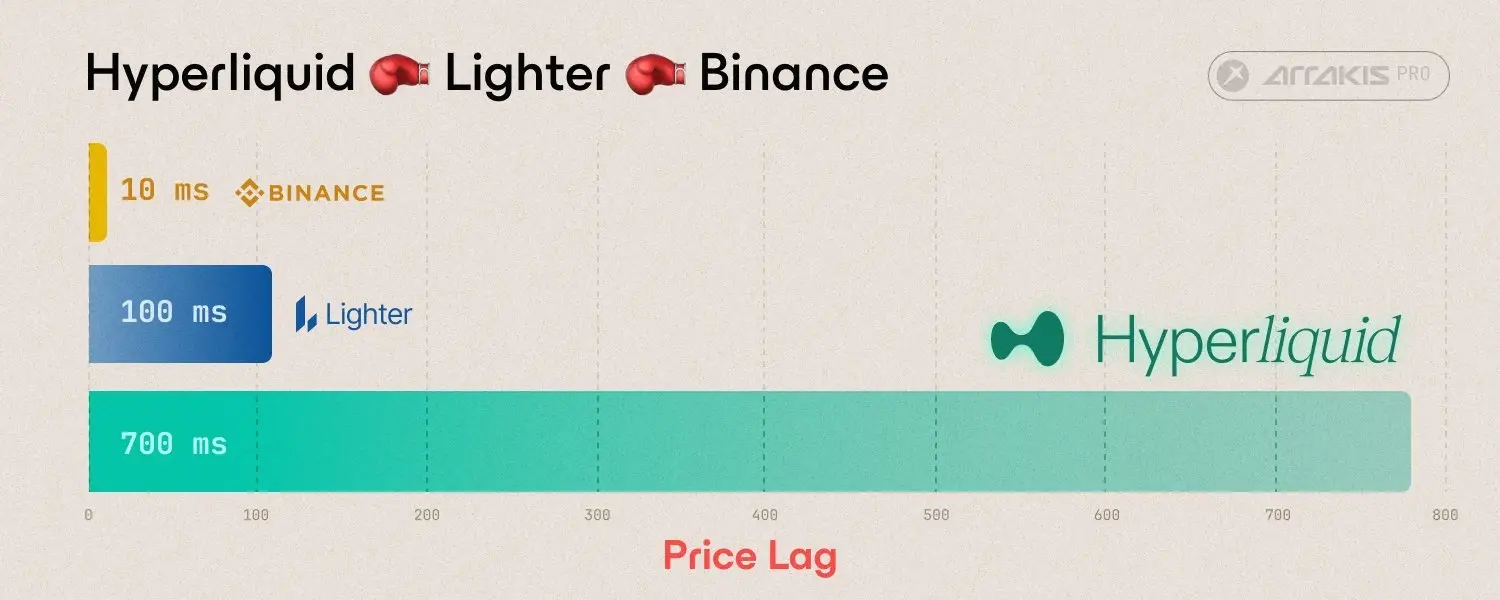
Cat Brother: In your view, will UEX be the mainstream direction for exchanges in the future? Recently, there have also been some other similar exchange products, such as PERP DEX, and Binance is also launching similar routes. How do you view this track?
KH: PERP DEX is indeed a hot topic and track right now. As industry participants, we have great respect for and look forward to more excellent teams and products like Hyperliquid emerging, as everyone pushes the boundaries of products and technology, and healthy competition can make the industry more prosperous. Derivatives have always been the trading product line that exchanges and users pay the most attention to, and the growth of DEXs compared to CEXs is more evident, which is also why it has become a hot topic.
When it comes to the differences with UEX, the user groups of PERP DEX and UEX are still quite different. Compared to PERP DEX, our products are more suitable for mainstream users today. We have made many efforts to create a better experience, hoping to make it easier for a broader range of mainstream users to use our products. This is a significant difference in user groups at present. This may be the case in the short term, but I personally believe that decentralization is indeed the future of the industry. The vision of using blockchain to promote reform in the financial system, which everyone had when they first joined the industry, is gradually becoming clearer, which is exciting.
Cat Brother: Will Bitget recently launch products similar to Hyperliquid?
KH: This is a field and track we are very focused on, and we will definitely have important layouts in this direction.
Positioning of AI Functions in Bitget's Strategy
Cat Brother: I saw in your announcement that you mentioned many AI-related functions, including information Q&A, smart money tracking, etc. What position do these AI products hold in your overall strategy? Are they auxiliary tools, or are they an important part of future core development? Will there be a dedicated AI department in the team to work on related products? Can you introduce this?
KH: From last year to the first half of this year, we have formed a very excellent AI product and technology team, which is the foundation for the subsequent product launches. The team members come from backgrounds including Microsoft, Alibaba's DAMO Academy, etc. AI capabilities are fully integrated across the platform, with some less visible aspects, such as internal AI coding, translation and localization, and translation review and recommendations for content-type products, which were previously manually reviewed and are now completed by AI; the intelligent customer service AI bot that everyone uses is also developed in-house by us. The most noticeable feature for users is that we launched the AI assistant GetAgent in August—we position it as a Crypto-based AI trading assistant.
It integrates a large number of foundational models and algorithm capabilities, along with data and services from both inside and outside the exchange, as well as crypto news and information. Users will find that it can deeply analyze market conditions and conduct news searches; more importantly, compared to general AI products, GetAgent knows your holdings, understands your trading style, can formulate more reasonable strategies, and even complete orders and trades using natural language. Compared to some general products or third-party tools, this is the advantage of the exchange creating an agent.
Regarding the two core strategies of UEX, one is the extreme diversification of assets, and the other is the upgrade of intelligent trading tools. This logic is similar to the development of traditional media from print to the internet era: when content supply is greatly opened up, the way users consume content will change, and recommendation systems become core. Similarly, after the expansion of asset supply, the upgrade of trading tools must be synchronized, which is why AI is the second core product strategy.
We believe in this trend, although it requires time for verification and fermentation. Currently, everyone is accustomed to placing orders using GUI graphical interfaces; will GUI be necessary in the future? Will more and more people interact with agents/chatbots to complete trades? This is the change we hope to promote.
Exchanges have a situational advantage in this process; user trading occurs within the exchange, allowing us to deeply integrate trading, truly helping users analyze and manage their portfolios and execute trades. GetAgent currently has a leading design architecture, integrating over 50 internal and external MCP tools. We see various platforms and startup projects launching Crypto+AI products; after multiple internal and external evaluations, Bitget's GetAgent is currently one of the market's most deeply integrated trading scenario AIAgents. We welcome everyone to experience it and share their feedback with us after use.
How UEX Faces Compliance Regulation and Tokenization of Traditional Assets
Cat Brother: You just mentioned tokenized stocks, RWA, gold, forex, and other traditional assets. If all of these are expanded to UEX, will it be quite challenging in terms of compliance and regulation? How do you plan to respond?
KH: Compliance has always been a key consideration in our product design. We conduct strict due diligence on RWA asset issuers, including whether they hold broker-dealer licenses, compliance of the entity, restrictions on countries and user privacy requirements, as well as the equity/dividend schemes that everyone is concerned about. We maintain close communication with active issuers in the market. For instance, the Ondo we are currently integrated with has undergone very strict bilateral due diligence. In terms of gold and forex, we have mature integration solutions; Mideast is a globally recognized online forex/CFD service provider, and we will obtain the necessary licenses and complete all required licenses for integration while adhering to the highest standards of AML/CFT to ensure that our products comply with legal and regulatory requirements.
Cat Brother: Regarding tokenized stocks, there is considerable controversy over liquidity and ownership rights, and this track is still in its early stages. Have you currently integrated Ondo's products? Have you studied the specific schemes regarding ownership rights for these products? Any new ideas?
KH: As products still in the early stages of development, the liquidity of RWA tokens is indeed a phase issue. Therefore, we have not listed any RWA token pairs in the spot matching market but have chosen to integrate Ondo's liquidity pool on 1inch, with liquidity provided by designated market makers. Compared to directly listing tokens in the exchange, this method of "external liquidity" is actually more concentrated and ideal, which is why we made this choice.
Regarding dividends, each issuer has different schemes. For example, Ondo will factor dividends into the "equity price" of the token at a discount. In the long run, if the underlying continues to pay dividends, the price of Ondo's token may exceed the traditional market price; it is not a one-to-one peg but reflects the reinvestment premium of dividends in the price of RWA assets. For users, holding it is equivalent to an "ever-reinvesting dividend" equity price. I believe that as the industry matures, more recognized solutions will emerge.
We have also innovated in RWA derivatives: launching perpetual contracts based on RWA indices for US stocks. Considering that the same underlying asset (like Tesla) may have multiple issuers, each with different initial liquidity periods, we have created index contracts for the same underlying asset, with different issuers contributing to the index's price source, assigning different weights based on trading volume and liquidity to maximize effective liquidity inclusion, thus forming a more stable and effective pricing market.
Cat Brother: During normal trading hours for stocks, for example, Tesla during US stock trading hours, will you consider the current price performance of US stocks as part of the index price? If during non-trading hours, will you use the prices of the tokenized stock products you just mentioned to create a weighted index as the price for derivatives? Can this be understood?
KH: We will not directly use the current price of the underlying traditional market because we support tokenized derivatives. Traditional prices can serve as a reference for price constraints or risk control, but in principle, the underlying for derivatives (PERP) is RWA tokens. For instance, Ondo's RWA tokens are tradable 5×24 hours, not tradable on non-trading days, and are available 24 hours on trading days.
 Risk warning Risk warning