








The New York Times: The Trump family's cryptocurrency scheme is worse than the Watergate scandal
 Core Viewpoint

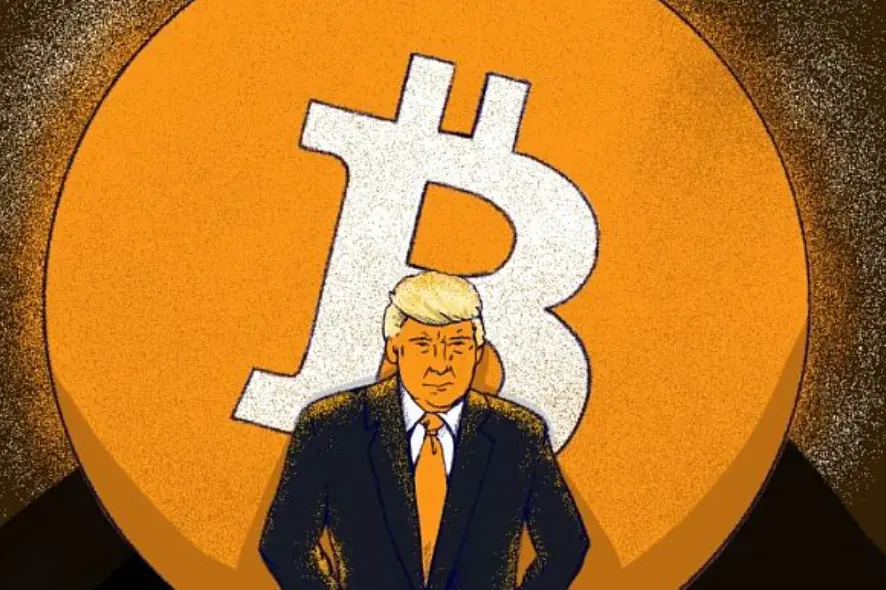
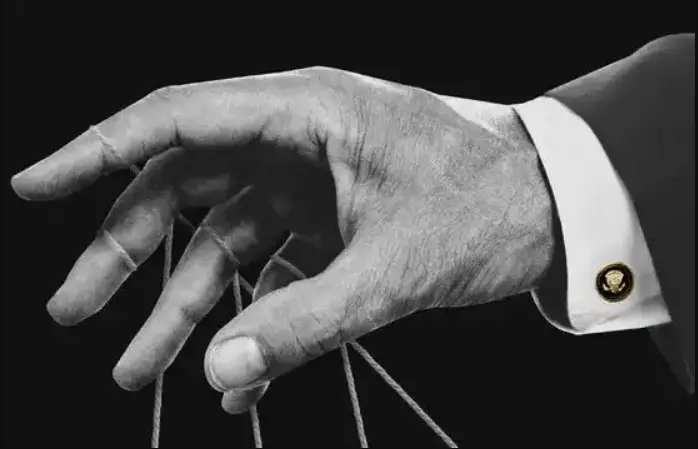
 When the president starts issuing tokens, politics is no longer a means of governing the country, but a game to inflate one's own market value.
Original Title: Teapot Dome. Watergate. They’re Nothing Compared to This.
Original Author: Jacob Silverman (Author of "The Golden Fury: Elon Musk and the Radicalization of Silicon Valley")
Original Compilation: Kaori, Peggy, BlockBeats
Editor's Note: In the history of American politics, no president has intertwined national power, personal branding, and financial speculation into a global-scale experiment like Trump.
The combination of money and power is not new, but when this combination appears in the form of "tokens," when the image of a head of state is minted into a tradable asset, and when political influence can flow freely on the blockchain, what we face is no longer traditional corruption but a systemic reconstruction.
This article records not a single scandal but a paradigm shift: the president is no longer just a political figure but the largest holder of tokens in a decentralized economy; diplomatic relations are no longer achieved through backroom deals but are connected through wallet addresses. Technology, once seen as a guarantee of transparency and fairness, may now become a new power broker.
As cryptocurrency enters the White House, and as the digital shadow of the dollar intertwines with national will, we must rethink a question: In this era of "on-chain sovereignty," do the boundaries of power still exist?
Below is the original content.
A New Wallet for Power: How Cryptocurrency Entered the White House
If you are an authoritarian leader trying to influence another head of state, you might give him a luxury-configured Boeing 747; you might spend lavishly at his hotel or invest in the many businesses he and his children own; you might even buy the sneakers, NFTs, and other branded products he promotes.
In the case of President Trump, potential "power brokers" have a richer menu of options.
But today, these all seem superfluous.
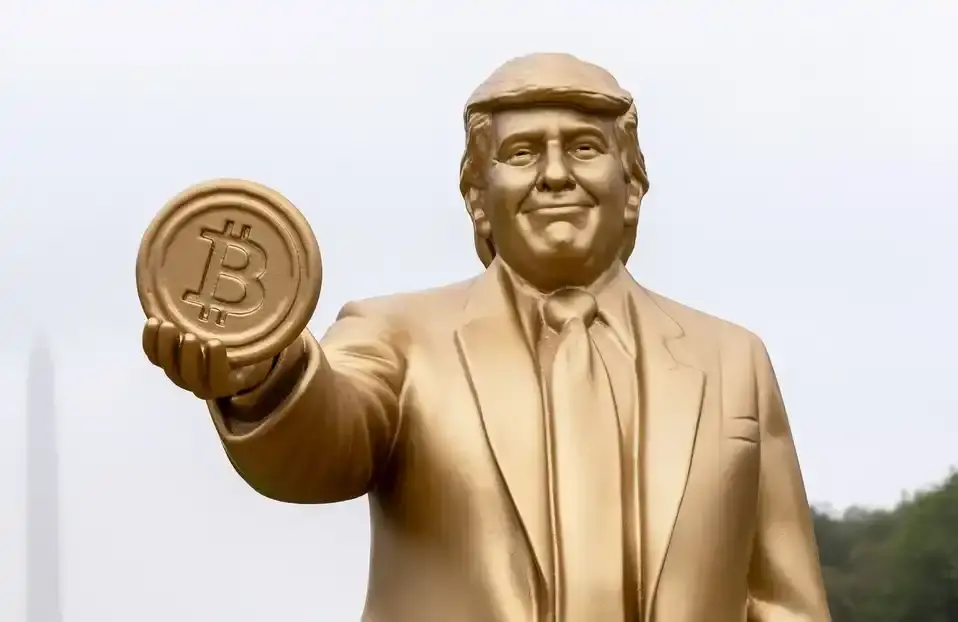
During the campaign, Trump announced his cryptocurrency plan—World Liberty Financial—and launched a "meme coin" named after himself just days before taking office. Anyone who purchases World Liberty tokens can indirectly funnel money to the Trump family business. Through a cryptocurrency project controlled by the president, his son, and family friends, the Trump family has amassed billions of dollars in paper wealth.
World Liberty has become a powerful channel of influence: anyone—whether you, me, or a prince from the UAE—can fill Trump's pockets simply by purchasing the tokens issued by the company.
The key lies in this "convenience." For those seeking influence, cash-filled briefcases and Swiss bank accounts have been replaced by cryptocurrencies that can be quickly transferred between wallets and exchanges. More sophisticated crypto users—state actors, hacker groups, money laundering syndicates—can also obscure transaction trails using tools like "mixers."
It is this convenience that has made cryptocurrency the preferred tool for criminal organizations and sanctions evaders.
The Illusion of Transparency: When Corruption Happens in the Name of "Decentralization"
This is unprecedented in American political history.
Looking back at past government scandals—the corrupt aides around President Grant, the oil lease bribes in the Harding-era "Teapot Dome Scandal," and Nixon's "Watergate"—none have seen a president so thoroughly blur the lines between personal and governmental interests, nor have any profited personally to such a degree.
There is nothing innovative here; the truly "novel" aspect lies in the current president's blatant use of his name, image, and social media influence to promote cryptocurrencies that are nearly indistinguishable from thousands of other products on the market. For MAGA supporters and ordinary speculators, buying these tokens might mean "going all in"; for a president to lead political supporters into such high-risk investments is itself a behavior that deserves condemnation.
But the greater risk is that powerful foreign entities might use this to funnel vast sums of money to Trump.
For any head of state, purchasing Trump's tokens or investing in his crypto projects has become a direct act of political speculation.
This is the grotesque incentive created by Trump's "crypto donation box."
Take, for example, two recent multi-billion dollar transactions involving one of the UAE's most influential figures—Sheikh Tahnoon bin Zayed Al Nahyan—and Trump's Middle East envoy, Steve Witkoff:
In the first transaction, the state-owned investment fund led by Tahnoon pledged to invest $2 billion in the world's largest cryptocurrency exchange, Binance, using USD1 stablecoins (issued by World Liberty Financial). (Stablecoins are cryptocurrencies aimed at maintaining stable value and serving as substitutes for "digital dollars.")
Notably, Binance founder Changpeng Zhao is seeking a pardon from Trump after admitting to money laundering charges.
In the second transaction, Witkoff facilitated an agreement with Trump's appointed "AI and Cryptocurrency Chief"—venture capitalist David Sacks—that allows the UAE to purchase hundreds of thousands of high-end AI chips for data center construction. These chips are highly sought after in the global AI race and are subject to strict export controls. Experts worry that these chips could be resold or shared with Chinese companies by the UAE.
While there is no concrete evidence showing a clear "quid pro quo" in these two transactions, the overlap of participants and interest networks is significant, and the blending of public and private interests is becoming a hallmark of the Trump administration.
The use of $2 billion in USD1 stablecoins by Tahnoon is itself intriguing.
If his goal was merely to invest in Binance, a direct wire transfer would suffice.
Choosing to use World Liberty Financial's USD1 stablecoin as an "intermediary" essentially creates a revenue stream for a company that directly benefits Witkoff and Trump.
Despite the scandalous nature, Trump's crypto activities largely unfold in relatively public environments.
Some notorious figures in the crypto space even boast on social media about their purchases of tens of millions of dollars in WLFI tokens.
Among the most active is Chinese crypto entrepreneur Justin Sun—who frequently showcases his substantial holdings of World Liberty and Trump meme coins on social media and positions himself as a key supporter of Trump's crypto empire.
In February of this year, the U.S. Securities and Exchange Commission (SEC) requested a federal judge to suspend the civil fraud lawsuit against Sun, and the court granted this request. In May, Sun, as one of the top holders of Trump meme coins, was invited to a dinner at Trump's National Golf Club in Virginia—where he received a gold watch from the president.
In the past (just a few years ago), if a president were involved in such obvious conflicts of interest, Congress would have already held hearings, and law enforcement would have launched investigations.
But a recent Supreme Court ruling on "presidential immunity" has rendered these oversight measures nearly ineffective.
The Justice Department will not prosecute a sitting president.
And at the beginning of his new term, Trump fired 18 inspectors general—key figures who might have exposed and investigated government crypto activities. In February of this year, he also ordered the Justice Department to suspend enforcement of the Foreign Corrupt Practices Act (which prohibits bribing foreign officials) until four months later when enforcement resumed.
Meanwhile, regulatory agencies have shifted their focus away from the cryptocurrency sector, while the Trump administration has helped push a legislative agenda favored by the crypto industry.
Trump and his offspring's accumulation of crypto wealth seems poised to continue expanding during his term.
There is currently no visible "cap" to prevent foreign capital from continuing to flow in. This door has opened the way for an unprecedented level of corruption at the highest echelons of the U.S. government. And we must confront the dark possibilities it brings.
 Risk warning
 Risk warning

Popular articles





