








Is building a self-developed Layer 2 public chain the ultimate strategy for Ethereum DAT to enhance mNAV?
 Core Viewpoint

 With the continuous evolution of the "coin-stock integration" trend, a type of listed company known as "crypto asset treasury companies" is emerging in the industry. Currently, the top three institutional holders have accumulated a total of 4.16 million ETH, forming a significant institutional force.
1. What is an Ethereum Treasury Company?
A treasury company is essentially a form of strategic transformation for publicly listed companies. This business model was initially pioneered by MicroStrategy, which showcased a new type of asset-liability management model to the capital markets by using Bitcoin as its core asset reserve. Influenced by this paradigm, some listed companies have expanded their asset allocation to include ETH, SOL, HYPE, and others, transforming into entities focused on the management of crypto assets and ecological participation.
The emergence of such companies is attributed to Ethereum's outstanding institutional consensus, complete infrastructure, and relatively clear regulatory outlook, making it one of the preferred targets for traditional capital entering the crypto world. Early transforming companies, such as Sharplink and Bitmine, have already garnered attention from the capital markets, but this is more due to the market's examination of their new strategic direction and the underlying technological logic rather than a mere reassessment of asset value.
In terms of asset scale, according to the industry data platform Strategic ETH Reserve, leading Ethereum treasury companies hold a considerable amount of ETH. However, when placed in a broader ecosystem, their scale is still in the early development stage compared to user assets on centralized exchanges or the custody volume of Ethereum ETFs. Their true uniqueness lies in having extensive self-management rights over the ETH assets they hold, which provides possibilities for exploring deeper ecological participation, such as building their own Layer 2 networks.
2. Current Status and Operational Strategies of Ethereum Treasury Companies
2.1 Current Status of Ethereum Treasury Companies
Currently, Ethereum treasury companies have formed a clear leading pattern, with their asset scale and market influence increasing day by day. According to statistics from the Strategic ETH Reserve, as of October 20, 2025, the top three independent entities holding the most ETH globally are all Ethereum treasury companies, namely Bitmine, Sharplink, and The Ether Machine. Among them, industry leader Bitmine has accumulated 2.83 million ETH【1】, and its massive asset reserves have gained recognition in the capital markets, reflected in its stable mNAV (market-adjusted net asset value) premium. Although Sharplink (holding 838,000 ETH) and The Ether Machine (holding 496,000 ETH) currently have relatively smaller holdings, it is noteworthy that both companies have only completed 14% and 4% of their respective ETH reserve targets, indicating significant potential for future accumulation and growth.
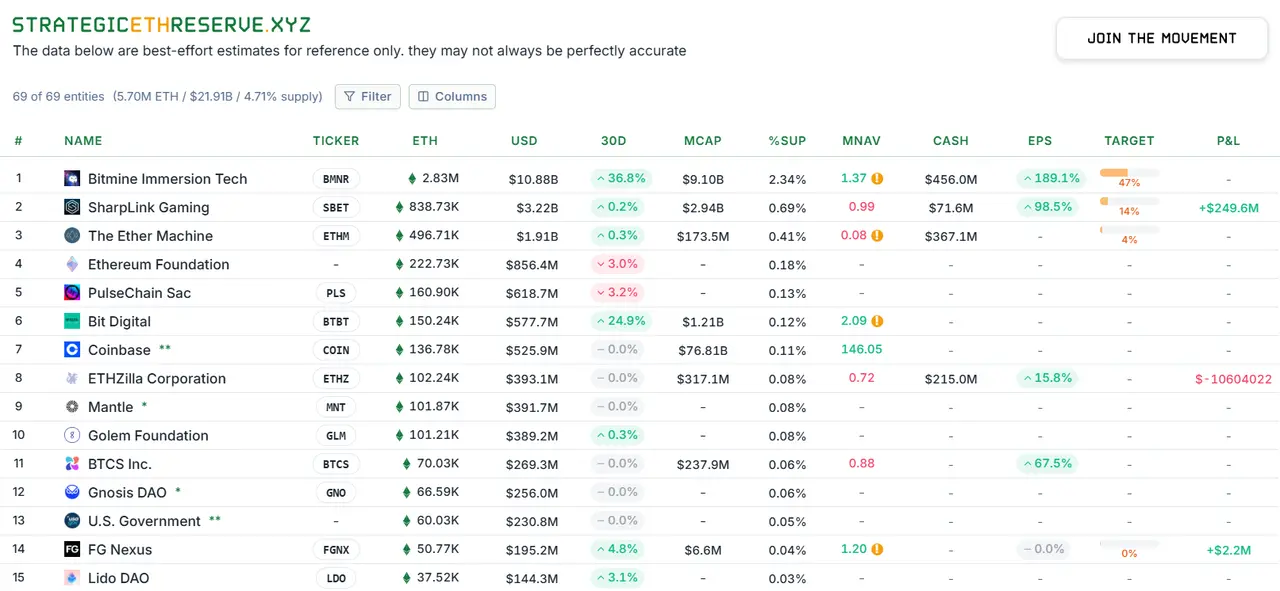
Statistics of ETH held by Ethereum treasury companies, source: Strategic ETH Reserve
To comprehensively assess the ecological position of Ethereum treasury companies, this article places them within a broader asset custody context. As a core reference, the largest centralized exchange, Binance, represents its users holding up to 4.13 million ETH【2】; meanwhile, the Ethereum ETF (ETHA) issued by asset management giant BlackRock also holds over 4.05 million ETH【3】. In contrast, although the total holdings of the three leading treasury companies currently account for about 3% of the total circulating ETH, there remains a gap compared to leading CEXs and ETF funds, but their growth momentum should not be underestimated. As existing treasury companies continue to finance asset accumulation through capital markets and more listed companies join the transformation ranks, Ethereum treasury companies are rapidly emerging as a significant institutional force in the ecosystem. Their aggregated capital and governance voting rights are likely to play a key role in major decisions, such as Ethereum network upgrades, becoming a new force that cannot be ignored.
2.2 Current Operational Strategies of Ethereum Treasury Companies
Ethereum treasury companies demonstrate greater strategic flexibility and proactivity in asset operations. Compared to Ethereum ETFs, their core difference lies in having broader self-management rights over the ETH assets they hold. Treasury companies can proactively choose various asset operation strategies within the compliance framework of publicly listed companies, depending on market conditions and revenue goals, including staking, lending, and building their own nodes to obtain MEV (Miner Extractable Value) income. This proactive management capability not only provides investors with additional sources of income beyond the appreciation of underlying asset prices but also constitutes an essential difference in the revenue structure and risk characteristics between investing in treasury companies and traditional ETFs. In contrast, even with the launch of staking-supported Ethereum ETFs in markets like Hong Kong, their asset management strategies remain relatively constrained, making it difficult to achieve the flexible and multi-layered investment portfolio construction and revenue optimization seen in treasury companies.
2.2.1 Staking
Staking is the core mechanism for ETH holders to participate in network security maintenance and earn basic income after Ethereum transitioned to a Proof of Stake (PoS) consensus. If treasury companies do not operate their own validation nodes, they typically delegate ETH to third-party service providers, with the main paths divided into DeFi and CeFi: in the DeFi space, they can obtain stETH certificates through liquid staking protocols like Lido, which can be reused in other DeFi ecosystems to compound returns; in the CeFi space, they can choose custodial staking services provided by exchanges like Coinbase and Binance, which offer ease of operation and institutional-level risk control but come with centralized custody risks and relatively lower on-chain transparency.
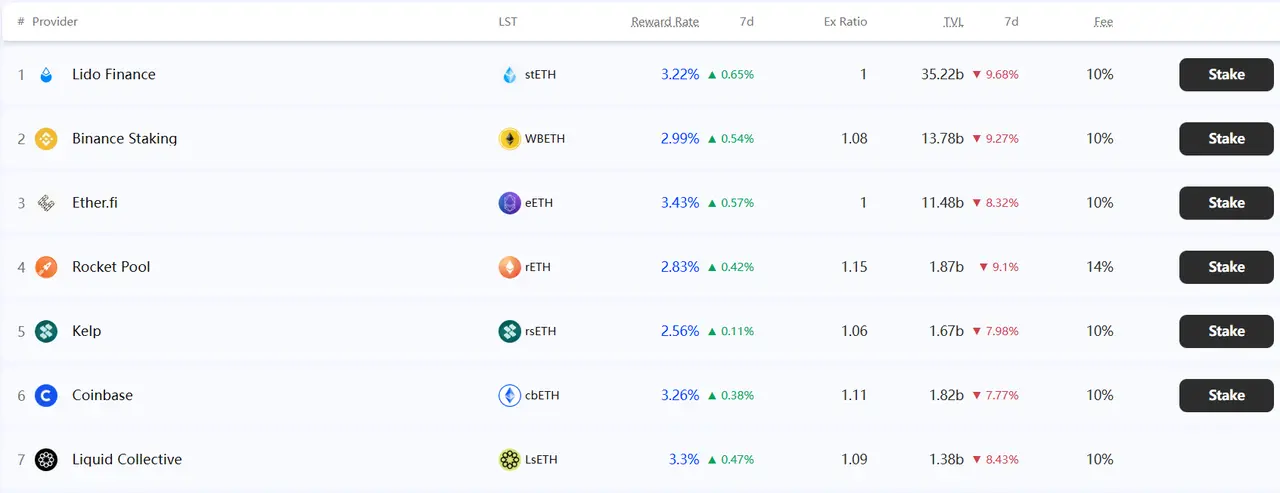
Main staking platforms and staking rates for ETH, source: Staking Rewards
2.2.2 Lending
Lending provides treasury companies with another income channel beyond staking, achieved through operations in on-chain protocols like Aave and Compound. Basic strategies include: directly depositing ETH into the protocol to earn deposit interest and generate yield-bearing tokens; or adopting a more proactive strategy by over-collateralizing ETH to borrow stablecoins and using them for other asset allocations or DeFi activities in pursuit of excess returns. Unlike the relatively stable returns from staking, lending rates are determined by market supply and demand for funds, leading to significant volatility, where the strategy of lending out and reinvesting introduces additional market and liquidation risks.
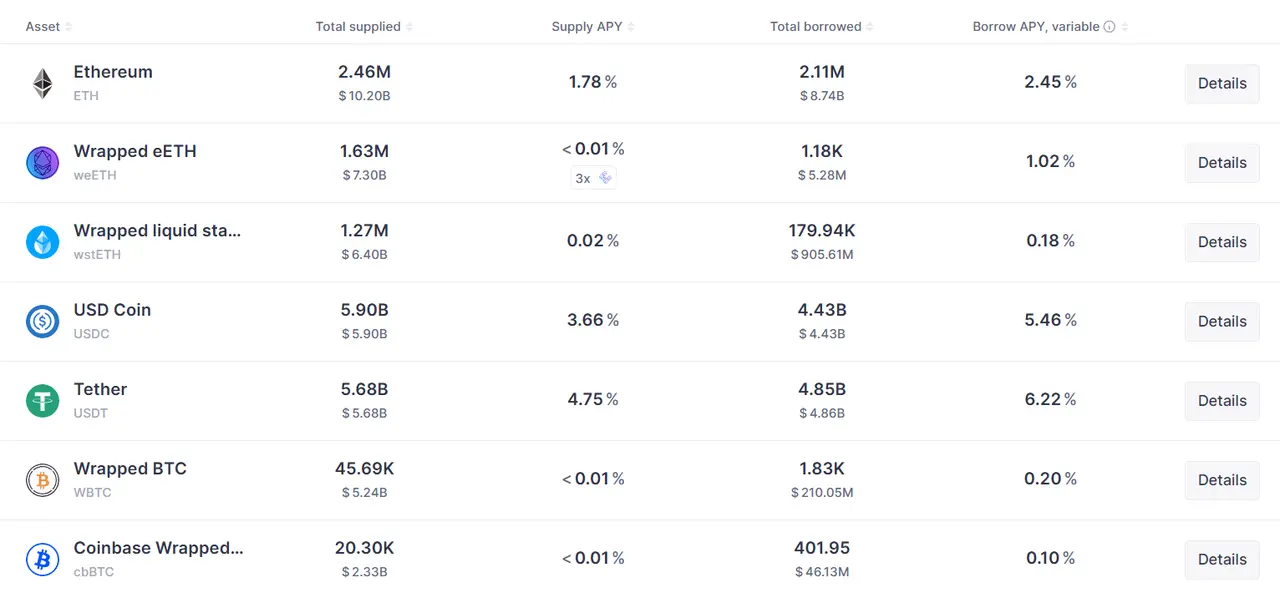
ETH lending rates on the Aave lending protocol, source: Aave
2.2.3 Building Own Nodes
Building validation nodes is a deeper asset operation method than delegated staking or lending, requiring treasury companies to invest in hardware and operational resources to directly participate in Ethereum network validation in a "self-custody" manner. Each validation node requires staking 32 ETH; by building their own nodes, companies can not only earn standard block rewards but also directly collect transaction fees and capture miner-extractable value (MEV), thus obtaining more comprehensive returns. However, this path demands a high level of technical expertise from the team, and the extraction of MEV income is fraught with challenges and uncertainties.
3. From Asset Holding to Ecological Construction: The Strategic Upgrade of Building Own Layer 2
Staking is currently the most commonly used asset appreciation method for crypto treasury companies, and this approach has gained widespread market recognition. However, for Ethereum treasury companies holding ETH, merely using third-party platforms for staking and lending limits ETH to a financial asset, failing to leverage the high scalability of the Ethereum mainnet on a technical level, thus missing strategic opportunities.
Building their own Ethereum Layer 2 network represents a fundamental strategic leap for treasury companies. Although building Layer 2 incurs higher capital expenditures for treasury companies, the core value of this decision lies in transforming the company from a passive "holder" of crypto assets to an active "builder" of the blockchain ecosystem. This role shift not only brings profound impacts on the company's technological branding and value discovery but also establishes a unique moat in the fierce market competition.
3.1 Strategic Positioning: A Fundamental Shift from Treasury Management to Ecological Leadership
Constructing a dedicated Layer 2 network signifies a deep exploration of the asset value and business boundaries by treasury companies. The strategic significance of this move transcends simple financial returns and is primarily reflected in three aspects:
First, by creating an on-chain environment influenced by its own rules, the company achieves a breakthrough in ecological leadership, no longer being entirely constrained by the rule systems of external public chains. Second, this transformation brings about a deepening of value creation—although direct Gas fee income may vary, an active ecosystem can effectively feed back into the core business, forming a more cohesive business loop. Finally, operating a public blockchain network itself is a powerful demonstration of technological brand value, showcasing the company's technological foresight and helping the public reframe the positioning of treasury companies from asset management firms to crypto technology-driven companies.
3.2 Feasibility Foundation: Standardization and Technological Inclusiveness of the Ethereum Ecosystem
The strategic choice of building Layer 2 has a special appeal for Ethereum treasury companies, with its fundamental advantage lying in the mature and standardized technological infrastructure already established within the Ethereum ecosystem. In contrast, Bitcoin treasury companies are limited by the Bitcoin network's native lack of smart contract support, facing extremely high technical barriers to building sidechains; while treasury companies holding SOL, SUI, and other assets struggle to achieve ecological expansion due to the lack of mature and stable Layer 2 solutions on their respective public chains.
Since the inception of Ethereum, its decentralized autonomous organizations (DAOs) have proposed multiple initiatives regarding Layer 2 network expansion. In terms of data, EIP-4844 introduces a transaction type carrying Blobs, providing inexpensive data storage space for Layer 2 and significantly reducing transaction costs【4】. Regarding scalability, EIP-7691 expands the Blob capacity of each block, directly enhancing Layer 2 throughput【5】. In terms of communication, EIP-7683 establishes standard communication protocols between different Ethereum Layer 2s, addressing the low network efficiency faced by users attempting cross-chain asset transactions【6】. These key proposals have made the creation of Layer 2 more standardized, laying the foundation for its prosperity.
Moreover, the Ethereum ecosystem has formed a highly modular Layer 2 technology system. Particularly, the proliferation of RaaS (Rollup as a Service) has genuinely lowered the technical barriers. Service providers like Conduit and Caldera have transformed the complex blockchain development process into configurable product solutions, enabling treasury companies to quickly deploy and operate dedicated networks without the need to build large-scale blockchain R&D teams, thus shifting the strategic focus from technical implementation to ecological operation, achieving a truly lightweight startup.
3.3 Official Endorsement: Vitalik's Continued Support for Ethereum Layer 2 Development
As the founder of Ethereum and a board member of the Ethereum Foundation, Vitalik Buterin has continuously played a key role in the development of Layer 2 technology routes and the expansion of the ecosystem. He has repeatedly emphasized that the core value of Layer 2 solutions lies in their ability to inherit the security guarantees of the Ethereum mainnet, thus providing fundamental backing for the security of various Layer 2 networks. On multiple important occasions, Vitalik Buterin has also given positive evaluations to specific Layer 2 projects: for example, in June 2022, he publicly supported Optimism's new governance structure, affirming that its mechanisms for collecting Gas fees through OP Tokens "reflect considerations for the interests of non-token holders," and praised the governance system【7】; in September 2025, he further praised Base as a "model-like" Layer 2 solution, believing it sets an industry benchmark in user-friendliness, non-custodial features, and integration with Ethereum's decentralized security system【8】. As a widely regarded authoritative voice in the Ethereum ecosystem, Vitalik's ongoing recognition theoretically and practically provides important innovative basis and confidence support for Layer 2 developers.
At this stage, limited by insufficient technical accumulation, no Ethereum treasury company has chosen the strategic path of independently building a Layer 2 network. However, a group of forward-looking industry leaders—such as Coinbase, Deutsche Bank, and Sony—have keenly recognized the strategic value inherent in Ethereum's high scalability and have taken the lead in laying out their respective Layer 2 solutions. The practices of these pioneers are sketching a clear path for the market to transition from asset holders to ecological co-builders.
3.4 Case Reference: Base, Coinbase's Self-Built Layer 2 Listed on US Stock Market
Coinbase is one of the major cryptocurrency trading platforms globally, and its constructed Base network is a typical representative of "traffic empowerment." Launched in 2022, Coinbase's management pragmatically chose the OP Stack developed by Optimism as its technical route. Although it is a newcomer among Layer 2 public chains, Base currently ranks first among all Layer 2 networks in multiple dimensions, including trading volume, active user count, and total value locked (TVL)【9】. Its success is primarily driven by two key factors. First, Coinbase has brought its vast user base from the trading platform onto the chain, giving the Base platform a solid user foundation from the outset. Second, Ethereum's mature DeFi applications like Aave, UniSwap, and Compound provide Base network users with an excellent trading experience, making it much more convenient than building a public chain and developing an ecosystem from scratch.
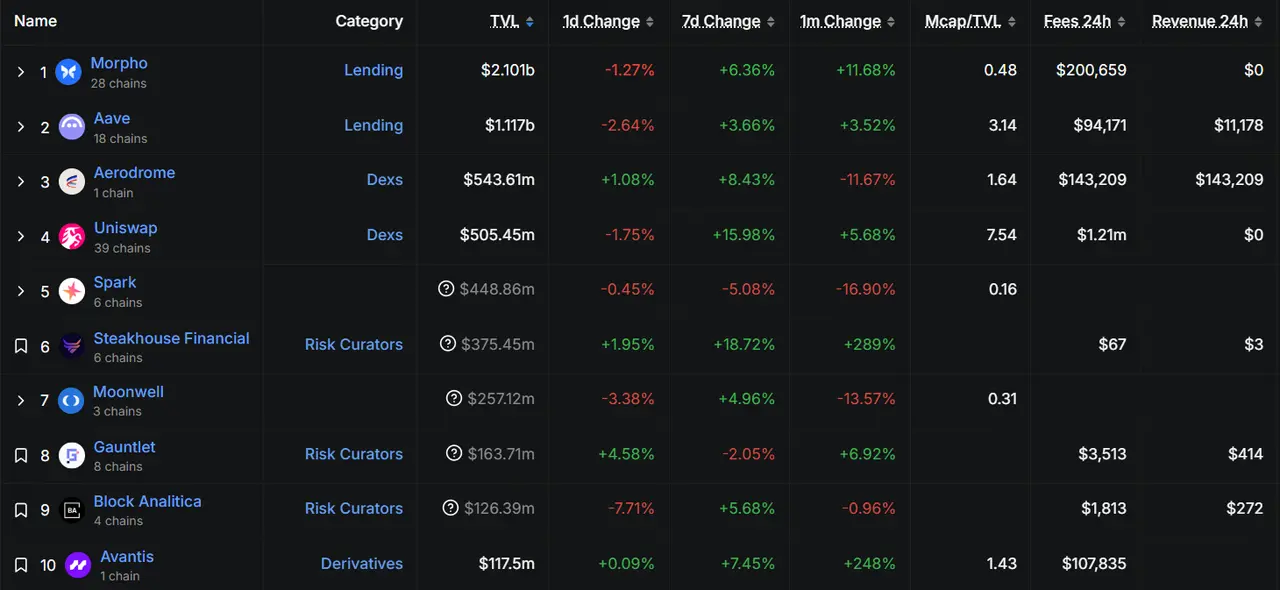
Top ten protocols by TVL on the Base network (data as of October 29, 2025), source: Defillama
3.5 Case Reference: Soneium, Sony's Self-Built Layer 2
For most treasury companies lacking the massive traffic of Coinbase, the Soneium Layer 2 built by Japan's Sony showcases a more instructive "resource integration" path. In August 2023, Sony launched its Ethereum Layer 2 network Soneium and, based on its deep accumulation in the gaming sector, introduced several blockchain games such as Sleepagotchi LITE and Farm Frens. As of October 29, 2025, the Soneium network's active user count has stabilized around 70,000, with a market share of approximately 1.5%【10】.
This case illustrates that the existing resources of traditional businesses—including game IPs, supply chain networks, and user communities—can be effectively reactivated and integrated on-chain. This means that treasury companies like Sharplink (sports games) and Bitmine (Bitcoin mining) have the potential to connect their existing customer and supplier relationship networks to their self-built Layer 2, creating an efficiently coordinated value network.
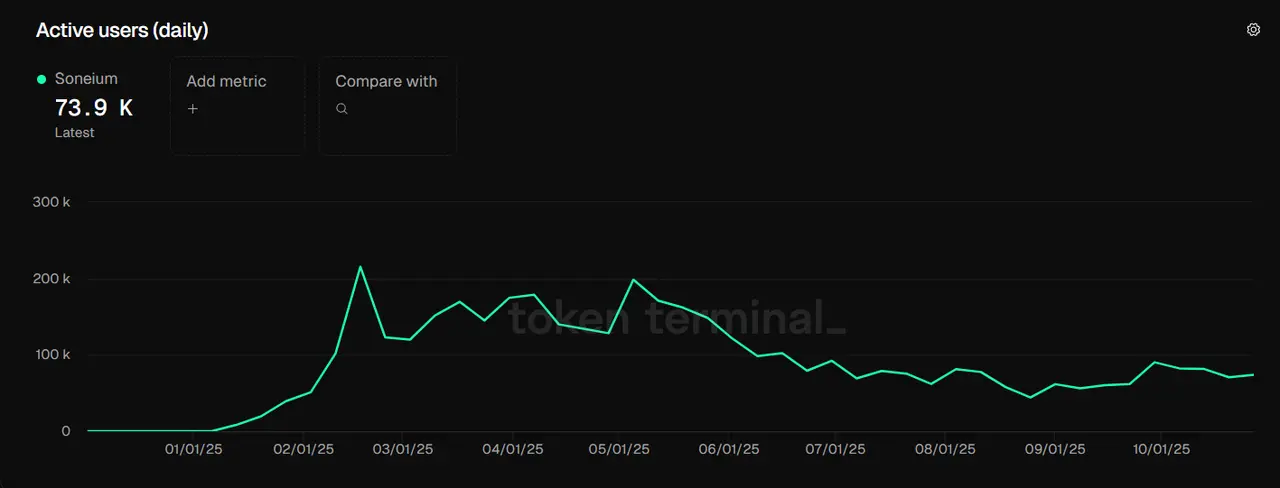
Active user count on the Soneium network (data as of October 29, 2025), source: tokenterminal
4. The Feasibility of Ethereum Treasury Companies Building Their Own Layer 2
For current Ethereum treasury companies, their original business has a low correlation with Ethereum network development, and there is a limited reserve of technical developers. Therefore, choosing RaaS platforms to quickly establish Layer 2 is significantly more cost-effective in the short term than building a technical team to develop Ethereum Layer 2. Several companies in the crypto industry provide RaaS services. Conduit, Caldera, and AltLayer are currently the main RaaS service providers in the market. These companies offer different options for companies needing to build Ethereum Layer 2 from the three main modular blockchain aspects: execution layer, data availability (DA) layer, and settlement layer.
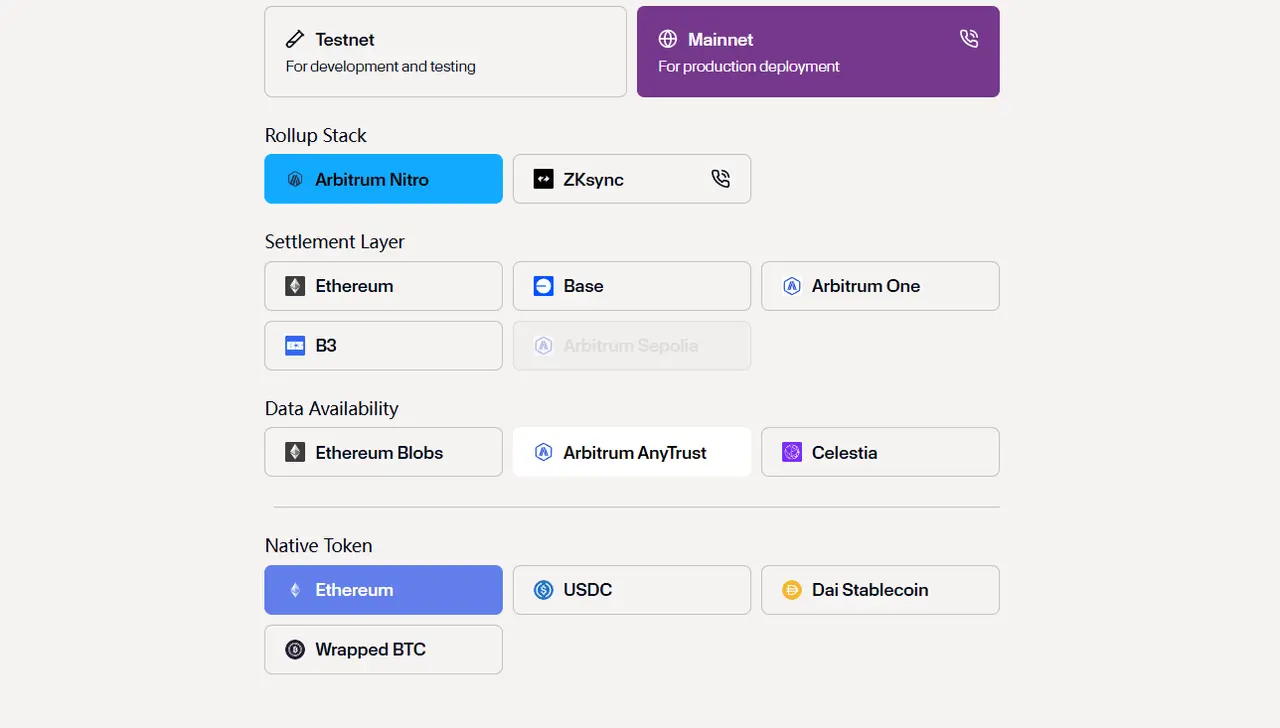
Caldera's rapid setup page for Ethereum Layer 2, source: Caldera
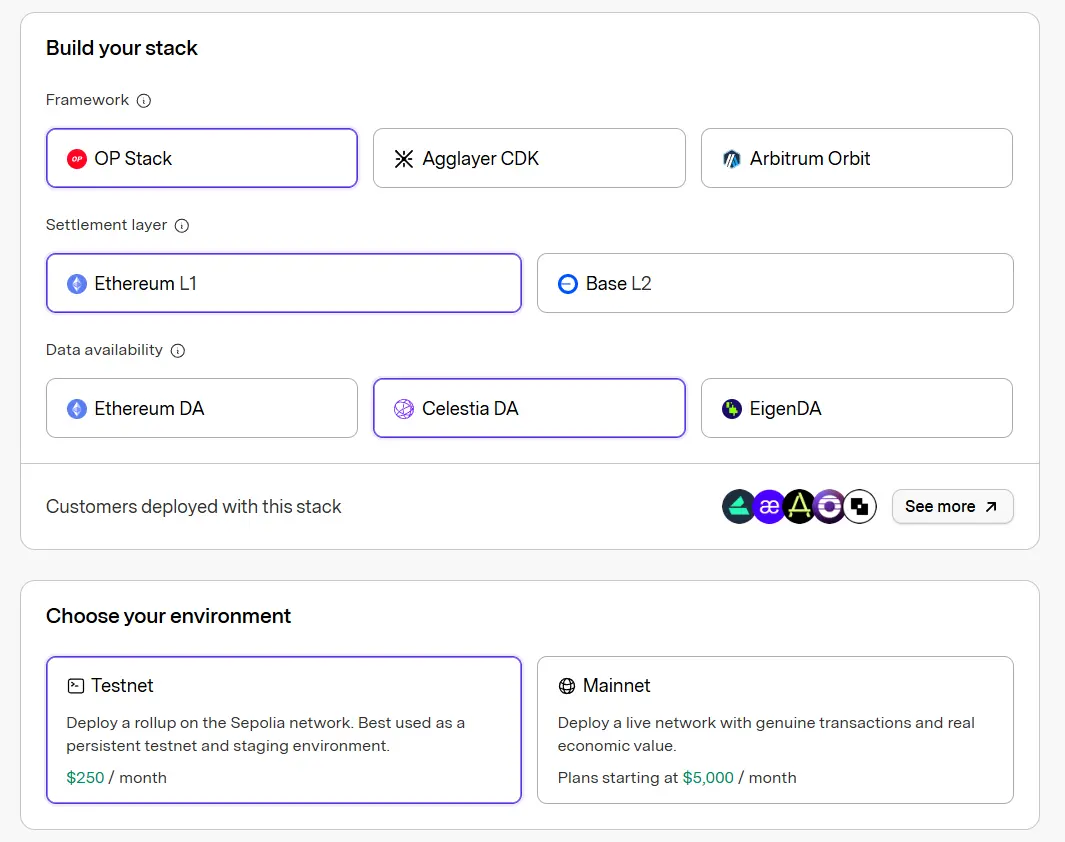
Conduit's rapid setup page for Ethereum Layer 2, source: Conduit
4.1 RaaS Platform Analysis
Rollup as a Service (RaaS) is not a new concept; it sparked widespread market discussions in 2024. By 2025, this sector has gradually matured, with a significant reduction in the number of new entrants and a stabilization of market dynamics. Among the mainstream RaaS service providers, Altlayer and Lumoz primarily target testnet deployment scenarios, while for mainnet deployments, most public chains still prefer the more technically mature Conduit and Caldera.
From a service architecture perspective, both Conduit and Caldera have long-term accumulations in modular blockchain technology, but there are differences in pricing models and technical solutions. Conduit charges $5,000 per month, significantly higher than Caldera, which charges $3,000 per month. This price difference corresponds to substantial differences in service content and performance.
In terms of technical stack support, Conduit offers various solutions, including OP Stack, AggLayer CDK, and Arbitrum Orbit, while Caldera primarily supports Arbitrum Orbit and ZK Stack. Both service providers support Ethereum and Celestia as standard options for the data availability layer (DA).
Although Caldera has a clear cost advantage, Conduit's high pricing corresponds to a more diversified service portfolio. First, in terms of Gas Token configuration, Conduit supports any ERC-20 Token as the public chain's native Gas Token, providing greater flexibility for project parties to issue governance tokens, while Caldera currently only supports mainstream tokens like ETH, DAI, and USDT. Second, in terms of performance, public chains using Conduit services, although having relatively higher transaction fees, also have superior theoretical TPS, making them more suitable for applications with high performance requirements. Finally, in terms of decentralization, Conduit achieves a higher degree of decentralization by integrating EigenLayer's sequencer, while Caldera still adopts a centralized sequencer architecture.
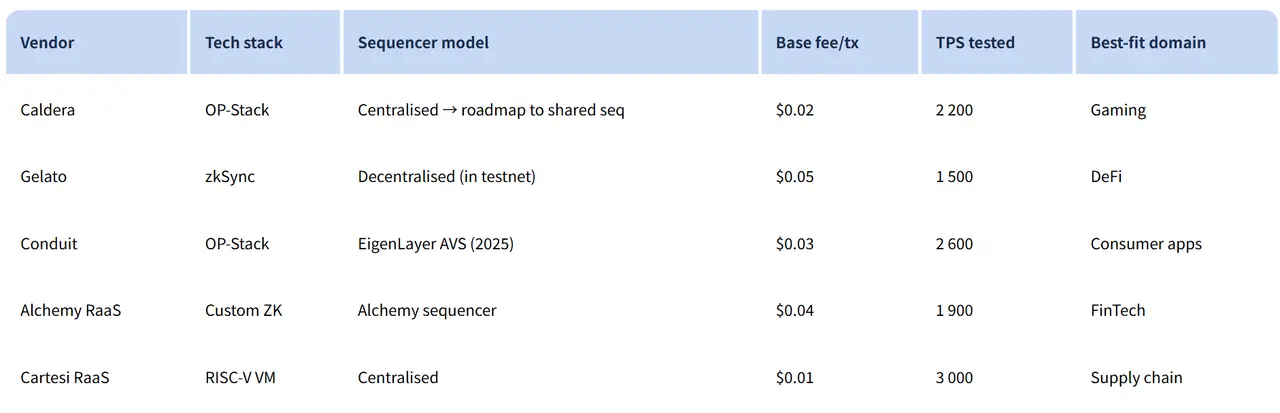
Performance and applicable scenarios of RaaS platforms, source: dysnix
4.2 Performance Analysis of Modular Blockchains (Execution Layer, DA Layer, Settlement Layer)
For Ethereum treasury companies, adopting RaaS platforms for lightweight Layer 2 deployment is not only a cost-effective technical choice but also possesses critical strategic value. This model is akin to enterprises using cloud computing instead of building their own IDC, enabling rapid initiation of on-chain business with lower trial-and-error costs and upfront investments, while flexibly adjusting strategies based on business development trends. As mentioned in the Caldera page above, developers need to make choices among the execution layer, data availability layer, and settlement layer in RaaS services. These choices will directly affect the overall efficiency, security, and ecological compatibility of the public chain. For treasury companies, decision-makers often have to make trade-offs between performance and cost when constructing modular blockchains. Below, we will compare the advantages and disadvantages of different solutions from each layer, strengthening the analysis, including performance indicators (such as TPS, cost, security models), applicable scenarios, potential risks, and strategic considerations. Through this analysis, we aim to help Ethereum treasury companies find the most suitable deployment solutions for their businesses.
4.2.1 Execution Layer Analysis
The execution layer is the most distinct part of modular blockchains, primarily responsible for transaction processing and state updates. The mainstream Rollup services currently include two main categories: OP Rollup and ZK Rollup. OP Rollup relies on a fraud-proof mechanism, assuming transactions are valid unless challenged; ZK Rollup uses validity proofs to directly verify the correctness of transactions. These two mechanisms involve trade-offs in security, speed, and compatibility.
- OP Stack: As the most mainstream Optimistic Rollup framework, its advantages lie in low deployment thresholds and extremely high EVM compatibility, making it suitable for rapid ecosystem launches, but it must endure a finality delay of about 7 days due to the fraud-proof window【11】.
- Arbitrum Orbit: An OP Rollup solution based on the Arbitrum ecosystem, its greatest advantage is its deep integration with the Arbitrum mainnet, allowing it to share liquidity and user bases, but overall performance is constrained by the state of the mainnet【12】.
- ZK Sync: A ZK Rollup solution using zero-knowledge proof technology, it can provide instant finality and stronger privacy protection, with excellent performance, but its technical complexity and hardware requirements are significantly higher, resulting in a much higher deployment threshold compared to OP solutions【13】.
- AggLayer (Polygon CDK Core): As Polygon's cross-chain coordination layer, it achieves liquidity sharing and low-latency settlement by aggregating multiple ZK chains, excelling in scalability and cost-effectiveness, but its system stability relies on the reliability of the aggregator network【14】.
4.2.2 DA Layer Analysis
In contrast to the diverse choices of the execution layer, the options for the data availability layer (DA) are relatively concentrated, with the core difference being whether to adopt an independent DA solution. Traditional Layer 2 solutions rely on the Ethereum mainnet for data availability guarantees, leading to high costs— for example, calldata fees (the cost of calling data) often account for over 80% of total transaction costs. Independent DA layers, by constructing dedicated data networks, provide efficient data storage and availability sampling mechanisms, significantly enhancing the overall efficiency of the system.
Mainstream independent DAs include Celestia, EigenDA, and Near DA:
- Celestia: Uses data availability sampling (DAS) mechanisms to ensure data integrity without requiring full node verification. Its advantages include high throughput (supporting GB-level data blocks) and low costs; by 2025, its modular design has supported multi-chain integration.
- EigenDA: An extension of EigenLayer, combining re-staking mechanisms to provide shared security. It offers higher throughput (TPS can reach 10x that of Ethereum under certain conditions) and lower costs, but relies on EigenLayer's staking ecosystem.
These independent DAs have become mainstream choices for modular Layer 2, as seen with Movement Labs choosing Celestia as their DA layer. They decouple DA from execution, reducing overall costs (average reduction of 60-90%【15】) and enhancing scalability (such as Celestia's blob storage optimization). Compared to Ethereum's native DA, independent solutions can expand throughput several times, making them suitable for data-intensive applications. However, risks include data availability attacks (if sampling fails) and centralization tendencies (dominated by a few validators). Strategically, if a project seeks cost optimization and independence, it should prioritize independent DA.

Performance comparison between Ethereum and independent DA layers, source: Forsight News
4.2.3 Settlement Layer Analysis
The settlement layer is responsible for final consensus and state root submission, typically relying on the robust security of the Ethereum mainnet (PoS consensus, market cap anchoring). There are fewer choices, but the strategic implications are profound.
- Ethereum Mainnet as Settlement Layer: The standard solution for Layer 2, ensuring that public chains inherit Ethereum's decentralization and security. Its advantages include strategically anchoring ETH and avoiding fragmentation; however, it has higher settlement costs (hundreds of USD per batch) and delays (from minutes to hours).
- Arbitrum or Base as Settlement Layer: Downgrading the self-built chain from Layer 2 to Layer 3, utilizing the settlement mechanisms of the upper chain. This offers high convenience (e.g., Base's integration with Coinbase, providing quick bridging), but strategically, it moves away from the original intention of "anchoring to ETH," relying instead on the governance of the upper chain, which may introduce additional costs and dependency risks.
Settling Layer 2 on the Ethereum mainnet maximizes security, suitable for projects pursuing long-term value anchoring; transitioning to Layer 3, while gaining convenience (like Arbitrum's governance tools), may dilute autonomy and face cascading risks from upper chain failures.
4.2.4 Summary
Currently, the technical stack choices for modular Ethereum Layer 2 show a clear trend, with mainstream solutions generally adopting a modular combination of "OP Stack/ZK Stack as execution layer + Celestia as data availability layer (DA) + Ethereum as settlement layer." This pattern has emerged from the core advantages of each module: Celestia, with its high throughput and significantly lower DA costs than the Ethereum mainnet, has become the preferred choice for data availability; while the Ethereum mainnet remains firmly positioned in the settlement layer due to its unparalleled degree of decentralization and network consensus security, offering advantages over other Layer 2 networks like Base and Arbitrum. At the execution layer level, the technical choice depends on the differentiated positioning of the public chain: if higher EVM compatibility and rapid ecological protocol migration are sought, OP Stack is preferable; if extreme transaction speed and native privacy features are prioritized, ZK Stack is the better choice. In summary, Ethereum treasury companies can flexibly configure the aforementioned modular solutions based on their specific positioning and development strategies for Layer 2 networks.
4.3 Cost and Revenue Analysis of Building Own Layer 2
From the Gas fee revenue model perspective, blockchain transaction fees are unrelated to transaction amounts and are only related to transaction complexity and network status. For example, whether transferring $100 or $10,000 through a self-built chain wallet, the base Gas cost remains consistent. Based on this model, if using RaaS services provided by Caldera, the fixed monthly cost is $3,000, and assuming a fee of $0.02 per transaction, the chain would need to complete 150,000 transactions per month to break even. If opting for Conduit services, with a monthly fee of $5,000, although the per-transaction fee revenue is slightly higher ($0.03), it would still require processing approximately 166,000 transactions per month to cover basic costs.
Completing 150,000 transactions per month translates to about 5,000 transactions per day. For a newly established Layer 2 network, this target presents certain challenges. Achieving this goal heavily depends on the user scale and transaction frequency of the company's existing business. Mature Layer 2 networks like Base and Arbitrum have already easily surpassed a million daily transactions in August【16】, significantly alleviating cost coverage pressures.
From the nature of the enterprise, if the existing customer structure of the Ethereum treasury company primarily consists of small and micro enterprises or C-end users, due to their high transaction frequency and dispersed behavior, it is easier to achieve scaled transaction accumulation. For instance, Sharplink's main business is online sports games, primarily targeting C-end users. If it has accumulated a considerable scale of active player groups, it would have the foundation to migrate games on-chain, build its own Layer 2, and guide users to complete transactions on-chain. In this scenario, achieving a monthly transaction volume exceeding 150,000 is realistically possible. Conversely, if the enterprise customers are mainly large groups or government agencies, their transaction behaviors often exhibit low frequency and large amounts, making it difficult to support high-frequency transaction needs even after chain migration. For such Ethereum treasury companies, relying on existing accumulated customers to build Layer 2 faces significant challenges, necessitating the expansion of individual users to cover RaaS costs.
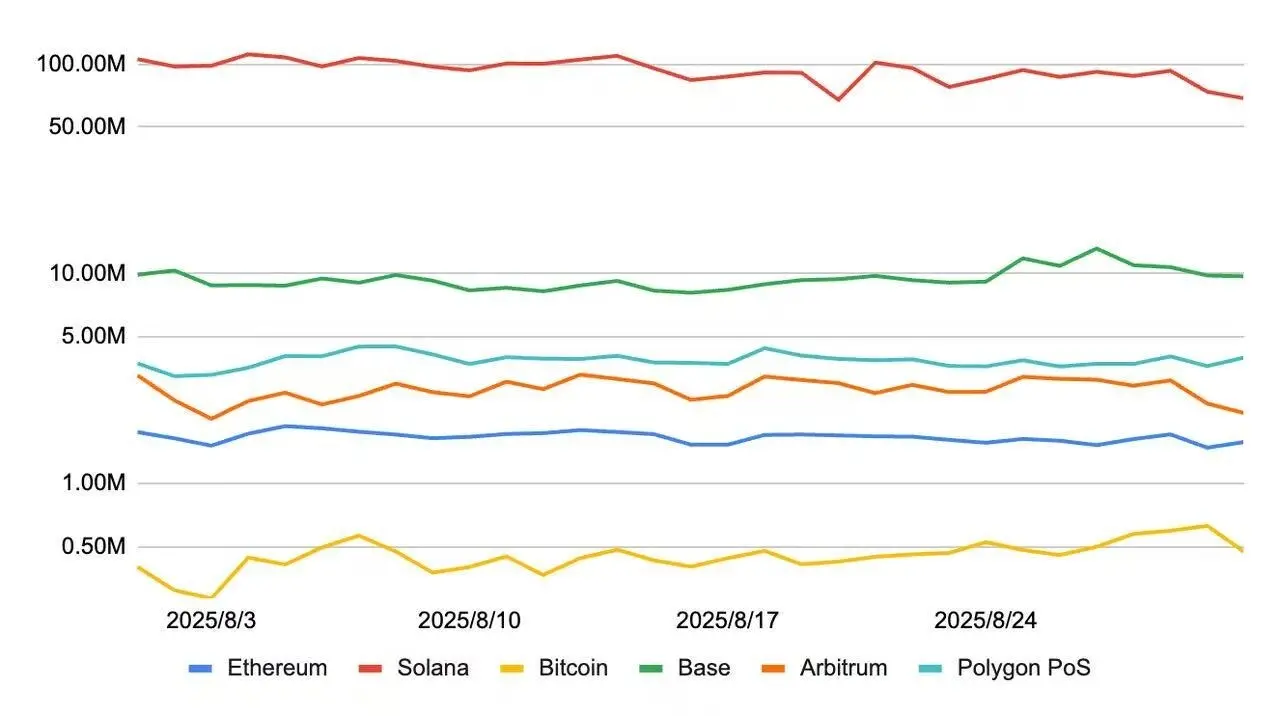
Daily transaction volume trends of mainstream public chains, self-made table by Mark Research (redrawn based on Artemis data)
5. Risks and Challenges of Ethereum Treasury Companies Building Their Own Layer 2
5.1 Challenges of Using Blockchain Payments in Upstream and Downstream Transactions for Ethereum Treasury Companies
In the concept of building their own Layer 2, the realization of its value largely depends on the treasury company's possession of a mature customer and supplier network in the real economy, enabling payment completion through blockchain wallet addresses. However, placing inter-enterprise transactions on a public chain, especially when involving payments and subsequent financial processes, faces unique challenges. The core issue lies in the contradiction between the anonymity of the public chain environment and the compliance requirements of corporate finance.
In traditional banking or third-party payments, payment records typically contain clear and verifiable identity information of both parties, which serves as the direct basis for subsequent invoicing and accounting. However, in public chain transfers, transaction records only publicly disclose the wallet addresses, transaction hashes, and timestamps of both parties, lacking identity information that can be directly correlated to real-world legal entities, creating difficulties for both parties in confirming identities and recognizing the substance of transactions when issuing invoices. In contrast, private chains (like DiChain) or consortium chains (like AntChain) typically incorporate identity authentication mechanisms (e.g., combined with CA certificates) in their design, better meeting corporate compliance requirements. Therefore, for enterprises needing clear audit trails and compliant invoice management, how to efficiently and compliantly complete accounting entries after transfers in a public chain environment is a pressing real-world issue.
5.2 Challenges of Industry Competition Facing Self-Built Layer 2 Networks
For treasury companies choosing to build their own Layer 2, the initial foundation of their public chain ecosystem relies on the Gas fee income generated from upstream and downstream enterprises interacting on-chain. However, to further expand the scale of individual users based on this foundation, they will inevitably face competition with other Layer 2 networks. Currently, the Ethereum Layer 2 market exhibits significant oligopolistic characteristics. Leading public chains represented by opBNB, Base, Arbitrum, OP Mainnet, and Linea account for over 90% of the total transaction volume across the entire Layer 2 network【17】, indicating high market concentration and continuously raising the customer acquisition threshold for emerging chains.
In this competitive landscape, if treasury companies hope to break through existing business boundaries and compete for external users with mainstream public chains, relying solely on basic transaction scenarios is insufficient to build a differentiated advantage. They must gradually establish an attractive ecological loop by constructing independent DeFi protocol systems and introducing innovative on-chain applications to effectively attract liquidity, enhance user stickiness, and secure development space in the highly concentrated Layer 2 market.
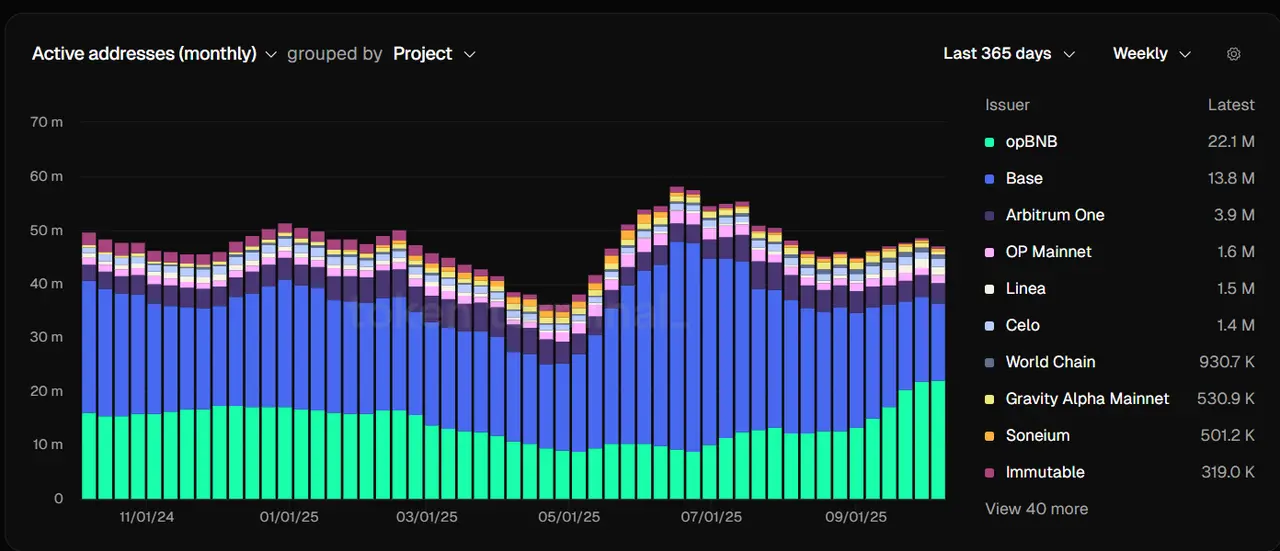
Active addresses in the Ethereum Layer 2 network, source: Tokenterminal
5.3 Challenges of Strategic Shifts in the Ethereum Mainnet
Although Vitalik has repeatedly expressed support for the development of Layer 2 networks, the development of the mainnet remains a top priority for the Ethereum Foundation. In August 2025, the Ethereum Foundation officially launched the "Scale L1" initiative, aiming to increase the mainnet's throughput to 45 million TPS and optimize network efficiency and decentralization through BAL (block-level asynchronous processing) and zkEVM technology. This move marks a significant strategic shift in Ethereum's development path, prioritizing improvements in mainnet performance. Simply put, the Ethereum mainnet can be viewed as a road that often experiences congestion due to its narrowness; BAL and zkEVM transform it into a complex interchange, maximizing traffic flow.
The background of this strategic adjustment can be traced back to the Dencun upgrade completed in March 2024. With the implementation of EIP-4844 (Proto-Danksharding), the data availability costs for Layer 2 were significantly reduced by over 90%. However, this upgrade did not drive an increase in mainnet transaction volume; instead, it accelerated the migration of transaction activities to Layer 2. Meanwhile, the "rent" (data settlement fees) paid by Layer 2 to the mainnet accounted for only about 2% of their total transaction fees. For example, the Base network's average monthly Gas fee income stabilized at $5 million in the second half of 2025【18】, while the rent paid to the mainnet during the same period was only $140,000, accounting for 2.8%, reflecting the limited contribution of the mainnet to value capture from Layer 2.
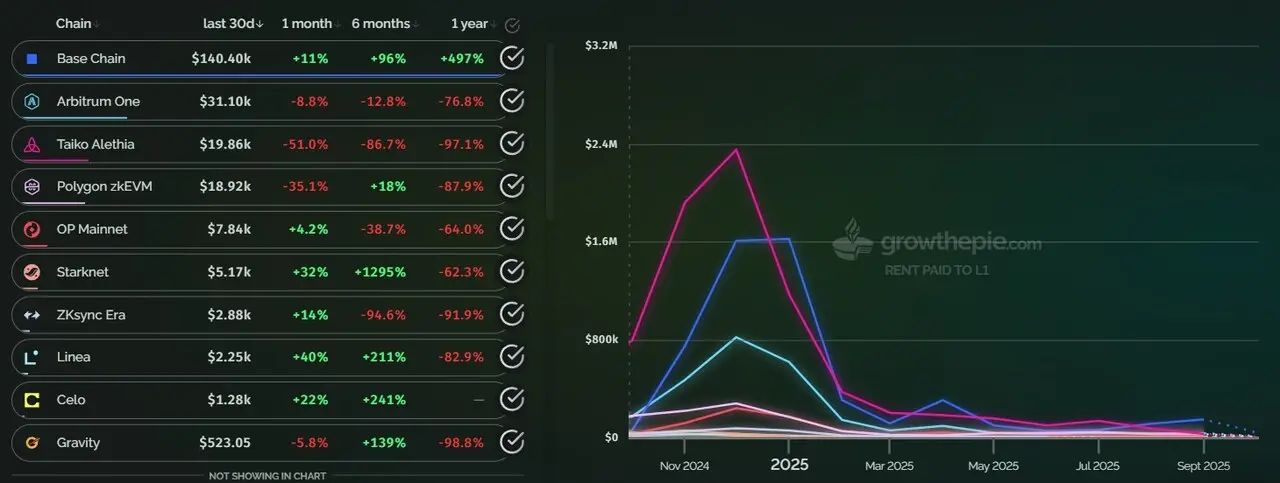
Rent paid by Ethereum Layer 2 to the mainnet, source: growthepie
Under the Scale L1 strategic framework, the Ethereum Foundation and community resources are expected to focus more on optimizing mainnet performance, and the development of Layer 2 may no longer be a priority in the short term. At the same time, improvements in mainnet performance and transaction cost optimization may attract some users back to the mainnet for transactions, thereby exerting certain pressure on the active addresses and transaction volumes of existing Layer 2 networks.
For treasury companies considering building their own Layer 2, it is crucial to fully recognize the structural challenges brought about by this strategic shift: against the backdrop of established scale effects in mainstream Layer 2, emerging chains face not only the cold start challenges of their ecosystems but also the potential user migration pressures resulting from enhanced mainnet performance. Therefore, treasury companies should carefully assess the differentiated positioning and long-term sustainability of their on-chain ecosystems, fully considering the uncertainties brought about by macro technological route changes in their strategic planning.
6. Conclusion
Building a Layer 2 network is one of the important paths for Ethereum treasury companies to achieve strategic upgrades under the trend of "integration of coins and stocks," but it is not the ultimate solution suitable for all enterprises. This decision should be based on a systematic assessment of the company's resource endowments, business foundations, and strategic goals: for enterprises with mature C-end user ecosystems and high transaction frequencies, building Layer 2 through standardized tools like RaaS can achieve business chain transformation and ecological expansion at controllable costs, potentially gaining higher mNAV premiums in the capital markets; however, in the context of increasingly fierce competition in the Layer 2 market and continuous improvements in Ethereum mainnet performance, emerging public chains face significant challenges in ecological cold starts and user acquisition. Therefore, treasury companies should carefully weigh the long-term strategic value of building their own chains against short-term operational pressures, concentrating resources on constructing on-chain application scenarios with differentiated competitive advantages to establish a competitive edge in the rapidly evolving crypto ecosystem.
References
【1】https://www.strategicethreserve.xyz/
【2】https://www.binance.com/en-GB/proof-of-reserves
【3】https://farside.co.uk/eth/
【4】https://eips.ethereum.org/EIPS/eip-4844
【5】https://eips.ethereum.org/EIPS/eip-7691
【6】https://eips.ethereum.org/EIPS/eip-7683
【7】https://www.bitpush.news/articles/2679317
【8】https://news.bitcoin.com/zh/weitalike-butelin-cheng-base-wei-yitaifang-l2-de-bangyang/
【9】https://defillama.com/chain/base
【10】https://tokenterminal.com/explorer/projects/soneium/metrics/active-addresses-daily
【11】https://docs.optimism.io/concepts/stack/getting-started
【12】https://arbitrum.io/orbit
【13】https://docs.zksync.io/
【14】https://www.agglayer.dev/
【15】https://s.foresightnews.pro/article/detail/78857
【16】https://app.artemisanalytics.com/chains
【17】https://tokenterminal.com/explorer/markets/blockchains-l2
【18】https://app.artemisanalytics.com/chains
【19】https://www.theblockbeats.info/tw/news/59629
 Risk warning Risk warning

Popular articles





