








YZi Labs' first biotechnology investment: Renewal Bio Investment
 YZi Labs invests in Renewal Bio, marking the company's first foray into the biotechnology sector. The cryptocurrency giant's shift from Web3 to regenerative medicine signals a major strategic transformation in 2025.
Yesterday's news caught my attention—YZi Labs has just invested in Renewal Bio, marking their first foray into the biotechnology sector. This is significant for those who have been closely following the cryptocurrency space.
We are observing how one of the largest investment institutions in the industry is deliberately shifting from pure cryptocurrency investments to a completely different field: regenerative medicine.
Let me analyze in detail what exactly is happening here, as this is far more than just another venture capital firm writing a check.
Name Game and Rebranding
First of all, YZi Labs (pronounced "easy") is the rebranded version of what we previously knew as Binance Labs.
This rebranding occurred in January 2025, and to be honest, the new name feels like a combination of Yi He and CZ's names, but that's just my personal feeling. More importantly, the significance of this rebranding represents a complete shift in investment strategy, moving from purely Web3 to Web3 + Artificial Intelligence + Biotechnology. This is a massive expansion of their business scope, which cannot be accomplished overnight.
How We Got Here
Looking back at history, its development has been gradual.
From 2018 to mid-2024, when it was still called Binance Labs, its business focus was very clear—blockchain infrastructure projects. For example, Polygon, LayerZero, Aptos, and The Sandbox. These projects are well-known in the cryptocurrency space and continue to thrive to this day. That was the golden age of pure Web3 investment.
Around mid-2024, things began to change. Binance Labs started to venture into the field of artificial intelligence, investing in projects like Sahara AI and MyShell in August 2024. At that time, they were still using the MVB incubator to filter projects before investing, but the direction was clear: they were testing the waters in areas outside of cryptocurrency. My guess is that the extreme volatility and cyclicality of the cryptocurrency market prompted them to diversify their investments. When your entire portfolio swings 50% in a month, you start looking for more stable long-term investment targets.
In January 2025, the company officially rebranded to YZi Labs, marking the formal launch of a plan that had been brewing for months. But the real signal came in March when they appointed He Jian as a general partner specifically responsible for biotechnology investments. He Jian holds an MBA from Stanford University and has extensive experience in biotechnology and medical technology—covering cancer therapies, gene editing, metabolic therapies, and more. You wouldn't hire someone with such a background unless you were passionate about this field.
Why Updating Biology Matters
Now let's look at yesterday's news: YZi Labs invested in Renewal Bio. This is not just their first investment in the biotech field; it also indicates their recognition of transformative potential. Frankly, the technology that Renewal Bio is developing sounds like science fiction, but it is very real.
The simplest explanation is: they want to use your own cells to grow replacement organs and tissues. The process starts with extracting a small sample of your cells—like skin cells—and then reprogramming them into stem cells. These stem cells are then cultured in a special laboratory environment that simulates embryonic development. After a few weeks, these cells begin to form organ structures—hearts, livers, blood cells, etc., any organ or tissue you need.
What is the key advantage? Because all materials come from the patient's own cells, there is no risk of rejection. In contrast, traditional organ transplant patients need to take immunosuppressants for life and pray that their bodies do not reject the donated organs.
Currently, complete organ regeneration remains a long-term goal. Renewal Bio is now focusing on hematopoietic stem cells—those that can treat leukemia and immune system diseases. The principle is the same as organ regeneration, just at an earlier stage. They extract the patient's own cells, cultivate healthy stem cells, and potentially rebuild the entire blood and immune system without the need for bone marrow donation.
The science behind this technology is astonishing. It is called the Stembroid platform, based on groundbreaking research by Professor Jacob Hanna at the Weizmann Institute of Science. His team successfully cultivated synthetic mouse embryos in 2022, which were able to develop beating hearts and brain structures, with a similarity to natural embryos of up to 95%. In 2023, they achieved the same goal using human cells. We are talking about cultivating embryo-like structures in an artificial womb, outside the human body.

Big Picture
What surprises me is that this move aligns perfectly with the trends we currently see among major venture capital firms.
Take a16z for example—they have transitioned from the internet space to cryptocurrency and now to biotechnology. Sequoia Capital has also established an independent healthcare fund. The trend is clear: tech capital is flowing into the life sciences sector, and the native capital from the cryptocurrency space is following closely behind.
Zhao Changpeng himself has publicly discussed his interest in health and longevity. When you have accumulated billions in wealth in the cryptocurrency space and start considering legacy, investing in technologies that can truly extend human lifespan or cure previously incurable diseases is a completely different level of impact than launching another DeFi protocol.
The funds that Renewal Bio has received will be used for laboratory expansion, building GMP-compliant production facilities, and preparing for clinical trials. They are still in the preclinical stage, which means human trials may take several more years, but this is common for biotech companies. Such projects typically take 5 to 10 years to mature, and that is precisely the point of investing with cryptocurrency gains. These projects require patient capital.
What Does This Mean?
YZi Labs currently manages over $10 billion in assets, investing in more than 250 projects across 25 countries. As their investment scope expands to include Web3, artificial intelligence, and biotechnology, YZi Labs is no longer limited to being a cryptocurrency fund but is gradually evolving into a true multi-sector technology investor, albeit with a genetic background in cryptocurrency.
This strategic logic makes sense. The cryptocurrency market is cyclically volatile, while artificial intelligence, though hot, is becoming increasingly competitive. Biotechnology can create real long-term value and has a lower correlation with cryptocurrency cycles. Moreover, there are potential synergies between them—imagine decentralized science (DeSci) platforms funding biotech research or blockchain-based health data systems. These intersections do exist.
For outsiders like me, this is indeed exciting. If cryptocurrency wealth can be used to address real issues like organ shortages or cancer treatments, it would fundamentally change the landscape of the entire industry. We are no longer talking about pure speculation, but rather funds genuinely flowing into transformative technologies.
Will I benefit from Renewal Bio's technology in my lifetime? It's hard to say. Clinical trials are time-consuming, regulatory approvals are challenging, and whether this technology can be scaled is uncertain. But the fact is, substantial funds are being poured into this groundbreaking research. Breakthroughs often happen this way. Someone has to fund those crazy ideas that might succeed.
All I can say is: big companies are investing heavily in longevity technologies—yes, I support that.
Let's see how things develop.
 Risk warning Risk warning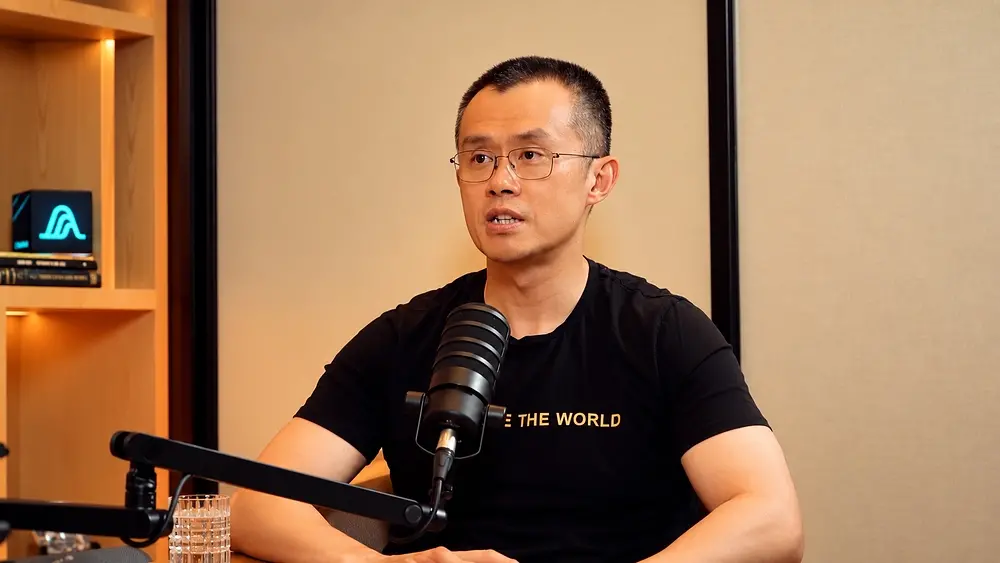




Popular articles





