OKX Research Institute | Why will RWA become a key narrative in 2025?
 Core Viewpoint

 RWA is not just a hot topic, but a revolution in infrastructure that reshapes the trillion-dollar capital market.
RWA (Real World Assets) is becoming the "new favorite" of global capital.
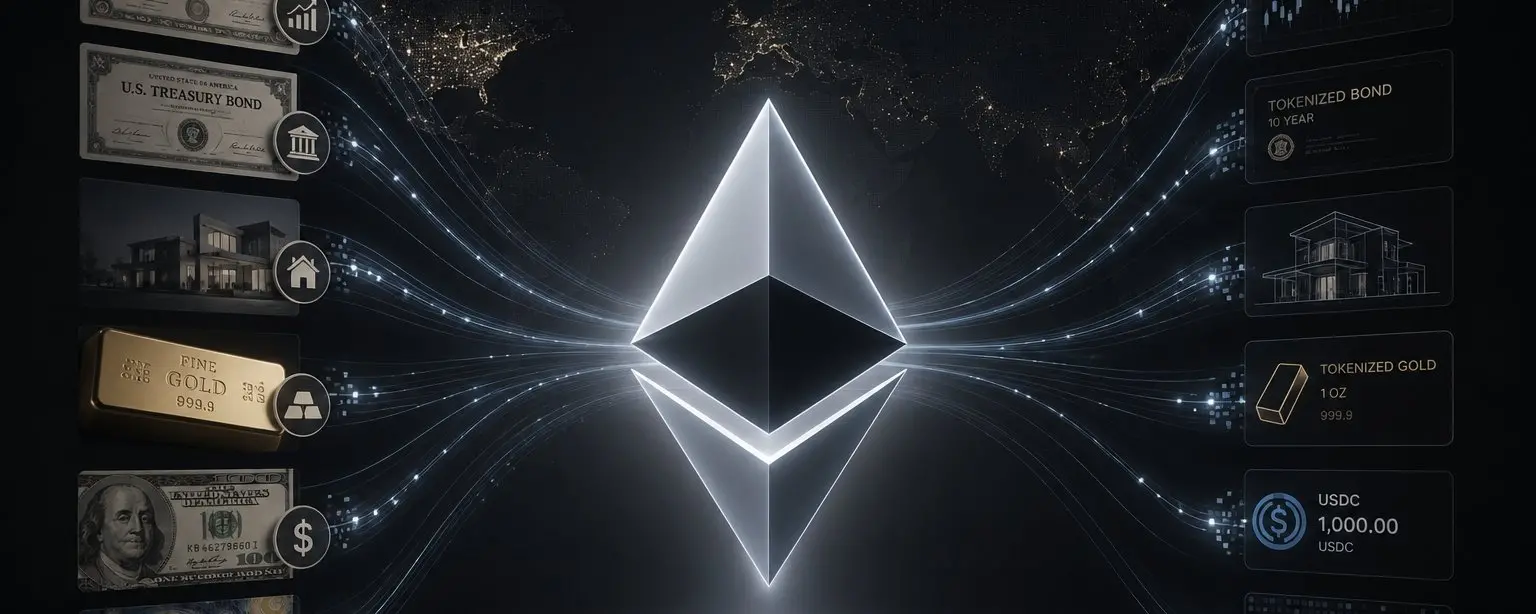
In simple terms, RWA refers to bringing valuable and owned items from the real world—such as houses, bonds, stocks, and other traditional financial assets, even art, private loans, and carbon credits, which are not easily traded—onto the blockchain, transforming them into tradable and programmable crypto assets. This allows for low-cost, round-the-clock trading of these assets on-chain, regardless of your location.

The OKX Research Institute believes that RWA is not a fleeting crypto trend but an important bridge for the integration of Web3 and the trillion-dollar traditional financial market. From the asset securitization of the 1970s to today's RWA, the core focus has been on enhancing asset liquidity, reducing transaction costs, and expanding the user base. This report aims to provide an in-depth analysis of the RWA sector and explore its future possibilities.
1. RWA Market Overview: Development History, Scale, and Institutional Drivers
Taking the rental housing scenario as an example, RWA is reconstructing traditional models: no need for intermediaries, no need for a deposit and three months' rent upfront; simply "rent for a month" via a mobile app, and payments are automatically deducted; when moving out, "one-click settlement" allows for instant return of the deposit; temporary relocations can transfer the remaining rental period on-chain, with full transparency and immutability. Landlords can complete property rights confirmation on-chain through RWA, with rent automatically distributed by smart contracts, and even convert "future rental periods" or "rental income rights" into cash in advance. RWA transforms real estate into flexible, tradable crypto assets, enhancing efficiency.
RWA is the inevitable result of traditional financial assets becoming machine-readable on-chain; it is not about creating new assets but about building a new, efficient operational environment for old assets.
The development of RWA has roughly gone through three stages: from 2009 to 2018, the initial stage, with the birth of Bitcoin and Ethereum, which initiated early explorations of asset tokenization and STOs; from 2019 to 2022, the application exploration stage, where RWA was introduced into DeFi as collateral, and assets like real estate and art began pilot projects on-chain, but still faced liquidity and compliance challenges; since 2023, with investors seeking stable returns and institutions actively issuing tokenized products, the RWA market has entered a rapid development phase, continuously expanding in scale and moving towards a trillion-dollar new financial market.

From a macro perspective, RWA first enhances payment and collateral efficiency, then expands credit, ultimately supporting AI wallet transactions, which may reshape capital markets in the next five to ten years. The market size of RWA has shown exponential growth since 2019, with particularly significant growth expected in 2024-2025. As of November 3, 2025, the total on-chain RWA (excluding stablecoins) reached $35 billion, an increase of over 150% compared to the same period last year; the total market capitalization of stablecoins surpassed $295 billion, with over 199 million users holding them, reflecting that the narrative of tokenization is moving from concept to large-scale application.

According to DeFiLlama data, the total locked value (TVL) of global RWA reached $18.117 billion, continuing its growth trend. (Note: The total on-chain RWA value counts the total value of all related tokens issued on-chain; TVL specifically refers to the value of RWA stored in DeFi protocols as collateral or income-generating assets. A significant portion of RWA (such as BlackRock's BUIDL) is held directly by users in wallets and is not deposited in DeFi protocols, so TVL will be much lower than the total issuance.)

This growth stems from the synchronous resonance of institutional entry, regulatory clarity, and technological maturity: the unclear global interest rate environment has made tokenized U.S. Treasury bonds (yielding about 4%) the low-risk asset of choice for DeFi users and institutions; regulatory frameworks like the EU MiCA provide a legal blueprint; asset management giants like BlackRock and Franklin Templeton have issued products that validate the compliance and feasibility of RWA. Meanwhile, DeFi protocols have introduced RWA as collateral and yield benchmarks to avoid volatility, with MakerDAO accepting RWA collateral to release stablecoin liquidity, creating a resonance between on-chain and off-chain funds.
2. RWA Sector Insights: User Profiles, Structure, and Six Major Assets
According to RWA.xyz data, as of November 3, 2025, the number of RWA asset holders has surpassed 520,000. Institutional investors dominate the market (about 50-60%), participating through platforms like BlackRock BUIDL and JPMorgan TCN; qualified/high-net-worth individuals account for 10-20%, mainly through platforms like Ondo and Paxos; retail investor participation remains relatively low but is gradually entering through new models like fractional ownership.
Currently, the RWA market appears prosperous, but institutional capital mainly chases a few safe assets, such as U.S. Treasury bonds and top private credit, creating a red ocean. The real growth lies in whether non-liquid long-tail assets (such as SME invoices, carbon credits, and consumer credit) can be scaled on-chain, but there is a fundamental conflict between the composability of DeFi and the risk isolation of traditional finance. Without accompanying disclosure and constraint tools, RWA will forever be just an on-chain mirror of traditional finance, rather than a more efficient capital market.
The on-chain RWA asset structure shows market preferences: private credit and U.S. Treasury bonds are core assets, with the former occupying a significant share due to high yields, while the latter is the "entry-level" product for institutional capital; commodities and institutional alternative funds are approximately $3 billion and $2 billion, respectively. Non-U.S. government bonds ($1 billion), public equity ($690 million), and private equity ($580 million) form long-tail assets with greater growth potential. In the long run, the space for asset tokenization far exceeds the current scale. BCG estimates that by 2030, global asset tokenization business opportunities could expand to $16.1 trillion, accounting for about 10% of global GDP.
It is worth noting that not all assets are suitable for tokenization. The real growth points often come from assets with stable cash flows but modest yields, such as short-term government bonds, HELOCs, and consumer credit, which are predictable and have ample cash flow, making them ideal candidates for on-chain packaging. In contrast, assets with extremely poor liquidity (such as certain real estate) may still struggle with liquidity issues even if tokenized.
A common but misleading understanding is that "tokenization can create liquidity." The reality is that tokenization cannot generate liquidity; it can only expose and amplify the inherent liquidity characteristics of assets. For highly liquid assets (like U.S. Treasury bonds and blue-chip stocks), tokenization can optimize and expand, making liquidity available around the clock, globally, and programmably, which is merely an enhancement. For low-liquidity assets (like individual real estate or specific private equity), tokenization only changes the form of ownership registration and does not solve the fundamental issues: information asymmetry, valuation difficulties, complex legal transfers, and insufficient market depth. On-chain property NFTs will still have zero liquidity if there are no buyers.
The core logic is that liquidity comes from a strong network of market makers, a clear price discovery mechanism, and market confidence, rather than the token standard itself. Blockchain addresses settlement and custody efficiency, not asset attractiveness. The takeaway for the market is that successful RWA projects (like tokenized U.S. Treasury bonds) do not create new assets but provide better channels for cash cow assets that have high demand and low trading efficiency. Furthermore, the current slow growth in the RWA sector (like real estate) is not a technical issue but stems from the non-standard and low-frequency trading characteristics of the assets themselves. The main value of tokenization lies in transparency and process automation, with liquidity improvement being a secondary benefit.
There are significant differences in the scale of RWA across different public chains. Aside from private, permissioned blockchains like Canton developed by Digital Asset, RWA assets are still primarily concentrated on the Ethereum network. Additionally, networks like Polygon, Solana, and Arbitrum also have varying scales of deployment.

When analyzing from the perspective of yield-generating assets or investment potential, the core focus remains on categories like private credit, U.S. Treasury bonds, and commodities. Although they are smaller in scale, they are the true "yield-driven" RWAs. Therefore, understanding the RWA market requires distinguishing between total market capitalization dominance and yield asset dominance.
(1) Private Credit: High-Yield Core Asset of RWA
Private credit in traditional finance has a scale of $1.6 trillion, making it the largest asset class among non-stablecoin RWAs. It packages non-publicly traded debt instruments like corporate loans, invoice financing, and real estate mortgages into tradable tokens through blockchain smart contracts.
The growth of private credit stems from high yields and relative stability, providing DeFi users with annualized returns of 5%-15%, with volatility independent of the crypto market. Tokenization fragments non-liquid assets, attracting global crypto capital and enhancing liquidity, while also empowering traditional lenders. Moreover, it does not redefine credit but offers a more efficient receipt mechanism. Once these assets are on-chain, they can be inserted into lending markets, used as collateral, or packaged into asset-backed securities like other crypto assets.

As of November 7, 2025, the active loan scale of private credit in the RWA sector is approximately $18.66 billion, with an average annualized interest rate of 9.79% and a total of 2,710 loans. The Figure platform occupies about 92% of the market share, with a total loan amount of $17.2 billion; Centrifuge has grown its TVL from $350 million to over $1.3 billion through a multi-chain architecture and interoperability with DeFi protocols, with historical annualized returns of 8%-15%.
The on-chain prosperity of private credit mirrors the traditional credit cycle: starting with high-quality credit and then expanding to lower-quality collateral. The collapse of certain yield-generating stablecoins may signal the entry into the "junk bond" phase—these products essentially lend user funds to opaque on-chain/off-chain hedge funds, carrying significant counterparty risk behind high yields. The Stream Finance incident shows that the real threat in the modular lending market is liquidity freeze: even if the protocol's solvency is normal, a run triggered by the collapse of poor-quality assets can drain the entire shared liquidity layer, leading to temporary paralysis for users, which is not only a technical risk but also a collapse of reputation and trust.

Figure follows a highly compliant route in the U.S. It addresses the pain points of traditional lending, such as numerous intermediaries, slow approvals, and poor asset liquidity. The platform uses its self-developed Provenance blockchain to tokenize the entire process of home equity lines of credit (HELOC), allowing for rapid settlement and custody on-chain. In other words, from application to disbursement, the borrower experience is extremely fast—pre-approval in 5 minutes and funds available in 5 days. This high-efficiency model not only meets borrower needs but also makes institutional investors more willing to participate. With over $16 billion in home equity loans and more than 50% market share, Figure is nearly a monopoly in the HELOC market and successfully went public on Nasdaq in September 2025.
Centrifuge takes a completely different approach, focusing on DeFi infrastructure and multi-chain interoperability. It solves the problem of bringing traditional non-liquid assets (like corporate invoices and accounts receivable) on-chain. Its core product, Tinlake, can split assets into different risk levels (Senior/Junior) tokens while providing DeFi users with annualized returns of about 8%-15%. Centrifuge's greatest advantage lies in its deep integration with the DeFi ecosystem—platforms like Aave and MakerDAO can directly use its assets as collateral. Through this approach, the platform's TVL has surpassed $1 billion, providing an efficient, on-chain financing channel for SMEs and asset owners.
(2) U.S. Treasury Bonds: The "Entry-Level" RWA for Institutional Capital
As of the end of October 2025, the total scale of U.S. Treasury bonds has exceeded $38 trillion. The tokenization of Treasury bonds actually originated during the DeFi bear market from 2020 to 2022, when market yields were generally low, prompting users to seek more stable and reasonably rewarding assets. U.S. Treasury bonds perfectly fit this demand: government-backed, nearly zero risk, with annual yields of 4%-5%, significantly higher than bank deposits (1%-2%) and some DeFi lending products. However, the issues are also apparent—insufficient liquidity (buying and selling must go through brokers or securities accounts), high thresholds (KYC required), and geographic limitations (non-U.S. users find it difficult to invest directly). By 2023, the Federal Reserve's interest rate hikes pushed Treasury bond yields above 5%, coupled with the explosion of the stablecoin market, rapidly increasing the demand for Treasury bond tokenization.
Early projects like Ondo Finance's OUSG (2023) and Franklin Templeton's FOBXX are representative. By 2024, BlackRock officially joined, driving the market scale from $85 million in 2020 to $4-5 billion in Q1 2025, with the overall market surpassing $8 billion. In terms of yield, BlackRock's BUIDL offers an annualized return of 4%-5%, while Ondo's USDY even exceeds 5%, and can participate in "sustainable yield farming" in DeFi scenarios, further amplifying returns.
Technically, Treasury bond tokenization relies on ERC-20/ERC-721 to achieve on-chain ownership transfer; BUIDL and USDY essentially package the programmability of extremely conservative debt instruments. They do not redefine Treasury bonds but provide an on-chain interface. Once these assets are on-chain, they can be used as collateral in DeFi, participate in yield farming, or even circulate across chains. This "Wrap as a Service" model is key for RWA to move from pilot projects to scaling. In terms of regulation, approvals from frameworks like the EU MiCA and the U.S. SEC accelerate implementation.
In terms of stability, U.S. Treasury bonds have nearly zero default risk (AAA rating), are resistant to inflation and market volatility; on-chain tokenization can enhance transparency and security through smart contracts and audits. Even better, their liquidity and accessibility have significantly improved—24-hour trading, minimum participation of $1, and global user access; in DeFi, they can also serve as collateral to borrow USDC. As institutions continue to join, with improved KYC support and diversified products (both short-term and long-term Treasury bonds), the compliance and universality of tokenized Treasury bonds are becoming stronger.

As of November 7, 2025, the total locked value of the tokenized U.S. Treasury bond market is approximately $8.7 billion, with over 58,000 holders, and the average annualized yield (APY) over the past seven days is 3.77%, slightly down from earlier, reflecting changes in the interest rate environment. In terms of on-chain distribution, Ethereum accounts for over $4.3 billion, while a clear multi-chain trend is evident, as seen with VanEck's VBILL fund expanding into multiple ecosystems.

The tokenized U.S. Treasury bond market is currently primarily dominated by institutions like BlackRock BUIDL, Circle USYC, and Ondo Finance. In 2025, as interest rates return to normal levels and stablecoin regulations become clearer, this sector is heating up rapidly. The core goal is straightforward: to bring U.S. Treasury bonds onto the blockchain, allowing users to obtain stable, readily available returns. Additionally, these products strictly differentiate between U.S. qualified investors and global non-U.S. investors, with thresholds ranging from retail (like USDY/USYC) to high-net-worth (like OUSG/BUIDL), allowing users to reasonably diversify investments based on geographic location, risk tolerance, returns, and fees.
BlackRock BUIDL is the leader in institutional-level U.S. Treasury bond tokenization. It addresses the issues of high investment thresholds and poor liquidity in traditional investments. Leveraging BlackRock's brand endorsement and Securitize's compliance pathway, BUIDL has a market capitalization of about $2.8 billion, accounting for about one-third of the market. The threshold is high (at least $5 million), aimed only at U.S. qualified institutions. Returns are based on the SOFR rate (simply put, the average overnight borrowing rate secured by U.S. Treasury bonds) minus management fees, yielding about 3.85% annually, while on-chain transparent audits make it the highest compliance benchmark for the integration of traditional finance and Web3.
Circle USYC primarily serves non-U.S. users and qualified institutions, addressing their difficulties in purchasing U.S. Treasury bonds, currently with a scale of about $990 million. It is deeply integrated with USDC, supported by Bermuda regulation, with a 7-day annualized yield of about 3.53% APY, with returns automatically updated daily through net asset value, eliminating the need for manual claims. The fund charges no management fees, only a 10% performance fee, which is relatively high. USYC supports T+0 real-time redemption and multi-chain circulation, with a moderate threshold ($100,000 and KYC/AML verification), and accelerates global expansion through partnerships with traditional financial institutions like DBS Bank.
Ondo Finance takes a more democratized approach, covering different user groups through its OUSG and USDY products, addressing the high KYC thresholds and liquidity issues in U.S. Treasury bond investments. OUSG (about $783 million) targets U.S. qualified institutions, investing in short-term Treasury bond ETFs, requiring strict verification (net worth ≥ $5 million, minimum investment of $100,000 USDC); USDY (about $690 million, with over 16,000 holders) targets global non-U.S. investors, requiring no strict verification, allowing users to earn yields simply by depositing USDC, greatly simplifying retail participation. Its advantages include low management fees (0.15%), multi-chain compatibility (Ethereum, Solana), and the ability to use Treasury bond yields (about 3.7% APY) as "liquid money" in DeFi. Strategically, Ondo is building a full-stack RWA infrastructure through acquisitions like Strangelove, preparing for institutional-level RWA solutions.
The success of tokenized Treasury bonds lies not in disrupting the bonds themselves but in serving as a compliant, low-risk "Trojan horse" that brings institutional capital and trust onto the chain. BUIDL and USDY essentially package conservative debt instruments programmably, making ancient financial products portable, composable, and always online. This is the true PMF (product-market fit) of the first phase of RWA: serving machines rather than humans, providing a risk-free yield curve for on-chain finance, and paving the way for more complex RWA financial engineering. In the next phase, whoever can build a killer application for on-chain money market funds based on this will capture immense value.
(3) Commodities: Gold Tokenization Leads Growth
In the RWA sector, commodities refer to the tokenization of traditional goods such as oil, gold, silver, and agricultural products through blockchain, giving them digital ownership and enabling on-chain trading.

As of November 10, the current commodity tokens in the RWA sector show significant growth, with total scale increasing from less than $10 in the early stages to about $3.5 billion, monthly trading volume reaching $8.22 billion, with 31,326 active addresses and 164,000 holders. Notably, gold tokens have performed exceptionally well, and tokenized assets for commodities like oil and soybeans have recently shown an accelerating upward trend, with overall market activity and scale rapidly expanding.
As of November 10, 2025, the spot price of gold has risen to about $4,075 per ounce, with a cumulative increase of 55.3% this year, reaching a historical high. The price increase is mainly driven by geopolitical tensions, inflation expectations, and central banks' continued gold purchases—over 600 tons of net gold purchases by global central banks in the first three quarters of 2025. In terms of market scale, the total global gold stock is approximately 216,000-282,000 tons (including minerals, central bank reserves, and jewelry), with a total value of about $27 trillion at current prices. The annual global demand is about 4,500-5,000 tons, with demand in the second quarter of 2025 reaching 1,249 tons (valued at about $13.2 billion, a year-on-year increase of 45%), and total demand for the year is expected to exceed 5,000 tons.

The asset structure in the RWA commodities sector is relatively concentrated, with gold tokens becoming the preferred choice for users to invest in RWA commodities due to their traditional safe-haven attributes and mature on-chain issuance mechanisms. This growth reflects both the increasing market demand for on-chain commodity assets and the breakthrough of gold as a "digitally native" physical asset in the RWA sector. Gold tokens like Tether Gold and Paxos Gold are core assets in the RWA commodities sector, with their market capitalization far exceeding that of other commodities (such as oil and agricultural product tokens). Particularly after July 2025, the market capitalization of gold RWA tokens has seen explosive growth, becoming the main driving force behind the expansion of the entire sector.
The tokenized gold market is currently dominated by products like Tether Gold (XAUt) and Paxos Gold (PAXG), both pegged 1:1 to physical gold but with significant differences in strategic focus and user service. The former is suitable for users seeking trading convenience and yield opportunities, while the latter is more suited for safety-conscious holders preferring long-term allocations.
Tether Gold (XAUt) is the largest tokenized gold, issued by Tether, with each token corresponding to one ounce of physical gold stored in professional vaults. As of November 2025, its market capitalization is approximately $2.1 billion, accounting for 56.8% of the market, making it the absolute leader. XAUt can be traded on exchanges like OKX, supports small holdings, and allows users to pay a fee of 0.1%-0.5% to exchange for physical gold; some DeFi protocols also support collateralization or yield earning. Technically, it operates on multi-chain networks like Ethereum, Solana, and Algorand, with Tether reporting gold reserves exceeding 7.7 tons. However, due to centralized custody and past transparency controversies surrounding Tether, users should remain cautious about custody and audit risks.
Paxos Gold (PAXG) emphasizes compliance, targeting institutional and conservative users, issued by Paxos Trust Company, regulated by the New York Department of Financial Services, with each token corresponding to one ounce of physical gold in the London vault. Its advantages lie in compliance and traceability, allowing users to query the serial number and storage information of the gold bars corresponding to their tokens on-chain. As of November 2025, its market capitalization is approximately $1.12 billion, accounting for 30.3% of the market, with over 41,000 holding addresses. PAXG supports purchases starting from 0.01 ounces, can be traded on OKX or Paxos' official website, and can be redeemed for physical gold bars, unallocated gold, or fiat currency. Settlements can be completed as quickly as the same day, with total costs ranging from 19 to 40 basis points, no custody fees, audited by KPMG, and monthly reserve reports published, leading the industry in transparency.
(4) Listed Stocks: Tech Stocks and ETF Tokenization Become Mainstream
In the RWA sector, stocks refer to the tokenization of traditional publicly listed company stocks into crypto assets through blockchain technology. Each token represents a fractional ownership of the company's stock, allowing holders to enjoy rights such as dividends and voting rights. Through tokenization, stocks can achieve round-the-clock trading, high liquidity, and cross-border settlement on the blockchain while maintaining compliance and transparency.

As of November 10, 2025, the total locked value of listed stocks is approximately $661 million, with a monthly trading volume of $973 million (month-on-month +56.35%), active addresses at 75,738 (month-on-month +133.38%), and the total number of holders surpassing 109,000 (month-on-month +34.43%). Overall, user participation and trading enthusiasm are continuously rebounding, indicating that the market is entering a new growth cycle.

Tokenized stocks are facing a "triple challenge" of structure, liquidity, and regulation. The mainstream model relies on SPV packaging, criticized for not allowing users to obtain complete shareholder rights, but supporters argue that this is a necessary step from 0 to 1. The most critical pain point is liquidity: market makers are reluctant to hold naked positions over the weekend, leading to large spreads and low depth; a black swan event, like a tweet from Elon Musk at dawn, can instantly collapse on-chain prices, with retail investors always being harvested; DeFi lending may liquidate at these prices, potentially triggering a chain reaction of liquidations. The real opportunity may not lie in the next Robinhood but in the "water sellers" providing infrastructure for it.
From an asset structure perspective, the core of tokenized stocks currently remains in tech stocks and ETF products, with the market highly concentrated in a few leading projects. For instance, Exodus Movement Inc. (EXOD) holds the top position with a total value of $194 million. On October 20, 2025, Exodus announced the expansion of its common stock tokens to Solana through the Superstate issuance platform (previously mainly operating on the Algorand chain), becoming a representative case of "native on-chain stocks," indicating that compliant equity tokenization is moving from concept to reality.
The popularity of tech giants continues on-chain as well. Tesla xStock (TSLAx), issued by Backed Finance on Solana, has a total value of approximately $29.44 million, with over 17,000 holders, indicating that tech stocks still carry heat in the crypto market. Additionally, the combined market capitalization of tokenized ETFs like SPDR S&P 500 ETF (SPYon) and iShares Core S&P 500 ETF (IVVon) exceeds $45 million, issued by Ondo Finance, further reinforcing the strategic position of ETF tokenization in providing broad market exposure.
From the issuance side, the growth of this sector is almost dominated by a few platforms. They generally adopt 1:1 backing with physical assets and achieve asset mapping and yield distribution through on-chain infrastructure. Ondo Finance ($ONDO) leads with about 47.8% market share ($316 million), focusing on ETF tokenization (SPYon, IVVon, QQQon, etc.), operating on its self-developed Ondo Chain and Nexus framework, making it the core driving force behind tokenized ETFs.
Securitize, although currently only issuing the EXOD asset, holds nearly 30% market share with a total value of $194 million. As a compliant platform regulated by the SEC, Securitize focuses on institutional-level equity tokenization, having processed over $10 billion in assets by 2025. Additionally, Backed Finance (BackedFi) holds about 18.6% market share ($123 million), primarily targeting tech stock tokenization (TSLAx, NVDAx, etc.), ensuring precise price synchronization through Chainlink oracles, and actively expanding into the Solana multi-chain ecosystem. WisdomTree, as a representative of traditional financial giants, has its WisdomTree 500 Digital Fund (SPXUX) accounting for about 3.4% market share, focusing on the issuance of digital ETF funds, leveraging traditional finance (TradFi) experience to accelerate compliance implementation.
Overall, the top four platforms collectively control over 90% of the market share. As mainstream exchanges like Robinhood and Kraken gradually open tokenized stock trading in mid-2025, along with the maturation of cross-chain settlement and regulatory recognition mechanisms, tokenized stocks are transitioning from niche experiments to mainstream asset classes. However, centralized custody and fragmented regulation remain potential risks that this sector needs to continuously monitor.
While tokenized public stocks bring convenience, they do not address the fundamental pain points, as the experience with traditional brokers is already good enough. The next wave of growth is more likely to stem from a core contradiction: providing efficiency premiums for traditional inefficient assets.
The main battleground for growth will shift from the transparent and efficient public market (listed stocks, Treasury bonds) to the private market (private credit, private equity). The real pain points in these markets lie in the difficulty of exit, ambiguous valuations, and slow settlements—for example, selling a share of a private equity fund may take months and rely on emails and manual matching. Tokenization can shorten this process from months to minutes through on-chain clearing and fragmented ownership, releasing liquidity for non-standard assets. The true PMF (product-market fit) lies in the tokenization of private credit and Pre-IPO equity (like SpaceX), which not only lowers investment thresholds but also addresses industry-wide challenges of capital lock-up and price discovery.
(5) Real Estate: Fragmented Ownership Lowers Investment Barriers
The RWA real estate sector refers to the tokenization of traditional real estate assets through blockchain, allowing ownership or income shares to be traded and managed on-chain. Market growth is primarily driven by fragmented ownership, enabling global users to invest in high-value properties with a minimum of $50 (like Lofty AI) and enjoy the high efficiency brought by rental income and instant settlement.
Although private credit, U.S. Treasury bonds, and others occupy the vast majority of the market share, real estate tokenization is still in a rapid growth phase with significant long-term potential. However, the structural challenges of real estate tokenization will not automatically disappear with "going on-chain": pricing lacks transparent benchmarks, property transfers are complex, and cash flow costs remain high. Even with property tokens or NFTs, property rights still rely on off-chain contracts and registration systems, which is also why RWA is primarily concentrated in standardized assets like Treasury bonds while real estate remains in the pilot stage.

Players in the real estate sector are highly focused on solving the two major pain points of compliance and liquidity, mainly divided into equity tokenization and trading settlement platforms, such as:
RealT is a pioneer in fractional property ownership models, managing over $500 million in assets as of November 2025. Its core model involves equity tokens, with each token corresponding to an LLC equity share of underlying U.S. residential properties, allowing token holders to enjoy rental dividends and potential property appreciation. The threshold is low, typically requiring only a few hundred dollars to purchase, with earnings automatically distributed to compatible wallets, facilitating direct participation of retail investors in U.S. real estate.
Propy focuses on the real estate transaction process, having processed over $1 billion in transactions to date. Its model involves NFT-Backed Deeds, mapping property deeds through NFTs to enable automated sales and property transfers. Users can complete tokenized property buying, payments, and compliance verification within the app, significantly enhancing transaction efficiency and addressing the complex legal and custody processes in traditional transactions.
Lofty is an emerging player with rapid growth, boasting a TVL growth rate of 200%. Its model involves AI-driven fractional rental properties, tokenizing rental property assets. Users face extremely low investment thresholds, starting from $50 to purchase tokens, with all investment management (such as rental income and exit mechanisms) processed in real-time through the app, making it easy for retail investors to participate in real estate.
(6) Stablecoins: Absolute Dominance
Incorporating stablecoins, the ranking of asset class market values reinterprets the RWA market, where stablecoins undoubtedly have a market capitalization more than ten times that of all other RWA categories combined, ranking first. This means that stablecoins serve as the liquidity foundation and base for the entire on-chain RWA ecosystem. The future growth potential and innovation stories of the RWA sector mainly lie in how to leverage this infrastructure tool to bring trillion-dollar non-monetary real-world assets (like bonds, credit, and stocks) onto the chain.
Stablecoins are cryptocurrencies pegged to fiat currencies, commodities, or other financial assets, aiming to maintain stable prices on-chain. According to CoinGecko data, as of November 11, the total scale of stablecoins is $311.99 billion. In terms of issuing networks, Ethereum stablecoins lead in market capitalization, followed by TRON, with Solana, Arbitrum, and others also holding certain shares, reflecting the distribution differences of stablecoins in multi-chain ecosystems.

The stablecoin market is highly concentrated, with USDT and USDC accounting for over 80% of the market capitalization, primarily backed by fiat currency, cash, and U.S. Treasury reserves, with a high degree of centralization, mainly used in traditional scenarios like cross-border payments, transaction settlements, and corporate payroll; meanwhile, smaller stablecoins like DAI, USDe, and sDAI adopt yield-based or over-collateralized models, partially decentralized, relying on on-chain monitoring and smart contracts to serve DeFi, on-chain lending, and asset tokenization, with higher risks and volatility. Overall, centralized fiat-backed stablecoins are low-risk and transparent, while innovative stablecoins emphasize on-chain financial functions and automated yields.
The centralization of stablecoins stems from the inherent demand for fiat support: issuance and management must rely on regulated financial institutions. While decentralization is technically feasible, it is challenging to design and costly, leading most transactions to occur on L2 layers. Users are willing to pay a premium for decentralization at the core settlement layer, but for lower costs and speed, they prefer to accept centralization at the upper layer.
Issuers have incentives to keep activities within their controlled networks (like Circle's Arc, Tether's Stable, and Plasma), while crypto and fintech players hope transactions occur within their controllable networks (like Base, Robinhood Chain). This competition will determine the future landscape of the stablecoin ecosystem.
The following table provides an overview of major global stablecoins (as of November 11, 2025).

As the most mature and strategically core liquidity infrastructure in RWA, first, leading centralized stablecoins (like USDT and USDC) introduce the stable value and low-risk returns of off-chain assets into the chain by allocating high-liquidity RWAs like U.S. Treasury bonds, reconstructing the trust foundation of 1:1 fiat anchoring; second, yield-based stablecoins (like USDe and USDM) utilize derivatives or tokenized Treasury bonds to convert off-chain asset yields into on-chain native yields, making stablecoins not only serve payment functions but also provide low-volatility investment returns; finally, stablecoins act as unified pricing and clearing tools, achieving cross-scenario interoperability in various RWA projects, enhancing asset liquidity and capital efficiency, and becoming the core value bridge of the on-chain RWA ecosystem.
It is noteworthy that stablecoins and tokenized Treasury bonds are forming a complementary relationship, with the former serving as on-chain cash for payments and the latter as on-chain savings for yields and collateral, jointly constructing a dual-layer currency structure for on-chain finance.
3. Why Will RWA Become a Key Narrative in 2025?
In 2025, the narrative of RWA will reach its peak, but it may ultimately not be dominated by crypto companies. Platforms like Robinhood will aggregate traffic through a unified window (stocks, crypto, future private credit) and earn distribution fees; meanwhile, traditional financial giants controlling trillion-dollar assets (like BlackRock and Fidelity) will hold the top of the value chain, capable of launching their own L2 or private chains to integrate assets, tokenized services, trading, and settlement into a closed loop.
The long-term story of RWA is not about crypto disrupting traditional finance but rather traditional finance going on-chain. Crypto companies may retreat to the role of infrastructure providers, with opportunities in serving long-tail assets that traditional giants cannot efficiently cover or establishing irreplaceable competitive advantages in key areas like cross-chain settlement, privacy computing, and dynamic risk pricing. Its core value lies in activating the liquidity of non-liquid assets and providing investment opportunities for the approximately 1.7 billion unbanked individuals globally, achieving true financial inclusion.
Despite the broad prospects, RWA still faces multiple challenges: fragmented regulations increase cross-border issuance costs and compliance pressures, the SEC may classify some RWAs as securities; legal complexities, oracle vulnerabilities, and centralized custody pose counterparty risks; market volatility and privacy compliance issues slow down adoption. During credit expansion cycles, underwriting standards may loosen, and collateral quality may quietly deteriorate, laying the groundwork for the next recession. When DeFi protocols introduce RWA as collateral, they must have a penetrating understanding of the credit risks of the underlying assets.
Therefore, strategically, a hybrid model that integrates CeFi and DeFi is needed to maintain development momentum. Users are best advised to choose diversified portfolios and operate through audited platforms; issuers should embed ERC-3643 compliance standards from the outset; regulatory bodies also need to establish a unified framework to avoid fragmentation. Overall, RWA is not a bubble but an important cornerstone of crypto finance, expected to support about 30% of global financial assets by 2030.
Disclaimer:
This article is for reference only. It represents the author's views and does not reflect the position of OKX. This article does not intend to provide (i) investment advice or recommendations; (ii) offers or solicitations to buy, sell, or hold digital assets; (iii) financial, accounting, legal, or tax advice. We do not guarantee the accuracy, completeness, or usefulness of such information. Holding digital assets (including stablecoins and NFTs) involves high risks and may fluctuate significantly. You should carefully consider whether trading or holding digital assets is suitable for you based on your financial situation. Please consult your legal/tax/investment professionals regarding your specific circumstances. You are solely responsible for understanding and complying with applicable local laws and regulations.
 Risk warning Risk warning