Morning News | Nvidia plans to acquire Groq assets for $20 billion; Tether freezes $3.3 billion in assets for two years; Infinex reduces the token sale amount and FDV for Sonar

 Overview of Important Market Events on December 25
整理:ChainCatcher
Important News:
- James Wynn predicts again: Bitcoin should rebound at least 10%
- CZ: Early investors buy during market fear, not at historical highs
- NVIDIA plans to acquire Groq assets for $20 billion, claims not to acquire Groq company as a whole
- Vitalik: Predicting market risks is no higher than stock market risks, critics' fears are exaggerated
- Data: Year-end AI token sell-off accelerates, with the sector losing nearly $10 billion in December
- AMLBot: Tether froze $3.3 billion in assets over two years, 30 times the scale of Circle
- Infinex lowers token sale amount and FDV on Sonar: FDV drops to $9.999 million, financing amount drops to $5 million
What important events happened in the past 24 hours?
Wintermute CEO: Crypto developers and KOLs under 30 announcing exit from the industry are all frauds
ChainCatcher reports that Wintermute CEO Evgeny Gaevoy posted on social media stating that some builders and KOLs under 30 who claim to "exit the crypto industry" have not truly participated deeply in industry development, and their statements are misleading. Gaevoy pointed out that this group is often not long-term investors but chose to leave at an early stage, thus not constituting a real "exit."
He believes that describing brief participation as "exiting the industry" is essentially about gaining industry experience and reputation that do not belong to them, which is unfair to long-term practitioners. Gaevoy emphasized that the development of the crypto industry relies on continuous investment and construction, and short-term attempts to exit should not be packaged as a symbolic personal choice.
Bank of Korea: Will assess future data to decide on interest rate cuts
ChainCatcher reports that the Bank of Korea stated it will decide whether and when to further cut interest rates next year based on a comprehensive assessment of future data. The bank indicated that due to the high caution in the domestic and foreign exchange markets, it will strengthen market monitoring activities and actively implement stabilization measures.
Last month, the Bank of Korea maintained interest rates for the fourth consecutive time at its policy meeting and hinted that the current rate-cutting cycle may be nearing its end, as a weakening exchange rate has reduced the space for further easing. The bank's next meeting will be held in January next year.
Data: Year-end AI token sell-off accelerates, with the sector losing nearly $10 billion in December
ChainCatcher reports that according to CryptoNews, data shows that the value of crypto tokens focused on artificial intelligence has decreased by about 75% year-on-year in 2025, with the market capitalization evaporating by approximately $53 billion.
Specifically, the sell-off in the AI token market accelerated towards the end of the year, with a market cap evaporation of about $4 billion in November and a staggering $10 billion drop in December. In terms of market capitalization, eight out of the top ten tokens have lost more than 70% in the past year.
Among them, the Artificial Superintelligence Alliance dropped 84%; Render and The Graph both fell 82%; the Virtuals Protocol, which surged 3500% last year, also fell 73%; meanwhile, Injective, Filecoin, Internet Computer, and NEAR Protocol all experienced significant declines.
Morgan Stanley: America's "jobless productivity boom" will stimulate further rate cuts by the Fed
ChainCatcher reports that Morgan Stanley strategists pointed out that the U.S. economy may experience a "jobless productivity boom," which will suppress inflation and open the door for more rate cuts by the Federal Reserve.
Data from the U.S. Department of Labor shows that the hourly output of all non-farm workers increased by 3.3% year-on-year in the second quarter, a significant improvement from the 1.8% year-on-year decline in the previous quarter. Investors' expectations for the Fed's rate-cutting pace next year are more aggressive than official forecasts. According to the CME FedWatch tool, Fed officials expect only one rate cut in 2026, but investors believe there is a 72% chance of a rate decrease by the end of the year.
Pantera Capital researcher releases 12 predictions for the cryptocurrency market in 2026
ChainCatcher reports that Pantera Capital researcher Jay Yu released 12 predictions for the cryptocurrency market in 2026 on the X platform:
- Capital-efficient consumer credit: Combining on-chain and off-chain credit modeling, modular design, and AI user behavior learning will become the new frontier in crypto lending;
- Predictive market differentiation: It will differentiate into financial directions combined with DeFi and cultural directions capturing pop culture and long-tail enthusiasts;
- Rise of Agentic Commerce: The x402 protocol will expand to conventional payments, and Solana may surpass Base in tiered trading volume;
- AI as the crypto interface layer: AI-assisted analysis, project research, and wallet tracking will permeate most consumer-grade crypto applications;
- Rise of tokenized gold: It will become a leading asset in the RWA field as a safe-haven asset;
- Bitcoin quantum threat panic: Technological breakthroughs may trigger discussions about quantum computing threats, prompting holding institutions to formulate contingency plans;
- Unified privacy development experience: Privacy-as-a-service bundles will emerge, simplifying the integration of privacy technologies into enterprise workflows;
- DAT consolidation: DAT will consolidate, with only 2 to 3 remaining in each major field through mergers or liquidations;
- Breaking the boundaries between tokens and equity: Convertible equity tokens may emerge, and the regulatory framework for token legal ownership will tend to solidify;
- Hyperliquid maintains Perp DEX dominance: The USDC share on HYPE may be replaced by USDe and USDH;
- Professional-grade AMMs move to multi-chain: They will account for more than half of Solana's trading volume and begin pricing assets like RWA;
- Stablecoin international settlement: Financial technology companies like Stripe, Ramp, Brex, and Klarna will use stablecoins for international settlements.
ChainCatcher reports that on-chain analysts state that on-chain data shows that Yi Li Hua's institution Trend Research began a new round of Ethereum accumulation in early November, currently holding about 645,000 ETH (approximately $2.1 billion), making it the third-largest Ethereum holding entity after Bitmine and SharpLink.
Its average acquisition price is $3299.43, currently facing an unrealized loss of about $242 million. If the "buy another $1 billion" plan is implemented, Trend Research may leap to become the second-largest ETH holding entity. The main accumulation occurred in November, accounting for over 88%, utilizing at least 7 major addresses. If Yi Li Hua's promise of "buying another $1 billion" is put into action, the holdings may approach 1 million, surpassing SharpLink to become the second-largest ETH holding entity.
AMLBot: Tether froze $3.3 billion in assets over two years, 30 times the scale of Circle
ChainCatcher reports that AMLBot's latest report shows that between 2023 and 2025, Tether froze a total of 7,268 addresses through its freezing mechanism, involving $3.29 billion USDT, of which over 53% of the frozen USDT is located on the Tron network.
In contrast, Circle only froze 372 addresses and $109 million USDC, with a scale difference of 30 times. The strategies of the two are entirely different. Tether adopts a proactive enforcement model, cooperating with 275 law enforcement agencies worldwide, allowing it to actively freeze suspicious addresses and support a mechanism for destroying and reissuing to return funds to victims. In July 2024 alone, over $130 million was frozen, including $29.6 million related to Cambodia's Huione Group.
Circle, on the other hand, only responds to court orders and regulatory requirements, with freezing actions being rare but concentrated, and does not support a destruction and reissue mechanism.
ChainCatcher reports that according to DLnews, Ethereum co-founder Vitalik Buterin responded to concerns about predictive markets threatening the integrity of sports events and elections.
He pointed out that the improper incentives created by predictive markets have long existed in the stock market, where politicians can profit by shorting stocks and then press the "create disaster" button. He believes predictive markets should be compared to social media, which is more likely to spread panic and misinformation, while predictive markets can provide useful information.
Vitalik stated that he has often felt panic due to news headlines but calmed down after checking Polymarket prices, "experienced people know the real situation, and the probability of abnormal events is only 4%." He cited Elon Musk's 2024 claim that a civil war in the UK is inevitable, at which time Polymarket users gave a probability of only 3%.
ChainCatcher reports that the well-known U.S. law firm Burwick Law announced that it is preparing to file a lawsuit against Believe and its founder Ben Pasternak, with a registration website open to the affected community.
In October this year, Believe's ecosystem token LAUNCHCOIN announced it had completed the upgrade to the BELIEVE token. As of the time of writing, the BELIEVE token has dropped from a peak of $120 million to $10.15 million, with a daily trading volume of only $195,400.
Burwick Law has previously initiated multiple lawsuits in the crypto field, including against projects like LIBRA, M3M3, and pump.fun.
ChainCatcher reports that cross-chain aggregation DeFi platform Infinex updated its token sale details on Echo's Sonar. This sale will provide 5% of the token supply, with the raised amount dropping from $15 million to $5 million, and FDV dropping from $300 million to $9.999 million.
User registration will open on December 27, and sales will begin on January 3. Additionally, the official will sell an extra 2% of tokens to Uniswap CCA.
Offshore RMB against the US dollar breaks through 7.0 again, onshore RMB against the US dollar breaks through 7.01
ChainCatcher reports that according to Sina quotes, the offshore RMB against the US dollar has broken through the 7.0 mark again. According to the China Monetary Network, the onshore RMB against the US dollar has broken through the 7.01 mark, reaching a new high since September 27, 2024. (Golden Ten Data)
NVIDIA plans to acquire Groq assets for $20 billion, claims not to acquire Groq company as a whole
ChainCatcher reports that according to CNBC, NVIDIA has agreed to acquire all assets of AI chip startup Groq for approximately $20 billion in cash (excluding its GroqCloud business), making it its largest acquisition to date.
Groq was founded by core developers of Google's TPU and focuses on low-latency AI inference chips. Although Groq claims that the agreement with NVIDIA is a "non-exclusive technology licensing agreement," its founder and CEO Jonathan Ross and the executive team will join NVIDIA, with Groq's CFO Simon Edwards becoming the new CEO and continuing to operate independently. NVIDIA emphasized that it has not fully acquired Groq but is integrating its low-latency processor architecture into its AI platform.
ChainCatcher reports that according to CoinTelegraph, Dragonfly general partner Rob Hadick stated that both Solana and Ethereum will thrive in tokenization competition, and no blockchain will push another out of this field.
If you believe that most assets will be tokenized and a large amount of economic activity will occur on-chain, you cannot have only one blockchain. Currently, most stablecoins are on Ethereum, and most on-chain economic activities also exist on Ethereum, but Solana handles most of the trading volume.
According to data from RWA.XYZ, Ethereum's network asset value is $183.7 billion, while Solana's network asset value is $15.9 billion. Hadick stated that in the future, different blockchains will have different application scenarios, and new blockchains may emerge to capture market share.
James Wynn predicts again: Bitcoin should rebound at least 10%
ChainCatcher reports that the well-known "bankruptcy whale" James Wynn made another "extreme prediction" this morning, stating that "Bitcoin could double in 60 days, reaching about $175,000, as funds may shift from stocks, real estate, and precious metals (all at historical highs) to BTC, after BTC fell 35% from $120,000."
However, he later moderated his prediction, stating that Bitcoin "will at least retest the 50-week moving average, which means an increase of over 10%."
Previously, on the 23rd, the well-known "bankruptcy whale" James Wynn again made a 40x long bet on BTC.
CZ: Early investors buy during market fear, not at historical highs
ChainCatcher reports that CZ posted on the X platform stating that when Bitcoin reaches its historical peak, investors often have the idea of wanting to buy in early. Those who bought early did not buy at the historical peak but during times of fear, uncertainty, and doubt in the market.
Meme Hot List
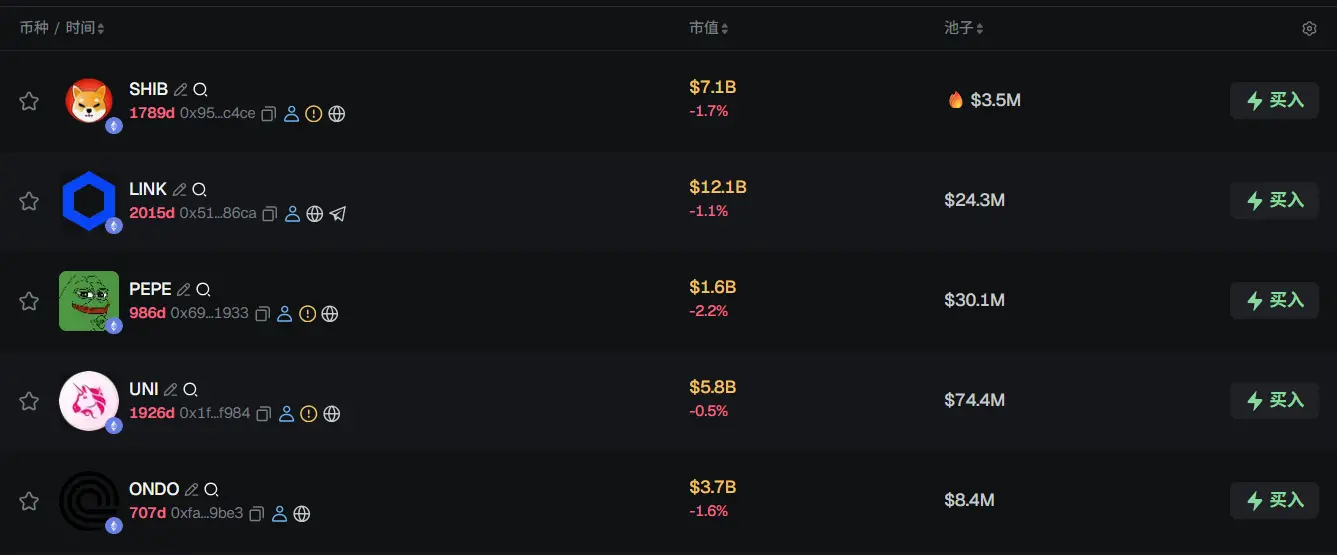
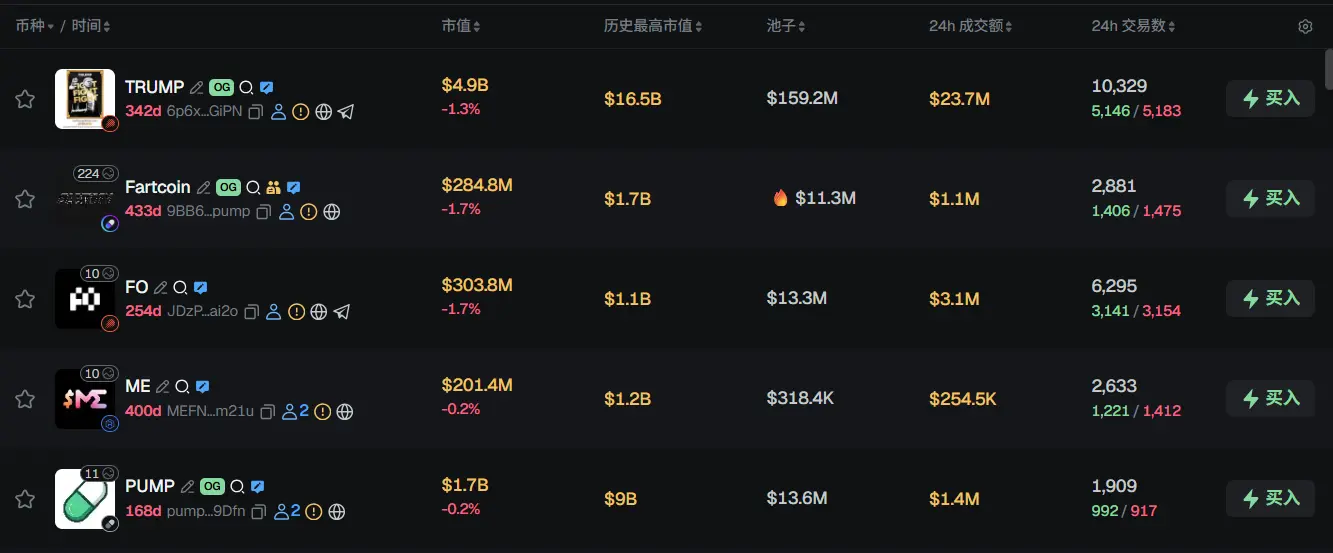
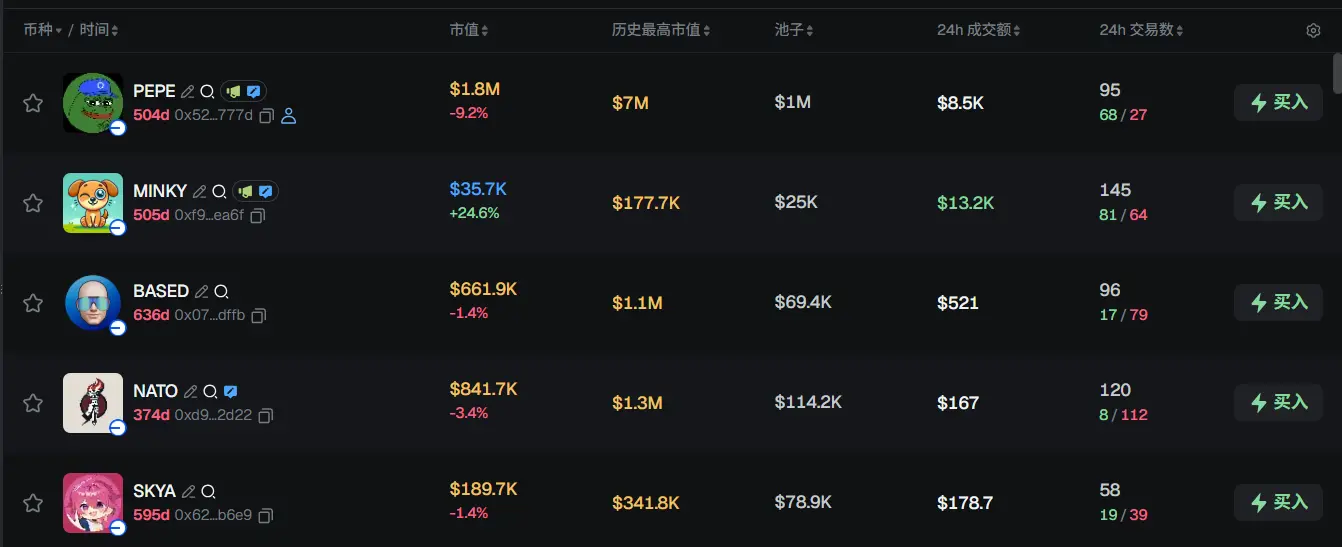
According to the meme token tracking and analysis platform GMGN, as of December 26, 09:00,
The top five hot tokens in ETH over the past 24 hours are: SHIB, LINK, PEPE, UNI, ONDO
The top five hot tokens in Solana over the past 24 hours are: TRUMP, Fartcoin, FO, ME, PUMP
The top five hot tokens in Base over the past 24 hours are: PEPE, MINKY, BASED, NATO, SKYA
What are some noteworthy articles to read in the past 24 hours?
Galaxy's 26 predictions: Bitcoin will still reach ATH next year, and $250,000 the year after
In the first ten months of this year, the cryptocurrency market experienced a real bull market wave. Regulatory reforms made progress, ETFs continued to attract capital inflows, and on-chain activity also increased. Bitcoin (BTC) reached an all-time high of $126,080 on October 6.
However, the market's euphoric sentiment did not bring the expected breakthroughs, but was instead defined by rotation, repricing, and readjustment. Disappointments in the macro economy, shifts in investment narratives, leveraged liquidations, and massive whale sell-offs collectively disrupted the market. Prices fell, confidence cooled, and by December, BTC had dropped back to just over $90,000, although this process was far from smooth.
The trillion-dollar stablecoin battle, Binance decides to enter the fray again
In 2024, the total on-chain transfer amount of stablecoins reached $27.6 trillion, surpassing the combined total of Visa and Mastercard for the first time.
This figure was $300 billion five years ago and nearly zero ten years ago.
On December 18, a project called United Stables launched a new type of stablecoin, $U, in Dubai. Its reserves are not in cash or government bonds but a combination of USDC, USDT, and USD1 stablecoins. Using stablecoins to collateralize stablecoins is referred to in the industry as "nested dolls."
Binance Wallet integrated it immediately, with official backing from BNB Chain, and support from PancakeSwap and Four.Meme.
In 2025, Ethereum wins, but ETH doesn't keep up
If "making money" is the measure, 2025 will undoubtedly be a bad year. But stepping out of the perspective of token gains, holding ETH in 2025 becomes more convenient, mainly due to the rise of market tools like ETFs and crypto corporate treasuries (DAT). Additionally, the significant upgrades of Pectra and Fusaka completed by Ethereum during the year have allowed this public chain to support large-scale applications more easily and efficiently.
The Uniswap Foundation (UF) has recently sparked heated discussions in the DeFi community due to high executive salaries. According to @ImperiumPaper, a detailed comparison of UF's financial data with that of the Optimism Foundation's Optimism Grants Council indicates that UF's funding efficiency is low.
This controversy has not only led UNI holders to question the value provided by the foundation but also prompted Pepo, a major contributor to Uniswap DAO, to respond, as he previously left due to dissatisfaction with UF's governance.
Who will pay for the false prosperity of the Lighters?
Recently, the name Lighter has been trending in the community, whether in valuation discussions, yield calculations for farming, or speculations about TGE timing and pre-market price fluctuations, the sentiment is exceptionally strong.
Exchanges like Binance and OKX have announced the launch of pre-market trading for the LIT token, and Polymarket's predictive market shows that the probability of its valuation exceeding $3 billion after TGE is over 50%. The on-chain transfer signal of 250 million LIT tokens has ignited FOMO sentiment, making everything seem logical; Lighter is undoubtedly one of the most anticipated projects in the crypto market at the end of the year.
 Risk warning
 Risk warning