








Morning News | Digital RMB wallet balances will earn interest next year; South Korean payment giant BC Card partners with Base; Yilihua responds to multiple increases in ETH holdings

 Overview of Important Market Events on December 29
整理:ChainCatcher
Important News:
- Yi Lihua responds to multiple increases in ETH holdings: $1 billion will continue to buy on dips, buying in bear markets and selling in bull markets
- Caixin: Digital RMB plan upgraded, wallet balances will earn interest starting in 2026
- Ubisoft suspends online services for Rainbow Six: Siege after hackers indiscriminately distribute $13.3 million in game tokens
- Kalshi's weekly trading volume reaches $2.3 billion, double that of Polymarket
- UK fintech company GSTechnologies acquires Polish crypto service provider Finferno, accelerating European expansion
- China's Supreme Court's journal voices: Digital transactions, electronic currency, and virtual property included in core legal issues
- South Korean payment giant BC Card partners with Base to promote USDC-based local payment pilot
What important events have occurred in the past 24 hours?
South Korean payment giant BC Card partners with Base to promote USDC-based local payment pilot
According to ChainCatcher, South Korea's largest payment processor BC Card has partnered with Base to jointly promote a local payment pilot based on the US dollar stablecoin USDC.
The collaboration will integrate Coinbase's Base chain wallet with BC Card's QR payment system, testing the process of using USDC for payments at Korean merchants, ultimately settling in Korean won, to assess compliance, interoperability, and practical feasibility.
Vitalik: Ethereum aims to reclaim users' autonomy and freedom
ChainCatcher reports that Vitalik Buterin stated on the X platform that while the cloud provides convenience to users, it comes at the cost of sacrificing users' autonomy and freedom.
Vitalik pointed out that the current computing field is in a "you will own nothing" utopian dilemma, and everyone assumes they are trapped in it. Ethereum's goal is to reclaim users' autonomy and freedom.
Bloomberg analyst: Bitcoin may drop to $50,000 in 2026, then fall to $10,000
ChainCatcher reports that Bloomberg analyst Mike McGlone stated on social media last night that Bitcoin's price could drop to $50,000 in 2026 and then possibly fall to $10,000. McGlone believes that 2025 may mark the peak of Bitcoin and cryptocurrency prices. He noted that gold has only three main competitors among precious metals: silver, platinum, and palladium. In contrast, Bitcoin, as the first cryptocurrency, now faces competition from millions of digital assets.
Currently, Bitcoin's price is around $88,000, down 30% from its historical high of about $126,000 set in October.
Financial Times: Trump-associated crypto company ALT5 Sigma faces scrutiny for unlicensed auditor
ChainCatcher reports that according to Cryptonews citing the Financial Times, the cryptocurrency company ALT5 Sigma, associated with Trump, is facing scrutiny due to its unlicensed auditor. State government documents show that the company's license expired in August and has not been renewed by the end of December, thus unable to conduct audits under Texas regulations.
The company stated that its auditor is undergoing mandatory peer review supervised by the Texas State Board of Public Accountancy, expected to be completed by the end of January.
The report also noted that since early 2025, the company's stock price has dropped over 77%, reflecting growing investor unease as the company struggles to meet disclosure requirements. The company currently faces the risk of delisting from Nasdaq due to its failure to submit its quarterly report for the period ending in September on time.
ChainCatcher reports that the authoritative journal "Digital Legal Governance," overseen by China's Supreme People's Court, has recently published its 6th issue of 2025 (the 18th overall). This issue focuses on digital transactions, electronic currency, virtual property, generative artificial intelligence, and data element governance, with multiple articles addressing the institutional foundational issues related to blockchain and crypto assets, signaling a clear acceleration in the improvement of digital asset legal governance.
In the "Overseas Observations" section, the article systematically reviews the 2022 amendments to the U.S. Uniform Commercial Code (UCC), focusing on electronic contracting, electronic currency, virtual property based on distributed ledger technology, and the new form of property rights known as "controllable electronic records." It argues that the institutional design in areas such as the circulation, control, guarantee, and good faith acquisition of virtual currencies has significant reference value for China's digital asset and blockchain legislation. Additionally, several articles in this issue discuss topics such as generative AI training data, data portability rights, public data, autonomous driving and intelligent connected vehicles, and digital copyright protection, emphasizing the need to balance technological innovation, market efficiency, and rights protection through institutional reconstruction in the context of rapid technological evolution.
Analysis indicates that "Digital Legal Governance," as an important theoretical window within the Supreme Court system, focusing on digital transactions, electronic currency, and virtual property, shows that these issues have moved from the academic frontier into the core judicial and institutional design perspective, providing important policy and theoretical references for the future improvement of rules related to blockchain, digital assets, and Web3.
ChainCatcher reports that according to Investing.com, UK fintech company GSTechnologies Ltd (London Stock Exchange: GST) has announced the acquisition of Polish virtual asset service provider Finferno Spółka Z Ograniczoną Odpowiedzialnością, with the transaction amount undisclosed.
This acquisition is funded by GST's existing cash resources and aims to expand the company's digital asset business in Poland and Central Europe. Through this transaction, GST will be able to launch new digital asset exchanges and wealth management services in Poland, initially operating in a pilot form. GST Chairman Tone Goh stated in a press release that this acquisition aligns with the company's plan to internationalize its digital asset business GS Fintech in specific markets with strong potential.
ChainCatcher reports that Yi Lihua, founder of Liquid Capital (formerly LD Capital), responded on social media to Trend Research's multiple large increases in ETH holdings, stating, "The $1 billion will continue to buy on dips; under the trend of a major bull market in 2026, opportunities lie with the bulls, not the bears. The crypto world has always been about one thing: buying in bear markets and selling in bull markets."
Caixin: Bitcoin, stablecoins, and other financial "test fields" will not be placed in Hainan
ChainCatcher reports that according to Caixin, Hainan Island has officially closed its borders for operations, with its geographical advantages lying in its backing of the domestic market as the world's second-largest economy, superior in physical space and area compared to Hong Kong. However, Hainan's free trade port and Hong Kong are complementary; Hong Kong serves more as a global trade center, while Hainan is a node and hub facing both domestic and international markets. In finance, the two will also have functional misalignments, such as financial "test fields" for Bitcoin, stablecoins, etc., being placed in Hong Kong rather than Hainan.
Ubisoft suspends online services for Rainbow Six: Siege after hackers indiscriminately distribute $13.3 million in game tokens
ChainCatcher reports that Ubisoft has suspended online services for Rainbow Six: Siege due to a hacker intrusion, where hackers distributed 2 billion in-game tokens R6 to every player after the breach.
Ubisoft previously sold 15,000 R6 tokens for $99.99, meaning players would need to spend about $13.3 million to acquire 2 billion R6 tokens, which can be used to purchase rare items such as skins and weapons. The Rainbow Six: Siege team announced that they are working to revoke the abnormal distribution of R6 tokens in the game and have begun the rollback process.
ChainCatcher reports that Trust Wallet CEO Eowync.eth has released the latest updates regarding the security incident of browser extension v2.68 on the X platform, stating that the team has confirmed that a total of 2,596 wallet addresses were affected, and they have received about 5,000 compensation claims, including many duplicate or invalid submissions attempting to fraudulently claim compensation for victims.
He stated that accurately verifying wallet ownership is the current core focus of the work, and the team is distinguishing between real victims and malicious submitters through multiple data cross-verifications. The verification work is progressing in parallel with evidence collection investigations, and some cases have formed relatively clear judgment conclusions, but the overall process is still ongoing.
Eowync.eth emphasized that the impact of this incident on users has been fully recognized, and investigation and compensation are currently Trust Wallet's highest priority. The team will prioritize accuracy over speed, ensuring that funds are safely returned to the correct users before quickly announcing further progress, expected to be updated within the next day.
ChainCatcher reports that according to Caixin, the Hong Kong Monetary Authority has confirmed that it will fully implement new banking capital regulations based on the Basel Committee's crypto asset regulatory standards in Hong Kong starting January 1, 2026.
The Basel Committee defines crypto assets as private "digital assets" that primarily rely on cryptography and distributed ledger technology or similar technologies, while "digital assets" are defined as a digital representation of value that can be used for payment or investment purposes or to obtain goods or services. Not only Bitcoin and Ethereum fall under the Basel Committee's definition of crypto assets, but RWA, stablecoins, etc., are also included.
Kalshi's weekly trading volume reaches $2.3 billion, double that of Polymarket
ChainCatcher reports that the prediction market platform Kalshi set a new record with a trading volume of $2.3 billion in the week ending December 21, 92% higher than its competitor Polymarket's $1.2 billion, marking the first time it has surpassed the $2 billion mark in a week.
The surge in trading volume is related to Kalshi's integration with the TRON network, supporting TRX and USDT deposit and withdrawal services. As of December 23, the platform's cumulative trading volume has exceeded $23.7 billion. Currently, the sports market remains the largest trading category, with the single market predicting the American professional football championship exceeding $65.8 million in trading volume.
The prediction market has experienced explosive growth over the past year due to the U.S. presidential election. Polymarket had previously maintained a leading position, but Kalshi's activity began to increase starting in September, with both platforms setting monthly trading volume records in November.
ChainCatcher reports that in 2025, venture capital funding flowing into crypto companies exceeded $25 billion, a 73% year-on-year increase. Looking ahead to 2026, five top investors predict that the industry will enter a mature phase.
Tejwani, an executive at Coinbase Ventures, pointed out that perpetual contracts will transition from purely speculative tools to synthetic markets trading real-world assets like oil and inflation data. With the clarification of laws and regulations such as the Genius Act, "2026 will be more about maturity than speculation," and investors will focus on long-term visions of 5 to 10 years.
Giampapa, a partner at Galaxy Ventures, predicts that stablecoins and tokenized assets will continue to grow, with large banks and asset management companies launching blockchain products. Conti from CV Labs emphasized that regulatory clarity has facilitated institutional participation, with blockchain investments in emerging markets like Africa accounting for 7% of total venture capital.
Ren, founder of OKX Ventures, believes that investments will focus on areas that connect with traditional finance, with stablecoins becoming the default track for salary payments and cross-border payments. Martynov from Morningstar Ventures predicts that consumer-grade DeFi applications will be as easy to use as Revolut, and blockchain will become the verification layer for AI and robotics, with technology ultimately achieving "invisibility."
ChainCatcher reports that Standard Chartered Bank (Hong Kong) and Ant International have jointly launched a blockchain-based tokenized deposit solution that supports real-time fund transfers around the clock. This solution, co-developed by both parties, enables seamless fund flows in Hong Kong dollars, offshore renminbi, and U.S. dollars, significantly enhancing global enterprises' fund management efficiency. The plan is jointly developed by the Hong Kong Monetary Authority's "Project Ensemble" and a distributed ledger technology regulatory incubator.
By tokenizing Ant International's accounts on its proprietary blockchain-based fund management system "Whale," it ensures near real-time fund flows between various global entities under the client.
Li Kaiwen, Technical General Manager of Ant International, stated that this collaboration combines Standard Chartered Bank's strong banking capabilities with Ant International's expertise in global payments and tokenization. "The new solution enhances liquidity management capabilities by providing seamless and secure operating capital channels for global businesses."
Caixin: Digital RMB plan upgraded, wallet balances will earn interest starting in 2026
ChainCatcher reports that the digital RMB will undergo an important plan upgrade. Starting January 1, 2026, digital RMB wallet balances will officially be included in an interest-earning mechanism. Without changing the "dual-layer operation structure," the digital RMB issued by banking institutions will be adjusted from off-balance sheet assets to on-balance sheet management, with the reserve system changing from the original 100% reserve to a partial reserve; non-bank payment institutions will still need to implement a 100% digital RMB margin system.
The report points out that banking institutions can pay interest on customers' real-name digital RMB wallet balances and must comply with self-regulatory agreements on deposit interest rate pricing, while also being able to independently conduct asset-liability management around digital RMB wallet balances. The relevant balances will be legally included in the deposit insurance protection scope, enjoying the same security guarantees as deposits. For non-bank payment institutions, the margin nature of their digital RMB is no different from existing customer reserves.
90% of the top 100 tokens have dropped over 90 days, with ETH and AAVE down over 20%
ChainCatcher reports that the latest data shows that 90% of the top 100 cryptocurrencies have shown negative values in the past 90 days, with the market experiencing a severe sell-off.
Market observers warn that most tokens will never return to their previous highs, and only projects with sustainable revenue models that can create real value for holders have a chance to recover.
Charts show declines ranging from -1.34% for SKY to -43.61% for TON, reflecting that the overall market is facing structural adjustments, and investors need to be more cautious in selecting projects with long-term value.
Meme Popularity Rankings
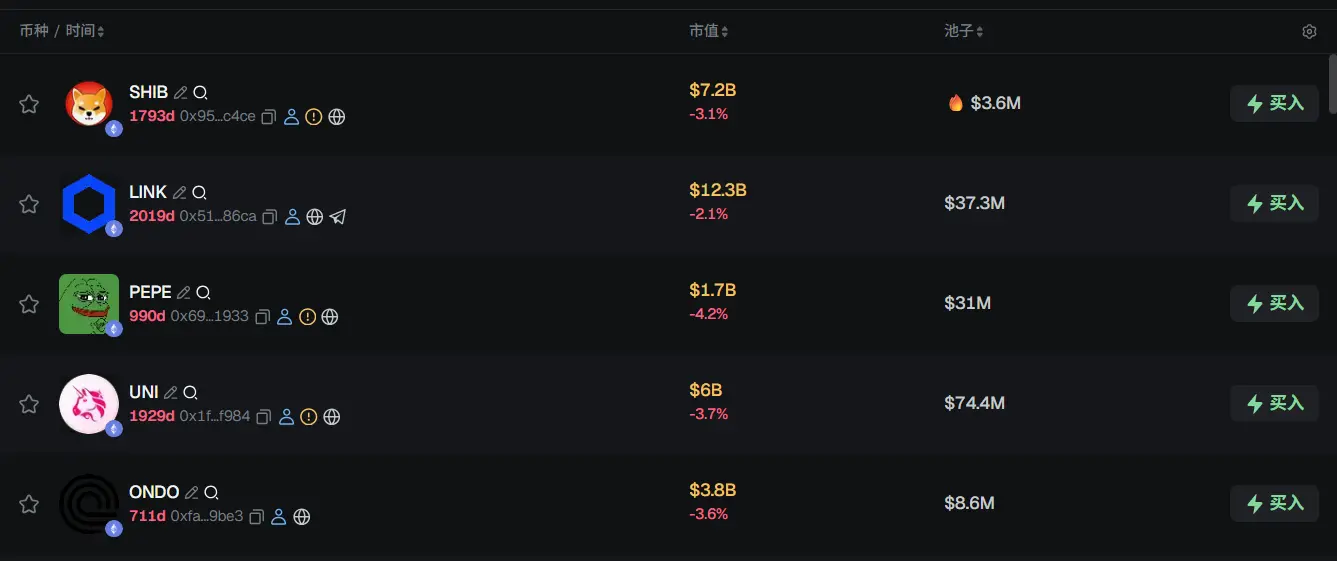
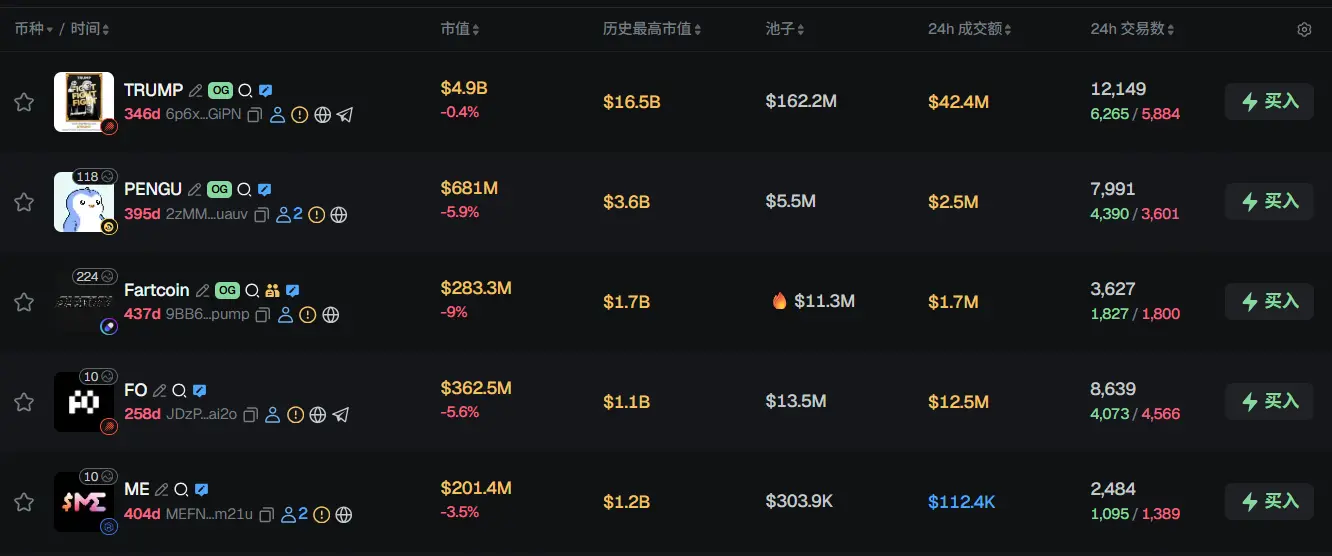
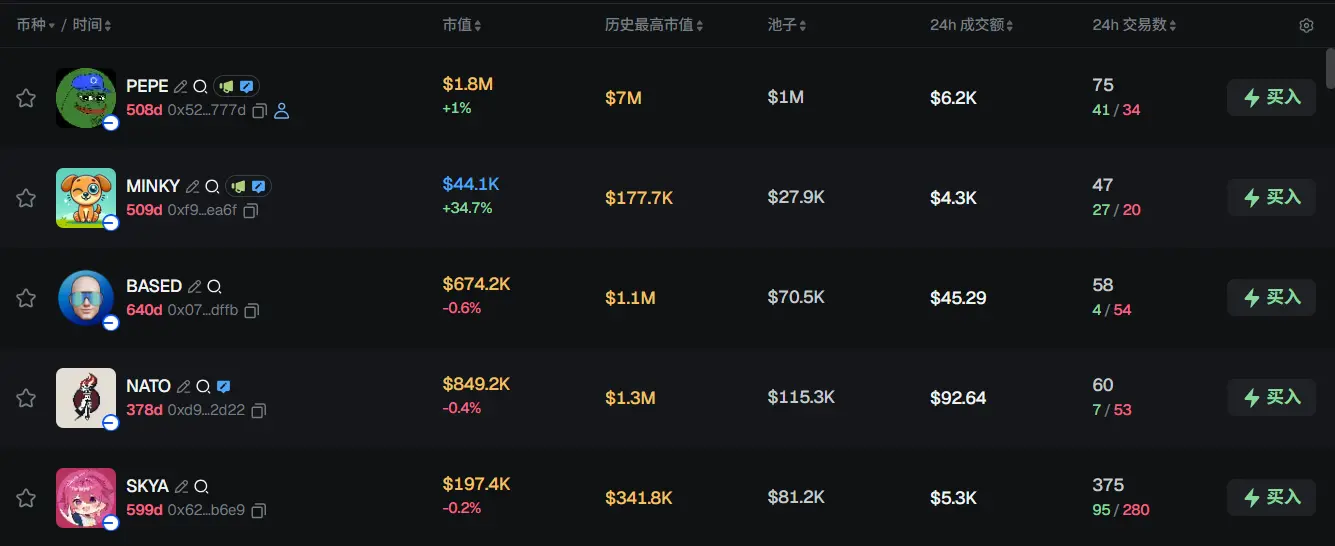
According to the meme token tracking and analysis platform GMGN, as of December 30, 09:00,
The top five popular tokens in ETH over the past 24 hours are: SHIB, LINK, PEPE, UNI, ONDO
The top five popular tokens in Solana over the past 24 hours are: TRUMP, PENGU, Fartcoin, FO, ME
The top five popular tokens in Base over the past 24 hours are: PEPE, MINKY, BASED, NATO, SKYA
What are some must-read articles from the past 24 hours?
The biggest TGE of the year, what details did Lighter and the big holders' conference reveal?
The most anticipated TGE recently is none other than Lighter.
With 3 days left until the TGE, Lighter previously opened up reservations for a conference call, allowing users with high ranking points to have a 15-minute one-on-one conversation. Some big holders, community members, and Lighter team members who have already made calls have released a lot of key information on Twitter, including TGE time, token distribution, token buyback, etc.
A Tale of Two Cities: A Cultural Perspective on BNB Chain and Base
BNB Chain is a port city that never sleeps, carrying massive traffic from Binance. Cargo ships come and go, the market is noisy, and street vendors and exchanges stand side by side. Here, it doesn't matter where you come from; what matters is whether you can participate immediately. Gas fees are low, the pace is fast, and new projects launch every day, with some making money and others exiting. You don't need to understand urban planning or agree with any ideology—just know where the excitement is and where the opportunities lie to survive.
Base, on the other hand, is a new city inheriting Ethereum's values, rapidly under construction. The roads are still being paved, the community is taking shape, and rules are being discussed repeatedly. There is no port's noise and crowd here, but it has attracted a large number of engineers, creators, and institutions to settle in early. They are not in a hurry to make quick money; instead, they are thinking: if there are a batch of truly mass-oriented on-chain applications in the next decade, where should they be born?
Bloomberg reviews: 11 key trades to understand the global financial market in 2025
This is another year filled with "high certainty bets" and "rapid reversals."
From Tokyo's bond trading desks, New York's credit committees to Istanbul's forex traders, the market has brought unexpected fortunes and created severe volatility. Gold prices hit historic records, and the stock prices of stable mortgage giants fluctuated dramatically like "meme stocks" (stocks driven by social media popularity), while a textbook-level arbitrage trade collapsed in an instant.
As the narrative dividends of the crypto market gradually fade, funds are searching for the next certain outlet. Recently, prediction markets have emerged, not only because of their independent performance in turbulent markets but also due to a series of high-return "smart money" strategies that have emerged behind them, making them widely regarded as one of the most explosive tracks in 2026.
However, for most onlookers, prediction markets still seem like a black box wrapped in blockchain. Although it is built on smart contracts, oracles, and stablecoins, its core mechanisms differ significantly from traditional "speculating on coins" logic. Here, K-lines are not observed; only probabilities are considered; stories are not told; only facts are discussed.
 Risk warning
 Risk warning


Popular articles





