








Morning News | Strategy increased its holdings by 1,142 bitcoins last week; TON Foundation launched the payment software development kit TON Pay; Farcaster founder Dan Romero joined Tempo

 Overview of Important Market Events on February 9
整理:ChainCatcher
Important News:
- Vitalik: Algorithmic Stablecoins are True DeFi
- Yili Hua: Continuing to Build Together for Ethereum and SharpLink, Maintaining Confidence and Efforts
- Story Co-founder Responds to Token Unlock Delay, States Project Still Needs Time to Build Real Use Cases
- MegaETH Mainnet Launches and Introduces Ecosystem Frontend The Rabbithole
- TON Foundation Launches Payment Software Development Kit TON Pay
- Strategy Spent $90 Million to Increase Holdings by 1,142 Bitcoins Last Week
- Farcaster Founder Dan Romero Joins Stablecoin Blockchain Project Tempo
What Important Events Happened in the Last 24 Hours?
Farcaster Founder Dan Romero Joins Stablecoin Blockchain Project Tempo
According to ChainCatcher, Farcaster founder Dan Romero announced on the X platform that he has joined the stablecoin blockchain project Tempo, which has previously received support from Stripe and Paradigm.
MegaETH Mainnet Launches and Introduces Ecosystem Frontend The Rabbithole
According to ChainCatcher, MegaETH announced on the X platform that its mainnet is fully launched and introduced the ecosystem frontend The Rabbithole, which primarily helps users discover running and upcoming applications, bridge and swap assets, and receive notifications about ecosystem events.
BitMine Increased Holdings by 40,613 ETH Last Week, Now Holds 4.326 Million ETH
According to ChainCatcher, BitMine, an Ethereum treasury company, increased its holdings by 40,613 ETH in the past week, bringing its total Ethereum holdings to 4,325,738 ETH, which accounts for 3.58% of the total supply, over 72% of its 5% holding target has been completed.
As of February 8, Bitmine's total crypto assets, cash, and investments amount to $10 billion, with 2,897,459 ETH staked.
Strategy Spent $90 Million to Increase Holdings by 1,142 Bitcoins Last Week
According to ChainCatcher, Strategy announced that it increased its holdings by 1,142 Bitcoins last week, spending $90 million at an average purchase price of $78,815.
As of February 8, 2026, the company holds a total of 714,644 BTC, with a total cost of approximately $54.35 billion, averaging $76,056 per coin.
Market Cooling Combined with Overvaluation Leads to MetaDAO's First Failed ICO Project
According to ChainCatcher, the Solana ecosystem issuance platform MetaDAO faced its first failed ICO project, Hurupay. The project launched on February 3, 2026, with a minimum fundraising goal of $3 million but only raised about $2,003,593 (about 67% of the minimum target). Due to not meeting the required minimum financing threshold, MetaDAO announced the ICO failure, and all participant funds were refunded.
Community feedback indicated that the project's overvaluation, unclear team background, and significant changes to the financing terms were factors in the ICO's failure.
TON Foundation Launches Payment Software Development Kit TON Pay
According to ChainCatcher, the TON Foundation released the payment software development kit (SDK) TON Pay, aimed at enabling cryptocurrency to be used for everyday transactions within the Telegram ecosystem. The product is positioned as a simple, wallet-agnostic payment layer that allows merchants and mini-program developers to accept cryptocurrency payments directly through Telegram, with the goal of making Telegram a seamless blockchain business hub.
The TON Foundation stated that TON Pay provides developers with a single software toolkit integrated with Telegram mini-programs, reducing the cumbersome processes of managing wallet infrastructure, settlements, and checkout.
Maple Finance: Web Application Has Security Vulnerabilities, Temporarily Closed
According to ChainCatcher, Maple Finance announced that its web application has security vulnerabilities. The issue has been fixed, but out of caution, the web application will be temporarily closed to ensure thorough completion of the fixes.
The team stated that the smart contracts were unaffected, and user deposits are safe. Users will be notified once the web application is back online.
According to ChainCatcher, Evgeny Gaevoy, founder of crypto market maker Wintermute, analyzed the abnormal fluctuations in Bitcoin and ETH spot 1-minute charts on February 8. He indicated that it was likely due to a market maker's robot facing liquidation, with losses potentially reaching tens of millions of dollars. The abnormal fluctuations were caused by the robot's losses rather than malicious actions by market makers, and Wintermute was clearly not involved.
Evgeny Gaevoy also expressed skepticism about rumors of "large institutions facing liquidation" in the market, stating that even if true, it would not have medium- to long-term impacts. In contrast to past events like the collapses of Three Arrows Capital and FTX, where liquidation news spread quickly and clear signs showed the validity of the liquidations, current market rumors mostly come from anonymous accounts and lack reliable source confirmation.
The leverage in this cycle mainly comes from perpetual contracts, and trading platforms no longer use user assets to invest in low-liquidity assets or issue special credit as they did in the past. Credit tightening has led to institutional credit scales being less than $2 billion, limiting impact and making it difficult to trigger a chain liquidation like in 2022.
Previous reports indicated that there were abnormal fluctuations in Bitcoin and ETH spot 1-minute charts on February 8, with single-minute amplitudes exceeding 1% and even 3% from 00:05 to 00:17.
According to ChainCatcher, SY Lee, co-founder of Story Protocol, responded to the delay of the project's first large-scale IP token unlock until August 2026, stating that the blockchain network still needs "more time" to build real use cases. This delay is for six months, and the team's and investors' tokens will continue to be locked to reduce short-term circulation pressure.
SY Lee stated that the current on-chain revenue being close to zero does not accurately reflect Story's business status, as its business model does not rely on gas fees but instead provides permissioned services for human-generated data for AI training off-chain.
He pointed out that the project is shifting from tokenizing media content to "non-capturable" human contribution data and enterprise-level licensing collaborations. Although this adjustment reduces short-term visible on-chain revenue, it helps release long-term commitments and alleviate token supply pressure.
Data: 4,225 BTC Transferred to Binance SAFU Fund, Approximately $299 Million
According to ChainCatcher, Whale Alert monitored that 4,225 BTC (worth approximately $299 million) has been transferred from Binance to the Binance SAFU fund.
Infini Attacker Transfers 9,154 ETH via Tornado Cash, Worth Approximately $19.33 Million
According to ChainCatcher, Onchain Lens monitored that the Infini attacker transferred 9,154 ETH via Tornado Cash, worth approximately $19.33 million.
Arthur Hayes Bets That HYPE Will Outperform All "Shitcoins" with Market Caps Over $1 Billion on CoinGecko in the Next Six Months
According to ChainCatcher, in response to former Multicoin co-founder Kyle Samani's view that "Hyperliquid embodies many of the worst issues in the crypto industry."
BitMEX co-founder Arthur Hayes responded, "Since you say HYPE is bad, let's make a bet. I bet that from February 10, 2026, 00:00 (UTC) to July 31, 2026, 00:00 (UTC), HYPE's increase will exceed any altcoin with a market cap over $1 billion on CoinGecko (in USD). You can choose any coin you support as the opponent. The loser must donate $100,000 to a charity designated by the winner."
Vitalik: Algorithmic Stablecoins are True DeFi
According to ChainCatcher, Vitalik Buterin stated on the X platform that algorithmic stablecoins are true DeFi. He believes that if there are high-quality algorithmic stablecoins backed by ETH, even if the majority of liquidity is supported by CDP holders holding negative algorithmic dollars, the ability to transfer counterparty risk to market makers remains an important feature. Even if algorithmic stablecoins are backed by RWA, if they can ensure sufficient collateral in the event of a single RWA failure through over-collateralization and diversified allocation, it is also an effective improvement in risk characteristics for holders.
He pointed out that the industry should develop in these directions and gradually move away from using the dollar as a pricing unit, shifting towards more universal diversified indices. Additionally, the current operation of depositing USDC into Aave does not fall under the aforementioned category.
According to ChainCatcher, Reuters reported that Lee Chan-jin, head of the Korean Financial Supervisory Service (FSS), stated that the recent incident where Bithumb unexpectedly issued over $40 billion worth of Bitcoin to customers reveals structural vulnerabilities in the cryptocurrency sector that urgently need regulatory strengthening. Lee emphasized that users who sold mistakenly issued tokens are legally obligated to return the assets.
Additionally, regarding "ghost tokens" (over-issued assets) and the launch of Bitcoin spot ETF products, the financial supervisory service expressed a cautious attitude and plans to further expand regulatory scope through the "Digital Asset Basic Law" secondary legislation.
Bithumb mistakenly issued 620,000 Bitcoins last Friday during a promotional reward distribution, triggering a sell-off on the platform. Currently, preliminary investigations by financial authorities show that 99.7% of the mistakenly issued Bitcoins have been recovered; of the 1,786 Bitcoins sold before trading was suspended, 93% have also been recovered.
According to ChainCatcher, Newspim reported that Lee Chan-jin, head of the Korean Financial Supervisory Service (FSS), stated that the "Bitcoin mistaken issuance incident" at Bithumb is a serious event that undermines the credibility of cryptocurrency exchanges. He pointed out that Bithumb actually holds only about 42,000 Bitcoins, and this mistaken issuance exposed the serious risks of "book trading" in trading fictitious assets without security guarantees.
He emphasized that if the investigation confirms illegal negligence, the highest level of sanctions, including fines and suspension, will be imposed, and it is recommended to include clauses for revocable or restricted access permits in future "Digital Asset Basic Law" to strengthen oversight of internal controls at exchanges.
The incident occurred on February 6, when Bithumb mistakenly issued 2,000 Bitcoins to 249 customers each (originally planned for 2,000 Korean won), totaling 620,000 Bitcoins, valued at approximately 61 trillion Korean won (about $45 billion) at the time. Bithumb intercepted the transactions within 20 minutes, but 125 Bitcoins were still sold.
According to ChainCatcher, Scam Sniffer monitored that a single victim lost $12.2 million in January due to copying an incorrect address from transaction history, along with a similar attack in December involving 500,000 dollars, resulting in a total loss of over $62 million for the two victims.
Address poisoning attacks involve attackers sending tiny amounts of tokens from visually similar addresses to lure users into copying the wrong address. Additionally, in January, phishing attacks via signatures stole $6.27 million, a month-on-month increase of 207%. Analysts believe that the Ethereum Fusaka upgrade has reduced transaction costs, leading to an increase in the frequency of such attacks.
Coin Metrics data shows that dust transactions related to stablecoins currently account for about 11% of Ethereum's daily transaction total. Whitestream stated that DAI has become the preferred choice for illegal practitioners to store funds due to the protocol's governance not cooperating with authorities to freeze addresses.
According to ChainCatcher, Yili Hua, founder of Liquid Capital (formerly LD Capital), shared a photo with the Chief Information Officer and Chief Development Officer of SharpLink, the second-largest crypto treasury company on Ethereum, stating, "Continuing to build for Ethereum, building together with SharpLink, maintaining confidence and continuous efforts."
Meme Popularity Rankings
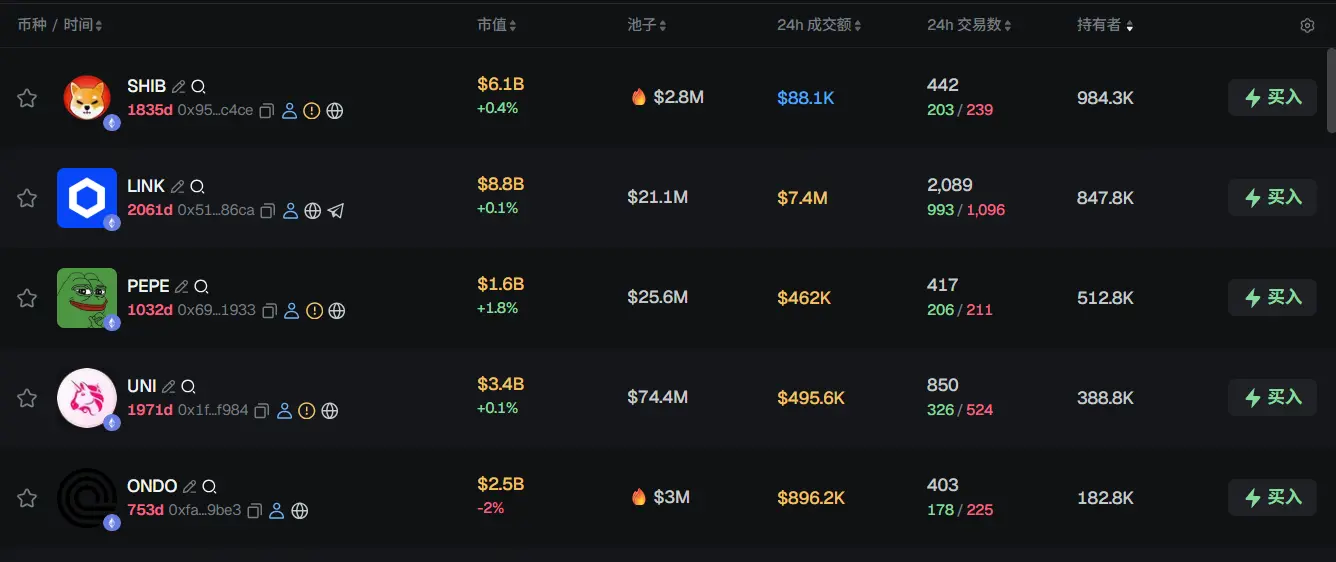
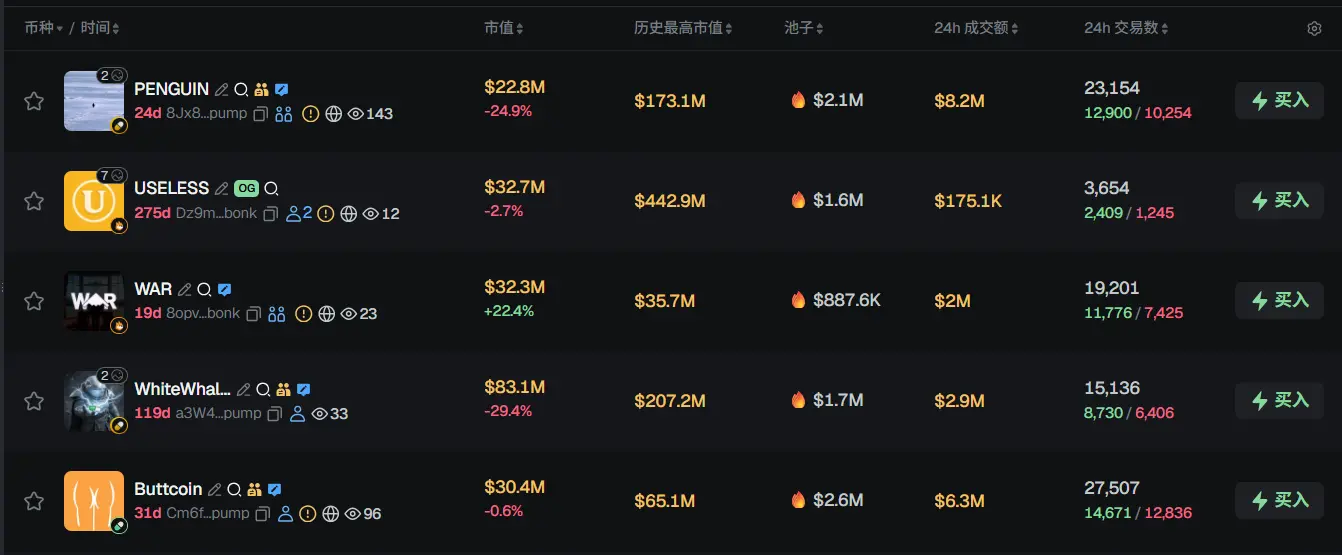
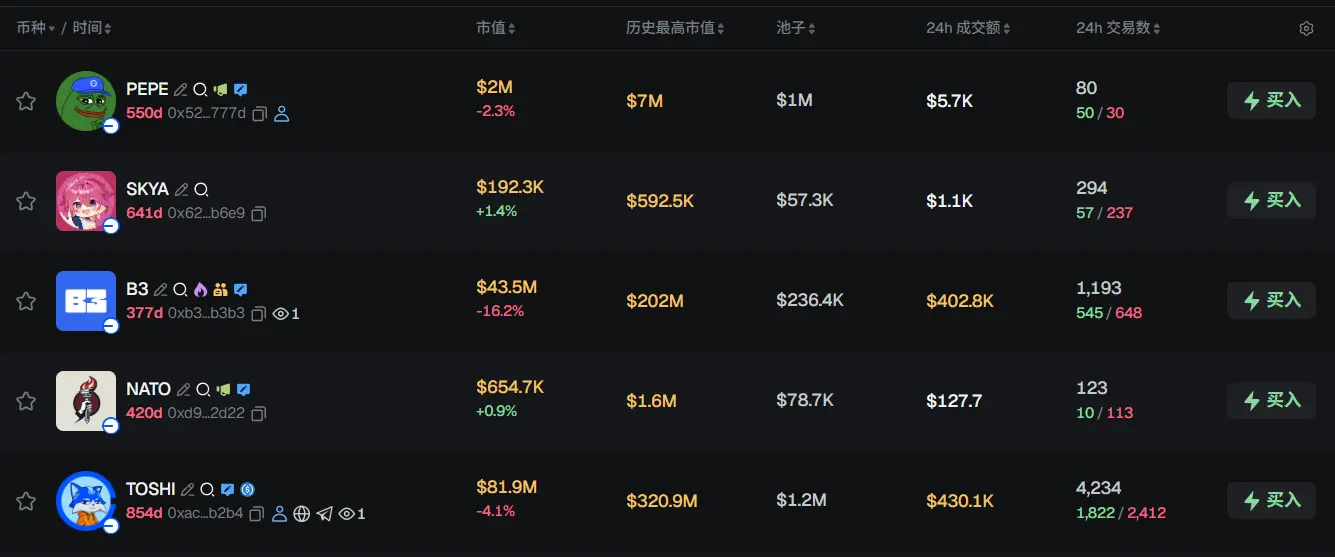
According to meme token tracking and analysis platform GMGN, as of February 10, 09:00,
The top five popular tokens on ETH in the past 24 hours are: SHIB, LINK, PEPE, UNI, ONDO
The top five popular tokens on Solana in the past 24 hours are: PENGUIN, USELESS, WAR, WhiteWhale, Buttcoin
The top five popular tokens on Base in the past 24 hours are: PEPE, SKYA, B3, NATO, TOSHI
What Interesting Articles Are Worth Reading in the Last 24 Hours?
Tracing the Source of the Crypto Market Crash: Hong Kong Hedge Funds or TradFi Cross-Asset Whales?
In early February 2026, the crypto market experienced a sharp correction, with Bitcoin dropping to around $60,000, the lowest level since November 2024. This round of sell-off was highly synchronized with the cross-asset deleveraging in traditional financial markets, with stock markets significantly declining and precious metals also experiencing sharp drops—silver recorded its largest single-day drop ever, and gold saw its largest single-day drop since the early 1980s. Analysts generally believe that the recent decline in the crypto market is primarily due to rising macro uncertainties (such as hawkish Federal Reserve chair nominations) and massive outflows of ETF funds.
In this context, a narrative began circulating on crypto social media suggesting that this fierce sell-off was not entirely driven by macro factors but was instead triggered by a large fund facing liquidation and being forced to liquidate its Bitcoin positions. One speculation pointed to a Hong Kong hedge fund involved in Bitcoin options trading. Several industry insiders subsequently joined the discussion, providing clues while also expressing clear skepticism.
The Day CZ Missed the Best Investment of His Life, Crypto Missed AI
In 2014, just one year after being introduced to the concept of cryptocurrency, CZ made the most daring investment of his life—selling his apartment in Shanghai to "go all in" on about 1,500 BTC at a three-digit price. Twelve years later, had CZ never sold, this investment could have yielded over a hundred million dollars in profits (with peak returns of about $189 million).
Compared to his subsequent achievement of founding Binance and becoming a leader in the industry, the returns from this investment are now insignificant for CZ. However, from an external perspective, this idealistic "all-in" move remains one of CZ's most talked-about actions.

 Risk warning



Popular articles





