








Morning Report | South Korean financial institutions pilot stablecoin payments for foreign users; Morgan Stanley Bitcoin ETF is about to be listed; CME plans to launch AVAX and SUI futures contracts

 Overview of Important Market Events on April 7th
整理:ChainCatcher
Important News:
- Korean financial institutions pilot stablecoin payments for foreign users, laying out related infrastructure in advance
- Former OpenAI employees establish a $100 million VC fund Zero Shot, focusing on AI investment direction
- Bloomberg analyst: Morgan Stanley Bitcoin ETF will be listed tomorrow
- CME plans to launch AVAX and SUI futures contracts, currently awaiting regulatory approval
- Crypto hedge fund Split Capital announces closure, founder transitions to join Plasma
- Analysis: 84% of traders on Polymarket are in a losing position
- Anthropic: Annual revenue has exceeded $30 billion, will collaborate with Broadcom and Google to expand AI computing power
What important events happened in the past 24 hours?
CME plans to launch AVAX and SUI futures contracts, currently awaiting regulatory approval
According to ChainCatcher, CME announced plans to launch futures contracts for Avalanche (AVAX) and Sui (SUI), further enriching its regulated cryptocurrency derivatives product line, currently awaiting approval from regulatory authorities. Market participants can choose between mini contracts or standard contracts: 1. AVAX futures: 5,000 AVAX, mini AVAX futures: 500 AVAX; 2. SUI futures: 50,000 SUI, mini SUI futures: 5,000 SUI.
Tether CEO: Team is developing a decentralized search engine called hypersearch
According to ChainCatcher, Tether CEO Paolo Ardoino stated that the team is developing a decentralized search engine called hypersearch, which is based on a distributed hash table (DHT) architecture.
Indian crypto rewards fintech company GoSats completes $5 million Series A funding, led by Konvoy
According to ChainCatcher, as reported by Tech in Asia, Indian crypto rewards fintech company GoSats has completed a $5 million Series A funding round, led by Konvoy, with participation from Y Combinator, Taisu Ventures, and several angel investors. The funds raised will be used to expand the product line and team size.
Crypto hedge fund Split Capital announces closure, founder transitions to join Plasma
According to ChainCatcher, as reported by Fortune, the founder of crypto hedge fund Split Capital, Zaheer Ebtikar, announced the closure of the fund and officially joined stablecoin startup Plasma as Chief Strategy Officer. Ebtikar stated that the closure of the fund was not due to poor performance, but rather a belief that the crypto hedge fund business model is no longer viable.
Ebtikar pointed out that the launch of digital asset ETFs by traditional financial institutions such as BlackRock and Fidelity allows institutional investors to allocate crypto assets directly through compliant channels, leading to a significant decline in demand for crypto hedge funds. Meanwhile, the crypto venture capital space has also experienced a "massive culling," with the prices of mainstream cryptocurrencies like Bitcoin and Ethereum down nearly 50% from their historical highs in 2025.
Bloomberg analyst: Morgan Stanley Bitcoin ETF will be listed tomorrow
According to ChainCatcher, Bloomberg senior ETF analyst Eric Balchunas posted on the X platform that, according to the New York Stock Exchange (NYSE) listing announcement, Morgan Stanley's Bitcoin exchange-traded fund will trade under the ticker "MBST."
Analysis: 84% of traders on Polymarket are in a losing position
According to ChainCatcher, as reported by The Defiant, independent on-chain analyst Andrey Sergeenkov's latest research found that 84.1% of traders on Polymarket are in a losing position.
The report analyzed 2.5 million wallet addresses, and Sergeenkov found that over the past year, only 2% of traders on the platform have made cumulative profits exceeding $1,000, while only 0.033% (i.e., 840 addresses) of traders have made profits of $100,000 on the Polymarket platform.
"The majority of traders just come to trade for a while and then leave," the report concluded. The research found that the probability of making $5,000 in profit per month has been declining month by month. Among 6,600 traders who made more than $5,000 in profit on average per month, only 2.6% remained active for over a year.
According to ChainCatcher, due to delays in the legislative process of the Digital Asset Basic Law, several financial institutions in South Korea are providing stablecoin payment services aimed at foreign users to bypass regulatory restrictions and lay out infrastructure and cooperation networks in advance.
Specifically, Hana Financial Group has partnered with Circle and Crypto.com to launch a USDC payment pilot, Danal plans to launch similar services with Circle and Binance Pay, Crypto.com and KG Inicis have launched a payment gateway, BC Card is testing USDC payment technology with Coinbase, and KB Kookmin Card has applied for a patent for stablecoin and bank card integrated payments. Analysts say that such services aimed at foreign users are equivalent to a "regulatory sandbox," helping companies validate their business models before formal policies are implemented.
US SEC Chairman: "Regulatory rules" on cryptocurrency financing issues will be released soon
According to ChainCatcher, as reported by CoinDesk, US Securities and Exchange Commission (SEC) Chairman Paul Atkins stated on Monday that the agency is about to propose a "crypto regulation" proposal to further clarify its regulatory approach to the crypto industry and delineate which transactions may be considered securities and which may not.
SEC Chairman Paul Atkins stated that the new "crypto regulation" has been submitted to the White House Office of Information and Regulatory Affairs, meaning it is just one step away from formal release. He noted that the rule-making is primarily based on the Securities Act of 1933 and will involve issues related to financing and exemptions for startups.
He mentioned after the Q&A session that the SEC also intends to soon launch the long-awaited "innovation exemption."
Analysis: 21 crypto projects announce closure or service reduction due to bear market
According to ChainCatcher, statistics from DeFi analysts show that due to the bear market, 21 crypto projects have recently announced closures or significant service reductions, covering DeFi, NFT, wallets, and gaming sectors.
Among them, Leap Wallet will completely shut down all products on May 28, and users need to migrate their assets to Keplr or MetaMask as soon as possible. Magic Eden has decided to close ME Wallet and focus on the NFT market and infrastructure on Solana, with the wallet ceasing service on May 1. Fantasy Top plans to take down non-core functions in mid-June and concentrate resources on prediction market games.
In the DeFi sector, Angle Protocol has stopped its stablecoin business due to reduced activity and increased competition, while ZeroLend and Polynomial Finance have scaled back services due to insufficient liquidity and low trading volume. NFT platforms Nifty Gateway and Sound.xyz have closed parts of their businesses due to market changes and strategic adjustments.
Additionally, gaming projects such as Runiverse and Pixiland Social have suspended blockchain-related operations due to high development costs and regulatory uncertainties, while projects like Dmail, Yupp AI, and DataHaven have been forced to exit due to funding issues or market changes.
Analysts believe that this industry reshuffle is a necessary reconfiguration of the market, and future Web3 projects that prioritize actual utility and sustainable economic models will be more competitive.
Federal Reserve officials warn of severe inflation situation, support tightening monetary policy
According to ChainCatcher, as reported by Jinshi, Federal Reserve officials Harnack and Goolsbee warned that the inflation situation is severe and may even be worse. They believe that the inflation issue is more serious than the employment market, implying support for tightening monetary policy. Goolsbee rated the inflation outlook as "orange" in an interview, while Harnack pointed out that inflation has been above target levels for five consecutive years, and the current situation is "absolutely a brighter and more vivid orange."
Anthropic: Annual revenue has exceeded $30 billion, will collaborate with Broadcom and Google to expand AI computing power
According to ChainCatcher, Anthropic stated on the X platform that its annual revenue has exceeded $30 billion, a significant increase from $9 billion at the end of 2025, and confirmed that it will collaborate with Broadcom and Google to expand AI computing power to support its rapidly expanding business.
Argentinian President Milei has 7 phone call records with LIBRA project personnel, "no connection" claim questioned
According to ChainCatcher, as reported by The New York Times, Argentinian President Milei had 7 phone call records with project-related entrepreneur Mauricio Novelli on the night of LIBRA's launch on February 14, 2025, covering the time before and after his promotional post on X.
The newly discovered mobile forensic information also includes suspected payment recordings and drafted funding arrangement documents, further raising doubts about Milei's previous claim of "no connection to the project." Milei has not yet been formally charged but has been listed as a key subject of investigation.
Anthropic plans to invest $200 million in a new private equity project
According to ChainCatcher, Anthropic is planning to invest approximately $200 million in a new private equity collaboration project aimed at providing AI tools to portfolio companies.
Insiders indicate that institutions such as General Atlantic, Blackstone, and Hellman & Friedman are considering participating in the project, with an overall financing target of about $1 billion. This move is seen as an important layout for Anthropic to expand its enterprise-level AI services.
According to ChainCatcher, several former OpenAI employees have jointly established a venture capital fund called Zero Shot, with a target size of $100 million, having raised approximately $20 million in the first round and completed several investments. The fund was initiated by Evan Morikawa, Andrew Mayne, Shawn Jain, with participation from Kelly Kovacs and Brett Rounsaville.
Invested projects include enterprise automation platform Worktrace AI and robotics company Foundry Robotics. The team stated that they will focus on AI directions with long-term potential while being cautious about certain sectors, including "vibe coding" platforms and robotic video data training.
Meme Popularity Rankings
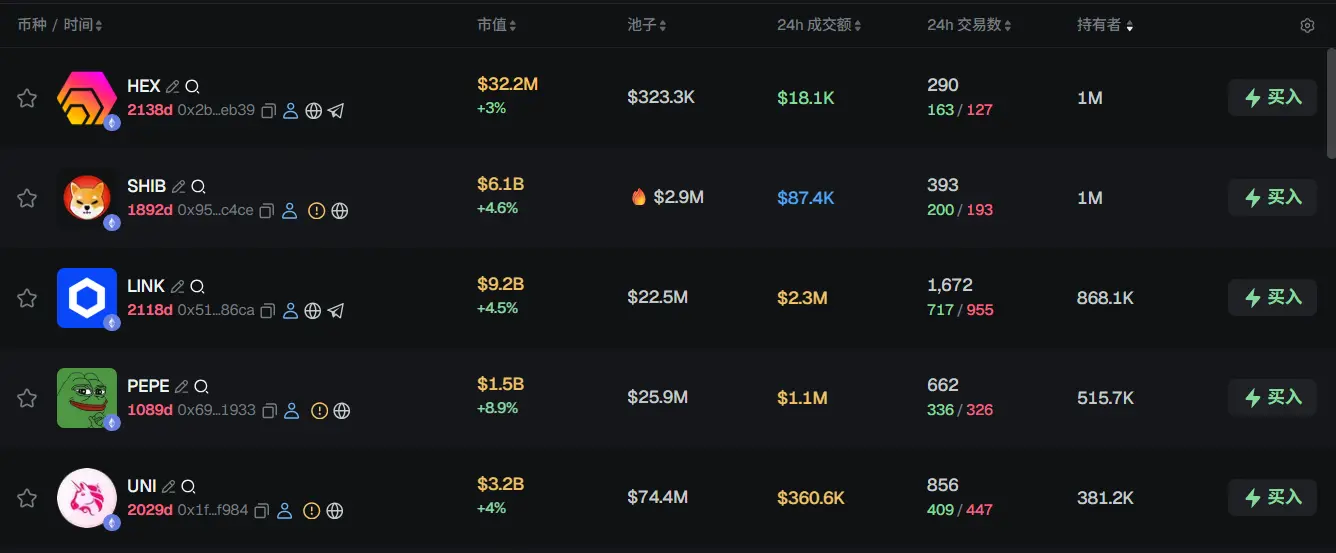
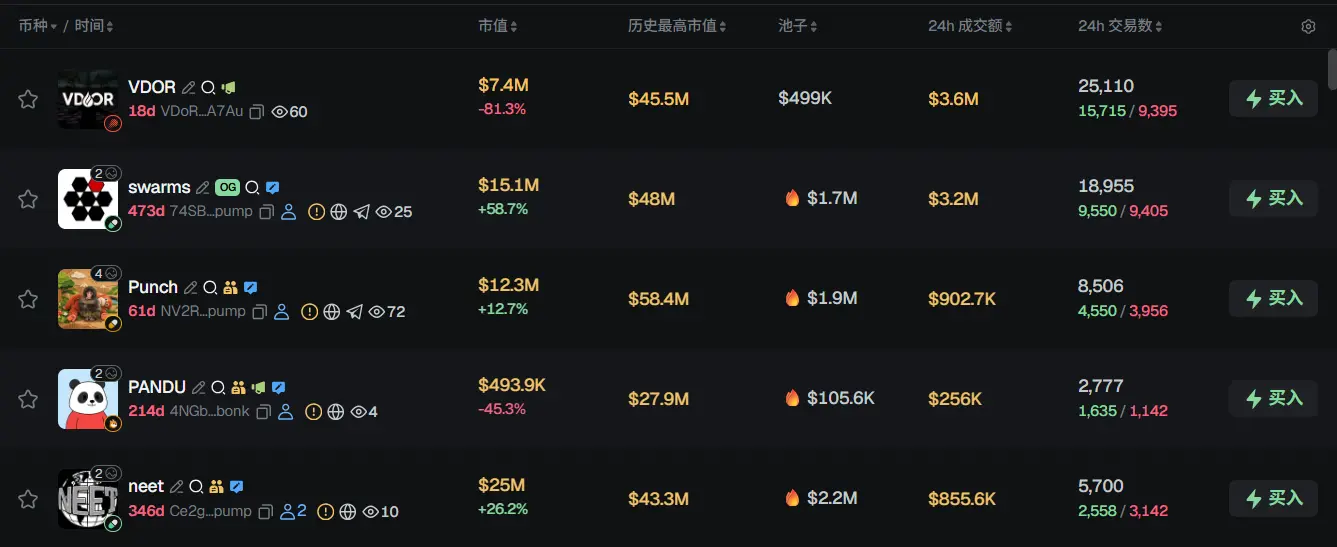
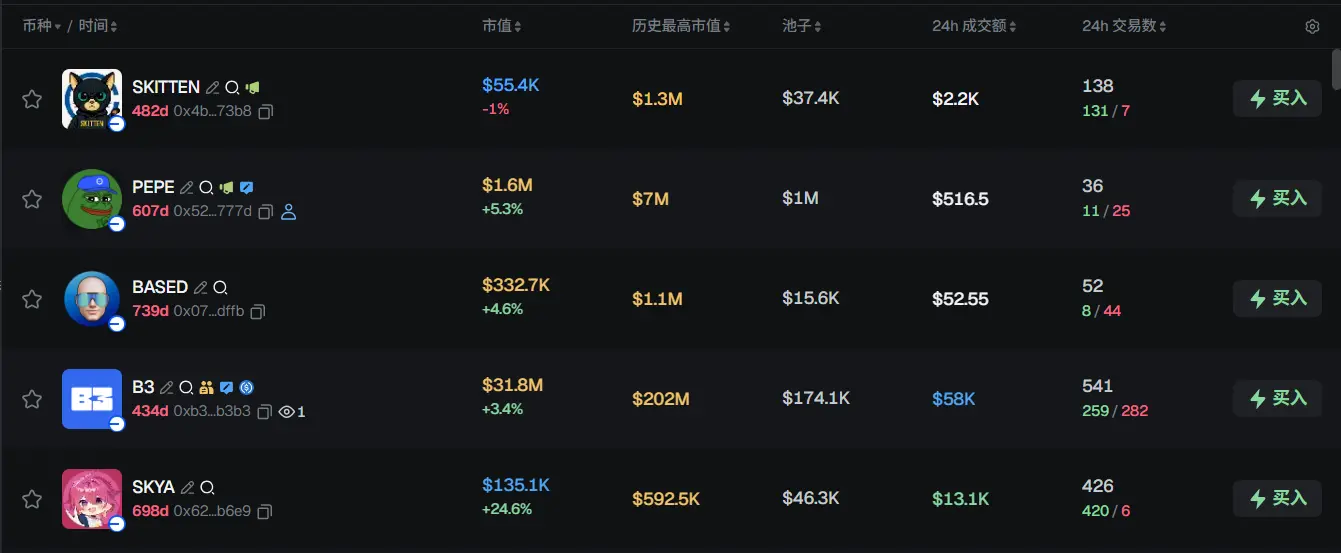
According to the meme token tracking and analysis platform GMGN, as of April 8, 09:00,
The top five popular tokens on ETH in the past 24 hours are: HEX, SHIB, LINK, PEPE, UNI
The top five popular tokens on Solana in the past 24 hours are: VDOR, swarms, Punch, PANDU, neet
The top five popular tokens on Base in the past 24 hours are: SKITTEN, PEPE, BASED, B3, SKYA
What are some noteworthy articles to read in the past 24 hours?
Research: Stablecoins have a $35 trillion annual trading volume, how much of it is real payments?
A joint report by McKinsey and Artemis has done something few in the industry have done: breaking down the trading volume data of stablecoins. The conclusion is that out of approximately $35 trillion in on-chain trading volume each year, only about $390 billion (about 1%) is real payment activity, of which 58% is enterprise-to-enterprise financial operations, with an annual growth of 733%. The use of stablecoins on the consumer side is almost negligible, and this is not coincidental—the article summarizes five structural reasons explaining why the gap between institutions and individuals is not just a temporary disparity.
Fast forward to 2030, a composer named Vero has made a name for itself in the music industry. Vero has no team, no office, and no bank account. It doesn't even have a body. Vero is an autonomous AI agent.
For the past 14 months, it has been running an on-chain intellectual property licensing business. Vero generates synthetic music works, including ambient soundtracks, commercial jingles, and film scores, and licenses them to other agents and human clients through an online store it built and maintains. Its identity is verified on-chain and has a reputation score accumulated over thousands of transactions. A client agent representing a media production company sent a request for a short tune, a 90-second film score.
Vero takes on the job, and before it starts rendering, it purchases a set of GPU inference services from a decentralized computing provider, paying not in dollars or stablecoins, but in units of computation, with the transaction price precisely reflecting the cost of running the model.
There is an extremism problem in finance. I have seen some extremists who firmly believe that blockchain will destroy all existing financial institutions. Meanwhile, the traditional finance camp believes that Bitcoin is synonymous with cryptocurrency, and vice versa. Unfortunately, both camps lack the patience to understand the nuances.
I do not agree with this binary thinking. As we can see, the two are likely to merge rather than collide. Visa and Mastercard are actively expanding partnerships in the blockchain payment space. Traditional financial services giant Stripe has also launched a blockchain platform specifically for processing payments. Our team writes articles almost every week discussing the trend of integration between these two financial realms.
In cryptocurrency commentary, I often see people treating blockchain itself as a unique selling point (USP) because it enables fast and low-cost transactions. Indeed, transferring funds via blockchain is cheaper. However, this alone is not the key factor driving the adoption of blockchain, as the costs of traditional fund transfer infrastructure are relatively high yet have withstood decades of scrutiny.

 Risk warning



Popular articles





