








What is the funding rate for cryptocurrency contract trading? How does it affect your profits and losses?
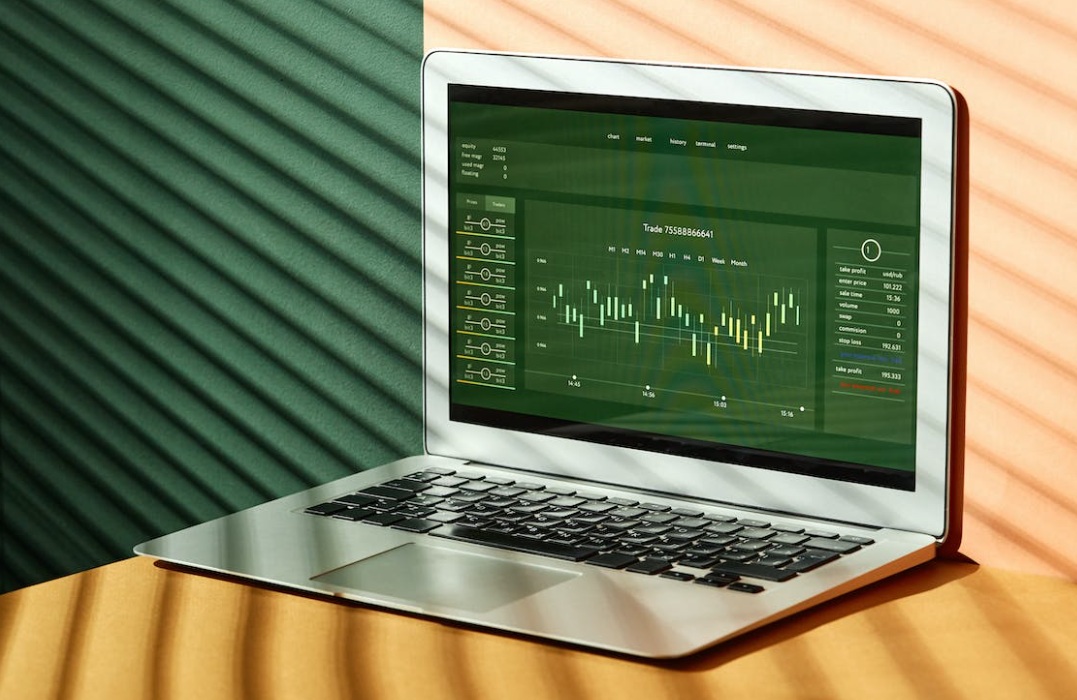
 The funding rate is not only a trading cost but also a barometer of market sentiment. Understanding it is a fundamental requirement for perpetual contract traders.
Many newcomers to contract trading find themselves confused after entering the market: they may have predicted the direction correctly but earned less than expected; or their account balance mysteriously decreases slowly during the holding period. This is often not due to platform fees, but rather a core mechanism in perpetual contracts that most newcomers overlook—Funding Rate. The Funding Rate is not only a trading cost but also a barometer of market sentiment; understanding it is a fundamental requirement for perpetual contract traders.
Risk Warning: Cryptocurrency contract trading uses leverage and carries the risk of losing the entire principal. The Funding Rate will continuously consume holding costs, so please operate after fully understanding the mechanism and make prudent decisions.
Key Takeaways
- The Funding Rate is a unique periodic settlement mechanism for perpetual contracts, used to anchor the contract price close to the spot price.
- When the Funding Rate is positive, longs (buyers) pay fees to shorts (sellers); when the Funding Rate is negative, shorts pay longs.
- The Funding Rate is usually settled every 8 hours, and the cumulative cost of long-term positions should not be ignored.
- A very high positive Funding Rate is a signal of an overheated market; a very low negative Funding Rate is a signal of excessive pessimism in the market.
- Savvy traders will incorporate the Funding Rate into their position cost calculations and use extreme values of the rate to seek reversal opportunities.
Why Perpetual Contracts Need Funding Rates
Pricing Issues Due to No Expiration Date in Perpetual Contracts
Traditional futures contracts have a fixed expiration date, and as the delivery date approaches, the contract price naturally converges toward the spot price. However, perpetual contracts (Perpetual Futures) have no expiration date and can theoretically be held indefinitely—this brings about a fundamental problem: without an anchoring mechanism, the price of perpetual contracts may deviate significantly from the spot price for a long time, losing their price discovery function.
The Funding Rate is the mechanism that solves this problem. According to Perps Trading's analysis of the Funding Rate mechanism, the Funding Rate is a periodic payment between longs and shorts in the perpetual contract market, with its core function being to continuously anchor the contract price close to the spot price through economic incentives.
The Operational Logic of the Funding Rate
The direction of the Funding Rate is determined by the "Funding Premium Index": when the price of the perpetual contract is higher than the spot price, the Funding Rate is positive (longs pay shorts); when the contract price is lower than the spot price, the rate is negative (shorts pay longs).
This mechanism creates an automatic balancing effect: when the contract price is too high (too many longs), the cost of holding long positions increases, prompting some longs to close their positions and shorts to enter, pulling the price back down to the spot; and vice versa. As described in One Trading's analysis of the perpetual contract mechanism, it is this built-in economic incentive system that allows perpetual contracts to track the spot price over the long term without a delivery period.
How the Funding Rate is Calculated
Rate Formula and Settlement Frequency
The Funding Rate on mainstream exchanges typically consists of two parts:
- Base Interest Rate: A fixed rate, usually 0.01%/8 hours (reflecting the cost of borrowing funds)
- Premium Index: Reflects the degree of premium or discount of the perpetual contract relative to the spot
Funding Rate = Base Interest Rate + Premium Index (truncated at Min/Max when premium is large)
The most common settlement frequency is every 8 hours (three times a day), while some exchanges settle every hour. The Funding Rate is calculated based on the nominal value of the current position, not the margin.
Example of Actual Cost Calculation
| Parameter | Example Value | Description | |--------|-------------------------|-----------------------| | Position Value | 10,000 USDT | Nominal value (not margin) | | Funding Rate | 0.05% (positive) | Relatively high, strong bullish period | | Single Settlement Cost | 10,000 × 0.05% = 5 USDT | Longs pay every 8 hours | | Daily Cost | 15 USDT | Settled three times a day | | Cost of Holding for 7 Days | 105 USDT | Equivalent to 10.5% of margin (assuming 1000U) |
This example illustrates that when the Funding Rate is at a relatively high level (0.05%), the funding cost for holding a position for a week could consume about 10% of the margin—even if the price does not change unfavorably. This is one of the reasons why holding high-leverage long positions at the top of a bull market is a dangerous operation.
Positive and Negative Funding Rates: Impact on Profits and Losses in Different Scenarios
 The direction of the Funding Rate reflects market sentiment: a higher positive rate indicates a crowded long position (potentially higher costs for going long), while a deeper negative rate indicates a dominant short position (short sellers need to continuously pay fees).
Extreme Funding Rates as Sentiment Indicators
According to PerpFinder's deep guide on Funding Rates, extreme Funding Rates themselves are important market signals:
- Extremely high positive rates (>0.1%/8 hours): The market is in a state of extreme optimism, with longs severely crowded. Historically, sustained extremely high positive rates often appear near the top of bull markets, signaling longs to reduce positions and pay attention to potential pullback risks.
- Extremely deep negative rates (<-0.05%/8 hours): Shorts dominate, and market sentiment is extremely pessimistic. Going long in a negative rate environment is essentially "subsidized"—for every long position you hold, the shorts are paying you fees. Historically, sustained negative rates often appear at the bottom of bear markets.
How to Incorporate the Funding Rate into Trading Strategies
Short-term Traders: Control Position Duration, Avoid Fee Settlement Points
For day traders or short-term traders, the impact of the Funding Rate is relatively limited, but there are still a few points to note: first, avoid intentionally holding positions across settlement times when the Funding Rate is extremely high (usually at UTC 0:00, 8:00, 16:00); second, observe the trend of the rate on the fee snapshot; a high and continuously rising rate is a warning signal of crowded longs.
Medium to Long-term Holders: The Funding Rate Must Be Included in Position Costs
If you plan to hold positions for several days or even weeks, the Funding Rate must be included in the calculation of holding costs. A reasonable approach is to add the cumulative Funding Rate cost expected during the holding period into the stop-loss calculation—if the holding cost plus the expected rate cost exceeds a reasonable stop-loss range, then you need to reduce your position or shorten your holding period.
Arbitrage Strategy: Funding Rate Arbitrage
Funding Rate arbitrage is a neutral strategy: simultaneously holding equal amounts of spot longs and perpetual contract shorts (or vice versa), continuously collecting fee income from the shorts due to the positive Funding Rate while hedging to eliminate price risk. This strategy can yield considerable annualized returns in a high-rate environment, but it requires capital, trading experience, and strict management of liquidation risks.
In the contract trading interface of CoinUp.io, you can view the current Funding Rates for various trading pairs, historical rate trends, and the next settlement time in real-time. Experience CoinUp contract trading and confirm the current rate level before placing orders, incorporating the Funding Rate into your trading plan.
Frequently Asked Questions
Is the Funding Rate a fee charged by the platform?
No. The Funding Rate is a direct transfer between longs and shorts, and the exchange does not take a cut. When the rate is positive, the platform collects fees from longs and directly transfers them to shorts; when the rate is negative, the operation is reversed. This is a market self-balancing mechanism, not an additional profit channel for the platform.
How often is the Funding Rate settled?
The most common settlement frequency is every 8 hours, which means three times a day (usually at UTC 0:00, 8:00, 16:00). Some exchanges settle every hour, while others settle every 4 hours. The key principle is: as long as you hold a position at the settlement time, you need to pay or receive the Funding Rate; closing a position before the settlement time means you do not participate in that settlement.
How to check the current Funding Rate?
Mainstream contract trading platforms will display the current Funding Rate and the countdown to the next settlement on the trading interface. Additionally, third-party platforms like CoinGlass aggregate real-time rate data from multiple exchanges for easier horizontal comparison. Cryptocurrency investment carries risks; please make prudent decisions.
Why can the Funding Rate sometimes become very high?
When the market experiences a strong one-sided trend (such as during a rapid bull market), a large amount of capital flows into the long direction, causing the price of perpetual contracts to be significantly higher than the spot. To restore balance, the Funding Rate will increase significantly to raise the cost of holding longs and incentivize shorts to enter. This extremely high rate state usually lasts for a limited time—either the market price corrects, or the rate naturally decreases as longs and shorts rebalance. Check real-time crypto market data while paying attention to Funding Rate data is a good habit for making more comprehensive judgments. Cryptocurrency investment carries risks; please make prudent decisions.
 Risk warning




Popular articles





