








In-depth restoration of the $285 million hacking incident: How should DeFi governance say goodbye to "makeshift teams"?
 Contract security is no longer the biggest threat to DeFi; business governance and compliance operations cannot be neglected.
On April 1, 2026, Drift Protocol, the largest decentralized perpetual contract exchange in the Solana ecosystem, suffered an epic blow. In just a few minutes, up to $285 million in crypto assets were completely looted, marking the largest security incident in the DeFi space this year.
As on-chain data was meticulously analyzed and security agencies delved deeper, the full picture of this suspected APT attack led by a North Korean hacker organization gradually emerged. It is lamentable that the destruction of this multi-million dollar DeFi fortress was not due to some ingenious zero-day vulnerability, but rather a months-long, human-targeting social engineering hunt.
This disaster was not only Drift's darkest hour but also stripped bare the "makeshift" governance and key management issues currently plaguing the DeFi industry.
A Long-Preplanned Hunt: How Did Drift Gradually Fall?
Reviewing the hacker's attack path, we find that it was an extremely tight and patient multi-pronged coordinated operation. The attackers perfectly exploited the Web3 geek community's blind confidence in "code is law" and the negligence regarding "humans," the weakest link.
Step One: Infiltration Disguised as a "Market Maker"
As early as six months before the incident, the attackers disguised themselves as a well-funded quantitative trading firm. They not only toasted with Drift's core team at major crypto summits but also deposited millions of dollars into the protocol. By participating in product testing and providing high-quality strategic suggestions, the hackers successfully blended into Drift's internal communication groups, establishing a fatal trust.
Step Two: Using "Durable Nonces" to Plant a Time Bomb
After gaining the trust of core contributors, the hackers began to exploit Solana's unique "Durable Nonces" mechanism. This mechanism allows transactions to be pre-signed offline and broadcast for execution at any future time. The hackers cleverly used persuasive language and disguised testing requirements to induce members of Drift's security committee to "blind sign" several seemingly ordinary transactions. The true payload of these transactions was to transfer the highest control rights of the protocol administrator.
Step Three: The Fatal 2/5 Multi-Signature and Zero Time Lock
On March 27, Drift executed a fatal governance update: migrating the security committee to a new 2/5 multi-signature structure and removing the time lock. This meant that as long as two signatures were gathered, any instruction modifying the underlying logic of the protocol would be executed instantly, without even allowing time to pull the plug.
Step Four: The Mirage of "Fake Coin" ATMs
On April 1, the hackers simultaneously detonated all deployments. They broadcasted the multi-signature instructions obtained through deception, instantly taking over the protocol's Admin rights. Subsequently, the hackers whitelisted a fake token called CVT (CarbonVote Token) and maximized its borrowing limit. Coupled with price manipulation by oracles, the hackers used a bunch of worthless tokens as collateral to "legally" borrow $285 million worth of USDC, SOL, and ETH from Drift's treasury.
Signed Legally ≠ Intent Legally: The Achilles' Heel of DeFi Security
In the Drift incident, what is most disheartening is that, in the eyes of the blockchain virtual machine, every step taken by the hackers was "legal." They did not exploit overflow vulnerabilities or conduct re-entrancy attacks; they simply obtained legitimate admin keys and brazenly walked into the treasury.
This exposes the significant misalignment in current DeFi protocols regarding fund management: using tools designed for managing hundreds of dollars to manage institutional-level treasuries worth hundreds of millions.
Currently, most mainstream DeFi protocols still heavily rely on traditional smart contract-based multi-signatures (such as Safe or native multi-signature mechanisms). This architecture has two fatal flaws:
Vulnerable to Social Engineering: As long as hackers manage to deal with (phishing, coercion, or bribery) a few key individuals holding private keys, the defense line collapses.
Lack of Intent Verification: Multi-signatures only verify "whether these few people signed," but do not care about "whether what they signed was a contract of servitude."
From Geek Experiment to Financial Infrastructure: The Inevitable Evolution of Web3 Security
The $285 million loss for Drift bought an extremely expensive lesson: as Web3 accelerates its integration with traditional finance, DeFi protocols must abandon governance models that rely solely on developer self-discipline and simple multi-signatures, and align with institutional-level security standards.
Currently, leading industry institutions and security observers have reached a consensus that the next security iteration of DeFi infrastructure must include upgrades across several core dimensions:
1. Upgrade of Cryptographic Foundations: Moving Towards HSM (Hardware Security Module)
Compared to software-based multi-signatures, HSM stores the protocol's private keys within certified, military-grade encrypted chips, making it impossible to export the private keys. This hardware-level physical isolation and security control fundamentally eliminate risks arising from social engineering attacks by internal personnel or device breaches, providing key security assurance for the protocol's treasury far beyond traditional multi-signatures.
2. Introduction of "Intent-Based" Policy Engine
Future DeFi management authority approvals cannot merely stop at the "signature verification" stage. The system needs to incorporate a set of risk control logic, for example: when a transaction attempts to modify the borrowing limit of an unknown token (like CVT in the Drift case) to unlimited, the policy engine should automatically recognize its abnormal intent, trigger a circuit breaker mechanism, and enforce higher-level verification (such as multi-tiered manual risk control, video verification, or mandatory time locks).
3. Embrace Independent Compliance Custodial Forces
As TVL continues to swell, protocol developers should focus their efforts on code logic and business innovation, while entrusting the control and security defense of hundreds of millions of dollars in treasury to professional third-party compliance custodial institutions. Just as traditional finance does not place user assets in the personal safe of the boss, introducing institutions with strong offensive and defensive capabilities and audited institutional-level risk control processes is an essential path for DeFi to reach the masses.
As advocated by long-term digital asset security service providers like Cactus Custody: the decentralization of DeFi should not become an excuse to evade systemic risk control.
The Drift hacking incident may be a watershed moment. It declares the bankruptcy of "makeshift" governance and heralds the arrival of a new security paradigm centered on hardware architecture, intent verification, and professional custodianship. Only by solidifying this defense line can Web3 truly bear the trillion-dollar future.
 Risk warning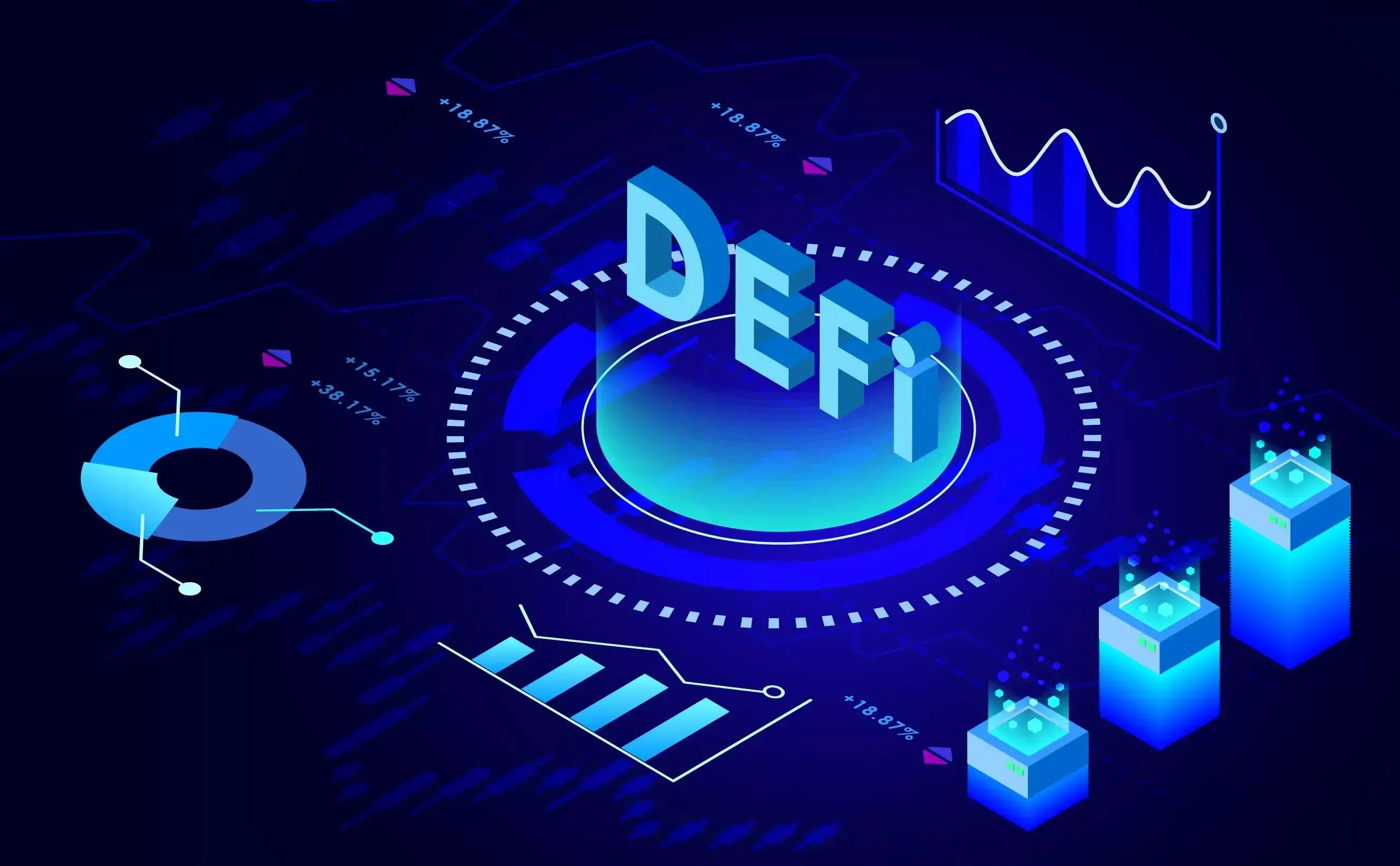
Popular articles





