








Daily Observation of Cryptocurrency Concept Stocks: Goldman Sachs Submits Bitcoin Income ETF Application to SEC, Wall Street's Cryptocurrency Product Competition Enters Second Phase

 Released on April 16, 2026. Goldman Sachs Group, Inc. (NYSE: $GS) submitted Form 485APOS to the U.S. SEC on April 14, applying to launch the Goldman Sachs Bitcoin Premium Income ETF—this is the first Bitcoin-linked ETF independently issued by Goldman Sachs in its history, utilizing a covered call option strategy to exchange some price upside potential for regular income. This move marks the official transition of Wall Street's Bitcoin ETF competition from the "spot access battle" to the second phase of "product structure differentiation"—Goldman Sachs chooses not to confront BlackRock, Inc. (NYSE: $BLK) directly with its $IBIT, but instead carves out a new investor segment with "income."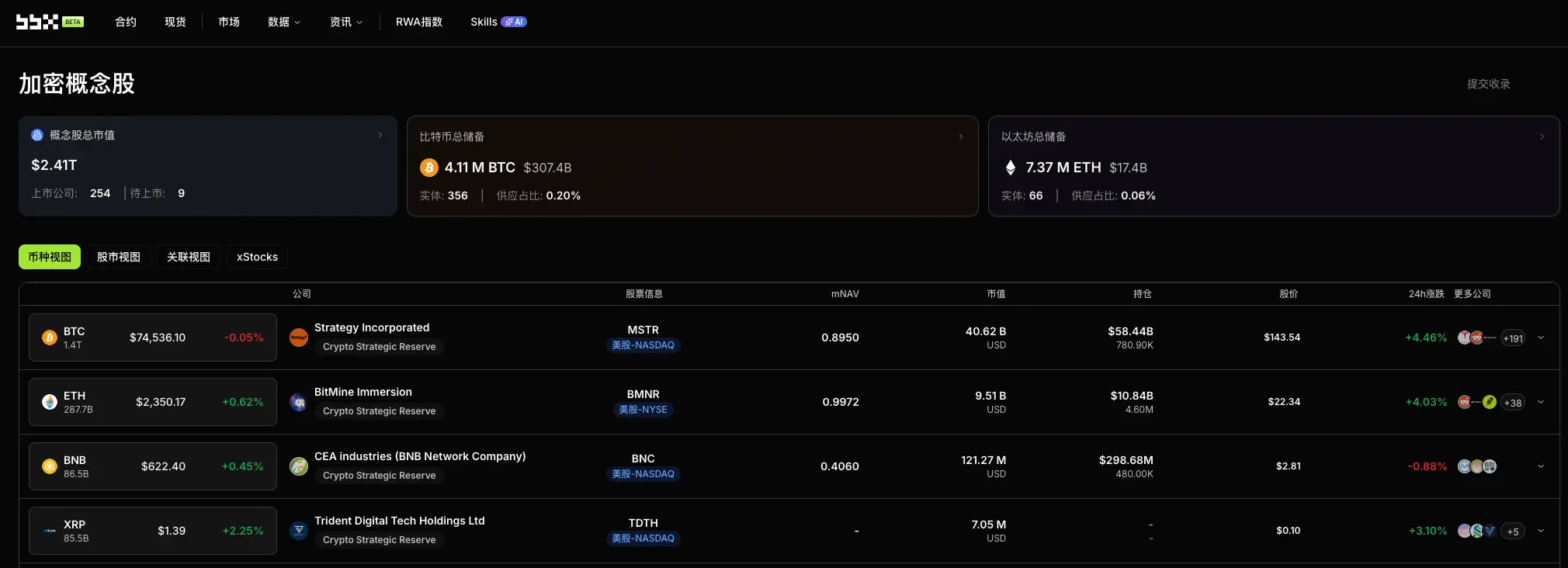
1. Product Structure: Exchange Volatility for Stable Cash Flow
Goldman Sachs Bitcoin Premium Income ETF allocates at least 80% of its net assets to instruments that provide exposure to Bitcoin, including spot Bitcoin ETP shares and related derivatives, but does not directly hold BTC; the income source is a dynamic covered call option strategy—by selling call options on Bitcoin-related ETPs and collecting premiums, the premium income is regularly distributed to investors, with the option coverage ratio dynamically adjusted between 40% and 100% based on market conditions. The core trade-off of this structure is: when Bitcoin is flat or slightly down, the premium income provides a buffer; but when BTC rises strongly, the fund will lose price gains exceeding the strike price. According to media reports, Bloomberg ETF analyst Eric Balchunas has described such covered income products as more suitable for older high-net-worth investors who prefer stable income and downside protection rather than pursuing full price gains—this aligns closely with the typical profile of Goldman Sachs' private wealth clients.
2. Strategic Positioning: Avoid the Frontline, Segment the Income Investor Circle
Goldman Sachs Asset & Wealth Management manages approximately $3.6 trillion in assets as of the end of 2025. This application marks its first proactive launch of its own Bitcoin ETF product; previously, Goldman Sachs participated in the subscription and redemption process of BlackRock's $IBIT as an authorized participant (AP). Choosing a covered call strategy instead of a spot product is essentially a rational decision for differentiated competition: BlackRock, Inc. (NYSE: $BLK) has recently managed about $55 billion in $IBIT, dominating the U.S. spot Bitcoin ETF market; Morgan Stanley's $MSBT has just entered the market with a minimum fee rate of 0.14%, directly challenging IBIT—if Goldman were to launch a third spot product at this time, it would face extreme first-mover disadvantages and pressure from fee wars. The covered income strategy product does not compete on the same dimension as spot ETFs but opens up an independent income-oriented sub-market within the Bitcoin asset class.
3. Timing Interpretation: Low Volatility Environment is Favorable for Covered Strategies
At the time of this application submission, Bitcoin was trading at approximately $74,314, down about 40% from its historical high of October 2025. In a market environment of sideways consolidation or mild decline, the covered strategy outperforms spot ETFs due to sustainable inflows from premium income; conversely, in a strong upward trend, the opposite is true—this means Goldman chose to apply at a time when BTC prices are still below the peak and the trend is unclear, which is not coincidental but a precise alignment of product logic and market timing. According to the SEC's standard 75-day review cycle, the fund could be approved and launched by the end of June 2026, and if BTC maintains its current wide fluctuation pattern, the initial attractiveness of the product will be particularly prominent.
The Second Phase of Competition Logic for Wall Street Crypto Products
Goldman Sachs' SEC application, along with CFO Jeremy Barnum's strong skepticism about stablecoin yields at JPMorgan's earnings conference the previous day, together form a highly tense panorama: both are top institutions on Wall Street, with JPMorgan characterizing the crypto industry's "yield innovation" as regulatory arbitrage, while Goldman proactively pushes "Bitcoin monetization" into the mainstream market within the regulatory framework through product forms. This divergence reflects the path differentiation of traditional financial institutions in their crypto strategies—opponents attempt to constrain competitors through legislation, while proponents choose to actively participate and seize product advantages. For investors tracking crypto concept stocks, the continuous expansion of Wall Street institutional crypto product sequences means that the financialization depth of Bitcoin is still accelerating; and once Goldman Sachs' approximately $3.6 trillion in private wealth management combines with Bitcoin income products, it will bring a new potential driving force for institutional capital inflow into related targets.
Data Source: https://bbx.com/ Crypto Concept Stock Information Database, compiled based on yesterday's announcements from global listed companies and SEC/TSE disclosure documents.
 Risk warning


Popular articles





