








Daily Observation of Cryptocurrency Concept Stocks: The Solana Reserve Logic of DeFi Development Corp. - What is the next narrative for the company's treasury after Bitcoin?

 Released on April 17, 2026. After Strategy, Inc. (NASDAQ: $MSTR) established the Bitcoin corporate reserve paradigm and Metaplanet (TSE: 3350) transplanted it to the Japanese capital market, a number of companies are attempting to replicate the same capital operation logic on Ethereum, Solana, and even broader ecological assets. DeFi Development Corp. (NASDAQ: $DFDV) is one of the most representative cases—this former commercial real estate technology company completed its strategic shift in April 2025, positioning itself as a "SOL digital asset reserve company." According to CoinGecko data, it is currently the third largest publicly listed holder of SOL globally and has achieved deep operational participation in the Solana ecosystem. Whether its logic is sustainable is a key test for determining whether the "non-Bitcoin asset reserve" track can be established.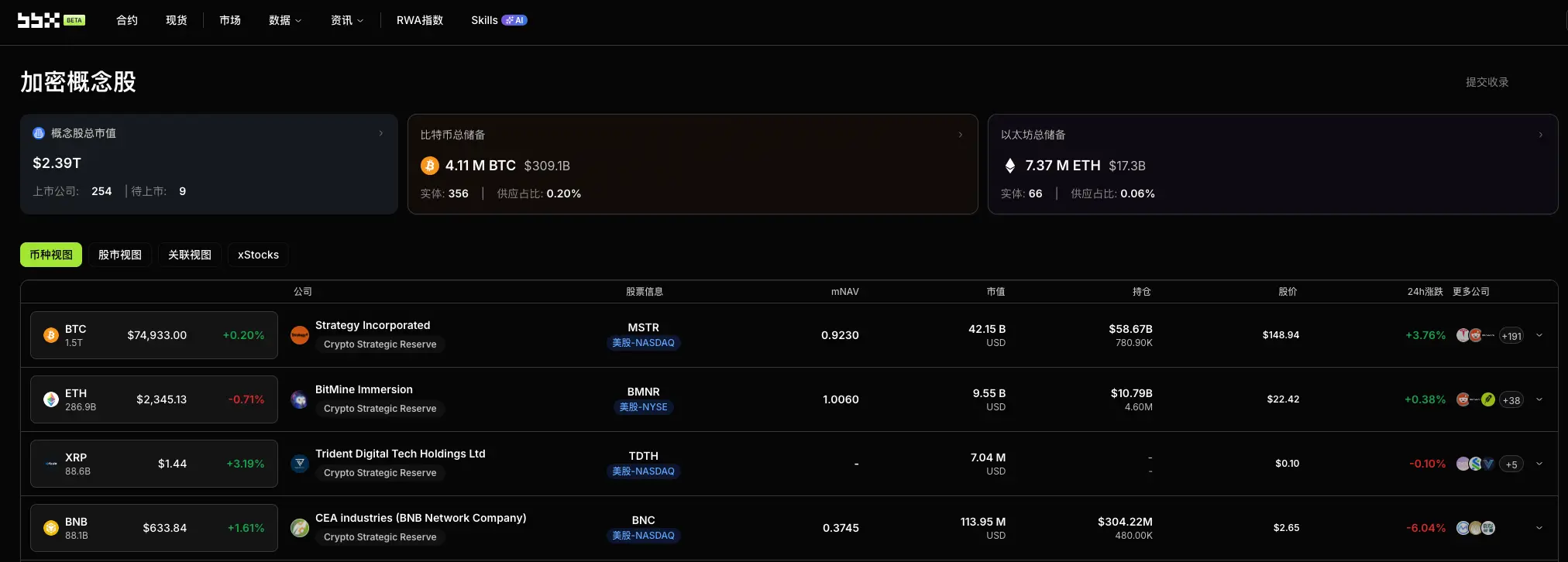
1. From Real Estate Technology to Solana Reserves: The Underlying Logic of Strategic Transformation
DeFi Development Corp. (NASDAQ: $DFDV) completed its rebranding in April 2025, transforming from its predecessor Janover Inc. to become the first publicly listed company in the United States with Solana (SOL) as its primary reserve asset; as of March 2026, according to CoinGecko data, the company holds approximately 2.196 million SOL, with a market value of about $195.6 million. The company earns staking rewards and fees through self-operated validation node staking and continuously reinvests the earnings, measuring the growth of SOL holdings per share with "SOL per Share (SPS)" as the core performance indicator. Notably, the company's FY 2025 annual revenue grew by 442% year-on-year, but this figure largely reflects the base effect and fluctuations in digital asset valuations, rather than robust growth in traditional operational income.
2. Capital Structure: The Flywheel Mechanism of Financing, Buying Coins, and Staking
The capital operation logic of DFDV is highly aligned with its Strategy—continuously financing in the public market, converting the funds into digital asset reserves, and generating protocol-native income through staking mechanisms, further increasing per-share holdings. The company has deployed a $500 million equity line of credit (ELOC) and completed $164 million in convertible debt and $149 million in equity PIPE financing; simultaneously operating dfdvSOL liquid staking tokens (issued by Sanctum, now integrated into mainstream Solana DeFi protocols such as Kamino, Drift, and Orca), as well as a DFDV franchise treasury model targeting Japan and South Korea. However, the company also candidly acknowledged key risks: due to the general contraction of mNAV premiums across the entire digital asset reserve company (DAT) industry over the past six months, DFDV's fully diluted mNAV has decreased by more than 80%, prompting the company to lower its SPS guidance for June 2026 from 0.165 to 0.085.
3. Structural Challenges in the "Non-Bitcoin Reserve" Track
Replicating the Strategy model to other assets faces a condition unique to Bitcoin that SOL currently does not possess—market capitalization size and liquidity moat. Bitcoin's global market value is approximately $1.3 trillion, with a highly stable institutional consensus, while Solana's market value is about $70 billion, with higher volatility, and the mNAV premium logic for SOL holdings is still immature. In February 2026, DFDV released a valuation framework pricing SOL at $10,000, focusing on four major sources of demand: RWA collateral, stablecoin reserves, AI agent demand, and consumer/network activity, claiming that about 90% of SOL supply is in a "structural lock-up" state. This framework is for the company's internal model and does not currently constitute market consensus; readers should critically assess its underlying assumptions.
Differentiation and Boundaries in the Corporate Digital Asset Reserve Track
From Strategy's Bitcoin to Metaplanet's Bitcoin, Bitmine Immersion Technologies (NYSE: $BMNR) Ethereum, and DeFi Development Corp.'s Solana, the ecosystem of "Digital Asset Reserve Companies" (DAT) has expanded from a single asset to multiple public chains. The internal logic of this diffusion trend is that companies are attempting to elevate the reserve model from "value storage" to "income-generating reserves" by selecting PoS assets with staking income capabilities—Bitwise $BAVA's 5.4% AVAX staking yield, along with DFDV's SOL staking flywheel, essentially point to the same product direction. The core difference lies in regulatory certainty and liquidity depth: Bitcoin's qualitative status as a commodity has stabilized, while the securities attributes of PoS assets like SOL and AVAX remain contentious, which will be a long-term variable constraining the scalability of the DAT track.
Data source: https://bbx.com/ Cryptocurrency concept stock information database, compiled based on yesterday's announcements from global listed companies and SEC/TSE disclosure documents.
 Risk warning




Popular articles





