








Dissecting 80 mainstream payment institutions and wallets worldwide
 Core Viewpoint

 A comprehensive overview of the top 100 global payment companies. Led by Alipay and WeChat, this article reveals the business logic and competitive advantages behind over 80 top players.
Author: Chen Tianyu Universe
Hello everyone, I am Chen Tianyu Universe.
There are over 200 countries and regions worldwide, thousands of payment methods, intricate regulatory licenses, fluctuations in cross-border exchange rates, and personalized payment zones, which have fragmented the global payment ecosystem into countless areas. They have built a global payment ecosystem through local clearing networks, cross-border clearing networks, mutual cooperation and links, and partnerships with banks, collectively achieving the global circulation of funds.
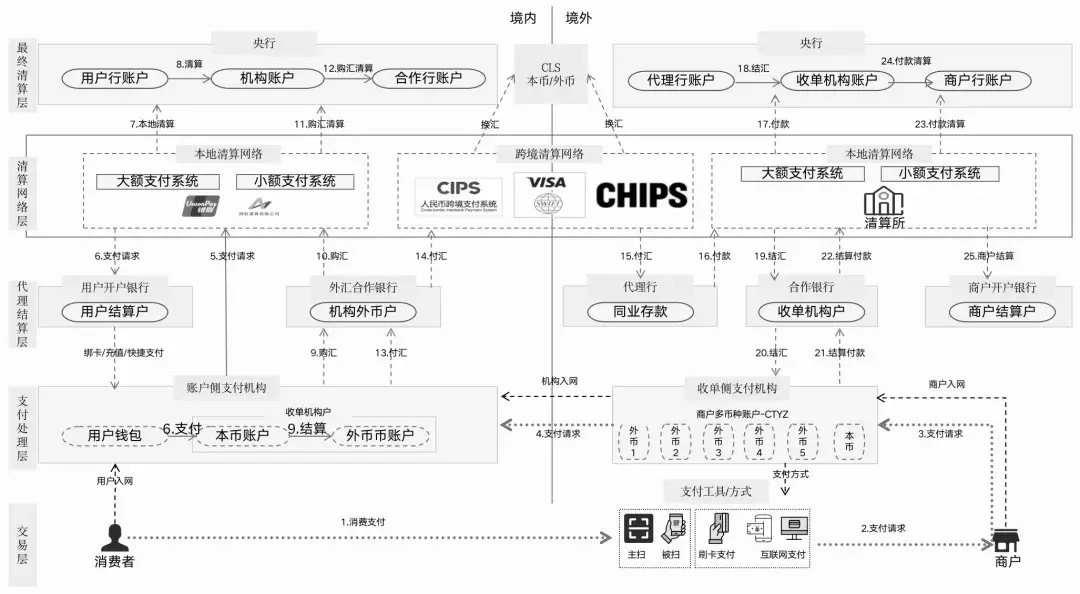
I have organized over 82 mainstream payment institutions, wallets, remittance agencies, and card organizations globally by region and ecological niche. Some specialize in acquiring, some in remittances, some in wallet aggregation, some focus on offline POS, and some provide APIs for developers.
I believe this article will greatly help everyone understand the global payment landscape and distribution.
01 Domestic Players in China
Considering that most readers are domestic practitioners, let's start with Chinese players and then extend outward.
1. Ant International
Ant International is headquartered in Singapore, with its main business spread across Asia, Europe, the Middle East, and Latin America. It is a leading global digital payment, digitalization, and financial technology provider, committed to driving inclusive growth through continuous innovation and extensive cooperation. Ant International comprises Alipay+, Antom, Bettr, WorldFirst, and others.
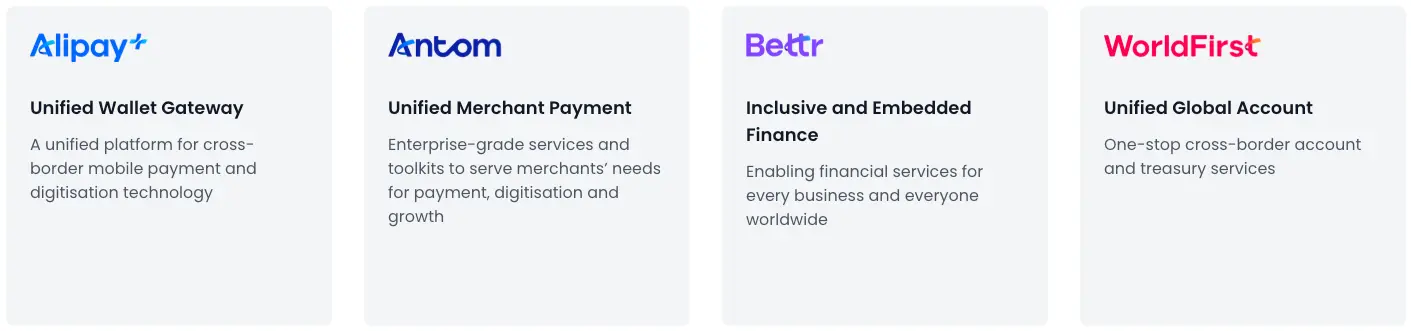
Alipay+ positions itself as a unified gateway for the world's leading payment methods, a unified wallet gateway for cross-border payments and digital services, connecting global merchants with billions of mobile users worldwide. With just one interface, global merchants can accept electronic wallets from over a dozen Asian countries. Mainstream wallets in Southeast Asia, such as Gcash, Kakao Pay, TrueMoney, and Touch 'n Go, are all part of its network. The underlying technology is supported by Ant's technical foundation and cross-border fund processing capabilities, supporting cross-border acquiring, wallet interoperability, and membership marketing. The uniqueness of Alipay+ lies in the fact that it does not replace local wallets but connects them.
Antom is Ant International's merchant payment and digital service brand, which will fully ramp up its efforts in overseas markets after 2024. Many people are unclear about the relationship between Alipay, Alipay+, and Antom. Simply put, Alipay is a payment tool for the domestic market, Alipay+ is the aggregation layer connecting global wallets, and Antom is the overseas acquiring service provided by Ant International to merchants, helping global merchants access Ant's technical capabilities and payment network. Antom's core capabilities are "payment method aggregation + digital value-added." It currently supports over 300 payment methods, covering credit cards, digital wallets, bank transfers, and buy-now-pay-later options, reaching consumers in over 200 markets and supporting settlements in over 100 currencies. Unlike pure gateways like Stripe, Antom not only does acquiring but also adds digital services on top of payments, such as helping restaurants with QR code ordering, assisting retail merchants with electronic membership marketing, and providing intelligent routing and chargeback handling for e-commerce platforms.

Bettr is Ant International's enterprise financial management platform launched in 2024. Many people may not have heard of this name, but it is actually the most behind-the-scenes of Ant International's four major business segments. If Antom is the acquiring interface, Alipay+ is the wallet aggregation layer, and WorldFirst is the cross-border account for small and medium-sized enterprises, then Bettr is the fund management system specifically serving large multinational enterprises.
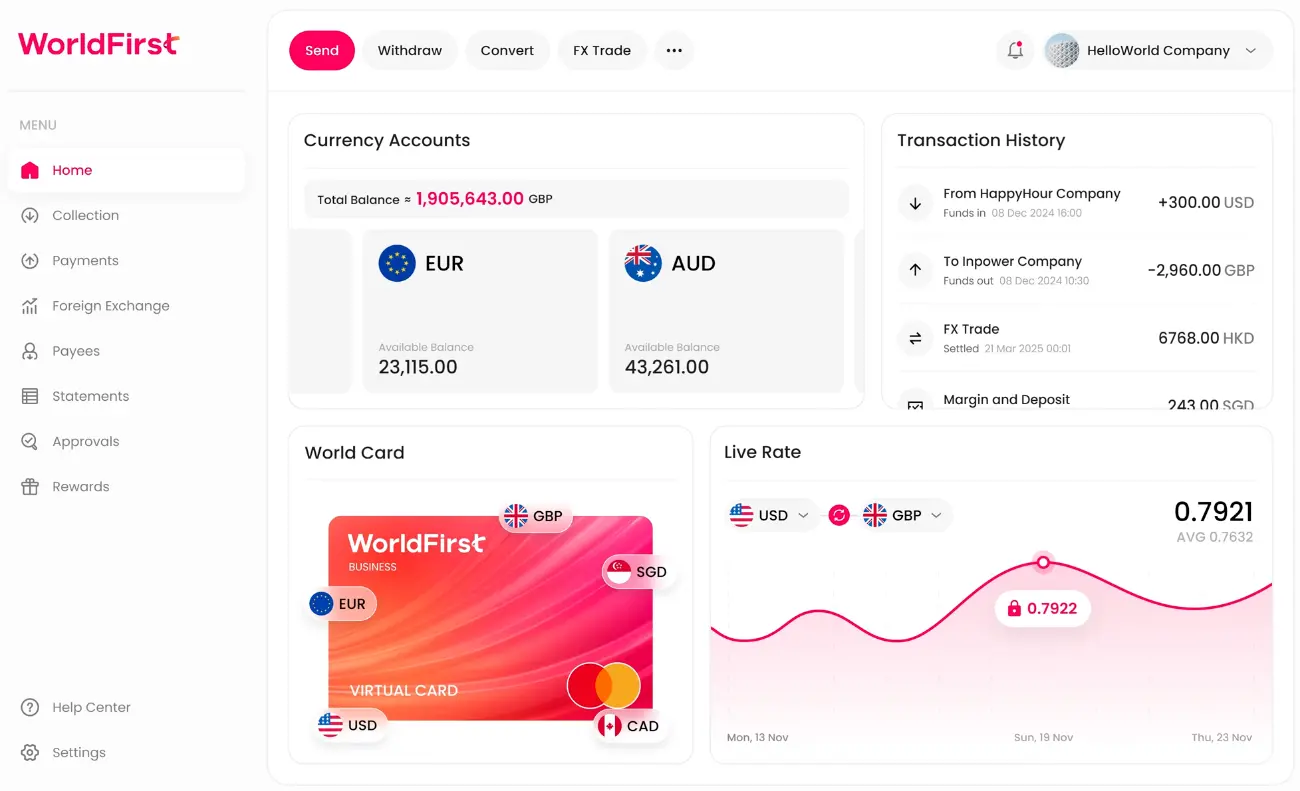
WorldFirst mainly serves cross-border sellers for payment collection and fund management. Many sellers on Amazon, Shopee, and eBay first encountered cross-border payments through WorldFirst. Its core product is a global multi-currency account, where sellers can open an account with WorldFirst to generate local receiving accounts in the US, UK, Europe, Hong Kong, Japan, etc. The platform's receipts are directly credited, and then currency exchange, payments to suppliers, and withdrawals to the domestic market can be done internally within WorldFirst. After being acquired by Ant, WorldFirst's changes include integration with Ant's ecosystem. Now, WorldFirst accounts are connected with Alipay+, Antom, and Bettr, allowing sellers to use funds from their WorldFirst accounts to pay overseas suppliers directly through Antom, purchase Bettr's currency hedging products, and complete the entire process from collection to payment to fund scheduling in one account.
2. WeChat Pay International
Unlike Alipay+'s aggregation approach, WeChat Pay International follows the strategy of "following our tourists." Wherever there are outbound tourists from our country, it will be present.
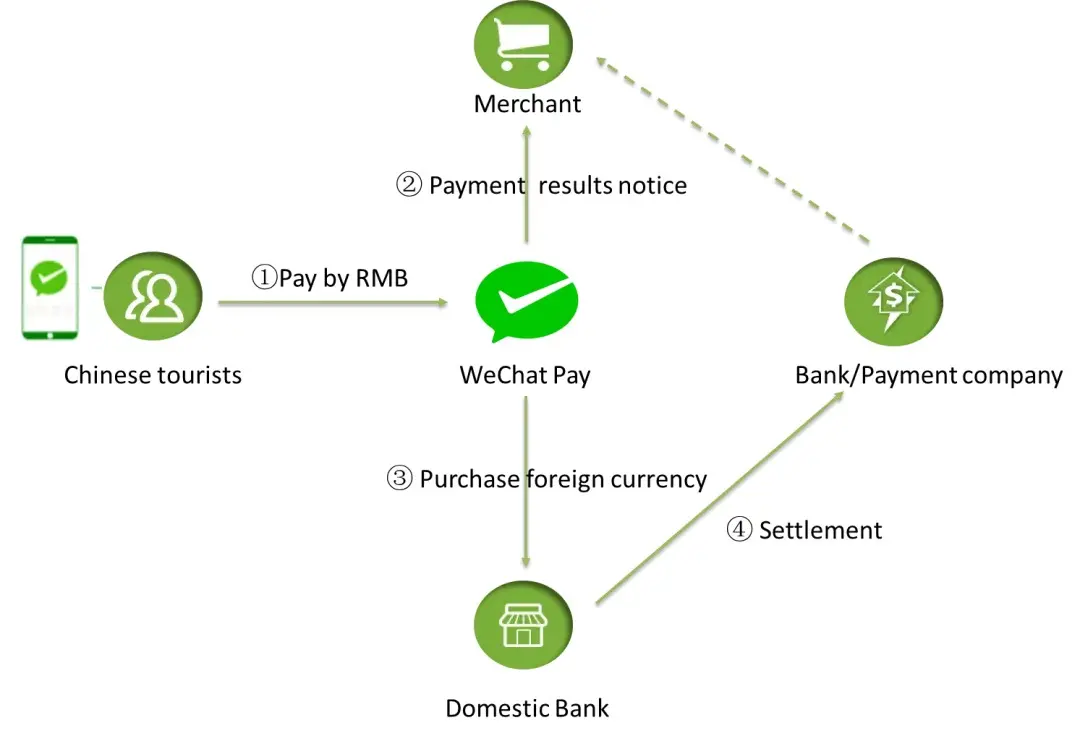
The product is cross-border acquiring, which means overseas merchants can accept WeChat Pay; there are overseas wallets, with WeChat Pay MY establishing local wallets in Hong Kong and Malaysia; and cross-border marketing, sending our users' coupons to overseas merchants. Its advantageous markets are Southeast Asia, Japan, South Korea, and popular tourist countries in Europe. Its moat is not technology, but the wallet habits of our users, as WeChat Pay is the first choice for outbound tourism. For overseas merchants, accepting WeChat Pay is not to serve locals but to capture the spending power of our tourists.
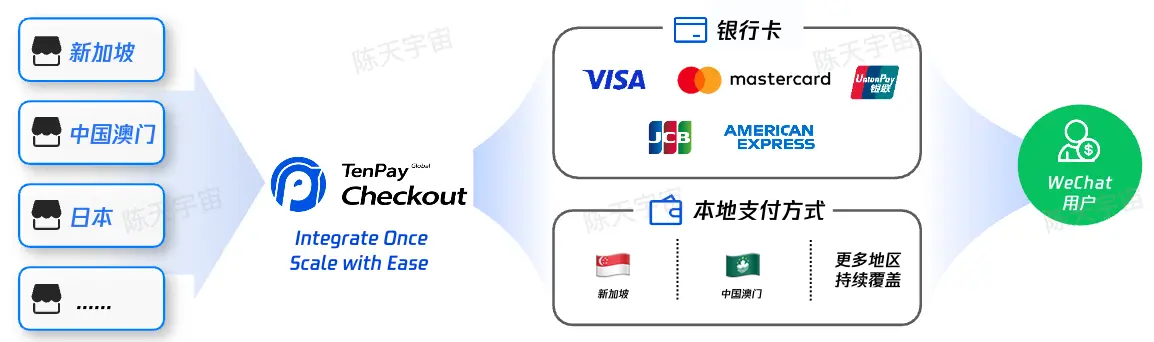
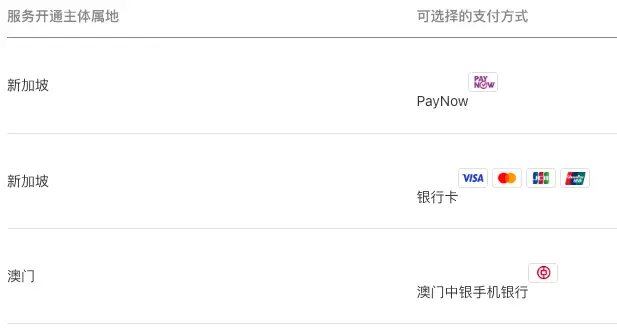
Additionally, Tenpay Global is a one-stop solution for WeChat mini-program merchants to access mainstream global payment methods, helping merchants conveniently receive payments from consumers in various countries within the mini-program scenario. The currently available countries/regions for the global cash register service are Singapore and Macau.
3. LianLian International
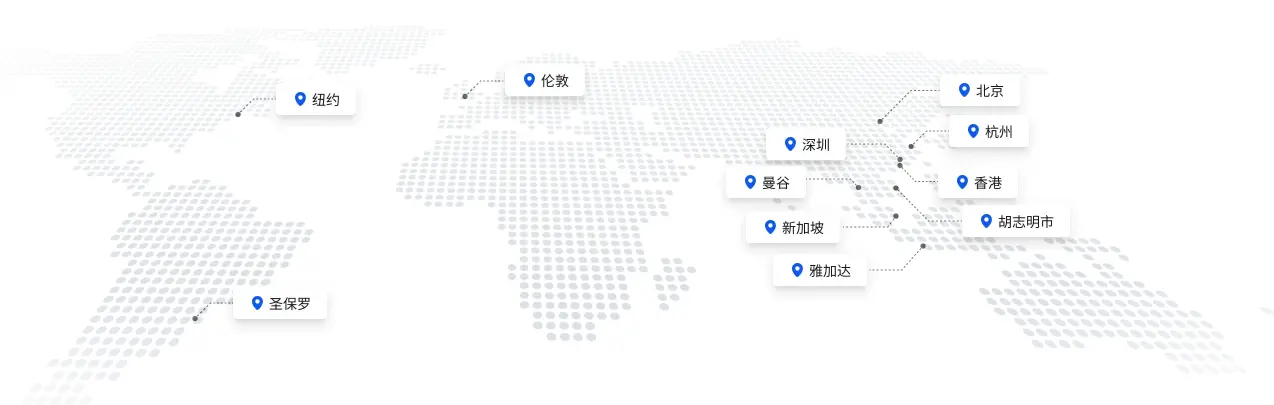
LianLian International is the cross-border payment segment under LianLian Digital, backed by LianLian's accumulation of payment licenses in China and its global acquiring network.
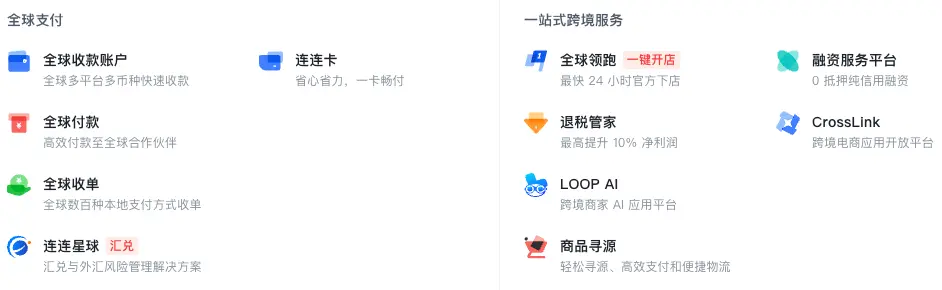
Its product line is comprehensive: global collection accounts, cross-border payments, foreign exchange services, VAT tax services, and merchant wallets. This combination addresses the full-chain needs of cross-border e-commerce sellers: from receiving payments on platforms like Amazon and Shopee to paying suppliers, paying taxes, and managing exchange rate risks, it covers everything. Seamlessly connected to over 100 global e-commerce platforms like Amazon, TikTok Shop, Shopee, and SHEIN, funds can be quickly recovered with just a click.
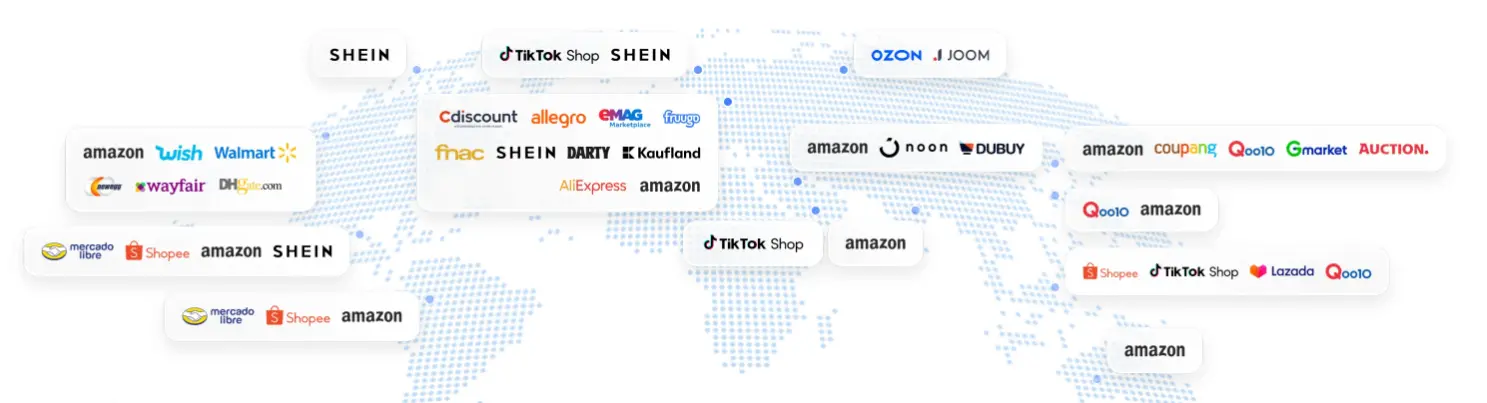
Its advantages cover Europe, North America, Southeast Asia, and Latin America, with deep penetration in cross-border e-commerce, foreign trade B2B, and study abroad payment scenarios. It acts as a financial steward for Chinese businesses going overseas, helping sellers streamline complex cross-border fund flows rather than just serving as a payment channel.
4. PingPong
PingPong is also a major player in cross-border payments emerging from Hangzhou, starting with Amazon payments and gradually expanding to collecting payments, currency exchange, and supplier payments on mainstream global e-commerce platforms (Wish, Shopee, Mercado Libre).
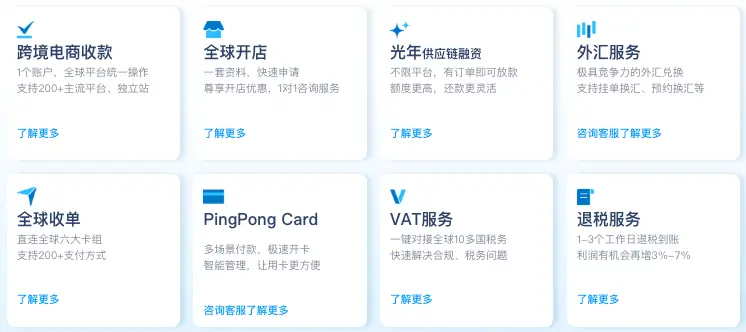
Its core capability is deep integration with global e-commerce platforms, allowing sellers to directly bind their PingPong accounts in the seller backend, automatically crediting payments, and enabling one-click payments to suppliers, VAT payments, and withdrawals to the domestic market. Its advantageous markets are cross-border e-commerce sellers in North America, Europe, Japan, South Korea, and Southeast Asia. Its strategy is transparent fees, fast settlement, and stable compliance, earning a solid reputation in the Chinese seller community. In recent years, it has also expanded into service trade scenarios, such as global payments for gaming and SaaS collections.
5. XTransfer
XTransfer focuses on a different track than the above companies—it specializes in B2B cross-border payments for foreign trade.
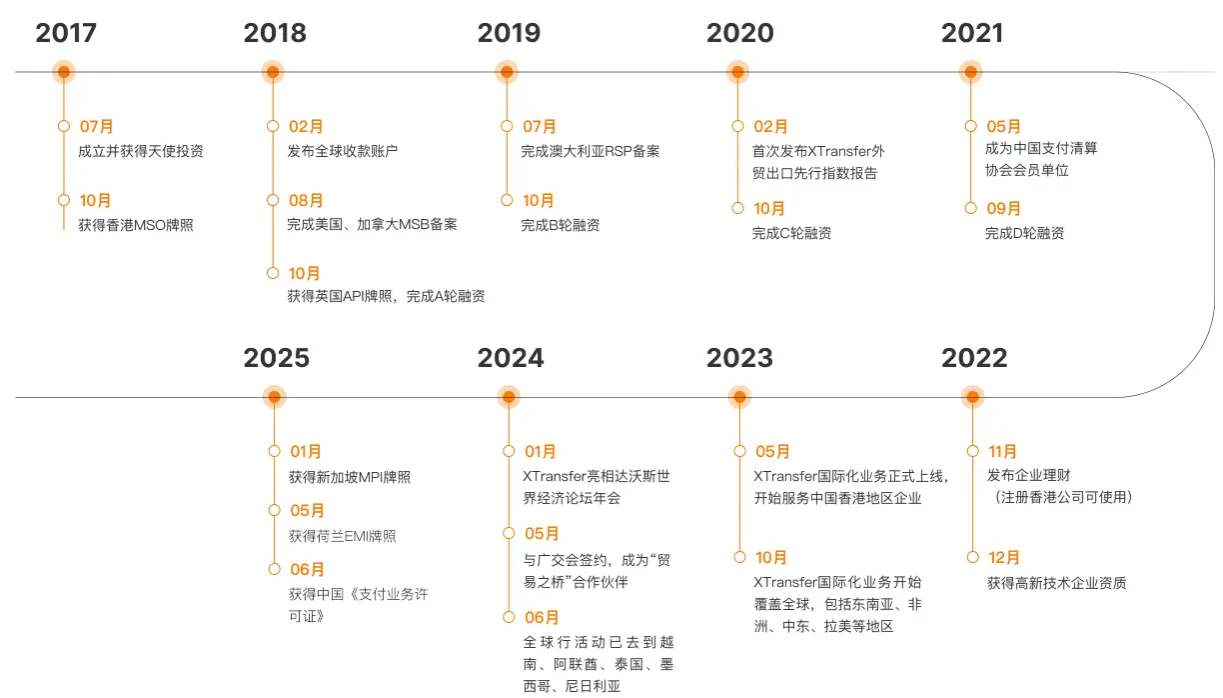
The pain points in this market are: small and medium-sized foreign trade enterprises find it difficult to open Hong Kong accounts, face high fees, and encounter high compliance risks. XTransfer collaborates with global banks like JPMorgan Chase and Deutsche Bank to provide foreign trade enterprises with global collection accounts, addressing issues like high account opening thresholds, payment rejections, and difficulties in currency exchange.
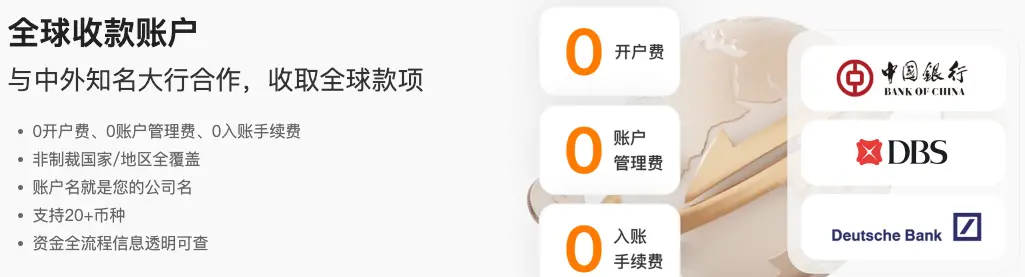
Products include global collection accounts, currency exchange, and risk control compliance services. Its advantageous markets are North America, Hong Kong, and Singapore, with a strong reputation among small and medium-sized foreign trade factories and foreign trade SOHO groups. It targets the B2B foreign trade segment often overlooked by mainstream payment institutions, enabling small and medium-sized foreign trade enterprises to collect international payments as easily as domestic payments.
6. Coral Cross-Border
Coral Cross-Border is headquartered in Hangzhou, focusing on cross-border collection in Southeast Asia and Africa.
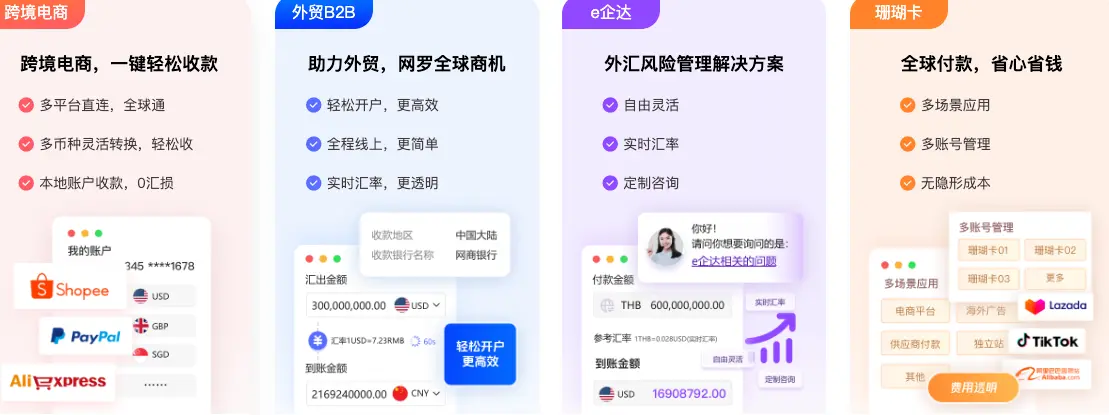
Its characteristic is deep cooperation with local banks and payment institutions to solve issues such as small emerging market currencies, significant exchange rate fluctuations, and slow fund recovery. Products include local collection accounts, such as Indonesian Rupiah, Vietnamese Dong, Thai Baht, and Nigerian Naira; cross-border payments, and exchange rate management. Its advantageous markets are Indonesia, Vietnam, Thailand, and Nigeria, with strong penetration among cross-border e-commerce and foreign trade enterprises targeting these markets.
7. PhotonEasy
PhotonEasy is a newcomer in the cross-border payment field, focusing on integrated global payments.
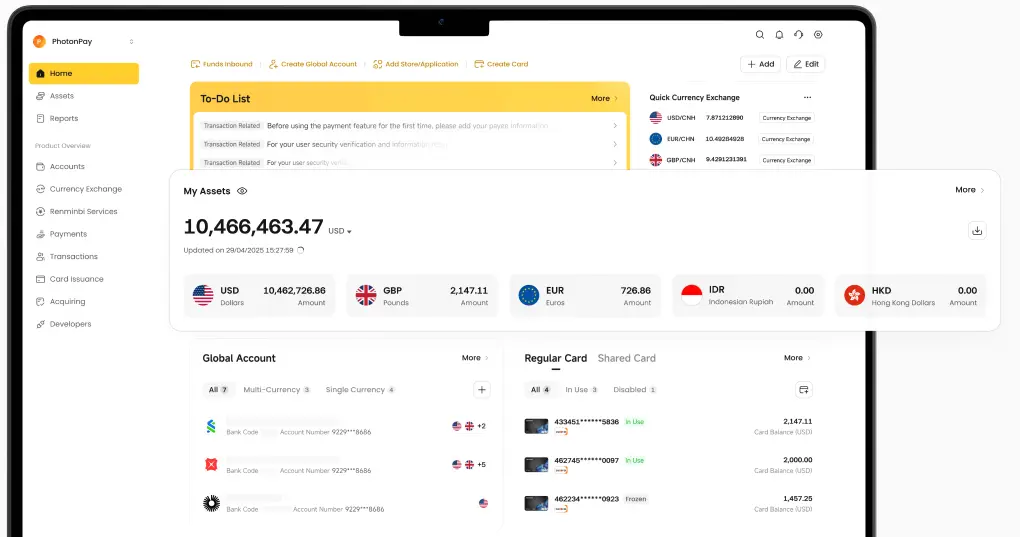
It can provide global collection accounts, international payments, card issuance, exchange rate risk management, and embedded finance. Its feature is a smooth product experience, with user-friendly API documentation, suitable for outbound enterprises with certain technical capabilities to integrate themselves. It has a certain share in SaaS outbound and app developer payment scenarios.
02 Global Payment Infrastructures
Players at this level are doing the most fundamental and labor-intensive work: packaging banks, card organizations, and local payment methods into a few lines of API, allowing developers to avoid dealing with hundreds of acquiring banks worldwide.
8. Stripe
Originating from the US, but fundamentally has the geek genes of its Irish brothers. Its moat is developer-first.
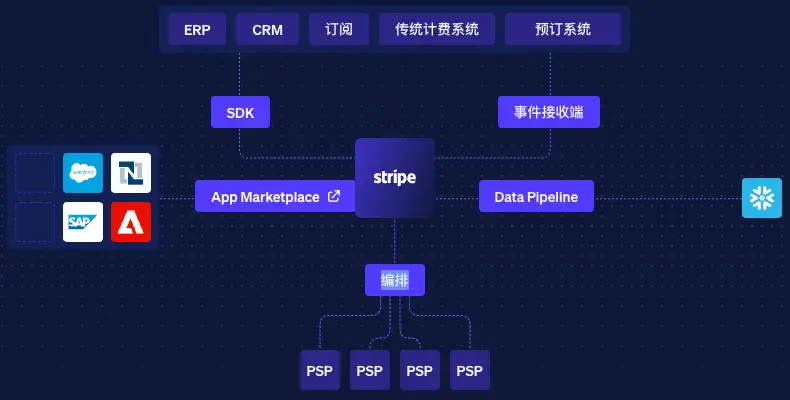
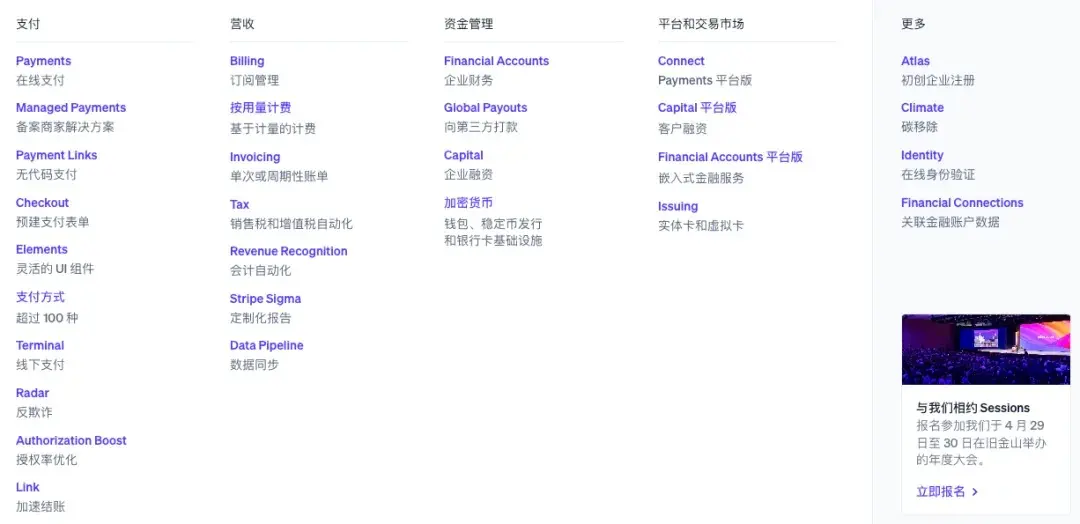
Its product matrix is comprehensive: Payments for acquiring, Connect for platform revenue sharing, Treasury for fund management, and Radar for fraud prevention using machine learning. Its advantageous markets are SaaS subscriptions and e-commerce platforms in the US and Europe, with typical clients including Shopify, Zoom, and Slack. Its valuation of $159 billion is not based on transaction fees, but on developer lock-in.
9. Adyen
A Dutch company catering to large clients. Unlike Stripe, it does not serve small merchants, only servicing large clients like McDonald's, Uber, and Spotify.

Its selling point is a single platform where acquiring, gateways, risk control, and data are all on one tech stack, eliminating the need to piece together multiple suppliers. Its advantages lie in chain retail, dining, and multinational platforms in Europe and North America. Large clients are willing to pay higher fees for a data-closed loop and globally reusable solutions.

10. Airwallex
Airwallex is the most technology-driven among these three, with dual headquarters in Singapore and San Francisco. Its positioning is not for cross-border e-commerce collection but as a global payment infrastructure. Starting from cross-border collection, it extends to global payments, currency exchange, card issuance, and fund management, creating enterprise-level cross-border bank accounts. Specifically, they integrate the entire financial lifecycle of enterprises, covering all aspects of cross-currency, cross-entity collection, fund management, and payment.
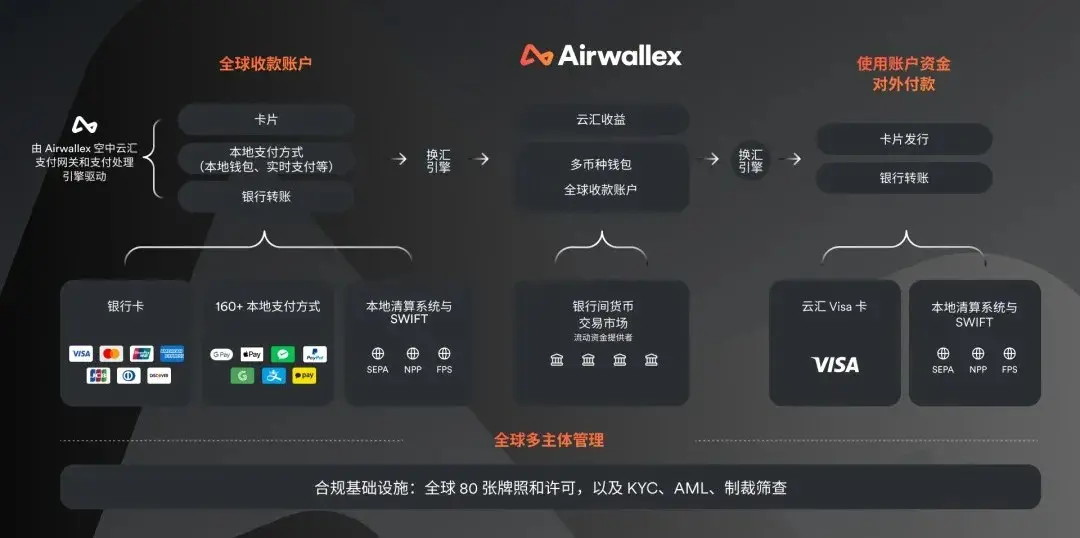
Core products include global multi-currency collection accounts, international payments, foreign exchange, cloud cards, and fund management APIs. It covers the Asia-Pacific, North America, Europe, and the UK, with deep penetration in cross-border SaaS, e-commerce platforms, and outbound enterprise scenarios.
Annual revenue surpasses $1 billion, going from $500 million to $1 billion in just one year
Annual transaction volume exceeds $260 billion, with 94% settled on the same day
Over 80 financial licenses globally, covering more than 200 countries and regions
Helped clients save $1.2 billion in cross-border costs in one year
More than half of clients use multiple products, with net promoter scores rising from 50+ to 60+
11. Payoneer
Payoneer is often compared with WorldFirst, but the two companies have different qualities. After being acquired by Ant, WorldFirst increasingly resembles a piece of the Ant International ecosystem, while Payoneer is a publicly traded company in the US, more like an independent global player. Its 2024 financial report shows an annual transaction volume exceeding $80 billion, covering 190 countries and regions, supporting over 7,000 trade channels.
Founded in 2005, it is a decade earlier than many cross-border payment players. Initially, it helped small and medium enterprises operating globally solve the pain points of cross-border payments: safety and compliance, faster than banks, and lower fees, perfectly timing the explosive wave of cross-border e-commerce from 0 to 1. Early eBay and Amazon sellers primarily used Payoneer for cross-border payments. Payoneer now focuses on a one-stop financial stack, revolving around "Collect, Manage, Grow, Expand."
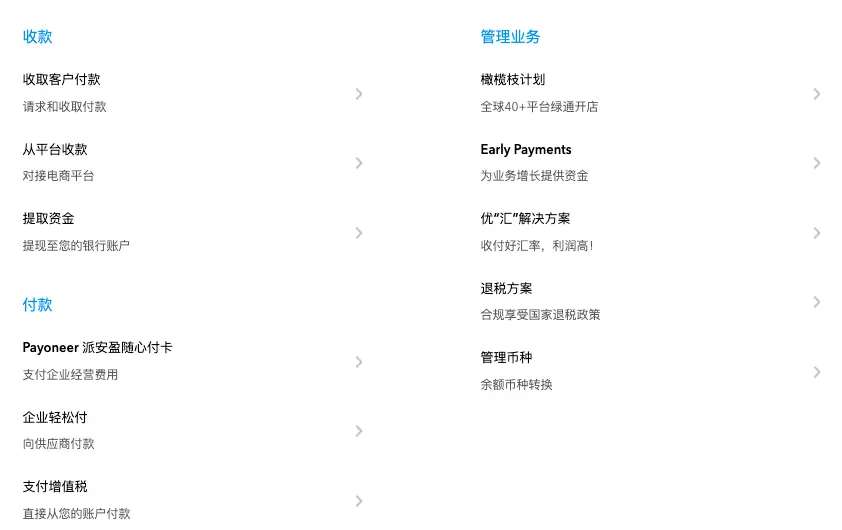
Collect refers to multi-channel collection, supporting over 40 global e-commerce platforms like Amazon, Shopee, and Mercado Libre, as well as local collection accounts covering currencies like USD, EUR, GBP, JPY, and Mexican Peso, allowing sellers to collect money using local accounts, saving on intermediary bank fees for cross-border transfers.
Manage refers to multi-currency fund management, allowing accounts to hold over 70 currencies, facilitating free currency exchange, bulk payments to suppliers, and VAT payments.
Grow refers to growth empowerment, with a product called the "Olive Branch Program" that helps Chinese sellers connect with over 40 global e-commerce platforms, essentially a green channel for entering Walmart e-commerce, Mercado Libre, and South Korea's Coupang. Payoneer assists with these connections.
Expand refers to market expansion, including data insights, localized operational support, and even co-hosting summits with Latin American e-commerce giant Mercado Libre, planning to support 600 Chinese enterprises entering the Latin American market within three years.
12. Checkout.com
A player from London, often referred to as Stripe's mirror in Europe, but with a more customized approach, offering high-end payment solutions.
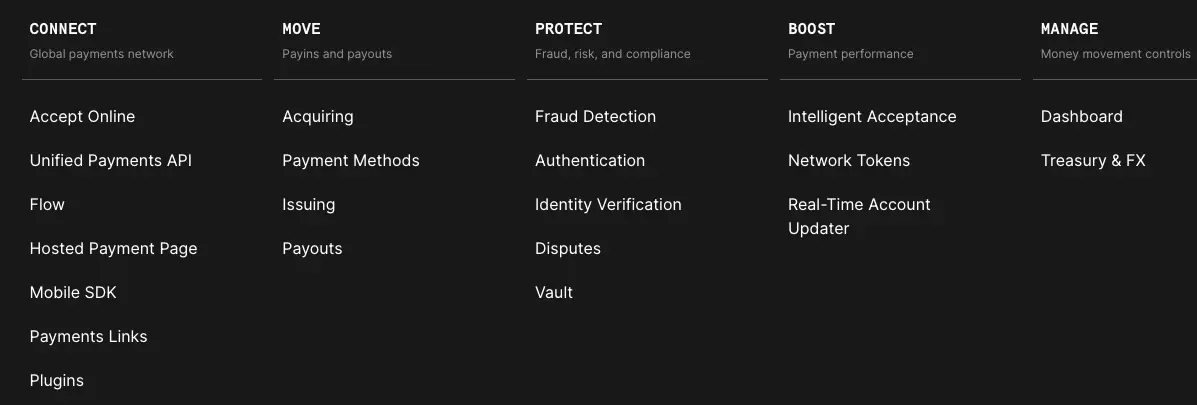
It does not operate a standardized plugin store but sends solution teams to write code and adjust parameters with large clients, especially excelling in high-compliance industries like cryptocurrency, foreign exchange, and gaming. Clients include Coinbase, Sony, and Shein.
13. PayPal
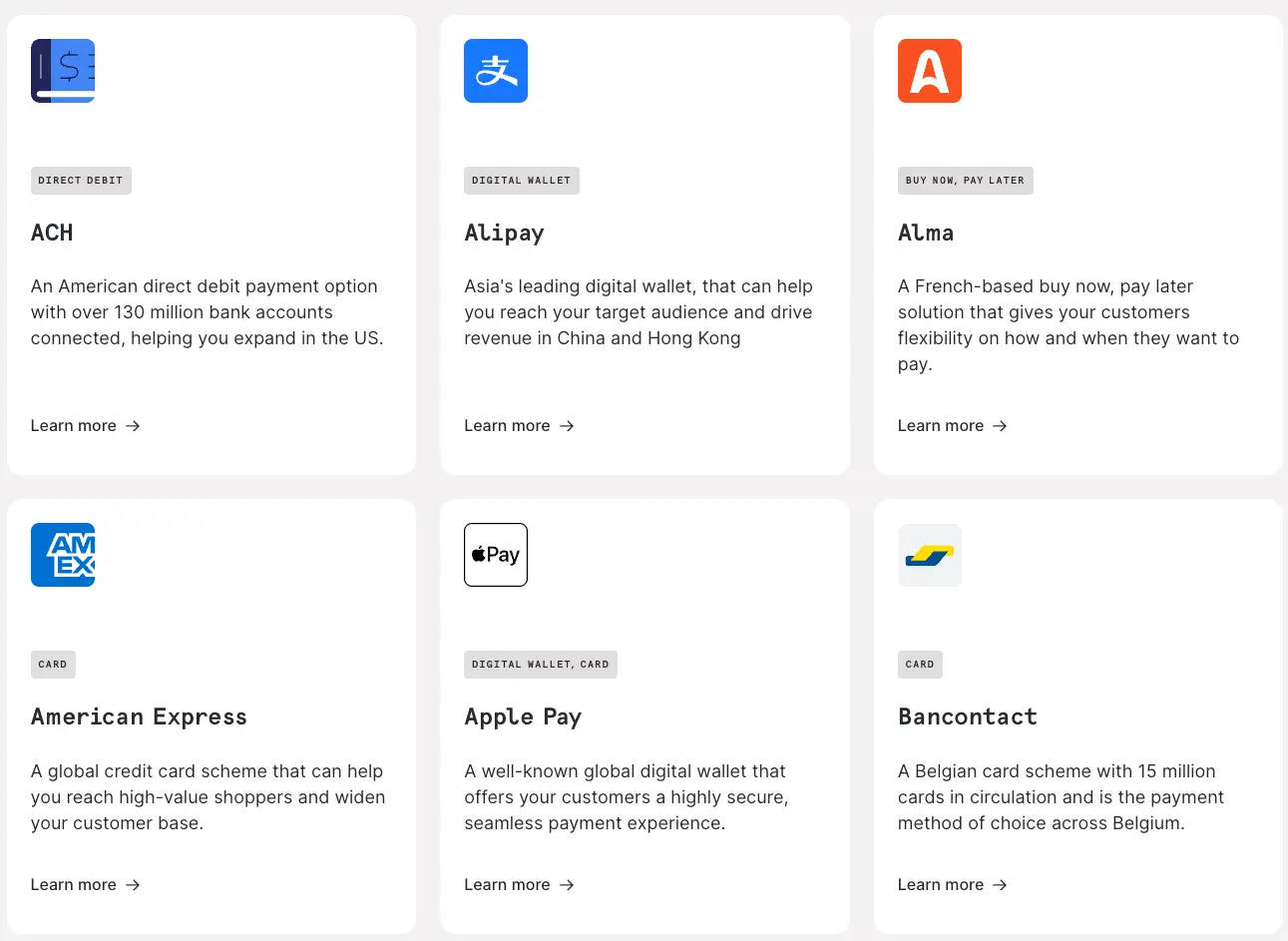
The elder brother of global digital wallets, with over 400 million users. Its foundation is on the consumer side, starting with buyer accounts and then pushing merchants to integrate. After acquiring Braintree in 2013, it also serves large clients like Uber and Airbnb.

Its greatest asset is user habits: many people are too lazy to enter card numbers and can just click PayPal to proceed.
14. Square/Block
It follows a soft and hard integration route: using a small white square card reader to engage offline micro-merchants, then extending Square Online to help them create online stores, Square Capital for small loans, and Cash App for consumer wallets.
Its soul is serving those overlooked by banks: street vendors, food trucks, and freelancers. It has advantages in the US, Canada, and Japan, and is a benchmark in the micro-merchant aggregation payment segment.
15. Bolt
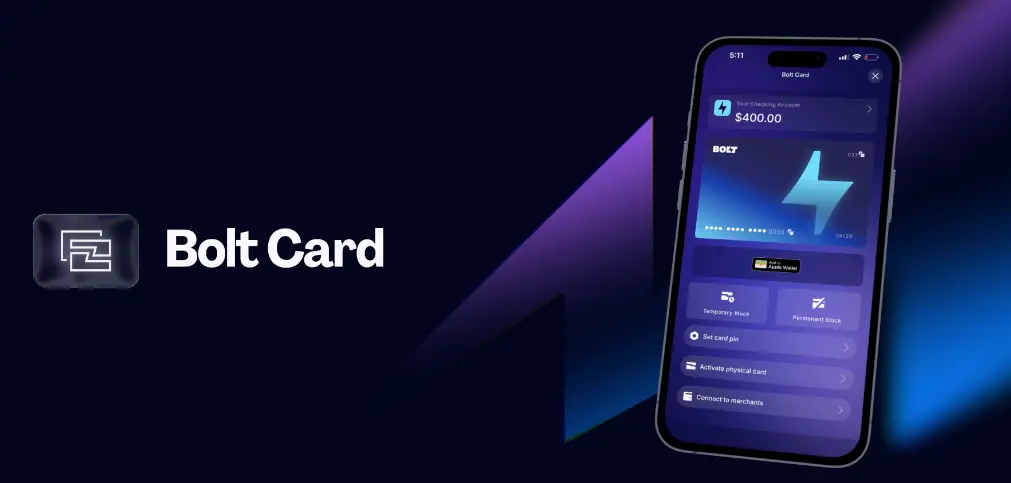
Bolt is a one-click checkout player in the US, focusing on allowing users to avoid repeatedly filling in addresses and card numbers. It integrates deeply with e-commerce platforms like Shopify and Salesforce, providing brand merchants the ability to skip the checkout page. Its goal is to create infrastructure at the shopping cart level.
03 Traditional Acquiring Giants
While tech companies focus on products and developer ecosystems, these players focus on acquiring licenses and merchant networks.
16. Worldline
The national team for acquiring in Europe. Formed from the merger of several European acquiring banks under France's Atos payment business, it is essentially an acquiring bank with licenses across various European countries.
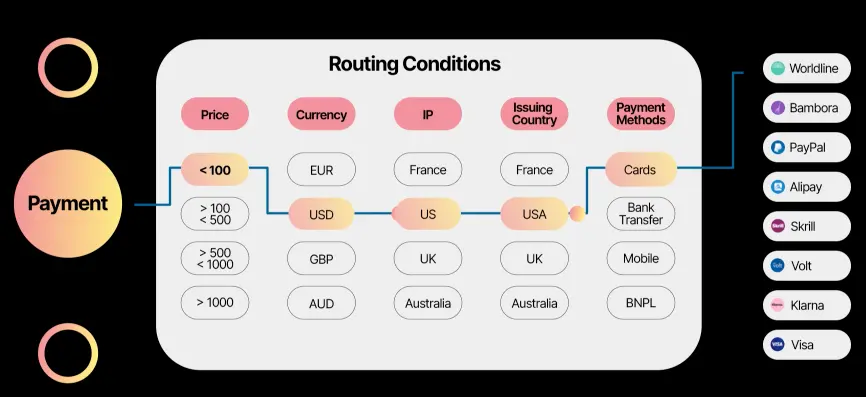
Especially in the POS acquiring field, its terminals are everywhere from France, Germany, to Belgium. Clients include large local retailers, chain restaurants, and public institutions. Worldline's gateway simplifies complex payment processes for global merchants while providing consumers with more local payment options.
17. Global Payments
A giant in acquiring in the US, with a focus on North America and cross-border transactions. It has several brands, including Heartland serving the restaurant retail sector, OpenEdge for small and medium enterprises, and Evo strengthening its presence in Europe and Latin America.
Its core capability is omnichannel acquiring: integrating online, offline, and mobile. It mainly operates in the US, Canada, the UK, and Australia, serving large retailers, hotels, healthcare, and education sectors.
18. JPMorgan Chase/Paymentech
The merchant acquiring division of JPMorgan Chase, consistently ranked first in transaction volume globally.
Its core advantage is not technology but its clearing network and one-stop banking services, allowing enterprises to manage payments and funds all in one bank, eliminating the hassle of multiple integrations. Its clients are almost all Fortune 500 companies, such as Amazon, Starbucks, and Walmart.
19. Fiserv/First Data
The largest merchant acquiring service provider globally by terminal count. It has deep roots in the offline POS sector, with its Clover brand being one of the best-selling smart POS systems in North America.
Its products cover the full spectrum from micro-merchants to large enterprises, particularly in the restaurant, retail, and gas station sectors in the US, Canada, the UK, and Australia. Its strategy is wide channels, comprehensive products, and stable reliability.
20. Elavon
Elavon is a global payment processing service provider under U.S. Bank. It focuses on providing businesses with secure and efficient payment solutions, supporting various transaction methods, including credit cards, debit cards, and mobile payments.
Its advantages lie in Europe and North America, with deep penetration in the aviation, hotel, and tourism industries. Its characteristic is its deep integration with the parent bank's fund management business, allowing large enterprises to handle acquiring and corporate accounts in one stop.
21. Nexi
The second-largest acquiring bank in Europe, originating from Italy, second only to Worldline, formed through the acquisition of Nordic Nets and Germany's Concardis.
Its strategy is to connect Europe's fragmented acquiring market to create economies of scale. Its advantages are in retail chains, public institutions, and e-commerce platforms in Italy, the Nordic countries, Germany, and Austria.
22. EVO Payments
A global commercial acquiring institution and payment processing company, mainly providing payment solutions for merchants in North America and Europe. Headquartered in the US, it was acquired by Global Payments in 2021 but operates independently.
It has a strong acquiring network in Central Europe, Eastern Europe, and Latin America, especially in markets like Poland, the Czech Republic, and Mexico. Its products include POS acquiring, payment gateways, and card processing.

04 Asia-Pacific and Southeast Asia
The Asia-Pacific region has the highest density of electronic wallets and is the most active market for cross-border payments. Players here can be divided into two categories: wallet aggregators, which help international merchants access multiple wallets; and local wallet kings, who dominate their own territories.
23. 2C2P
An established player, acquired by Fiserv in 2023 but operates independently. It has been deeply rooted in Southeast Asia for over a decade, integrating 250 local payment methods from Thailand, Indonesia, Vietnam, and the Philippines, such as bank transfers, electronic wallets, counter cash, and operator billing into a single API.
It mainly operates in cross-border e-commerce, game distribution, and digital content subscription in Thailand, Singapore, Malaysia, and Vietnam. Clients include Emirates Airlines, Nike, and Uniqlo, helping international merchants avoid the hassle of connecting with dozens of local payment providers in Southeast Asia.
24. Xendit
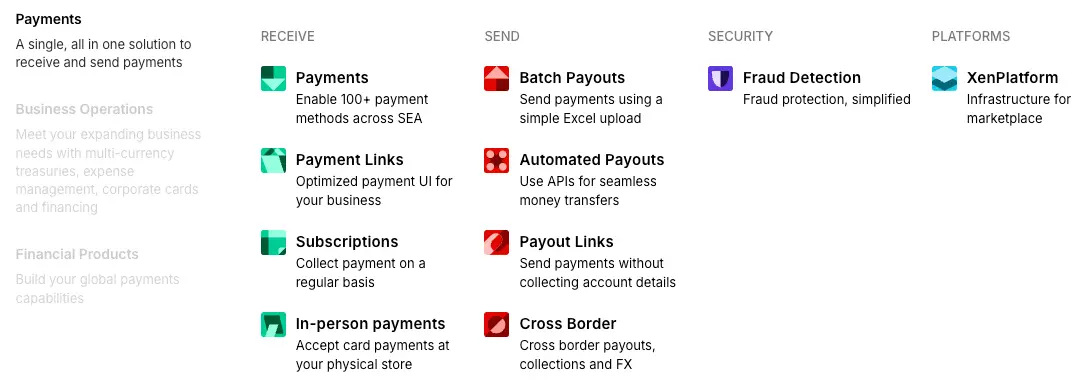
Secured $300 million in funding in 2022. It is a robust infrastructure emerging from Indonesia, where the dispersed islands, low bank penetration, and fragmented payment methods led Xendit to standardize virtual account transfers, retail cash payments, and electronic wallets into APIs.
Its culture is similar to Stripe: developer-first, clean documentation, and support for sandbox testing.
25. Doku
An established local payment player in Indonesia, founded in 2007 and later acquired by Indonesia's telecom giant Telkom. It secured a position in virtual account transfers and ATM transfers during Indonesia's e-commerce boom.
Products include acquiring gateways, bulk payments, and electronic wallets. It has advantages only in Indonesia but covers most leading e-commerce and online merchants in the country, including Tokopedia, Bukalapak, and Traveloka. It is a typical example of penetrating a single market.
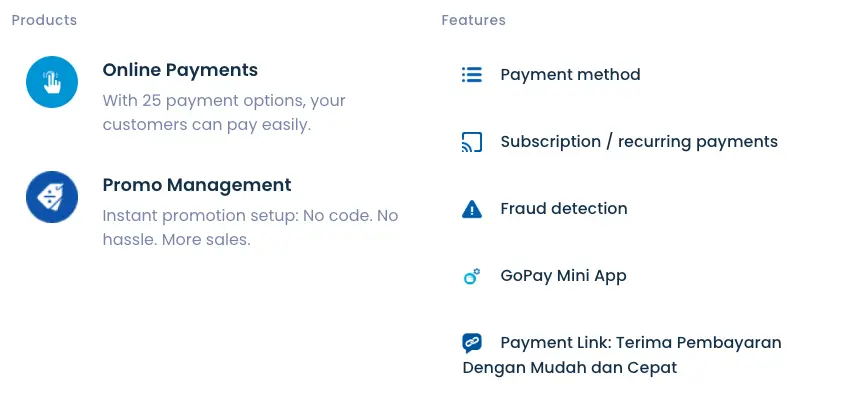
26. Midtrans
Another major payment gateway in Indonesia, later acquired by GoTo and deeply integrated with GoPay.
Products include acquiring gateways, payment routing, and installment payments. It focuses on providing secure and efficient payment gateway solutions for e-commerce, subscription services, education, and finance sectors. It supports up to 24 local payment methods, including electronic wallets like GoPay, OVO, Dana, credit/debit cards, bank transfers, and convenience store cash payments.
27. GHL Systems
A publicly listed company in Malaysia and an established payment service provider in Southeast Asia, founded in 1999. It operates with both offline acquiring and online gateways, holding acquiring licenses and POS terminal networks in Malaysia, the Philippines, Thailand, and Indonesia. Products include POS acquiring, payment gateways, and prepaid card issuance.
28. GrabFin / GrabPay
The fintech segment under Grab. Grab operates as a combination of Didi, Meituan, and Alipay in Southeast Asia, with GrabPay serving as the wallet in this ecosystem.
Products include the user-facing GrabPay wallet, merchant acquiring, small loans, and insurance. It covers six countries in Southeast Asia and occupies a natural monopoly position in the payment loop for ride-hailing, food delivery, and fresh produce distribution. Its value lies not in technology but in scenario control.
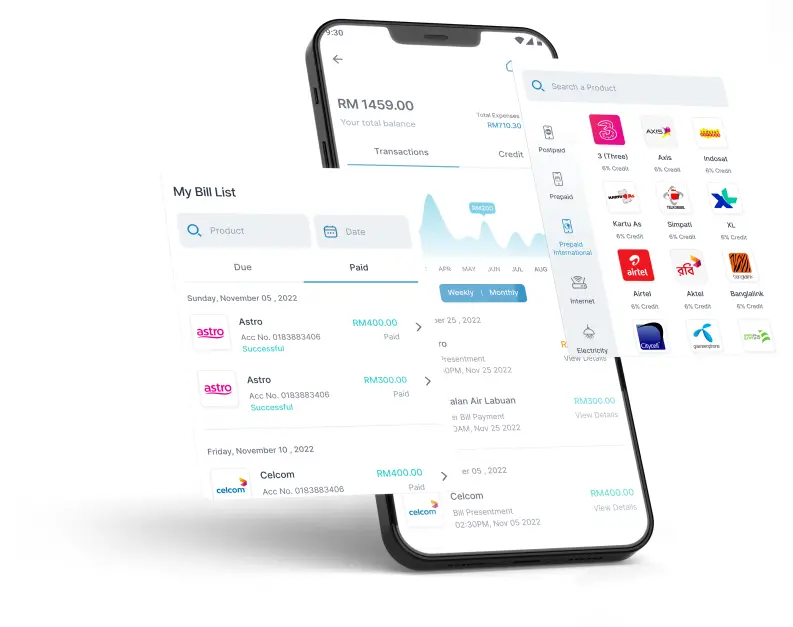
29. GoPay
A wallet under GoTo, one of Indonesia's two major wallets. Similar to GrabPay, it started with ride-hailing and food delivery scenarios and then extended to offline QR code payments, merchant acquiring, and small loans. It is deeply integrated with the GoTo ecosystem.
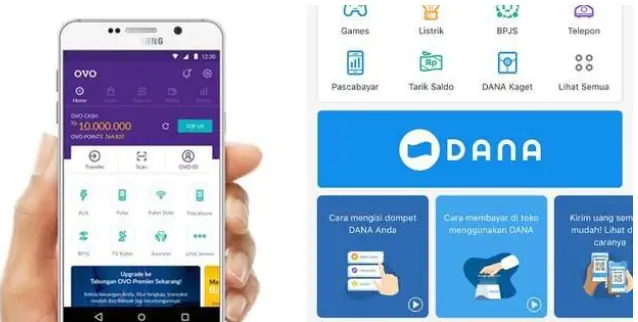
30. OVO
Another major wallet in Indonesia, backed by the Lippo Group and Grab, with Grab also being a shareholder. OVO has extensive coverage among offline merchants in Indonesia, especially in convenience stores, dining, and retail scenarios. Its characteristic is being an open wallet, not just serving one super app but being integrated as a universal payment tool across various apps.
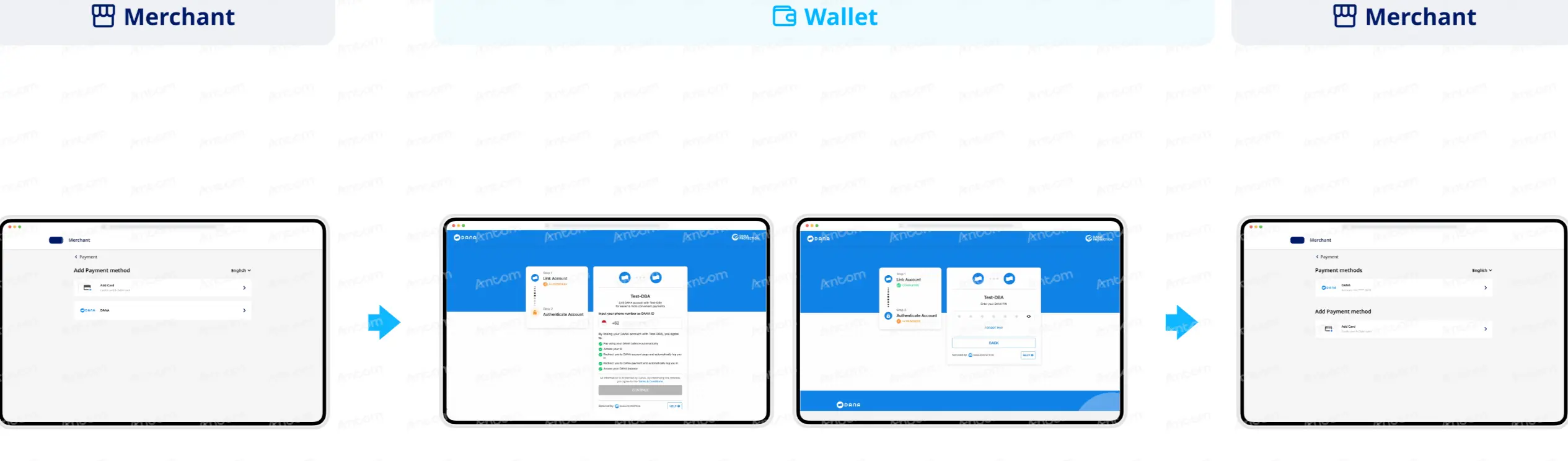
31. DANA
A local wallet in Indonesia, strategically invested by Ant Group. In the wallet battle among OVO, GoPay, and DANA in Indonesia, DANA has firmly established itself with the support of Ant's technology and scenario penetration, deeply binding with Bukalapak and BRI Bank.
The core of its product is the wallet, including P2P transfers, QR code payments, bill payments, and merchant acquiring. Its advantages lie in Indonesia's second- and third-tier cities and among small and micro merchants.
32. TrueMoney
Thailand's largest electronic wallet, backed by Charoen Pokphand Group and Ant Group. TrueMoney not only operates as a wallet in Thailand but also has a nationwide agent network, similar to the Philippines' GCash, allowing users to deposit cash into their wallets at 7-11 or TrueMoney agent points. It supports mobile payment services in Thailand, Cambodia, Vietnam, and several other countries.

33. GCash
The largest electronic wallet in the Philippines, with over 80 million users, covering nearly the entire adult population of the Philippines. It serves as the digital bank for Filipinos, providing not just payment tools but also a full suite of financial services including deposits, loans, insurance, investments, and cross-border remittances. It includes GCash wallet, merchant acquiring via GCash QR, small loans, and deposits. It is the absolute ruler in the Philippine payment ecosystem.
34. Maya
Another major wallet in the Philippines, upgraded its brand to Maya in 2022, evolving from a simple wallet to an integrated "bank + wallet + acquiring" model. It has obtained a digital banking license in the Philippines, with Maya Bank providing deposit, loan, and credit card services. Products include Maya wallet, Maya Business, and Maya Bank. Its strategy is to bundle payments and finance with a banking license.
35. Kakao Pay
A national wallet in South Korea, emerging from the Korean version of WeChat, Kakao Talk. South Korean users can send red envelopes, transfer money, pay utility bills, buy insurance, and invest in funds all within Kakao Talk. Its advantage is in South Korea, with a C-end penetration rate close to 90%. Its moat is the social relationship chain of Kakao Talk, with payments being an extension of social interactions.
36. Naver Pay
Another major national wallet in South Korea, backed by Naver, the largest search engine in South Korea. Unlike Kakao Pay, Naver Pay excels in e-commerce scenarios, with Naver Shopping being the largest e-commerce platform in South Korea, and Naver Pay being its default payment method.
37. PayPay
Japan's dominant QR code payment solution. Japan was originally a cash kingdom, but after SoftBank and Yahoo Japan jointly established PayPay, they used 10 billion yen in cashback to forcefully popularize QR code payments.
It mainly focuses on wallet QR code payments, transfers, and merchant acquiring. Its advantages lie in offline convenience stores, dining, and micro-retail in Japan, with over 60 million users and over 4 million merchants. It is a typical case of capital-driven payment expansion.
38. Line Pay
Another major wallet in Japan, backed by the mainstream social app Line. Line Pay's advantage is its binding with the Line social ecosystem, allowing users to send red envelopes, transfer money, and make payments within Line. It includes Line Pay wallet and merchant acquiring.
39. Rapyd
Headquartered in the UK/Israel, but with operations spanning the globe. It is the aggregator of payment aggregation. It integrates over 900 payment methods worldwide, including cards, wallets, bank transfers, and cash, into a single API, allowing enterprises to connect globally with one interface.
This includes acquiring, card issuance, fund management, and foreign exchange. It primarily serves cross-border payment scenarios in emerging markets like Latin America, Southeast Asia, and the Middle East. Its clients are mainly multinational enterprises, outbound platforms, and SaaS companies needing global payment solutions.
05 Latin America
Latin America is a market with extremely high payment complexity, low credit card penetration, a strong cash culture, and volatile political situations, but this has also given rise to a batch of payment institutions addressing specific pain points.
40. Mercado Pago
The payment platform under Latin America's e-commerce giant Mercado Libre, serving as the cornerstone of the entire Latin American payment ecosystem. It integrates e-commerce and payments, allowing users to pay using Mercado Pago by default when buying on Mercado Libre, then extending from e-commerce scenarios to offline QR code payments, P2P transfers, and investment services. It covers major Latin American countries like Argentina, Brazil, Mexico, and Chile.
Its moat is the e-commerce scenario of Mercado Libre, making it akin to the "Alipay" of Latin America.
41. PagSeguro
A payment giant in Brazil, founded in 2006, initially aimed at enabling small merchants in Brazil to accept credit cards. It involves card machines, QR code payments, online acquiring, and bank accounts. It has extremely high penetration among micro-merchants, freelancers, and individual entrepreneurs. Its strategy is similar to that of Square in the US: using hardware to pry open the market and binding customers with bank accounts. It is also one of the largest online payment solution providers in Latin America, mainly serving the online and face-to-face payment needs of e-commerce, virtual stores, and physical merchants.
42. Stone
Another major acquiring player in Brazil, directly competing with PagSeguro. However, Stone focuses more on medium-sized merchants and enterprise clients, with products including POS terminals, payment gateways, corporate bank accounts, and credit. It has advantages in Brazil's retail chains, dining, and service industries. Its strategy is to serve the full lifecycle of merchants, from acquiring to loans to financial management.
43. Cielo
The largest acquiring bank in Brazil, established by a joint venture between Brazil's two major banks, Bradesco and Banco do Brasil. It is the king of bank-affiliated acquiring, possessing the broadest POS terminal network in Brazil. It includes POS acquiring, payment gateways, and prepaid cards among its payment products, covering the entire spectrum from large retailers to micro-merchants.
44. Getnet
Another major acquiring bank in Brazil, belonging to the Santander banking group. Similar to Cielo, but with deeper penetration in the small and medium merchant market. Its products include POS acquiring, payment gateways, and digital accounts.
45. Clip
A rising payment player in Mexico, listed in 2021 with a valuation of $2 billion, later privatized. Its products include POS terminals and QR code payments, primarily serving small and micro merchants in Mexico. With low credit card penetration in Mexico, Clip has captured a large share of the small and micro merchant market using low-threshold hardware and flexible settlement cycles.
46. Conekta
A payment gateway in Mexico, known for being developer-friendly and referred to as Mexico's Stripe. It offers online acquiring, installment payments, and payment routing optimization. It is popular in Mexico's e-commerce, SaaS, and digital product sectors, with clients including Uber Eats and Shopify merchants in Mexico. Its ecological value lies in helping international merchants connect to Mexico's complex local payment networks, such as cash payments at OXXO convenience stores.
47. Kushki
A payment gateway from Ecuador, covering multiple countries in Latin America, such as Mexico, Colombia, Chile, and Peru. It serves as a unified payment layer for Latin America, using a single API to cover local payment methods across various countries. It mainly serves cross-border e-commerce and SaaS collection scenarios in Mexico, Colombia, and Chile.
48. Yuno
A payment orchestration platform based in Colombia and the US, rapidly securing funding after its establishment in 2022. Its product is a payment orchestration layer—helping merchants dynamically route transactions to the optimal acquiring bank, improving authorization rates and reducing costs. It has a certain share among large e-commerce platforms and cross-border merchants.
06 Europe and the Middle East
Europe is the region with the strictest payment regulations, with layers of PSD2, strong customer authentication, and anti-money laundering rules, but it is also a natural hub for cross-border payments.
49. Klarna
The king of buy-now-pay-later in Sweden, one of the highest-valued fintech companies in Europe. Its positioning is to make the shopping experience smoother, allowing users to delay payments or pay in installments without entering card numbers at checkout. Services include Pay Later for payment upon delivery, Slice It for installments, and the Klarna App. It has deep penetration in the fashion, beauty, and home goods e-commerce scenarios in Europe and North America.
50. Afterpay
An Australian BNPL player, later acquired by Block. Similar to Klarna, but more focused on young consumers and the North American market. Its product is interest-free installment payments in four phases, where users choose Afterpay at checkout to pay in four installments, with merchants receiving the full amount upfront. It is widely accepted among young consumers in North America, Australia, and the UK.
51. Clearpay
The brand name of Afterpay in Europe, mainly operating in the UK, France, and Italy. Its product logic is consistent with Afterpay, making it an important player in the European BNPL market.
52. Sofort
A German online bank transfer payment method, later acquired by Klarna. Sofort is unique in Europe, allowing users to log into their online banking directly to complete payments, with merchants receiving instant confirmation without needing credit cards, essentially an online bank transfer payment method. It covers the online banking systems of Germany, Austria, Switzerland, Belgium, and the Netherlands. For European e-commerce merchants, Sofort is one of the essential local payment methods.

53. iDEAL
The national online payment method in the Netherlands, not a single company but a payment standard launched by major Dutch banks. When users shop online, they select iDEAL, which redirects them to their online banking to complete the payment. Due to low credit card penetration in the Netherlands, iDEAL occupies over 60% of the Dutch e-commerce payment market. International merchants wanting to sell to Dutch consumers must accept iDEAL.

54. Bancontact
Belgium's national payment method, similar to iDEAL, is the first choice for Belgian consumers shopping online. It is an online bank transfer payment method covering almost all banks in Belgium. International merchants wanting to serve the Belgian market must accept Bancontact.
55. Twint
A mobile payment app in Switzerland, launched by several Swiss banks. It serves as the wallet for Swiss people, with high penetration in offline merchants and P2P transfer scenarios in Switzerland. It includes QR code payments, P2P transfers, and bill payments. It operates solely in Switzerland but holds a dominant position in the Swiss payment ecosystem.
56. Bizum
A mobile payment app in Spain, launched by several Spanish banks. It serves as an instant transfer tool for Spaniards, allowing users to transfer money using their phone numbers, and online merchants can also accept Bizum payments. It has high penetration in P2P transfers and e-commerce scenarios in Spain.
57. Blik
A mobile payment method in Poland, launched by several Polish banks. Its uniqueness lies in a 6-digit dynamic code, where users generate a 6-digit code in their banking app during e-commerce checkout, entering it on the merchant's page to complete the payment. It supports online payments, ATM withdrawals, and P2P transfers. It is the absolute mainstream payment method in the Polish payment ecosystem.
58. PayU
A payment company under Netherlands-based Prosus, focusing on emerging markets. It has local acquiring licenses and merchant networks in India, Turkey, Poland, Latin America, and Southeast Asia. It offers online acquiring, payment gateways, and credit services. It has deep penetration in cross-border e-commerce, game distribution, and digital subscription sectors. It represents the payment network in emerging markets.

59. Paytm
India's largest payment platform, starting as an electronic wallet and later obtaining a banking license, transforming into a comprehensive "payment + banking + e-commerce" entity. It includes Paytm wallet, Paytm Payments Bank, merchant acquiring, and the e-commerce platform Paytm Mall. It has extensive coverage in offline QR code payments, P2P transfers, and small and micro merchant acquiring scenarios.
60. Razorpay
An Indian payment gateway, often referred to as India's Stripe. Its products include online acquiring, payment routing, subscription management, card issuance, and small loans. It is the primary choice for developers and startups in India's e-commerce, SaaS, and digital product sectors.
61. Cashfree
Another major payment gateway in India, directly competing with Razorpay. It offers online acquiring, bulk payments, payment routing, and risk control services. It has strong advantages in e-commerce, fintech, education, and B2B payment scenarios.
07 Middle East and Africa
62. Paytabs
A payment gateway for the Middle East and North Africa, headquartered in Saudi Arabia and the UAE. It offers online acquiring, payment routing, installment payments, and card issuance. It has deep penetration in e-commerce, tourism, and aviation scenarios in the Middle East.
63. Checkout.com
Previously mentioned, but particularly noteworthy in the Middle East market. Checkout.com established its presence early in the Middle East, securing acquiring licenses in countries like Saudi Arabia, the UAE, and Egypt, making it one of the preferred payment gateways for large and multinational enterprises in the region.
64. Flutterwave
A payment unicorn in Africa, headquartered in the US and Nigeria, covering multiple countries across Africa. It standardizes African payment methods into APIs, helping international enterprises connect to local payment methods in various African countries. It includes acquiring gateways, bulk payments, and card issuance.
65. Paystack
A payment gateway in Nigeria, acquired by Stripe for $200 million in 2020. It is the most popular payment gateway in Nigeria, with a strong reputation among African developers. Its products include online acquiring, payment routing, and subscription management. It has a solid foundation in Africa's e-commerce and SaaS scenarios.
66. Interswitch
An established payment company in Nigeria, founded in 2002, is a key player in Nigeria's payment infrastructure. Its products include the Verve payment gateway, card issuance, POS acquiring, and the Quickteller wallet. It covers the entire chain from interbank clearing to merchant acquiring.
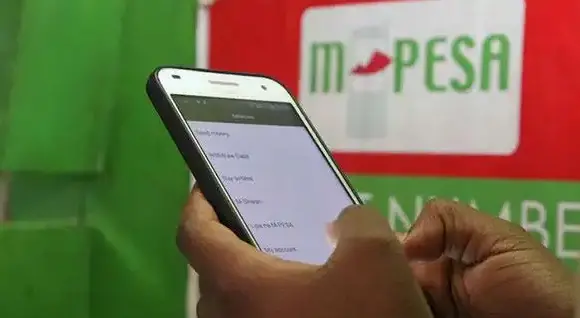
67. M-Pesa
The most successful mobile wallet in Africa, launched by Kenya's telecom operator Safaricom. It allows users to complete all financial services via SMS, enabling transfers, payments, deposits, and loans even in regions with low smartphone penetration. It includes P2P transfers, merchant acquiring, and small loans. It covers Kenya, Tanzania, and other East African countries, representing a landmark achievement in African fintech.
08 Cross-Border Remittances and Fund Transfers
Players in this category do not focus on merchant acquiring but on transferring funds from Country A to Country B: remittances, currency exchange, and bulk payments.
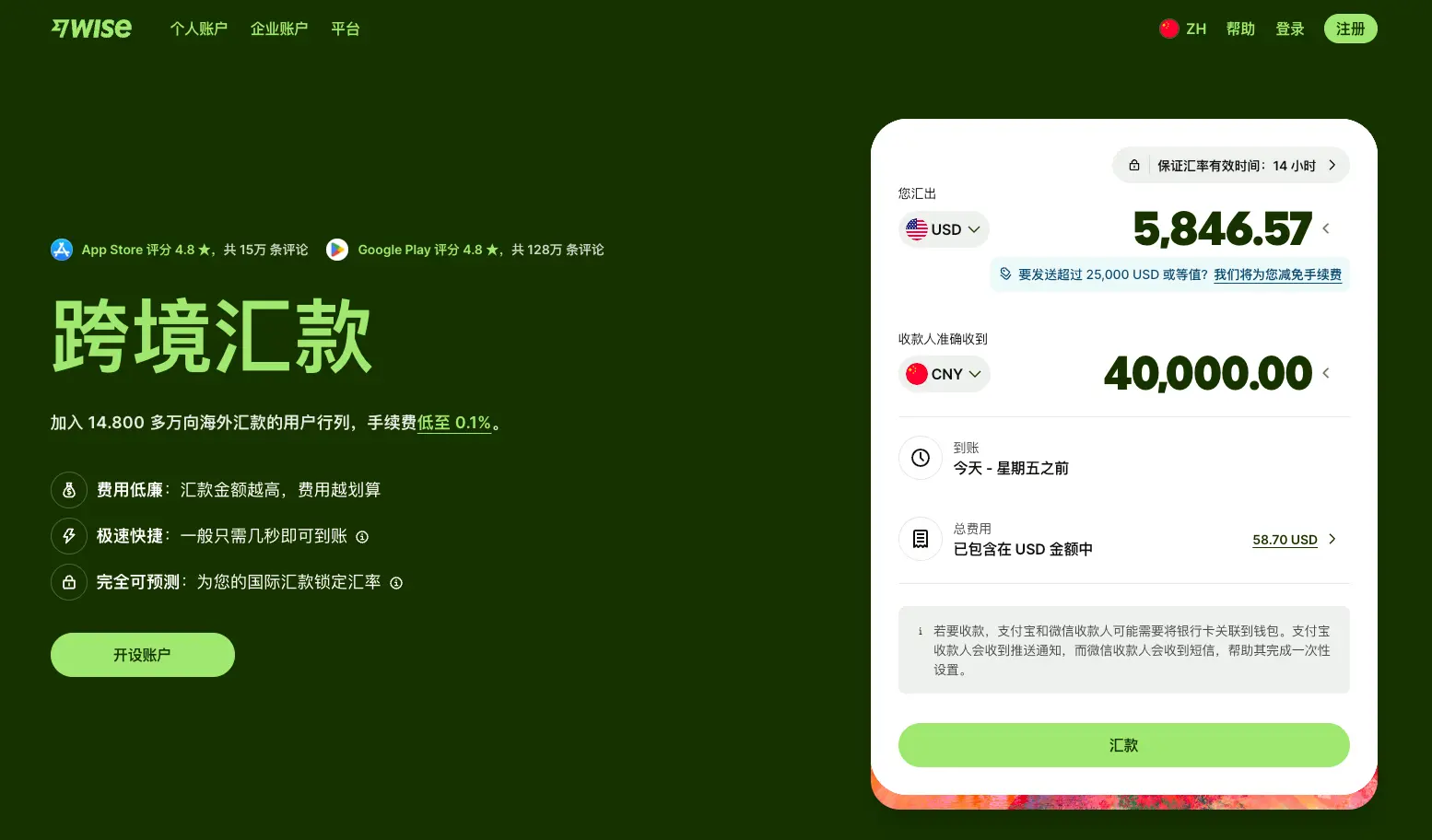
68. Wise
A cross-border remittance platform originating from the UK. Its products include personal cross-border remittances and multi-currency accounts, allowing users to hold over 50 currencies; debit cards that deduct local currency for overseas spending. It has deep penetration in personal remittances, freelancer collections, and cross-border payments for small and medium enterprises globally.
69. Remitly
A US-based cross-border remittance platform, focusing on remittances from developed countries to developing countries. It specializes in personal remittances from the US, Canada, and the UK to Mexico, the Philippines, India, Nigeria, and other countries. It offers fast service with multiple delivery options, allowing recipients to choose bank deposits, cash pickups, or mobile wallet deposits.
70. WorldRemit
A UK-based cross-border remittance platform, similar to Remitly, focusing on remittances to emerging markets. It facilitates transfers from Europe, North America, and Australia to Africa, Asia, and Latin America. It operates entirely online without physical outlets, resulting in lower costs.
71. Xe
A Canadian foreign exchange and remittance platform, known for its rate inquiry website XE.com. It offers personal remittances, bulk payments for businesses, and foreign exchange risk management. It is well-known in the global personal remittance market for its transparent exchange rates.
72. OFX
A cross-border remittance platform in Australia and the US, focusing on cross-border payments for small and medium enterprises. It includes corporate remittances, bulk payments, and foreign exchange services. It facilitates transfers from Australia, New Zealand, the US, and Canada to the world, with deep penetration in B2B payment scenarios for small and medium enterprises.
73. Western Union
Western Union, a century-old player in global cross-border remittances. Cash-to-cash… senders deposit cash at a Western Union outlet, and recipients can pick up cash at another Western Union outlet in another country without needing a bank account. This serves as the foundational infrastructure for global remittances, especially in countries and regions with low bank penetration, where Western Union is a primary channel for remittances. In recent years, it has also launched digital channels, but physical outlets remain its core asset.

74. MoneyGram
The second-largest remittance company globally, similar to Western Union, focusing on cash-to-cash remittances. It facilitates transfers from the US and Europe to Latin America, Africa, and Asia. After being acquired by Abu Dhabi's Madiq Holding Company in 2023, it is strengthening its digital channels and expanding into emerging markets.
75. Ria
The third-largest remittance company globally, owned by Euronet. Similar to Western Union and MoneyGram, but focuses more on corridors from the US to Latin America, especially Mexico. It has high penetration among the Latino immigrant population in the US.
09 Payment Card Organizations and Clearing Networks
Finally, let's mention payment card organizations, which are not payment institutions but are integral to the entire payment ecosystem.
76. Visa
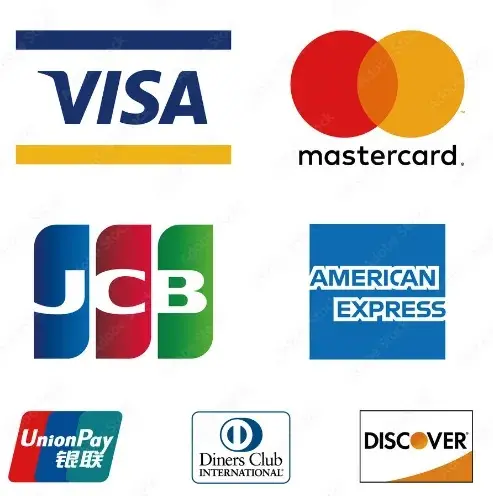
The largest card organization globally, covering over 200 countries and regions. It operates as a payment network operator, not issuing cards or acquiring, but connecting issuing banks and acquiring banks to process transaction settlements. In recent years, it has also promoted Visa Direct and Visa B2B Connect.
77. Mastercard
The second-largest card organization globally, similar to Visa. Mastercard has invested heavily in B2B payments, cross-border remittances, and virtual card issuance, with products including real-time payments via Mastercard Send and multi-scenario payment tokens.
78. UnionPay International
The international business segment of China UnionPay. The acceptance network for UnionPay cards has covered over 180 countries and regions, especially strong in the Asia-Pacific market, including Hong Kong, Macau, Japan, South Korea, and Southeast Asia. In recent years, it has also promoted UnionPay QR codes and cross-border remittances.
79. American Express
American Express, a model that integrates card organization and issuing bank. Its positioning is for high-end cardholders and high-end merchants. Cardholders of Amex have strong spending power, and merchants are willing to pay higher fees to serve this group of customers. It holds a unique position in high-end retail, travel, and dining scenarios in North America and Europe.
80. JCB
A Japanese card organization, primarily operating in Japan and Asian markets. JCB has a high market share in Japan and has been expanding its acceptance network overseas, especially in China, South Korea, and Southeast Asia.
81. Discover
Discover, an American card organization with a certain market share in the US. It has a cooperation agreement with UnionPay, allowing UnionPay cards to be used on the Discover network and vice versa.
82. Diners Club International
Diners Club International, a historic card organization now under Discover. It has a certain market presence on the Diners Club acceptance network.
Final Thoughts
After reviewing nearly a hundred institutions, you will notice a trend: the payment industry is transitioning from an era dominated by unified card organizations to a layered infrastructure era.
At the bottom are card organizations like Visa, Mastercard, UnionPay, and bank clearing networks. One layer up are acquiring banks and payment gateways like Worldline, Global Payments, and Adyen. Further up are developer-facing payment APIs, such as Stripe and Checkout.com. Above that are wallet aggregation layers like Alipay+, 2C2P, and payment loops within super apps like GrabPay and Kakao Pay. There are also players specializing in cross-border remittances like Wise and Western Union, BNPL providers like Klarna and Afterpay, and local payment methods like iDEAL, Bancontact, and Blik.
No single player dominates. Each player builds a moat in its ecological niche: Stripe's developer lock-in, Adyen's customization for large clients, Alipay+'s wallet aggregation, PayPay's subsidies for market capture, PingPong's reputation among Chinese sellers, M-Pesa's SMS finance, and Western Union's cash network.
Payments may seem simple, but once a moat is established, it becomes invincible.
I am Chen Tianyu Universe, see you next time.
 Risk warning

Popular articles





