








Daily Observation of Crypto Concept Stocks: Meta Returns to Stablecoin Payments, A New Start Four Years After the Failure of Libra/Diem

 Released on April 30, 2026. Meta Platforms, Inc. (NASDAQ: $META) announced on April 29 that it has begun to pay some creators in Colombia and the Philippines in USDC, supported by payment infrastructure from Stripe. This marks Meta's first return to the stablecoin payment space in product form since shutting down the Libra/Diem project in 2022—four years ago, Libra failed under a united crackdown by global regulators; four years later, the same narrative is re-emerging in a completely different regulatory environment. Behind this switch is both a fundamental change in the regulatory landscape and Meta's strategic logic in seeking differentiation in the competitive payment scene.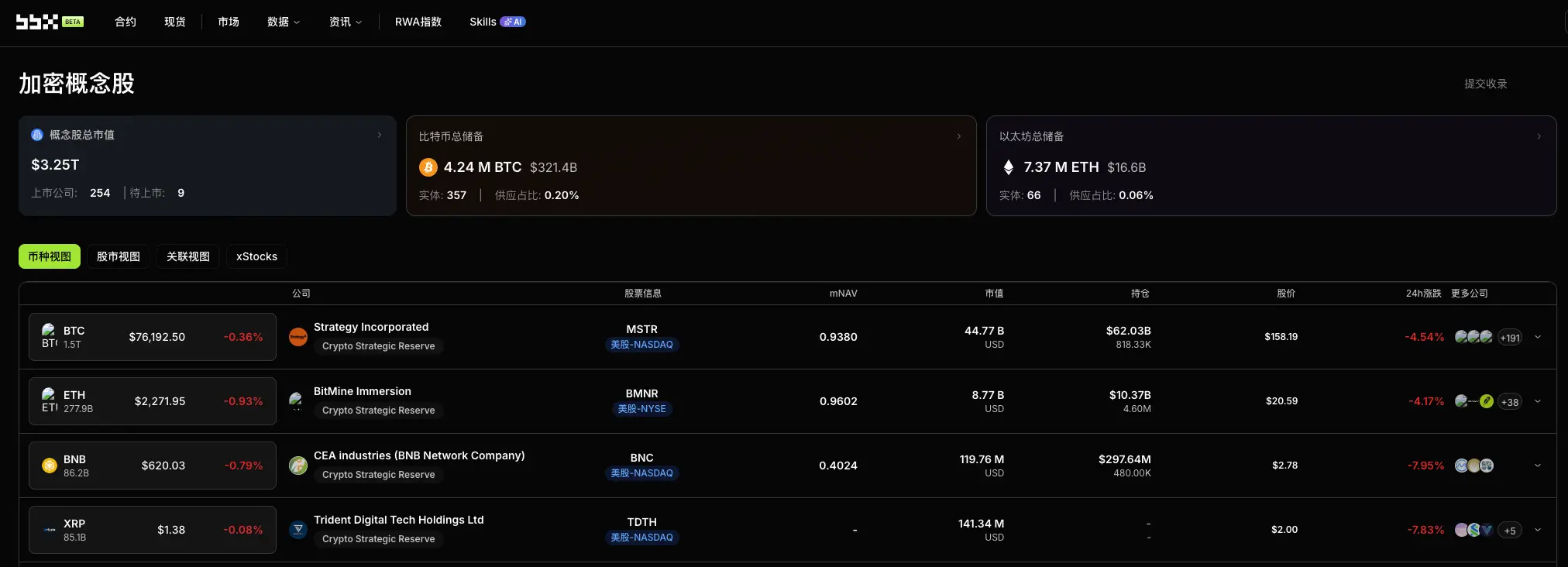
1. From Libra to USDC: The Same Goal, Two Completely Different Paths
Meta's Libra project made a high-profile debut in 2019, planning to issue a global stablecoin backed by a basket of fiat currency reserves, covering its user base of over 3 billion. However, major global regulators such as the Federal Reserve, the Treasury Department, and the European Central Bank almost unanimously opposed it, citing potential threats to monetary sovereignty and financial stability. After being renamed Diem, Libra was completely shut down in 2022, and Meta sold all related assets. Meta's approach this time is completely different: instead of issuing its own stablecoin, it directly uses the compliant stablecoin USDC issued by Circle Internet Group, Inc. (NYSE: $CRCL) to make creator payments on the Solana or Polygon chains; the payment infrastructure is provided by Stripe, and tax reporting documents are jointly issued to creators by Meta and Stripe. The core logic of this design is that Meta leverages existing compliant third-party stablecoins and payment infrastructure to completely avoid the regulatory risks of "building its own currency," while achieving the business goal of accelerating cross-border payment efficiency.
2. Why Choose Colombia and the Philippines: The Real Pain Points of Cross-Border Remittance Costs
The project is currently only open to a select group of eligible creators in Colombia and the Philippines, allowing users to link their crypto wallets with their Meta accounts and choose to receive USDC on Solana or Polygon, with Stripe responsible for providing tax reports related to digital asset transactions. The choice of these two markets is not coincidental— the Philippines is one of the largest remittance-sending countries for overseas workers globally, and Colombia also relies heavily on large-scale cross-border remittances. Traditional SWIFT remittance delivery times typically range from 1 to 5 business days, with relatively high fees; however, transferring funds via stablecoins can result in funds arriving within minutes, with fees close to zero. This experience gap provides the most direct value proposition for stablecoin payments and is also the underlying driver for Visa's ($V) continuous expansion of its stablecoin settlement network—Visa confirmed yesterday that the annualized scale of stablecoin settlements has reached $7 billion, a 50% quarter-over-quarter increase, covering over 50 countries and more than 130 card projects, with Latin America and the Asia-Pacific region being the fastest-growing areas.
3. The Industrial Significance for Stripe and Circle
Meta's stablecoin payment project directly benefits both companies in the industry chain. Stripe (not publicly traded), as a payment infrastructure provider, not only handles payment execution but also takes on the generation of tax compliance reports—this role aligns closely with its strategic positioning as "AWS for money." Jay Shah, head of Stripe's Link business, confirmed that its Link payment tool has been integrated into Meta's stablecoin payment system. For Circle Internet Group, Inc. (NYSE: $CRCL), Meta's adoption represents a significant upgrade in the application scenario for USDC—switching the narrative from "an internal tool for the crypto industry" to "the payment currency of the world's largest social media platform." The market capitalization of USDC has exceeded $78 billion, accounting for about 25% of the global stablecoin market. Meta's endorsement also has symbolic significance at the regulatory level: if Meta, a tech giant with over 3 billion users, chooses USDC as a payment tool, it will further reinforce the regulatory characterization of stablecoins as "payment tools rather than securities," directly supporting the legitimacy arguments for the retention of activity incentive clauses in the CLARITY Act.
The "Infrastructureization" Turning Point of Stablecoin Payments
Meta's payment entry coincides with the expansion of Visa's stablecoin settlement network, pointing to a clear industry signal: stablecoin payments are transitioning from "crypto experiments" to "financial infrastructure." Over the past two years, the main use case for stablecoins has remained as pricing and settlement tools for crypto exchanges; however, Visa embedding stablecoins into the global card network's settlement layer and Meta using stablecoins to pay content creators signifies that use cases are penetrating into real economic activities. This trend has profound implications for the valuation of crypto concept stocks: it means that the growth in stablecoin demand will increasingly be driven by payment scenarios rather than fluctuations in crypto market sentiment. According to a March research report by Bernstein, "stablecoin adoption has begun to operate independently of the crypto market cycle, with USDC supply nearing historical highs, maintaining expansion even in a phase of pressure in the crypto market"—this judgment is gradually being validated by the latest actions of Meta and Visa. For Circle, which will release its financial report in May, Meta's stablecoin adoption is not only a positive validation at the product level but also the latest industry endorsement gained in the legislative game of the CLARITY Act.
Data source: https://bbx.com/ Crypto concept stock information database, compiled based on yesterday's announcements from global listed companies and SEC/TSE disclosure documents.
 Risk warning




Popular articles





