Tokenized US Stock Duel: Ondo vs. xStocks, Who is Defining On-Chain Nasdaq?
 Core Viewpoint
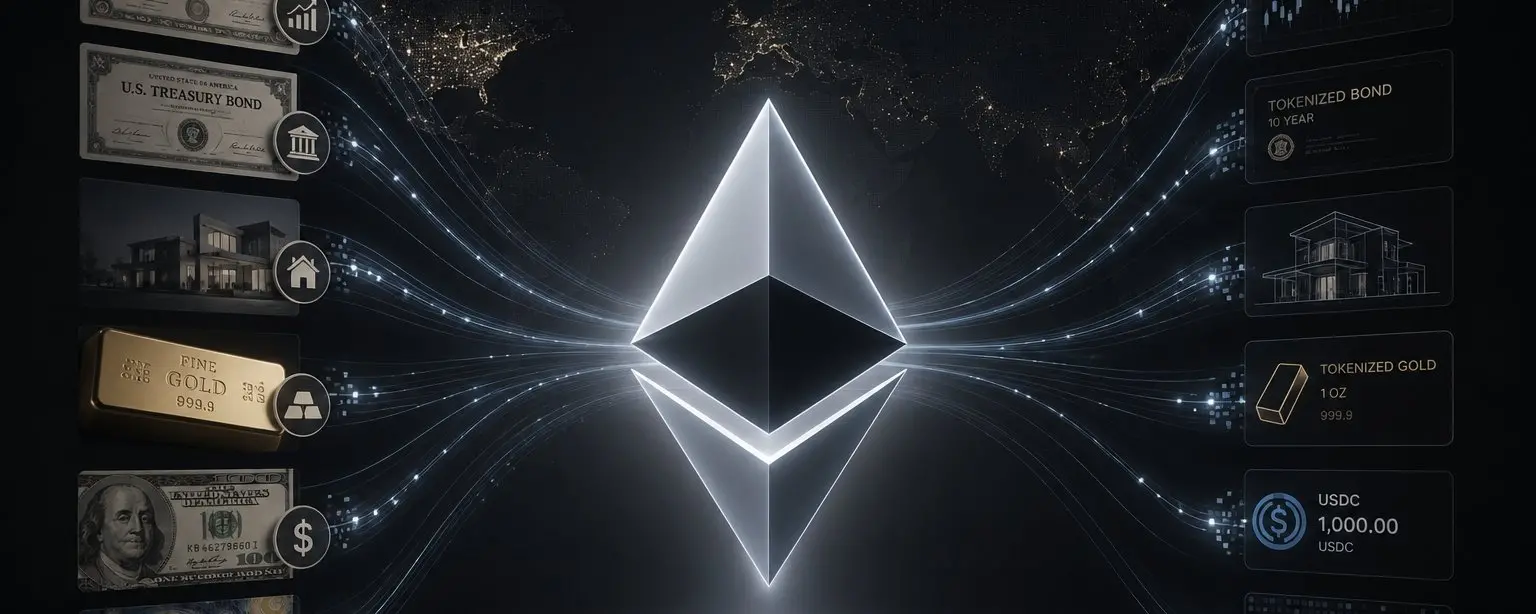
 Tokenization is redefining the issuance, holding, trading, and circulation of stocks.
Author: Hu Tao, ChainCatcher
In recent years, the RWA boom has quietly made U.S. stock tokenization a cutting-edge experiment connecting traditional finance and blockchain. It enables popular stocks like Apple, Nvidia, and Tesla, as well as popular ETFs like SPY and QQQ, to achieve 1:1 physical backing through blockchain, allowing non-U.S. investors to trade 24/7, settle instantly, and seamlessly integrate these assets into DeFi lending, DEX trading, and cross-chain liquidity pools.
Ondo and xStocks (issued by Backed Finance and later deeply acquired and integrated by Kraken) are the absolute dual leaders in this field, representing two complementary yet distinct paths, both driving tokenized stocks from the experimental stage to a multi-billion dollar mainstream narrative.
With recent restrictions on U.S. stock brokerage in several countries, the market demand for tokenized stocks has ushered in a new wave of enthusiasm, and Ondo and xStocks are expected to become the two biggest winners in this space. So, what are the differences in their technical routes and compliance? Who leads in terms of the number of supported stocks, trading volume, and other data dimensions? What recent product developments have occurred? This article will analyze these questions one by one.
I. Main Background
Founded in 2022, Ondo initially positioned itself to introduce structured yield products into DeFi, raising over $50 million in funding within two years from well-known institutions including Pantera Capital, Tiger Global, Founders Fund, Coinbase Ventures, DCG, CoinFund, and Wintermute.
However, as the native DeFi market continued to decline, Ondo launched its V2 product in 2023, focusing on the tokenization of U.S. Treasury bonds, partnering with companies like BlackRock to provide users with high-yield U.S. Treasury investment opportunities. This product attracted over $1 billion in total locked value during the crypto bear market, pushing the FDV of the ONDO token to briefly exceed $10 billion.

In September 2025, Ondo launched its tokenized stock product on the Ethereum mainnet for the first time, further solidifying its leading position in the RWA space, with total locked value surpassing $3.7 billion.
Ondo's founder and CEO Nathan Allman had worked for many years in Goldman Sachs' digital assets division and had also founded a quantitative crypto hedge fund, possessing both traditional finance and crypto technology backgrounds. However, this month, Ondo announced the unexpected passing of Nathan Allman, with former president Ian De Bode taking over as CEO, fully leading strategy, product, and daily operations.
xStocks, on the other hand, acted earlier in the U.S. stock tokenization space. The product development company Backed Finance has been working since 2021 to bridge stocks and equity assets to the blockchain, refining its underlying architecture and compliance for years, ultimately launching xStocks in May 2025, with over 60 tokenized stocks/ETFs on the Solana network, quickly listing on Kraken and Bybit.
Backed, the parent company of xStocks, has raised a total of $9.5 million, with investors including Gnosis VC, Cyber Fund, and Blockchain Founders Fund, and its team and funding background are relatively ordinary.
With the explosion of the tokenized stock market, the well-known compliant cryptocurrency exchange Kraken announced in December 2025 the acquisition of Backed Finance, deeply integrating xStocks into its ecosystem.
II. Underlying Architecture and Compliance
Whether it is Ondo or xStocks, the tokens correspond to real U.S. listed stocks or ETFs. The issuing institutions purchase and hold the corresponding assets through regulated custodians and then mint tokens on-chain at a 1:1 ratio. Therefore, from the perspective of asset backing, they are closer to on-chain security certificates rather than price-mapped assets previously launched by protocols like Mirror and Synthetix.
Similarly, they differ significantly from the perpetual contract products for U.S. stocks launched by Binance and OKX, which essentially belong to derivatives (similar to CFDs or futures) and do not represent actual stock ownership, with the underlying typically being synthetic prices.
Although both adopt the "1:1 backing of real stocks" model, Ondo and xStocks have clear differences in legal structure, asset custody, and strategic goals.
xStocks' issuing entity, Backed Finance, is headquartered in Switzerland, and its products primarily operate under relevant European and Liechtenstein securities regulations. Each xStocks token essentially corresponds to a transferable security, with the underlying stocks held by a third-party custodian and managed through a special purpose vehicle (SPV).
The biggest advantage of this model lies in standardization and scalability. Once issued, xStocks can quickly connect to exchanges, DEXs, lending protocols, and wallet ecosystems, allowing it to cover a large number of traffic entry points such as Kraken, Bybit, and Solana DeFi in a short time.
If xStocks aims for global expansion within the existing regulatory framework, Ondo's goal is to enter the U.S. securities system itself.
The acquisition of Oasis Pro by Ondo in 2025 marked an important turning point for the entire industry. Oasis Pro is one of the few digital securities platforms in the U.S. that simultaneously holds SEC-registered Broker-Dealer, Alternative Trading System (ATS), and Transfer Agent qualifications.
These licenses have long been regarded as the core entry barriers to the U.S. on-chain securities market. After the acquisition, Ondo is no longer just an asset issuer but has gained the capability to build a complete securities issuance, registration, trading, and settlement system.
Thus, Ondo holds a clear advantage in terms of license endorsement and compliance, which is one of the key reasons why traditional asset management institutions like BlackRock and Franklin Templeton have frequently collaborated with Ondo in recent years.
III. Development Status and Dynamics
Although Ondo launched its tokenized U.S. stock functionality 3-4 months later, it has been quite leading in terms of expansion speed, currently supporting over 260 tokenized assets, while xStocks currently supports over 170 tokenized assets.
However, in terms of trading volume, the number of holding addresses, and other dimensions, the competitive landscape for tokenized U.S. stocks is primarily driven by sales channels rather than the number of stocks.
Currently, the tokenized U.S. assets issued by Ondo have been listed on exchanges such as Binance Alpha, Gate, Bitget, MEXC, and BingX, while the tokenized U.S. stock assets issued by xStocks have been listed on Kraken, Bybit, OKX DEX, Gate, and MEXC.
In other words, among the mainstream cryptocurrency exchanges, only Kraken has launched tokenized U.S. stock assets on the mainnet, while Binance and OKX primarily focus on perpetual contracts for U.S. stocks on their main sites, only listing tokenized U.S. stocks in their sub-sections, which has little impact on the overall landscape.
Therefore, the trading volume of tokenized U.S. stocks issued by xStocks, which receives full support from Kraken, often significantly exceeds that of Ondo. For example, the near 24-hour trading volume of assets issued by xStocks for Tesla and Nvidia was $24.45 million and $16.44 million, respectively, while the near 24-hour trading volume of assets issued by Ondo was $5.83 million and $8.30 million, with differences exceeding 2 times.
In March of this year, xStocks announced the launch of a points program, encouraging users to earn points by trading tokenized U.S. stocks, providing liquidity, or participating in DeFi applications. Since the project has not yet issued tokens, and Ondo's total diluted market cap has already surpassed $4 billion, this expectation of token issuance and airdrop has significantly stimulated xStocks' market activity.
xStocks effectively carries Kraken's strategic goal of building a full-asset trading platform and attracting incremental users. After Kraken acquired the product, it quickly promoted tokenized stocks as a core growth business. In addition to spot trading, it has successively launched tokenized stock perpetual contracts, margin products, and DeFi integration plans, aiming to make U.S. stock trading a new growth curve for cryptocurrency exchanges.
In contrast, Ondo's goal is asset-centric, actively promoting the synergy between tokenized stocks and its existing Treasury bond products, attempting to build an on-chain asset management platform covering cash, bonds, and stocks. For institutional users, this model is closer to an "on-chain version of BlackRock."
In terms of ecosystem expansion, Ondo has invested more effort in the traditional financial system this year. In March, asset management giant Franklin Templeton announced a partnership with Ondo Finance to launch a tokenized ETF that can be traded directly in crypto wallets, enabling round-the-clock trading. In April, Ondo also stated that it had reached a partnership with Broadridge, and its tokenized stocks would soon have shareholder governance and voting functions.
IV. The Beginning of Tokenization Trends
xStocks represents a typical internet mindset: by lowering barriers, enriching trading scenarios, and broadening ecological distribution, it allows global investors to trade U.S. stocks like cryptocurrencies, thereby reshaping the distribution system of traditional brokerages. Its core competitiveness comes from traffic, liquidity, and network effects.
In contrast, Ondo pursues a different path. Whether it is Treasury bond tokenization, yield-bearing stablecoins, Ondo Global Markets, or acquiring Oasis Pro to obtain key licenses in the U.S. securities market, its ultimate goal is not just to issue on-chain stocks but to build a set of on-chain capital market infrastructure covering issuance, registration, settlement, and trading. Its competitive advantage is more derived from regulatory capabilities, institutional collaboration networks, and barriers in financial infrastructure.
To some extent, the two companies are playing the roles of Robinhood and Nasdaq in the crypto industry, respectively. The former addresses the question of "who trades," while the latter addresses "how the market operates." Although they seem to compete in the same market, they are actually promoting the development of tokenized securities ecosystems at different levels.
More importantly, the industry trend behind this competition has become increasingly clear. In recent years, tokenization has been more concentrated in low-risk asset areas such as U.S. Treasury bonds and money market funds. However, as the regulatory framework matures, on-chain liquidity continues to grow, and the entry barriers for traditional brokerages increase, stocks are becoming the next core asset to migrate en masse to the blockchain.
For global investors, the greatest significance of tokenized U.S. stocks may not be the ability to trade Apple or Nvidia 24/7, but rather that it first endows securities assets with internet-native attributes—instant settlement, global circulation, programmability, and seamless integration with DeFi. Stocks are no longer just a string of numbers in brokerage accounts but are beginning to become freely combinable and transferable on-chain financial assets.
Looking back at the history of internet development, email did not change the information itself but restructured the way information is transmitted; online payments did not change the currency itself but restructured the way currency circulates. Similarly, tokenization may not change the intrinsic value of stocks, but it is redefining the way stocks are issued, held, traded, and circulated.
The competition between Ondo and xStocks may just be the beginning of this wave of capital market reconstruction. As more stocks, bonds, funds, and even private equity assets are moved on-chain, people may look back at today's tokenized U.S. stocks and find that it is not a new crypto narrative but the first core piece of the global capital market's shift to on-chain.

 Risk warning