








Samsung conference: Storage supply is insufficient, "next year will be tighter than this year," 60-70% of capacity has been allocated to long-term agreements, HBM4 revenue will account for 60%
 Core Viewpoint

 Samsung Electronics' management sent strong bullish signals during a conference call: Agentic AI is driving demand for computing power, and the shortage of storage supply is expected to continue until 2028. To this end, Samsung is signing five-year rolling long-term agreements (LTAs) with the world's top ten tech giants, planning to lock in 60%-70% of the company's total capacity to establish high visibility for performance. Additionally, in the second half of the year, HBM4 revenue is expected to account for over 60%, and orders for 2nm foundry services are anticipated to double.
Author: Dong Jing
Driven by the strong demand for Generative AI and Agentic AI, Samsung Electronics delivered an explosive report for the second quarter of 2026.
According to the financial report, Samsung Electronics achieved revenue of 171.5 trillion Korean won in the quarter, a staggering increase of 130% year-on-year (28% quarter-on-quarter); operating profit soared to 89.5 trillion Korean won, up 1814% year-on-year (56% quarter-on-quarter), with the operating profit margin jumping from 43% in the previous quarter to an astonishing 52.2%. The net cash position nearly doubled to 167.6 trillion Korean won, and ROE (Return on Equity) surged from 5% to 56%. The semiconductor (DS division) became the absolute core engine, accounting for about 99% of the company's total profit. Currently, Samsung's HBM4 has completed large-scale production and has begun shipping HBM4E samples.
In the face of surging computing power demand, Samsung Electronics' management sent a clear signal during the earnings call:
The supply-demand gap is widening, and HBM4 revenue will exceed 60% in the second half of the year, with sales targeting to surpass traditional DRAM; at the same time, Samsung is signing five-year rolling long-term agreements (LTAs) with the world's top ten tech giants, locking in 60% to 70% of the company's total capacity with substantial advance payments. The long-term agreement model will become a "ballast stone" for future performance, and the company is fully launching into high-value areas such as customized SoC, AI OS, and humanoid robots.
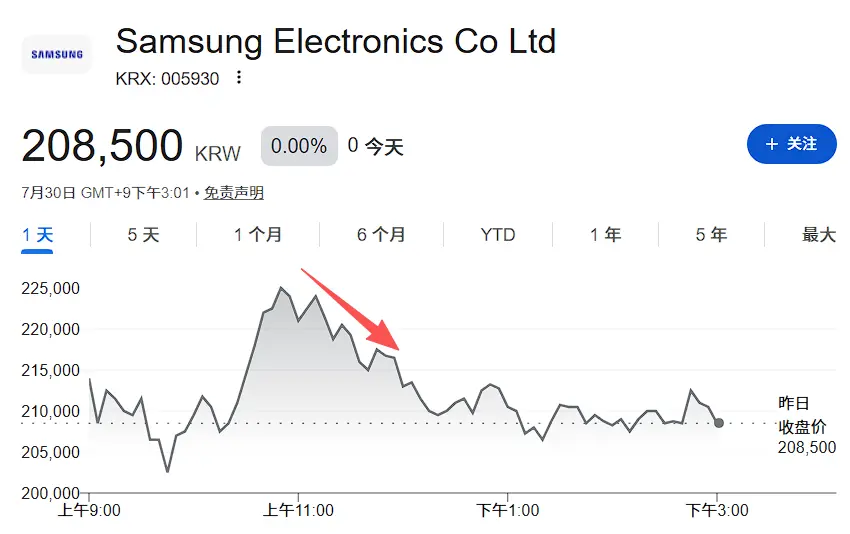
Notably, after the earnings report was released, Samsung Electronics' stock price surged, increasing by over 8%, but quickly fell back to near flat as the conference call proceeded.
Storage Supply Shortage to Last Until 2028, "Next Year Will Be Tighter Than This Year"
The explosive data from the financial report essentially reflects the evolution of AI infrastructure demand to a deeper level. The highly anticipated storage supply-demand cycle received clear guidance from management during this conference call.
Jaejune Kim, head of the storage business, pointed out that as Agentic AI accelerates, token consumption is growing exponentially, leading to unprecedented demand for AI servers and robust demand for general computing servers.
Facing the future supply-demand landscape, Jaejune Kim made a market-attention-grabbing judgment:
"Even as Agentic AI continues to accelerate, the available storage supply in the industry is still significantly insufficient relative to demand. It takes more than three years for a new wafer fab to start actual production, so we believe that there is unlikely to be a significant increase in new supply before 2028."
On the supply side, he further emphasized the severity of the shortage: it takes more than three years from building a new wafer fab to actual mass production, and significant new supply is unlikely before 2028. The unmet demand this year will carry over into the next year, "with supply constraints in 2027 expected to be more severe than in 2026," and supply shortages may persist until 2028.
Analysts believe this judgment directly supports Samsung's strong enthusiasm for long-term agreements (LTAs).
Locking in Giant Capacity: "We Plan to Allocate 60-70% of Total Capacity to Multi-Year Agreements"
In the face of long-term structural shortages, tech giants are locking in Samsung's capacity with real money in advance. To hedge medium- to long-term business risks, Samsung is vigorously promoting binding multi-year storage supply agreements (LTAs).
"Since almost every customer is seeking LTAs, we find it difficult to meet all supply requests within the available capacity," Jaejune Kim stated frankly.
When discussing specific capacity allocation and long-term agreement structures, he revealed key data:
"To maintain sufficient supply flexibility, we plan to allocate about 60-70% of total capacity to LTAs. Once the agreements currently under negotiation are finalized, we expect LTA supply to easily reach this proportion of our medium- to long-term production plan."
He also disclosed that the company has completed agreements with the top five data center customers globally and is in the final stages of negotiations with another five major customers. The number of agreement customers is expected to increase over time, "once the current pending contracts are completed, the supply covered by multi-year agreements for DRAM and NAND will easily reach 60% to 70% of planned capacity."
Regarding contract structure, Samsung disclosed specific frameworks:
The basic term is five years, with annual rolling negotiations, and both parties can agree to extend for one more year, forming a "5-year rolling" mechanism;
It includes substantial advance payments distributed throughout the contract period, "we have already received about a quarter of the agreed total advance payment," and the total is expected to increase as more agreements are signed;
A minimum price clause (price floor) is set for mainstream products to fully hedge against investment risks arising from market price fluctuations;
Specific advance payment amounts cannot be disclosed due to confidentiality agreements.
Samsung's strategic intent is very clear: "Historically, the storage industry has been affected by fluctuations in consumer application demand, repeatedly experiencing upturns and downturns. By increasing the proportion of long-term order-driven business, we hope to significantly enhance the stability and visibility of future operations."
HBM and Foundry Dual-Line Sprint: HBM4 Sales Expected to Surge Over 3 Times in Q3, 2-Nanometer Orders Double
In the high-end storage HBM and foundry sectors, Samsung also released positive expansion signals, dispelling market concerns about its HBM progress.
Regarding HBM capacity and share expectations, Jaejune Kim clearly stated:
"We expect HBM4 sales in the third quarter to grow over three times quarter-on-quarter. We believe that the company's HBM market share will roughly recover to a level comparable to the overall DRAM market share in the second half of the year."
In response to HSBC's Ricky Seo's questions about the HBM business, Sooncheol Park stated that HBM4 is expected to account for significantly over 60% of total HBM revenue in the second half of the year.
At the same time, the once-pressured foundry business has also seen a breakthrough. Foundry head Sukchae Kang pointed out that advanced processes of 8 nanometers and below have reached "full load levels."
"Based on current order momentum, we expect the number of 2-nanometer projects obtained in 2026 to more than double year-on-year." When mentioning the profitability turning point, he stated, "Although it is difficult to accurately predict the timing of the turning point for foundry business driven by customer orders, we believe there is a possibility of achieving (profitability) turning soon."
Samsung Electronics expects that by 2026, the proportion of AI and high-performance computing applications in the foundry business will leap from a high single-digit percentage in 2025 to over 30%.
Restructuring End Devices and Finding New Engines: Creating "AI OS" and Entering Humanoid Robots
In addition to upstream semiconductor efforts, Samsung has also provided imaginative guidance on mobile terminals (MX) and future frontier businesses.
Facing the cost pressure on mobile business caused by rising memory prices, MX business head Daniel Araujo stated that Samsung is not only increasing AI functionality but also undergoing a fundamental restructuring:
"We are not just adding AI features; we are redesigning the system architecture into what we call 'AI OS,' making AI the core of how the system operates. This involves not only smartphones; we will leverage our vast ecosystem, including TVs and home appliances, to enhance the AI experience that covers users' overall lifestyles."
In terms of long-term growth points, Chief Financial Officer Soon-Cheol Park disclosed Samsung's ambitions in the robotics field for the first time. Samsung has established a robotics business office that reports directly to the CEO. "We will first focus on B2B applications such as manufacturing and logistics to acquire core technologies and data, and develop highly intelligent, multifunctional humanoid robots, gradually expanding into the B2C market. Leveraging our semiconductor, software, AI, and manufacturing capabilities, we aim to establish a differentiated competitive advantage in the robotics field and cultivate it as a future growth engine."
MX Mobile Business: Q2 Loss of 700 Billion, Continued Pressure from Rising Memory Prices, Betting on Foldable Screens and Galaxy AI OS
Mobile experience business head Daniel Araujo admitted that the enormous demand for storage from AI servers has directly driven up mobile storage prices, "We have already seen this impact in Q2, and we expect this cost burden to continue in the second half." The combined operating loss for Q2 MX and network business reached 700 billion won, with annual smartphone shipments expected to decline.
However, Samsung's response strategy is clear: The Z8 foldable series, Tab S12, and Watch Ultra 2 will all be launched in the second half, while pushing for mid-range product upgrades through A57/A37; a new form factor product, smart glasses, will also be launched this year.
At the strategic level, Samsung claims it is restructuring the entire system architecture into "AI OS":
"AI OS makes AI the core of how the system operates. This will allow Galaxy AI to develop into the foundation that integrates all mobile intelligent experiences. Leveraging our close collaboration with Google, we are pushing it towards Agentic AI, enabling the system to understand user contexts, automatically execute tasks, and even proactively make suggestions."
Full Transcript of Samsung Electronics' Q2 2026 Earnings Call (AI-assisted translation)
Company Participants
- Charles Hur, Executive Vice President and Head of Corporate Strategy Team
- Daniel Araujo, Vice President, Mobile Experience Business
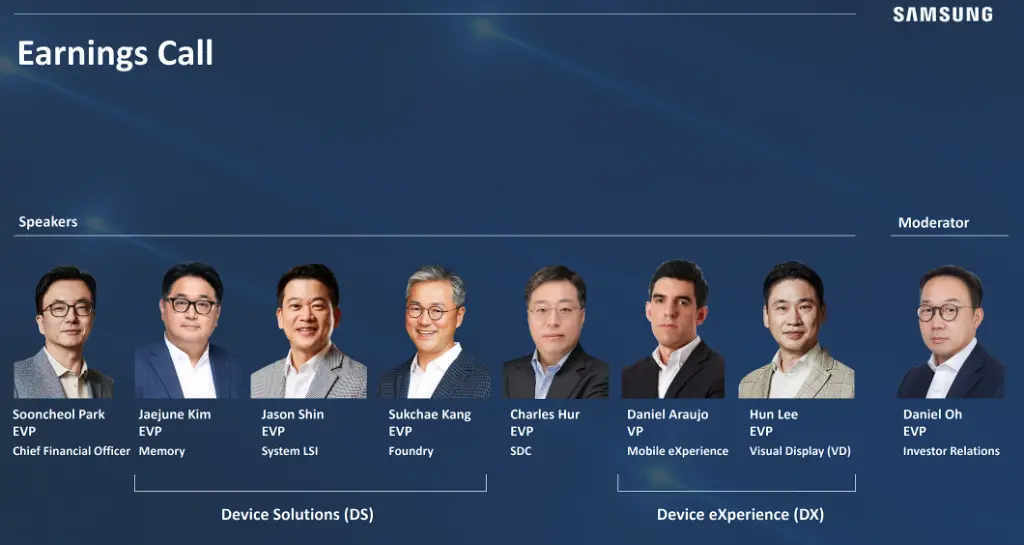
- Daniel Oh, Head of Investor Relations Hun Lee, Executive Vice President, Visual Display (VD) Business
- Jaejune Kim, Executive Vice President, Storage Business
- Jason Shin, Executive Vice President and Head of System LSI Sales Team
- Sooncheol Park, Executive Vice President, Head of Corporate Management Operations and Chief Financial Officer
- Sukchae Kang, Executive Vice President, Foundry Business
- Unnamed Speaker
Other Participants
- Dong-Hee Han, Analyst, SK Securities Co., Ltd.
- Jay Kwon, Analyst, JPMorgan Chase
- Kim Dong-Won, Analyst, KB Securities Co., Ltd.
- Ricky Seo, Analyst, HSBC
- Ryugyong Woo, Analyst, NongHyup Financial Group
- Seicheol Lee, Analyst, Citigroup
- Seok Jae Lee, Analyst, Korea Investment Corporation
- Unnamed Participant
- Woo Dong-je, Analyst, Bank of America
Presentation Segment
Operator:
Hello everyone, welcome to Samsung Electronics' Q2 2026 financial performance earnings call. I will serve as the coordinator for this meeting. Before we open the Q&A session after the presentation, all participants will be in listen-only mode. Please note that this call will be recorded. Now, I will hand over the meeting to the investor relations team. Please begin.
Daniel Oh:
Welcome everyone, thank you very much for taking the time to join our Q2 2026 earnings call. We sincerely appreciate your continued attention and support for the company. I am Daniel Oh, head of investor relations at Samsung Electronics, and I am honored to host today's call.
For those joining us today, we sincerely invite you to visit samsung.com/global/ir, where all materials from today's call, including slides and live streaming, are available and will remain accessible after the meeting. First, before we officially begin, I would like to briefly outline our important legal disclaimer.
As per our usual practice, please note that today's discussion may contain forward-looking statements that may differ significantly from actual results. For reference, our complete disclaimer has been provided in the relevant slides. In today's call, Executive Vice President Sooncheol Park, our Chief Financial Officer and Head of Corporate Management Operations, will review the Q2 2026 financial performance, shareholder returns, and business outlook.
Following that, I will provide updates on capital expenditures and sustainability initiatives, and then hand the call over to the executive officers of each business unit to introduce their respective performance and outlook. Finally, we will conduct a Q&A session. Today's call is expected to last about an hour. The executives joining us today include: Executive Vice President Sooncheol Park, Chief Financial Officer and Head of Corporate Management Operations; Executive Vice President Jaejune Kim, Head of Global Sales and Marketing Office for the Storage Business; Executive Vice President Jason Shin, Head of System LSI Sales Team; Executive Vice President Sukchae Kang, Head of Sales and Marketing Office for Foundry; Executive Vice President Charles Hur, Head of Corporate Strategy Team at Samsung Display; Vice President Daniel Araujo, Head of Strategic Planning Team for Mobile Experience Business; and Executive Vice President Hun Lee, Head of Sales and Marketing Team for Visual Display. Now, I will hand the call over to our Chief Financial Officer Sooncheol Park for his comments on the Q2 financial performance.
Sooncheol Park:
Thank you, Daniel. Good morning, and thank you to all shareholders, investors, and analysts for joining today's earnings call. I am Sooncheol Park, Chief Financial Officer of Samsung Electronics. Building on our record performance in the first quarter, we achieved new highs in both revenue and operating profit in the second quarter, thanks to our continued technological leadership in artificial intelligence and our ability to respond to the changing market environment.
Despite ongoing macroeconomic and geopolitical uncertainties, we have achieved the above results, fully demonstrating the differentiated technological strength we have built in our core businesses.
Looking ahead, we will continue to strengthen our future growth engines through software technology innovation and further consolidate our leading position in the global market. Now, please allow me to review the financial performance for the second quarter.
Our total revenue reached 171.5 trillion won, a 28% quarter-on-quarter increase; operating profit grew 56% to 89.5 trillion won; and the operating profit margin improved from 43% in the previous quarter to 52%. We also continued to invest actively in maintaining our technological leadership for the future, with R&D expenses reaching a quarterly record high of 15 trillion won, up from 11 trillion won in the previous quarter. On a quarter-on-quarter basis, net profit grew 52% to 71.6 trillion won; earnings per share for both common and preferred shares increased by 52% to 10,849 won, which I believe is among the highest levels in global tech companies.
The DX division continued its record performance from the previous quarter, with both DRAM and NAND Semi driven by strong market demand and product system advantages, both achieving historic highs. The random access memory-related business faced headwinds in the mobile market. On the other hand, the foundry business benefited from higher capacity utilization and growing demand for all advanced nodes, while continuously expanding orders from major customers, including in the 2-nanometer high-performance computing sector. The DX division achieved year-on-year revenue growth supported by strong sales of high-end and AI products, but operating profit declined due to rising component costs. To minimize profit decline, we will strengthen our product mix with more high-value products and continue to optimize our cost structure, improve processes, and enhance operational efficiency.
In terms of currency effects, the strengthening of the dollar against the won had a positive impact of about 3.1 trillion won on operating profit, mainly reflected in our component business.
The executives joining us today will provide more detailed business updates shortly. Now I would like to talk about shareholder returns. The board approved the second-quarter dividend, with both common and preferred shares at 374 won per share. Under our three-year shareholder return policy from 2024 to 2026, we commit to distributing 98 trillion won in regular dividends each year, paid in quarterly installments of 24.5 trillion won. The second-quarter dividend is scheduled to be paid in August. Our current shareholder return policy continues to receive high attention from shareholders, consistent with what we communicated in the last earnings call. We remain fully committed to fulfilling this plan as promised and will provide further updates soon.
Now let me turn to the outlook for the second half of the year. We expect growth momentum to continue to build in the second half, supported by sustained strong semiconductor demand. For the DX division, although new terminal products will be released sequentially, macroeconomic uncertainties persist, and pressures from component and material costs may continue, the division will continue to focus on maintaining profitability. The DX division will strive to overcome profitability challenges by strengthening the fundamentals of each business. Our goal is to establish a leadership position in the intelligent AI market by providing hyper-personalized AI experiences through open platforms and expanding high-end product sales across business segments. At the same time, we are improving business fundamentals through AI-driven innovation and better resource efficiency, laying the foundation for the DX division to respond to market changes.
We expect that the storage business will continue to achieve growth driven by strong demand fueled by the rapid adoption of Agentic AI. The storage business will further strengthen its technological leadership and lead the market by expanding sales of HBM4 (including HBM4E), DDR5, SOCAMM2, and eSSD high-performance products. The system LSI will develop high-value businesses by advancing new customized FVOC businesses while broadening the application fields of sensors and Power ICs. The foundry business will improve profitability by increasing orders for advanced node products and orders related to high-growth AI and high-performance computing. In the display business, due to rising prices of complete machines caused by tight memory supply, sales may decline, but we will achieve revenue growth by expanding high-end product sales and achieving full-scale production on the Gen 8.6 production line.
Finally, the DX division will continue to strengthen core technologies through optimized capital expenditures and active R&D investments. The DX division will also continue to support new growth businesses such as robotics, HVAT, automotive electronics, and medical technology, laying the foundation for medium- to long-term growth.
Thank you.
Jaejune Kim:
Thank you, Sooncheol Park. Now let me update you on our capital expenditures. Capital expenditures for the second quarter were 16.8 trillion won, an increase of 5.5 trillion won quarter-on-quarter. Of this total, 15.4 trillion won was allocated to the DX division, and 0.7 trillion won was invested in the display business.
By business segment, capital expenditures in the storage business increased quarter-on-quarter as we expanded investments in the new Pyeongtaek wafer fab and other infrastructure projects to meet the sustained strong expectations for AI demand. We also continue to invest in advanced R&D to maintain our technological leadership.
Capital expenditures in the foundry business also increased quarter-on-quarter as we expanded investments to support the ramp-up phase of the U.S. wafer fab, which is currently progressing smoothly. In the display business, capital expenditures increased quarter-on-quarter due to continued additional investments in the Gen 8.6 production line.
Next, I would like to briefly introduce our significant achievements in sustainability. In June of this year, we released the 2026 Sustainability Report, which details our progress. In terms of the environment, we are continuously advancing the acquisition of renewable energy by signing several important Power Purchase Agreements (PPAs) with major sites globally. As a result, the company's renewable energy transition rate is expected to reach 32.5% by 2025, an increase of 1.1 percentage points from the previous year. We have also increased the proportion of recycled plastics used in our products to 33.7%, a year-on-year increase of 2.7 percentage points, further fulfilling our commitment to a circular economy.
In terms of social responsibility, we have achieved four consecutive years without major workplace accidents, which reflects our strong commitment to workplace safety. For more details on our sustainability progress, please refer to the 2026 Sustainability Report published on our official website. We will continue to commit to further advancing this work.
Now, I invite each executive to provide updates on their respective business units. First, we will hear from Executive Vice President Jaejune Kim of the storage business.
Jaejune Kim:
Good morning, I am Jaejune Kim from the global sales and marketing department of the storage business. In the second quarter, storage market demand was significantly strong, primarily driven by AI applications. Especially with the proliferation of Agentic AI, the additional supply demand driven by major hyperscale cloud service customers continues to increase for both DRAM and NAND.
Against the backdrop of strong AI demand, we have focused on expanding sales in the server application area, where demand momentum is strong, under existing capacity conditions. Therefore, our storage business achieved historic highs in both DRAM and NAND shipments in the second quarter, with server applications reaching the highest proportion in overall shipments.
Additionally, in HBM, we expanded differentiated HBM4 supply and were the first to ship the industry's first HBM4 samples to major customers, further strengthening our technological competitiveness.
In the second quarter, DRAM shipments increased by low teens percentage quarter-on-quarter, exceeding our previous guidance; NAND shipments increased by low single digits percentage, in line with our guidance. Furthermore, our average selling price (ASP) for DRAM increased by mid-40% compared to the previous quarter, while NAND increased by high 60%.
Thus, with strong market demand and our product competitiveness, we once again set a record for the highest quarterly performance, continuing the excellent performance of the previous quarter.
Looking ahead to the second half, hyperscale cloud service providers are continuing to increase infrastructure investments to seize opportunities in the AI market, and the proliferation of Agentic AI is accelerating. We are observing not only strong demand for AI servers but also robust demand for general computing servers. Looking to the future, we expect this trend to accelerate further.
In mobile and PC applications, although demand has slowed due to customers raising terminal product prices, the additional demand for server DRAM, SSD, and HBM is growing much faster than this slowdown. Therefore, next year, the supply-demand gap is expected to further widen, and this trend seems quite clear. Despite our efforts to increase capacity, the growth rate of customer demand still exceeds our supply capabilities.
As a result, we plan to optimize the product structure of DRAM and NAND in advance, taking into account changes in demand across various application areas and customer feedback.
Regarding third-quarter shipment growth outlook, as inventory levels for DRAM and NAND are significantly low, we expect DRAM to grow in the mid-single digits quarter-on-quarter, and NAND to grow in the high-single digits. We will actively respond to AI-related demand across product lines, leveraging our industry-leading technological competitiveness and diverse product lines to continue leading the market. Thank you.
Jason Shin:
Good morning, I am Jason Shin from the System LSI business unit. In the second quarter, overall demand slowed due to seasonal factors for flagship smartphones and a weak Chinese mobile market. However, we maintained quarterly revenue by driving sales of SoCs and image sensors in high-volume mobile segments, achieving the highest revenue in the first half of the year. We also secured next-generation flagship SoC orders and continued to receive new projects from major customers across various categories, with business momentum continuing to strengthen.
In the second half, under the ongoing cost pressure from rising component prices, overall consumer market demand is expected to further slow. Even in such an unfavorable market environment, we will continue to strengthen the competitiveness of our core business and further expand into high-value segments.
In SoCs, we are securing next-generation flagship orders, driving stable sales, and exploring more custom SoC new business opportunities. In image sensors, we are enhancing the competitiveness of 200-megapixel sensors and expanding into more application areas. In LSI, we will continue to solidify our leading position in high-end DDI and expand our power IC business. Thank you.
Sukchae Kang:
Hello everyone, I am Sukchae Kang from the foundry business. In the second quarter, revenue grew due to increased demand for memory HBM-type products and product demand centered around U.S. customers.
Before incentives, profitability also showed significant improvement. From an order perspective, we continue to expand our 2-nanometer order pipeline around major HPC customers (including cloud service providers). In the second half, we will start mass production of new products for mobile based on the second-generation 2-nanometer process while accelerating the ramp-up of LPU products for major 4-nanometer customers and expanding sales of memory-type products. With revenue growth from major U.S. and Chinese customers across various process nodes, we expect to achieve double-digit or higher year-on-year revenue growth.
Notably, revenue contribution from advanced process nodes is expected to exceed 50%, and the share of AI HPC applications is expected to expand significantly from nearly 20% in 2025 to over 30% in 2026. Against this backdrop, we expect profitability improvements to accelerate comprehensively by strategically shifting our business towards high-growth segments. Additionally, we will continue to solidify the foundation for medium- to long-term growth by expanding advanced process nodes and orders related to AI HPC products. Thank you.
Charles Hur:
Good morning, I am Charles Hur from Samsung Display. Now I will briefly introduce our performance in the second quarter. In the mobile display business, our performance improved quarter-on-quarter, driven by strong demand for high-end mobile products. In the large-size display business, sales volume and revenue both achieved quarter-on-quarter growth, driven by the growth of the gaming monitor market.
Next, I will share our outlook for the second half of the year. Due to the tightening supply-demand relationship in memory, market uncertainties are expected to persist in the second half. However, we will maintain profitability and new product launches through high-value products and operational efficiency, supported by major customer backing.
In the smartphone market, we will focus on high-end segments based on competitive technologies with low power consumption and diverse forms. In the IT field, we plan to expand revenue by ramping up production on the new generation 8.6 IT OLED production line to ensure timely supply of panels.
QD-OLED products will expand sales by broadening the customer base in the gaming monitor market and strengthening the product lineup. We will also extend differentiated OLED products to the tablet, gaming, and automotive markets. In the second half, we will continue to strengthen cost competitiveness and accelerate the R&D of differentiated technologies to solidify our leadership in the high-end market and strive for stable performance. Thank you.
Daniel Araujo:
Hello everyone, I am Daniel Araujo from the DX division. Let me share our performance in the second quarter and future outlook. Due to memory shortages, smartphone market shipments declined year-on-year, mainly concentrated in the price-sensitive mass segment, while market value increased due to higher average selling prices and the expansion of high-end product shares. In the MX business, second-quarter revenue reached 32.3 trillion won, with a combined operating loss of 0.7 trillion won for MX and network business.
Driven by robust sales of the S26 series flagship models and strong momentum in the A series, our smartphone sales volume increased quarter-on-quarter, and revenue also achieved year-on-year growth. However, due to overall industry factors, including rising component costs, profits declined.
In the second half, with increasing macroeconomic uncertainties and rising memory prices leading to softened demand, annual smartphone shipments are expected to decline. Nevertheless, supported by the expansion of AI functionality and form factor innovations, demand in the high-end segment is expected to remain resilient.
Therefore, annual sales volume and average selling prices are expected to increase. Despite the current exceptionally challenging operating environment, we remain committed to strengthening our AI leadership through personalized and intuitive experiences. To this end, we are focusing on two strategic pillars.
First, we will drive overall market share growth through a "flagship-first" expansion strategy. In our flagship product lineup, we are enhancing the sales proportion of high-value products, including the top-tier Ultra models and the newly launched foldable Z8 series—this series embodies seven years of innovation, providing an optimized mobile experience and featuring designs that align with users' diverse lifestyles.
We will maintain the market heat of the S26 through ongoing marketing and the launch of the new S26 FE, while expanding upgrade sales in the mid-to-high-end segment by introducing core AI experiences into the A series, aiming to seize market opportunities arising from component supply shortages and drive growth in shipment market share.
In the broader Galaxy ecosystem, we will focus on increasing the proportion of high-end product offerings while introducing new form factor experiences with smart glasses later this year, bringing a fresh experience to the AI era.
Second, we will continue to advance end-to-end efficiency improvement initiatives while maintaining flexibility in responding to market changes, including dynamically adjusting sales mixes and channel operations based on profitability. Thank you.
Hun Lee:
Hello everyone, I am Hun Lee, Head of Global Sales and Marketing Team for Visual Display. I will briefly introduce the market situation and share our performance in the second quarter as well as the outlook for the second half of the year.
In the second quarter, overall TV demand showed moderate growth compared to last year due to a major global sporting event, but declined compared to the previous quarter. Against this backdrop, we achieved dual improvements in sales and profitability compared to last year by successfully launching new categories and preemptively capturing demand for major sporting events. However, due to rising costs of raw materials such as memory, profitability saw a slight decline quarter-on-quarter.
Now let me introduce the outlook for the second half of 2026. In the second half, as sporting events conclude, TV market demand is expected to slow, and macroeconomic and geopolitical uncertainties may continue to persist. Against this backdrop, we will expand sales of new categories through product competitiveness and highlight differentiated experiences.
On this basis, we will strengthen strategic cooperation with core channel partners to capture peak season demand. Additionally, we will explore the AI TV market by providing differentiated viewing experiences driven by Vision AI and continue to advance AI functionality upgrades to solidify our sales leadership in an increasingly competitive environment.
At the same time, we will ensure future growth engines and enhance profitability by expanding our advertising services business while strengthening our operating system competitiveness and further expanding our licensing business. My remarks conclude here, thank you for your attention.
Daniel Oh:
Thank you to all the speakers. This concludes the second-quarter performance review meeting, and we will now enter the Q&A session, which will be conducted in Korean. Questions at the company level will be answered by our Chief Financial Officer Sooncheol Park, while questions related to each business segment will be addressed by the respective business representatives. Thank you for your attention.
Q&A Session
Operator:
(The operator prompts) The first question comes from Dong-Won Kim of KB Securities, please go ahead.
Questioner - Kim Dong-Won:
I am Kim Dong-Won from KB Securities. Thank you for the opportunity to ask questions, and congratulations on your record performance. I have two questions: First, the three-year shareholder return policy is now at the midpoint of its final year; can you update us on the latest situation regarding shareholder returns and the direction of the next phase of the policy? The second question is about memory. The supply shortage in the memory market continues; do you expect the supply shortage to extend into next year? If possible, could you share the medium- to long-term outlook for memory demand?
Responder - Sooncheol Park:
I will address the question about shareholder returns. As mentioned in the last earnings call, we remain committed to executing the current three-year shareholder return policy as promised. The board and management are actively discussing specific implementation plans for the current shareholder return policy, including this year's special dividend.
At the same time, they are also engaged in in-depth discussions regarding the next phase of the shareholder return policy. Regarding our current policy of using 50% of free cash flow for shareholder returns, it should be noted that advance payments made by customers for long-term agreements (LTAs) in the memory business, as well as stock buybacks for employee compensation, may impact free cash flow. We will continue to provide updates on this progress.
Regarding the next phase of the shareholder return policy, we are striving to maintain an optimal balance between reinvesting for future growth and continuously delivering long-term value to shareholders, thereby enhancing shareholder value. We look forward to sharing specific details with shareholders soon.
Responder - Daniel Araujo:
Okay, I will address your question about memory supply-demand dynamics. As Agentic AI accelerates, the number of tokens consumed is also growing exponentially. This not only drives unprecedented growth in AI server demand but also boosts demand for broader computing servers. Many developers of cutting-edge AI models are finding it increasingly difficult to obtain sufficient cloud capacity from hyperscale cloud service providers, and they are increasingly turning to emerging cloud service providers for additional service capacity.
As emerging cloud service providers become major buyers for server OEMs, OEMs are also continuously seeking substantial memory supplies to meet the growing demand. Nevertheless, due to memory supply constraints limiting the expansion capabilities of hyperscale cloud service providers and emerging cloud service providers in AI infrastructure, developers of cutting-edge AI models are increasingly reaching out to us directly to ensure memory supply. These customers are sharing their medium- to long-term demand forecasts and requesting multi-year supply agreements to secure sufficient capacity.
Therefore, although the proliferation of Agentic AI is accelerating the growth of memory demand, the existing supply in the industry is still severely insufficient relative to actual demand. Furthermore, despite a general increase in capital expenditures across the industry, considering that the delivery cycle from building new plants to actual wafer production exceeds three years, this means that any meaningful increase in supply capacity will take quite a long time. Thus, we believe that significant incremental supply is unlikely before 2028. Based on the ongoing customer demand applications we are receiving, the unmet demand this year is likely to carry over into the next year, further exacerbating future supply tightness. The supply constraints in 2027 are expected to be more severe than in 2026, which further corroborates our judgment that supply shortages will persist until 2028.
After 2029, due to limited visibility, it is currently difficult to make judgments. However, as the number of tokens is expected to drive demand to grow exponentially in the medium to long term, customers seeking to ensure large-scale AI service infrastructure are increasingly looking to us for multi-year supply collaborations. These multi-year arrangements are actually highly aligned with our goal of hedging medium- to long-term risks. Therefore, we have been actively engaging in discussions with customers and prioritizing those who can guarantee future demand certainty.
In this way, we expect to transform the company's business structure from a previously overly exposed supply-demand cycle model to a more stable and predictable model. Multi-year supply agreements will provide stronger predictability for medium- to long-term demand, allowing us to deploy investments with greater flexibility. Under these improved conditions, we will continue to adhere to strict supply management practices, prioritizing the deployment of cleanroom capacity through preventive investments and then flexibly arranging equipment installation based on changes in demand conditions.
Operator: The next question comes from Mr. Ricky Seo of HSBC Securities.
Question - Ricky Seo: Thank you, and congratulations on your good performance. I have a question regarding the DRAM supply structure. I remember in the last earnings call, you explained that you wanted to maintain a balanced product mix between HBM and traditional DRAM. Is this position still valid now? Additionally, I have heard some good news regarding your HBM performance; could you provide us with an update on your HBM business's latest progress?
Answer - Sooncheol Park: Okay, let me answer this question. In the last earnings call, we did explain that to support the demand driven by AI, regardless of the profit differences between HBM and traditional DRAM, we intend to maintain a balanced supply structure. We are still adhering to the same practice at this time, even in the context of rapidly growing HBM demand.
For the currently highly anticipated HBM4, product certification work for various customer projects is progressing smoothly, and as customer projects gradually implement mass production plans in the second half of the year, we see demand rapidly increasing. Meanwhile, supported by our 1C nanometer capacity expansion and yield improvement—both of which are progressing as planned—we are continuously expanding HBM supply capacity.
Therefore, we expect HBM4 sales in the third quarter to grow over three times quarter-on-quarter. Based on our outlook for the second half, HBM4 is expected to account for over 60% of our total HBM revenue structure. We believe that in the second half, we will be able to achieve a market share for HBM that is roughly comparable to the overall DRAM market share, thereby forming a more balanced business mix.
Looking ahead to next year, based on the 2027 HBM supply agreements we have signed with customers and our technological leadership in HBM4E products—we are the first in the industry to provide HBM4E samples—we believe we have established sufficient product competitiveness to achieve commercial cooperation with major customers as planned.
As mentioned earlier, with the proliferation of Agentic AI, we are also seeing exponential growth in general computing demand. We are closely monitoring the relative pace of growth in HBM and server DRAM demand while maintaining an optimal product mix to support the long-term growth momentum of AI demand.
Looking ahead to next year, we expect industry supply to remain tight, and we will manage HBM and traditional DRAM businesses in a balanced manner, keeping HBM market share consistent with traditional DRAM shares.
Operator: Thank you very much. We will continue to the next question. The next question comes from Mr. Seicheol Lee of Citigroup.
Questioner - Seicheol Lee: I am Seicheol from Citigroup. I have two questions regarding the company's overall affairs. The first question is about bonus accruals. I remember there was no confirmation of bonus accruals in the first quarter; could you explain the amount of bonus accruals for the second quarter and the subsequent plans? The second question is about American Depositary Receipts (ADRs). Following a competitor's listing in the U.S., there is growing interest in the possibility of Samsung issuing ADRs. Additionally, recent media reports have indicated that the company is in the early stages of considering a U.S. listing. Could you comment on the possibility of ADR listings?
Responder - Sooncheol Park: First, let me address the question about bonus accruals. To provide reasonable compensation that matches operational performance while attracting and retaining top talent, the company has a performance incentive plan. Since negotiations for the first quarter were still ongoing and the incentive plan had not been finalized, no incentive accruals were confirmed for the first quarter. In the second quarter, we confirmed the cumulative accrual amount for the first half of the year, which includes a special performance incentive equivalent to about 10.5% of the cumulative operating profit for the first half.
To clarify, it should be noted that there is a timing difference between recording bonus accruals in financial statements and recognizing related expenses in the income statement according to accounting standards. A portion of the bonus accruals for the second quarter is capitalized as manufacturing labor costs included in product inventory costs.
Therefore, the amount of expenses recognized in the second-quarter income statement is lower than the total bonus accrual amount. The remaining capitalized amount will be recognized as cost of sales when the relevant inventory is sold to customers. This is standard accounting treatment.
Thus, the amount of bonus accruals recorded in a given quarter does not necessarily match the amount of expenses recognized in that quarter's income statement. From the third quarter onward, the related expenses will be recognized in sync with the sales of the corresponding inventory. As a result, the second-quarter profit results reflect this particularity in accounting treatment.
Next, I will address the question about ADRs. Listing ADRs is not simply about being listed overseas; it requires careful consideration of financing needs, the effects of expanding the global investor base, and the additional disclosure and operational burdens that come with it.
Moreover, ADRs are a structure for trading limited shares of stock in an independent market. Therefore, liquidity and supply-demand conditions in overseas markets may lead to value discrepancies between ADRs and domestic underlying stocks. We need to carefully assess whether this can bring tangible benefits to all shareholders, including those domestic shareholders who have long trusted and continuously invested in the company.
Given that the company can achieve stable cash generation through its diversified business portfolio, the necessity of issuing ADRs as a means of raising new capital is not high. Although recent media reports have mentioned the possibility of a U.S. listing, we are currently not considering issuing ADRs. That said, from the perspective of enhancing shareholder value in the medium to long term, we view it as one of several options to consider in the future. Thank you.
Responder - Daniel Oh: Okay, thank you. Please continue to the next question.
Operator: The next question comes from Mr. Han Dong-Hee of SK Securities.
Question - Dong-Hee Han: Hello, I am Dong-Hee Han from SK Securities. Thank you for the opportunity to ask questions. I have two questions, one about the foundry business and one about the MX business. First, could you provide an update on the latest orders from major customers regarding advanced process nodes? And how do you plan to enhance the profitability of the MX business and the monetization plans for service products?
Responder - Sukchae Kang: Okay, I will address the questions regarding the foundry business. Regarding the latest progress in winning orders for advanced processes: In the second quarter, we secured 2-nanometer project orders from major CSP customers and AI HPC customers and have begun entering the design phase for these projects. We are also in discussions with Broadcom and other major customers regarding multiple different projects, continuously expanding our design order pipeline in advanced process nodes.
With this order growth momentum, we expect the number of 2-nanometer project orders in 2026 to more than double year-on-year.
Responder - Daniel Araujo: Regarding the MX business, the enormous demand for AI servers is currently causing a shortage of mobile memory and driving up prices. We have already seen this trend in the second quarter, with memory prices rising quarter-on-quarter, putting pressure on our profitability, and we expect this cost burden to continue throughout the second half.
To address this situation, we are focusing on maintaining strong sales momentum for the S26 series while ensuring the successful launch of new high-end products in the second half, such as the new foldable series, Tab S12, and Watch Ultra 2. We are also actively promoting upward sales for the A series, especially the A57 and A37 models.
In addition, we are tightening resource allocation across procurement, sales, and R&D, to minimize the impact on profitability. We fully recognize the importance of expanding value creation beyond equipment sales, and we are actively exploring various ways to generate revenue leveraging our vast global user base.
However, we are not just pursuing short-term profits; we are focused on high-end value approaches—providing real value and practical convenience, such as hyper-personalized services tailored to each user's specific context, without compromising user experience. That said, we are taking a phased approach, considering service maturity and global user feedback. Thank you.
Responder - Daniel Oh: Okay, thank you. Please continue to the next question.
Operator: The next question comes from Mr. Jay Kwon of JPMorgan Chase, please ask your question.
Question - Jay Kwon: Thank you for the opportunity to ask questions. I have one question regarding the storage business and one regarding the company's overall affairs. First, regarding the storage business, it seems that demand related to AI is expanding from DRAM to NAND and server SSDs, which has drawn greater market attention to the NAND sector. Could you provide an update on the latest developments in this area and introduce your unique competitive advantages?
My second question concerns the acquisitions of Harman (Harman) of ZF and Sound United. What benefits are expected from these two acquisitions? How will your company formulate strategies to fully leverage these assets?
Responder - Sooncheol Park: I will address the first question regarding NAND. Previously, market attention was more focused on DRAM rather than NAND, but with the rapid proliferation of Agentic AI, we are now seeing strong demand growth for server SSDs across a wide range of segments, such as general computing servers and dedicated storage servers for KB caching.
NAND is also transitioning to a high-value business centered around server SSDs. In fact, NAND made a significant contribution to our strong storage business performance in the second quarter. We are also negotiating long-term agreements with major customers to further enhance the medium- to long-term predictability of our NAND business.
We are actively responding to the growth in server SSD demand driven by AI application scenarios. This year, server SSDs are expected to account for over 60% of our NAND sales mix, an increase of more than 20 percentage points compared to the same period last year. To meet the market demand for high-performance TLC storage, our PCIe Gen 6 SSD has received positive feedback from major customers, recognized for its differentiated performance.
We expect to take a leading position in the early market of the next-generation Gen 6 AI platform, converting our technological leadership and solutions into tangible business outcomes. In the QLC area, after completing the development of V-NAND TB (Terabit) level QLC in March this year, we have expanded our product lineup to include 256TB large-capacity server SSDs. We expect QLC bit shipments in the second half to more than double compared to the first half. The V10 V-NAND, which uses bonding technology and three-layer stacking architecture, is scheduled to start mass production in August. By increasing the proportion of advanced process nodes, we will enhance bit production efficiency, better respond to customers' growing demands, and ensure timely supply of V10 solutions suitable for high-speed input-output application scenarios. We will continue to develop new products in a timely manner to meet customer demands for new technologies, further solidifying our position in the NAND market for the next-generation AI platform.
Responder - Charles Hur: As a member of the Harman board, please allow me to answer your question. To actively respond to rapidly evolving market trends and enhance business competitiveness, Harman has recently completed two acquisitions in the automotive business. By acquiring ZF's ADAS business, we extend from digital cockpit and in-car audio products into the ADAS field, providing intelligent camera sensors and high-performance controllers.
This acquisition will not only broaden our customer base and create new stable growth engines but also strengthen the digital cockpit business by integrating ADAS capabilities, enabling Harman to proactively respond to the technological trend of integration around centralized controllers in future vehicles.
Looking ahead, Harman will leverage synergies with Samsung to provide better in-car IT and AI experiences and extend into the autonomous driving field, aiming to become a leading global enterprise in automotive electronics. In the lifestyle business, the acquisition of Sound United will optimize our brand portfolio and enhance the visibility of our high-end audio brands, further solidifying our position as a global audio leader. Additionally, to respond to the evolving technological trends and customer demands in the audio market, we need to enhance consumer connectivity and audio experiences.
To this end, we plan to strengthen collaboration with Samsung in the fields of AI and connectivity. Thank you.
Question - Jay Kwon: Thank you for your answer.
Responder - Daniel Oh: We will continue to the next question.
Operator: The next question comes from Mr. Seok Jae Lee of Korea Investment Securities, please ask your question.
Question - Seok Jae Lee: Hello, good morning.
Question - Anonymous Participant: I am Min Seok Jae, thank you for the opportunity to ask questions. I would like to ask a few questions about the overall storage market. Overall, we have heard a lot about multi-year contracts. I remember in the last earnings call, you mentioned that Samsung Electronics is advancing multi-year cooperation arrangements. Within the scope that can be disclosed, could you provide us with the latest progress and introduce some aspects of the contract terms?
Responder - Sooncheol Park: Okay, let me address the question about multi-year contracts in storage. As the medium- to long-term market demand for AI service infrastructure continues to grow, the market generally expects the storage supply shortage to persist for a long time. Therefore, many customers are seeking multi-year supply agreements from us.
These long-term cooperation arrangements actually align with our own interests in avoiding medium- to long-term future risks. Therefore, when negotiating contract terms, we prioritize customers willing to accept binding contract conditions and who can guarantee committed demand. We continue to see strong demand for additional supply of DRAM and NAND in the market. As market prices continue to rise, almost all major customers are looking to seek long-term supply, making it increasingly difficult to meet all customer demands under existing capacity constraints.
Initially, we planned to maintain some flexibility in supply allocation, intending to allocate about 60% to 70% of total capacity to long-term supply agreements while retaining sufficient capacity to support customers without multi-year contracts. However, as more and more customers seek long-term commitments—including those with existing agreements—capacity allocation is becoming increasingly tight.
Currently, we are actually signing multi-year supply agreements with a five-year term, which stipulates annual negotiations, and both parties can agree to extend for one more year, effectively operating on a rolling basis. We hope to establish this business structure based on rolling contracts to gain better business visibility. We have completed agreements with the top five data center customers globally and are also in the final stages of negotiations with another five major customers regarding their AI-related needs.
Moreover, as more customers seek multi-year supply arrangements, we expect this number to continue to increase. Once the current pending contracts are all finalized, we believe the supply covered by multi-year agreements for DRAM and NAND will easily reach 60% to 70% of our factory capacity. According to our current medium- to long-term production plans, we will continue discussions with other customers also seeking additional supply and explore various feasible options in conjunction with potential medium- to long-term capacity expansion plans.
To emphasize the binding nature of multi-year supply commitments, we have set substantial advance payment requirements in the contracts that must be fulfilled throughout the entire multi-year contract period. We have already received a significant proportion of these payments, and the overall balance is expected to continue to grow—currently, we have received about a quarter of the total advance payments. Due to confidentiality agreements, we cannot disclose further details about the advance payments.
Regarding the pricing model for multi-year agreements, our goal is to establish a pricing structure that adequately compensates for a certain degree of future investment risks. We adopt a differentiated pricing model based on customer types and product categories and advance contract negotiations. For mainstream products, through mutual coordination, we have set a minimum price floor that is sufficient to hedge against future investment risks arising from market price fluctuations.
Through these multi-year supply agreements, we aim to establish a more stable and predictable business structure from a medium- to long-term perspective. By providing clearer supply expectations to core customers that play a key role in building the AI ecosystem, we will support the sustainable development of the entire AI industry. Importantly, we always maintain a balanced customer mix to avoid excessive reliance on any specific customer, and this principle also applies to our multi-year supply agreements.
Historically, the storage industry has repeatedly experienced cyclical fluctuations due to demand volatility in consumer applications. However, by increasing the proportion of long-term backlog-driven business, we hope to significantly enhance the stability and visibility of our operations. Looking ahead, we will continue to consolidate our leading position and further expand the focus on AI application areas within our business portfolio.
Operator: Okay, the next question will be posed by Mr. Seonggyu Kim of Daiwa Securities.
Question - Seonggyu Kim: Hello, I am Seonggyu Kim from Daiwa Securities. Thank you for the opportunity to ask questions, and congratulations on your good performance. I have a question regarding the foundry business, as well as a question regarding the VD (Visual Display) business. As customer commitments continue to increase, it is expected to put pressure on existing capacity; could you introduce your company's capacity expansion plans for the Taylor wafer fab in Texas? Additionally, is there a potential plan to convert old process lines to advanced processes in Pyeongtaek? Regarding the VD (Visual Display) business, in the current challenging operating environment, I understand that there have been changes in management and leadership; what is the new leadership's medium- to long-term plan?
Responder - Sukchae Kang: Okay, let me address the questions regarding the foundry business. Given that demand growth continues to exceed the expansion speed of advanced process capacity, we are actively taking measures to expand advanced process capacity at the Taylor fab. The fab is on track to be operational in 2026, and we plan to gradually increase 2-nanometer capacity while ensuring that capacity is ready in time to meet growing customer demand. The Taylor II fab is set to begin construction by the end of this year, with the goal of achieving mass production by 2030.
We are also seeing an increase in inquiries from customers regarding the 1.4-nanometer process. Currently, we are evaluating various options to secure additional wafer fab capacity. Detailed plans will be developed in phases based on customer discussions, order developments, and ongoing discussions regarding mature process nodes. Our strategy is to optimize our product mix by transitioning to higher-value, higher-margin application areas and strengthening our focus on special technologies that require differentiated capabilities.
Specifically, we are expanding capacity in areas where customer demand is continuously growing, such as 8 nanometers, 17 nanometers, CIS (image sensors), and eNVM (embedded non-volatile memory), while also securing capacity for next-generation technologies such as ISC and silicon photonics.
Responder - Daniel Araujo: Thank you. Let me address the question regarding the VD business. With the recent changes in leadership, we plan to strengthen our growth strategy while consolidating existing advantages and actively responding to the industry's shift towards AI and service-centered business models, as well as changing customer demands. The TV market remains stagnant, while the CTV (Connected TV) advertising and services market continues to grow. From a medium- to long-term perspective, we are positioning ourselves around AI TVs to lead the next era, proactively responding to the trend of market transformation towards services and changes in consumer habits while formulating device and platform strategies to scale. By providing the best consumer experience across our entire product range, including content, we aim to extend our influence into a service platform company.
Through this initiative, we will enhance both growth capabilities and profitability. First, in the area of AI TVs, we will create differentiated user experiences based on user data and contextual awareness by understanding and remembering users, enhancing product competitiveness and market competitiveness. We will provide media and lifestyle experiences with contextual awareness and expand the role of AI TVs as everyday devices. At the same time, we will ensure that consumers can tangibly feel the value of Agentic AI in their daily lives. Additionally, in terms of TV content, we will diversify our content layout, acquire popular IPs, and strengthen content competitiveness. We will enhance usability, optimize content discovery experiences, and further enhance AI-driven hyper-personalized content recommendations to improve customer satisfaction. Thank you.
Responder - Daniel Oh: Thank you for the answers, and thank you to everyone for your questions. This quarter's earnings call has concluded successfully. I wish you and those around you good health and safety. We sincerely appreciate your participation today and your continued support for Samsung Electronics. Have a great day, thank you.

 Risk warning

Popular articles





