Legendary investor Paul Tudor Jones: The current U.S. stock market is similar to the eve of the tech bubble burst in 2000; I will short the market for the entire year next year
 Core Viewpoint

 Paul Tudor Jones warned that the surge in stock supply from large tech IPOs, combined with the risk of fiscal deficits, will make 2027 the "worst year for the stock market since 2002," and he announced that he would short U.S. stocks for the entire year. Meanwhile, he is bullish on crude oil, believing that the U.S.-Iran conflict remains unresolved. "If there was anything that could ease the situation, it would have happened long before the midterm elections."
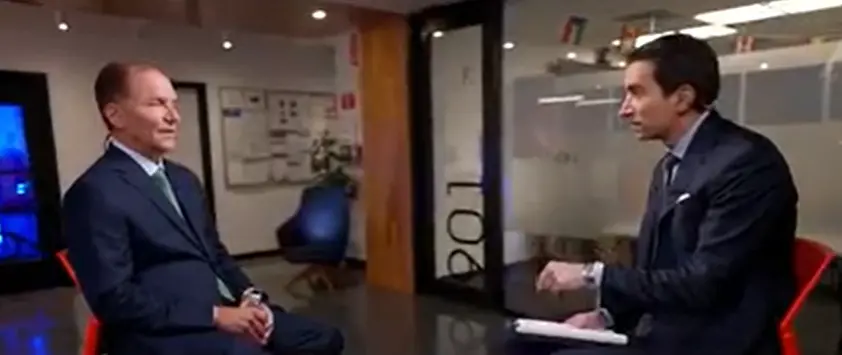
Tudor Investment founder and hedge fund legend Paul Tudor Jones issued a rare comprehensive bearish signal for the U.S. stock market on Tuesday during CNBC's "Squawk Box."
He warned, "2027 will be very, very difficult for the stock market." The current supply and demand dynamics of the U.S. stock market are "the worst since 2002," similar to the period just before the bursting of the dot-com bubble in 1999, and announced that he will be shorting the U.S. stock market for the entire next year.
Meanwhile, he is bullish on crude oil, expecting oil prices to have an upside potential of $20 to $25. He warned that once oil prices surge, the stock market will "extremely dislike" this situation.
Drawing Parallels to 2002: The IPO Supply Surge Will Crush the Bull Market
Jones believes the current market conditions are similar to those in 1999, which was about a year before the internet bubble burst in 2000.
He stated that one of the core drivers of the bull market over the past four years has been the continuous reduction in stock supply due to corporate buybacks and mergers and acquisitions. However, this logic is now reversing.
Large IPOs from companies like Anthropic and OpenAI are on the horizon, and SpaceX's issuance has just been completed. Additionally, many companies will launch secondary offerings to raise funds for AI development. Jones believes that these factors combined will create significant stock supply pressure in 2027. He stated:
"I'll be short the whole year. There's really no value to speak of. In '98, '99, and in 2000, 2001, 2002, those years were the easiest to short because there were constant unlocks and new supply flooding the market."
Fiscal Deficit: The Market Will Eventually Force Corrections
Jones also listed the U.S. fiscal deficit as another major hidden danger for the stock market.
His judgment is that politicians will not voluntarily raise taxes or cut spending; they will only act when forced by the market.
"We will never proactively solve the deficit problem until the market forces us to do so. Just like in 2008 with TARP. No politician will voluntarily raise taxes or cut spending; they are forced to."
He further stated, "The only question is whether we have reached that critical point where the market is about to take action? If you force me to give an answer, I would say 60 to 40, we are already on that path."
Bullish on Crude Oil: Unresolved Iran Conflict, Oil Prices Have Room to Rise
Regarding crude oil, Jones holds a long position, reasoning that the U.S.-Iran conflict is unlikely to resolve in the short term.
"I'm bullish on crude oil… I think it can rise another $20 to $25. If anything was going to ease the situation, it would have happened before the midterm elections."
West Texas Intermediate crude futures were trading at about $92.50 per barrel on Tuesday morning. If oil prices rise another $20 to $25, they will surpass the previous closing high of about $113 per barrel in 2026.
Jones pointed out that earlier this year, the stock market's tolerance for rising oil prices was decent—after the outbreak of the U.S.-Iran war on February 28, the S&P 500 index's maximum decline was just over 7%. However, he warned that if oil prices surge again, the stock market will "completely and utterly dislike it."
On the geopolitical front, Jones believes that Trump will seek to promote peace after the midterm elections.
"I assume the president will have a plan after the election because the current situation is clearly unsustainable."
 Risk warning