NVIDIA Changes Leadership in 72 Hours: Chip Stocks Were Only Strong for One Day, Bitcoin Falls Below Institutional Cost Line
 Core Viewpoint


 Alea Research reviews the cross-market transmission after the leadership change at NVIDIA: the chip index remained strong but fell back after a day, AMD erased its gains over two days; the October CPI and PPI pushed the probability of a rate hike in December to 98%, BTC dropped below the $75,000 cost line by 9.47%, Hyperliquid leveraged long positions were forced to exit; the capital expenditures of the three major cloud giants have exceeded their operating cash flow.
Author: Alea Research
Compiled by: Deep Tide TechFlow
Deep Tide Guide: Jensen Huang's sudden resignation as CEO of NVIDIA shook the global tech circle, but the Philadelphia Semiconductor Index only slightly fell by 0.54% the next day, as market funds quickly diverted to competitors like Broadcom and AMD amid panic.
Meanwhile, U.S. inflation data for October remained high, with traders pushing the probability of a Federal Reserve rate hike in December to a high level. Bitcoin fell below institutional holding cost lines during the deleveraging process.
Alea Research delved into the chain from excessive capital expenditure by cloud service providers, semiconductor supply chain rebalancing, to the contraction of liquidity in crypto assets, presenting the real financial game behind the macro shock.
Key Points Summary
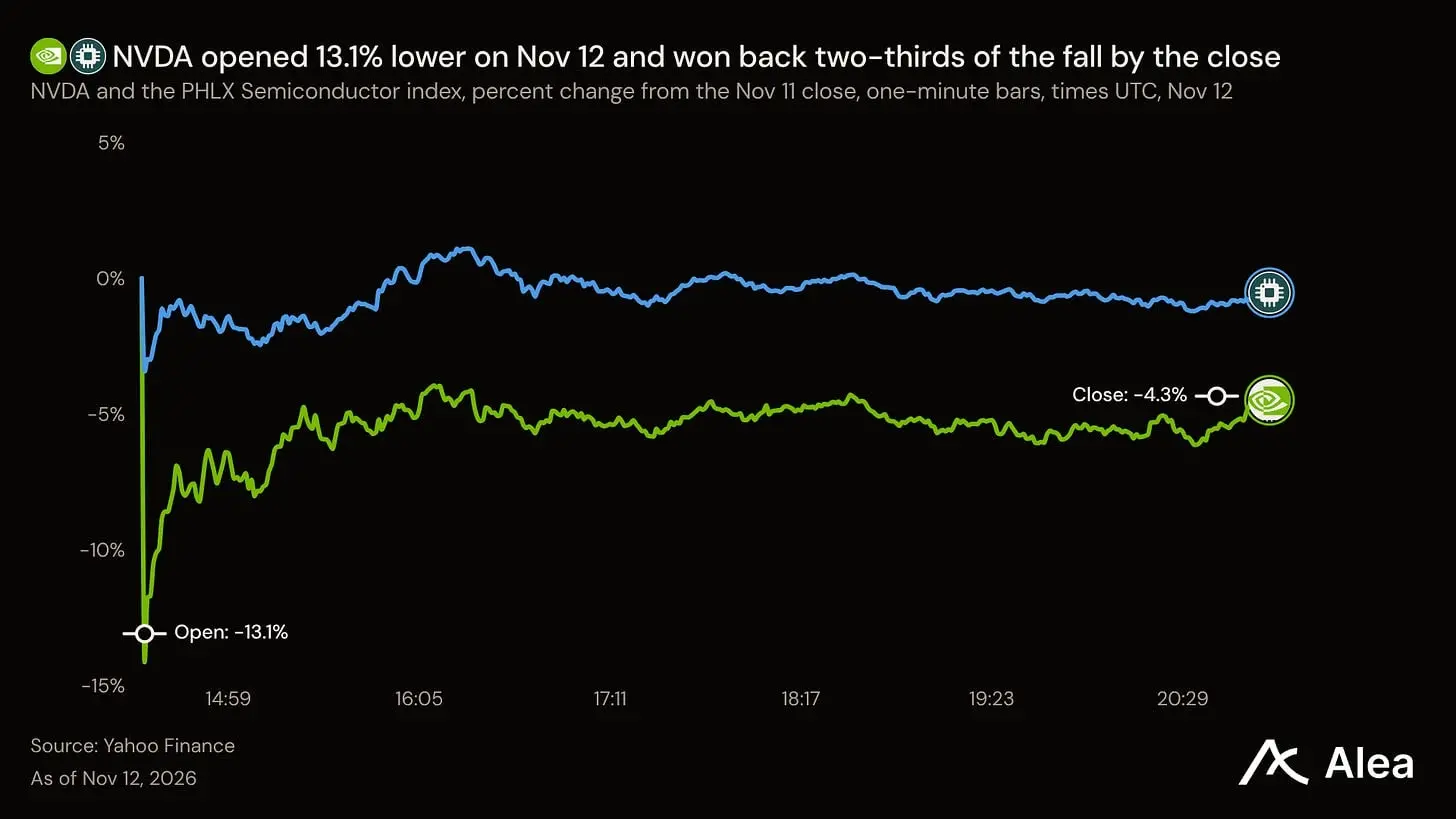
After losing its leader, the chip index only held steady for one day before experiencing volatility. On November 12, competitors AMD and Broadcom saw their stock prices rise, while Micron and Arm fell by less than 2%. However, shortly after on November 13, AMD's pullback erased all gains from the previous day.
In the crypto market, Bitcoin's decline on November 12 was about twice that of Ethereum. On Friday, leveraged funds accelerated their exit from Bitcoin futures, with Bitcoin's closing price 9.47% lower than the average holding price of Strategy.
After the October Producer Price Index was released, a December rate hike became almost a consensus among traders. Traders on Polymarket believed the probability of maintaining rates in December was only 2.35% by Friday's close. Despite a slight easing in inflation data, Bitcoin's rebound was completely exhausted within just one hour.
As real yields and the dollar rose, gold fell to a one-year low, while oil prices rebounded. Brent crude for January rose a cumulative 3.94% on November 12 and 13, driven by market concerns over geopolitical situations.
Before Anthropic's official listing, the crypto derivatives market gave a valuation far exceeding its IPO pricing range, with contract trading prices 37.6% higher than the median of the IPO pricing range.
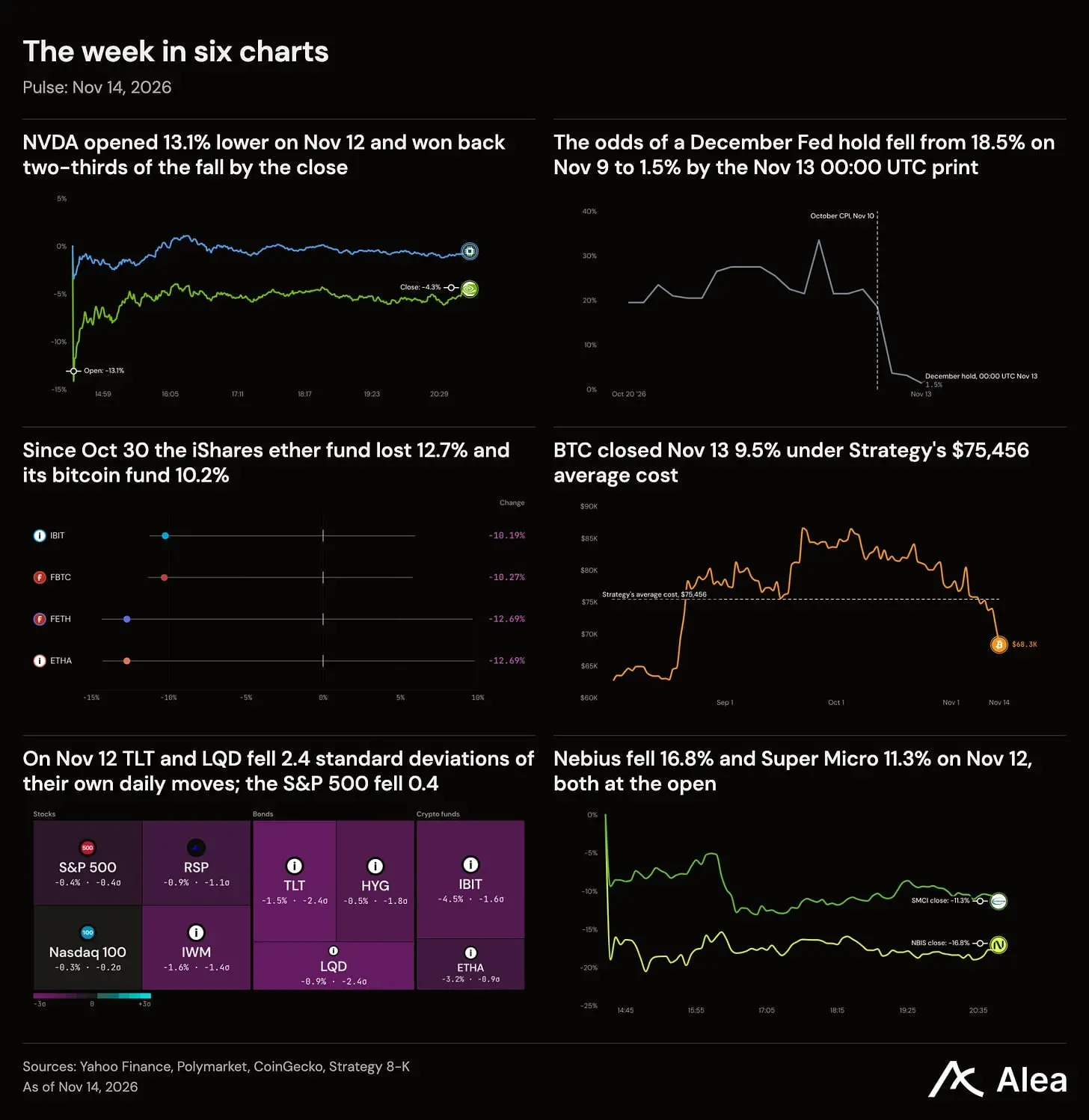
Figure: Comparison of multi-asset volatility across markets
NVIDIA Loses Its Leader in Three Days
From the board's investigation to the appointment of an interim CEO, NVIDIA took only three days. On the evening of November 8, the board stated that independent directors would work with external legal counsel to review reports of Jensen Huang becoming a target of foreign intelligence activities. The board found no signs of national security or NVIDIA secrets being leaked. Subsequently, Jensen Huang admitted to the company that he had violated his loyalty to his wife.
On November 9, a shareholder sued NVIDIA and Jensen Huang, and on that day, NVIDIA's stock price fell by 4.27%.
On November 11, the board accepted Huang's resignation and appointed Chief Financial Officer Colette Kress as interim CEO, while appointing board member Harvey C. Jones as chairman.
For customers purchasing NVIDIA chips, the board promised that everything would remain unchanged: Jones stated that the company's daily operations, customer commitments, and product roadmap would continue without hindrance.
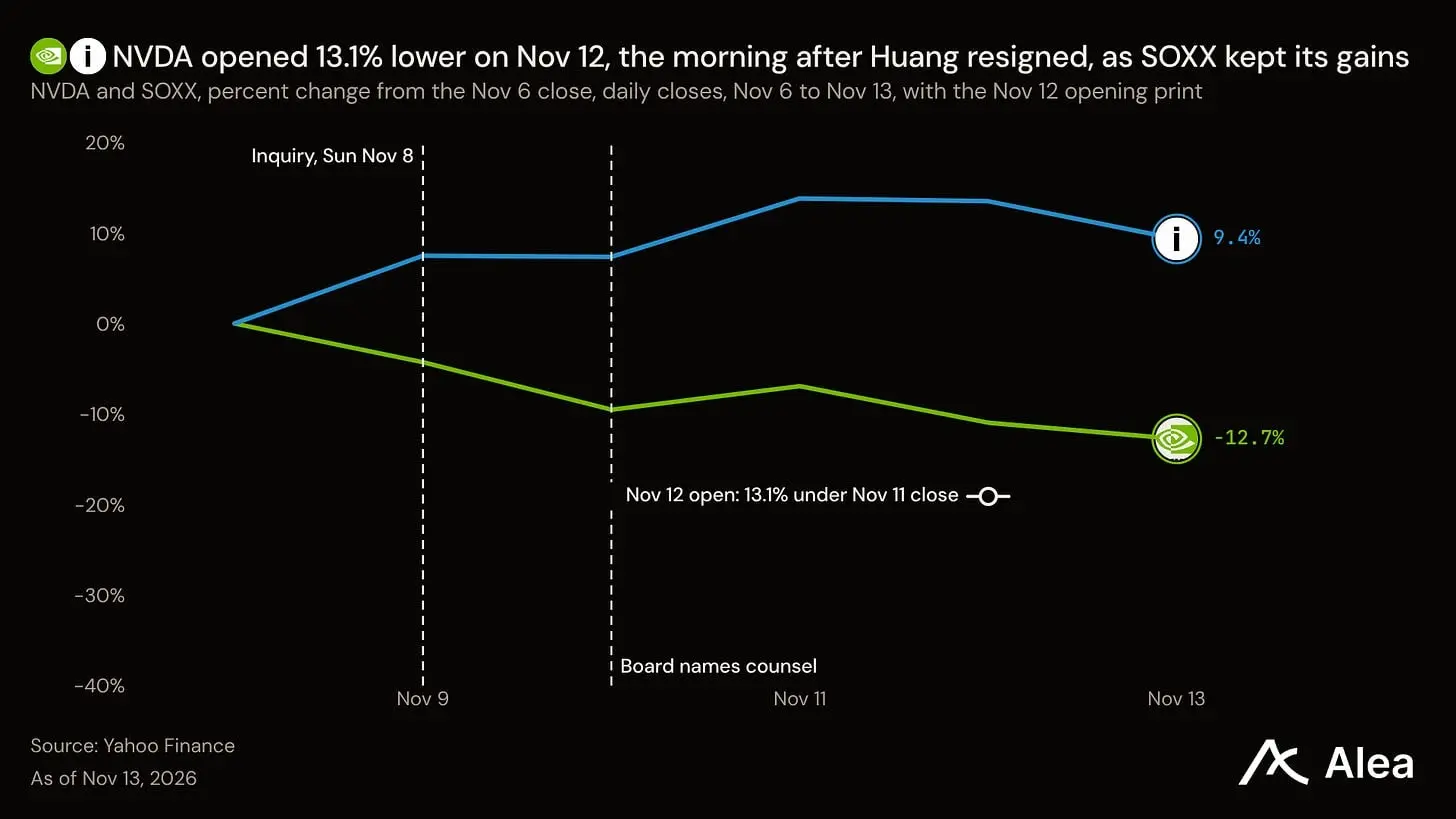
Figure: Comparison of NVIDIA and semiconductor index trends
On November 12, the chip index remained relatively stable, with gains from peers offsetting NVIDIA's decline. Due to a significant increase of 5.66% in the chip index on November 11, the index only slightly fell by 0.54% on the 12th, while the S&P 500 index fell by 0.35% during the same period.
Although Micron produces memory for NVIDIA's accelerated computing cards, it and Arm both saw declines of less than 2% that day. Competitor AMD rose by 5.86%, while networking chip giants Broadcom and Arista both rose by over 5%.
However, Supermicro and computing leasing companies faced a double blow at the opening. Server manufacturer Supermicro plummeted by 11.30% on November 12. Before the opening, computing leasing company Nebius lowered its 2026 revenue guidance to the lower end of the range, primarily due to delayed computing deployments until 2027.
Nebius closed down 16.84%, while peer CoreWeave fell by 6.86%.
By November 13, chip manufacturers erased most of the previous day's rebound. The chip index overall fell by 3.43%, with AMD dropping 8.75% and NVIDIA falling 2.01%, indicating significant pressure on the chip sector.
Macro Perspective: CPI Drives Traders to Digest December Rate Hike Expectations
After the release of the October CPI, traders almost viewed a December rate hike as inevitable. On November 10, core CPI rose by 0.3% month-on-month, reaching the threshold set earlier that day by Federal Reserve Governor Christopher Waller for considering a 50 basis point rate hike. Dallas Fed President Lorie Logan stated that the committee would need to raise rates at least two more times by 25 basis points each.
Polymarket's December contracts showed that the probability of maintaining rates before the CPI announcement was 18.5%, but this probability plummeted to below 2% two days later.
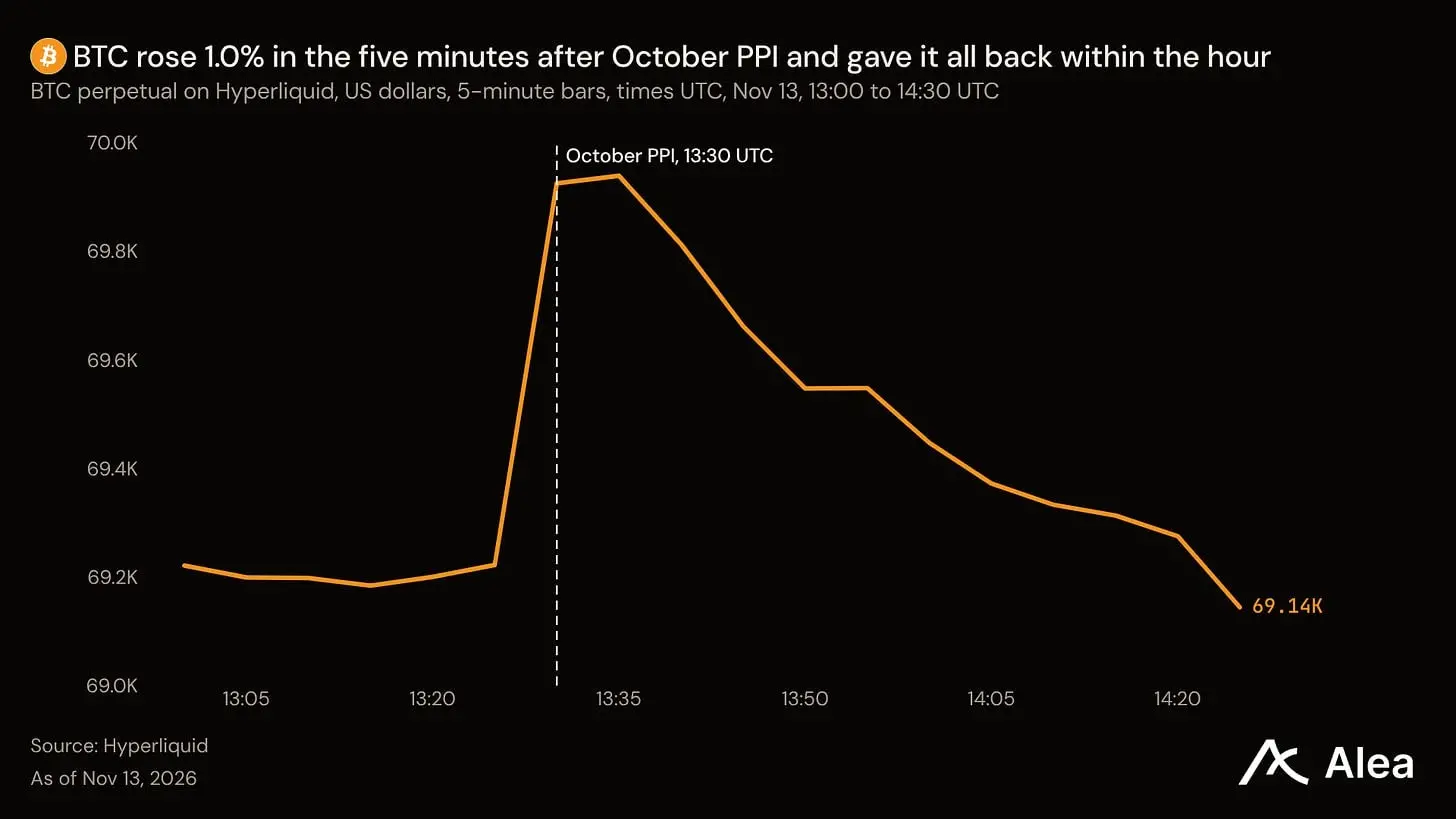
Figure: Market microstructure after inflation data release
The producer price data only provided less than an hour of respite. The October PPI released on Friday rose by 0.3% month-on-month, below economists' expectations of 0.4%, but its year-on-year growth rate still reached 6.5%, marking a new high since November 2022.
Bitcoin rose by 1.0% within five minutes after the data release, but within an hour, it gave back all its gains. Expectations for a significant rate hike that day increased, with the probability of a 50 basis point hike or more ultimately closing at 10.3%.
From November 9 to the close on the 12th, the yield on U.S. 2-year Treasury bonds rose by 30 basis points to 4.86%, with most of the increase occurring on November 10.
Crypto Observation: Bitcoin Further Falls Below Strategy Cost Line
Since November 8, Bitcoin's closing price has been below Strategy's average holding cost every trading day. Strategy holds 850,364 Bitcoins with an average cost of $75,456. By Friday's close, Bitcoin's price was 9.47% lower than this average, resulting in a floating loss of approximately $6.07 billion.
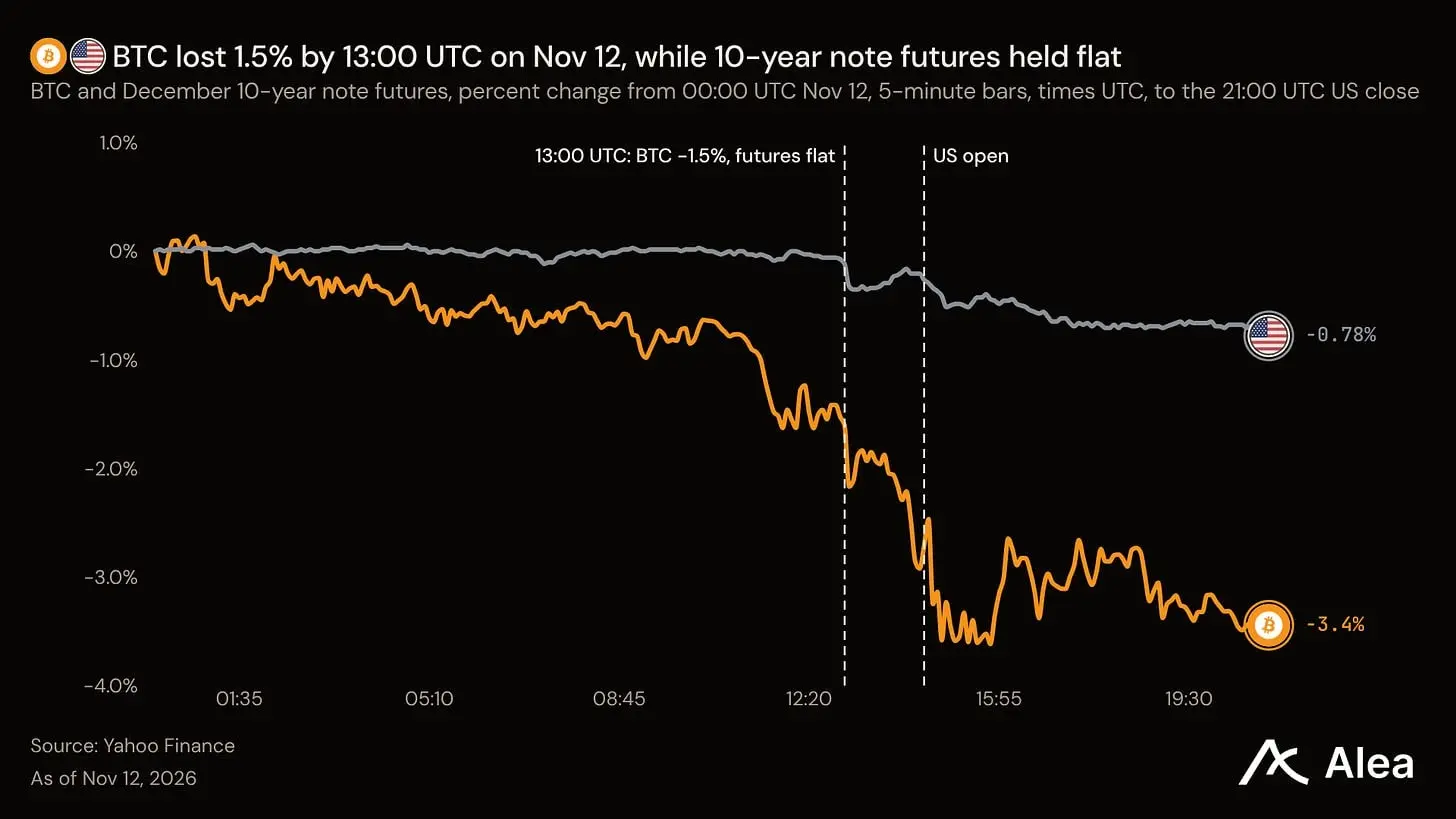
Figure: Bitcoin and Treasury futures intraday trends
In the week ending November 8, Strategy's expenditure on repurchasing its preferred stock exceeded its expenditure on purchasing Bitcoin. The company spent $188.3 million repurchasing its STRC preferred stock, while only $81.9 million was used to purchase Bitcoin.
Funds tracking the MSCI index will sell Strategy before the close on November 30, as MSCI is about to remove the company from the index.
Bitcoin's decline preceded the volatility in Treasury futures by several hours. Before 13:00 UTC on November 12, Bitcoin had already fallen by 1.49%, while Treasury and Nasdaq futures were basically flat. The open interest in Binance Bitcoin perpetual contracts increased by 4.3% during these hours, as traders continued to add positions amid the decline.
As Bitcoin fell below $68,000 on Friday, leveraged funds were forced to exit. Between 00:00 and 06:00 UTC, open interest in Bitcoin on Binance, Bybit, OKX, and Hyperliquid decreased by approximately 4,060 Bitcoins.
U.S. Stock Perspective: Three of the Four Cloud Giants Have Capital Expenditures Exceeding Operating Cash Flow
In the last quarter, capital expenditures for Google's parent company Alphabet, Meta, and Amazon all exceeded their operating cash flow, with only Microsoft's operating cash flow covering its 1.47 times cash capital expenditure.
Alphabet's capital expenditure doubled year-on-year to $51.4 billion, and the company suspended stock buybacks. Meta's expenditure also exceeded its operating cash flow, with its stock buyback scale reduced to zero. Amazon's operating cash flow could only cover 55% of its expenditures. These massive capital expenditures are the source of orders that chip manufacturers rely on for survival.
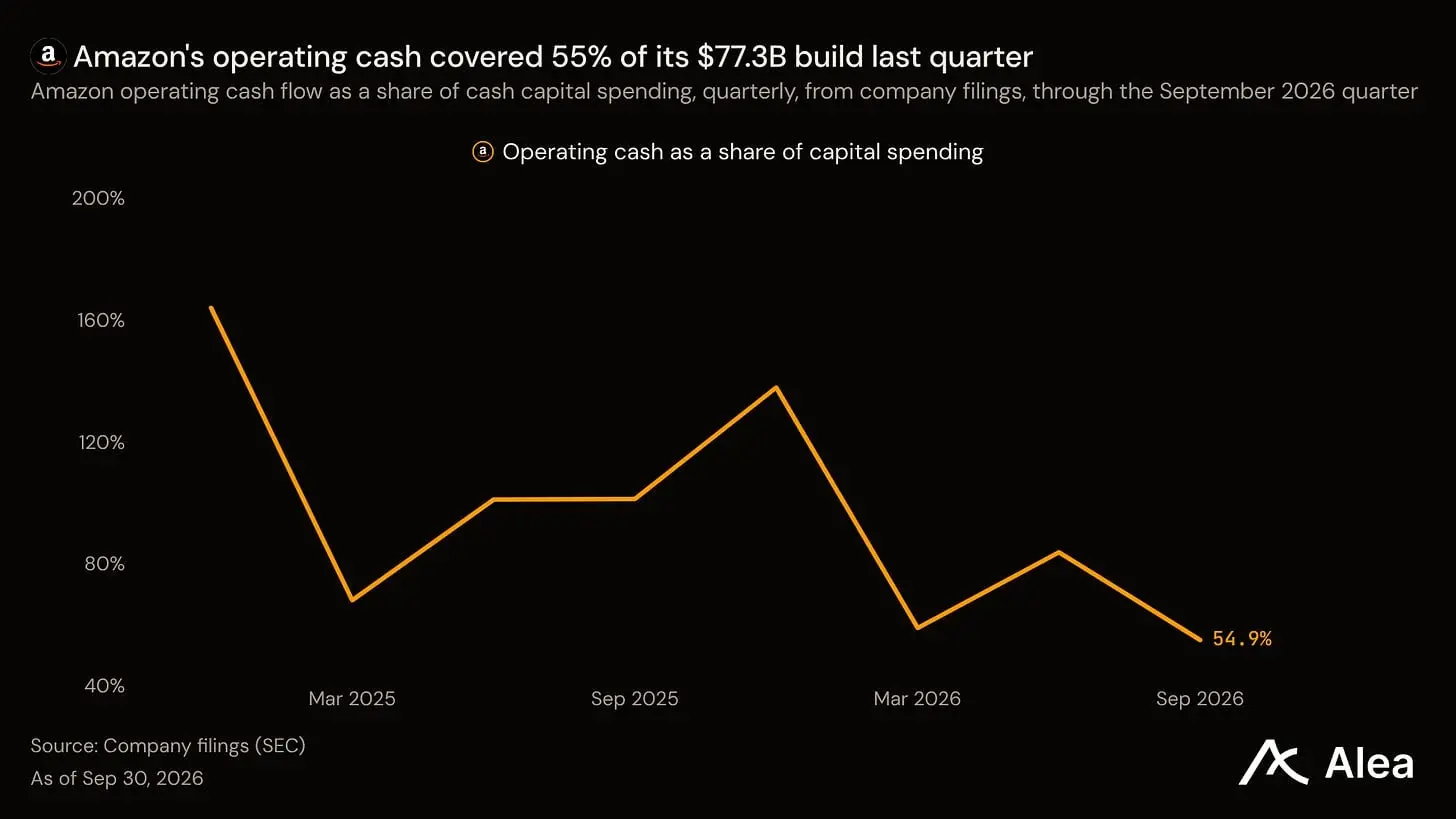
Figure: Amazon's operating cash flow and capital expenditure ratio
Crypto Derivatives Market Gives Anthropic a Valuation Far Exceeding IPO Range
Traders have given Anthropic a high premium in crypto contracts. As of November 14, 00:00 UTC, related contracts on Hyperliquid valued Anthropic at $1.782 trillion.
Based on the equity corresponding to the contracts, the median valuation of its IPO range of $74 corresponds to a valuation of $1.295 trillion, with the current contract price showing a premium of 37.6%.
Even at the upper limit of the IPO range of $78, and adding the average first-day increase of 17.9% for large IPOs since 2001, the valuation would only be $1.609 trillion, still 10.8% lower than the contract market. Currently, seven companies have committed to purchasing $26 billion worth of shares at the IPO issue price, with NVIDIA and Google each committing about $10 billion.
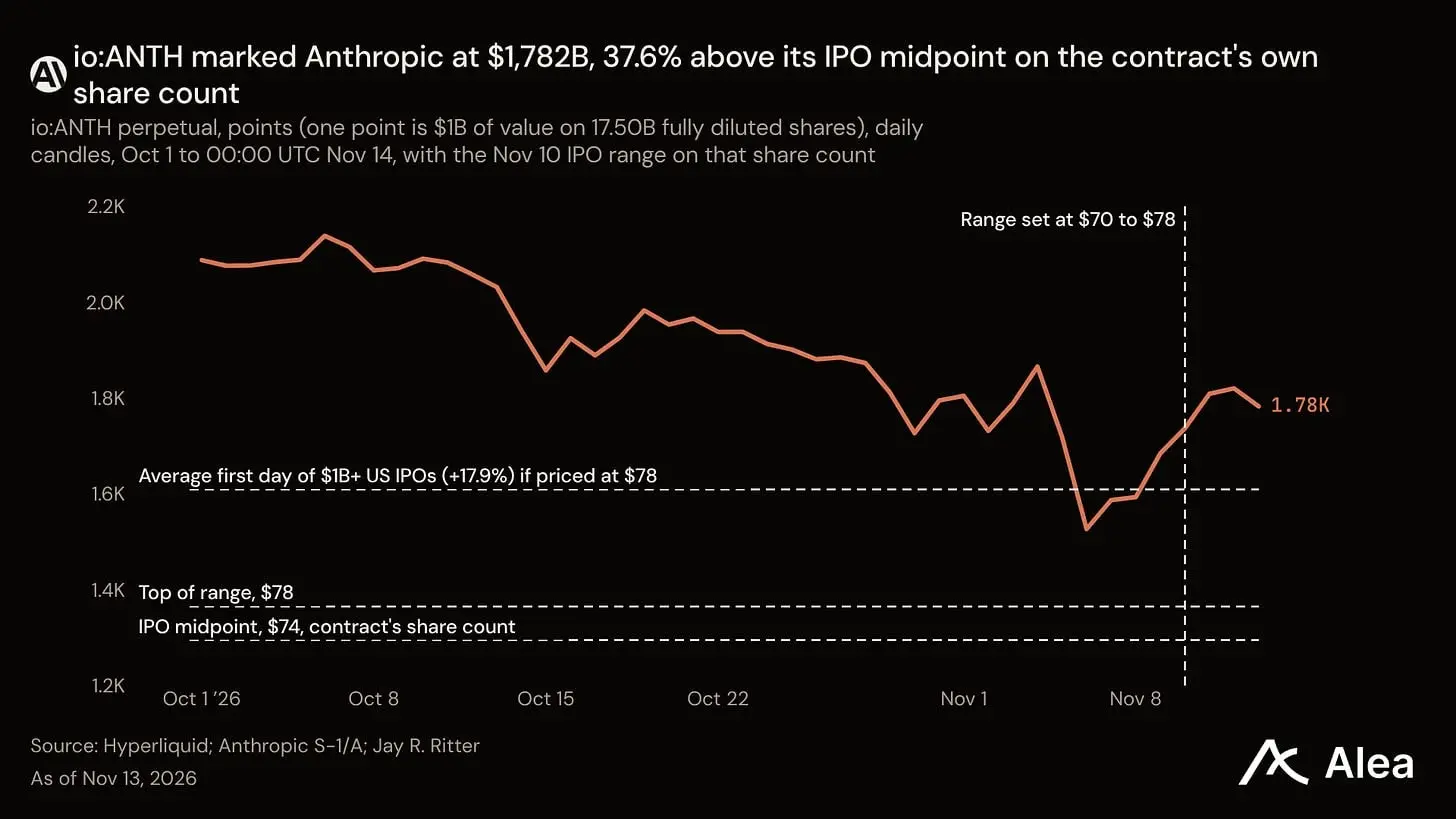
Figure: Anthropic OTC contract price trends
AMD also has its own vested interests. Anthropic purchased AMD computing racks equipped with MI450 power chips, and AMD reached an agreement in July to acquire up to $5 billion in Anthropic equity upon delivery of the racks.
Commodities: Gold Hits One-Year Low, Oil Boosted by Geopolitical Risks
December gold futures closed at a one-year low on November 12. The U.S. 10-year real yield has risen 25 basis points since November 9 to close at 2.91% on Friday. The dollar index reached a new closing high for the past year, while speculative funds continued to reduce their net long positions in gold futures.
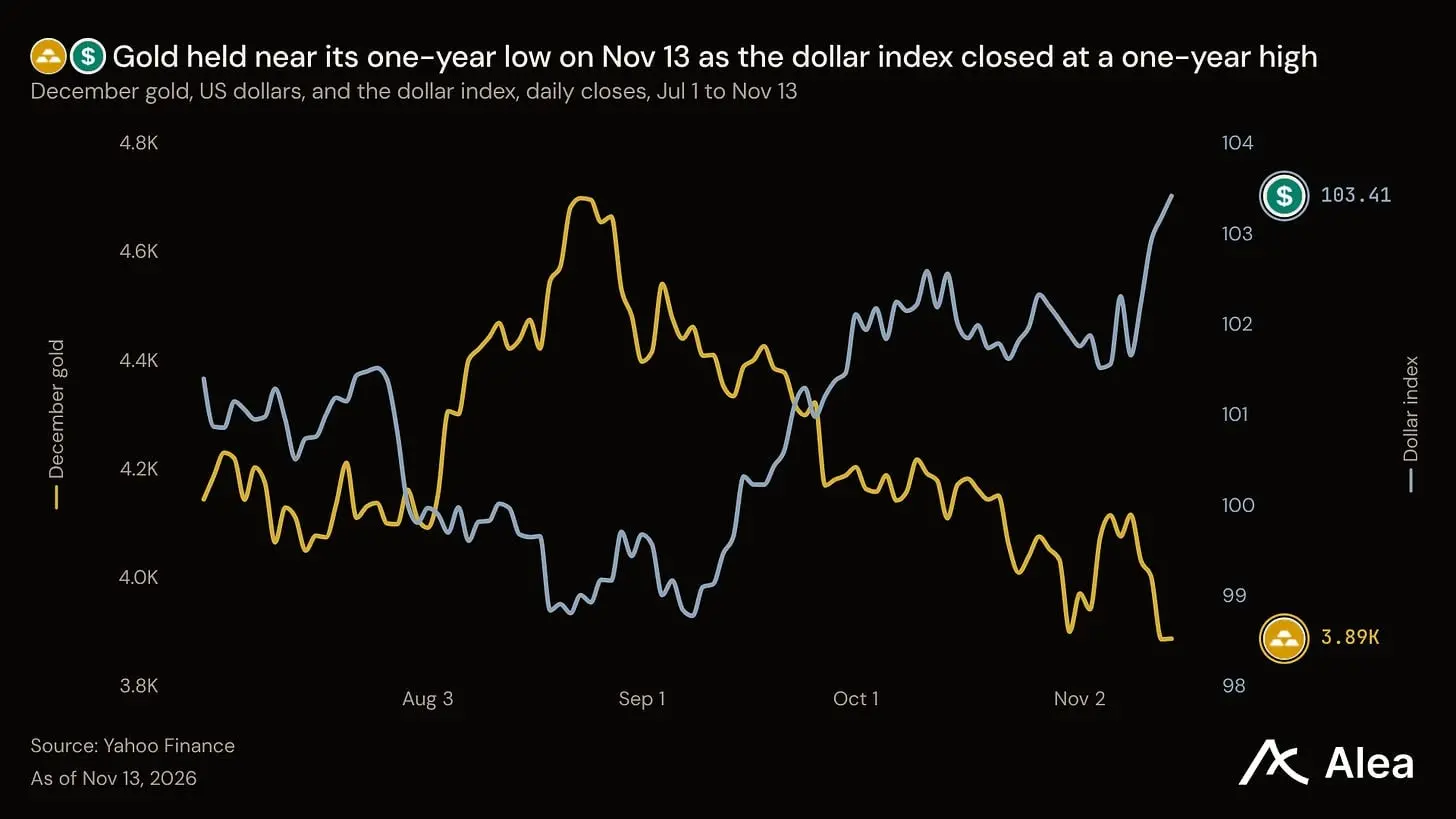
Figure: Comparison of Gold and Dollar Index Trends
Meanwhile, due to a decrease in market expectations for a ceasefire agreement, January Brent crude oil rose a cumulative 3.94% over two trading days. The natural gas market rebounded significantly amid extremely crowded short positions, with December natural gas rising 13.10% since the close on November 2, and demand for short covering from speculators significantly increased.
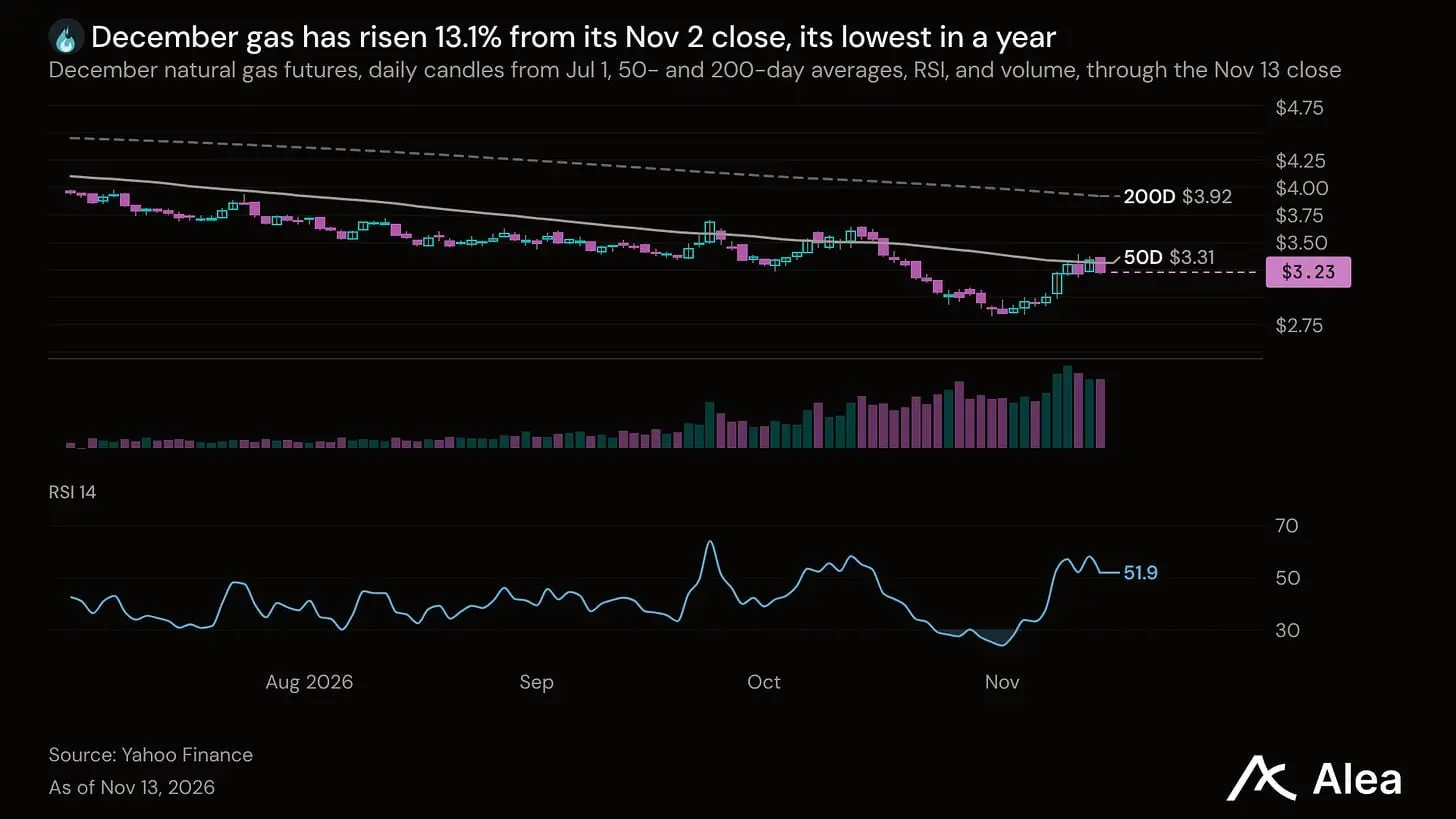
Figure: Natural Gas Futures Price Trends
Nvidia's Impact on the Semiconductor Supply Chain
Although Nvidia's stock price was hit on November 12, the semiconductor index remained robust overall, with AMD and Broadcom rising, while suppliers Micron and Arm saw smaller declines. Supermicro and computing rental companies experienced a pullback, compounded by their own lowered performance guidance.
On November 13, the chip sector corrected, as the market may be slowly digesting the shock or stabilizing the premiums from previous high bids. The dynamics among buyers and sellers have not yet fully solidified in the current price system.
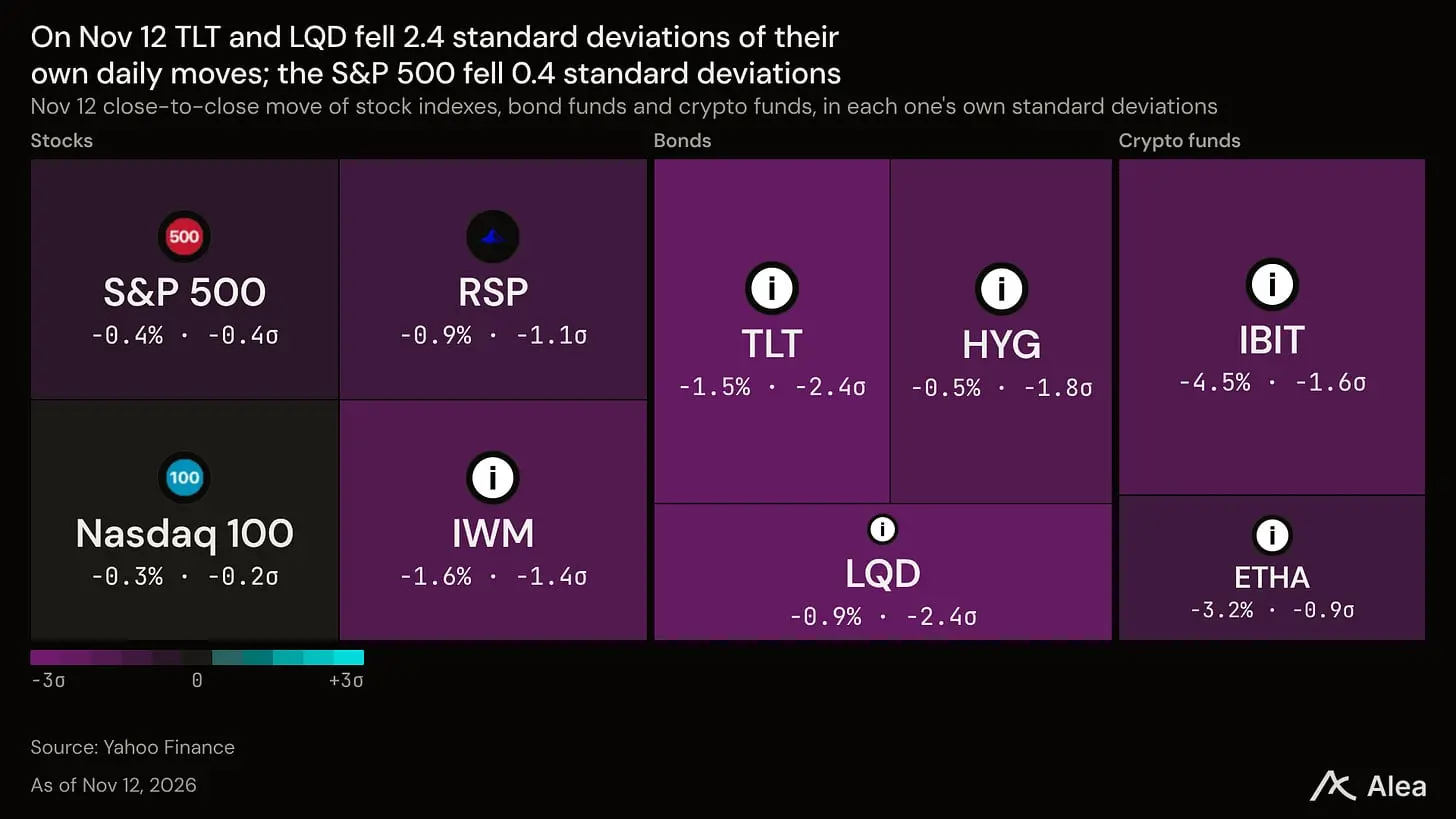
Figure: Performance After Adjusting for Multi-Asset Volatility
Key Timeline Overview
On November 16, the latest futures position report will be released, providing a basis for assessing speculative fund trends.
On November 17, Nvidia will announce its first financial performance since losing Jensen Huang, with its current market value corresponding to a valuation multiple of 9.1 times its annualized revenue guidance.
On November 18, the Federal Reserve will release the meeting minutes, and Anthropic's IPO is also expected to be officially priced around this date.
On November 30, MSCI will officially remove Strategy at the close.
On December 9, the Federal Reserve will officially announce its latest interest rate decision.
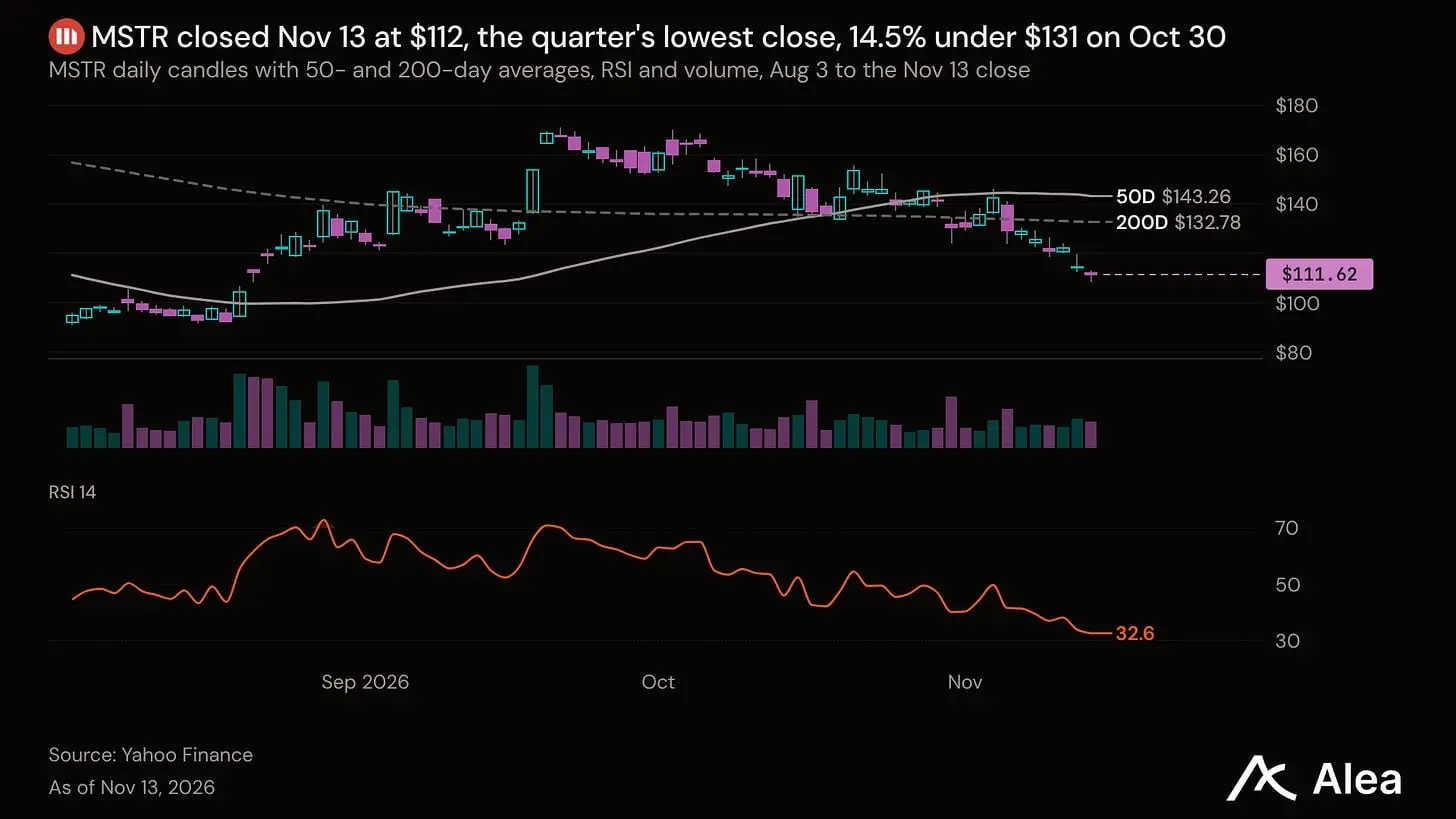
Figure: Strategy Stock Price and Moving Average Trend
 Risk warning
ChainCatcher reminds readers to view blockchain rationally, enhance risk awareness, and be cautious of various virtual token issuances and speculations. All content on this site is solely market information or related party opinions, and does not constitute any form of investment advice. If you find sensitive information in the content, please click , and we will handle it promptly.



Popular articles