Selling coins to pay debts and betting on AI, mining companies are facing a double whammy
 Core Viewpoint


 14 listed mining companies sold over 100,000 bitcoins this year, and the largest of the AI leases will not start generating rental income until after 2027.
Author: Zhou, ChainCatcher
Since November, Bitcoin has fallen by more than 20%, once approaching $55,000, setting a new low since September 2024.
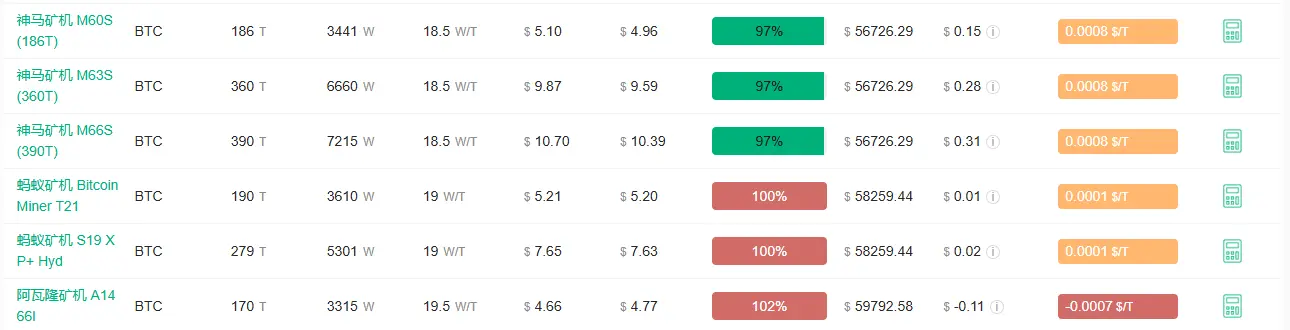
Mining revenues have shrunk accordingly. According to Antpool data, with an electricity price of $0.06 per kilowatt-hour, the electricity costs for newer models like Antminer T21 and Shenyu M60S series have accounted for over 97% of their income, leaving them barely breaking even, while Avalon A1466I has already fallen below the shutdown price.
In the past year, listed mining companies have responded to the bear market in almost identical ways, selling off their Bitcoin holdings while transferring power and facilities to AI companies. The mass exodus from mining companies to AI, which is seen as more profitable, has become a market consensus.
However, entering November, the AI sector has also experienced severe fluctuations. During the two weeks when NVIDIA CEO Jensen Huang resigned and then returned, the stock prices of mining companies that transitioned to AI also fluctuated dramatically. This indicates that the AI business, which mining companies originally used to hedge against Bitcoin prices, is becoming a new source of risk.
1. Mining machines are still running, but mining is no longer profitable
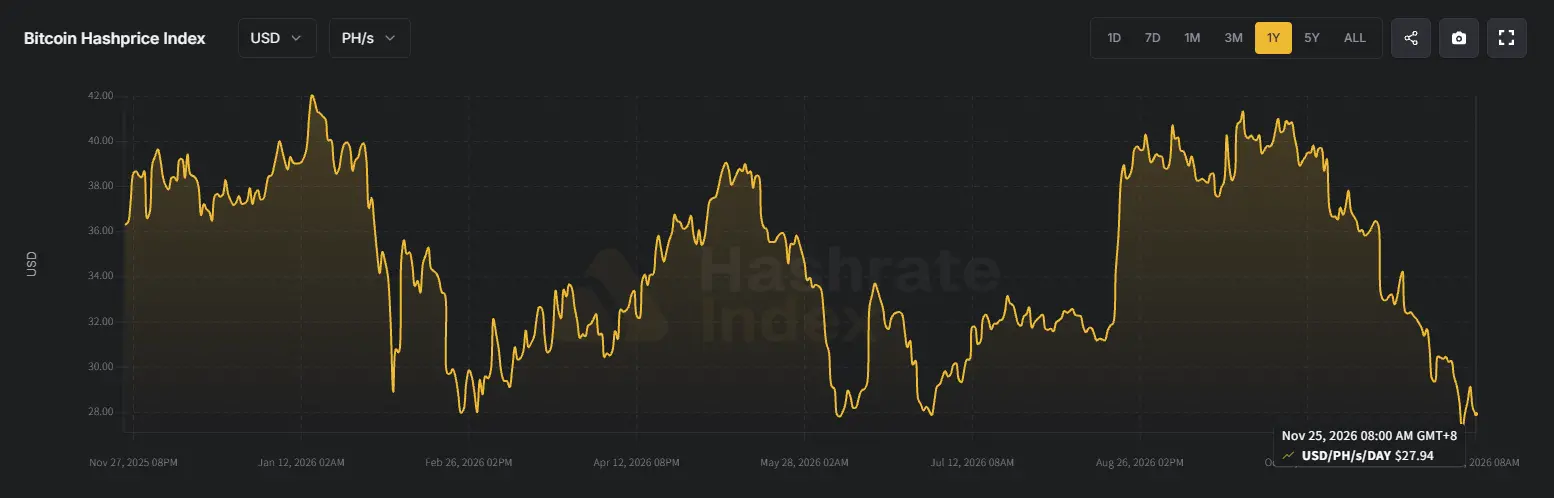
According to Hashrate Index data, as of November 25, the price of Bitcoin hash power has dropped to $27.74 per PH per day, at a near one-year low. However, the 7-day average hash rate across the network remains at 1048.8 EH/s, and there has not yet been a large-scale shutdown of mining machines. Hashrate Index predicts that the difficulty adjustment on November 27 will increase by about 8.6%.
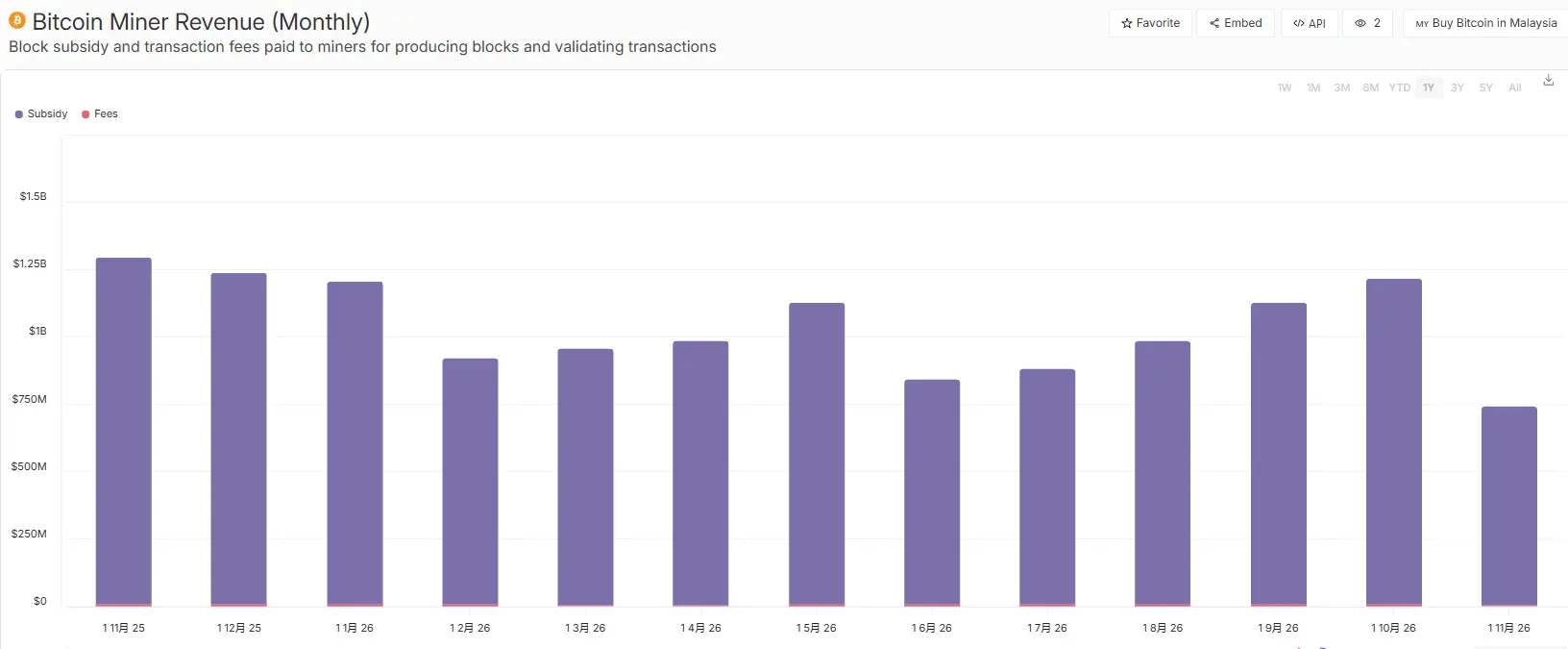
In terms of miner revenue, according to Newhedge data, total miner revenue in October was approximately $1.215 billion, the highest in 11 months; entering November, the revenue so far is only about $740 million, and at this rate, the total revenue for the month will be significantly lower than in October.
The cost pressure on listed mining companies has long been evident. CoinShares' second-quarter mining report showed that the weighted average cash cost to mine one Bitcoin for listed mining companies was about $75,500, while the Bitcoin price at the end of that quarter was only $58,400, causing the industry as a whole to fall below the cash break-even line. Now the Bitcoin price has returned to this level.
Twenty One Capital CEO Rapha Zagury previously stated that Bitcoin is experiencing its first-ever hash power bear market, and the number of listed mining companies that can continue large-scale mining is decreasing.
2. Who is selling Bitcoin?
With mining no longer profitable, mining companies have started to sell Bitcoin.
According to Lookonchain statistics, as of November 10, 14 listed companies have collectively sold 108,247 Bitcoins this year, worth about $8.08 billion, the vast majority of which are mining companies. MARA and Riot sold 40,581 and 20,264 Bitcoins respectively, together accounting for over half.
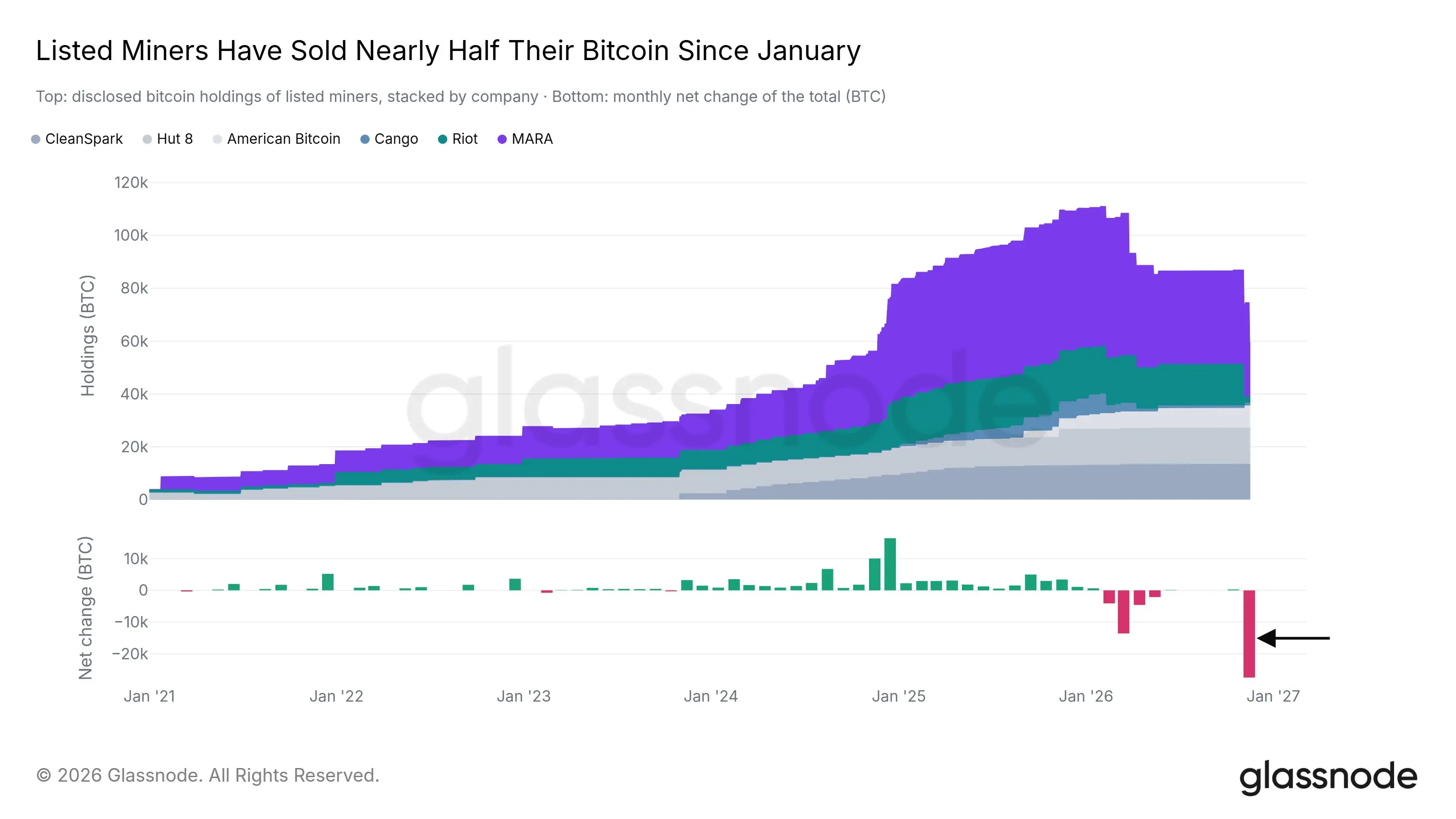
Glassnode also pointed out that for many years, listed mining companies have held onto the Bitcoin they mined, with some even buying more, but since January of this year, they have sold nearly half of their reserves, and these Bitcoins are now being used to fund the transition to AI data centers. From their charts, November alone saw a net decrease of about 27,000 Bitcoins, the largest drop on record.
That said, the purposes for selling Bitcoin vary among companies.
MARA disclosed in its third-quarter shareholder letter that after the quarter ended, it sold 13,597 Bitcoins at an average price of about $81,039, cashing out about $1.1 billion, of which $750 million was used to pay off Bitcoin-backed loans.
Previously, MARA had sold Bitcoin to repurchase about $1 billion worth of convertible bonds, reducing its debt by a total of $1.4 billion in the first three quarters, a decrease of 37%. This means that MARA's Bitcoin sales are primarily aimed at repaying the leverage left over from its previous expansion.
Riot, on the other hand, has invested the proceeds from selling Bitcoin into data centers. According to its third-quarter financial report, Riot sold 20,264 Bitcoins in the first three quarters of this year, cashing out about $1.5 billion, mainly for data center construction, without any equity financing throughout the year.
3. Betting on AI: Where the money from selling Bitcoin went
Mining companies' bets on AI are backed by straightforward calculations. CoinShares estimates that AI computing power can bring in about $1.5 million in profit per megawatt per year, while Bitcoin mining only yields about $500,000. The capital markets are also willing to pay a premium for this; Benoît Pellevoizin, Managing Director of CoinShares France, stated that mining companies with signed AI capacity contracts are trading at an average of 12.9 times forward sales, while those without contracts are only at 3.7 times.
The narrative of transformation peaked in September when Grayscale renamed its Bitcoin mining ETF to AI Computing Power ETF, changing the ticker from MNRS to GCPU, and the tracking index was also switched to the Indxx High-Performance Computing Index.
However, the other side of this equation is the massive investment required. CoinShares estimates that transforming a mining facility into an AI facility costs between $8 million and $15 million per megawatt, more than ten times the cost of building a mining facility. According to BlocksBridge Consulting, nine listed mining companies had capital expenditures of $5.11 billion in the first half of this year, while AI and high-performance computing revenues during the same period were only $341 million, making the investment 15 times the revenue.
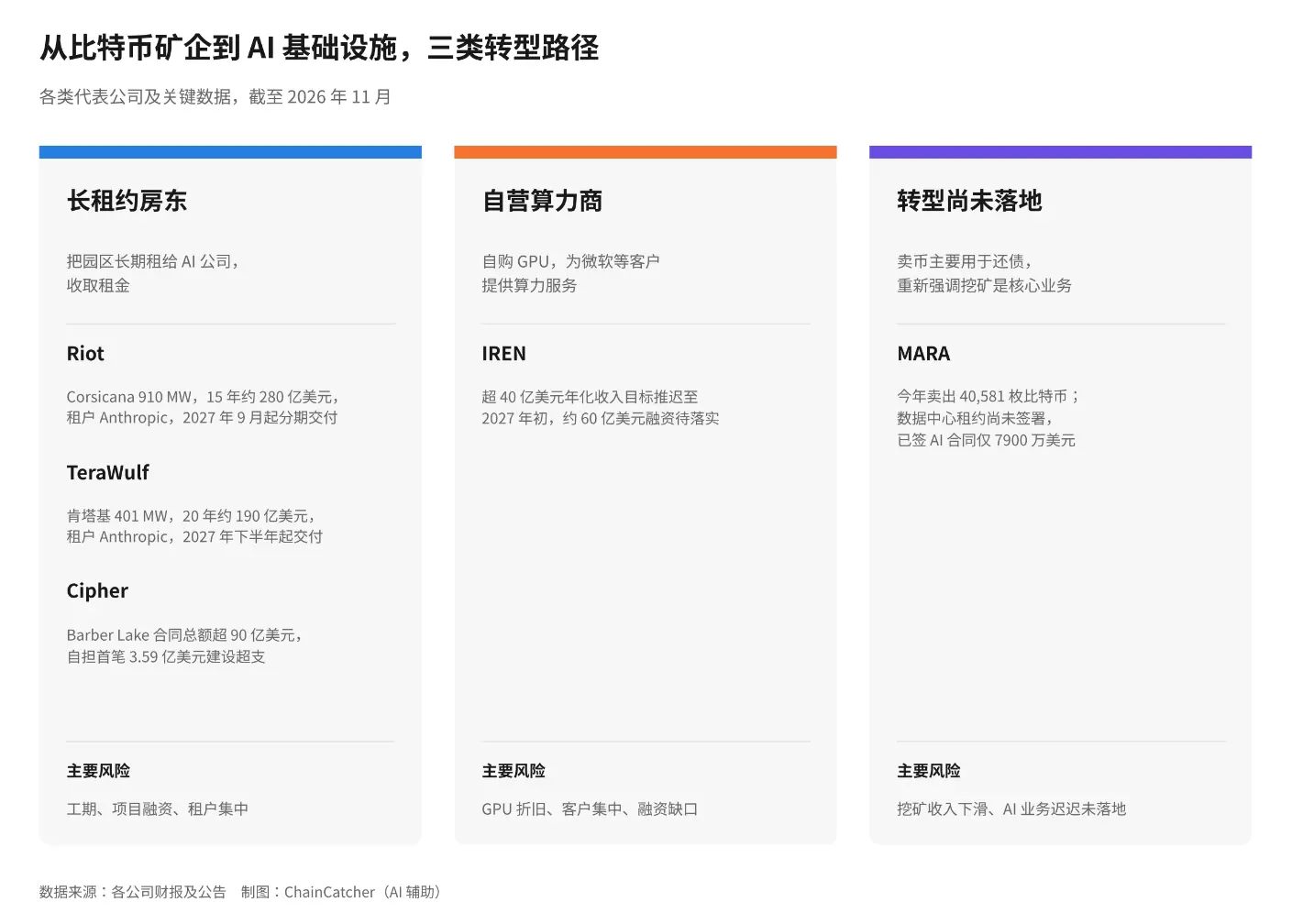
From the transformation paths, mining companies can be roughly divided into three categories.
The first category consists of landlords with long-term leases, represented by Riot, TeraWulf, and Cipher. Riot has leased the entire Corsicana facility for 15 years, with a contract value of about $28 billion, and its 10-Q filing shows that the tenant is Anthropic. TeraWulf has signed a 20-year lease with Anthropic worth about $19 billion. It is also worth mentioning that most of these leases will not commence until the second half of 2027, and many mining companies' long-term revenues are dependent on the same AI company.
The second category is self-operated computing power providers, represented by IREN. It procures GPUs itself to provide computing power services to clients like Microsoft, allowing for greater revenue flexibility, but it also has to bear the risks of GPU depreciation and client concentration.
The third category consists of mining companies whose transformations have not yet materialized, typified by MARA. It has sold the most Bitcoin this year, but its shareholder letter indicates that it has not signed a single data center lease, and the only signed AI contract is a four-year GPU service contract worth $79 million with its subsidiary Exaion. In November, amid increased volatility in AI stocks, MARA reiterated in its shareholder letter that Bitcoin mining remains the company's core business.
4. Bidirectional failure, the market begins to classify mining companies
In November, the severe fluctuations in the AI sector disrupted this path.
According to a Bloomberg report on November 5, Microsoft tightened its oversight of neocloud projects such as Nebius, IREN, and Nscale, withdrawing from projects it deemed risky and internally discussing whether to continue signing new neocloud contracts.
On the same day, IREN postponed its annual revenue target of over $4 billion from the end of 2026 to January 2027, and possibly to February, citing design changes requested by clients and supplier delays.
Subsequently, NVIDIA CEO Jensen Huang resigned on November 12 and was reinstated by the board on the 23rd. The stock prices of mining companies that transitioned also fluctuated dramatically.
Based on NASDAQ closing prices, from November 13 to 20, IREN fell 34.9%, MARA fell 27.2%, while Bitcoin dropped about 15% during the same period. On the day Huang was reinstated, mining stocks collectively rebounded, with IREN soaring over 20%, only to fall back 11.54% the next day.
From the trends, the stock prices of these companies are increasingly following AI sentiment, while Bitcoin has receded to a secondary position.
The deeper issue lies in financing. Bitcoin buffers have already been sold, while most AI leases will not commence until after 2027, meaning that construction funds during this period can only rely on external financing. Unfortunately, the financing environment is tightening.
IREN disclosed that of the remaining capital expenditures for fiscal year 2027, about $6 billion in financing has yet to be secured, depending on market conditions. Cipher has also agreed to bear the first $359.3 million in excess costs for the Barber Lake project.
Riot's management mentioned in the third-quarter conference call that rising interest rates and widening credit spreads have led lenders to conduct significantly stricter reviews of tenant credit, power supply, and delivery records. Project financing for the Corsicana project will not start until 2027, and if loans cannot be obtained under market conditions, the tenant will have to advance about $3.6 billion in construction costs, which will then be deducted from rent at an implied annual interest rate of about 12%.
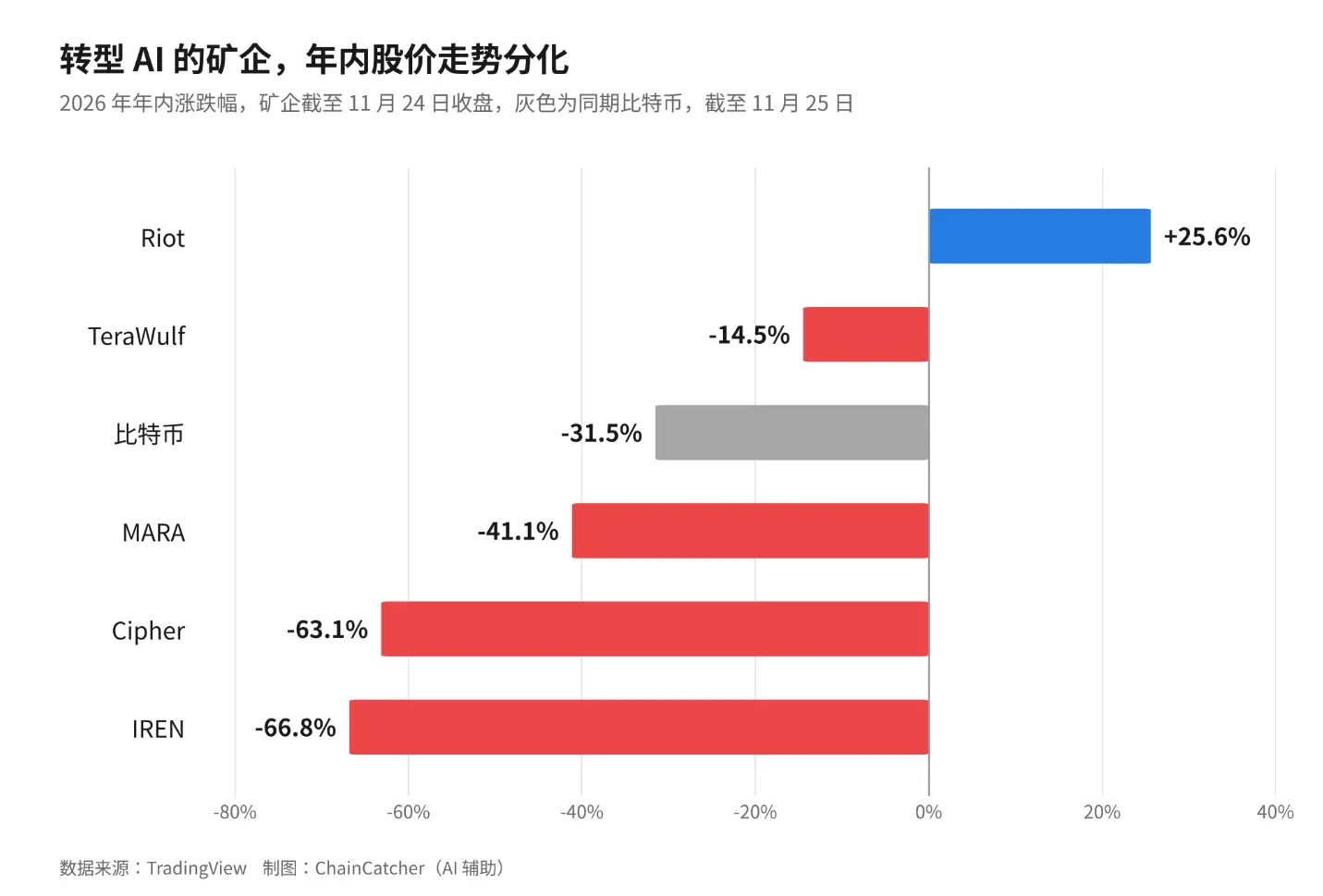
The market has also begun to reprice mining companies accordingly. As of the close on November 24, Riot has risen 25.6% this year, while IREN and Cipher have fallen 66.8% and 63.1%, respectively, MARA has fallen 41.1%, and TeraWulf has fallen 14.5%, while Bitcoin has dropped 31.5% this year.
Riot, which has secured top tenants and temporarily does not require equity financing, has become one of the few exceptions, while IREN, which has self-purchased GPUs and still has financing gaps, has seen the steepest decline.
Of course, from the disclosures of each company, there have been no signed leases canceled so far. What mining companies are currently facing is more pressure in terms of valuation, financing, and delivery.
5. Conclusion
Overall, it has become very difficult for mining companies to return to their original path. According to Hashrate Index estimates, the next halving will occur around April 2028, at which point the block reward will be halved again. CoinShares analyst Luke Nolan also believes that even if the price of cryptocurrencies rebounds, it will be difficult to reverse the transformation of mining companies towards AI.
This raises a larger question. Publicly listed mining companies were once the main force in Bitcoin's computing power, but now they are gradually transferring their electricity and facilities to AI companies. Who will take over the remaining computing power?
In May of this year, VanEck proposed that as publicly listed mining companies in the U.S. shift their electricity to AI mega-scale customers, government-controlled idle hydropower and natural gas resources will become the natural successors for Bitcoin mining.
If this judgment holds, the security budget of the Bitcoin network will increasingly be borne by sovereign entities and low-cost energy providers, while publicly listed mining companies supported by Wall Street capital will gradually become the landlords of electricity in the AI era.
For Bitcoin, this may mean yet another shift in the computing power landscape, with the new participants being more decentralized and harder to predict.
ChainCatcher reminds readers to view blockchain rationally, enhance risk awareness, and be cautious of various virtual token issuances and speculations. All content on this site is solely market information or related party opinions, and does not constitute any form of investment advice. If you find sensitive information in the content, please click , and we will handle it promptly.




Popular articles