Scan to download
BTC $60,577.44 -1.51%
ETH $1,556.72 -2.74%
BNB $572.67 -0.68%
XRP $1.08 -1.84%
SOL $61.73 -4.11%
TRX $0.3234 +0.50%
DOGE $0.0813 -1.77%
ADA $0.1567 -2.20%
BCH $216.07 -0.87%
LINK $7.35 -1.34%
HYPE $56.64 -4.82%
AAVE $60.38 -4.32%
SUI $0.7114 +0.46%
XLM $0.2106 +3.40%
ZEC $356.41 -3.77%
BTC $60,577.44 -1.51%
ETH $1,556.72 -2.74%
BNB $572.67 -0.68%
XRP $1.08 -1.84%
SOL $61.73 -4.11%
TRX $0.3234 +0.50%
DOGE $0.0813 -1.77%
ADA $0.1567 -2.20%
BCH $216.07 -0.87%
LINK $7.35 -1.34%
HYPE $56.64 -4.82%
AAVE $60.38 -4.32%
SUI $0.7114 +0.46%
XLM $0.2106 +3.40%
ZEC $356.41 -3.77%

reserve

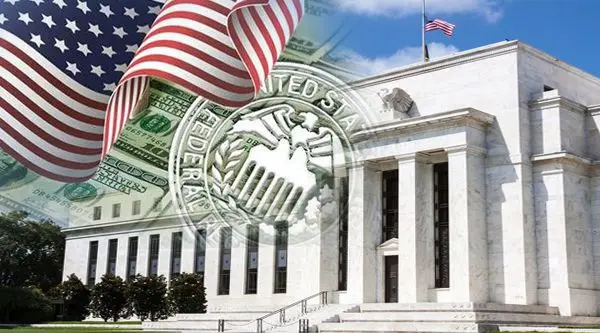
The U.S. House of Representatives plans to set a 20-year holding period for strategic Bitcoin reserves

According to the official website of the U.S. Congress, the full text of the U.S. House of Representatives' "American Reserve Modernization Act" (H.R.8957, ARMA) has been made public. This bill was introduced on May 21 by Alaska Congressman Nicholas Begich and has now been referred to the House Financial Services Committee for review.The main content of the bill includes: incorporating Bitcoin obtained by the government through criminal or civil forfeiture into a strategic Bitcoin reserve managed by the Treasury Department, establishing a minimum holding period of 20 years during which it cannot be sold or disposed of; establishing a quarterly reserve verification mechanism and introducing independent third-party audits; allowing states to voluntarily hold their Bitcoin in independent accounts at the Federal Reserve.In terms of forward-looking provisions, the bill requires the Treasury Department and the Department of Commerce to jointly study feasible paths for increasing Bitcoin holdings in a budget-neutral manner within 180 days, including converting non-Bitcoin digital assets, forfeiture proceeds, voluntary donations, tax or tariff revenues, and utilizing mechanisms related to the Federal Reserve or gold certificates.Analysts point out that compared to the previous "BITCOIN Act," which called for the purchase of 1 million Bitcoins, ARMA is more moderate and politically feasible, but still leaves room for future federal increases in Bitcoin holdings.

SoFi becomes the first national bank in the U.S. to offer bank-issued stablecoins to retail users, Coinbase receives CFTC approval to launch crypto perpetual contracts, Sequans announces a complete exit from its Bitcoin reserve strategy, currently holding 658 BTC

According to BBX data, yesterday the intertwining news of traditional finance's entry into cryptocurrency and corporate reserve exits presented the following core dynamics:SoFi Technologies, Inc. (NASDAQ: $SOFI) announced through a BusinessWire official press release that its SoFiUSD stablecoin has officially opened to approximately 14.7 million members within the SoFi app, supporting buying, selling, holding, and conversion, becoming the first national bank in U.S. history to embed its own stablecoin within a banking app (the issuer is SoFi Bank, N.A., regulated by the OCC). SoFiUSD (on-chain code SOFID) is pegged 1:1 to the U.S. dollar and can be used on the Ethereum and Solana networks, with reserves backed by liquid assets and subject to regular independent CPA audits; in the coming weeks, tokenized deposits and 24/7 cross-border transfer functions will be launched, and an institutional trading channel will be opened in collaboration with Bullish exchange. SoFi CEO Anthony Noto stated, "Users no longer have to choose between blockchain technology and regulated bank products." The company's Q1 2026 crypto trading revenue reached $121.6 million, with a net income of approximately $852,000 after costs; SoFiUSD is not insured by FDIC or SIPC, does not constitute legal tender, and on-chain transactions are generally irreversible.Coinbase Global, Inc. (NASDAQ: $COIN) and the prediction market platform Kalshi announced that the two platforms have received approval from the CFTC to launch cryptocurrency perpetual contract products for U.S. customers, becoming the first exchanges approved to offer such products within the U.S.; this move by the CFTC officially brings perpetual contracts from a regulatory gray area into the federal derivatives legal framework, and a policy statement was released simultaneously, indicating that future applications for perpetual contracts in other asset classes will be reviewed on a case-by-case basis. In 2025, the global trading volume of cryptocurrency perpetual contracts reached $61.7 trillion (up 29% year-on-year, according to CryptoQuant data), and the U.S. previously lacked regulated domestic trading venues. This approval is expected to drive a significant amount of institutional and retail funds back from offshore platforms to compliant channels in the U.S., with several other exchanges expected to follow suit with applications.Sequans Communications S.A. (NASDAQ: $SQNS) CEO Georges Karam clearly announced during the recent Q1 2026 earnings call that the company has completely terminated its previously initiated Bitcoin treasury reserve strategy. The company began its cryptocurrency layout in June 2025, raising approximately $384 million through debt and equity financing, and quickly accumulated 3,000 BTC by the end of July 2025; however, the crypto market crash in October 2025 triggered the company to deleverage, selling 970 BTC in November 2025 and another 1,025 BTC in Q1 2026; as of now, it holds approximately 658 BTC (completely debt-free, worth about $46.8 million), and the company stated it will gradually liquidate over time, with all funds returning to its core chip business. Sequans is an IoT/5G semiconductor company, and this case is one of the most significant "failed corporate Bitcoin reserve strategy cases" in 2026.
app_icon
ChainCatcher Building the Web3 world with innovations.