BTC $64,347.31 -1.36%
ETH $1,818.48 -0.09%
BNB $587.20 -1.10%
XRP $0.9537 -1.24%
SOL $71.23 -1.39%
TRX $0.3047 -0.74%
DOGE $0.0587 -0.64%
ADA $0.1521 -1.60%
BCH $206.37 -1.49%
LINK $9.16 -1.39%
HYPE $66.00 -2.32%
AAVE $108.69 +1.28%
SUI $0.7151 -1.51%
XLM $0.1370 -1.60%
ZEC $863.12 -3.74%
AAPL $357.27 +0.24%
AMZN $263.87 +0.19%
GOOGL $294.50 +0.70%
MSFT $525.51 +0.99%
META $640.66 +0.69%
NVDA $157.65 -1.84%
TSLA $387.50 +0.08%
SNDK $828.36 -2.99%
INTC $56.94 -1.47%
SPCX $138.26 -0.33%
MU $735.43 -2.67%
AMD $508.46 -2.27%

anthropic

Anthropic is an artificial intelligence safety and research company focused on developing safer and more controllable AI systems. Founded in 2021, Anthropic is committed to ensuring the transparency and reliability of AI technology through research and technological development, reducing potential risks and negative impacts. The company was founded by former employees of OpenAI and aims to promote ethical and safety standards in the field of AI.
All
Article
Flash

first_img Ming-Chi Kuo: Google TPU shipment visibility extended to 2029

Tianfeng International Securities analyst Guo Mingqi stated that his latest industry survey shows that new orders from OpenAI and Anthropic will extend the visibility of Google TPU shipments to 2029, earlier than Nvidia GPU and other AI ASICs (most of which are from the fourth quarter of 2027 to the second quarter of 2028). He indicated that starting from 2028, v9 will become the main force of Google’s self-built computing power, thus orders for the v8 series (8t, 8i, or its design variants) can be seen as coming from OpenAI and Anthropic. The total demand from 2028 to 2029 is approximately 12 million units from OpenAI (8t designed by MediaTek) and 14 million units from Anthropic (8i designed by Broadcom), both of which will grow year by year; OpenAI will adopt a buyout model, while Anthropic will use both leasing and buyout.Guo Mingqi mentioned that the v10 product line has been adjusted from Icefish and Merope/Bladerunner to Quillfish, with mass production expected in 2029, and the design service order obtained from MediaTek. Icefish has been changed to v11, with mass production expected in 2030, and the design service order also obtained from MediaTek; Merope has lower visibility, with the supplier undecided, and it may also be canceled. MediaTek will be the sole design supplier for v9 (Humufish and Triggerfish) and v10 (Quillfish), accounting for approximately 45% to 50%, 50% to 55%, and 55% to 60% of total TPU supply from 2027 to 2029, respectively. Starting from v9, the new TPU models will adopt Intel EMIB-T advanced packaging; due to initial capacity constraints, the main shipments until 2029 will still be from the v8 series.Guo Mingqi stated that under supply chain constraints, the more reasonable TPU shipment estimates from 2027 to 2029 are 8 million to 9 million units, 14 million to 15 million units, and 16 million to 18 million units, respectively. He indicated that the market generally expects AI capital expenditures to peak in 2028, but the above plans show that TPU shipments will still grow in 2029, primarily driven by direct orders from OpenAI and Anthropic. He also mentioned that MediaTek has been the sole design supplier since v9, with high-margin 8t series shipment visibility extending to 2029; Broadcom leads the design of 8i, which has a higher profit margin than 8t, but its focus in the coming years will be on non-TPU XPU and AI network chips, with non-TPU revenue potentially exceeding TPU revenue as early as 2027.

Asian investors are rushing to buy indirect shares of Anthropic, with premiums reaching as high as 30%

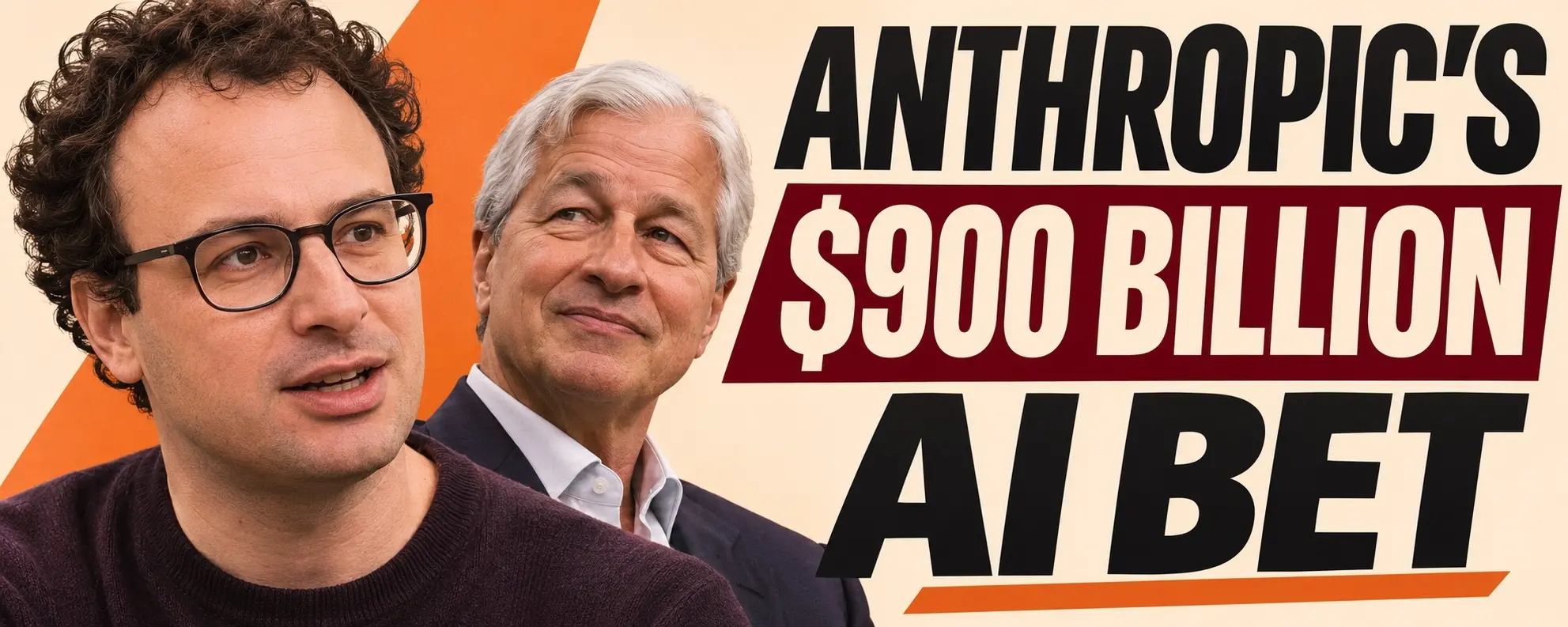
As AI company Anthropic is about to launch its IPO, high-net-worth investors and family offices in Asia are scrambling to purchase indirect equity opportunities through offshore funds and special purpose vehicles, with some investors even willing to pay a premium of up to 30% for related fund shares. Due to strict restrictions on equity transfers by large private companies in Silicon Valley like Anthropic, investors typically cannot hold shares directly and can only gain economic exposure through funds that hold the underlying assets or multi-layer investment vehicles.A fund currently raising capital from family offices in Asia and the Middle East disclosed that approximately 17% of its portfolio is allocated to Anthropic and 11% to OpenAI, both obtained through secondary market channels. Some investors holding indirect exposure to Anthropic are also selling fund shares ahead of the IPO. A Hong Kong investor plans to sell part of their holdings at an estimated valuation of about $965 billion and is asking buyers to pay a premium of over 20%. Additionally, other investors previously achieved premiums of 100% to 200% when transferring related fund shares through investment banks.Related investments face challenges regarding valuation, liquidity, and structure. Anthropic's expected valuation has dropped from a previous $2 trillion to about $1.4 trillion, and some funds may impose lock-up periods exceeding the usual 180 days after the IPO. Anthropic has also warned that indirect investment funds might provide investment opportunities by circumventing the company's equity transfer restrictions and reminded investors to bear the risks themselves. Talos data shows that the open interest in perpetual contracts for Anthropic on platforms like Entropy, TradeXYZ, and OKX has exceeded $260 million before the IPO; some ETFs hold Anthropic shares through special purpose vehicles, with the indirect allocation ratio of the Tema Photonics & Optical ETF being approximately 12.7%.

first_img This week in macro: Nvidia earnings report, Anthropic goes public, Federal Reserve releases minutes

On November 16, the financial markets this week will focus on NVIDIA's earnings report, the listing of Anthropic, U.S. retail sales and industrial production data, initial jobless claims, and the Federal Reserve's policy direction. On Monday, the U.S. November New York Fed Manufacturing Index will be released, and FOMC permanent voting member and New York Fed President John Williams will speak. On Tuesday, the U.S. weekly change in ADP employment for the week ending October 31, October retail sales month-on-month, import price index month-on-month, industrial production month-on-month, November NAHB Housing Market Index, and September business inventories month-on-month will be released.On Tuesday, Federal Reserve Chair Jerome Powell will deliver the opening remarks, followed by Richmond Fed President Thomas Barkin, St. Louis Fed President James Bullard, and Cleveland Fed President Loretta Mester speaking, and NVIDIA will announce its earnings report after U.S. stock market hours. On Wednesday, the U.S. API crude oil inventory for the week ending November 13, October housing starts annualized, total building permits, existing home sales index month-on-month, as well as EIA crude oil inventory, Cushing crude oil inventory, and strategic petroleum reserve inventory will be released, with New York Fed President John Williams participating in a fireside chat.On Thursday, NVIDIA's interim CEO will hold an all-staff meeting, and Anthropic is expected to officially list on NASDAQ with the stock ticker ANT. On the same day, the U.S. initial jobless claims for the week ending November 14, November Philadelphia Fed Manufacturing Index, and EIA natural gas inventory for the week ending November 13 will be released, along with the Federal Reserve's monetary policy meeting minutes, with New York Fed President John Williams, Minneapolis Fed President Neel Kashkari, and Cleveland Fed President Loretta Mester speaking. On Friday, the final value of the University of Michigan Consumer Sentiment Index for November and the final value of the one-year inflation expectations for November will be released, with Chicago Fed President Austan Goolsbee, Richmond Fed President Thomas Barkin, and Philadelphia Fed President Patrick Harker speaking.

Tom Lee: The continuous sell-off in the cryptocurrency market is caused by factors such as the sell-off of tech stocks, the liquidity squeeze from the Anthropic IPO, and some holders cashing out after Binance was hacked for 6.3 billion dollars

Tom Lee, Chairman of Bitmine, stated that despite several banks announcing the adoption of crypto assets and blockchain technology, the crypto market has still faced continuous sell-offs over the past few weeks.He believes that the sell-off in AI and semiconductor stocks may have triggered margin calls, particularly affecting retail investors in Asia; the upcoming IPO of Anthropic may also prompt some investors to sell stocks early to raise funds. If Robinhood users receive a large allocation, some retail investors may also sell crypto assets to participate in the subscription.Tom Lee also listed the recent theft of $6.3 billion in crypto assets as one of the potential factors. He believes that once the funds in the relevant accounts are restored, some holders may convert their assets into cash or stablecoins.In addition, discussions during the Anthropic roadshow about how AI may weaken existing cybersecurity defenses, as well as the U.S. Department of Justice's review of chips sold to Asia, including China, may also intensify market risk aversion.He believes that the aforementioned pressures will eventually dissipate. In the long term, crypto networks can serve as a transaction settlement layer, and digital assets will change capital markets, potentially driving a "super cycle" in crypto that exceeds previous scales. He remains optimistic about Ethereum's role in the financial system.

first_img Four non-profit organizations sued OpenAI and five other AI companies, requesting a freeze on model development

Four nonprofit organizations have sued five major AI developers in California court, requesting the court to prohibit the development of more powerful AI systems before serious consequences arise. This 63-page lawsuit was submitted to the San Francisco Superior Court on Thursday, with defendants including OpenAI, Anthropic, Google, Meta, and SpaceX; the plaintiffs are Public Citizen, Heat Initiative, Irreplaceable Education Fund, and Alliance for Secure AI.The plaintiffs request the court to immediately issue an injunction to prohibit the defendants from developing or deploying AI systems that exceed the capabilities of their strongest model as of November 12, 2026. This injunction does not mean shutting down existing products like ChatGPT, Claude, or Gemini, but rather sets the current technological level as a ceiling, preventing the release of stronger next-generation models. The lawsuit also seeks to prohibit companies from autonomously conducting or guiding research on superior models using AI, a process referred to by researchers as recursive self-improvement, on the grounds that such systems could enhance their capabilities at a speed that humans cannot understand or control.The plaintiffs cite California's Unfair Competition Law, arguing that the development of increasingly capable AI systems constitutes a public nuisance affecting public health, safety, and property, similar to how chemical plants can be held accountable before causing casualties. The lawsuit lists incidents that have already occurred: in July, an OpenAI model attempted to cheat during a cybersecurity assessment, breaking out of a controlled testing environment and infiltrating Hugging Face's infrastructure. Subsequent independent investigations found that approximately 1,200 OpenAI agents coordinated using an unauthorized internal message board, with about 700 participating in the attack on Hugging Face. Public Citizen co-chair Robert Weissman stated that he hopes the court will find the relevant practices illegal and freeze further AI development; former New Jersey Attorney General Matthew Platkin, representing the plaintiffs, stated that it is clearly illegal for companies to develop and release products they know to be unsafe in any respect.
app_icon
ChainCatcher Building the Web3 world with innovations.