BTC $61,524.56 -3.47%
ETH $1,738.19 -3.30%
BNB $567.90 -3.75%
XRP $0.9452 -3.68%
SOL $71.15 -4.28%
TRX $0.3059 -2.00%
DOGE $0.0565 -4.72%
ADA $0.1468 -4.59%
BCH $197.05 -5.40%
LINK $8.75 -4.69%
HYPE $63.39 -7.07%
AAVE $101.60 -6.40%
SUI $0.6833 -5.98%
XLM $0.1314 -4.29%
ZEC $810.70 -14.25%
AAPL $349.94 -1.26%
AMZN $251.41 -8.19%
GOOGL $271.02 -7.71%
MSFT $488.72 -5.06%
META $574.74 -8.22%
NVDA $141.60 -7.63%
TSLA $366.74 -6.29%
SNDK $747.36 -4.58%
INTC $52.94 -7.30%
SPCX $130.13 -11.20%
MU $655.11 -11.50%
AMD $455.95 -16.05%

ipo

All
Article
Flash

first_img The China Securities Regulatory Commission will not approve the plan for red-chip companies to list outside mainland China

According to a Reuters report on November 20, the China Securities Regulatory Commission recently informed some law firms that it would not approve plans for red-chip companies to list outside mainland China. Sources familiar with the matter stated that red-chip companies established after the new regulations for overseas listings in 2023 must first relocate their registered offices back to China before they can go public. Red-chip companies are primarily registered overseas, often in tax havens, and hold assets and conduct business within China through equity or contractual arrangements. This structure is commonly seen in Chinese startups, especially technology companies, that wish to raise funds in Hong Kong or New York. The aforementioned sources spoke on the condition of anonymity due to regulatory guidelines. Reuters stated that this is the first report of such measures, and the China Securities Regulatory Commission has not yet responded to requests for comment.Before March 2023, Chinese companies using an overseas holding structure to raise funds abroad did not need to obtain approval from regulatory authorities; this arrangement changed after the new regulations were implemented. In March of this year, the China Securities Regulatory Commission told Reuters that it was reviewing the "necessity and compliance" of the red-chip structure, particularly focusing on structures formed after March 2023. Sources indicated that despite this statement, some red-chip companies planning to conduct initial public offerings and their advisors are still seeking approval to list outside mainland China without dismantling the existing structure or relocating their registered offices back to China. The sources noted that most applicants have failed to convince regulators of the necessity of the red-chip structure, leading to a stricter regulatory stance.

first_img Data center operator DayOne suspends up to $5 billion U.S. stock IPO

According to informed sources, Singapore-based data center operator DayOne Data Centers has shelved its plans for a multi-billion dollar initial public offering in the United States. The sources stated that investors have raised questions about the sustainability of the high valuations of digital infrastructure that supports artificial intelligence development. The company's largest client is ByteDance, the parent company of the short video platform TikTok. DayOne originally planned to raise up to $5 billion through an IPO as early as the fourth quarter, but has begun to reassess options such as delaying the listing or reducing the offering size amid increased volatility in data center and AI-related stocks.The sources indicated that if market conditions improve, DayOne may still pursue its IPO in 2027. The company submitted its IPO application in October, with partner banks including Morgan Stanley, JPMorgan Chase, Bank of America, Citigroup, and BNP Paribas. Discussions are ongoing, and no final decision has been made; company representatives declined to comment. DayOne's investors include Coatue, Hillhouse, Global Switch, SoftBank Vision Fund, and Citadel founder Ken Griffin. The company operates hyperscale data centers in Singapore, Malaysia, Thailand, and Indonesia.The Nasdaq 100 index has fallen more than 6% this month, heading toward its worst November performance since 2008. Anthropic completed an IPO and private placement worth $107.3 billion on Thursday, rising 17% on its first day of trading, making it the seventh highest-valued company globally. Last month, Firmus Grid abandoned one of Australia's larger IPO attempts, while Blackstone-backed AirTrunk postponed its Singapore real estate investment trust listing until next year. The United States has implemented temporary rules this week to restrict China's access to advanced AI chips and servers in Singapore, Malaysia, Thailand, and Indonesia, requiring data center operators to obtain licenses for purchasing U.S. technology hardware.

first_img Dario Amodei: After the IPO, AI will continue to be deployed at a safe pace and will not bow to commercial or political pressure

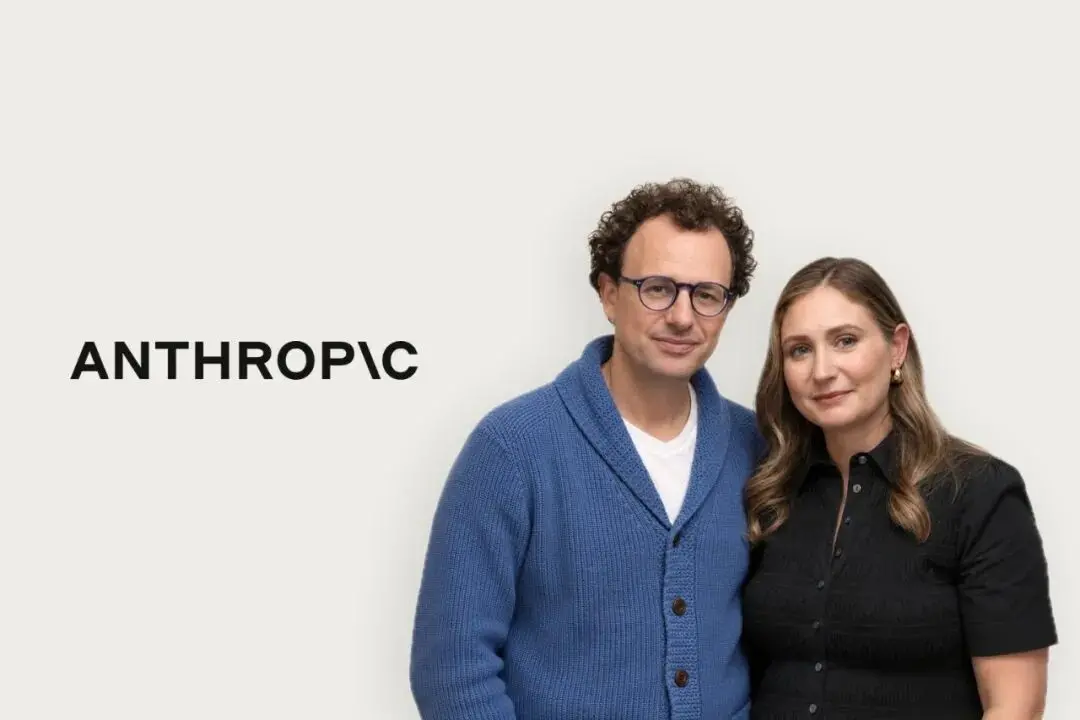
Anthropic CEO Dario Amodei spoke about the company's initial public offering, stating that he and his co-founder founded Anthropic because they believe that the most powerful technologies of our time should be built for the benefit of humanity. He mentioned that he lost his father to a disease that became curable years later, and his career began in biology, hoping to help future therapies emerge sooner. He believes that sufficiently powerful AI, when collaborating with humans, has the potential to compress a century's worth of scientific and medical advancements into a decade; currently, there are only early results, and experiments and clinical trials still require time, but the related processes can be significantly accelerated by AI.Amodei stated that clients have used the relevant intelligence to promote economic growth, help people escape poverty, protect democracy and free societies, and improve everyday public services. He also noted that this technology carries real risks, including misuse by individuals or nations, economic disruption, and loss of control over AI systems. These risks are not inevitable but can be avoided, depending on the choices made by those building AI. He emphasized that the focus on safety and public interest has been embedded in Anthropic from the beginning, and the company has advanced methods to understand and guide AI behavior in areas such as biological and cybersecurity risk protection, alignment training and testing, and observing the internal workings of models.Amodei made it clear that the company will schedule the training and deployment of AI systems at a pace that aligns with the time needed to gain confidence, ensuring that the systems are safe and remain under human control, without succumbing to commercial or political pressures. He stated that going public strengthens the company's financial position and reinforces the determination to do the right thing. He referred to making the right choices in safety while still building a successful company as upward competition, with the goal of making the entire industry better, regardless of whether Anthropic is leading at any given moment.

Data: On its first day of trading, retail investors' net buying of Anthropic was below expectations, estimated to be about one-third of the original expectation during the trading session

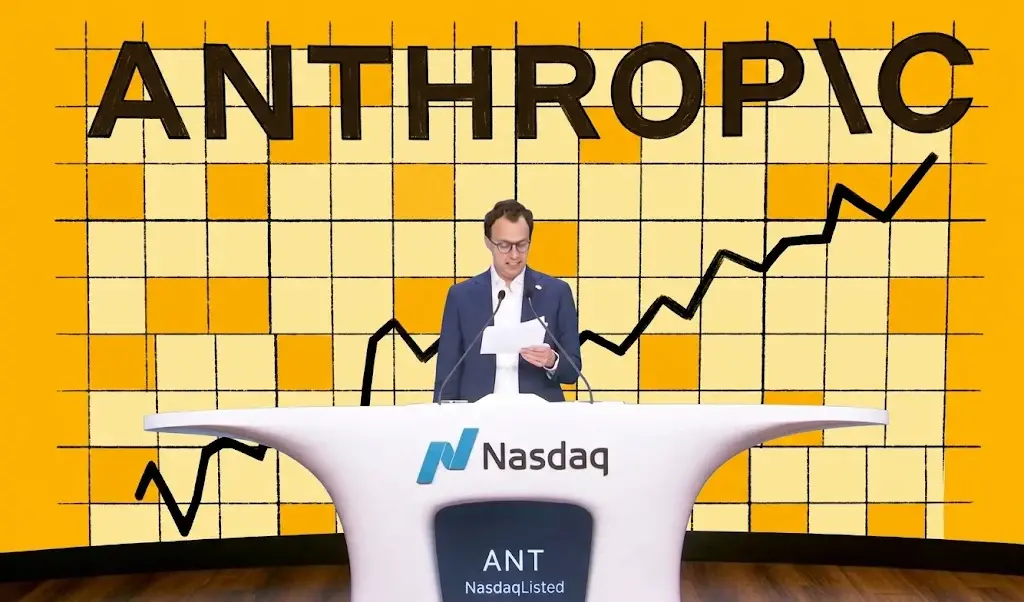
According to Vanda Research monitoring, after the AI company Anthropic's stock ANT was listed on Nasdaq on November 19, retail trading was active, but net buying was weaker than SpaceX during the same period. Within 30 minutes of ANT's opening, retail trading totaled approximately $255 million, more than double that of SpaceX's listing period, but net purchases were only $18.6 million, lower than SpaceX's $25.6 million during the same period. By the third hour after the listing, retail net purchases for ANT reached $37 million, about 63% lower than SpaceX's $99 million during the same period.Before the listing, Vanda had anticipated that retail net purchases for ANT on the first day would be around $250 million, higher than SpaceX's $118 million on its first day. After the listing, Vanda observed that the proportion of retail buying dropped from 57.2% to 52.5% during early trading, and based on intraday trading, revised the full-day net purchase estimate down to $80 million to $90 million, about one-third of the original expectation.Regarding the IPO allocation, approximately 1,200 institutions participated in the subscription, with more than half not receiving allocations; retail investors received about 15% of the public offering shares, valued at approximately $12 billion, lower than the 20% cap listed in the prospectus. On its first day, ANT had a total market trading volume of about 840 million shares, opening at $111.50 and closing at $97.17, an increase of 17.07% from the issue price of $83.

Anthropic sets a record with its IPO, driving the annual financing scale in the United States to a new high

The listing of Anthropic further boosted the fundraising scale of the U.S. IPO market this year. Data compiled by Bloomberg shows that as of Wednesday, including the listing of Anthropic, the total amount raised from U.S. IPOs in 2026 is close to $246 billion, surpassing the record of $195 billion set in 2021. This statistic does not include financial instruments such as blank check companies.The fundraising scale this year has been largely driven by the IPO of SpaceX. During the IPO roadshow, SpaceX highlighted market opportunities in the AI sector as one of its key selling points. Additionally, South Korean memory chip manufacturer SK Hynix issued $26.5 billion in American Depositary Receipts, further expanding the total fundraising amount.According to documents submitted by the company, aside from the 980 million shares issued in the IPO, on the first day of trading, non-founder employees, board members, and former employees can sell up to 315 million shares, including those held by Chief Financial Officer Krishna Rao. Approximately 1.55 billion shares held by insiders are subject to lock-up agreements, with related restrictions continuing until the company announces its performance in the third quarter of next year. If the conditions for early inclusion in the index are met, the company may enter the Russell 1000 Index and the Nasdaq 100 Index as early as December this year.
app_icon
ChainCatcher Building the Web3 world with innovations.