BTC $64,339.66 -1.30%
ETH $1,806.66 -0.97%
BNB $591.41 -0.25%
XRP $0.9726 +1.80%
SOL $73.56 +2.64%
TRX $0.3073 +0.63%
DOGE $0.0595 +0.24%
ADA $0.1543 +0.70%
BCH $209.66 +0.58%
LINK $9.19 +0.65%
HYPE $68.86 -0.02%
AAVE $110.59 +2.86%
SUI $0.7300 +1.21%
XLM $0.1393 +1.42%
ZEC $925.01 +2.89%
AAPL $350.32 -0.68%
AMZN $258.54 +0.04%
GOOGL $281.18 -1.14%
MSFT $506.05 -2.38%
META $619.21 -1.03%
NVDA $161.51 +3.04%
TSLA $382.05 +0.67%
SNDK $833.80 +2.36%
INTC $56.25 +1.24%
SPCX $142.84 +3.94%
MU $731.85 +1.14%
AMD $515.99 +2.10%

asia

All
Article
Flash

first_img Ulanqab is building 22 data centers, with the scale of computing power clusters ranking among the top in the Asia-Pacific region

According to LatePost, Ulanqab in Inner Mongolia is emerging as one of the largest and fastest-growing AI computing power clusters in the Asia-Pacific region. Within the Chahar High-tech Zone, which is equivalent in size to 9 Shanghai Disneyland parks, 22 data centers are currently under construction, with nearly 30,000 workers involved in the construction. To keep up with the demand for computing power, the construction cycle of the data centers has been drastically compressed to 3 to 6 months, and for some projects, if delivery is delayed, the daily compensation can reach 500,000 yuan.The report points out that the infrastructure for computing power has extremely stringent requirements for electricity and stability. A park with an investment of over 3 billion yuan has an electricity consumption equivalent to that of 1.45 million households, and it requires multiple redundancy designs to control annual downtime to within 26 minutes. The procurement cost for a single 10,000-card cluster server reaches 6 billion yuan, and to ensure the operation of these high-value devices, the park needs to be equipped with hundreds of diesel generators and multiple cooling systems.Despite the booming construction, the data centers have limited impact on local employment and economic stimulation. Due to high automation, a single data center requires fewer than 20 operational staff after it goes into operation. By 2025, the electricity consumption of data centers in the city is expected to account for about 5% of the total city consumption, contributing 368 million yuan in tax revenue, which is lower than the 768 million yuan tax revenue from the local ferroalloy industry.

Asian investors are rushing to buy indirect shares of Anthropic, with premiums reaching as high as 30%

As AI company Anthropic is about to launch its IPO, high-net-worth investors and family offices in Asia are scrambling to purchase indirect equity opportunities through offshore funds and special purpose vehicles, with some investors even willing to pay a premium of up to 30% for related fund shares. Due to strict restrictions on equity transfers by large private companies in Silicon Valley like Anthropic, investors typically cannot hold shares directly and can only gain economic exposure through funds that hold the underlying assets or multi-layer investment vehicles.A fund currently raising capital from family offices in Asia and the Middle East disclosed that approximately 17% of its portfolio is allocated to Anthropic and 11% to OpenAI, both obtained through secondary market channels. Some investors holding indirect exposure to Anthropic are also selling fund shares ahead of the IPO. A Hong Kong investor plans to sell part of their holdings at an estimated valuation of about $965 billion and is asking buyers to pay a premium of over 20%. Additionally, other investors previously achieved premiums of 100% to 200% when transferring related fund shares through investment banks.Related investments face challenges regarding valuation, liquidity, and structure. Anthropic's expected valuation has dropped from a previous $2 trillion to about $1.4 trillion, and some funds may impose lock-up periods exceeding the usual 180 days after the IPO. Anthropic has also warned that indirect investment funds might provide investment opportunities by circumventing the company's equity transfer restrictions and reminded investors to bear the risks themselves. Talos data shows that the open interest in perpetual contracts for Anthropic on platforms like Entropy, TradeXYZ, and OKX has exceeded $260 million before the IPO; some ETFs hold Anthropic shares through special purpose vehicles, with the indirect allocation ratio of the Tema Photonics & Optical ETF being approximately 12.7%.

first_img Brian Hong joined the social trading application fomo, responsible for the Asia-Pacific region

Brian Hong announced that he has joined the social trading application fomo, responsible for the Asia-Pacific region. Brian Hong previously publicly identified as the head of growth for consumer blockchain Abstract in the Asia-Pacific region. He stated that many high-quality trading ideas around the world have never left the language in which they were originally written; traders in Seoul and New York can focus on the same asset for months but do not have access to each other's work. Both parties see the same prices, but the ideas behind the trades remain trapped in circles separated by language, local communities, and existing information flows.He wrote that for nearly a decade, he has been connecting products, services, and information between the East and West. Products are now easier to cross borders, but ideas are not; he feels this most acutely in the market, where some ideas with significant upside potential remain confined to a single language and community. He stated that fomo is the first product that makes him feel this situation can change, as it does not require consideration of chains or cross-chain bridges; it faces a single market where information flow shows what people are actually buying. A trade does not need translation; ideas from Seoul can reach New York on their own, with attribution remaining with the originator.Brian Hong expressed that this feeling has not faded, and he agrees with fomo's direction and development team, and will help grow a product he already uses daily. He referred to the Asia-Pacific as the most important region for this matter, but the Asia-Pacific is not a single location; the languages, cultures, and platforms differ. Most of what happens here exists in communities that are not visible to the outside world. Introducing users is only part of the work; a larger part is putting ideas that the world has yet to see onto the same map. He has opened private messages to traders, large players, creators, and chain builders in the region.

After the U.S. midterm elections, anti-data center forces are on the rise, putting pressure on Asian AI chip stocks

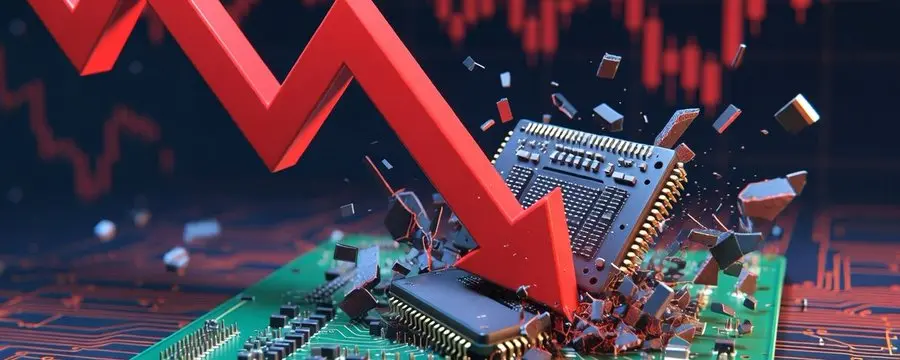
According to Wall Street News, the Democratic Party achieved a significant victory in the U.S. midterm elections, with several candidates who clearly opposed the expansion of data centers elected as governors, raising concerns in the market about a slowdown in AI infrastructure investment in the U.S. Asian chip stocks were under pressure on Wednesday, with companies like Samsung Electronics and SK Hynix facing risks that demand for server DRAM and high bandwidth memory (HBM) could be affected.The opposition to data centers mainly focuses on issues such as noise, water consumption, energy consumption, and increased electricity bills for residents. The market is concerned that local governments may tighten project approvals under the pretext of power supply, environmental protection, and AI safety, leading to delays in the construction of new data centers. However, analysts believe that regulation may not directly lead to a shrinkage in investment scale, and tech companies may also turn to building their own power and supporting infrastructure.For South Korean companies, the election results have varying impacts. The Democratic Party's control of Congress may counterbalance the Trump administration's efforts to cut subsidies from the CHIPS and Science Act, benefiting companies like Samsung that invest in the U.S.; the clean energy tax credit policy is also expected to be restored, potentially benefiting solar companies like Hanwha Solutions. Meanwhile, significant easing of automotive tariffs is unlikely, while the Korea-U.S. shipbuilding cooperation framework is expected to continue.
app_icon
ChainCatcher Building the Web3 world with innovations.