BTC $63,539.51 -2.15%
ETH $1,772.44 -2.13%
BNB $586.33 -0.83%
XRP $0.9854 +1.42%
SOL $74.02 +0.49%
TRX $0.3096 +0.63%
DOGE $0.0592 -0.28%
ADA $0.1526 -1.38%
BCH $207.20 -1.86%
LINK $9.10 -2.16%
HYPE $67.25 -3.11%
AAVE $109.15 -3.77%
SUI $0.7200 -1.90%
XLM $0.1401 +0.14%
ZEC $930.86 -1.53%
AAPL $355.38 +0.15%
AMZN $263.69 +1.76%
GOOGL $283.80 +0.34%
MSFT $506.21 -1.02%
META $618.88 -0.80%
NVDA $154.97 -0.21%
TSLA $385.17 +0.76%
SNDK $777.80 -3.04%
INTC $54.97 +0.44%
SPCX $143.72 +1.46%
MU $707.99 -0.19%
AMD $514.66 +1.89%

hike

All
Article
Flash

first_img Data: U.S. Treasury yields rise, traders bet on a Federal Reserve rate hike in December

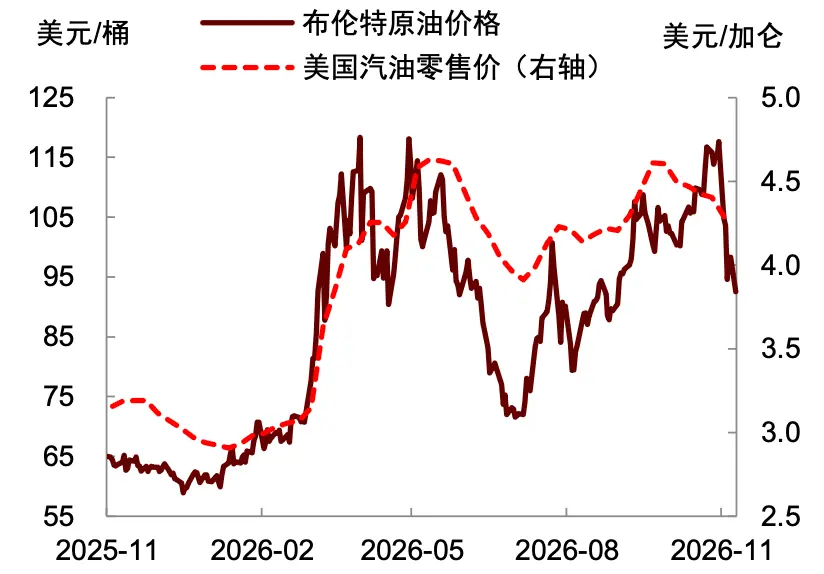
U.S. Treasury yields rose on Friday as traders increased bets on a Federal Reserve rate hike in December. The 10-year Treasury yield, a key benchmark for mortgages, auto loans, and credit card debt, rose 2 basis points to 5.1271%. The 30-year Treasury yield, which is more sensitive to geopolitical risks, increased 3 basis points to 5.4602%. The 2-year Treasury yield, which is typically more sensitive to the Fed's short-term rate decisions, fell 1 basis point to 4.8525%. One basis point equals 0.01%, and yields move inversely to bond prices.Earlier, during Thursday's trading session, the 10-year Treasury yield rose more than 13 basis points and broke above 5%, while the 2-year Treasury yield increased by more than 15 basis points. According to the CME Group FedWatch tool, traders are currently pricing in a 100% probability of a rate hike at the Federal Reserve's meeting on December 9, with a nearly 87% chance of a 25 basis point increase and about a 13% chance of a 50 basis point increase. Energy inflation remains a concern, with oil prices expected to record a second consecutive week of decline, and the likelihood of renewed U.S. action against Iran decreasing. Oil prices fluctuated in early trading on Friday, with December West Texas Intermediate crude futures falling 0.1% to $88.63 per barrel, while Brent crude rose 0.3% to $96.11 per barrel. The October Producer Price Index will be released later on Friday, with the market expecting a month-over-month increase of 0.4%, down from 1.3% in September.

In October, the core CPI in the United States exceeded expectations for three consecutive months, with rising costs in energy, services, and AI increasing pressure for interest rate hikes

Inflation data for October in the United States sends multiple warning signals. The data shows that the core CPI rose by 0.3% month-on-month, higher than the market expectation of 0.2%, exceeding expectations for the third consecutive month; the overall CPI rose by 0.4% month-on-month, also above expectations. The impact of rising energy prices is spreading to areas such as food and transportation, and service inflation remains robust, further complicating the Federal Reserve's efforts to control inflation.Specifically, food prices in the U.S. rose by 0.5% month-on-month in October, with grocery prices recording the largest monthly increase since April; urban transportation service prices saw the largest monthly increase since 2020, and prices for airline tickets and delivery services also increased. Additionally, service prices excluding energy and housing rents rose by 0.4% month-on-month, while owners' equivalent rent increased by 0.3%.AI investments are bringing new cost pressures. Over the past three months, the annualized price increase for computers and peripheral devices in the U.S. reached 25%, and electricity prices rose by 0.9% month-on-month in October, marking the largest increase in six months. Morgan Stanley estimates that AI-related factors have contributed about 6 basis points to the core CPI this year, with the current impact still relatively limited, but as data center investments expand, related pressures may rise further.In terms of monetary policy, Chicago Fed President Goolsbee described the latest inflation data as approaching an alarming level. Fed Governor Waller previously stated that if the core CPI month-on-month increase reaches 0.3% or higher, the December meeting should consider raising interest rates by 50 basis points. Goldman Sachs has included a forecast for an additional 25 basis point increase in March 2027, expecting that the target range for the federal funds rate will rise to 4.25% to 4.50%. However, some economists warn that there is a lag in the transmission of energy prices, and over-reliance on current data may lead to excessive tightening of monetary policy.

Federal Reserve spokesperson: The interest rate hike in December is almost certain, with the focus shifting to the magnitude and pace of the rate increases

According to the Wall Street Journal, Nick Timiraos, known as the "mouthpiece of the Federal Reserve," wrote that after the third consecutive strong inflation report was released, a rate hike by the Federal Reserve in December is almost certain. Market focus is shifting to the magnitude of the rate hike and the subsequent pace, including a 25 basis point hike at each meeting, a one-time hike of 50 basis points, or signaling multiple consecutive hikes of 25 basis points.Nick Timiraos pointed out that the Federal Reserve will hold a policy meeting from December 8 to 9, and the bigger question is whether this rate hike is a moderate adjustment envisioned by several officials, with two to three more hikes, or the beginning of a sustained effort to suppress the economy and lower inflation.Previously, Federal Reserve Governor Waller, who supported maintaining interest rates last week, stated that if the core price increase in October reaches about 0.3% month-over-month, the Federal Reserve should consider a 50 basis point hike in December, and the latest published data happens to align with this scenario. Dallas Federal Reserve President Logan also hinted after the data release that, given the current inflation pressures, it may be necessary to accelerate the pace of rate hikes. The relevant tactical choices are usually decided by the Federal Reserve Chair.

Reuters survey: The Federal Reserve's interest rate hike expectations for December remain solid, but there is still controversy over the end of the tightening cycle

A Reuters survey shows that about 55% of the economists surveyed, or 56 out of 101, expect that the interest rate hike in December will mark the end of the current tightening cycle, a figure that is basically unchanged from last month.However, 45 economists still expect that the Federal Reserve will raise interest rates at least two more times, including more than half of the surveyed primary dealers, which is consistent with the expectations reflected in market pricing, and believe that the risks to the inflation outlook have not changed since the U.S. midterm elections. Changes in the political landscape are unlikely to quickly alleviate inflationary pressures.Despite market hopes that the nearly 9-month-long Middle East conflict could be resolved, leading to a drop of over 22% in crude oil futures prices from the late October peak, inflationary pressures still persist. A strong labor market, resilient economic growth, and inflation remaining above the Federal Reserve's 2% target for nearly six years all indicate that further tightening of monetary policy is still necessary.Wells Fargo Chief Economist Tom Porcelli stated, "The Federal Reserve's decision-making depends on the upcoming inflation data, which will prompt it to raise rates again. In fact, the Federal Reserve has every reason to raise rates at the October meeting."
app_icon
ChainCatcher Building the Web3 world with innovations.