BTC $63,756.36 -1.72%
ETH $1,785.28 -2.09%
BNB $586.50 -0.61%
XRP $0.9588 -0.09%
SOL $72.34 +1.44%
TRX $0.3066 -0.05%
DOGE $0.0586 -1.12%
ADA $0.1519 -0.43%
BCH $207.29 -0.12%
LINK $9.11 -0.42%
HYPE $68.69 +3.06%
AAVE $110.04 +2.47%
SUI $0.7193 -0.17%
XLM $0.1377 +0.23%
ZEC $929.76 +4.45%
AAPL $350.95 -0.84%
AMZN $257.72 -0.43%
GOOGL $281.97 -1.84%
MSFT $500.88 -4.25%
META $619.87 -1.20%
NVDA $153.63 -2.10%
TSLA $380.81 +0.10%
SNDK $788.59 -3.99%
INTC $53.83 -3.48%
SPCX $141.03 +2.98%
MU $697.16 -4.60%
AMD $489.90 -3.74%

miner

All
Article
Flash

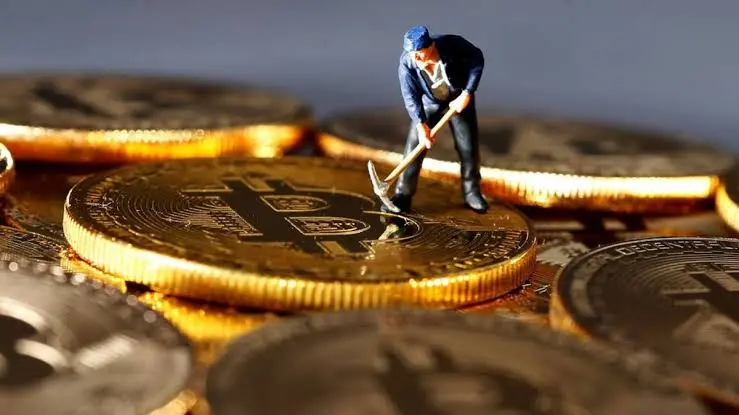
first_img FutureBit Apollo III miner makes its offline retail debut, available at four Micro Center locations

According to Bitcoin Magazine, Brooklyn-based consumer-grade Bitcoin miner manufacturer FutureBit announced that the Apollo III Full Node will go on sale this Friday at four Micro Center locations, marking the company's first entry into offline retail channels. The stores are located in Brooklyn, Miami, Tustin in California, and Austin in Texas, with the Austin store being the 31st Micro Center location in the United States. Consumers can also reserve online and pick up in-store; FutureBit has not disclosed the inventory and retail pricing for each store.According to FutureBit's official website, the Apollo III Full Node without a hard drive is priced at $1,099.99, while the versions with 1 TB and 2 TB SSDs are priced at $1,299.99 and $1,399.99, respectively. The Standard version for mining starts at $899.99. The machine's Turbo mode has a maximum hash rate of about 18 TH/s and a power consumption of about 325 watts; Eco mode has about 12 TH/s, 150 watts, and noise below 35 decibels; Super Eco mode has about 8 TH/s and 80 watts. The entire unit is a 6.5×6.5×6 inch cube, weighs 6.5 pounds, uses a 3-nanometer chip designed in the United States with 8 GB of memory, has a built-in independent mining pool, is assembled in the United States, and comes with a one-year limited warranty.FutureBit founder John Stefanopoulos stated that in the early days of the company, they would purchase parts weekly from the DIY electronics section of the Brooklyn Micro Center, and now consumers can walk into the same store to learn about Bitcoin mining and take home a miner on the spot. FutureBit has been developing consumer-grade miners since 2015. Bitcoin Magazine previously reported that on October 26, a user mined block 973262 using FutureBit's Apollo Solo solution, receiving a block reward of 3.154 Bitcoins.

first_img FutureBit Apollo Solo miner mined Bitcoin block 973,262, earning 3.154 BTC

On October 26, a mining machine running on the FutureBit Apollo Solo solution mined Bitcoin block 973,262, receiving a complete block reward of 3.154 BTC and collecting transaction fees from 2,477 transactions within that block. Multiple block explorers, including mempool.space, marked the discoverer of this block as "FutureBit Apollo Solo," with its coinbase transaction containing text mentioning FutureBit and Apollo.FutureBit stated on X that the Apollo device or Solo Node assembles block templates, allocates work, and submits complete blocks using its built-in solo pool. This is at least the fourth block attributed to FutureBit Apollo Solo, with the previous three being 867,760, 881,423, and 888,737. FutureBit designs Apollo hardware for users who wish to run a full Bitcoin node and mine independently at home, with the latest model, Apollo III, achieving a maximum hash rate of 18 TH/s in turbo mode and integrating a full node.Solo mining is often referred to as "lottery-style mining" due to the extremely low probability of winning relative to block rewards. Against the backdrop of the Bitcoin network's hash rate recently being around 1,070--1,087 EH/s, the expected time for home devices with 10--18 TH/s to mine a block is still measured in centuries at current difficulty levels, but verified successful cases of solo mining continue to appear on-chain. Additionally, the next day, another miner successfully mined a solo block through CKPool Solo.
app_icon
ChainCatcher Building the Web3 world with innovations.