BTC $63,938.09 -1.49%
ETH $1,792.48 -1.35%
BNB $588.48 -0.60%
XRP $0.9840 +0.78%
SOL $74.13 +0.27%
TRX $0.3096 +1.24%
DOGE $0.0592 -0.38%
ADA $0.1538 -0.78%
BCH $208.34 -2.05%
LINK $9.13 -1.97%
HYPE $68.48 -1.82%
AAVE $110.52 -2.77%
SUI $0.7251 -1.86%
XLM $0.1407 -0.02%
ZEC $930.12 -1.92%
AAPL $351.10 -0.41%
AMZN $259.26 -0.23%
GOOGL $282.14 -0.37%
MSFT $506.64 -1.78%
META $618.27 -0.65%
NVDA $160.10 +1.10%
TSLA $383.60 +0.42%
SNDK $816.12 -0.54%
INTC $55.46 +0.38%
SPCX $142.58 +2.62%
MU $726.42 -0.52%
AMD $512.41 -0.68%

rated

All
Article
Flash

first_img Former UK Prime Minister Johnson reiterated skepticism about Bitcoin, stating that no one is responsible for it

According to Decrypt, former UK Prime Minister Boris Johnson stated at the Solana Breakpoint conference held in London that he remains skeptical about Bitcoin, saying he cannot see who is responsible for the world's largest cryptocurrency. "As far as I know, no one knows who is in charge except Satoshi Nakamoto, and I don't know where to find him." He deliberately mispronounced Satoshi Nakamoto's name as "Yakimoto Nakasori" and expressed that if a large amount of funds were stolen from a cryptocurrency, he wouldn't know whom to approach or how to recover them.Johnson's remarks respond to his labeling Bitcoin as a "giant Ponzi scheme" in a Daily Mail column earlier this March. Strategy Executive Chairman Michael Saylor refuted on social media at the time, stating that a Ponzi scheme requires a central operator to promise returns and pay early investors with the funds of later investors, whereas Bitcoin has no issuer, no promoter, and no guaranteed returns. Johnson admitted on stage that he is "not a crypto enthusiast" and holds almost no crypto assets, influenced by a person from a village in Oxfordshire who keeps investing more to recover losses.Johnson also distinguished Bitcoin from the underlying blockchain technology, stating that his "Luddite anxiety" about Bitcoin does not mean he wishes to slow down blockchain development; London should take the lead in this technology, and the UK must be at the forefront of asset tokenization.Speaking at the same event, Conservative Member of the House of Lords Ross Kempsell stated that the UK is "on the eve of establishing a large number of regulatory rules," involving the regulatory boundaries of the Financial Conduct Authority (FCA) and the Bank of England's stablecoin framework. He cited an FCA survey indicating that currently about 8% of UK adults hold crypto assets, down from 12% in 2024, but there is still significant room for high-growth industries within the compliance boundaries.

AI infrastructure stocks have evaporated $4.2 trillion since June

Since June of this year, the combined market value of global manufacturing, utility, and mining companies has evaporated by $4.2 trillion, nearly wiping out half of the $9.4 trillion increase in these sectors over the previous year. Companies that previously benefited from the AI data center construction boom, known as "shovel sellers," are now facing concentrated sell-offs. The industrial sector has become the second worst-performing sector of the S&P 500 index this summer, only behind the technology sector.Among them, data center gas power equipment supplier Caterpillar has fallen 44% since its historical high at the end of June, with a market value loss of about $21.4 billion; nuclear power company Oklo's stock price has dropped by 49%. HVAC manufacturer Comfort Systems and fiber optic manufacturer Corning have also lost about half of their market value during the same period.Analysts believe that a large influx of institutional funds into AI infrastructure transactions previously inflated the valuations of some traditional industrial companies, with investors pricing them as semiconductor growth stocks. The uncertainty of regulatory policies for data center construction after the U.S. midterm elections has also intensified selling pressure. Caterpillar's backlog of orders has reached a record $78 billion, with power generation sales up 75% year-on-year; Siemens' backlog of orders for data center electrical equipment has increased by 60%, reaching €7 billion; Eaton's related orders have doubled year-on-year. Some companies expect that the existing backlog of orders can at least support revenue growth until 2027, while some analysts simultaneously warn that companies may have duplicate orders and oversubscriptions, and the order data may not fully reflect real demand.

Analysis: The cryptocurrency market has shifted from a gradual decline to accelerated liquidation, and a rebound under multiple negative factors may be difficult to sustain

According to Bloomberg, Bitcoin briefly fell to nearly $62,000 over the weekend, hitting a new low since July. Unlike previous sudden crashes, this round of selling mostly occurred during relatively quiet trading periods, with prices continuing to decline until the recent days when leveraged liquidations accelerated significantly. Many small-cap tokens have retraced years of gains, and the expansion of institutional participation and the popularity of spot ETFs have not been able to prevent this round of decline.Spot buying has weakened, while U.S. Treasury yields and the dollar have strengthened. From October 30 to November 13, nearly $3 billion flowed out of U.S. spot Bitcoin ETFs. Meanwhile, persistently high inflation has raised expectations for further tightening by the Federal Reserve, with the 10-year U.S. Treasury yield breaking above 5%, increasing the opportunity cost of holding non-interest-bearing assets like Bitcoin. The Binance hacking incident has reignited market concerns about the security of trading platforms, and the results of the U.S. midterm elections have added to policy uncertainty.The Anthropic IPO may divert funds, but the scale is still unclear. Joshua Lim, co-head of market operations at FalconX, pointed out that discussions about the reasons for the decline have focused on two aspects: nearly $20 billion in stablecoin balances that have flowed out over the past month, and the potential impact of the Anthropic IPO on liquidity. Bloomberg noted that the IPO received a large number of subscriptions, and some investors may sell other holdings, including crypto assets, to raise funds, but it is currently unclear how much money has directly shifted from the crypto market to this IPO.Bitcoin rebounded from below $65,000 in August to above $87,000 in late September after the U.S. Treasury announced an expansion of long-term Treasury buybacks, but it has now retraced most of those gains, with the market refocusing on the year-to-date low of about $58,000. Ayesha Kiani, Chief Operating Officer of Monarq Asset Management, believes that short-term trends mainly depend on whether institutional demand can stabilize and whether the macro environment can allow risk appetite to recover. Before that, any rebound may be difficult to sustain, and market volatility will remain high.

Analysis: The process of deleveraging has accelerated, and Binance's Bitcoin open interest has decreased by 17% in one month

CryptoQuant analyst Darkfost stated that within less than a month, the open interest of BTC on the Binance platform has decreased from 10.6 billion dollars to 8.8 billion dollars, a drop of 17%. Meanwhile, its 180-day moving average has risen from 8.4 billion dollars to 8.6 billion dollars. As the open interest falls below the moving average, new signals of deleveraging are emerging in the market. In a bull market phase, this signal typically appears when market corrections are nearing their end, reflecting that traders are reducing their leveraged exposure, which includes both voluntary liquidations and forced liquidations due to insufficient margin.Aside from the fact that this process may last for months in a bear market, a similar signal last appeared in June of this year when the BTC price was below 60,000 dollars, subsequently rebounding to above 87,000 dollars, with an increase of over 45%. Currently, as the open interest declines, the market is also experiencing large-scale liquidations. Low volatility seems to encourage some traders to take on higher risks to compensate for the insufficient returns brought about by the narrowing price fluctuations, making them more susceptible to market reversal shocks. Over the past three months, the monthly liquidation scale on Binance has reached new highs since 2021: over 1.4 billion dollars in August, 1.1 billion dollars in September, and 1.3 billion dollars in October. This trend appears to continue into November, with the liquidation scale exceeding 520 million dollars before the end of the first half of this month.These data highlight the potential losses that leveraged trading can bring to investors. In a market environment with low volatility and shrinking trading volume, blindly increasing risk exposure due to a lack of patience can quickly lead to heavy costs. However, the deleveraging phase also helps improve the market environment. Reducing leveraged positions can lower the risk of cascading liquidations, allowing spot demand to play a greater role in market pricing, thereby helping Bitcoin establish a more robust market structure.

The seven sisters of the U.S. stock market evaporated about 1.04 trillion U.S. dollars in a single day, and the cloud giants experienced negative cash flow

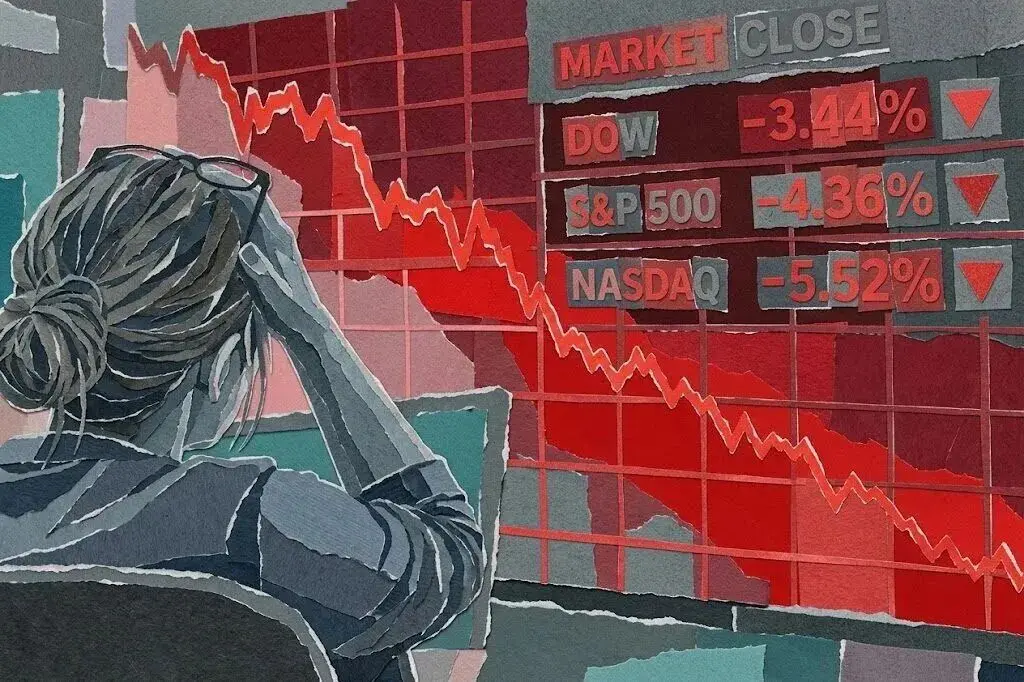
After the U.S. midterm elections, concerns about tightening AI regulations and slowing data center construction have intensified, leading to a significant sell-off in U.S. tech stocks. On November 5, the "Seven Sisters" of U.S. stocks lost approximately $1.04 trillion in market value in a single day, with Nvidia dropping 9.26%, resulting in a loss of over $440 billion in market value, which is 2 to 4 times the decline of core clients like Microsoft, Google, and Amazon.The financial pressure on AI infrastructure investment is increasing. In the third quarter of this year, the combined operating cash flow of Microsoft, Google, Amazon, and Meta was no longer sufficient to cover fixed asset expenditures, with a funding gap of about $26.4 billion, whereas a year ago, the four companies still had a cash flow surplus of about $61.7 billion. Amazon's free cash flow turned from $14.8 billion in the past 12 months to a net outflow of $42.4 billion, while Meta's free cash flow turned negative for the first time in over a decade, and Google's long-term debt increased from about $20 billion to $125 billion.On Election Day, out of 41 local propositions related to data centers in 10 U.S. states, 40 of the voting results leaned towards restricting development, with 27 restrictive or oppositional propositions being passed. Research firm SemiAnalysis predicts that the impact of related policy changes on projects already underway by 2027 will be limited, but it may affect computing power expansion plans for 2028 and beyond. More than 90% of Nvidia's revenue comes from data center business; during the same period, Google Cloud's operating profit in the third quarter reached three times that of the same period last year, AWS's operating profit increased from $11.4 billion to $17.8 billion, and Microsoft Azure's revenue grew by 48%.
app_icon
ChainCatcher Building the Web3 world with innovations.