Scan to download
BTC $67,588.70 +2.20%
ETH $1,976.12 +1.98%
BNB $628.83 +1.26%
XRP $1.42 -4.56%
SOL $81.67 -4.53%
TRX $0.2795 -0.47%
DOGE $0.0974 -3.83%
ADA $0.2735 -4.22%
BCH $438.25 -0.46%
LINK $8.64 -2.97%
HYPE $28.98 -1.81%
AAVE $122.61 -3.42%
SUI $0.9138 -6.63%
XLM $0.1605 -4.62%
ZEC $260.31 -8.86%
BTC $67,588.70 +2.20%
ETH $1,976.12 +1.98%
BNB $628.83 +1.26%
XRP $1.42 -4.56%
SOL $81.67 -4.53%
TRX $0.2795 -0.47%
DOGE $0.0974 -3.83%
ADA $0.2735 -4.22%
BCH $438.25 -0.46%
LINK $8.64 -2.97%
HYPE $28.98 -1.81%
AAVE $122.61 -3.42%
SUI $0.9138 -6.63%
XLM $0.1605 -4.62%
ZEC $260.31 -8.86%

quest

11 U.S. senators request federal agencies to investigate Binance's compliance with sanctions

Eleven U.S. senators have sent a letter to Treasury Secretary Scott Bessent and Attorney General Pamela Bondi, requesting a comprehensive review of Binance's compliance with U.S. sanctions and anti-money laundering requirements, as well as an assessment of its adherence to the 2023 settlement agreement.The letter cites reports indicating that approximately $1.7 billion in digital assets flowed through Binance to entities linked to Iranian terrorism, including organizations associated with the Houthis and the Islamic Revolutionary Guard Corps. Investigators also found that over 1,500 accounts were accessed by Iranian users, along with potential activities related to evading sanctions against Russia. The letter further notes that some compliance personnel at Binance who identified suspicious transactions were subsequently dismissed, and law enforcement agencies have indicated that Binance's cooperation in providing customer information has declined. Senators Chris Van Hollen, Ruben Gallego, and nine other senators co-signed the letter, expressing concerns about Binance's payment card launched in the former Soviet region and its partnerships related to stablecoins, believing these products could be used to evade sanctions. The senators have requested that the relevant agencies report on the review's progress by March 13. Additionally, Senator Richard Blumenthal initiated a congressional investigation into Binance this Tuesday, requesting relevant documents and internal records from Binance CEO Richard Teng. Binance denies the allegations, stating that it has identified and reported suspicious activities to authorities and does not allow Iranian users to access its platform.

Jane Street's questioning escalates: After being sued, the "10-point crash" of Bitcoin disappears

According to the WSJ, on February 24, the court-appointed bankruptcy administrator of Terraform Labs has sued Jane Street in the federal court in New York, accusing it of engaging in front-running trades and profiting from non-public insider information provided by Terra insiders during the Terra collapse. The lawsuit reveals that Jane Street established a secret communication channel with Terraform Labs employees through former intern Bryce Pratt to obtain non-public confidential information. On May 7, 2022, Terraform Labs withdrew 150 million TerraUSD (UST) from the Curve liquidity pool without prior announcement, and Jane Street followed suit by withdrawing approximately 85 million UST through affiliated wallets in less than 10 minutes, completing the "front-running" trade before a massive market panic and the complete de-pegging of UST, which not only resulted in illegal profits but also accelerated the collapse of Terraform Labs and the Terra ecosystem.A spokesperson for Jane Street responded to the accusations from the Terraform Labs bankruptcy administrator, stating that the lawsuit is an attempt to extract money from Jane Street, and that Jane Street will vigorously defend its rights against "baseless and opportunistic allegations." In addition to the Terraform lawsuit, Jane Street was accused of market manipulation in India last year, resulting in the freezing of assets worth approximately 4.843 billion rupees (about 565 million dollars) and a ban on trading in the Indian securities market. There are also rumors that Chinese regulators are reviewing Jane Street's trading patterns in the Chinese ETF market.The crypto community has noted that since Jane Street was sued, the daily "10 AM crash" of Bitcoin (Eastern Time) has suddenly disappeared, with Bitcoin rising by 10% and its market capitalization increasing by approximately 120 billion dollars, marking the first green weekly candle for BTC after five consecutive red ones. During the same period, the total market capitalization of the cryptocurrency market also increased by nearly 200 billion dollars. Bloomberg ETF analyst Eric Balchunas stated, "This 'threat' has disappeared, which is the atmosphere felt today in CT and price movements. I also understand that the previous significant intraday drops nearly destroyed every rebound and undermined everyone's confidence. But is simply eliminating it enough to support a sustained rebound? We shall see."Speculation surrounding Jane Street has reignited discussions about the trading mechanism of Bitcoin spot ETFs. Analysts point out that the share creation and redemption of spot ETFs can be completed by authorized participants (APs) under a regulatory exemption framework, and does not necessarily require immediate buying and selling of Bitcoin in the public market; in cases of futures contango, APs may also hedge and protect through derivatives such as futures, leading to a time lag between ETF fund inflows and spot buying and short-term price performance.As a leading global quantitative trading giant, Jane Street has a broad presence in the cryptocurrency sector, primarily focused on infrastructure, DeFi, and crypto mining. Public information shows that Jane Street has invested in several crypto-native projects, including: ZetaChain, Arbitrum, 1inch, Euler Finance, Membrane Labs, Kaito, Vest Exchange, and others.In terms of equity, Jane Street significantly increased its holdings in several crypto mining companies through the secondary market between 2024 and 2026, including: approximately 5.4% of Bitfarms (BITF); approximately 5% of Cipher Mining (CIFR); and approximately 5% of Hut 8 (HUT). Additionally, Jane Street participated in multiple rounds of Kraken financing last year. Jane Street is also one of the main liquidity providers and stockholders of Coinbase.

Aave internally questions Labs' past performance: secured $86 million in funding, holds 23% of tokens, all six products failed or incurred losses

The founder of the Aave ecosystem contribution organization ACI, Marc Zeller, released a public report disclosing that Aave Labs has received approximately $86 million in capital support since 2017, including ICO, VC financing, and direct grants from the DAO. Meanwhile, the founding team retained 23% of the LEND tokens during the 2017 ICO (which were later migrated to AAVE at a ratio of 100:1).The report points out that Labs had a capital base of about $48.7 million before receiving DAO funding, and subsequently received approximately $37.4 million in grants from the DAO. They are currently applying for an additional $51 million through the "Aave Will Win" proposal.The report critically questions the past performance of Labs' products, stating that six independent products launched apart from the core protocol have either failed or not achieved profitability. Among them, the RWA project Horizon once claimed to have surpassed $1 billion in scale, but the actual RWA collateral scale is about $135 million, highly concentrated in a single asset. Since its launch in 2025, Horizon has generated approximately $216,000 in cumulative revenue for the DAO, while incentives and related costs amount to about $5.25 million, resulting in a return on investment ratio of about 24:1.The report also notes that early core developers of Aave V1, V2, and V3 left Labs between 2021 and 2022, with V3 being seen as the last major protocol version led by Labs. Subsequent versions have primarily been advanced by DAO service providers. In related governance votes, a single large delegated address played a key role in passing the Horizon proposal, sparking community discussions about the concentration of governance power and the efficiency of fund usage.This controversy comes at a time when a new proposal for a $17.5 million product growth grant is under review, further intensifying discussions within the Aave community regarding fund allocation, performance disclosure, and governance transparency.

Democratic lawmakers question SEC Chairman, focusing on reduced crypto enforcement and potential political connections

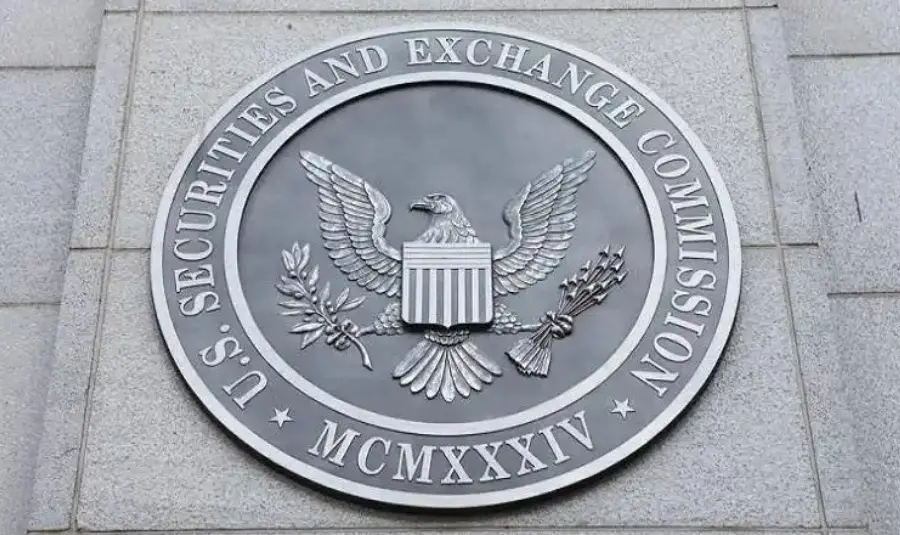
At a hearing of the House Financial Services Committee, several Democratic lawmakers questioned SEC Chairman Paul Atkins regarding the recent reduction in enforcement actions against the cryptocurrency industry by the U.S. Securities and Exchange Commission (SEC), expressing concerns about whether these decisions are linked to Trump and his connections to the crypto industry.Lawmakers specifically mentioned the SEC's suspension of the case against Tron founder Justin Sun and the withdrawal of the lawsuit against Binance. Democratic Congressman Stephen Lynch stated during the hearing that the decline in SEC enforcement has impacted the agency's reputation and demanded an explanation for why the related cases were not pursued further. The SEC had previously sued Justin Sun in 2023 for allegedly issuing unregistered securities and manipulating trading volumes, but later in 2025, it applied to pause the case to explore settlement possibilities; in May of the same year, the SEC withdrew its lawsuit against Binance under Atkins's leadership.Data shows that in 2025, the SEC's overall enforcement actions decreased by about 30% compared to the previous year, with crypto-related cases dropping by approximately 60%, which is viewed by outsiders as a signal of a shift in regulatory focus. In response, Atkins stated that the SEC still maintains a "strong enforcement presence" and noted that some changes are part of the normal adjustments following a change in regulatory leadership.

Vitalik questions the L2 scaling path, Arbitrum, Optimism, and Base collectively respond towards the direction of de-homogenization

Ethereum co-founder Vitalik Buterin recently stated that the initial idea of using L2 as the main scaling engine for Ethereum is no longer reasonable, and he called for second-layer networks to evolve towards stronger specialization. This statement quickly prompted responses from mainstream L2 teams such as Arbitrum, Optimism, and Base.Vitalik pointed out that many L2s still rely on multi-signature bridges and have not fully inherited Ethereum's security; at the same time, with the increase in gas limits and the advancement of native Rollup solutions, the throughput capacity of the Ethereum mainnet itself is strengthening. Against this backdrop, the positioning of L2 needs to be rethought.Karl Floersch, co-founder of the Optimism Foundation, stated that he supports building a modular L2 that covers the entire decentralized spectrum, but also admitted that there are still real challenges such as long withdrawal periods, immature Stage 2 proof mechanisms, and insufficient cross-chain tools.Steven Goldfeder, co-founder of Offchain Labs, the developer of Arbitrum, emphasized that scaling remains the core value of L2. He believes that even if the Ethereum mainnet's capabilities improve, it will be difficult to replace L2's role in handling thousands of TPS during peak times, and warned that if Ethereum is unfriendly to Rollups, institutions may choose independent Layer 1s instead.Jesse Pollak, head of Base, stated that scaling Ethereum L1 is beneficial for the entire ecosystem, while agreeing that L2 cannot just be a cheaper version of Ethereum. He pointed out that Base is forming its own characteristics through application layer differentiation, account abstraction, and privacy features.Additionally, StarkWare CEO Eli Ben-Sasson hinted on social media that ZK-native L2s (such as Starknet) have, to some extent, aligned with the specialization direction proposed by Vitalik. Overall, L2 builders generally accept the trend of de-homogenization and repositioning, but there are still divergences on whether scaling remains a core mission.

Vitalik questions the L2 scaling path, Arbitrum, Optimism, and Base collectively respond in the direction of de-homogenization

According to Cointelegraph, after Ethereum co-founder Vitalik Buterin commented that "the original vision of Layer 2 as the primary scaling engine is no longer applicable," several L2 builders responded, generally agreeing that Rollup needs to move beyond the positioning of "a cheaper Ethereum," but there are disagreements on whether scaling should still be its core role.Optimism co-founder Karl Floersch welcomed the challenge of building a modular L2 stack that supports "full-spectrum decentralization," while acknowledging that there are still major obstacles such as long withdrawal periods, second-stage proofs not being production-ready, and insufficient cross-chain application tools. He supports the native Rollup precompiled solutions emphasized by Buterin.Steven Goldfeder, co-founder of Arbitrum developer Offchain Labs, took a firmer stance, arguing that although the Rollup model has evolved, scaling remains the core value of L2. He pointed out that Arbitrum was not built as "a service of Ethereum," but because Ethereum provides a highly secure and low-cost settlement layer, making large-scale Rollups possible. He warned that if Ethereum is seen as hostile to Rollups, institutions might choose to launch independent Layer 1 chains instead of deploying on Ethereum.Base head Jesse Pollak stated that scaling Ethereum L1 is "a victory for the entire ecosystem," agreeing that L2 cannot just be "a cheaper Ethereum." He mentioned that Base is differentiating itself through applications, account abstraction, and privacy features, and is working towards decentralization in the second stage.StarkWare CEO Eli Ben-Sasson hinted that some ZK-native L2s (like Starknet) believe they already fit the specialized role described by Buterin. The entire Ethereum ecosystem is facing a roadmap adjustment: the base layer aims to enhance its capabilities, while L2 is repositioning itself as a dedicated environment serving different technical needs.
app_icon
ChainCatcher Building the Web3 world with innovations.