








How will the data economy integrate with DeFi, DAO, and NFT?

 The vision of the data economy is to make every data producer realize that they are "producing," that they are "incentivized" in this process, and then "decide for themselves" how to handle it.
This article was published in Pangcheku, author: Pangcheku's Meow Bi ter.
Today's piece is based on some reflections on the data economy and what ownershipLabs has been doing these days, with the main research framework being Ocean protocol. The second part discusses recent thoughts on the combination of NFTs and data. It's not very readable and belongs to the category of things that would be disastrous if not published.
Part One
Data Privatization
Collective poverty refers to a situation where a small group of people takes away everything produced by you and me, leaving us with nothing. Or, in other words, most people are equally poor. For those born in the 80s, 90s, and 00s, having never experienced collective poverty, it seems like a story from rural China in the 1970s.
But it seems we are also producing something at every moment, aren't we?

In China during the 1980s, the rise of commercial privatization allowed people to own the cars, property, food, and clothing they produced. People began to be allowed to own a portion of what they produced.
Jennifer Zhu Scott said in her TED talk, "Why Data Privatization is Important for Inclusive AI": Privatization is a form of freedom we have never had.
What if we looked at data ownership from a completely different perspective? What if data ownership is actually a private, individual, and economic issue? What if in the new digital economy, we are allowed to own a part of what we create (data) and give people the freedom of private data ownership?
The vision of the data economy is to make every data producer realize they are "producing," being "incentivized" in the process, and then "deciding for themselves" how to handle it.
Importance of the Data Economy

In the past, data and artificial intelligence were often accumulated in the hands of a few internet giants. The purpose of Ocean protocol is to democratize the value of data and artificial intelligence. It aims to monetize data from individuals, businesses, and even cities.
- Individuals lack data ownership and cannot control privacy.
- There is a lack of regulatory entry points, making it difficult to price data.
- Planning signal falsification.
- Fake reviews on Amazon or bot accounts on Twitter disrupt the ecosystem.
- Interoperability.
Personal data, especially privacy data, is crucial for research (like AI) and business decisions. However, privacy data exists in a gray area, making it hard to obtain and prone to leakage. Blockchain and cryptographic technologies make it possible to monetize personal data while protecting privacy.
Do You Need Google? You Need a "Search Engine"
In the web3 economy, no single force is a dominant power. No service is exclusive anymore. A world with only one Google, one Facebook, or one Amazon will coexist with the rich application components of web3. Services in web3 are linked by tokens, allowing them to interconnect through tokens. You can authorize Swash to leave a dataset (your search history) because you used the decentralized search engine The Graph, automatically earning rewards or choosing to sell it on the data market. You will also receive airdrops or NFT incentives from related projects for producing and contributing good data as a reward for your contributions to training some AI models.

Ocean's Case Study
The approach of Ocean protocol can be summarized in two aspects:
- Entering the data economy through DeFi, primarily to help the public recognize that data is an asset.
- Directly discussing from the data perspective to create a data market for data trading.
The Combination of Ocean and DeFi

Compute-to-Data
According to a McKinsey report, AI will add $13 trillion in economic output over the next decade, and the data generated by individuals will undoubtedly contribute to this massive growth. Specific practices by commercial companies, such as Microsoft's Decentralized Collaboration Program, incentivize organizations to contribute good data for AI model usage through data transparency and strong collaborations.
Ocean has created a data market and allows privacy datasets and algorithms to be securely traded with the support of blockchain through compute-to-data, a feature recently integrated into the data market.
Compute-to-Data means that the data remains with the owner, and the computation requester sends the algorithm to them. After accepting the algorithm, they compute the results at their location and return them to the requester, thus protecting data privacy.

Ocean's Application Cases

Part Two
Other Possibilities
In addition to Ocean's combination with DeFi and the creation of a data trading market, I am also thinking about the intersection of data with DAO and NFT.
Data DAO (dataDAO)
The context of DAO is currently limited to the financial sector, such as managing money and investments through smart contracts. But fundamentally, it is about incentivizing a group of people with expertise in specific fields to contribute their wisdom (collective intelligence). Thus, I thought of data DAO—gathering a group of data scientists for knowledge programming.

Based on specific organizational knowledge classification and structure, there are countless practical software programs that include detailed logic for data, information, and knowledge programming, storage, and retrieval. Theoretically, research papers like Robin Cowan's "The Explicit Economics of Knowledge Codification and Tacitness" have been discussing the economic feasibility of programming knowledge (attention) since 20 years ago (2000).

What has not been achieved is a successful case that integrates these theories with value networks. Blockchain, smart contracts, and decentralized storage will bring about change. Of course, the explosive scenarios of this will be unknown; could it be an open recommendation algorithm?
My guess is that various algorithms will be designed in the future, mostly pricing algorithms. Designers will abstract corresponding code based on their understanding of the network structure, variables, weights, and other relationships in the database (after all, the theories are so diverse) and embed them into smart contracts. Pricing can be done based on each level or each network node, where users pay not only to access data but also to join the network (attenuation). There will be an event or series of events that make data curation profitable, perhaps as Li Bo said: web3's knowledge management is financial management.


Tacit knowledge (to put the economics of tacit and codified knowledge together)
NFT + Data
The degree of knowledge (attention) programming is determined by incentive factors—that is, the cost and benefits of doing so. Based on graph databases and smart contracts for storage and computation, it seems we have reached a critical point of breakthrough.------The Explicit Economics of Knowledge Codification and Tacitness
Sometimes I feel that this form of data economy is already emerging in NFTs. The turning point I just mentioned, the killer application of web3 might be: making knowledge (attention) management automatically become a financial management application.
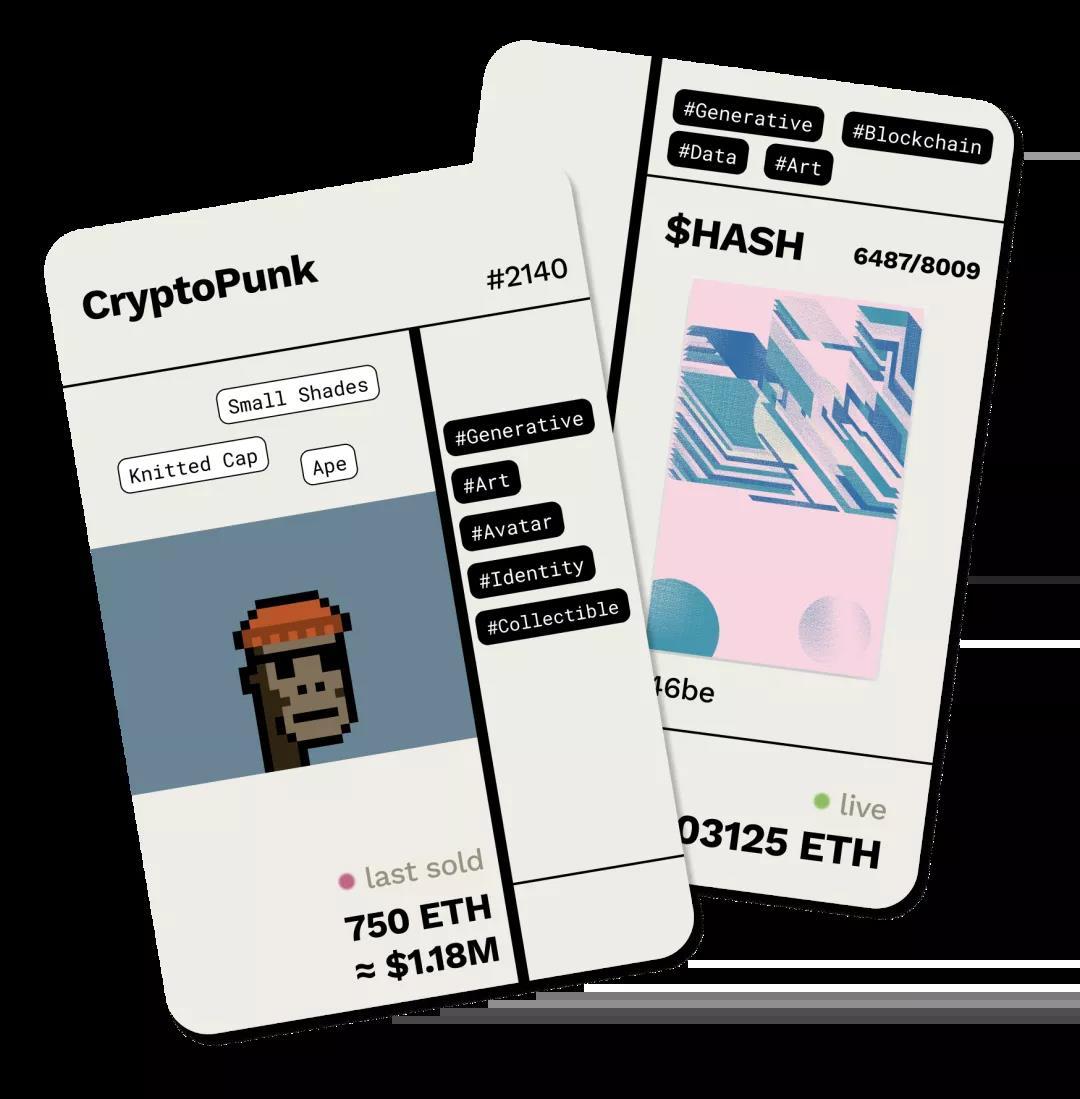
Under the combination of NFT and data, NFTs serve as carriers for the monetization of data. As a reward for people's attention, it is essentially a card with #[[]]. Just like the previously mentioned tacit knowledge or proactive knowledge collection and organization (knowledge curation), both are behaviors where we invest our attention.
For example, in the future, you might receive corresponding rewards for collecting bookmarks—such as NFT rewards (these rewards are more like coming to your door, just like advertisers looking for their 1,000 fan users).

NFTs are an excellent medium for building relational networks. I believe this aspect is even greater than its financial attributes (although many efforts are currently focused on enhancing its liquidity and connecting it with financial products and DeFi). Most of the time, I decide to purchase an NFT because I recognize the work, and the person behind it will provide me with continuous inspiration. My attention needs to be "glued" here, becoming a node; thus, this marks the beginning of a relationship where you choose to focus your attention. You are investing in a relationship, building a relational network, and not just constantly calculating returns or thinking about flipping it as a financial investment.

The World After Capital
I previously wrote a thread, and what interests me most and what I want to see in the future is to let people's thoughts bring direct value, even if it's just pure curiosity or increasingly scarce attention. On one hand, people's attention must be "treated well" in some way to form a positive cycle, allowing us to place our attention according to our preferences and autonomously (rather than passively, addictively, and manipulatively, as I refer to TikTok). On the other hand, good products should seek more aligned attention to incentivize 1,000 true fans rather than 1,000k random users who don't care, building and developing relational networks on this basis.

 Risk warning
 Risk warning


Popular articles





