








Interview with Christy, former Investment Director of Binance Labs: After 500 times return in 4 years, now plans to build a playground for the Web3 community

 "I believe the cryptocurrency industry has no endgame."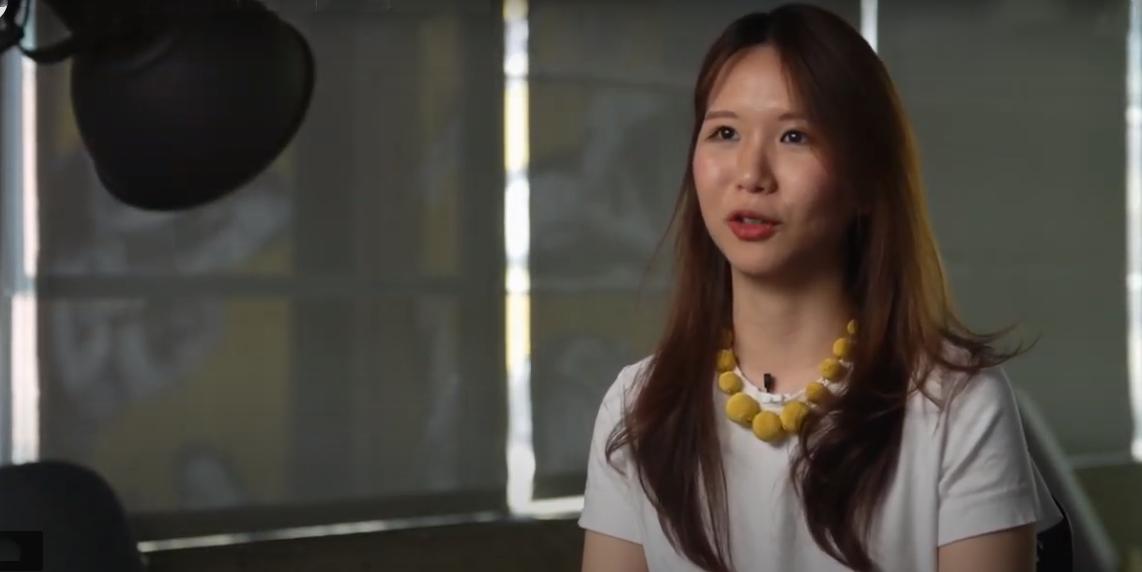
Source: crypto @ stanford
Interviewee: Christy Choi, former Investment Director at Binance Labs
Compiled by: Linqi, Chain Catcher
Main Points:
Binance Labs has achieved tremendous success overall and may be the best-performing fund in world history. Over 500 times in four years. This has never happened before in the world.
We see many communities emerging through models like DeFi, NFTs, and DAOs, but they are all fragmented. We want people to come together, allowing their existing identities to transcend community limitations, and go to a place where they can play together. We use games as a metaphor for how this will happen.
I still do not believe any project has solved the donation issue, because what truly drives innovation is not the technology itself, but our intentions and how we create incentive mechanisms.
Background + Binance
C@S: What year did you go to GSB (Stanford Graduate School of Business)?
Christy: I started at GSB in September 2021, currently in my first year of MBA.
C@S: Where is your hometown?
Christy: I am from Seoul, South Korea, but I grew up like a wanderer, constantly moving. I first came to the U.S. when I was five, and then I went to high school and college in Korea, so I consider myself a pretty authentic Korean.
C@S: How did you become interested in crypto?
Christy: I consider myself a wanderer because my great-grandparents were North Korean refugees, and my family built hospitals and schools for refugees. So I have always been very concerned about the situation of refugees and immigrants. I also co-founded a nonprofit organization with my sister and brother-in-law, who have been working full-time for it. I previously created an educational platform in my spare time while running that nonprofit.
At the same time, I was working on a project for Samsung about envisioning what the world would look like in the next 30 years and how disruptive technologies would shape it, one of which was blockchain technology. I heard a slogan that "blockchain will make donations transparent." Clearly, for many donors, their biggest concern is where those donated items or funds go after the donation. Yes, that was what initially brought me into the crypto world.
It was obvious that it didn't take long for me to realize that was nonsense. I still do not believe any project has solved the donation issue, because what truly drives innovation is not the technology itself, but our intentions and how we create incentive mechanisms. That experience was around 2016/17 when the crypto industry was still very small, and when I reached out to all the founders, they almost all responded in some way.
C@S: How did you go from Seoul to GSB?
Christy: It's a long story. At that time, through interacting with founders in the cryptocurrency space, I met Binance CEO Changpeng Zhao. It was when Binance was taking off after its ICO. All Chinese crypto exchanges were banned, but Binance survived, so he had hundreds of millions of dollars. For three days, we discussed the meaning of crypto and what role we should play in the crypto space. It was then that I decided to join them and set up the investment department for Binance.
That was in early 2018, during the ICO frenzy, when funds were pouring in with white papers flying everywhere. Binance had no reason not to participate. It was clear that these projects had not thought about what was suitable for the market, so we tried to help them solve that problem and support them in building their own communities. Thus, we founded Binance Labs to incubate projects. Essentially, it was about giving the first check to smart people trying to solve big problems in the crypto space. These projects include Polygon, Injective Protocol, NYM, etc.
We were very passionate about solving these big problems in the crypto space, but at the same time, Binance was undergoing significant changes. For example, in the U.S., Binance provided services for all users. However, as other countries gradually formed their own regulatory structures, we had to create separate platforms in different jurisdictions. We basically had to create different fiat exchanges and fiat entry channels to allow users to access Binance, complete KYC, and use compliant payment channels.
At that time, I was transferred to Binance's M&A department and oversaw market expansion. So my job shifted to becoming a crypto investor/ecosystem builder to operate the Binance exchange. In hindsight, that wasn't where my true passion lay. What I was really interested in was collaborating with founders and building communities. That was when I realized I needed to return to where I started, and my mission was how we empower people with crypto technology, so I decided to leave Binance.
A few people have had a significant impact on my life, and coincidentally, they all came from GSB. So after hearing my story, everyone felt it was time to belong to GSB. We really considered what we wanted to do and where our passions lay. My GSB admission essay was "What is most important to you, and why?" For me, it was a bit like a clinical therapy course. I worked hard to think about what motivated me, what was most important in my life, and what I should do now. Our lives are short. So that was how I got into GSB.
C@S: So what is the answer to that question? What is most important to you, and why?
Christy: The most important thing in my life is to love others, love excessively, even a bit overboard. So the focus is on creating impact.
Returning to my family story. The biggest struggle I had growing up was that my parents and grandparents were, to some extent, social entrepreneurs. But I was passionate about technology, so I always struggled. Why do I like nonprofits? For me, I discovered through the crypto industry that there are ways to create a greater impact in the world through technology and finance. It was then that I realized this was what I truly loved.
But I think what motivates me now is different. I believe that just because we are in cryptocurrency and have the right intentions, we can have a tremendous impact on humanity. Binance Labs has achieved tremendous success overall and may be the best-performing fund in world history. Over 500 times in four years. This has never happened before in the world. But we haven't really been able to sustain it for long because we all left. I feel we didn't win a collective victory as a team.
This is a significant regret for me. I personally think everyone did great. Everyone found their suitable jobs afterward. But I wanted to achieve something as a team, not as individuals.
C@S: 500 times, wow. What was your strategy for evaluating projects while working at Binance?
Christy: It really depends on the stage of the project, but for writing the first check, alpha returns come from betting early, and I think at this early stage, it is definitely about the people. I really like teams that have good synergy and vision, while also being rational enough to focus on what they are building and never give up.
C@S: Can you give an example?
Christy: Two examples, starting with Terra. Because Do Kwon is from Stanford. Terra was the most challenging investment project I've ever encountered because many people at Binance were skeptical about algorithmic stablecoins. At that time, it was Do and Dan; Dan is another founder of Terra, and I think they are a perfect combination. Dan is a very business-minded talent, while Do is a technically skilled, research-driven founder. Ironically, Do has essentially become one of the best businessmen in the crypto space today.
Do has a unique personality and very strong leadership. But I am sure that initially, our belief came from the combination of the two. They had a grand vision, and they boldly said, "We are going to create a financial system for cryptocurrency."
Another example is Injective, which is also a project created by Albert Chon and Eric Chen from Stanford. These two were just students at Stanford, and when I first met them, they only had a white paper. But they were genuinely passionate about what they were building. Moreover, they were very honest about what kind of help they needed.
C@S: What are you most interested in about cryptocurrency now, both personally and as an investor?
Christy: Honestly, I think crypto technology is crossing a chasm, so everything in crypto is interesting. My definition of crypto is building a massive incentive system where we can reward people in a timely, global, and fair manner. I believe we are conducting a large social experiment to see how these incentive systems will work, especially starting from digital life. So how do we create and scale this incentive system; that might be the most interesting thing I see.
Christy's Current Project: Building a Playground for Web3
C@S: Can you tell us about what you are currently busy with?
Christy: The company's name is AO, and we are developing Spacebar, which is a playground for the Web3 community. We see many communities emerging through models like DeFi, NFTs, and DAOs, but they are all fragmented. We want people to come together, allowing their existing identities to transcend community limitations, and go to a place where they can play together. We use games as a metaphor for how this will happen.
C@S: Can you tell us how this platform actually works?
Christy: We are building a game as its metaphor. Suppose the infrastructure supporting the metaverse will emerge at some point; we want to start building the infrastructure that will support the construction of the metaverse. In our current digital lives, we are gamifying everything, essentially, the incentive system is about gamifying interactions between things and humans.
So to create the gamified world we dream of, I think we should start by creating a game. Our game is designed to gather communities and then modularly allow communities to own the game. The core team builds the initial components, but the community can plug in different tools. These tools may be built by our team, or they could be existing DAO tools, or DeFi products, or tools built by our ecosystem developers on the platform.
This game is a space-themed game filled with metaphors. Imagine we are in a space bar, and everyone seems happy, but everyone has different goals and tasks. All of this is to find the true meaning of your life. The metaphor is that if you are in a spaceship, you are starting your spaceship, and as you travel through space, you will encounter different stars in your life journey. Each star you encounter is a significant event in your life. Whether to mint it as an NFT is your decision, just like whether to give that event meaning; it completely depends on you. So users collect NFTs and mint them, and the person who collects the most NFTs will win this round of the game. This is the alpha version of the game.
For some people, winning the game may not be their ultimate goal. Just like in life, some people chase money or status, but some find different meanings in life. There are other concepts. For example, in the initial game, you need to win rewards as an individual, but we allow players to turn their identities into a spaceship; you use your existing NFTs to represent your spaceship.
In this way, users who own these PFP NFTs will initially join as a community. We will later create a team system where users will create different teams to win prizes as a collective identity, and the most obvious way to form the initial team may depend on the NFTs the users hold. But as the game progresses, users may team up with people who have different NFTs.
This team system is also our way of trying to define a reasonable price discovery for NFT games, which I think is a significant issue in the current industry. We will have a fixed price pool, and then a certain number of people will play this game, so there will be a certain number of stars in the universe. Therefore, if we apply this method, we will be able to give a price for each star NFT.
Initially, we build the stars ourselves, but as the game progresses, users will create different shapes and colors for these stars. We may also add planets or space components, but essentially, by adding these layers of identity, different meta-games will emerge, such as leaderboards, rankings, NFTs, and of course, DeFi and DEX, etc. I think we will build the building blocks of the metaverse's functional roles by adding these different elements.
C@S: Who are you currently working with on this project?
Christy: The project team is a group of people from Stanford. One of our co-founders is not from Stanford, but he might be one of the first people to talk about blockchain games since 2017. I met him when I was trying to learn more about blockchain games and NFTs. He comes from the mobile gaming industry, and now he wants to transition from mobile gaming to crypto gaming.
The project's CTO graduated from Stanford and is currently a senior engineering manager at Meta. He is a great person and one of my best friends. I always thought if I were to start a startup, he would definitely be my CTO. So these two people were the first I reached out to.
We also have a talented art director who has worked at Disney, Take-Two Interactive, Tencent America, etc. He is incredibly talented and designed one of the most successful games in Korean history.
C@S: What do you expect to be the biggest challenge in this project?
Christy: Absolutely the community. I think for all crypto projects, the key is how to build the initial community. Because the community provides us with momentum, we exist for the community, and how will we facilitate and motivate these community members to feel excited about the project from the very beginning? That will be the biggest challenge, and it will be a permanent challenge, even if the project is very successful.
The Current Crypto Industry
C@S: What does Web3 mean to you?
Christy: Web3 is about collaboration, and when I talk about collaboration, I think WAGMI (We All Gonna Make It) is Web3 itself. In Web2, all the value is essentially captured by huge tech platforms, and by definition, a few players who founded Web2 can set the rules that benefit themselves the most, making it really difficult for people to have ownership.
In Web3, we will ultimately create a truly open-source economy and transform these passive users into active stakeholders (i.e., token holders). So for me, our current stage feels more like an experiment because we haven't really proven anything yet. But this is indeed the direction the world is moving towards, I believe crypto is becoming the payment and incentive layer of Web3. I think Web3 might not even need to be called Web3 because I believe blockchain itself is a new web. So I feel we need to give it a new name.
C@S: When people think of NFTs today, they usually refer to JPEGs that can be bought and traded. Do you think these JPEGs are just early versions of NFTs, or will JPEG NFTs continue to play a role as the metaverse advances?
Christy: Certainly not in the form of JPEGs, but honestly, it is presented that way right now. I don't think what we need now is something very advanced. I see many projects launching various NFTs with more quirky visuals, even 3D effects, etc., but currently, the use cases for NFTs are still very limited. This is also one of the problems Spacebar wants to solve.
I think we will try to mimic the existence of many existing assets and transform them into NFTs, but when we transfer elements from the real world to the digital world, I think it is necessary to create differences. We are currently randomly imposing scarcity on digital life, while in reality, we have infinite resources. So this will be a very interesting perspective because many people are basically trying to create NFTs that represent things that exist in real life. To some extent, I think this will be the next wave of NFTs, but I believe that when you create NFTs purely for your digital life, that is truly exciting. I think when our digital lives become more important than our real lives, that will be a critical point (tipping point).
C@S: Are you excited about that tipping point?
Christy: I am very excited about it. This tipping point may or may not occur in the near future. I believe to achieve this, we need to solve a lot of real-world problems, including energy, computation, storage, and scalability; all these technical issues must be resolved before we get there. At the same time, I think in the long run, people will laugh at the current NFT market and its existence in JPEG form.
Quick Q&A
C@S: If the crypto space has developed to 100 times what it is now, or has reached its limit, what do you think about such a crypto time?
Christy: I believe the crypto industry has no endgame. It will only embed itself into our daily lives. I think everyone in our generation and the younger generation will be crypto-native and will have the ability to interact with crypto just like we currently interact with apps or the internet.
C@S: What advice do you have for newcomers to the crypto space?
Christy: I suggest starting with Twitter first.
C@S: Which top Twitter accounts should we follow?
Christy: I will only recommend one for now, he is Qiao Wang from DeFi Alliance. He is the only person worth turning on Twitter notifications for. I really like this person because it feels like he tweets about what I have always been thinking, but he just outlines it in a very, very simple way. He is very good at capturing what is happening in crypto but explaining it in a very insightful way. Simple words, but very insightful. He is one of the people I respect the most in the crypto space.
C@S: Would you recommend business school to others?
Christy: It depends on your previous experiences and the direction you want to develop. I don't think I would recommend business school to everyone. Especially for Web3, I strongly advise against getting an MBA.
 Risk warning
 Risk warning



Popular articles





