








An overview of the seven major L2 networks, what advantages and potential do they each have?

 In-depth study of the 7 L2 projects with the greatest potential for the future: Optimism, Arbitrum, Polygon, Base, Mantle, opBNB, zkSync.
Author: Baize Research Institute
Ethereum Layer-2 (L2) scaling solutions are thriving and are set to be the biggest highlight of the next bull market. So how do you find your 100X in this space? To answer this question, we will delve into the 7 L2 projects with the most potential for the future.
This article is based on the insights shared by Crypto researchers MooMs and 0xFinish in a Twitter thread.
1. Optimism
In October 2022, Optimism launched the OP Stack, an open-source development stack that supports the OP mainnet. It introduced the concept of a superchain, which refers to a set of L2 blockchains (OP chains) built on the OP Stack.
The stack consists of various code libraries that can be used to create highly customizable L2 blockchains. Essentially, its purpose is to simplify the creation of L2 blockchains.
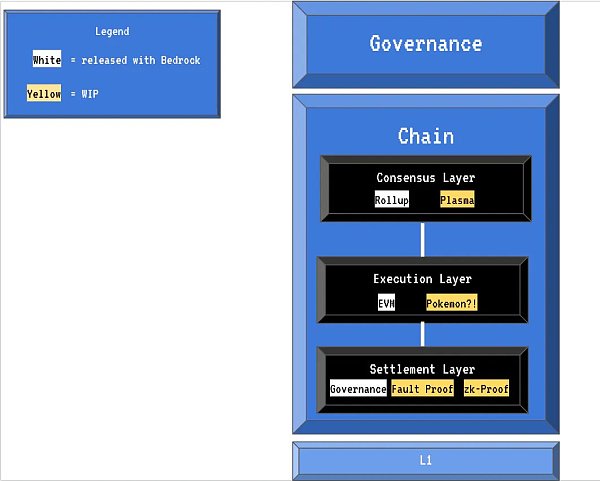
The Bedrock upgrade on June 6, 2023, was the first official version of the OP Stack, bringing several key improvements:
• Reduced fees
• 70% shorter deposit times
• Improved modularity of proofs
• Enhanced node performance
After the Bedrock upgrade, Optimism's next step is to upgrade to the superchain. The L2 Rollup chain of Optimism is the first member of the superchain. The upcoming Base chain from Coinbase will be the second member.
After raising $240 million, Worldcoin is also committed to building on the OP Stack. Binance's BNB Chain has also launched a testnet for the EVM-compatible OP chain opBNB based on the OP Stack.
The ultimate goal is to form a "superchain" composed of various L2 networks built using the OP Stack—where all L2s will share ordering, proof, and cross-chain infrastructure, facilitating seamless communication between networks.
Optimism is currently the third-largest L2 by TVL, but with its vision for the OP Stack and its partners, it is expected to become a leader in L2s in the coming years.
Too many people are optimistic about Arbitrum while overlooking Optimism. Coinbase and Binance bring a massive user base to Optimism, and I believe this is just the beginning.
2. Arbitrum
Arbitrum is an Optimistic Rollup and currently the largest and most dominant L2 network by TVL, having launched its mainnet in August 2021.
The Arbitrum ecosystem currently includes:
• Arbitrum One: The core Rollup of the entire Arbitrum ecosystem
• Arbitrum Nova: A Rollup for projects with high transaction volume expectations
• Arbitrum Nitro: An open-source stack that supports Arbitrum L2.
Here, we focus on Arbitrum Nova, which has gas fees 90% lower than Arbitrum One. Although Arbitrum Nova has lower security, it is well-suited for gaming, social, and other high-bandwidth applications. Opensea and TreasureDAO recently launched markets on Arbitrum Nova.
What is Arbitrum's vision? Like Optimism, Arbitrum launched an open-source framework for everyone to use in March 2023, called "Arbitrum Orbit," allowing any developer to create and deploy L3 without permission or formal approval.
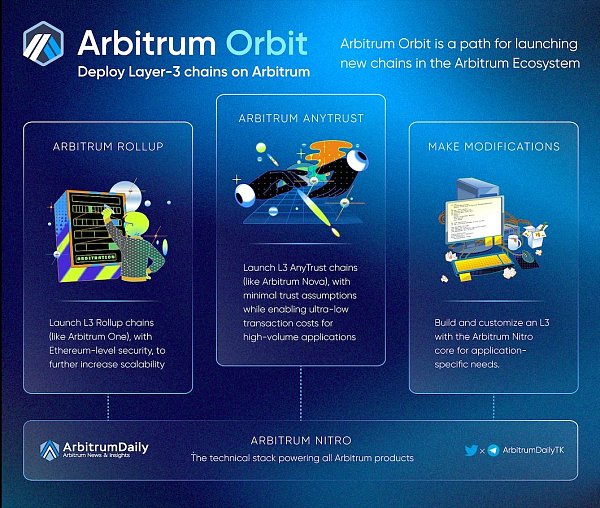
The simplest way to understand L3 is to think of them as L2s of Arbitrum One, which is already an Ethereum L2. They significantly enhance the scalability of Arbitrum One, making it the ideal solution for high-throughput applications.
The difference between OP Stack and Arbitrum Orbit is that L3 will be built on top of Arbitrum One, while OP chains will be independent networks that share security with each other.
L3 could become a compelling narrative in the future. However, I believe OP Stack has greater growth potential as it targets a broader user base through institutional entities.
Arbitrum vs Optimism
The main technical difference between the two chains is that Optimism uses single-round fraud proofs, while Arbitrum uses multi-round fraud proofs.
This means that Optimism's approach is faster, but it may be more expensive due to higher gas fees since it is executed on L1. Arbitrum's issuance takes more time but is more cost-effective.
Additionally, Optimism uses EVM, while Arbitrum has its own Arbitrum Virtual Machine (AVM). This means that Optimism's programming language is limited to Solidity. Arbitrum supports all EVM programming languages.
3. Polygon
Polygon is a blockchain dedicated to enhancing Ethereum's scalability, achieving this through various solutions. Their flagship product is the Polygon PoS sidechain, which currently handles 2-3 million transactions for 300,000-400,000 addresses daily.
Polygon is also involved in the dApp chain narrative, having released their own solution, Supernets, which enables developers to build customizable dApp chains.
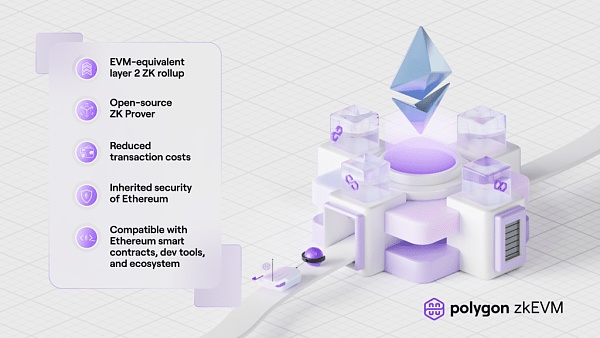
In addition, Polygon zkEVM (its EVM ZK-rollup solution) went live on the mainnet at the end of March, with approximately 20,000-50,000 transactions daily since then.
The recent Polygon 2.0 upgrade aims to unify these platforms to create a seamless user experience.
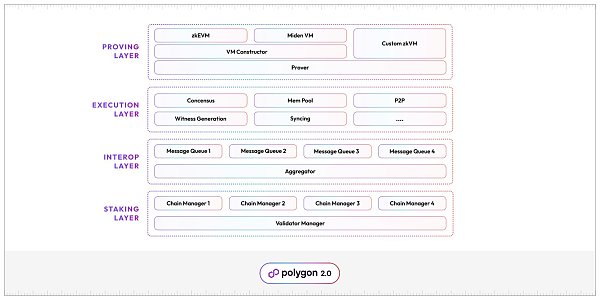
The concept of Polygon 2.0 is an ecosystem composed of various L2 chains supported by ZK technology, utilizing a unique cross-chain coordination protocol to achieve seamless interoperability between Polygon zkEVM, Polygon PoS, and Supernets.
Polygon 2.0 consists of four protocol layers, each supporting an important process within the ecosystem:
• Staking Layer: Provides users with re-staking capabilities using Polygon's native token MATIC
• Interoperability Layer: Facilitates cross-chain messaging within the ecosystem
• Execution Layer: Enables any Polygon chain to generate batches of ordered transactions, i.e., blocks
• Proof Layer: Proves all transactions of each Polygon chain
I believe Polygon is a major competitor to Optimism for mass adoption. They have already partnered with many large Web2 companies, attracting millions of users.
4. Base
"Base is a secure, low-cost, developer-friendly Ethereum L2 designed to bring the next billion users into Web3."
Base is built by Coinbase on the OP Stack and plans to gradually decentralize over the next few years.
With Coinbase as a cryptocurrency exchange having an easy "crypto <-> fiat" gateway, Coinbase's 110 million users and $80 billion in assets can easily adopt Base.
The testnet for Base was launched on February 23, and the mainnet is expected to go live this year.
Even in a bear market, Coinbase has 8.3 million trading users monthly (according to December 2022 data), while its competitors, Polygon, Optimism, and Arbitrum, have an average of 3.04 million fees, an average revenue of $1.23 million, and about 200,000 average daily active users.
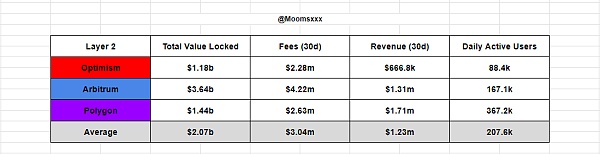
This means that Coinbase only needs to convert 2.50% of its 8.3 million bear market users into Base users to reach the average daily active user count of these three competitors. Therefore, Base has the potential to become one of the major L2s in the DeFi (trading) space.
5. Mantle
Mantle is a novel modular L2 network designed to elevate Ethereum's scalability to a new level while maintaining high decentralization and robust security.
Launched in 2023, Mantle separates the three key layers of blockchain (consensus, execution, and data availability) to allow for independent optimization:
• Consensus Layer: Works similarly to how L1 chains operate, primarily focusing on ordering transactions and blocks.
• Execution Layer: Is isolated from the other two layers and is dedicated to executing transactions and smart contracts.
• Data Availability Layer: Based on innovative DAS technology, ensures data is always available and not concealed, enhancing the network's security.
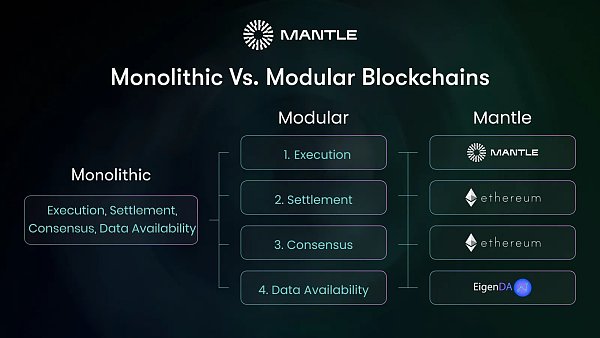
Mantle's modular design could change the game for the L2 space. By separating the three key layers for independent optimization, it can make the network more flexible and improve scalability without compromising security or decentralization.
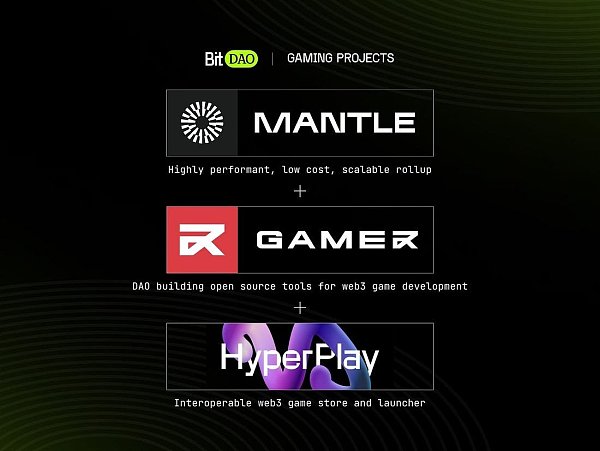
Mantle is also gaining attention due to its partnership with the decentralized autonomous organization BitDAO. This strategic partnership could bring significant value to the Mantle network and solidify its position in the blockchain ecosystem.
One unique aspect of Mantle is its focus on enhancing user experience, particularly for chain games or GameFi. With Mantle's high scalability, lower transaction costs, and faster transaction speeds, it could revolutionize the GameFi landscape.
Although Mantle is a newcomer in the L2 space, it has shown tremendous promise. Its innovative technology, focus on user experience, and commitment to decentralization make it a strong contender in the increasingly competitive L2 landscape.
6. opBNB
In June 2023, Binance announced the launch of the opBNB testnet. opBNB is built on the OP Stack and places a strong emphasis on maintaining compatibility with the Binance Smart Chain (BSC), providing significant advantages for BSC developers and users.
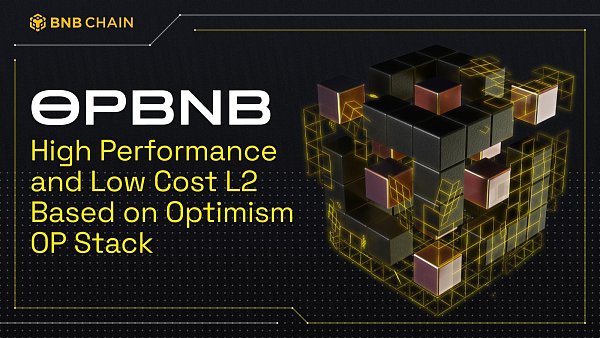
Similar to Base, opBNB will leverage Binance's vast user base to provide a seamless and cost-effective L2 solution for millions of users already using Binance. This indicates that opBNB has significant growth potential in the DeFi ecosystem.
It is worth noting that the success of opBNB will be closely tied to the native token BNB of the entire Binance ecosystem. If opBNB gains traction, it could positively impact the value of BNB, creating a ripple effect throughout the entire Binance ecosystem.
According to the roadmap, opBNB is set to launch its mainnet in 2023. The launch of the opBNB mainnet is worth watching, as it will showcase Binance's L2 solution in areas such as high-frequency trading, gaming, and social networks.
7. zkSync
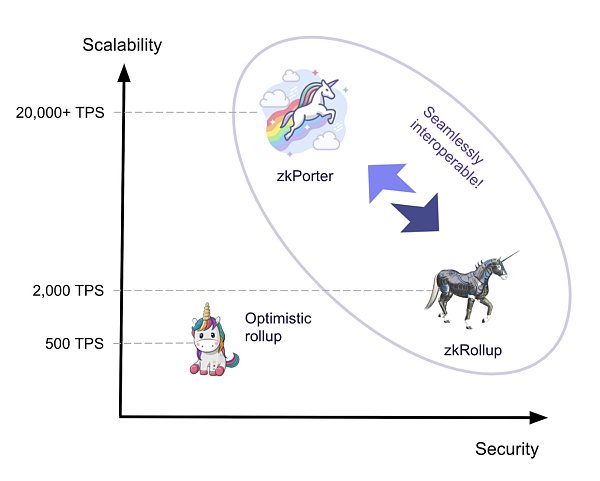
zkSync is an L2 scaling solution developed by Matter Labs. It employs zkRollup technology and aims to provide Ethereum-level security. It is one of the key projects driving the L2 revolution.
zkSync uses zero-knowledge proof technology to bundle multiple transactions into a single proof. By moving most of the computational work off-chain while ensuring a high level of security through the Ethereum mainnet, it enhances scalability.
One significant advantage of zkSync is that it allows users to pay gas fees with the tokens they wish to transfer, rather than being required to use ETH. This greatly improves the user experience and brings Ethereum closer to mainstream adoption.
Matter Labs is also committed to upgrading zkSync without hard forks. This modular design ensures it can integrate future Ethereum improvements and scale with the ever-growing Ethereum ecosystem.
By using a PoS consensus mechanism for block validation, zkSync maintains decentralization, aligning with Ethereum's core values.
The primary goal of zkSync is to be completely permissionless, allowing any project to build and deploy smart contracts on its network. This will further contribute to Ethereum's scalability and support for diverse dApps.
zkSync's vision is not just to serve as a scaling solution; it is a stepping stone towards a more scalable, secure, and user-friendly Ethereum network. With zkSync, the possibilities for Ethereum to transform various industries are limitless.
Keeping an eye on projects like zkSync is crucial for understanding the future of Ethereum and DeFi. As Ethereum continues to evolve, zkSync will undoubtedly play a vital role in its growth and adoption.
zkSync is not just a competitor among L2 projects; it sets the standard for L2 security, scalability, and efficiency. As the Ethereum ecosystem continues to develop, zkSync is worth long-term attention.
 Risk warning Risk warning



Popular articles





