








Sei's Ultimate Marketing Rule: The King of Airdrops in the Post-Airdrop Era

 You opened a contract and got liquidated, he borrowed to take advantage of cross-chain airdrops and got liquidated, you both have ______.
*Written by: Xiao Fei, * Odaily Planet Daily
Despite being in a fiercely competitive environment with numerous old L1s, emerging new L1s, and multiple L2 races during the bear market, Sei Network has never lacked traffic.
To be honest, when it comes to technological innovation, ecological projects, on-chain data, and financing scale, Sei may not be a leader at present. However, in terms of "marketing its own popularity" and "managing airdrop expectations," Sei can be said to have made notable efforts, employing a series of tactics that have made the community both love and hate it.
Over the past year, how has Sei managed to frequently make headlines with news, and how did it once again rise to prominence with a delayed "sunshine" airdrop just as it launched on Binance Launchpool, sweeping through the crypto community with its popularity?
Controversy and Heat Before Launch
Sei launched its incentivized testnet in August 2022 and announced that 1% of the total supply of SEI would be used to reward testnet participants. At that time, Sei's tutorial for interacting with the testnet was already widespread in the community, with everyone expressing that the interaction steps were quite cumbersome. Not only did it require multiple interactions and completion of five major tasks, but it also required filling out forms multiple times and KYC for rewards. However, the "more troublesome, the more it should be done" principle led many to participate in the interactions.
On May 27, 2023, Sei's official Twitter announced that the upgrade of its Discord was complete, and users could now obtain the "Verified Seilor" role through Humanode facial recognition verification. It was reported that "Verified Seilor" is a badge of authenticity for users, proving they are real individuals on the internet.
Upon this announcement, the community erupted in outrage, accusing it of violating the spirit of Web3, as facial recognition was required to receive the airdrop?
However, on June 15, the Sei Foundation clarified via Twitter that the notion that "Sei testnet incentives or airdrops require facial recognition" was a misunderstanding. Participation in Sei's testnet incentives or airdrops does not require facial recognition or KYC. The addition of a third-party facial recognition tool to Discord was in response to feedback about a large number of bot attacks, and Sei would not adopt any form of facial recognition or KYC, as Sei is an open-source, permissionless Layer 1.
Although there was no actual change from the back-and-forth, Sei managed to capture attention and heat in media and social media discussions.
Schrödinger's Airdrop and Anxious Community
Afterward, rumors circulated in the community that Sei would soon launch on Binance, until August 1, when Binance announced that Sei would be listed on Binance Launchpool, with trading starting on August 15. The token details are as follows: Total supply: 10,000,000,000 SEI; Initial circulating supply: 1,800,000,000 SEI (18% of total supply); Total mining amount: 300,000,000 SEI (3% of total supply).
What frustrated the community was that even after the Launchpool listing was confirmed, Sei had yet to announce the details and quantity of the airdrop, only releasing a brief economic model. When community members asked questions, the Mod merely replied that there was an airdrop plan and everything would be based on official announcements.
On August 11, the Sei Foundation stated: The mission of the Sei Foundation has been to support the decentralization of the Sei blockchain from the very beginning. The mainnet includes Sei airdrops and incentivized testnet rewards. The initial main token distribution aims to recognize loyalty and enhance the global influence of the Sei blockchain as the best place to build Web3 applications.
At this time, many in the community noticed that in Sei's official statements, the terms airdrop and testnet incentives were consistently separated, suggesting they were not equivalent.
It wasn't until the night before the launch that Sei finally announced detailed token economics: 48% of tokens allocated to the ecosystem; 20% of tokens allocated to the team; 20% of tokens allocated to investors; 9% of tokens allocated to the foundation; 3% of tokens allocated to Launchpool; among which 48% of tokens allocated to the ecosystem would be used for staking rewards, ecological initiatives, and Sei airdrops and incentives. Season 1 airdrops will distribute 3% of the SEI token supply to reward community users.
However, the specific rules for the airdrop were still not announced.
Cross-Chain Blind Box Airdrop Ignites Community Again
It wasn't until the day SEI launched on Binance that the airdrop rules finally arrived, catching everyone by surprise and reigniting community discussions.
Sei announced that during the launch of the Pacific-1 mainnet, it would conduct a "cross-chain" airdrop for active users across six ecosystems. The specific rules are as follows: Users active on chains such as Solana, Ethereum, Arbitrum, Polygon, BNB Chain, and Osmosis would have the opportunity to be included in the airdrop whitelist, and to claim, they would need to create a Sei wallet and bridge specified assets to the Sei network after the mainnet launch.
For those who participated in Sei's Atlantic 2 testnet and/or ambassador program, there would be different reward rules, which were not referred to as "airdrops."
This seemingly "sunshine" airdrop rule excited the community, although some users pointed out that this set of rules was very similar to the cross-chain operations in Cosmos, akin to the Evmos airdrop from years ago. However, since the Sei team itself comes from Cosmos, this was not surprising.
Community testing revealed that when claiming the SEI airdrop, users could choose between the "Airdrop Treasure Chest" and the "Cross-Chain Treasure Chest." Users selecting the "Cross-Chain Treasure Chest" would need to bridge at least $500 worth of ETH or USDC and would receive a certain amount of SEI, with the airdrop quantity depending on the value of the bridged assets.
**This whitelist for active addresses across multiple chains, employing a random airdrop quantity mechanism, led to rampant discussions in the community about how to obtain more airdrops. Ultimately, the conclusion was drawn: ** The more funds whitelisted addresses participated in cross-chain activities, the more airdrop quantity they would receive. Some shared screenshots of receiving over 10,000 SEI in airdrops, prompting many to jump in, with many borrowing to cross-chain.
Subsequently, Sei announced that due to high demand, the number of eligible wallets for the cross-chain airdrop would be increased from 500,000 to 1.5 million, allowing even more people to get involved. Many chose to cross-chain to the relatively less popular Osmosis, and a minimum of $500 was required to qualify for the airdrop, which briefly boosted the price of OSMO.
Of course, aside from a few large whales, most people were merely along for the ride, receiving a meager reward, while Sei's cross-chain data soared.
This rule garnered praise for Sei's thoughtful design and innovative mechanisms, but it also sparked dissatisfaction among some. Firstly, users who had previously completed complex tasks on the testnet felt that their efforts were undervalued compared to those who simply crossed chains. Secondly, some users reported that despite significant cross-chain amounts, their rewards were minimal, leading to complaints in Discord about the unreliability of the blind box.
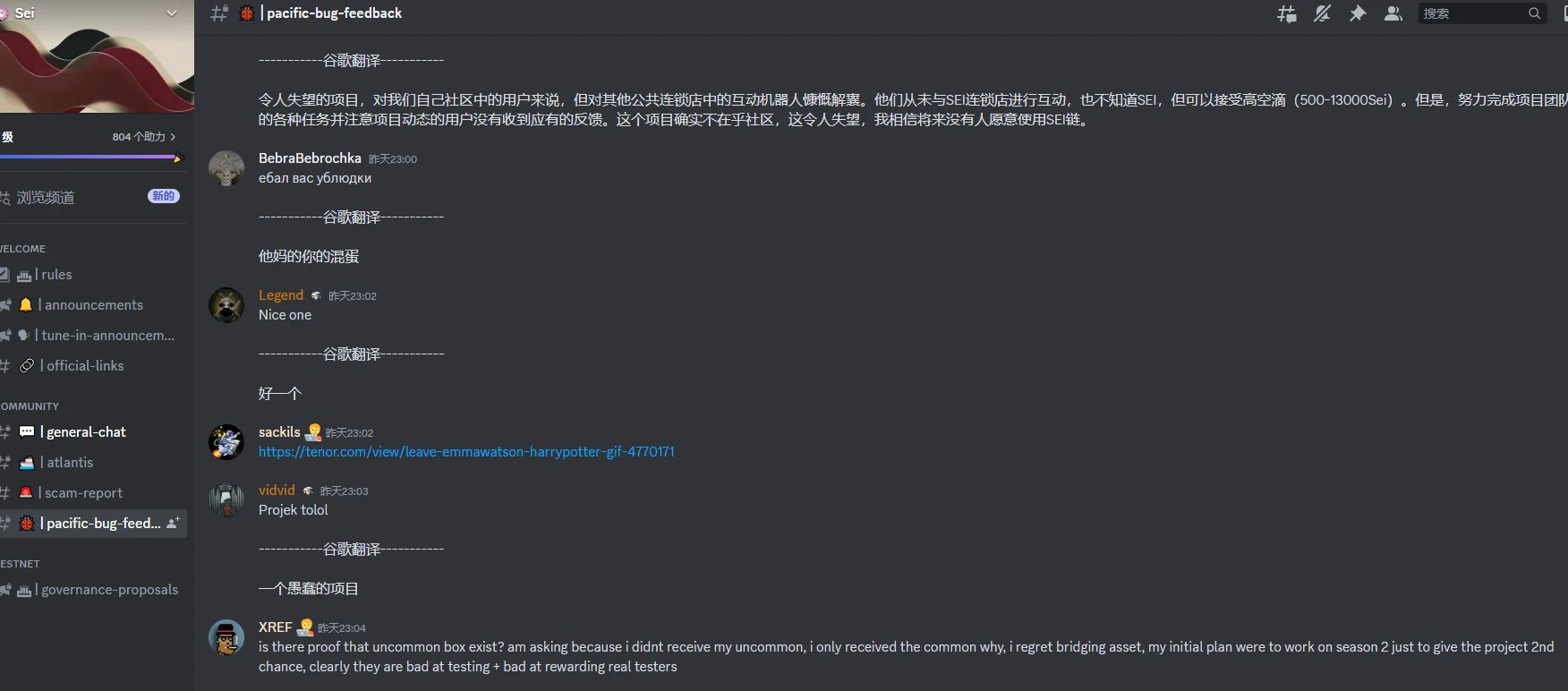
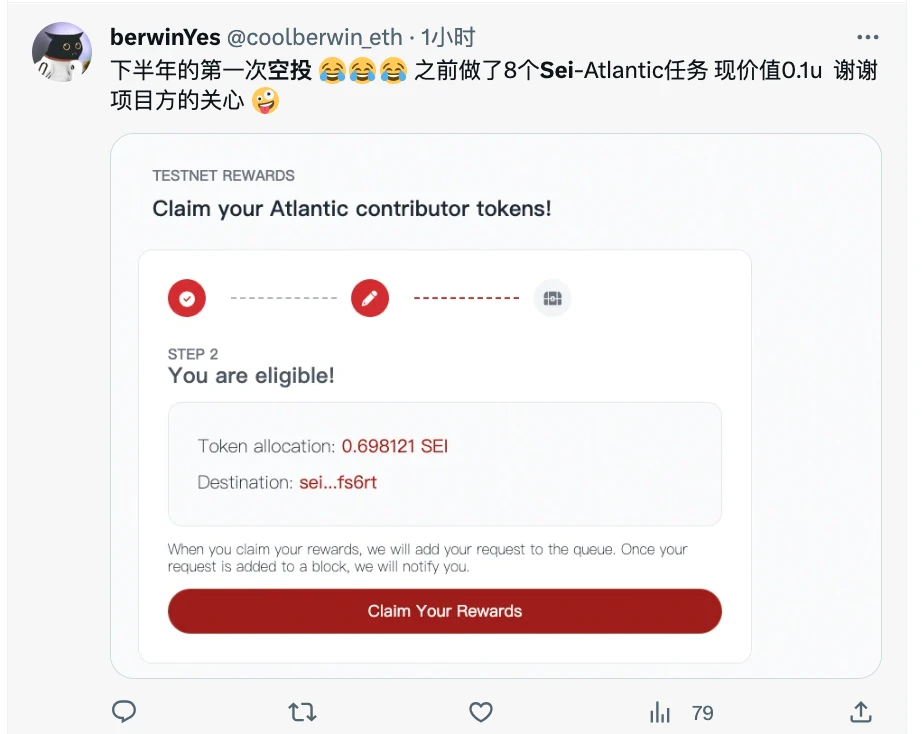
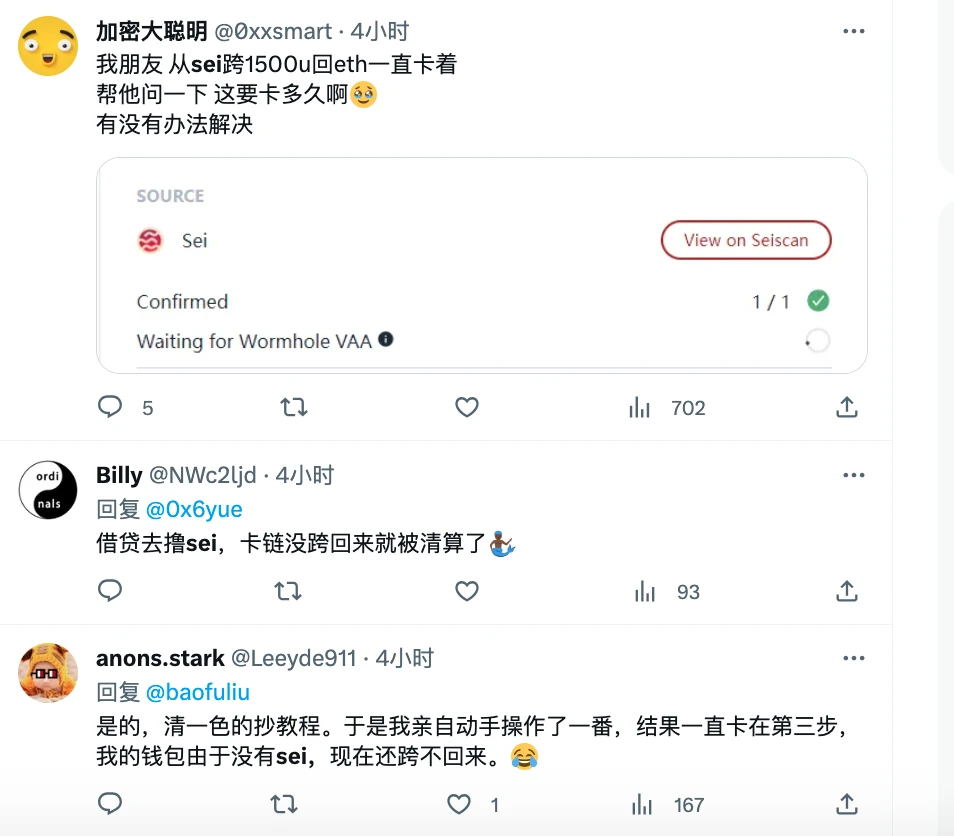
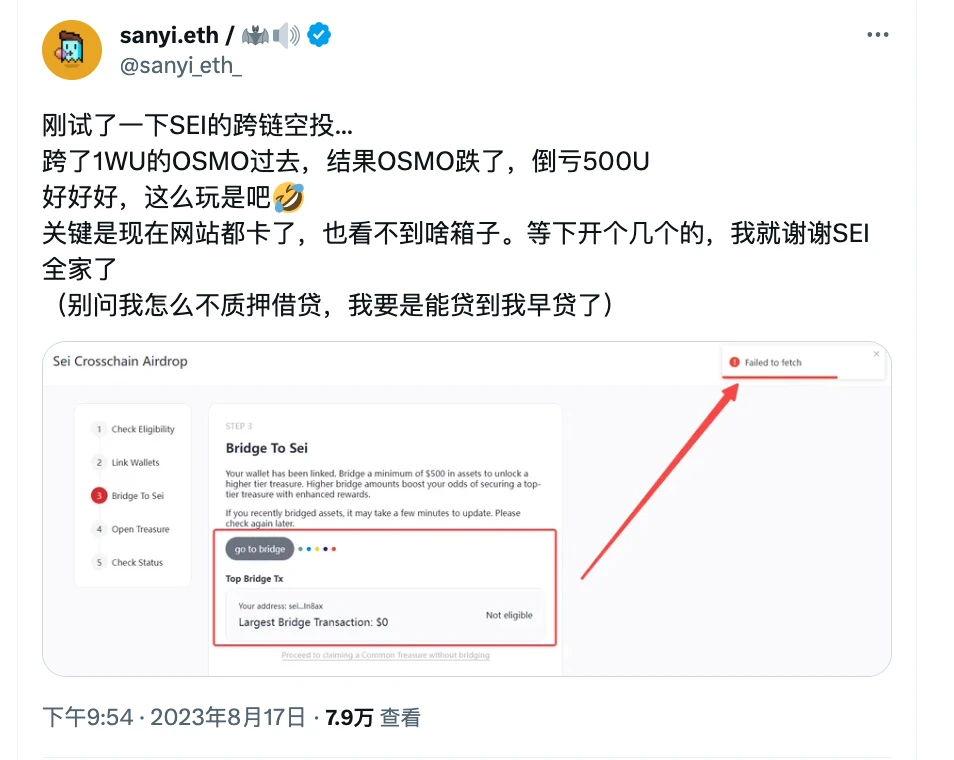
Last night, possibly due to the airdrop claims being too fervent, the network became congested, and several community users reported being stuck while claiming the cross-chain airdrop on the Pacific-1 webpage, with the page lingering on the third step for a long time without successfully completing the claim.
Worse still, in the early hours of today, Bitcoin, which had been stagnant for a long time, plummeted, dropping nearly $4,000 in a short period, causing other tokens to fall in response. Some users expressed on social media that they had borrowed to cross-chain for Sei's airdrop, only to be stuck on one side while facing liquidation on the other. Even those who weren't liquidated found that the airdrop they received might not cover the price drop…
Final Thoughts
Regardless, Sei's case seems to represent a "success" in one dimension, with innovative mechanism design and plenty of topics to discuss. However, looking at the long term, it may also represent another form of consumption and overextension, requiring subsequent operations to keep up.
Whether the project team should conduct airdrops and how to establish rules and standards has long been a topic of discussion in the crypto industry.
Originally, airdrops were hoped to incentivize active users and complete cold starts, but under the myth of wealth creation, countless "haircutters" entered the scene with dreams of freedom, leading to the emergence of many studios, forcing project teams to be cautious and gradually falling into a dilemma of mutual PUA, tug-of-war, and love-hate relationships.
As the market continues to decline and project teams tighten their belts, "airdrop wealth creation" is becoming increasingly difficult, leading to craziness. Recently, media reports have indicated that many haircutting studios are unable to sustain themselves and are closing down.
Indeed, this is also a result of industry reshuffling and iteration. DeFi OG Mindao once stated on Twitter: Airdrop farmers have now industrialized, and the airdrop rules are so predictable that witch resistance is simply impossible. Frankly, it would be best to completely abandon airdrops or allocate more tokens to ordinary liquidity mining after TGE.
However, to date, this discussion has not yielded a convincing conclusion, and perhaps we can only hope for a market recovery, allowing new traffic to enter and the industry to form a healthy ecological cycle.
 Risk warning Risk warning




Popular articles





