MIX Capital: Research on the Cryptocurrency Market in Vietnam

 Vietnam's cryptocurrency market is one of the largest in Asia, in fact, it surpasses the European Union or the United States in terms of cryptocurrency adoption rates. The main reason is that most Vietnamese citizens lack investment opportunities. Retail investors seek to hedge against the uncertainty of the local fiat currency and to invest funds in areas with potential growth.
Author: MIX Capital
According to data from Statista, the revenue of cryptocurrency exchanges in the Vietnamese market is expected to reach $109.4 million in 2023, while the number of cryptocurrency users is projected to reach 12.37 million by 2027. Additionally, a recent report from The Wall Street Journal indicates that Vietnam ranks among the top five in cryptocurrency trading volume.
As the Vietnamese cryptocurrency market matures, numerous infrastructure projects are emerging, while many experienced investors remain steadfast during market downturns. Especially now, investor confidence has returned, with 70% believing that the bear market cycle has ended or is about to end, and investment enthusiasm is reflected in increased participation across various sectors compared to the previous year.
Vietnam's Economic and Macro Market Overview
The global economic landscape remains uncertain due to ongoing challenges such as inflationary pressures and supply chain disruptions. Central banks around the world are cautiously monitoring these factors and adjusting monetary policies.
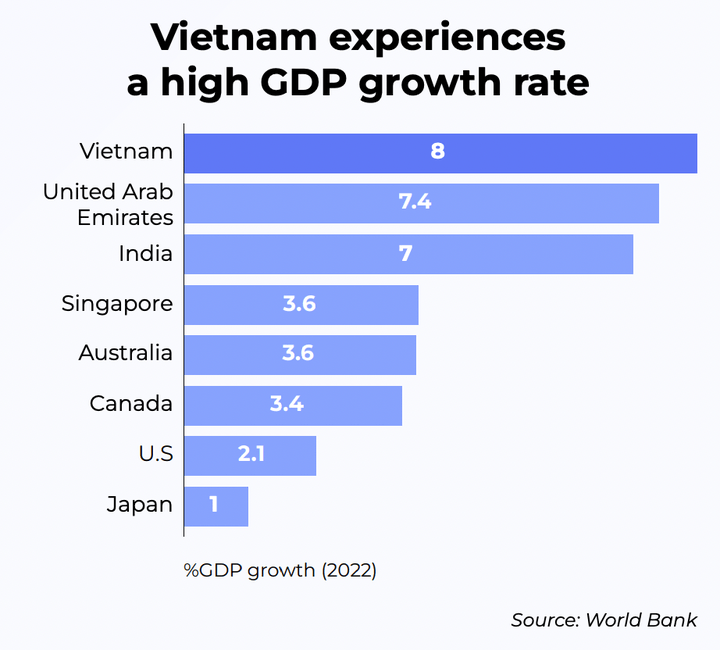
The data in the chart summarizes the annual GDP growth percentages of several countries. Vietnam ranked as one of the fastest-growing countries in 2022 with a growth rate of 8%. Meanwhile, developed economies like Japan and the United States exhibited relatively low growth rates of 1% and 2.1%, respectively, highlighting a diverse economic landscape. By the third quarter of 2023, the GDP growth rate was 5.33%, with an expected 5.10% in the fourth quarter. The per capita GDP stands at $15,514.
Vietnam ranks 35th in the world by GDP ($408.8 billion). The inflation rate is relatively low, at 3.5% in October 2023, compared to an average of 2% in 2022, while the EU is around 8.83% and the US is close to 8%. The unemployment rate in 2022 was only 1.9%.
According to reports from Google, Bain & Company, and Temasek Holdings, Vietnam is set to become the fastest-growing digital economy in Southeast Asia, growing from approximately $23 billion in 2022 to $49 billion by 2025 (growing faster than the Philippines and Indonesia). This significant growth rate is driven by e-commerce, transportation, food delivery, and social media.
According to Bain & Company, in 2022, Vietnam attracted more foreign investors than Indonesia and the Philippines due to its macroeconomic conditions and favorable environment for startups.
Key Sectors in Vietnam's Cryptocurrency Industry
1. Blockchain Infrastructure
The number of blockchain infrastructure projects has increased to 8. The most notable project is Aura Network, which has raised a total of $9 million from investment firms such as Republic Crypto, Hashed, and Coin98 Ventures. TomoChain was acquired by Coin98 Finance. The infrastructure network Remitano Network, backed by the Vietnamese P2P exchange Remitano, launched its mainnet in October 2022. Firebird (formerly PolkaFoundry) is currently a Web3 gaming platform focused on chain games. Verichains discovered a private key extraction vulnerability with a risk exposure of up to $8 billion.

2. Decentralized Finance (DeFi)
Despite the market being in a prolonged bear phase, project development momentum this year has outperformed the same period last year. Successful projects such as Fewcha, Octan Network, Orochi, and Cavies emerged after the Web3 Matching event hosted by Kyros Ventures in December 2022. The following are decentralized finance (DeFi) projects:

3. GameFi
Although there were no significant breakthroughs in the GameFi sector in the first half of 2023, data from Finder and Bloomberg indicates that Vietnam remains a global gaming powerhouse, ranking in the top five for GameFi participation rates and mobile game production. Vietnam is poised for a strong comeback in the GameFi sector. Meanwhile, infrastructure projects such as Space3, SeekHype, W3W, and Oxalus have gained visibility following events like Web3 Matching and GM Vietnam 2023.
Cryptocurrency Wallets and E-Wallets
Over the past four years (2018-2022), the number of cryptocurrency wallet users in Vietnam has grown to 18.6 million. In comparison, there are over 420 million cryptocurrency wallet users globally. A significant proportion of cryptocurrency asset owners in Vietnam prefer to store their digital assets on centralized cryptocurrency exchanges. According to data from datawallet.com, the most commonly used centralized exchanges in the Vietnamese market include:
- Binance - Binance stands out among many competitors due to its strong liquidity depth, allowing users to execute large transactions smoothly, increasing its appeal among Vietnamese investors.
- OKX - OKX caters to the needs of institutional investors, supporting various trading tools such as futures, options, and leveraged trading. The platform is committed to security and compliance to attract institutional investors.
- Bybit - Bybit is the most popular among traders and investors in the Vietnamese cryptocurrency trading market.
- Gate.io - Gate.io attracts users through a different approach, being unregulated and not requiring KYC (Know Your Customer) or AML (Anti-Money Laundering). It offers users a wide range of options for trading altcoins and financial products.
- BitcoinVN - A local cryptocurrency exchange founded by a Vietnamese-German team.
In terms of e-wallet usage, online payments in Vietnam are made through e-wallets (QR codes), with MoMo being the largest player, followed by Zalo Pay (part of one of Vietnam's largest messaging applications). Another payment platform in Vietnam is VNPay.
Currently, approximately 42 million users in Vietnam have e-wallets, and this number is expected to grow significantly in the near future. The relatively developed e-wallet market may serve as an important foundation for the future cryptocurrency wallet market. Cryptocurrency asset owners will require more security and control (self-custody) to manage their assets, indicating potential growth in the cryptocurrency wallet market.
Additionally, those looking to enter the cryptocurrency space can choose to use third-party platforms such as AlchemyPay. AlchemyPay launched local payment features in Vietnam this year, supporting domestic bank transfers and e-wallets MoMo and VT Pay. Vietnamese users can purchase cryptocurrencies on Web3 platforms using the Vietnamese dong.

Vietnam's Notable Cryptocurrency Projects
1. Coin98
Coin98 was established in Ho Chi Minh City in 2017 and has achieved great success. It is a DeFi platform that allows users to move and exchange assets across different blockchains and earn interest through staking. Coin98 has attracted attention in the crypto world and created opportunities for startups.
2. Kyber Network
Another project contributing to the Vietnamese cryptocurrency market is Kyber Network, founded in 2017. It is a decentralized exchange, DEX aggregator, and liquidity platform.
3. Axie Infinity
The third most notable cryptocurrency project in Vietnam is Axie Infinity, founded by SkyMavis in 2018. It is a "Play to Earn" platform operating on the Ethereum blockchain (involving the NFT market). Axie Infinity achieved tremendous success during the Covid-19 lockdown, with 2.5 million players and a market cap of $10 billion at its peak. This was an early revolution in Vietnam's GameFi sector and created opportunities for other startups.

Vietnam's Cryptocurrency User Profile
1. User Insights

The primary demographic remains those aged 25 to 34. Compared to 2022, the proportion of participants aged 18 to 24 has decreased from 38% to 26%.
Investor proportions year-on-year comparison.

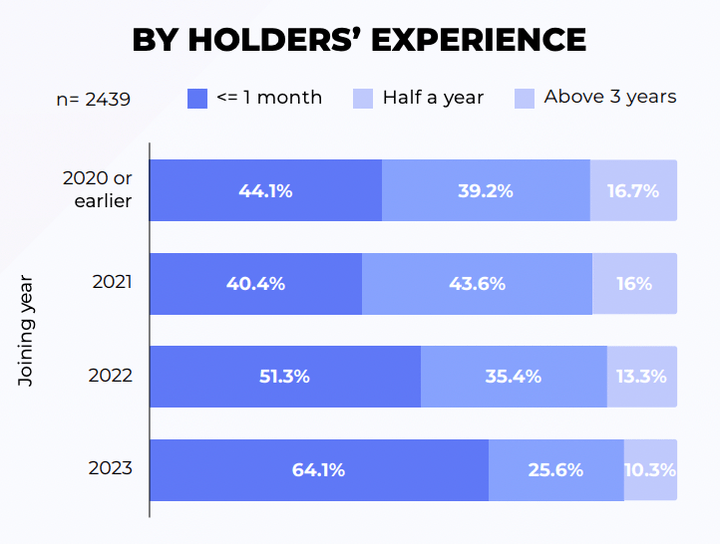
Over 90% of respondents have more than one year of market experience. The proportion of new users in 2022 was 11%, while in 2023, it dropped to only 6.5%. The year 2021 still saw the highest proportion of new users, revealing that regardless of market conditions, new users in Vietnam were optimistic about the market at that time.
2. Individual Investor Perspectives and Behaviors

Consensus on Bitcoin (BTC) prices generally centers around a range of $30,000 to $50,000 by the end of 2023. Only about 20% of investors believe Bitcoin will drop below $20,000.

Nearly 70% of respondents indicated that the cryptocurrency winter will last less than a year or has already ended.
3. Information Acquisition Channels
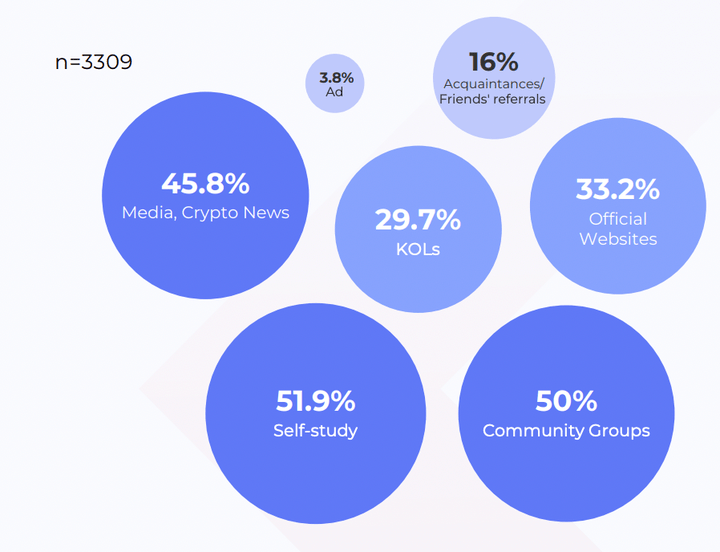
Vietnamese investors primarily rely on social media, news, and community groups for information. Additionally, project websites are a means for them to gain deeper insights into projects.
4. Recommendation-Driven Investment Decisions
75% of respondents believe that recommendations from friends have some influence on their investment decisions. However, when asked whether they rely on the opinions of trusted individuals for investments, most respondents still choose comprehensive project research. This indicates that investors are very cautious before making investment decisions.

For user groups with varying levels of market participation, novice investors tend to be skeptical during project research. There is a paradox here: the remaining groups tend to base their investment decisions on recommendations from friends.
Cryptocurrency User Segmentation Participation

Compared to 2022, participation in sectors such as DeFi, GameFi, and NFTs has increased, with significant growth trends in NFTs and GameFi. Although airdrops were the most popular community engagement in 2021, this sector has fallen to second to last in 2023.
1. Stablecoin Holding Rankings
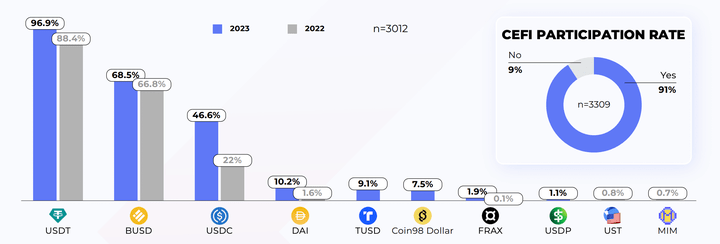
Compared to last year, the top four stablecoins by adoption rate remain unchanged: USDT still ranks first, with USDC and DAI showing the highest growth rates. TUSD and Coin98 Dollar (CUSD) are two new stablecoins that have replaced UST and MIM from the previous year. 75.8% of investments hold more than two stablecoins for portfolio diversification to reduce risk.
2. Stablecoin Allocation Ratios
Despite most market participants being optimistic about Bitcoin prices, the majority of users hold assets in stablecoins, accounting for 25%-50%. This phenomenon reflects a preference for lower-risk investment methods during market downturns. Notably, new users have the lowest proportion of stablecoin holdings. Most users choose to store stablecoins in CEX.


Most respondents indicated that ongoing stability is the basis for their choice of commonly used stablecoins, accounting for 53.85%. The remaining bases for choice are generally consistent with relevant data.

3. Cryptocurrency Governance Expectations
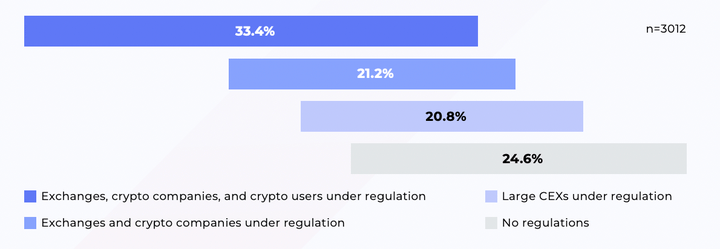
Over 70% of survey respondents hope for regulatory control over cryptocurrencies. More than a third of investors wish to improve comprehensive regulation across exchanges, crypto businesses, and individual investors. Users hoping for a fully decentralized cryptocurrency market account for only a quarter of the total.
4. DEX Trends
Recent FUD (Fear, Uncertainty, Doubt) surrounding the compliance of CEX has prompted users to migrate to decentralized trading platforms (DEX). The DEX/CEX adoption ratio increased from 10% to 22% in the first half of the year (The Block).
Selection Criteria: DEX has no bankruptcy risk, allowing users to manage assets independently. Users can easily purchase DeFi products. The trend of transferring from CEX to DEX makes buying stablecoins more convenient and faster. Short-term adoption of DEX is expected, but long-term, users will return to CEX due to higher liquidity, convenience, and customer service. CEX is easier to use compared to DEX, and its more transparent organizational structure makes it more trustworthy.

5. DeFi vs. Non-DeFi

Investors in the DeFi sector are more open: the vast majority of DeFi participants do not reject investments in other sectors. DeFi also serves as a gateway for investors to enter different areas of the cryptocurrency market. The most popular DeFi ecosystems:
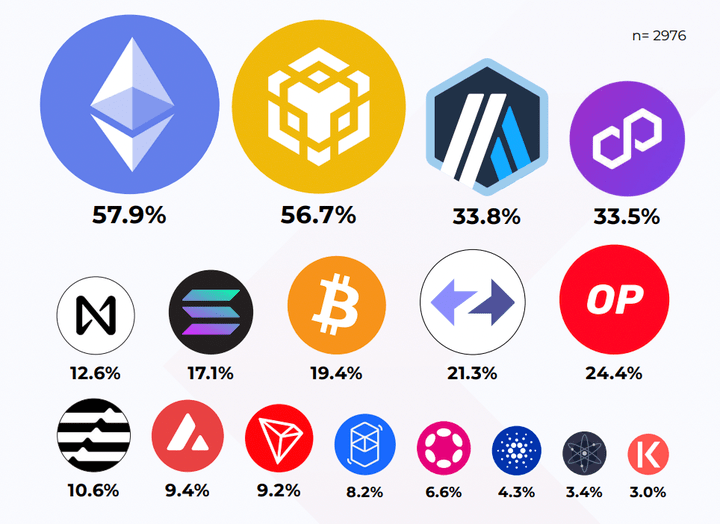
Notable changes: In 2023, the top three platforms have changed, with Ethereum surpassing BNB Chain. Solana is no longer a standout platform; in contrast, emerging Layer 2 solutions such as Arbitrum, Optimism, and zkSync Era have attracted more users in the first half of the year.
6. Airdrops
The vast majority of wallet addresses receiving airdrops fall between 1 to 5 times, with a median of 2, and the highest number of airdrops reaching 3000.

In 2021, airdrops were rated as the most popular community activity, with over half of users participating in airdrops that year, approximately 55.7%.
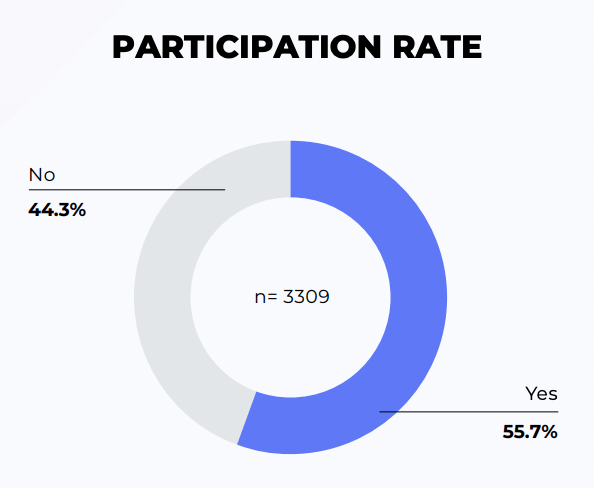
Mainstream project airdrop expectations: zkSync and LayerZero are the two projects most favored by Vietnamese users during this airdrop period. Although Venom is still in the testnet phase, it is very attractive to the community.

User behavior after airdrops: 91.8% of investors who received airdrops indicated that they sold them.

7. NFTs and Web3
NFT Ecosystem: Although BNB Chain and Solana were the two most anticipated NFT ecosystems in 2022, Ethereum has also performed strongly this year. In 2023, emerging ecosystems such as Arbitrum, Aptos, and especially Bitcoin are capturing market share from Solana.

User participation in NFTs accounts for 73.7%.
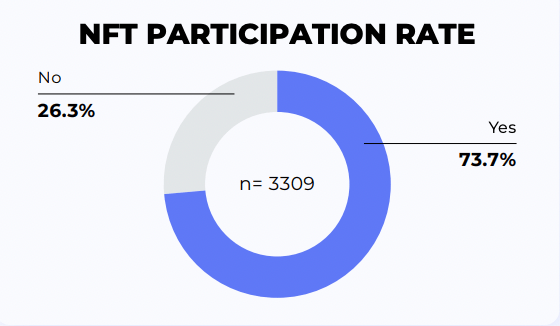
The most common NFT holding period is between 1 to 6 months, accounting for more than two-thirds of respondents.

Compared to other groups, NFT newcomers tend to sell assets earlier.
8. GameFi
Compared to 2022, GameFi players' preferences have shifted, with casual games replacing FPS/TPS as the top choice. There are no significant differences between these sub-markets.

Overall:
Nearly 60% of respondents still hold stablecoins, making up more than half of their portfolios, while 75% expect regulatory governance or intervention.
In Vietnam, investment decisions influenced by friends are a popular trend, with this proportion being 2.5 times higher than in the United States.
Vietnamese citizens have relatively fewer opportunities in investment targets. About 70% of the population lacks bank accounts and cannot access financial services. In reality, only about 33% of citizens have bank accounts. Considering that approximately 70 million citizens collectively own a mobile phone (out of a population of 97 million), this indicates a significant potential for cryptocurrency user adoption, especially in the P2P exchange market.
Moreover, retail investors in Vietnam are largely driven by a gambling nature—most of them cannot access casinos, making the opportunity to invest in crypto digital assets very appealing to meet their needs. They tend to seek wealth accumulation rather than merely hedging against inflation. This is similar to the characteristics of retail investors in China.
Vietnam's Cryptocurrency Regulatory Policies
Regulatory Friendly: Vietnam has not yet integrated cryptocurrencies into its fiat currency system, thus not imposing taxes on cryptocurrencies. Although discussions regarding cryptocurrency regulation are ongoing, changes to the regulatory framework have been limited. Notably, peer-to-peer lending and virtual asset service providers were excluded from the new anti-money laundering law enacted in March this year (Baker & McKenzie, 2023).
Overall, the Vietnamese government maintains a positive attitude toward cryptocurrency regulation. Authorities have not enforced any mandatory regulations beyond prohibiting the use of cryptocurrencies for payment of goods or services. The government has enacted an investment law that clarifies the status of cryptocurrencies as legitimate investment tools, meaning that Vietnamese citizens can legally invest their funds in crypto digital assets. The anti-money laundering (AML) policy effective in 2023 requires organizations providing payment services (such as digital wallet services) to implement KYC measures.
BitcoinVN is the only cryptocurrency exchange regulated by the Vietnam National Securities Commission. (Founded by a Vietnamese-German team)

For the first time in the history of Vietnam's blockchain industry, two formally recognized legal entities have emerged: The first is the Vietnam Blockchain Union (VBU), established by the Vietnam Digital Communication Association (VDCA), officially launched on April 21, 2022. The second is the Vietnam Blockchain Association (VBA), founded a day later according to the decision 343/QD-BNV issued by the Ministry of Home Affairs.

Conclusion
Thanks to favorable government regulatory policies and the investment nature of Vietnamese citizens, Vietnam ranks third globally in cryptocurrency adoption rates (Chainanalysis data from October 2023).
Remittances are another important reason for the success of cryptocurrencies in Vietnam. In 2022, the total remittance to Vietnam increased to approximately $19 billion. This makes Vietnam one of the top three remittance-receiving countries in the Asia-Pacific region and ranks high globally. According to the World Bank, the remittance cost is about 7%, but the cost of using cryptocurrencies is much lower. Additionally, local peer-to-peer networks are popular in Vietnam, eliminating intermediaries. Furthermore, Vietnamese citizens have historically had low trust in the local currency, the Vietnamese dong. Therefore, many choose to hold cryptocurrencies to hedge against issues such as currency depreciation.
Currently, cryptocurrencies are receiving increasing attention in Vietnam, and this interest is not limited to retailers. As mentioned, many new projects are being developed, focusing not only on previous application layers but also on infrastructure platforms, further deepening research and development. At the same time, local technological developments and trends are evolving with global industry changes. Vietnam previously had over a hundred GameFi projects, and now the "Web3 Builder" wave is sweeping in, especially after GM Vietnam 2023.
The high adoption rate of cryptocurrencies and the quality of a skilled workforce are two main reasons attracting foreign projects to develop new businesses in Vietnam. Since the bull market in 2021, most existing investors have continued to invest, leading to a decline in the proportion of new participants. Overall, investors hold a positive outlook on the future of cryptocurrencies, hoping that the market will gradually receive appropriate management to some extent.
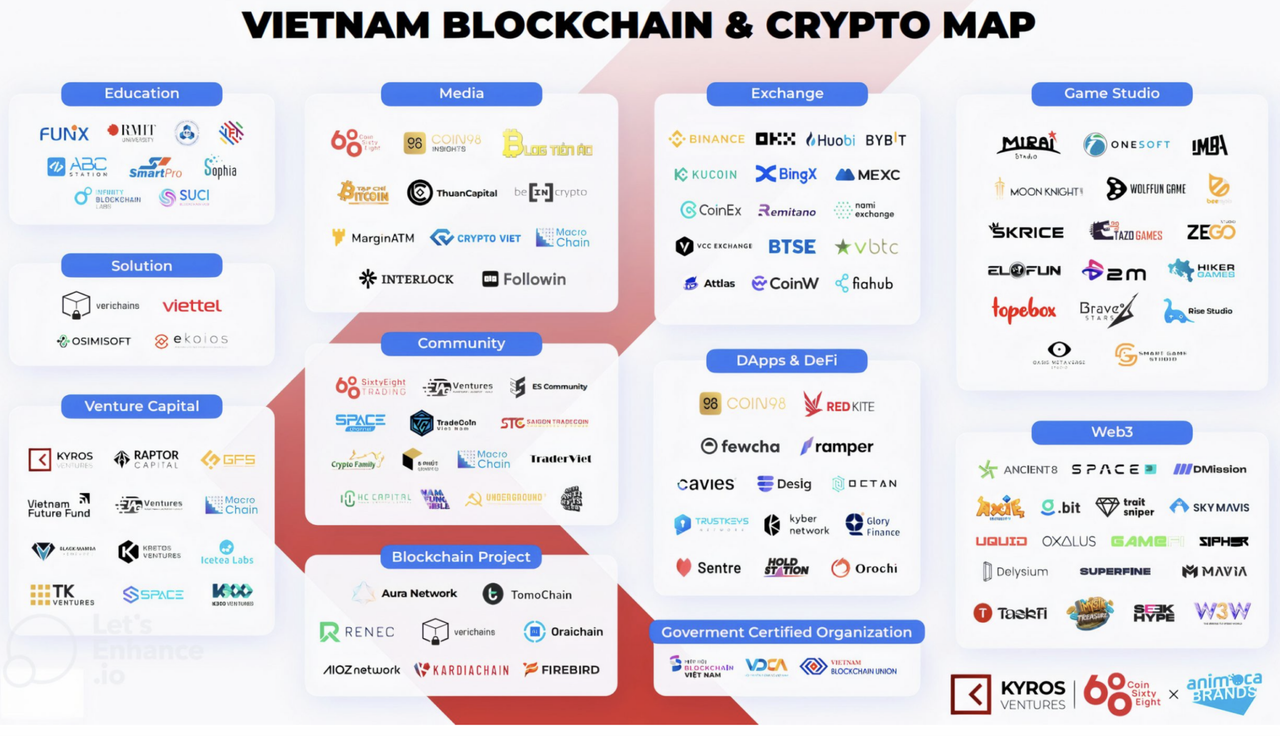
Below is the landscape of blockchain and cryptocurrency projects in Vietnam:
 Risk warning
 Risk warning