








Airdrops are criticized, but Blast wants to be the Apple system in Layer 2

 Surface Stake Layer2, internally aiming to create a full-stack chain.
Author: Jessy, Golden Finance
The multiple PUA users' Blast airdrop has finally come to an end. Airdrops cannot satisfy everyone, and this Blast airdrop was quite generous; basically, anyone who participated in the interaction could receive an airdrop, which was essentially free, although the amount was indeed small, amounting to less than 1U when converted. The largest recipients of the airdrop received about 23 billion points, which could translate to around 50 million tokens. Based on an initial issuance price of $0.03, this amounts to approximately $1.5 million.
The community has criticized this generous airdrop method, especially the "killing of big holders" behavior, which has caused strong dissatisfaction among large holders. X user @Christianeth stated that he deposited $50 million into Blast but only received $100,000 in airdrops. Others have complained about the severe inflation of Blast points.
In recent months, Ethereum Layer 2 projects, including Blast, have faced criticism from users looking to exploit airdrops, and the reasons for their complaints are simple: they did not achieve the expected returns. Indeed, the era of massive returns seen during the ARB period is unlikely to be replicated in the Ethereum ecosystem.
The conclusion of this airdrop marks a transition in the era of airdrops. After the token issuance, the focus should shift to the development of Blast itself. Is founder Tie Shun really a scammer as many say? Is Blast merely a financial scheme?
The Airdrop Issue Is Not Significant
In this round of airdrops, 17% of the total BLAST supply (17 billion tokens) will be allocated to users. The 17% consists of: 7% Blast points, 7% Blast gold points, and 3% for the Blur Foundation.
The specific details are as follows:
Blast Points: 7,000,000,000 (7%). Users who connected ETH or USDB to Blast guided the initial liquidity of the Blast ecosystem and received Blast points in the first phase. These users will receive 7% of the total BLAST supply as a reward.
Blast Gold Points: 7,000,000,000 (7%). Users who contributed to the success of the Dapp will receive Blast gold points and will also receive 7% of the total BLAST supply as a reward.
Vesting: The top 0.1% of users (about 1,000 wallets) will have a portion of their airdrop vested linearly over 6 months. According to the activities of the first phase, vesting must meet a monthly points threshold.
Blur Foundation: 3,000,000,000 (3%). The Blur Foundation will receive 3% of the total BLAST supply for distribution to the Blur community for retrospective and future airdrops.
Currently, the top ranks for individual airdrops are as follows:

From the rankings above, it can be seen that true point holders can indeed receive a significant amount of tokens and rewards, although the behavior of targeting large holders does exist. For instance, X user @Christianeth stated that he deposited $50 million into Blast but only received $100,000 in airdrops.
Since the mainnet launch of Blast in March, there has been considerable criticism regarding the Blast airdrop. At that time, users who staked Ethereum on the testnet found that they needed to transfer their assets and staked points to the mainnet themselves, which required a considerable amount of Gas, sometimes exceeding $50. Blast was also questioned for its contract security; before the mainnet launch, it was merely a smart contract that stated users' funds would be directed to a multi-signature wallet, and once received, these funds would be deposited into Lido for investment.
However, these relatively minor issues did not hinder the development of Blast. This year, the airdrop finally materialized, and it was precisely due to the airdrop method that Blast's marketing succeeded.
What sets Blast apart from previous Layer 2 airdrop methods is that it provides a staking and earning platform. Users deposit mainstream assets into Blast, not only expecting airdrops but also having their assets staked on platforms like LDO for earning.
When users stake tokens in Blast, they are allocated to other staking protocols based on the type of token. For example, if you deposit DAI, Blast will place it in MakerDAO; if you deposit ETH, it will go into Lido. Blast's native stablecoin USDB is used to settle returns back to users.
Blast uses straightforward airdrop incentives to attract users and increase the locked amount on its platform. Moreover, the airdrop incentive method is a simple and aggressive "three-tiered multi-level marketing model," which has been proven effective multiple times. Currently, Blast's TVL ranks third among Ethereum Layer 2 projects, following ARB and Base.
In this light, the impact is undoubtedly effective. Although Blast has faced criticism from users looking to exploit airdrops, the airdrop itself is a win-win situation. Not only for Blast's airdrop, but users should also recognize that the era of exploiting airdrops through numerous accounts at little or no cost has come to a short-term end; now, it is about the amount of capital and the depth of participation.
On the Surface, Stake Layer 2; Inside, Aiming for a Full-Stack Chain
Blast positions itself as a "Stake Layer 2" with a new narrative distinct from other Layer 2s, but it essentially involves Ethereum staking mining and contract mining through Blast users. Users deposit funds into platforms like Lido, and because they deposit through Blast as an intermediary, they can earn airdrop points.
In addition to using airdrop marketing to achieve a super high TVL, Blast's technical implementation itself is also somewhat innovative within Ethereum Layer 2.
While many technical teams continuously optimize their own chains, Tie Shun has directly leveraged OP Stack to rapidly develop the Blast chain, and on this basis, he is laying out a full-stack chain. The Blast Foundation announced that it will undertake this in the second phase and stated that it will collaborate with the community to develop desktop and mobile wallets designed specifically for crypto-native users, aiming to provide a better experience than Metamask and accelerate user adoption through incentives. It is evident that Blast is not satisfied with merely being an L2 public chain; it aims to create a fully integrated full-stack chain from chain to wallet to CEX.
Currently, a commonality among public chains is that they all have similar end-to-end user experiences. Each chain focuses on optimizing the technology of the chain itself while relying on third parties to complete the rest of the stack. This approach is somewhat akin to Android, which optimizes the operating system and relies on third parties to handle the remaining work.
So far, the Android approach has been effective for public chains, but it has also led to a fragmented and friction-filled ecosystem.
In contrast to Android, Apple adopts a full-stack approach. They build everything from software to hardware and optimize across the entire stack. This approach has greatly accelerated the evolution toward mobile and created the world's most valuable mobile ecosystem.
In this regard, what Blast aims to do next is akin to what Apple is doing.
Thus, Tie Shun appears to be a very ambitious developer. Although the price of his NFT market project Blur has been declining, perhaps more attention should be paid to the innovations he is making in the industry and whether they are genuinely being implemented.
 Risk warning Risk warning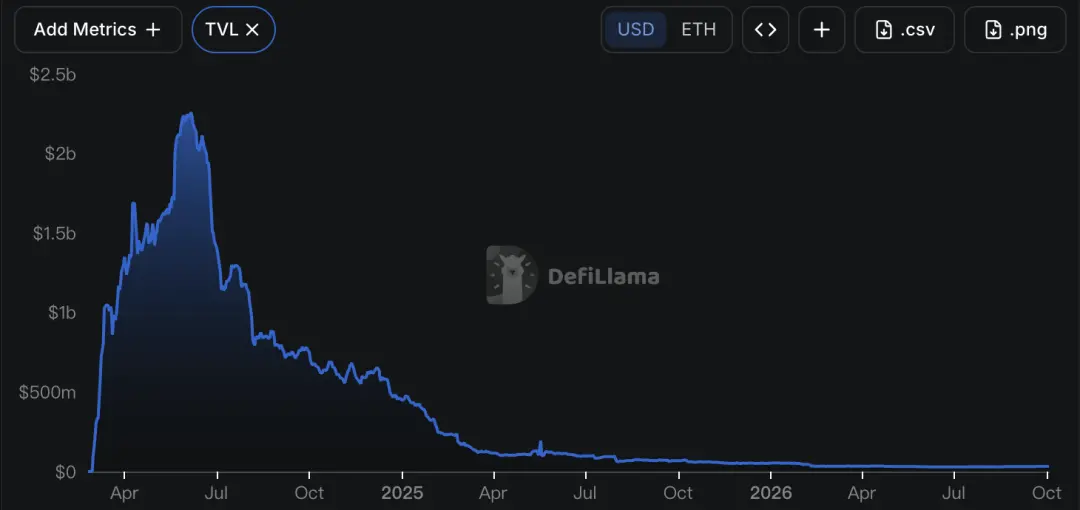




Popular articles





