








Altcoins underperform? Lack of liquidity and dispersion of coins may be the culprits

 A more friendly retail market benefits everyone.
Original source: Miles Deutscher X account
Author: Miles Deutscher
Translation: Shenchao TechFlow
The main fundamental flaws of cryptocurrencies are becoming apparent, which is the primary reason for the poor performance of altcoins in this cycle. Currently, there seems to be no solution, and after digging through all the data, the findings are shocking.
The purpose of this tweet is to provide you with more insights into the biggest issues in cryptocurrency. It will accurately explain how we got here, why prices are behaving this way, and the path forward.
Let me take you back to 2021, when the market was euphoric. New liquidity flooded into the market, primarily driven by newly joined retail investors. The bull market seemed unstoppable, and risk appetite reached its peak.
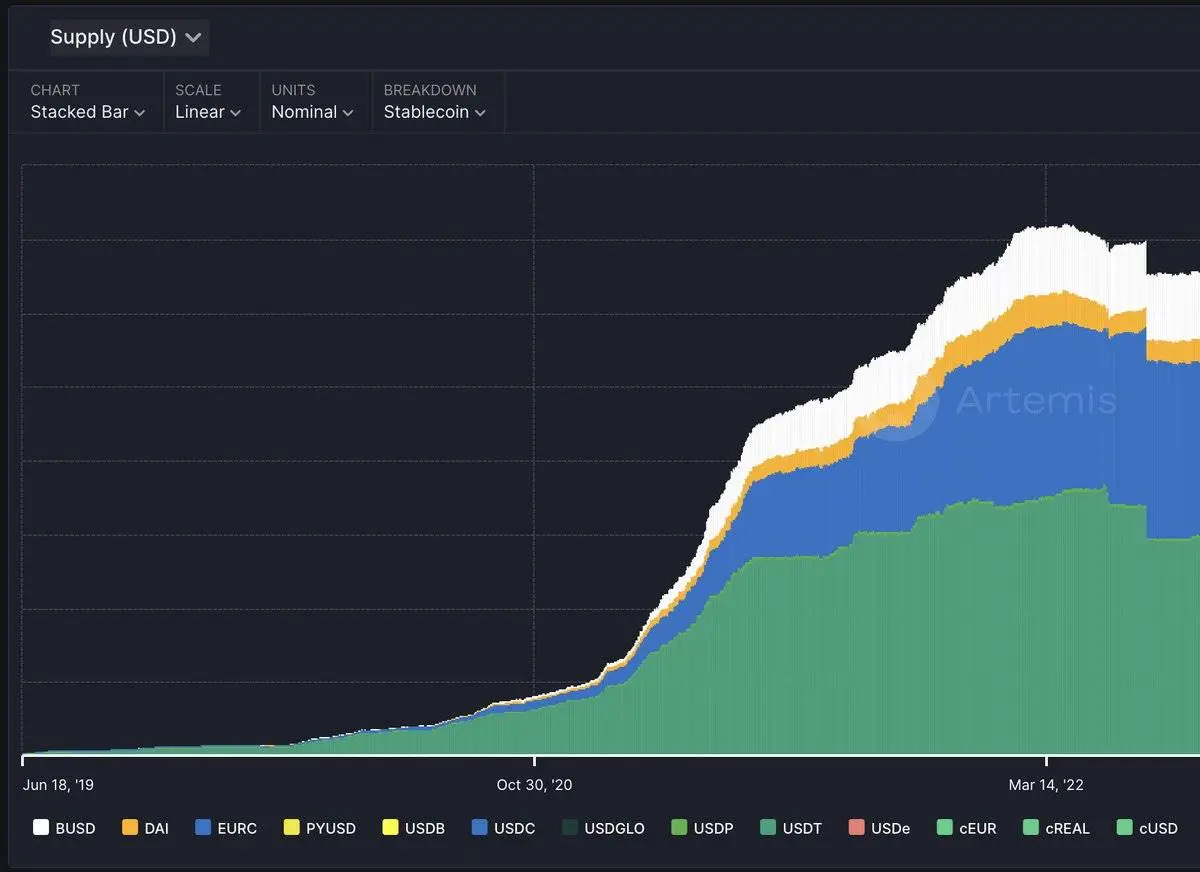
During this time, venture capital firms began pouring unprecedented amounts of money into the space.
Founders and venture capitalists were opportunists just like retail investors.
The increase in investment is a natural response of capitalism to market conditions.
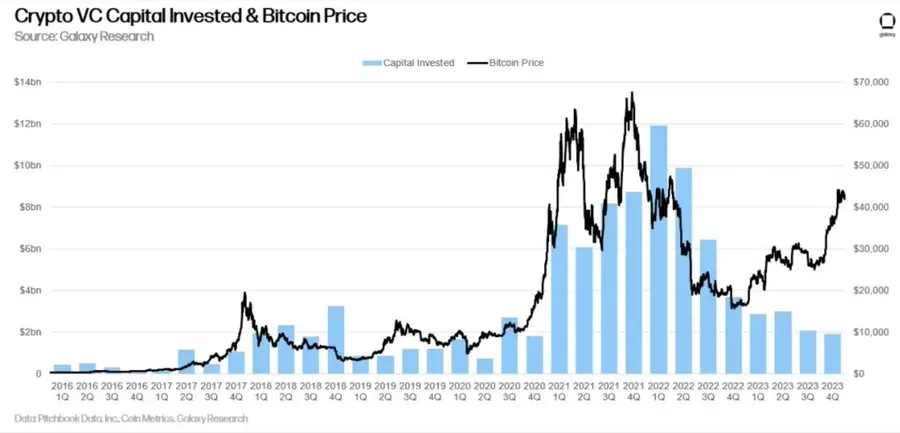
For those unfamiliar with the private equity market, simply put, venture capital firms invest in projects at early stages (usually 6 months to 2 years before launch) at typically lower valuations (with vesting attached). This investment helps fund the development of the project, and venture capital firms often provide other services/connections to help the project launch.
Interestingly, the first quarter of 2022 was the highest quarter for venture capital funding ever (12 billion USD). This marked the beginning of the "bear market" (yes, venture capital firms timed it well).
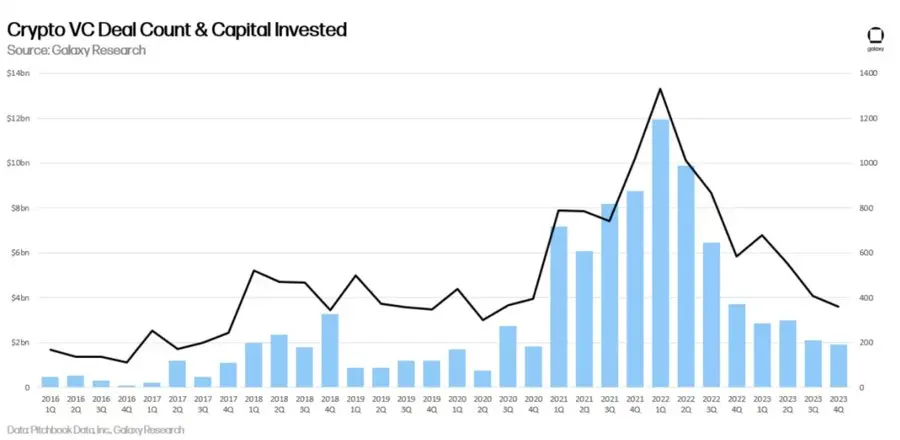
But remember, venture capitalists are just investors; the increase in transaction volume comes from the increase in the number of projects being created.
With low entry barriers and the high upside potential of cryptocurrencies during the bull market, Web3 became a breeding ground for new startups. New tokens emerged one after another, leading to a doubling of the total number of cryptocurrency tokens between 2021 and 2022.
But soon after, the party stopped. A series of contagions, starting with LUNA and ending with FTX, completely destroyed the market. So, what did these projects, which raised all this funding earlier this year, do?
They delayed, time and again. Launching a project in a bear market is akin to a death sentence; low liquidity + bad sentiment + lack of interest meant many new bear market releases were already dead on arrival. Therefore, founders decided to wait for a reversal. It took some time, but eventually------in the fourth quarter of 2023, they got their chance. (Remember, the peak of venture capital was in the first quarter of 2022, which was 18 months ago).
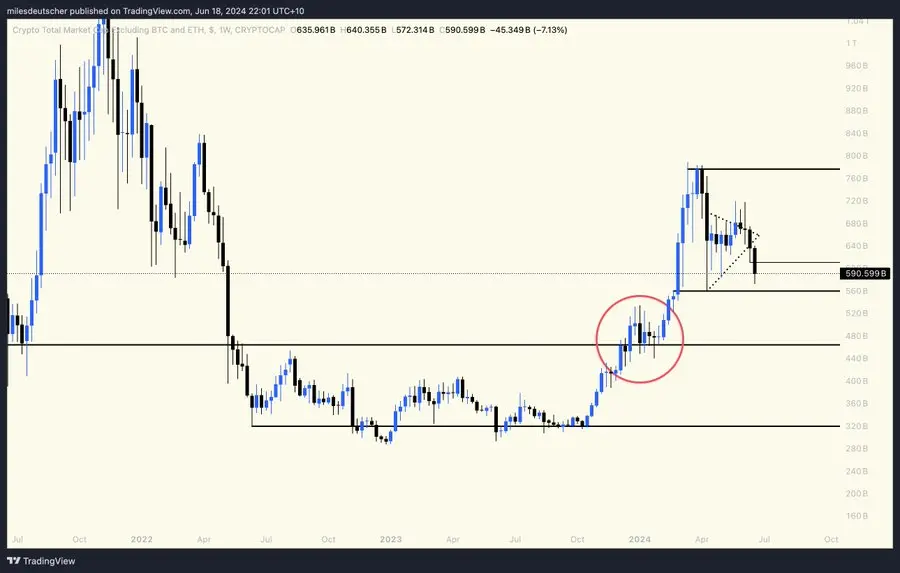
After months of delays, they could finally launch their tokens under better conditions, and they did, one after another.
It wasn't just old projects deciding to launch. Many new players also viewed the new bull market conditions as an opportunity to launch projects and make quick profits. As a result, the number of new products in 2024 reached an all-time high.
Here are some statistics that are simply unbelievable. Since April, over 1 million new cryptocurrency tokens have been launched. (Half of these are meme coins created on the Solana network).
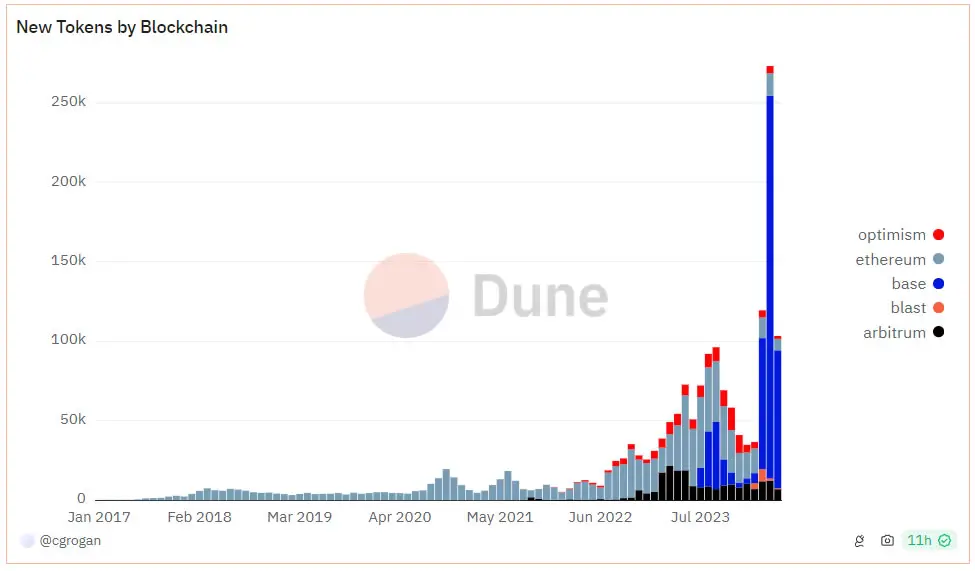
You could argue that these numbers are exaggerated due to the ease of deploying meme coins on-chain. This is indeed true, but it’s still a crazy number.
For more accurate figures, see the chart below from CoinGecko, which excludes many smaller meme coins.
The number of cryptocurrency tokens we currently have is 5.7 times that of the peak during the 2021 bull market.
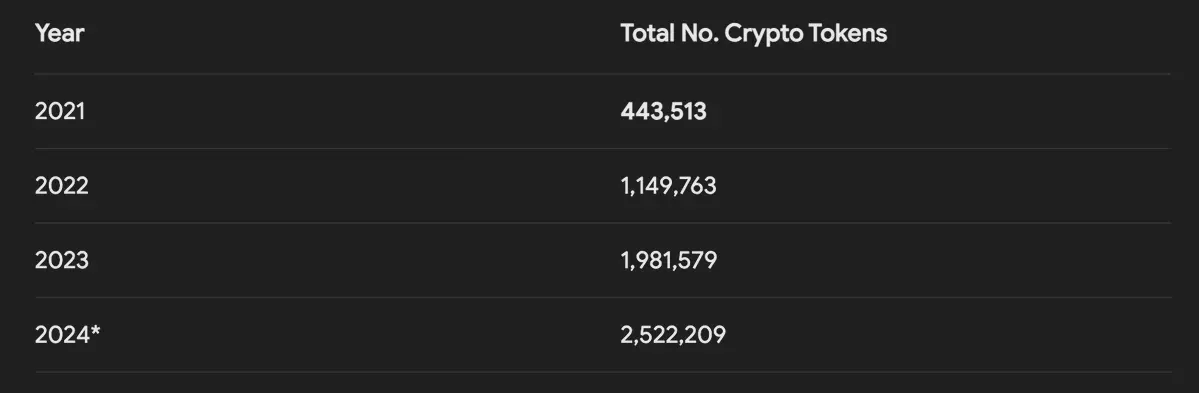
This is a big problem and one of the main reasons why cryptocurrencies have been struggling this year, despite $BTC reaching new all-time highs.
Why?
Because the more tokens that are released, the greater the cumulative supply pressure in the market, and this supply pressure is "compounding."
Many projects from 2021 are still unlocking, and the supply pressure continues to compound in each subsequent year (2022, 2023, 2024).
Current estimates suggest that there is about 150 million to 200 million USD of new supply pressure daily. This ongoing selling pressure has a massive impact on the market.
Think of token dilution as inflation. If a government prints dollars, it correspondingly reduces the purchasing power of the dollar relative to goods and services.
The same applies to cryptocurrencies. If you print more tokens, it correspondingly reduces the purchasing power of the cryptocurrency relative to other currencies (like the dollar).
The dilution of altcoins is essentially the cryptocurrency version of inflation. It’s not just about the number of tokens issued; the low FDV/high circulation mechanisms of many newly launched projects are also a big problem.
Because this leads to a) high dilution, and b) ongoing supply pressure.
If new liquidity were entering the market, all these new releases and supplies would be acceptable. In 2021, there were hundreds of new projects launching daily, and everything was rising. However, that is not the case now. So we find ourselves in the following situation:
A) There isn’t enough new liquidity entering the market;
B) The massive dilution/selling pressure from unlocking.
Now that you know what the problem is, let’s discuss the current issues.
So how can things improve? First, I must emphasize that there needs to be more liquidity in cryptocurrency.
Relatively speaking, there are too many venture capital firms. The imbalance in the private equity market is one of the biggest (and most destructive) problems in cryptocurrency, especially compared to other markets like stocks and real estate. This imbalance becomes a problem because retail investors feel they cannot win. If they feel they cannot win, they won’t participate in the game.
Do you think that’s why meme coins have dominated this year? It’s the only way retail investors feel they have a fighting chance.
Since the price discovery of many high FDV tokens occurs in the private equity market, retail investors have no chance to achieve 10x, 20x, or 50x returns like venture capitalists.
In 2021, you could buy a launchpad token and achieve 100x returns. This round, tokens are launching with market caps of 5 billion, 10 billion, 20 billion or more, and there is no price discovery space in the public market.
Then they start unlocking, and prices keep falling. I don’t have the answer to this problem. It’s a complex issue with many participants who can make changes.
However, I have some ideas.
Exchanges could implement better token distribution.
Teams could prioritize community allocation and provide larger pools for real users.
A higher percentage could be unlocked at launch (possibly implementing measures like tiered sell taxes to prevent dumping).
Even if insiders don’t force changes, the market will eventually do so. The market always self-adjusts and corrects, and the diminishing effectiveness of current meta data and public reaction may change the situation in the future.
Ultimately, a more retail-friendly market benefits everyone. It benefits projects, venture capital firms, exchanges, and more users.
Most of the current problems are symptoms of short-sightedness (and the industry still being in its early stages). Additionally, on the exchange side, I would like to see exchanges be more pragmatic. One way to offset the massive new listings/dilution is to equally ruthlessly delist. Let’s clear out the 10,000 dead projects that are still soaking up valuable liquidity.
The market needs to give retail investors a reason to come back, which would at least solve half the problem. Whether it’s the rise of $BTC, $ETH ETFs, changes in the macro environment, or killer applications that people genuinely want to use. There are still many potential catalysts.
I hope I’ve been able to explain what has been happening recently to those who are confused by the recent price movements. Dilution is not the only problem, but it is certainly a major issue that needs to be discussed.
 Risk warning Risk warning




Popular articles





