In-depth analysis of the reasons behind the 8.5 crash: Bank of Japan's interest rate hike and the exit of "Mrs. Watanabe."

 Overall, the core reason for the significant pullback of risk assets led by U.S. tech stocks in this round is the aggressive interest rate hikes by the Bank of Japan, which have rendered many yen carry trade paths ineffective or exposed to greater risks. "Mrs. Watanabe" is unwinding positions to repay yen-denominated debts and reduce risks. However, considering the relationship within the U.S.-Japan alliance, the factors that will truly dominate the long-term market trends are still the monetary policy of the Federal Reserve. Therefore, before the U.S. lowers interest rates, everyone should remain patient.
Author:++@Web3Mario(https://x.com/web3_mario)++
Abstract: This week, I have been studying some APIs related to Telegram Bots, and the framework for the TON contracts has basically been completed. I was a bit happy about this, but the entire cryptocurrency market's crash on Monday really cast a shadow over my mood. I had some expectations for this outcome, but I didn't expect it to come so quickly and violently. Therefore, I organized some of my views to share with everyone, hoping that you can stabilize your mindset and not let panic affect your investment decisions.
Overall, the core reason for the significant pullback of risk assets, led by U.S. tech stocks, is the aggressive interest rate hikes by the Bank of Japan, which have rendered many yen carry trade paths ineffective or facing significant risks, specifically in three areas: exchange rate volatility, interest rate reversal, and liquidity risk. In the face of these risks, "Mrs. Watanabe" is unwinding positions to repay yen debts and reduce risks. However, considering the relationship within the U.S.-Japan alliance, the factors that truly dominate the long-term market trends are still the monetary policy of the Federal Reserve. Therefore, before the U.S. lowers interest rates, everyone should remain patient, and of course, appropriate adjustments to leverage are still necessary.
Abenomics and Japan's Long-Term Negative Interest Rate Environment Make Yen a Key Financing and Carry Trade Asset Globally
I believe that even those with a little economic background are familiar with the so-called "Lost Two Decades of Japan." After the bursting of Japan's bubble economy in the early 1990s, the economy fell into a long-term stagnation, entering what is known as the "Lost Decades." During this period, economic growth was slow, and both corporate and personal investment willingness was low, leading to persistent deflation. To cope with the economic downturn, the Bank of Japan began implementing low-interest rate policies in the late 1990s, lowering the benchmark interest rate to near zero, hoping to stimulate economic activity by reducing borrowing costs. As the effectiveness of traditional monetary policy tools diminished,
This is the background against which former Prime Minister Shinzo Abe introduced a series of economic policies after his second term began in 2012. The core goal of these policies was to stimulate economic growth, end long-term deflation, and address structural problems in the Japanese economy. The core framework of Abenomics consists of "three arrows," and here I will briefly introduce its bold monetary policy, which mainly includes two aspects: first, the Bank of Japan implemented a large-scale quantitative easing policy. This means that the Bank of Japan injects a large amount of money into the market by purchasing government bonds and other assets to lower interest rates and increase liquidity. Second, the Bank of Japan officially introduced a negative interest rate policy in 2016. This policy aims to further reduce interbank borrowing costs, encouraging more funds to flow into the real economy, thereby boosting consumption and investment and raising inflation expectations. The so-called "negative interest rate" here refers not to the lender having to pay interest to the borrower, but rather to the real interest rate being negative, meaning that the interest is lower than the domestic inflation rate.
In this context, a type of arbitrage trade gradually became popular, known as the yen carry trade (JPY Carry Trade). The market has given a very interesting name to traders engaging in this arbitrage trade: "Mrs. Watanabe." The so-called yen carry trade refers to an investment strategy based on interest rate differentials. Its basic principle is to borrow in a low-interest currency (such as the yen) and then invest the funds in a high-interest currency or high-yield assets to earn the interest differential. The operational principle is as follows:
- Borrow yen: Since Japan's interest rates are very low (sometimes even close to zero), investors can borrow yen at a very low cost.
- Exchange for high-yield currency: Convert the borrowed yen into another currency with a higher interest rate, such as the Australian dollar or New Zealand dollar.
- Invest in high-yield assets: Then invest this money in bonds, deposits, or other assets in the high-yield currency country to earn higher interest income.
- Interest differential income: The investor's profit comes from the difference between the borrowing cost (low-interest yen loans) and the investment income (high-interest assets).
In fact, this interest differential arbitrage trade is also widely distributed in the DeFi field, with a typical example being the LSD - ETH interest differential arbitrage, where st ETH is used as collateral on lending platforms like Compound to borrow ETH, which is then exchanged back into st ETH. If the borrowing rate for ETH is lower than the yield of st ETH throughout the process, there is room for interest differential arbitrage. The same applies in the yen carry trade market. Typically, there are two operational paths: the first is to use dollar assets as collateral to borrow yen and directly purchase high-dividend stocks of Japan's five major trading companies. This has actually been one of Buffett's core investment portfolios in recent years. The second is to borrow yen and then sell it for dollars, purchasing some high-interest financial instruments, such as U.S. stocks and bonds. This is similar to the circular lending strategy introduced earlier in DeFi.
This type of trading became exceptionally popular as the U.S. officially entered its interest rate hike cycle in 2022. As the Federal Reserve raised interest rates, major global economies began to enter their own interest rate hike cycles to stabilize exchange rates and avoid capital outflows, with only Japan continuing to adhere to its low-interest rate policy, making the yen the primary low-cost financing source during the tightening cycle. Of course, some may argue that the interest rates for the renminbi are also very low, but considering the entire international political context and the dividends of China's financial sovereignty, the renminbi is not suitable as a carry trade asset. Therefore, it can be said that during this tightening cycle, the reason why the "Seven Sisters of Tech" market in the U.S. continues to thrive is closely related to the support from the yen.
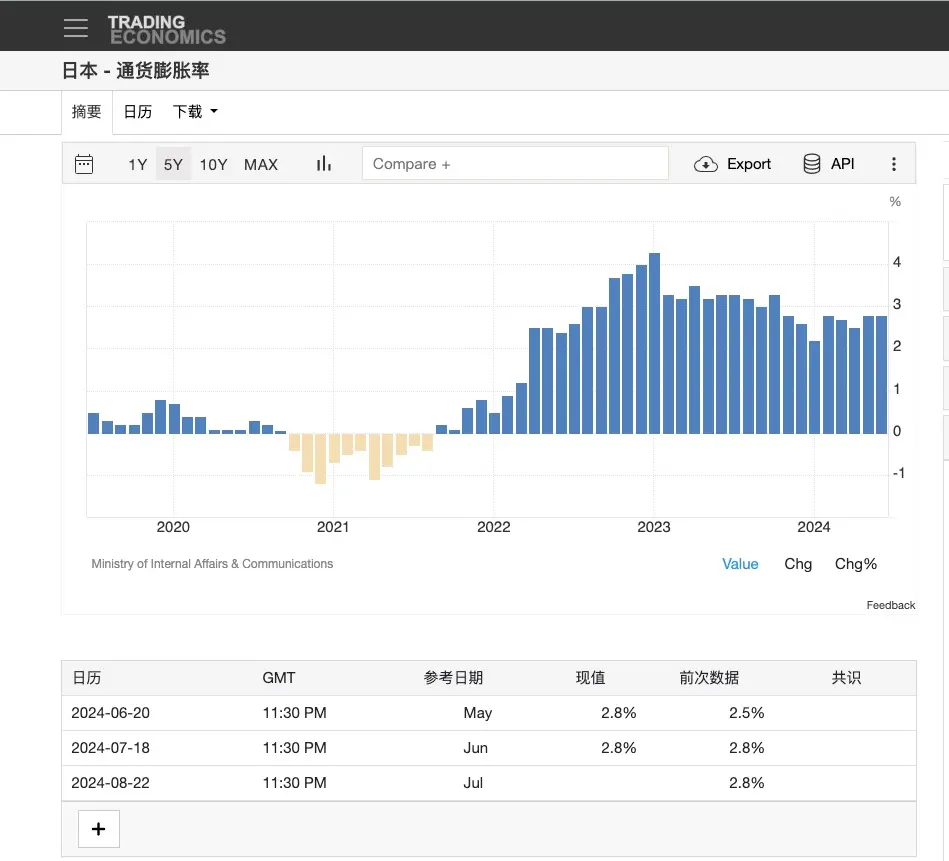
The impact of this on Japan has both positive and negative aspects. On the positive side, due to the existence of the "Buffett carry trade path," Japanese stocks have experienced a long-term growth phase. This has brought about a rare "wealth effect" in Japan. We know that the vitality of an economy is mainly built on the wealth effect; only when the public can easily acquire wealth and maintain optimism about future returns are they willing to leverage investments or consumption. This is how economic vitality is created. With the drive from foreign capital, Japan has sparked a surge in "Nikkei Special Valuation," leading to a wealth effect that has officially transitioned Japan from long-term deflation to moderate inflation, which can be said to have realized the original vision of Abenomics.
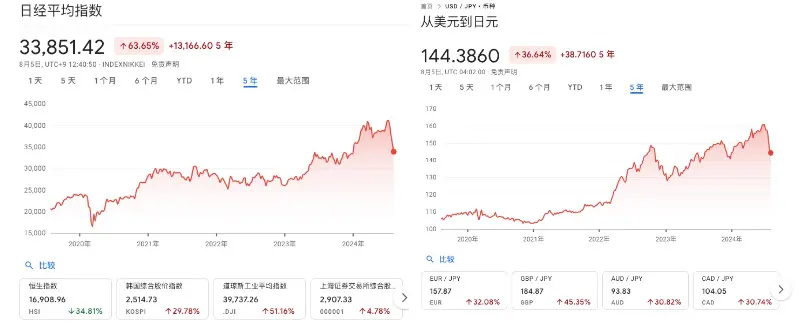
On the other hand, the existence of another carry trade path has led to a large amount of yen being exchanged for dollars to purchase dollar assets, resulting in a long-term depreciation trend of the yen against the dollar. From 2021 to 2024, the dollar-yen exchange rate rose from a low of 103 to 160, with the yen depreciating by more than 60%. However, considering that the volatility of currency exchange rates does not have such a strong impact on the sense of gain for the domestic population, even under such depreciation, inflation in Japan has been steadily increasing.
The Bank of Japan's Forward Guidance and the Speculative Market's Confrontation Recently Came to an End, Leading to a V-Shaped Reversal for the Yen
After more than two years of this trend, a reversal has recently occurred, naturally stemming from the conclusion of the U.S. interest rate hike cycle. At the beginning of 2024, the newly appointed Governor of the Bank of Japan, Kazuo Ueda, reversed the negative interest rate policy of his predecessor, Haruhiko Kuroda, and began to provide forward guidance for interest rate hikes to the market. However, the market seemed skeptical and chose to confront the Bank of Japan, resulting in the yen depreciating past 160 in the first half of this year. One interpretation of the underlying reason is that the speculative market does not recognize the sustainability of Japan's inflation and believes that once the U.S. enters a rate-cutting cycle, Japan will revert to its old deflationary ways.
Another interpretation stems from a complex hedging demand within the yen interest differential arbitrage path, with Nvidia being the core of this path. Simply put, Japanese electronics and chip stocks have a strong correlation with Taiwanese semiconductors and Nvidia, which is related to both political and industrial transfer backgrounds. Therefore, for a long time, buying Japanese chip stocks has been an important channel for capturing alpha returns in the AI sector. However, entering 2024, the U.S. stock market has shown a clear trend of "shrinking circles," with capital concentrating on leading companies, specifically Nvidia. This has caused Japanese chip stocks to gradually decouple from Nvidia, and to avoid losing future alpha returns by selling Japanese electronics stocks, many funds have developed a hedging demand, making selling yen and buying Nvidia a good choice. This viewpoint is drawn from an economist I greatly admire, Fu Peng. If you're interested, you can read this logic in his public account.
But regardless of the reasons, this confrontation officially ended last Wednesday when the Bank of Japan raised interest rates by 15 basis points, far exceeding market expectations. The market has thus officially welcomed a reversal, as evidenced by the rapid appreciation of the dollar-yen exchange rate from 160 to 143 at the time of writing. Consequently, the yen carry trade has officially come to an end, with many traders beginning to unwind their positions. This has led to a large amount of dollar-denominated risk assets being sold and converted back into yen for debt repayment.
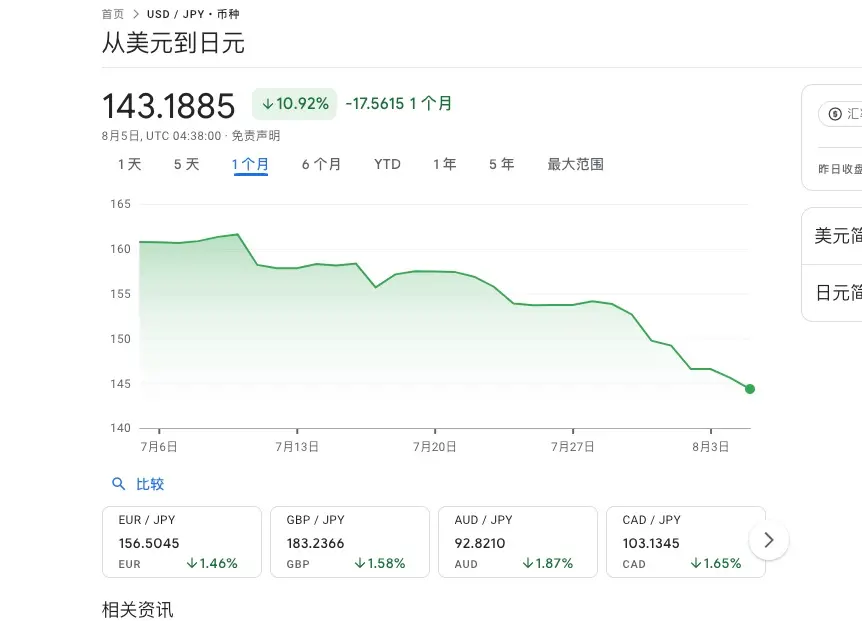
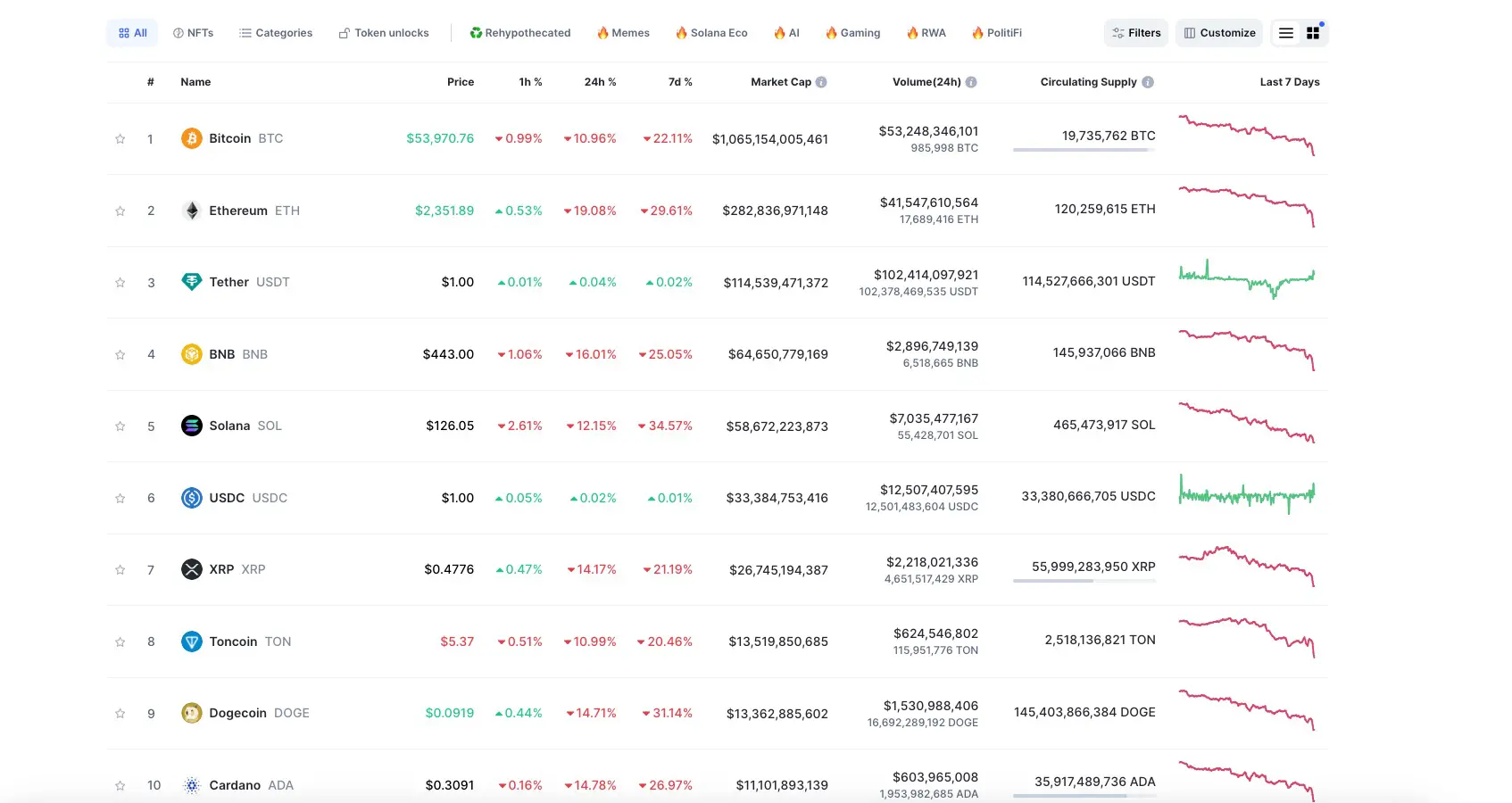
Thus, we can see that after the weekend, the market fully digested the news of Japan's interest rate hike, and the unwinding of positions officially reached a climax. This is the source of the cryptocurrency asset crash on August 5. One piece of evidence that can illustrate this issue is that during this round of decline, the drop in yield-bearing assets was significantly greater than that of zero-yield assets like Bitcoin, specifically referring to ETH. This is because they are the core targets of interest differential arbitrage.
In the U.S.-Japan Alliance, the Bank of Japan is the Coordinating Party, While the Dollar Truly Influences Future Trends
Here, I would like to briefly look ahead at future trends. I still hope that everyone will not be frightened by this pullback because, although the scale of yen carry trades is not small, I believe that in the U.S.-Japan alliance, Japan is actually the coordinating party. The reason for the recent announcement of interest rate hikes is merely to align with U.S. monetary policy. We know that the reason the U.S. has not entered a recession early and why the Federal Reserve has been slow to cut rates is due to the vibrancy of the U.S. stock market. Even though small and medium-sized enterprises are crying out in distress, the wealth effect brought by the "Seven Sisters of Tech," specifically Nvidia, has kept the U.S. GDP driven by the financial sector from showing a significant recession. If the U.S. were to hastily cut rates, it would greatly stimulate the risk market, likely leading to a resurgence of inflation, which is clearly unacceptable.
However, considering the current economic situation in the U.S., it has no choice but to lower interest rates, so a reason for the Federal Reserve to cut rates needs to be found, and that reason is actually the pullback in U.S. stocks. Therefore, it is not difficult to understand the Bank of Japan's actions to align with this policy. So when the U.S. officially enters a rate-cutting cycle, with liquidity easing again, cryptocurrency assets will undoubtedly welcome a recovery. Therefore, everyone should remain patient and optimistic about the future. Of course, for those with high leverage, appropriately reducing leverage is also an unavoidable choice.
 Risk warning
 Risk warning