RWA - The New Wave of the DeFi World

 Blockchain technology is regarded as a disruptive technology, but it does not have a significant consumer interface like emerging technologies such as electric vehicles, ChatGPT, or the Metaverse, making it difficult to perceive its innovations at first glance. However, what sets blockchain apart is its involvement in the transfer of value and its entry into the realm of currency.
Introduction
Blockchain technology is regarded as a disruptive technology, but it does not have a prominent consumer interface like emerging technologies such as electric vehicles, ChatGPT, or the Metaverse, making it difficult to perceive its innovations at first glance. However, what sets blockchain apart is its involvement in the transfer of value and its entry into the realm of currency.
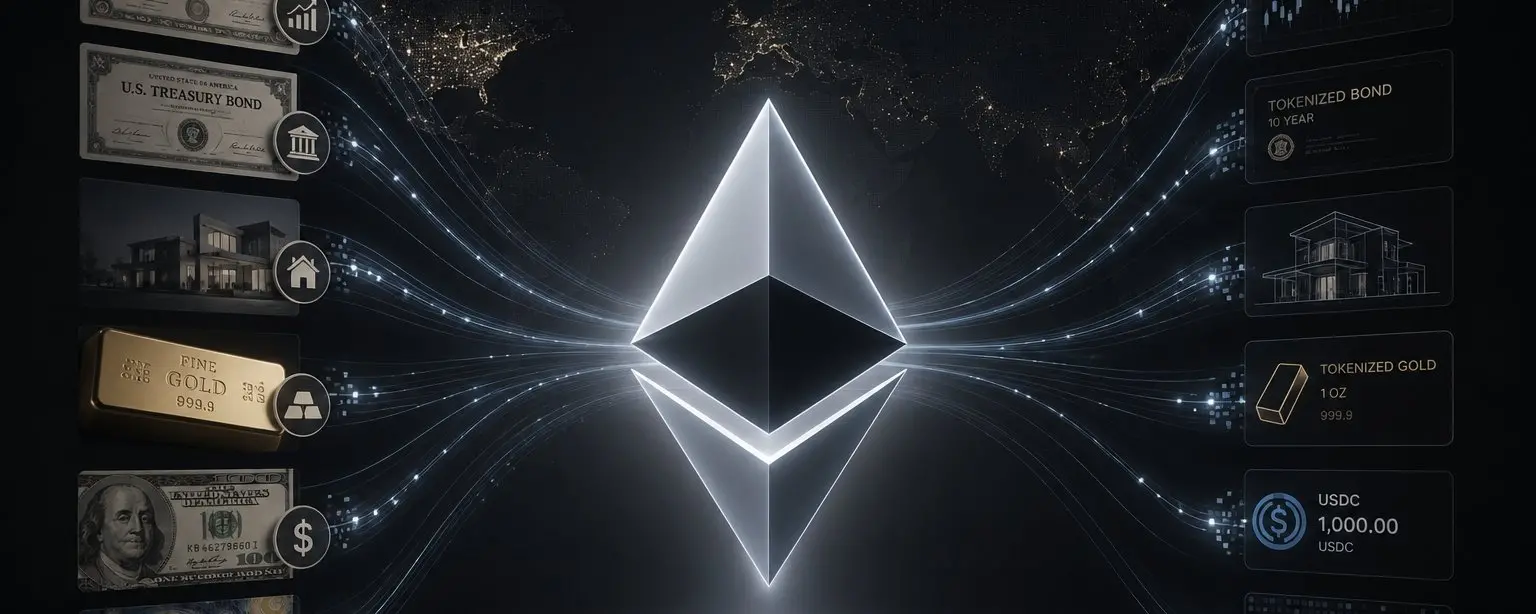
Blockchain technology has a rich array of application scenarios and is currently widely used in areas such as DeFi, GameFi, and SocialFi. The successful application of blockchain technology will enable it to have over 1 billion end users, many of whom may not even realize they are using this technology. The tokenization of digital assets will drive a market worth tens of trillions of dollars in the future, including CBDCs, stablecoins, and the tokenization of real assets. This will trigger innovations at both legal and technical levels, including privacy solutions, cross-chain technologies, and legal smart contracts.
Reasons for the Birth of RWA
As the risk-free interest rates in traditional financial markets rise and the investment returns in DeFi decline, investors have begun to flock to the U.S. bond market. To expand market size and provide users with sustainable and stable returns, DeFi protocols have introduced real-world assets (RWA) as a source of collateral or new investment opportunities. This shift means that DeFi will no longer be limited to digital assets but will also include real-world assets. This move further promotes the integration between DeFi and traditional finance, providing investors with more diversified choices.
Traditional financial giants are also actively positioning themselves in RWA, with Goldman Sachs launching GS Dap to tokenize traditional assets, and Siemens issuing a $60 million bond using RWA. Citigroup even pointed out in its report "Money, Tokens, and Games" that RWA will be a game-changer driving the blockchain industry into a multi-trillion dollar scale, as almost any asset that can be represented in value can be tokenized. Optimistically, it is projected that by 2030, the scale of RWA will reach $4 trillion.
RWA introduces physical assets from the real world into the on-chain financial ecosystem, involving numerous real assets such as real estate, commodities, and artworks, making them representable on the blockchain and using these digital assets as collateral to issue on-chain credit. Furthermore, by using physical assets as collateral, the on-chain credit market can become more stable and less risky compared to other forms of cryptocurrency lending.
Overview of the Traditional Fixed Asset Market
Currently, a significant portion of global wealth is tied up in illiquid assets that are difficult to monetize. A survey conducted in the U.S. in 1997 showed that among all taxpayer-held assets, about 5,646 assets had a net value between $600,000 and $1 million, all of which fell into the category of illiquid assets. Under similar conditions, illiquid assets are typically traded at a discount, characterized by high stock levels, high liquidity ratios, lower trading volumes, and imperfect value assessments.
Illiquid assets mainly include real estate (such as home equity), natural resources, land, bulk commodities, public infrastructure (such as mines and ports), artworks, infrastructure projects, private equity, and more. Additionally, many other asset classes are only accessible to a limited number of wealthy investors and institutions due to investment scale restrictions, such as publicly traded stocks, hedge funds, infrastructure projects, bulk commodities, and other alternative investment tools, private credit, etc. It is expected that by 2030, the total scale of tokenized global illiquid assets will reach $16 trillion. 
Data Source: BCG analysis: The relevance of on-chain asset tokenization in the 'crypto winter'
The main reasons for the lack of asset liquidity include:
For ordinary investors, the asset scale is large (ranging from $250,000 to $5 million), and their capacity is limited; this depends on the asset type, such as real estate, bonds, hedge funds, etc.;
Fixed utility cannot be divided (for example, 100 investors sharing a single house);
Lack of wealth management expertise, leading to information gaps for retail/high-net-worth individual investors (e.g., livestock, plantations, alternative investments, etc.);
Strict access conditions;
Regulatory restrictions;
Complex user pathways for access (e.g., KYC and payments spread across multiple platforms without a single customer interface);
Lack of existing scalable technological solutions to unlock the liquidity of these assets.
Motivation for Introducing RWA into the Crypto World
With rising U.S. Treasury yields and declining DeFi yields, institutions are seeking lower-risk, high-yield products, making DeFi, which is susceptible to token volatility and technical security issues, no longer the first choice for investors. Currently, one of the main motivations for bringing real-world assets into the crypto world is that real-world assets can provide a stable, risk-free return for the crypto market. DeFi protocols capture the income-generating value of underlying assets through RWA projects, essentially establishing a dollar-based asset class with underlying assets that have real yields, similar in logic to LSD establishing yield-bearing assets based on ETH.
Moreover, most mature RWA projects are currently built on the unilateral demand for real-world assets from DeFi protocols. This demand comes from various aspects, including:
1. Asset Management Demand
Traditional on-chain yields mainly come from staking, trading, and lending activities. However, during downturns in the crypto market, the inactivity of on-chain activities directly leads to a decline in on-chain yields. In the current context of high yields on U.S. Treasury bonds, some traditional DeFi protocols have begun to gradually introduce U.S. Treasury bonds. This helps secure treasury assets while obtaining stable returns.
2. Portfolio Diversification
During extreme market volatility, the high volatility and correlation of crypto-native assets can easily lead to asset mismatches and liquidations. Introducing RWA assets that have lower correlation and stability with on-chain crypto-native assets can effectively mitigate these issues, allowing investors to achieve diversified asset allocation and build more robust and effective investment portfolios.
3. Introduction of New Asset Classes
Integrating DeFi Lego with RWA can further unlock the potential of RWA assets.
Advantages and Disadvantages of RWA
RWA provides an opportunity to improve the shortcomings of illiquid fixed assets. RWA helps to re-match investors with investment opportunities in an end-to-end process and facilitates investors in discovering secondary market opportunities after investment completion.

Data Source: BCG analysis: The relevance of on-chain asset tokenization in the 'crypto winter'
Advantages of RWA
RWA brings many benefits to financial assets, primarily reflected in the improved efficiency of clearing, settlement, custody, and asset services.
- Increased Liquidity
RWA makes high-value illiquid assets more liquid. It enables the fragmentation of asset ownership, making transactions, ownership transfers, and record updates easier. This not only lowers the investment threshold but also meets personalized asset needs, such as selling or pledging only a small portion of an asset while retaining the rest for appreciation and income. Tokenization provides investors with decentralized opportunities to participate in investments in high-quality global assets.
- Enhanced Operational Efficiency
The distribution process on the blockchain is transparent, eliminating intermediaries, allowing anyone with internet access to easily own assets.
- Lowered Barriers to Entry
RWA can help individuals access assets that were previously only available to institutional clients or high-net-worth investors.
- Potential User Base
The demographic accepting RWA tends to be younger, more interested in technology, and has diverse backgrounds, making them potential clients for traditional financial institutions.
- Reduced Financing Barriers
Tokenization opens new financing avenues for small and medium-sized enterprises and other assets that struggle to obtain financing.
- Improved Operational Efficiency
Smart contracts make the issuance, trading, and subsequent processes more efficient and rapid, thus reducing communication costs among parties.
- Innovation in Financial Products
The combinability of RWA assets promotes innovation in financial products, allowing for the mixing and combining of real-world assets, financial assets, and digital assets. Asset and wealth management companies can create more diverse and flexible portfolios.
- Minimization of Trust and Maximization of Transparency
RWA reduces reliance on trust in counterparties through the automated execution and recording of transactions via smart contracts.
- Efficiency and Security of Blockchain Technology
RWA also provides more robust risk management and clear ownership through blockchain technology.
Disadvantages of RWA
Increasing regulatory scrutiny, regional differences, and related governance uncertainties may prolong the path to cross-border tokenization: Regulatory differences across multiple major markets require multiple revisions or adjustments to operational models, thereby extending the path to expansion;
Lack of a coordinated plan to enhance awareness and adoption rates among investors for new products;
The technology associated with RWA is not yet mature: Issues arising from DLT risks, platform risks, coding errors in smart contracts, cybersecurity, etc., continue to emerge;
Investors' acceptance of RWA remains low: Although demand for asset tokenization continues to grow, this demand is still not strong enough among some investors.
Pathway for On-Chain RWA Assets
According to a report by Binance Research, the implementation process of RWA is divided into three stages: (1) Off-chain Packaging; (2) Information Bridging; (3) RWA Protocol Demand and Supply.

Source: https://research.binance.com/en/analysis/real-world-assets-s
Off-Chain Formalization
To bring real-world assets into DeFi, these assets must first be packaged off-chain to digitize, financialize, and ensure compliance, clarifying details regarding asset value, ownership, and legal protections of asset rights.
This process requires clarifying the following key points:
Representation of Economic Value: The economic value of assets can be represented in various ways.
Legitimacy of Ownership and Title: The ownership of assets must be clearly defined through deeds, mortgages, notes, or other legal forms.
Legal Support: There must be clear legal procedures in cases involving changes in asset ownership or rights.
Information Bridging
This process includes:
Tokenization: After the information from off-chain packaging is digitized, it is brought on-chain, using metadata in digital tokens to represent it. This metadata is open to everyone and can be accessed via the blockchain, achieving complete transparency of the asset's economic value and ownership. Different types of assets can correspond to different DeFi protocol standards.
Regulatory Technology/Securitization: For assets that need to be regulated or considered securities, they can be introduced to DeFi in a legally compliant manner.
Oracles: For real-world assets, external data needs to be referenced to accurately reflect the asset's value. However, since blockchains cannot directly access external data, oracles are needed to connect on-chain data with real-world information, providing data such as off-chain asset values to DeFi protocols.
RWA Protocol Demand and Supply
RWA protocols drive the entire process of tokenizing real-world assets, combining supply and demand. On the supply side, DeFi protocols oversee the formation of RWA, while on the demand side, DeFi protocols promote investor demand for RWA.
Conclusion
The cryptocurrency field has always been controversial, as it seems to have yet to fully demonstrate its actual value to the real world. However, the emergence of RWA changes this situation, drawing the attention of traditional financial giants and enterprises because they see the potential benefits of RWA in enhancing the liquidity of real assets. In particular, connecting real assets with blockchain technology can provide investors with more diversified investment choices. In the short term, the current participants and audience for RWA are mainly concentrated among institutions and enterprises, while general investors have yet to find appropriate entry points. In the long term, RWA offers broad prospects for connecting traditional finance and crypto finance, filled with innovative space. As a financial innovation, we need to closely monitor the development of RWA and remain vigilant about related risks; the RWA field still requires more experimentation and exploration.
References:
Moneys, Tokens and Games / Kathleen Boyle, CFA, Managing Editor, Citi GPS
Real-world-assets Relevance of on-chain asset tokenization in 'crypto winter' BCG, ADDX
https://research.binance.com/en/analysis/real-world-assets
Author: Snow
Translator: Sonia
Article Review: Edward, Wayne, Elisa, Ashley He, Joyce
Copyright © Gate.io.
 Risk warning Risk warning