








Report Interpretation: How does the U.S. Treasury Department's think tank view stablecoins?

 Interpret how stablecoins have evolved from "on-chain cash" to an important variable influencing U.S. fiscal policy.
Source: TBAC
Author: Deep Tide TechFlow
Stablecoins have undoubtedly become a hot topic in the crypto market over the past week.
First, the U.S. GENIUS stablecoin bill passed the Senate procedural vote, and then the Hong Kong Legislative Council passed the "Stablecoin Regulation Bill" in the third reading. Stablecoins have now become an important variable in the global financial system.
In the U.S., the future development of stablecoins not only concerns the prosperity of the digital asset market but may also have profound impacts on government bond demand, bank deposit liquidity, and the hegemony of the U.S. dollar.
A month before the passage of the GENIUS bill, the U.S. Treasury's "think tank"—the Treasury Borrowing Advisory Committee (TBAC)—released a report that delved into the potential impacts of stablecoin expansion on U.S. fiscal and financial stability.
As an important part of the Treasury's debt financing plan, TBAC's recommendations not only directly influence the issuance strategy of U.S. government bonds but may also indirectly shape the regulatory path for stablecoins.
So, how does TBAC view the growth of stablecoins? Will the perspectives of this think tank influence the Treasury's debt management decisions?
We will use TBAC's latest report as a starting point to interpret how stablecoins have evolved from "on-chain cash" to an important variable influencing U.S. fiscal policy.
TBAC, the Fiscal Think Tank
First, let’s introduce TBAC.
TBAC is a consulting committee that provides economic observations and debt management advice to the Treasury, composed of senior representatives from buy-side and sell-side financial institutions, including banks, broker-dealers, asset management companies, hedge funds, and insurance companies. It is also an important part of the Treasury's debt financing plan.
TBAC Meetings
TBAC meetings primarily provide financing advice to the U.S. Treasury and are an important part of the Treasury's debt financing plan. The quarterly financing process of the U.S. Treasury includes three stages:
1) The Treasury debt manager solicits advice from primary dealers;
2) After meetings with major dealers, the Treasury debt manager seeks advice from TBAC; TBAC will issue a formal report to the Secretary of the Treasury regarding the questions and discussion materials proposed by the Treasury;
3) The Treasury debt manager makes decisions on changes to debt management policy based on research analysis and advice received from the private sector.
Report Summary: Impact on U.S. Banks, Treasury Market, and Money Supply
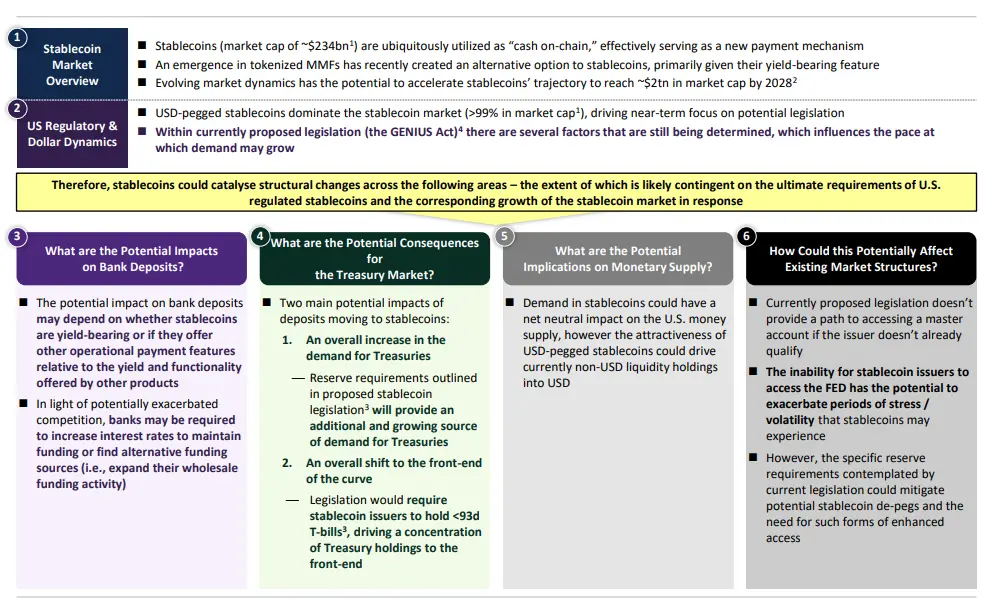
Bank Deposits: The impact of stablecoins on bank deposits depends on whether they have yield functionality and their operational payment characteristics compared to other financial products. In a context of increasing competition, banks may need to raise interest rates to retain funds or seek alternative financing sources.
Treasury Market: The overall increase in demand for Treasury bonds, along with reserve requirements in stablecoin legislation, will provide an additional and growing source of demand for Treasury bonds; the overall shortening of Treasury bond holding periods, due to legislative requirements for stablecoin issuers to hold Treasury bills with maturities of less than 93 days, leads to a concentration of Treasury holdings in the short term.
Money Supply: The demand for stablecoins may have a net neutral impact on U.S. money supply. However, the appeal of stablecoins pegged to the dollar may shift current non-dollar liquidity holdings towards dollars.
Impact on Existing Market Structure: Current legislative proposals fail to provide a pathway for ineligible issuers to access master accounts. Stablecoin issuers' inability to access the Federal Reserve may exacerbate risks during periods of stress or volatility.
Digital Currency Current Diversification Realization: From Private to Central Bank Panorama
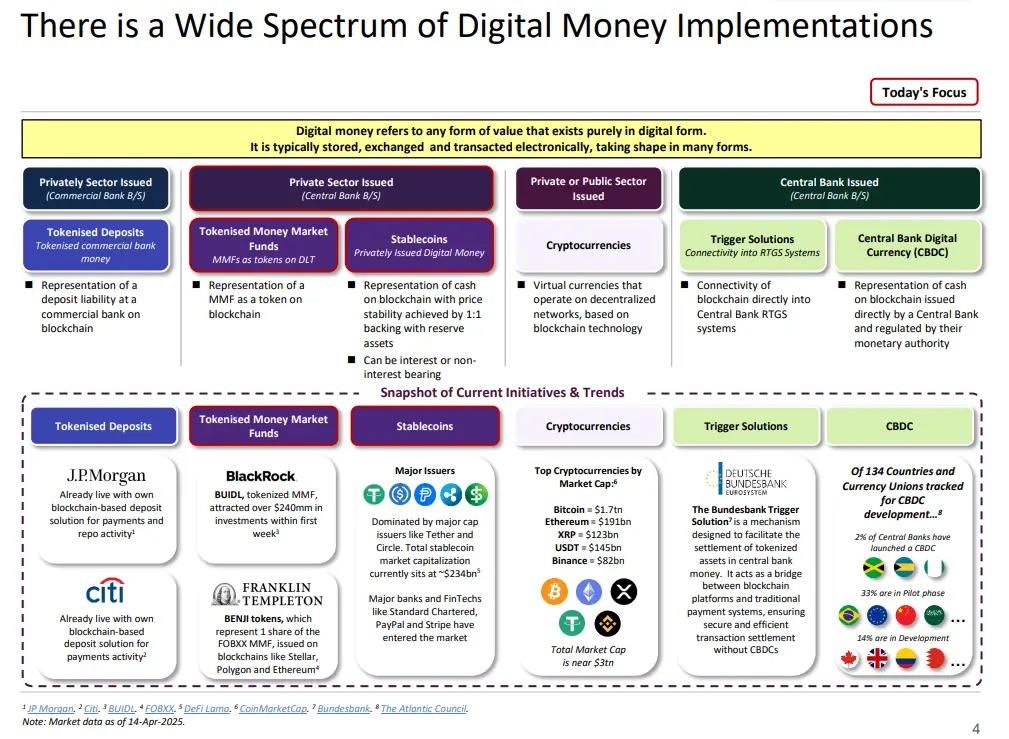
This chart provides us with a panoramic view of digital currencies, showcasing their diverse realization paths and practical applications across various fields.
- Classification of Digital Currencies
Private Sector Issuance (Commercial Bank Balance Sheets)
Tokenized Deposits: Blockchain representation of commercial bank deposit liabilities.
Tokenized Money Market Funds: Blockchain-based tokenization of money market funds.
Private Sector Issuance (Central Bank Balance Sheets)
Stablecoins: Blockchain cash forms backed by 1:1 reserve assets, which can be interest-bearing or non-interest-bearing.
Private or Public Sector Issuance
Cryptocurrencies: Virtual currencies based on decentralized networks.
Central Bank Issuance
Trigger Solutions: Connection between blockchain and central bank real-time gross settlement systems (RTGS).
CBDC (Central Bank Digital Currency): Blockchain cash forms directly issued and regulated by central banks.
- Current Market Trends
Tokenized Deposits
J.P. Morgan and Citi have launched blockchain-based payment and repo activity solutions.
Tokenized Money Market Funds
BlackRock's BUIDL has attracted over $240 million in investment.
Franklin Templeton launched the BENJI token, supporting Stellar, Polygon, and Ethereum blockchains.
Stablecoins
The market is dominated by major issuers like Tether and Circle, with a total market cap of approximately $234 billion.
Cryptocurrencies
The total market cap is close to $3 trillion, with mainstream coins including Bitcoin ($1.7 trillion) and Ethereum ($191 billion).
Trigger Solutions
The mechanism launched by the German central bank facilitates the settlement of blockchain assets with traditional payment systems.
CBDC
Among the 134 tracked countries and currency unions, 25% have launched, 33% are in pilot stages, and 48% are still in development.
Current State of the Stablecoin Market: Market Cap and Key Events Overview
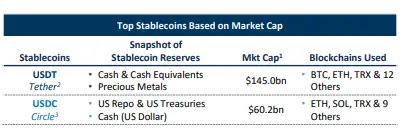
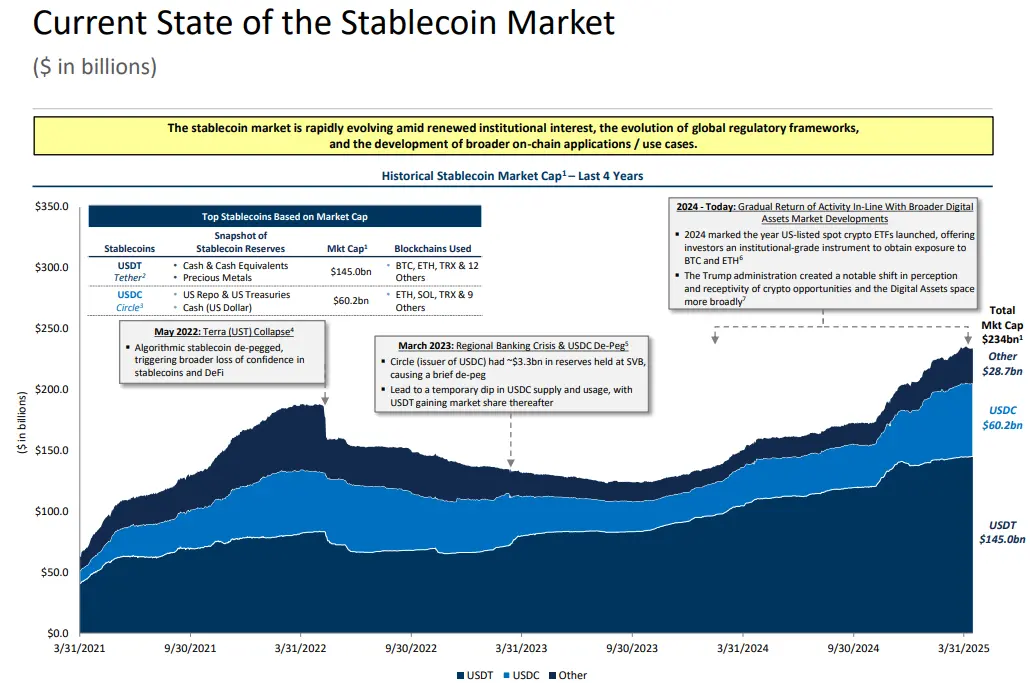
The stablecoin market has experienced significant volatility and development in recent years. As of April 14, 2025, the total market cap has reached $234 billion, with USDT (Tether) dominating at $145 billion, followed by USDC (Circle) at $60.2 billion, and other stablecoins totaling $28.7 billion.
Looking back over the past four years, two major events in the stablecoin market have become watershed moments for the industry's development.
In May 2022, the collapse of the algorithmic stablecoin UST triggered a crisis of confidence across the entire DeFi sector. The de-pegging of UST not only raised doubts about the feasibility of algorithmic stablecoins but also affected market confidence in other stablecoins.
Subsequently, the regional banking crisis in March 2023 once again threw the market into turmoil. At that time, Circle, the issuer of USDC, had approximately $3.3 billion in reserves frozen at Silicon Valley Bank (SVB), leading to a brief de-pegging of USDC. This event prompted the market to reassess the reserve transparency and safety of stablecoins, while USDT further solidified its market share during this period.
Despite experiencing multiple crises, the stablecoin market gradually recovered in 2024 and kept pace with the broader digital asset market's development. In 2024, the U.S. launched its first spot crypto ETFs, providing institutional investors with tools to access BTC and ETH.
Currently, the growth of the stablecoin market is primarily attributed to three factors: increased institutional investment interest, the gradual improvement of global regulatory frameworks, and the continuous expansion of on-chain application scenarios.
Digital Money Market Funds and Stablecoins: A Comparison of Two On-Chain Assets
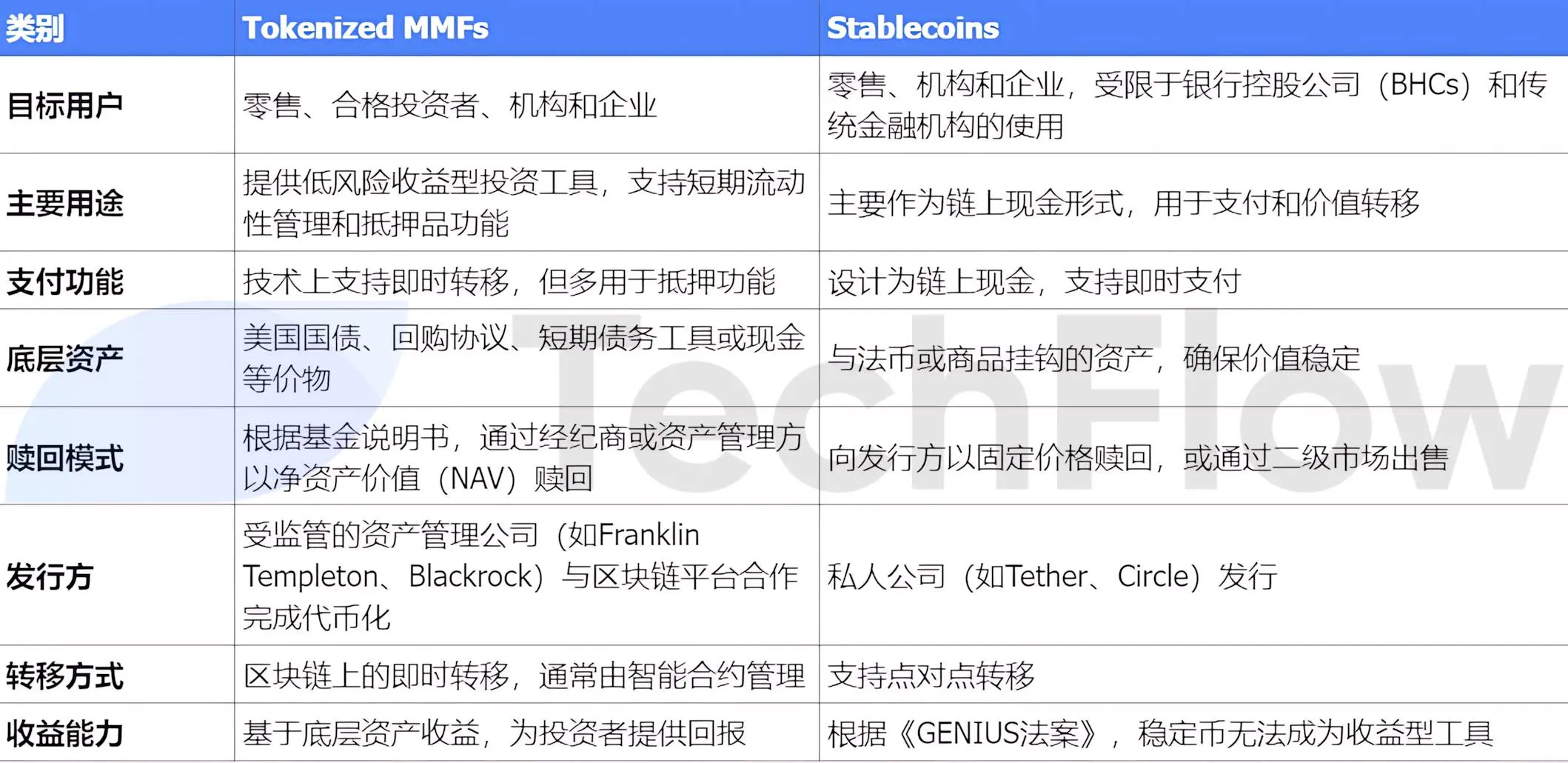
With the rapid growth of Digital Money Market Funds (Tokenized Money Market Funds, or MMFs), a narrative of alternatives to stablecoins is gradually forming. Although both have similar use cases, a significant difference is that stablecoins cannot become yield-generating tools under the current GENIUS Act, while MMFs can provide returns to investors through underlying assets.
Market Potential: From $230 Billion to $2 Trillion
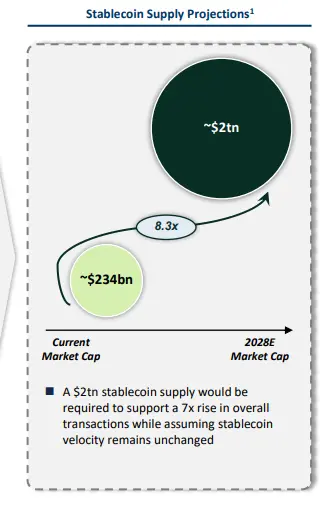
The report suggests that the market cap of stablecoins is expected to reach approximately $2 trillion by 2028. This growth trajectory relies not only on the natural expansion of market demand but is also driven by various key factors, which can be categorized into three main types: adoption, economics, and regulation.
Adoption: Participation of financial institutions, on-chain migration of wholesale market trading, and merchant support for stablecoin payments are gradually pushing stablecoins to become mainstream payment and trading tools.
Economics: The value storage function of stablecoins is being redefined, especially with the rise of interest-bearing stablecoins, providing holders with the potential for yield generation.
Regulation: If stablecoins can be incorporated into capital and liquidity management frameworks and gain permission for banks to operate on public chains, their legitimacy and credibility will be further enhanced.
(Note: At the time the report was released, the stablecoin bill had not yet passed and was in the voting process.)
It is expected that by 2028, the stablecoin market size will grow from the current $234 billion to $2 trillion. This growth requires a significant increase in trading volume, assuming the velocity of stablecoin circulation remains unchanged.
The Market Dominance of Dollar-Pegged Stablecoins
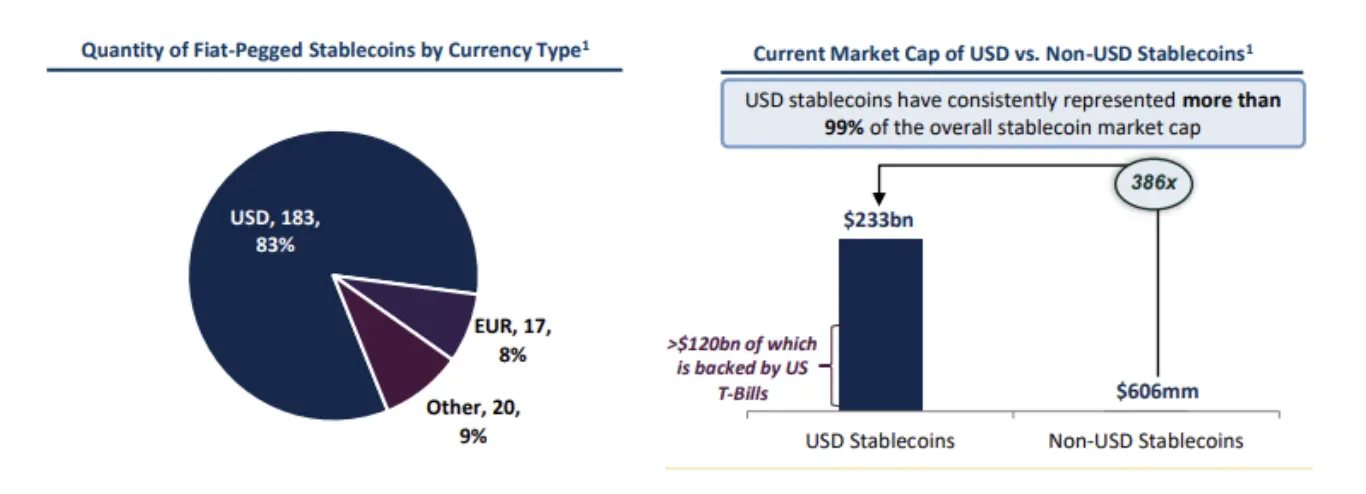
USD stablecoins account for 83% of the total fiat-pegged stablecoins, far exceeding other currencies (EUR accounts for 8%, others account for 9%).
In the overall stablecoin market cap, USD stablecoins represent over 99%, with a market cap of $233 billion, of which approximately $120 billion is backed by U.S. Treasury securities. The market cap of non-USD stablecoins is only $606 million.
The market size of USD stablecoins is 386 times that of non-USD stablecoins, indicating their absolute dominance in the global stablecoin market.
Potential Impact of Stablecoin Growth on Bank Deposits
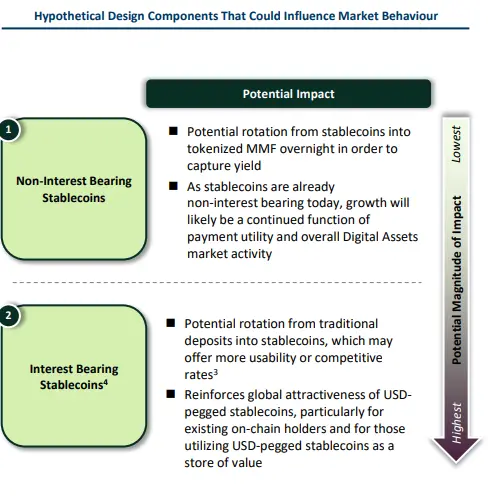
The growth of stablecoins may have a significant impact on bank deposits, particularly whether they are designed to pay interest, which will be a key factor.
As of the fourth quarter of 2024, the total deposit size in the U.S. reached $17.8 trillion, with non-transaction deposits (including savings accounts and time deposits) making up the majority, at $8.3 trillion and $2.9 trillion, respectively. Transaction deposits include demand deposits ($5.7 trillion) and other non-transaction deposits ($0.9 trillion).
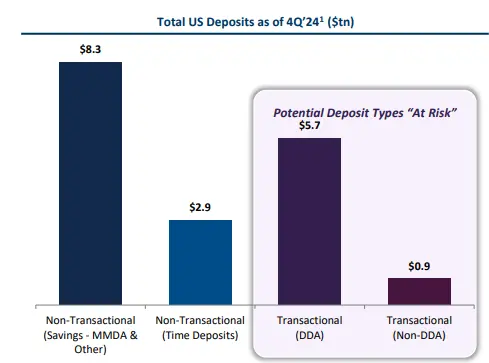
Among these deposits, transaction deposits are considered the most "vulnerable," meaning they are more susceptible to the impact of stablecoins. This is because such deposits typically do not pay interest, are mainly used for daily activities, and are easily transferable. Uninsured deposits are often moved to higher-yielding or lower-risk instruments, such as money market funds (MMFs), during periods of market uncertainty.
If stablecoins do not pay interest, their growth will primarily rely on payment functionality and the overall activity of the digital asset market, thus having a limited impact on bank deposits. However, if stablecoins begin to pay interest, especially offering higher yields or convenience, traditional deposits may be significantly transferred to such stablecoins. In this case, USD-pegged interest-bearing stablecoins would not only attract on-chain users but also become important tools for value storage, further enhancing their global appeal.
In summary, the interest characteristics of stablecoin design will directly influence the potential impact on bank deposits:
Non-interest-bearing stablecoins have relatively small impacts, while interest-bearing stablecoins may significantly alter the deposit landscape.
Potential Impact of Stablecoin Growth on U.S. Treasury Securities
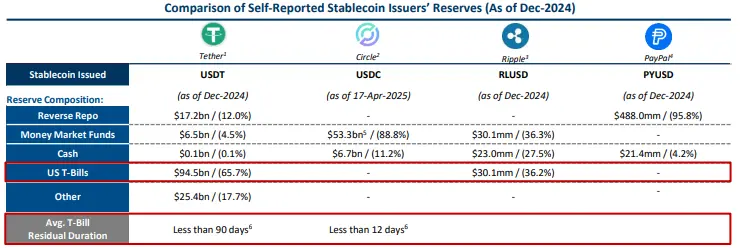
According to publicly available reserve data, major stablecoin issuers currently hold over $120 billion in short-term Treasury bills (T-Bills), with Tether (USDT) having the highest proportion, approximately 65.7% of reserves allocated to T-Bills. This trend indicates that stablecoin issuers have become important participants in the short-term Treasury market.
In the future, the demand from stablecoin issuers for T-Bills is expected to be closely related to the overall expansion of market instruments.
In the coming years, this demand may further boost approximately $900 billion in short-term Treasury demand.
The growth of stablecoins and bank deposits exists in a mutually exclusive relationship. A significant amount of funds may flow from bank deposits to assets supported by stablecoins, especially during periods of market volatility or crises of confidence (such as stablecoin de-pegging), this transfer may be further amplified.
The requirements of the U.S. GENIUS Act for short-term Treasury securities may further drive stablecoin issuers' allocation to T-Bills.
From a market size perspective, in 2024, stablecoin issuers are expected to hold T-Bills worth approximately $120 billion, which may grow to $1 trillion by 2028, representing an increase of 8.3 times. In contrast, the current market size of tokenized government securities is only $2.9 billion, indicating significant growth potential.
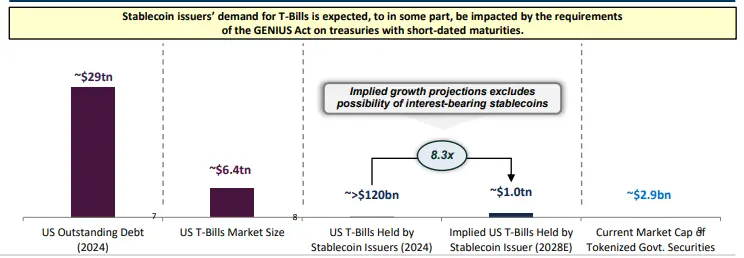
In summary, the demand from stablecoin issuers for T-Bills is reshaping the ecology of the short-term Treasury market, but this growth may also intensify competition between bank deposits and market liquidity.
Potential Impact of Stablecoin Growth on U.S. Money Supply Growth
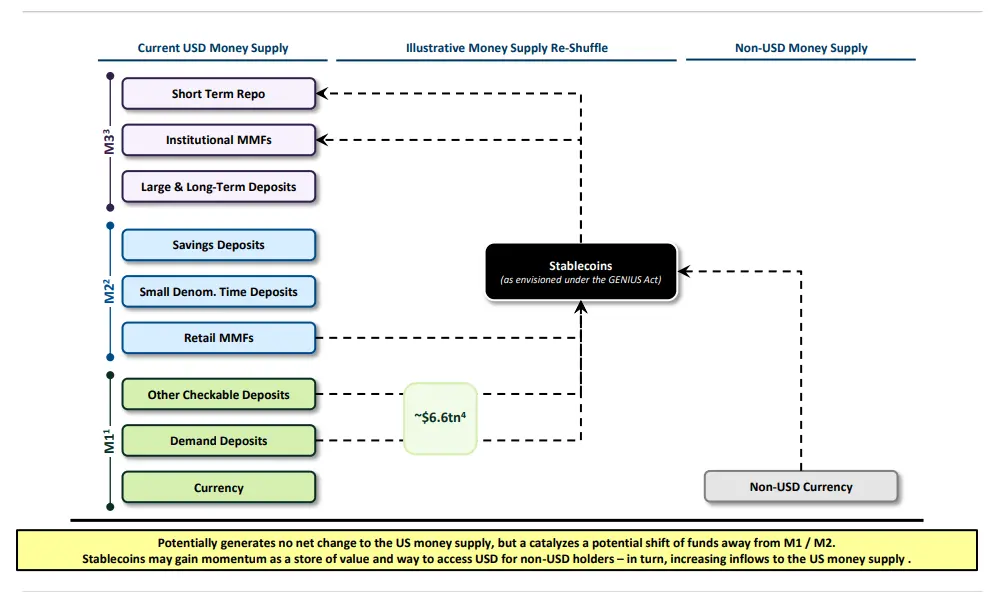
The impact of stablecoin growth on U.S. money supply (M1, M2, and M3) primarily manifests in the potential transfer of funds rather than direct changes in total volume.
- Current Money Supply Structure:
M1 includes currency in circulation, demand deposits, and other checkable deposits, totaling approximately $6.6 trillion.
M2 includes savings deposits, small time deposits, and retail money market funds (MMFs).
M3 includes short-term repurchase agreements, institutional MMFs, and large long-term deposits.
- Role of Stablecoins:
Stablecoins are seen as a new means of value storage, particularly under the framework of the GENIUS Act.
Stablecoins may attract some funds out of M1 and M2, shifting towards stablecoin holders, especially non-dollar holders.
Potential Impacts
- Transfer of Funds:
The growth of stablecoins may not directly change the total amount of U.S. money supply but will lead to a transfer of funds from M1 and M2. This transfer may affect bank liquidity and the attractiveness of traditional deposits.
- International Impact:
As a means of obtaining dollars, stablecoins may increase non-dollar holders' demand for dollars, thereby increasing inflows into U.S. money supply. This trend may promote the use and acceptance of stablecoins globally.
Although the growth of stablecoins will not immediately change the total U.S. money supply, their potential as a means of value storage and currency acquisition may have profound impacts on fund flows and international demand for dollars. This phenomenon needs to be addressed in policy-making and financial regulation to ensure the stability of the financial system.
Possible Directions for Future Stablecoin Regulation
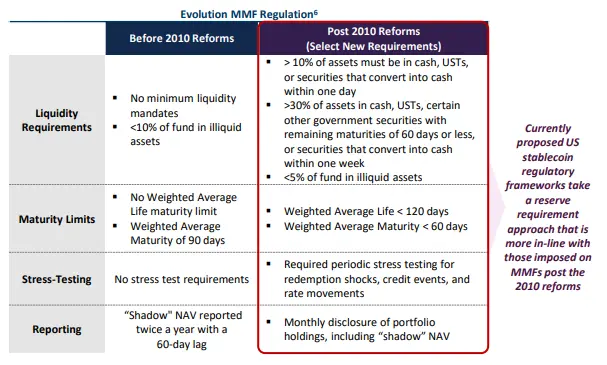
The current proposed regulatory framework for stablecoins in the U.S. is similar to the reform requirements for MMFs after 2010, focusing on:
Reserve Requirements: Ensuring the high liquidity and safety of stablecoin reserves.
Market Access: Exploring whether stablecoin issuers can gain access to Federal Reserve (FED) support, deposit insurance, or 24/7 repo markets.
These measures aim to reduce the risk of stablecoin de-pegging and enhance market stability.
Conclusion
- Market Size Potential
The stablecoin market is expected to grow to approximately $2 trillion by 2030 under continuous market and regulatory breakthroughs.
- Dominance of Dollar Pegging
The stablecoin market is primarily composed of dollar-pegged stablecoins, which shifts the recent focus to the potential U.S. regulatory framework and its legislative acceleration of stablecoin growth.
- Impact and Opportunities for Traditional Banks
Stablecoins may pose a threat to traditional banks by attracting deposits, but they also create opportunities for banks and financial institutions to develop innovative services and benefit from the use of blockchain technology.
- Profound Impact of Stablecoin Design and Adoption
The ultimate design and adoption of stablecoins will determine their impact on the traditional banking system and their potential to drive demand for U.S. Treasury securities.
 Risk warning
 Risk warning



Popular articles





