








SignalPlus Macro Analysis Special Edition: Opening Salvo
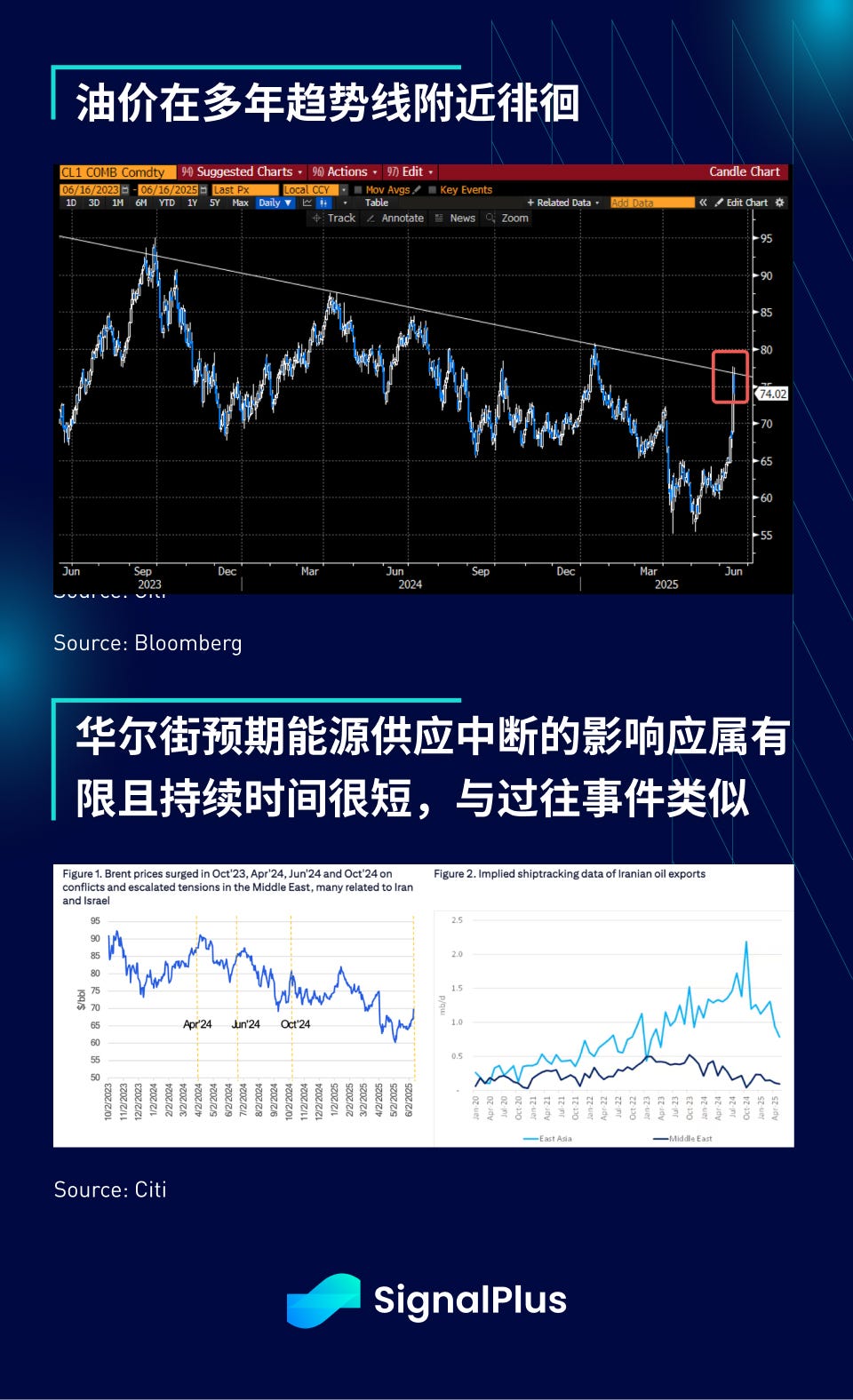
 Geopolitics has once again become the focus of the market. Israel launched attacks on Iranian facilities, followed by Iran's retaliation, leading to a surge in oil prices and weakening market risk sentiment last Friday. The market is concerned about the risks of escalating conflict, particularly the possibility of Iran blocking the Strait of Hormuz and potential U.S. intervention, which will affect oil prices during the peak driving season in the U.S. summer.
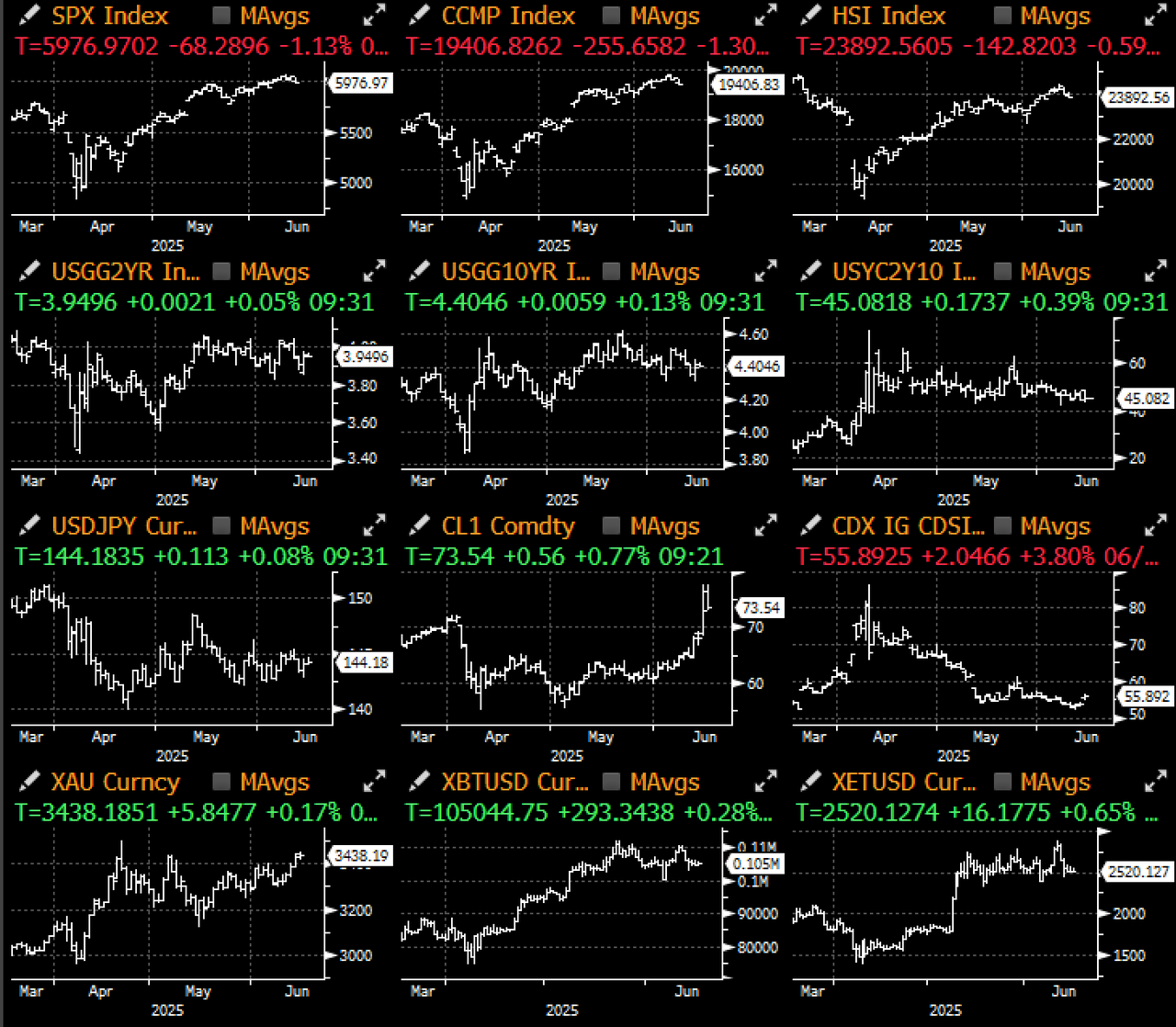
Geopolitics has once again become the market focus. Israel launched attacks on Iranian facilities, followed by Iran's retaliation, leading to a surge in oil prices and weakening market risk sentiment last Friday. The market is concerned about the risks of escalating conflict, particularly the possibility of Iran blocking the Strait of Hormuz and potential U.S. intervention, which will affect oil prices during the peak driving season in the U.S. summer.
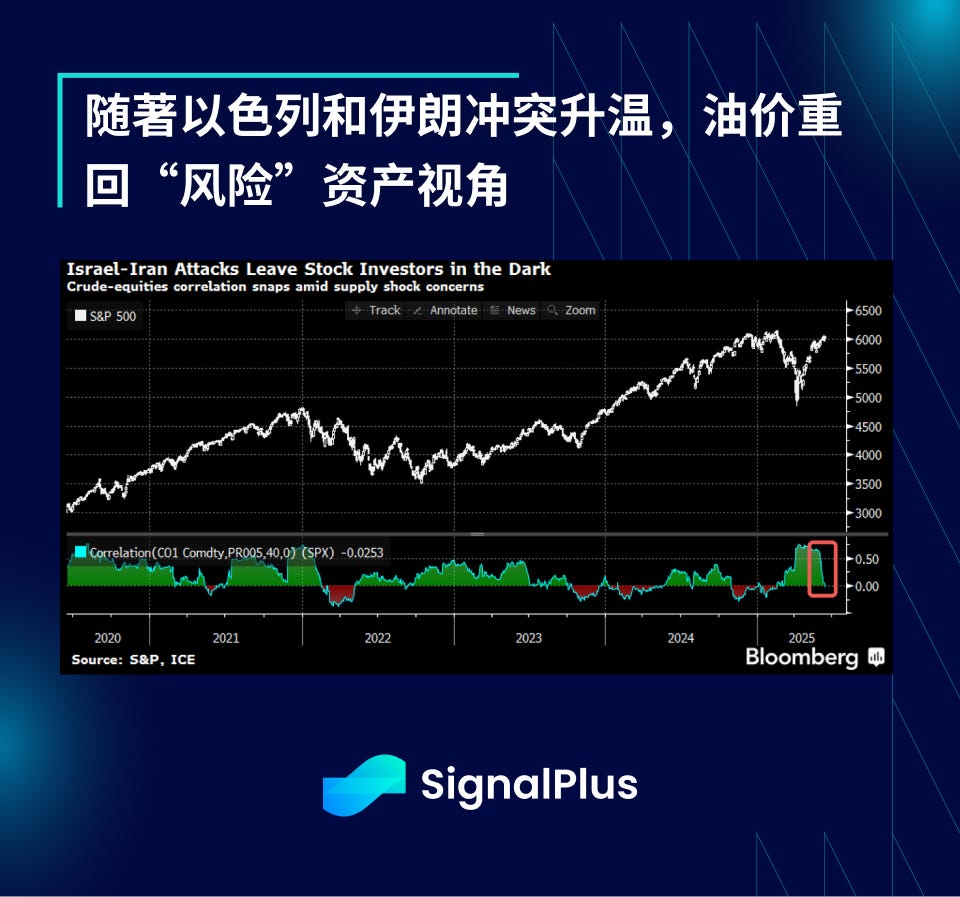
Meanwhile, the rise in oil prices has reached a two-year downward trend line, and a more convincing upward breakout may not be favorable for overall risk sentiment in the short term. However, the market generally believes that the impact of energy supply disruptions should be limited, such as increased production from Saudi Arabia as a supplementary source, but the most sustainable path still relies on diplomatic solutions.
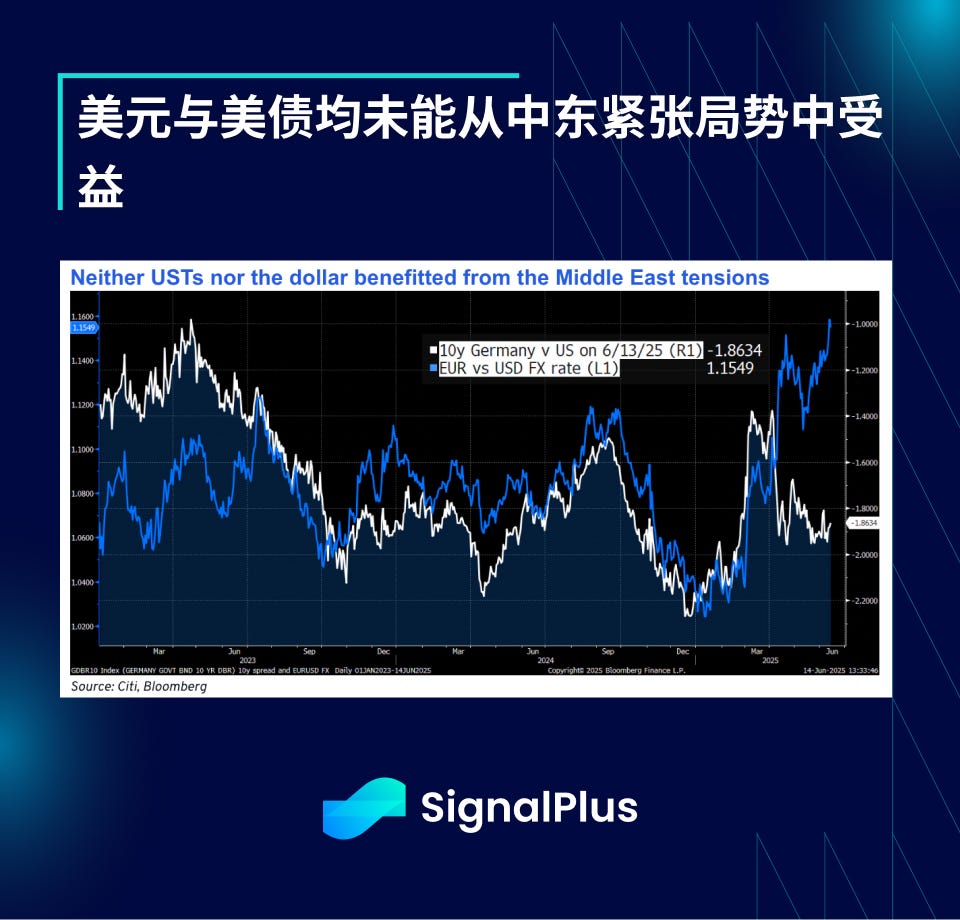
Notably, during this wave of conflict, there has not been a significant "flight-to-quality" buying in the dollar and U.S. Treasuries, indicating that global investors' concerns about U.S. capital flows still outweigh their focus on the Middle East situation, which is clearly not to be overlooked.
Interest rate volatility has also fallen to near multi-year lows, indicating that the macro market is more inclined to refocus on tariffs and economic fundamentals.

In fact, this wave of conflict has had little impact on market expectations for interest rate cuts in 2025, with the market still anticipating only two rate cuts before the end of the year, even though inflation data has repeatedly fallen below market expectations.

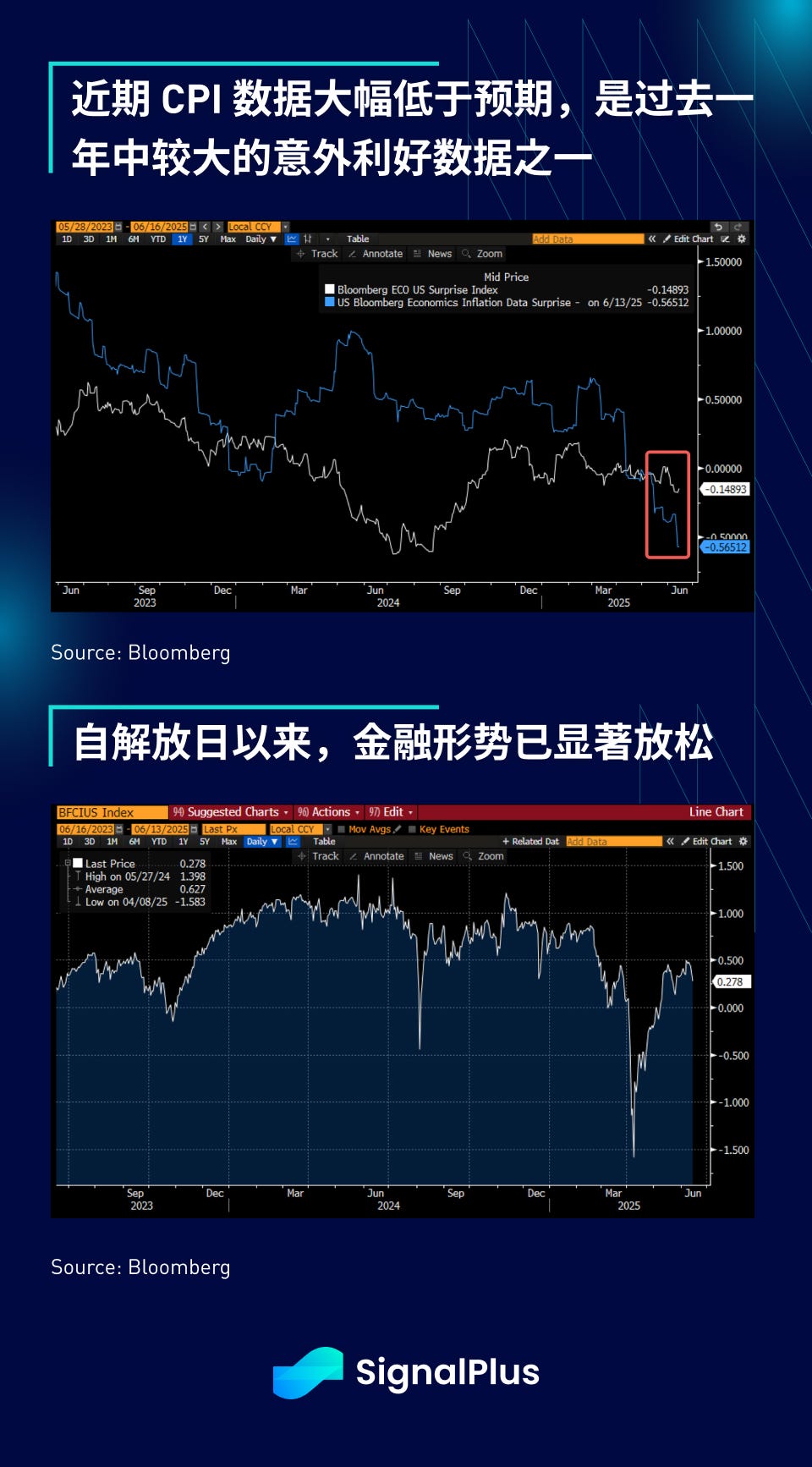
Before the movements last Friday, the market was celebrating lower inflation data across multiple developed markets (excluding Japan), where U.S. CPI, PPI, New York Fed inflation expectations, and Michigan inflation expectations all came in below expectations.

In fact, the recent core CPI has significantly undershot expectations, which helps boost risk sentiment and gives the Federal Reserve more room to maintain a loose monetary stance.
Equity long-short hedge funds have re-increased their long positions in stocks, with net exposure rising to a one-year high, indicating that the path of least resistance for the market in the short term remains upward.

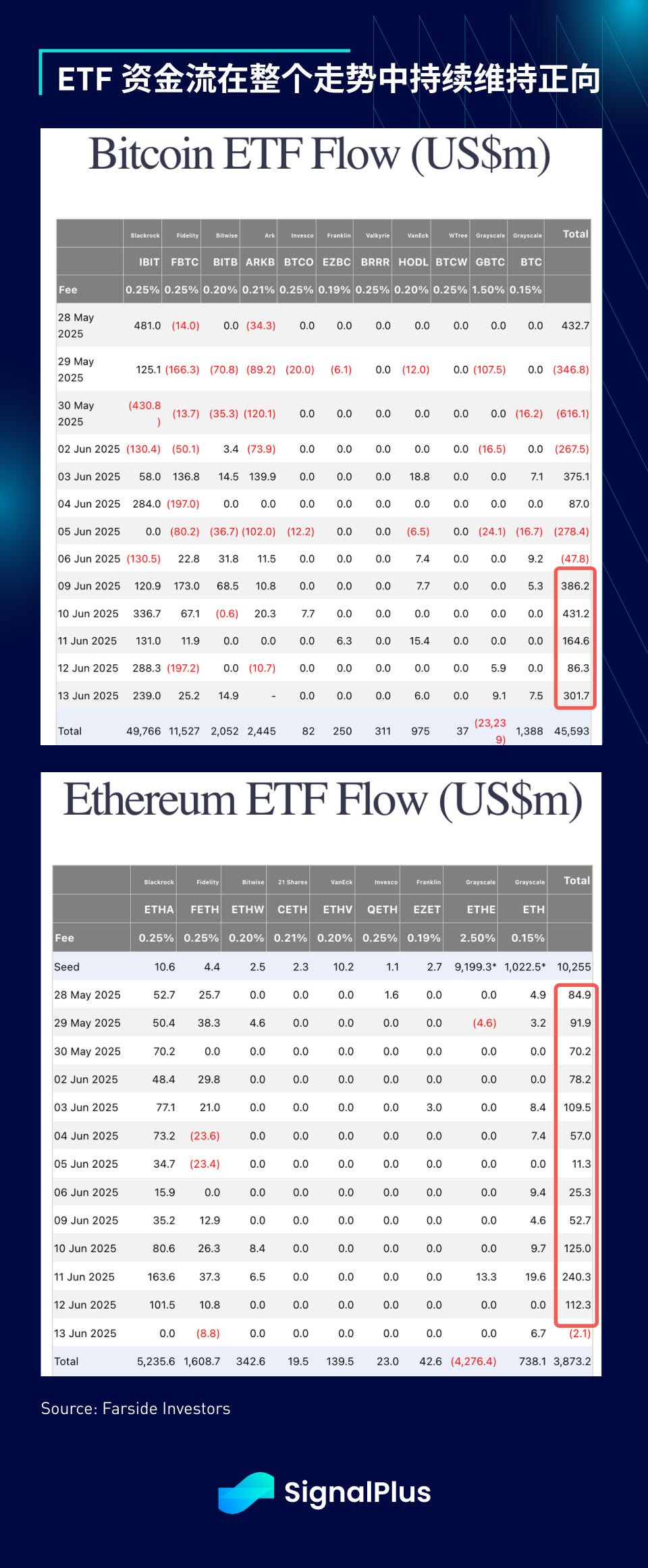
Cryptocurrencies have once again validated their positioning as "high-risk assets," with prices of various tokens declining across the board last week. On Friday, cryptocurrency prices fell alongside the stock market, with over $1.2 billion in futures positions being liquidated. The decline on Friday was mainly driven by altcoins, while BTC returned to around $105k with stable ETF fund flows and support from publicly traded companies holding the asset.
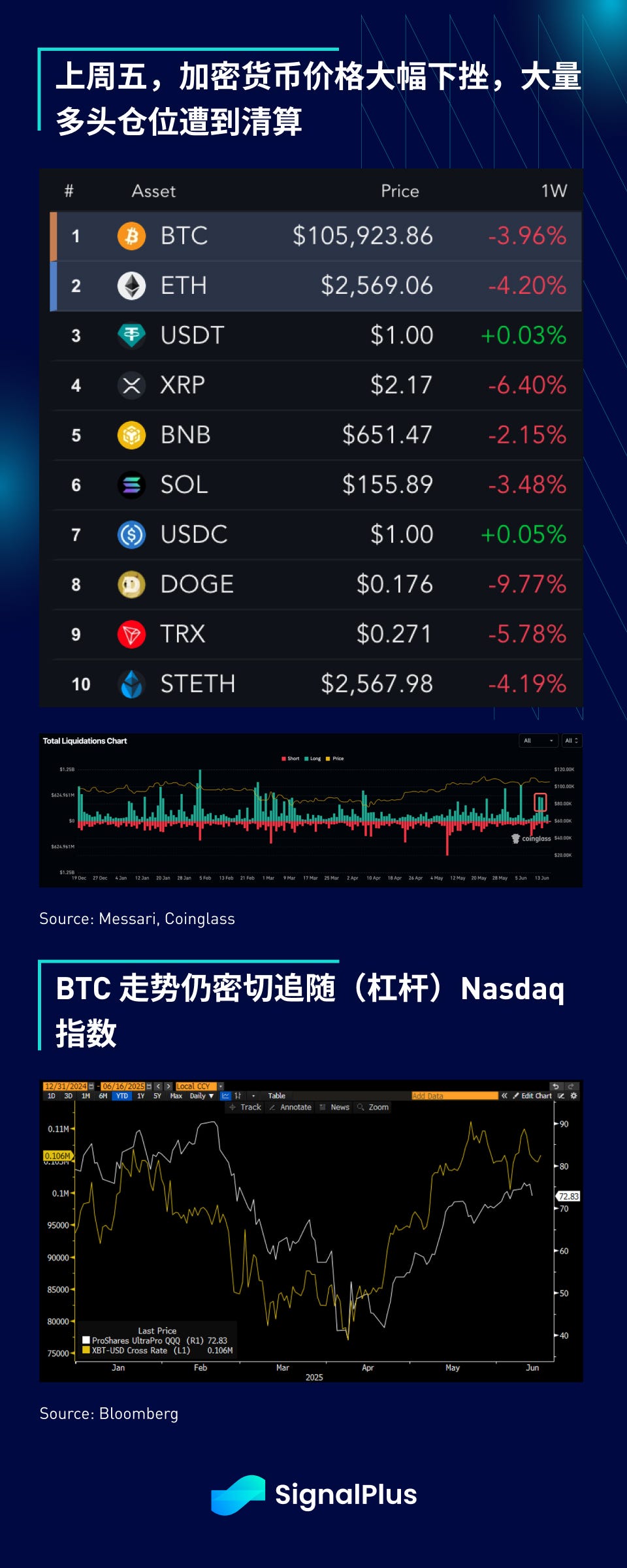
BTC ETF net inflows reached $1.4 billion, while ETH ETF recently broke a record of over two consecutive weeks of net buying, indicating that participation from TradFi remains strong. We expect prices to continue to follow stock market sentiment and gradually rise as we enter the summer.
This week will see several central bank meetings (including the Federal Reserve, Bank of Japan, Bank of England, Norges Bank, and Swiss National Bank), but we believe the substantive impact will be limited. From the Federal Reserve's side, there may be slight dovish signals, and the market will focus on whether it will use the recent series of lower-than-expected inflation data and weak unemployment claims as a basis for further dovish shifts. We do not expect any major policy moves, and the recent market focus will remain on the developments between Israel and Iran, particularly any substantial military escalation or dangerous political maneuvers, while the U.S. remains mired in a stalemate over tariffs and budget negotiations. Wishing everyone successful trading this week!

 Risk warning Risk warning


Popular articles





