








Flashbots Research: How MEV Devours Blockchain Scalability Benefits

 As Ethereum Layer 2 and Solana strive to scale, MEV bots are occupying over 50% of block space with spam transactions, causing user fees to soar and the benefits of scaling to be nearly lost.
Author: Robert Miller, Flashbots
Compiled by: Saoirse, Foresight News
Today, we present a new argument: MEV (Maximum Extractable Value) has become the main limiting factor for blockchain scalability.
As mainstream public chains like Ethereum and its Layer 2 networks, as well as Solana, compete to scale at the fastest pace, the economic constraints brought by MEV have become evident throughout the industry. On-chain search behavior is beginning to occupy the majority of the capacity of most high-throughput blockchains in a remarkably resource-wasting manner.
This is not a theoretical assumption or an isolated phenomenon. From Solana (where MEV bots consume 40% of block space) to the Ethereum Layer 2 ecosystem, this situation is ubiquitous. To quantify the impact, we conducted an in-depth analysis of top OP-Stack Rollups supporting specific tracking endpoints, revealing an industry-wide issue:
- Multiple Rollups have garbage trading bots consuming over 50% of Gas while paying less than 10% of fees;
- Between November 2024 and February 2025, the Base network will increase Gas processing capacity to 11 million Gas/second, but almost all of it will be occupied by garbage bots (equivalent to the capacity of three Ethereum mainnet blocks!);
- The ongoing demand for Gas from garbage bots drives up user fees;
- The garbage trading market is highly concentrated, with over 80% of garbage trades on Base dominated by two searchers.
While technical scalability measures such as database sharding (like Rollups), validity proofs, and optimizations of databases or consensus mechanisms are important, relying solely on technology cannot solve the problem. Although we have mastered methods for building foundational technical throughput, the current market structure imposes economic constraints on scalability.
This article will analyze this market failure phenomenon, demonstrate its impact with data, and propose a new MEV auction mechanism aimed at addressing the issue.
Analysis of Garbage Trading
To understand why block space is being wasted, let's first break down a successful arbitrage trade:
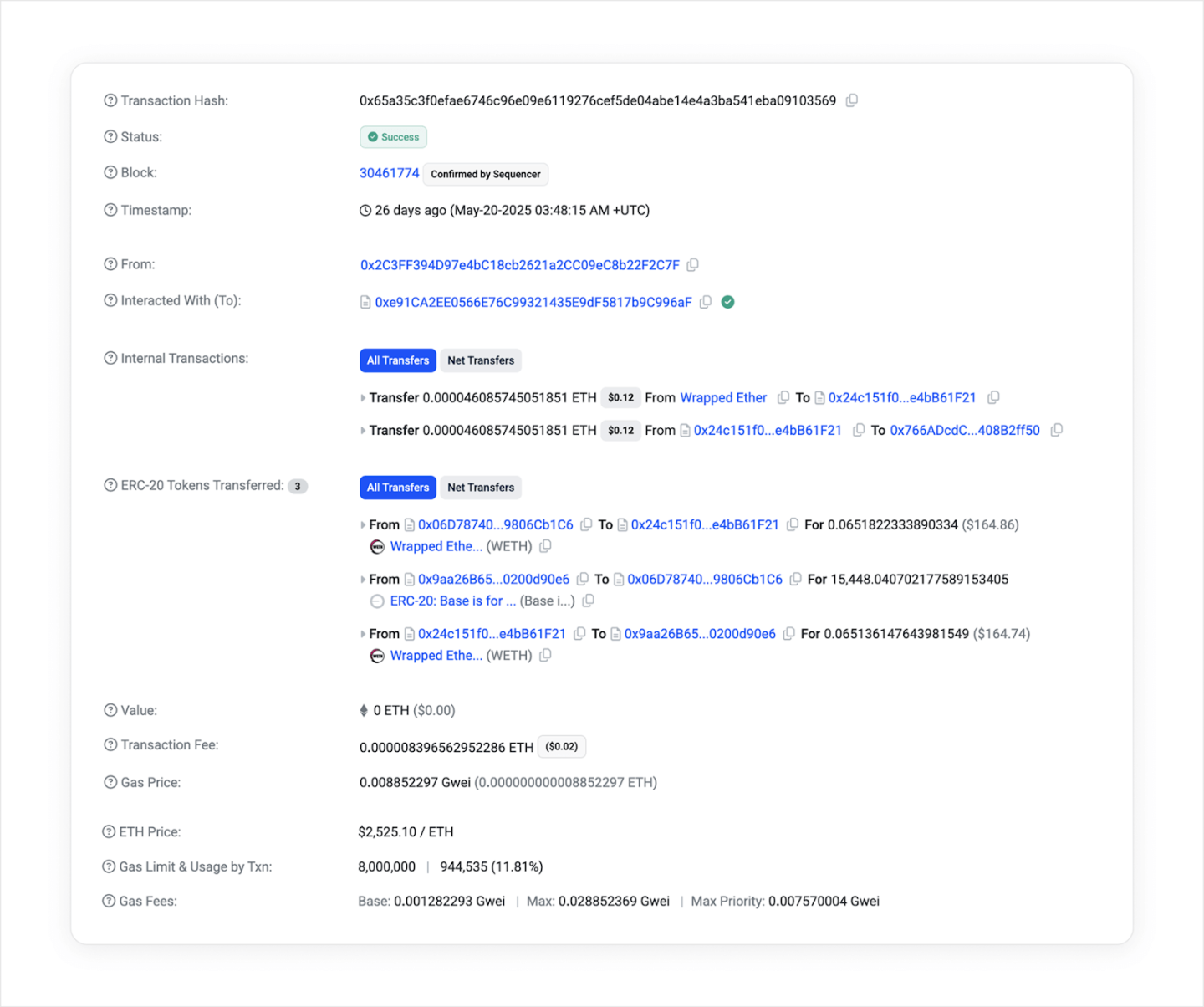
Example of a successful arbitrage trade on Base
At first glance, this seems to be a model of efficiency: the search bot executes precise arbitrage, earning $0.12 and paying $0.02 in fees.
However, the true cost of this successful arbitrage is shocking: for each successful arbitrage, the bot sends about 350 attempts at arbitrage (most of which fail). On average, a single successful arbitrage consumes about 132 million Gas—equivalent to nearly 4 complete Ethereum blocks. It is important to note that this is just one of many bots competing, meaning the actual cost to the chain is even higher.
Now, let's look at a typical failed attempt to understand the on-chain behavior of the bots:
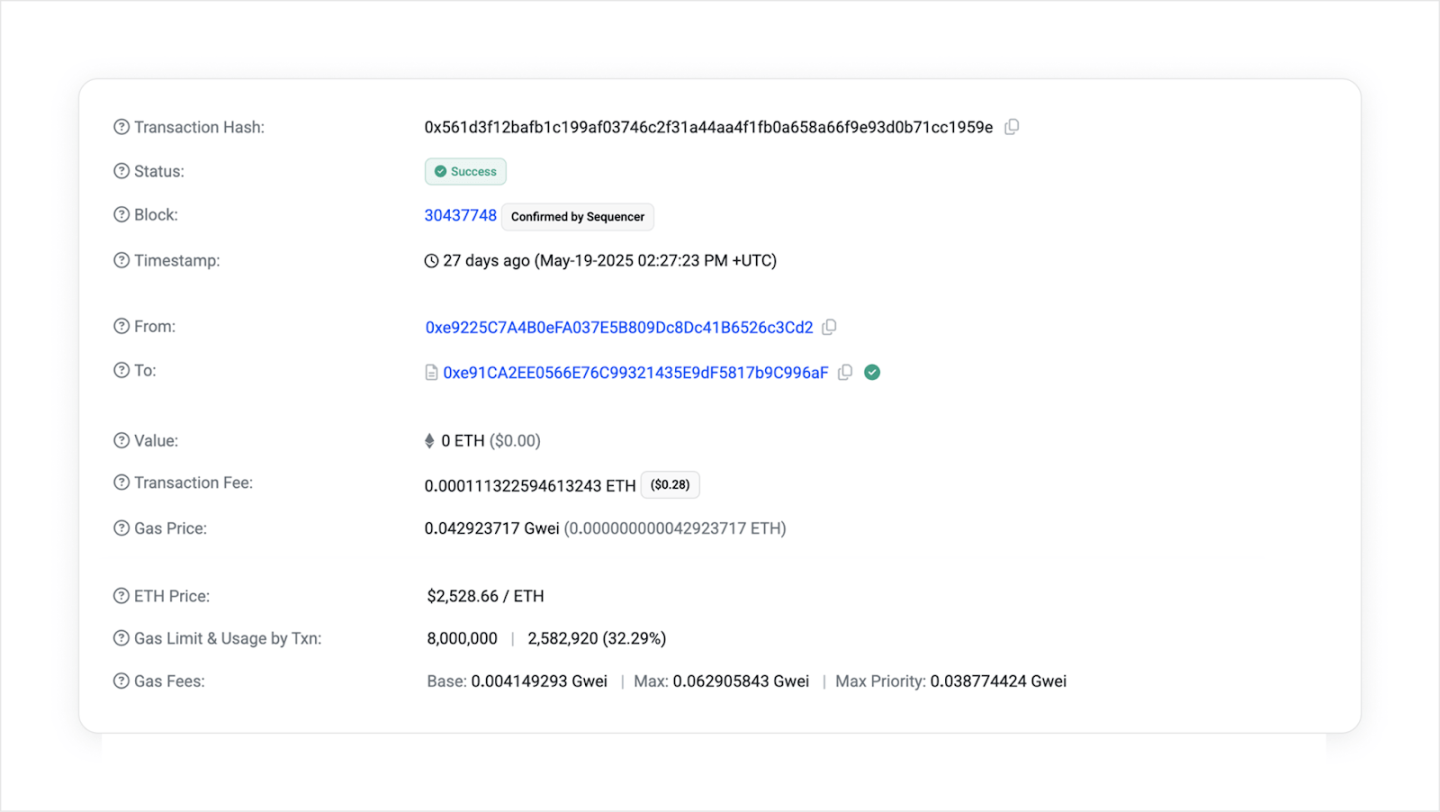
Example of a failed trade blindly searching for arbitrage opportunities
At first glance, this transaction appears unremarkable: it executed successfully and did not involve any token transfers. The only clue is that it consumed about 2.6 million Gas (as shown in the image above).
A deeper trace of its internal calls reveals that it initiated a series of calls to dozens of different DEX pools, querying the pool status through getReserves() and slot0(). These calls are essentially fetching asset prices across different DEXs.
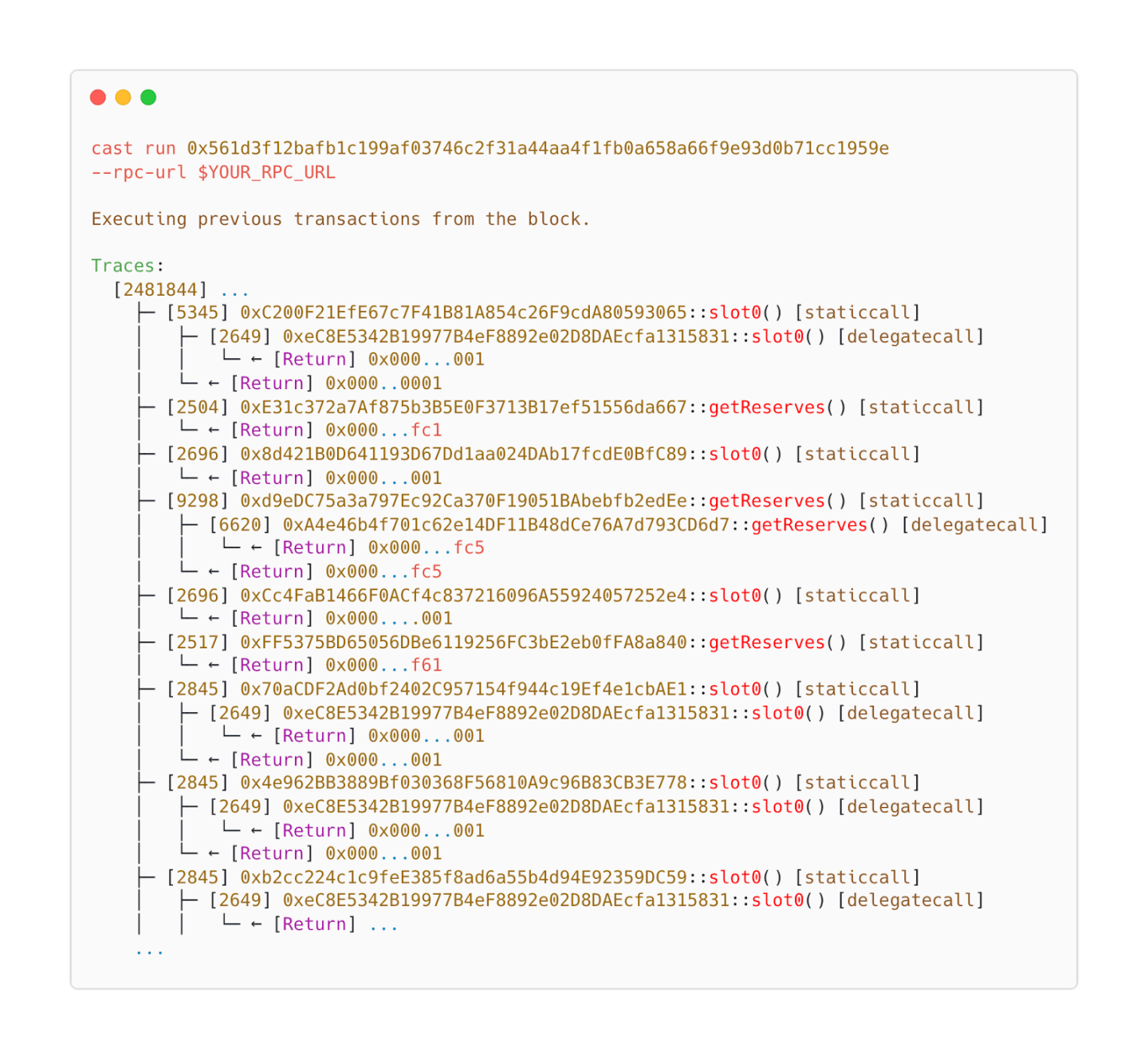
Example of tracing repeated calls to slot0() and getReserves()
The core logic of the bot is simple:
- Send a transaction to the chain
- Query prices from multiple DEX pools during execution
- Execute if an arbitrage opportunity exists
- Terminate if not
The above transaction reflects these four steps, ultimately terminating without executing any operations. In reality, it is merely a high-intensity price query, consuming about 2.6 million Gas while only reading market conditions without any substantive action.
On public chains like Base, World, and Solana, this strategy has become the mainstream method for extracting MEV. A few successful trades must pay for a large number of failed attempts, which is a rational choice for searchers but leads to systemic inefficiency for the network.
A significant amount of resources is used to read prices without generating substantive value. Moreover, it is not just this one searcher; all searchers must adopt this strategy to capture atomic-level MEV. The end result, as the data shows, is that public chains are clogged with garbage trades, and fees rise due to these trades. (Note: Atomic-level MEV emphasizes value extraction achieved in a single on-chain operation, such as a single transaction or within a single block, commonly seen in scenarios like arbitrage and front-running that leverage the immediacy and transaction order of blockchains.)
Fundamental Causes of Garbage Trading
The clogging of high-throughput public chains by garbage trading is not coincidental but a direct and "rational" response to structural defects in the market: if searchers want to profit by reading the latest state of the block, they must blindly initiate transactions within the same block.
The arbitrage bot analyzed earlier is a typical case. Off-chain queries can obtain the state of the last confirmed block, but this lags behind the MEV opportunities being created by transactions currently being built in the block. In networks like Base or Solana, the native mempool is private, meaning that searchers cannot know the execution status of user transactions and the opportunities they create before the block is published. The only way to discover and capture arbitrage opportunities is to have their transactions included in the same block immediately after user transactions. If they wait for the next block, the opportunity will be taken.
The rampant on-chain search phenomenon arises from the interplay of the following factors:
1. Transaction Expressiveness
Unlike traditional finance where traders submit simple static orders (like "buy at price X"), searchers can create transactions as on-chain programs, embedding condition logic based on the market's real-time state to achieve complex responsive strategies that would otherwise be impossible.
2. Shift to Private Mempools
To protect users from front-running, most high-throughput public chains set their mempools to private. While this effectively defends against front-running, it also prevents searchers from seeing user order flow. Unable to react before transactions go on-chain, searchers can only blindly probe for opportunities by initiating highly expressive transactions.
3. Low Transaction Fees
The low cost of block space further amplifies on-chain search behavior. Searchers know that the profit from a single successful arbitrage can cover the costs of many failed trades, so they dare to send massive speculative transactions to every block. The lower the Gas fees, the more complex logic searchers can write, pursuing more intricate strategies.[1]
4. Lack of Efficient Auction Mechanisms
Competition among searchers lacks a formal mechanism for expressing transaction ordering preferences. Without a direct way to bid for the ordering of specific transactions in a block, competition devolves into a wasteful alternative: consuming more Gas. The primary way for searchers to increase their chances of success is to consume Gas in more positions within the block, increasing the probability that their transactions land in the "correct position."
These four factors together give rise to "garbage trading auctions," an extremely wasteful mechanism that not only exacerbates network congestion but also fails to effectively capture MEV value. To quantify the inefficiency caused by garbage trading, we conducted data validation.
Research Findings
Analysis confirms that MEV-driven garbage trading constitutes an economic constraint on scalability.
We define garbage trading by identifying transactions that "query DEXs repeatedly without transferring tokens." This heuristic approach aims to pinpoint systematic wasteful "backrunning" arbitrage behavior that could have been completed off-chain but is forced on-chain. We implemented this method in both Python tools and Dune dashboards, with detailed methodology provided in the appendix.
Since the garbage trading detection tool relies on specific RPC methods, current data analysis is limited to OP-Stack Rollups. However, data from the Ghost Logs team indicates that similar phenomena exist on Solana, and other Ethereum Rollups (like ZKsync and Arbitrum) have also shown signs of garbage trading.
1. Garbage Trading is Systematic and Ubiquitous
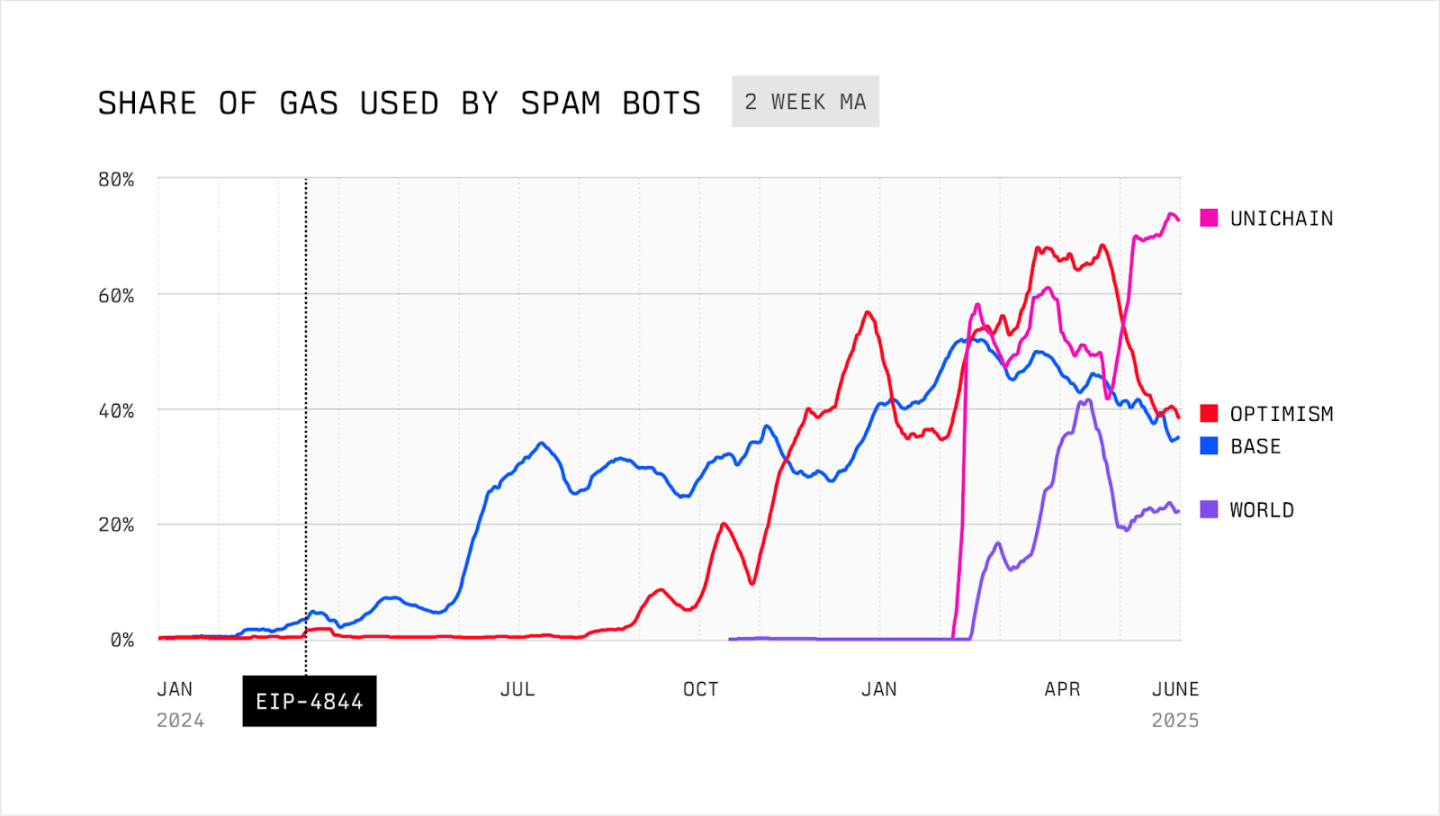
First, this issue is systematic and widespread. Analysis of OP-Stack Rollups indicates that garbage trading is not an isolated phenomenon but a dominant force within the entire ecosystem. On chains like Unichain, Base, and OP mainnet, garbage trading typically consumes over 50% of total Gas. This shows that it is a structural consequence of the current market design, rather than a localized anomaly.
2. Gas Consumed by Garbage Trading Far Exceeds Fees Paid
The second finding shows that, from the chain's perspective, the efficiency of garbage trading is extremely low.

In all the Rollups we analyzed, there is a huge gap between the resources consumed by garbage trading and the revenue generated. Compared to other users, garbage trading bots consume several times the Gas they pay in fees. For example, garbage bots on the OP mainnet consumed about 57% of the Gas while paying only about 9% of the fees, a difference of 6 times.
The disparity between fee payments and Gas consumption indicates that garbage trading imposes significant external costs on the network while providing almost no corresponding value, which is a typical feature of a systematically inefficient market. This includes tangible waste of computational resources, as every full node is forced to execute these transactions, thereby increasing the hardware requirements for all network participants.
Additionally, we analyzed how garbage trading in L2 affects Rollup's use of L1 Data Availability (DA).
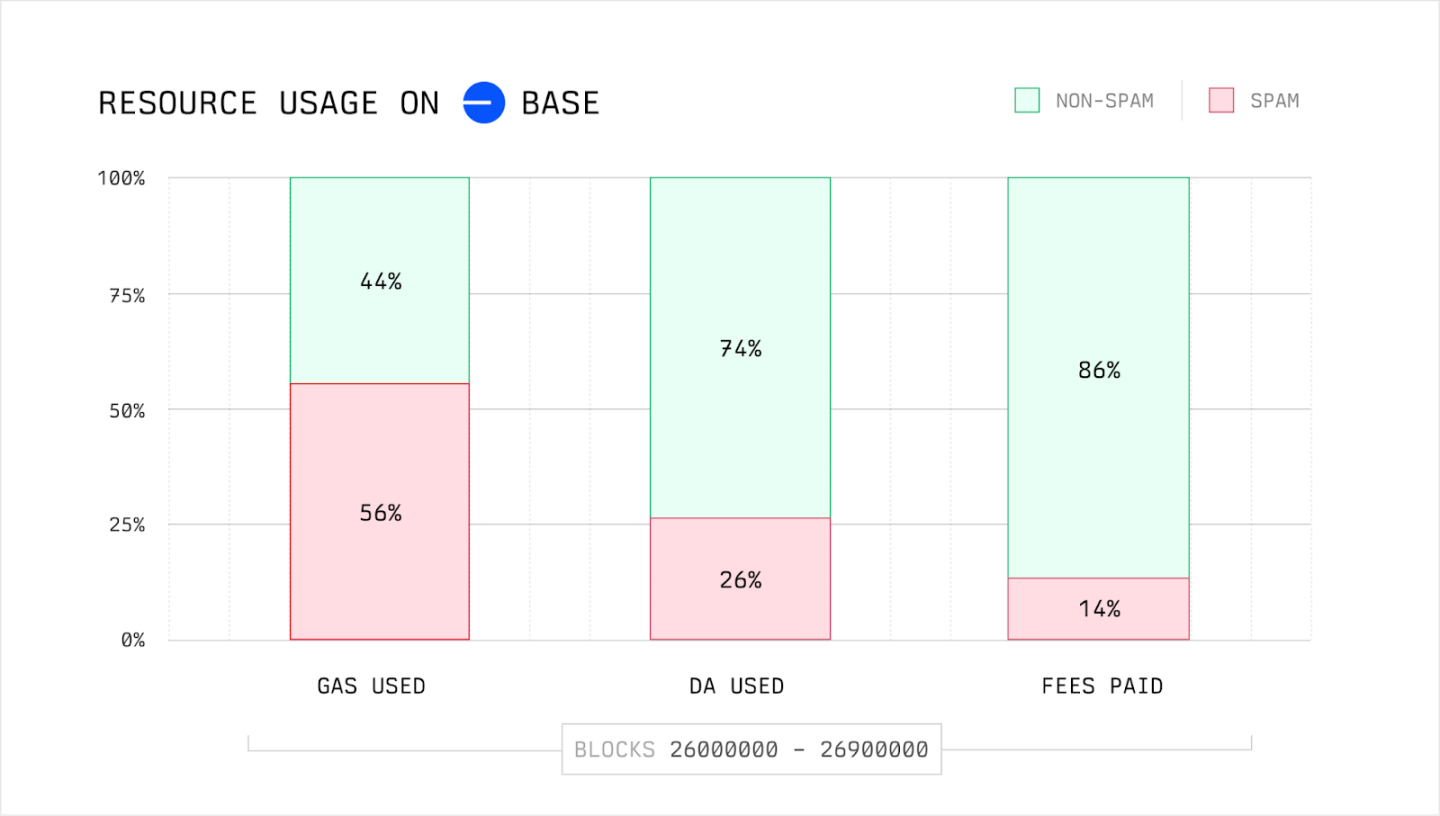
Data shows that in one million blocks in February 2025, garbage bots on Base contributed approximately 56% of Gas consumption, 26% of L1 DA usage, and 14% of on-chain fees. The proportion of DA usage by garbage bots initially surprised us, but we later found that it correlates with their transaction volume (rather than Gas consumption). This is reasonable, as DA usage depends on data compression efficiency rather than Gas consumption.
3. Garbage Trading Limits and Offsets the Benefits of Scalability
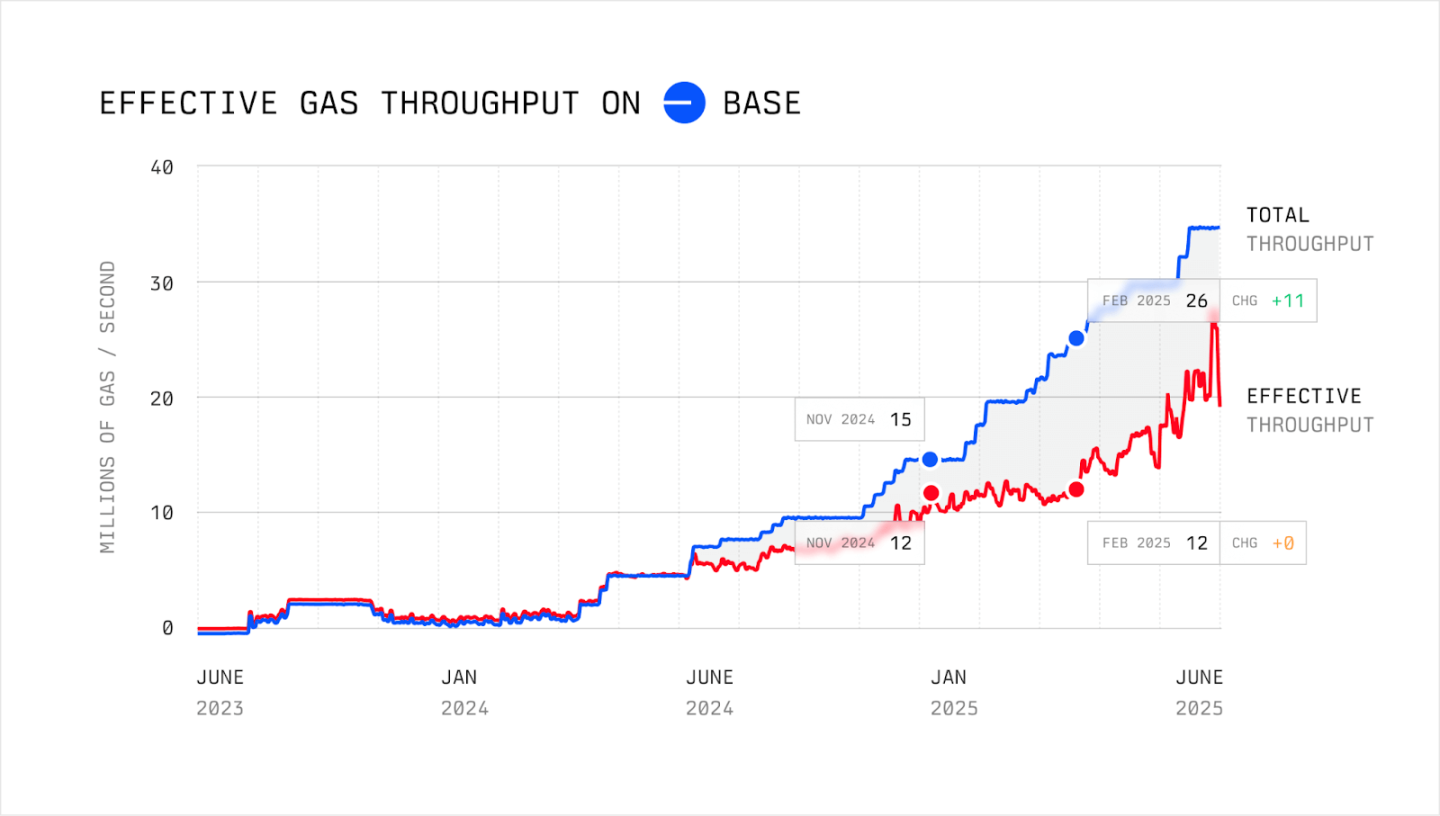
Third, this inefficiency directly offsets the benefits of scalability. To measure the negative impact of garbage trading, we introduced a new metric: effective Gas throughput, which is the amount of user-available Gas processed per second by Rollup after deducting garbage bot consumption.
The trend on Base is particularly evident: in November 2024, the total Gas throughput was 15 million Gas/second, while the effective Gas throughput for users was only 12 million Gas/second. In the following four months, although total throughput increased by 11 million Gas/second, effective throughput remained nearly unchanged. In other words, almost all of the newly added processing capacity was occupied by garbage trading.
Interestingly, after the end of February, effective throughput began to align more closely with the growth trend of total throughput. This seems related to market trading volume (and the resulting MEV): after the "Libra Scandal" broke on February 14, effective throughput began to grow again as the volume of Memecoin trades from Telegram bots declined.
4. Ongoing Demand for Garbage Trading Drives Up User Fees
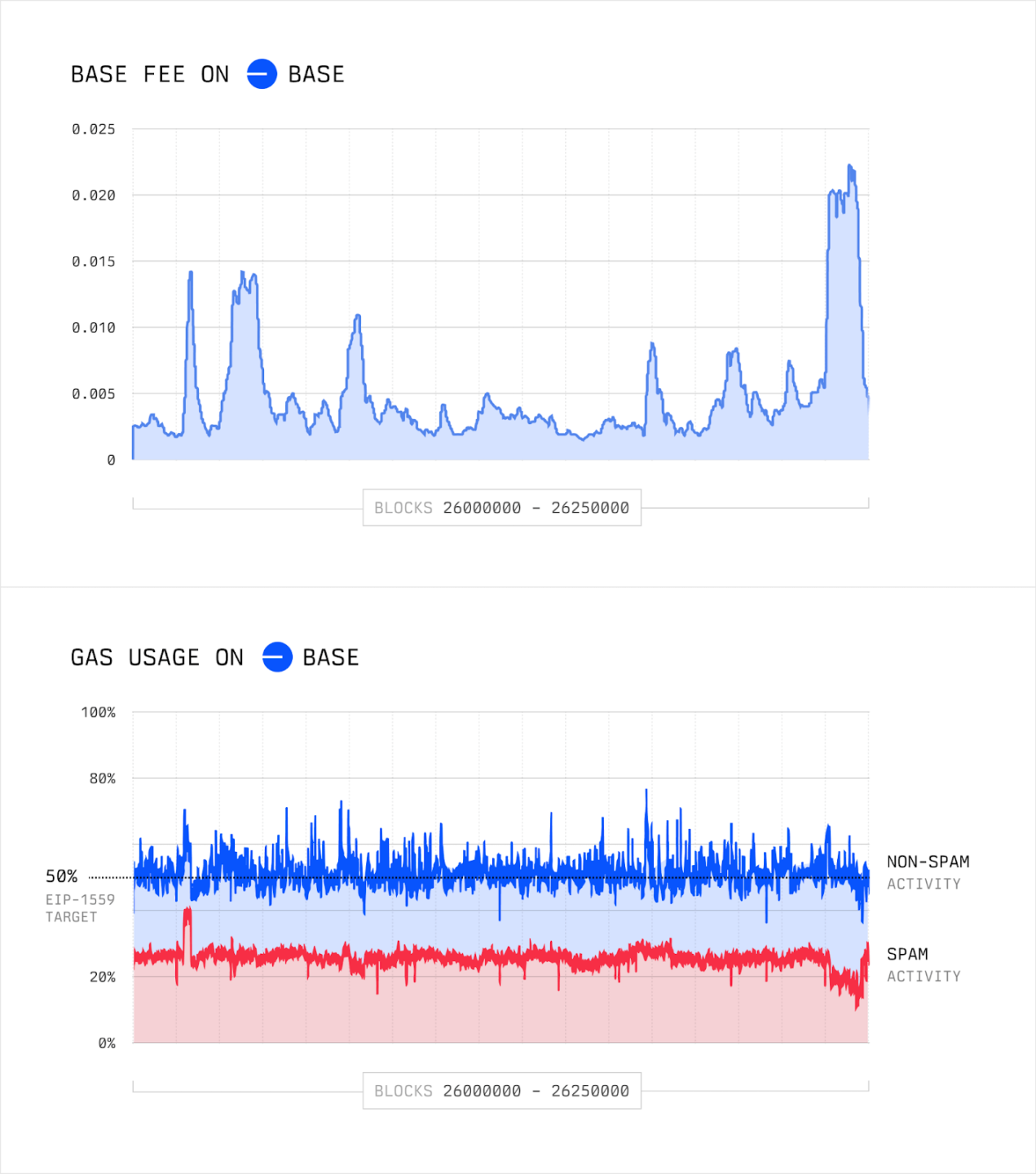
Perhaps the most direct impact on users is that the ongoing presence of garbage trading artificially raises the baseline for transaction fees, keeping them high over the long term.
Although Rollup's scalability measures have reduced nominal fees to extremely low levels (e.g., around $0.01), making many natural users insensitive to price, theoretically, if block space is sufficient, users are insensitive to price, and with the effect of the EIP-1559 fee market mechanism, fees should approach an absolute minimum. The vision of scalability is to create enough capacity to make this near-zero fee state the norm.
However, the reality is different. Searchers attempting to capture MEV through garbage trading are filling blocks with massive transactions, consuming large amounts of Gas. This behavior drives up block utilization, leading to a continuous increase in base fees, which reflects the systemic inefficiency of the MEV market rather than the true demand of natural users.
While the fees borne by end users remain low, the overall level is much higher than what is actually needed. The key point of this issue is that those innovative application scenarios relying on large amounts of cheap block space (such as on-chain social networks or automated micropayments) are being excluded from the market.
5. The Garbage Trading Market is Highly Concentrated
Finally, analysis shows that the market for MEV garbage trading searchers exhibits extreme concentration characteristics.
To verify this, we counted which smart contracts consumed the most Gas classified as "garbage trading" between block heights 26000000 and 26900000. At first glance, the market seems to have a high concentration of top players but a dispersed structure.
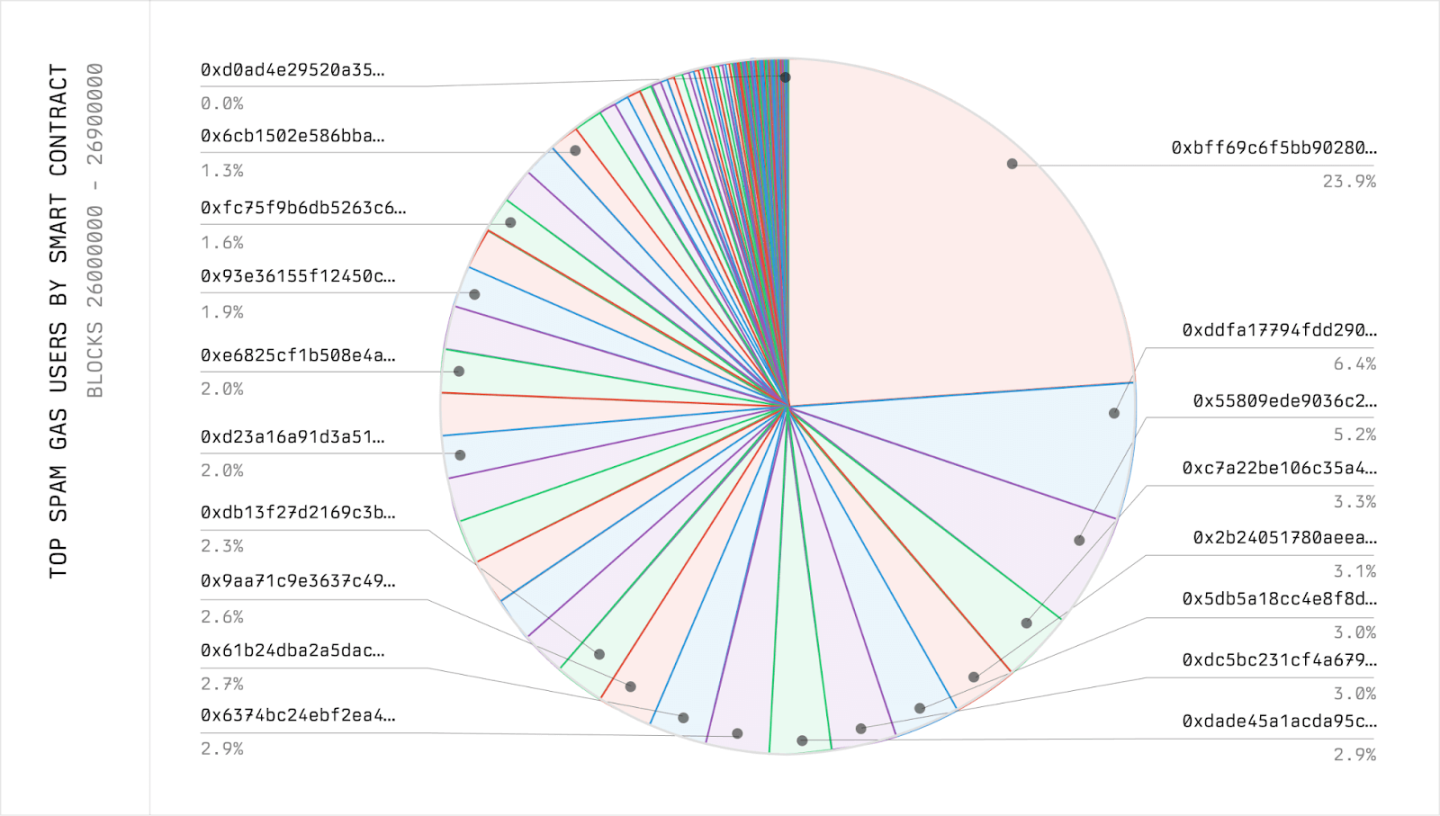
However, this appearance is deceptive. On-chain analysis shows that searchers commonly rotate the smart contracts used to send garbage trades but funnel profits into a fixed "profit address." By tracing the ETH transfer paths of successful arbitrage trades, we attempted to identify smart contracts controlled by the same operator. While not all bots adopt this model, it is common among top bots.
When grouping the data by profit address, market concentration becomes extremely significant:
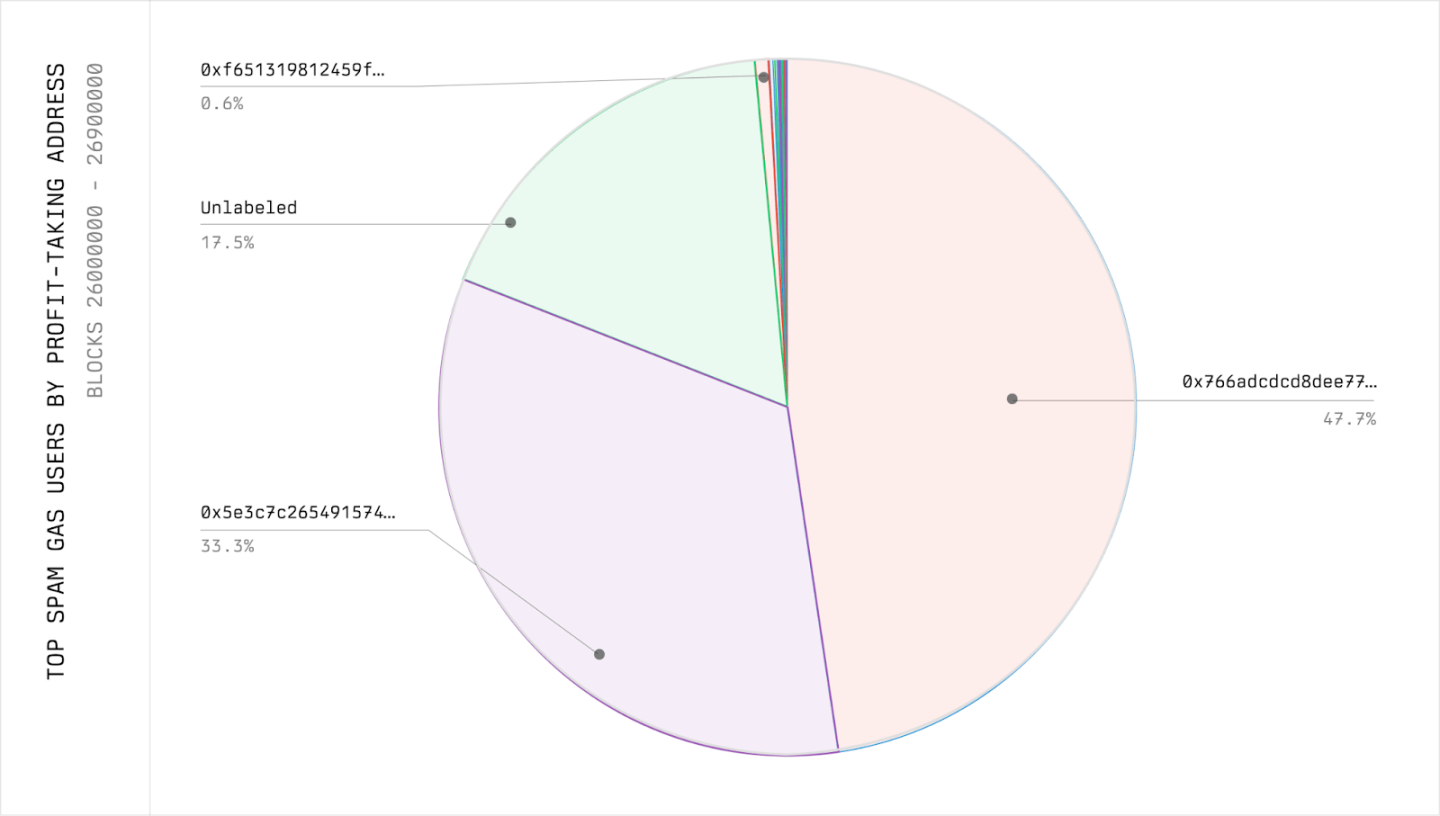
The results are clear: just two entities dominate over 80% of garbage trading on Base. This extreme concentration indicates a clear barrier to entry in the market, and the current "garbage trading auction" is not a truly competitive market. The lack of competition further undermines the price discovery mechanism, causing public chains to neither capture the true value of extracted MEV nor avoid the negative externalities brought by garbage trading.
The Path Forward
We believe that blockchains should maximize the accommodation of valuable economic activities within limited block space.
From this standard, the current "garbage trading auction" mechanism is highly inefficient: completing two swaps on Uniswap v3 requires only about 200,000 Gas, while achieving the same economic result on Base consumes about 132 million Gas. The efficiency gap is as high as 650 times, and narrowing this gap is key to unlocking the true potential of scalability.
To address this issue, we must return to the four reasons why on-chain search has become the mainstream model: transaction expressiveness, mempool privacy, low transaction fees, and lack of efficient auction mechanisms. Among these, low Gas fees and high expressiveness are clear goals for general-purpose smart contract chains [2], and we need to continue to strengthen these characteristics. Therefore, solutions must focus on the other two points: enabling searchers to read the state about to go on-chain and expressing their preferences in a way that protects user rights while minimizing on-chain garbage trading.
Directions for Solutions
1. Achieving State Transparency through Programmable Privacy
An efficient market needs to provide searchers with real-time access to transaction flows while programmatically restricting how they can use that information. The system must verifiably ensure that searchers can only conduct "backrun" trades and cannot engage in front-running, sandwich attacks, or leak private data. This visibility allows searchers to execute conditional logic off-chain rather than blindly probing on-chain. Once searchers generate potentially profitable trades off-chain, there still needs to be a way to embed them precisely into blocks to capture MEV.
2. Building an Explicit Bidding MEV Auction Mechanism
Abandoning the "garbage trading auction" model that competes based on Gas consumption, we should design a bidding mechanism for transaction ordering rights based on economic incentives. Searchers can directly submit monetary bids for the block position of target transactions, determining transaction order through a market-based pricing mechanism. This model transforms the chaotic competition of Gas consumption into an efficient price discovery process:
- Searchers do not need to send hundreds of invalid transactions; they only need to pay for truly valuable ordering rights;
- The blockchain can capture the true value of MEV through auctions rather than wasting resources on meaningless on-chain computations.
Flashbots has been attempting to leverage Trusted Execution Environments (TEEs) to provide visibility for searchers while preventing sandwich attacks. TEEs can ensure that specific code remains confidential even to machine operators during execution.
This allows searchers to run in TEEs, verifiably conducting backrun trades on private transactions while being unable to execute sandwich attacks or export any private data. We have validated this model on Ethereum L1, where searchers have been conducting backrun trades through a similar system for several months and are actively adapting it to L2.
Conclusion
For a long time, discussions about scalability have been limited to foundational technical throughput. However, our research indicates that the key breakthrough point is no longer expanding block capacity but rather utilizing block space more efficiently [3]. This is because every unit of block space released incentivizes MEV to consume the newly added capacity. In other words, most of the benefits brought by "scalability" are captured by economically rational MEV bots, leaving real users with little to gain. This issue is driving up fees for ordinary users, constraining the effectiveness of scalability, and causing massive waste of network resources.
The limitation of scalability lies here: while increasing block space can enhance throughput, it has limited effects on fee improvement because increasingly complex on-chain MEV will consume most of the gains. To break through these limitations and unlock the true potential of scalability, we must eliminate the wasteful garbage trading market. Through programmable privacy and explicit bidding, we can eliminate the incentives for garbage trading and replace it with a rich, fair, and efficient MEV market.
Adopting MEV auctions is not a luxury choice but a strategic necessity. The core lies in leveraging TEEs to provide searchers with access to transaction flows while programmatically restricting their usage. This design can achieve the ideal outcome: supporting backrun arbitrage without garbage trading while preventing sandwich attacks. For blockchains, this means capturing more revenue in an efficient, garbage-free market; for users and developers, lower and more stable fees along with genuinely available capacity will ultimately unlock the full value of scalability.
What will happen when we break through the limitations of garbage trading? When transaction costs are low enough to be almost negligible, what new possibilities will be unlocked? What new applications will emerge? The answers can only be proven through practice.
Thanks to DataAlways, Hasu, Fahim, Danning, dmarz, Nathan, Georgios, Dan, buffalu, Quintus, Tesa, Anika, Brian, Xin, Sam, Eli, Christine, Christoph, Alex, Fred, and many others for their valuable feedback. Special thanks to Phil, and also to Achal for the design assistance.
Appendix
Heuristic Method for Identifying Garbage Trading
To identify garbage trading, we employed two heuristic rules:
- No Token Transfer: Does the transaction involve any token transfer? If so, it is not classified as garbage trading.
- Repeated DEX Price Queries: If a transaction initiates at least 4 queries for common DEX price data without executing a token transfer, it is classified as garbage trading.
We believe that at the time of writing this article, these heuristic methods are reliable: any operation involving token transfers typically has actual value for users, while garbage trading only transfers tokens when capturing MEV opportunities. Additionally, the DEX price query rule effectively identifies bots systematically probing for arbitrage opportunities, which is the main form of garbage trading we observed. This definition focuses on wasteful behavior that only queries DEX prices on-chain while excluding productive backrunning behavior.
However, this definition will need further optimization in the future: garbage trading bots can bypass this rule by simply transferring tokens, so the classification criteria for "garbage trading" remain a direction for future research. Furthermore, this definition mainly covers blind backrunning arbitrage bots that dominate MEV and does not include other MEV strategies such as liquidation.
Methodology for Identifying Garbage Trading
We identified garbage trading by analyzing transaction traces: for each transaction, we check all its traces to determine whether it calls token transfer functions or DEX price functions (such as slot0(), getReserves(), etc.). If the transaction involves token transfers, it is excluded; if it does not transfer tokens and initiates 4 or more DEX price queries, it is classified as garbage trading.
Choosing 4 as the threshold is a conservative consideration; experiments show that setting the threshold to 3 has minimal impact on overall results. Similarly, we filtered transactions on Dune based on transfer events and found that the results were not significantly different from those based on tracing methods.
Spam-Inspect Tool
To study garbage trading, we developed spam-inspect, a Python tool specifically designed for analyzing Ethereum Rollup activity, aimed at efficiently identifying garbage bot behavior. This tool analyzes each transaction within blocks by tracking them and applying the aforementioned heuristic rules.
This tool relies on the trace_block method and is currently only available on OP-Stack chains that support OP-Reth or OP-Erigon.
Dune Queries
We built materialized views on Dune, filtering transactions that contain Transfer events and identifying repeated DEX price calls to locate hashes that meet the garbage trading criteria. The difference from spam-inspect is that this method relies on transfer events rather than transaction traces. These garbage trading materialized views were used for subsequent query analysis.
Estimation of Data Availability (DA)
Although this article mainly discusses the impact of garbage trading on Gas, it also consumes other resources, such as Rollup's usage of L1 Data Availability. To estimate the L1 DA resources wasted by L2 garbage trading, we constructed a custom data pipeline (reusing some modules from op-batcher) and derived results through two sets of calculations:
- Total size of blocks containing all transactions after compression;
- Total size of blocks after removing garbage trading, also after compression.
The difference between the two provides an estimate of the L1 DA consumed by garbage trading in a single block.
 Risk warning Risk warning



Popular articles





