








Cryptoeconomic Trio - Prelude: Non-Farm Data

 Whether in traditional markets or cryptocurrency markets, why do non-farm payrolls play a role in setting the stage in the market's symphony?
Written by: Musol, Foresight News
In July, the U.S. Department of Labor released the non-farm employment data for June, which disappointed global market expectations—an increase of 147,000 jobs, far exceeding the expected 110,000, and the unemployment rate dropped to 4.1%. This data directly doused the market's expectations for a rate cut by the Federal Reserve in July. However, it is puzzling that Bitcoin experienced a significant surge both before and after the data was released. What kind of market logic lies behind this unusual phenomenon? Whether in traditional markets or the crypto market, why does non-farm data play the role of striking the first chord in the market's symphony?
What is Non-Farm Data?
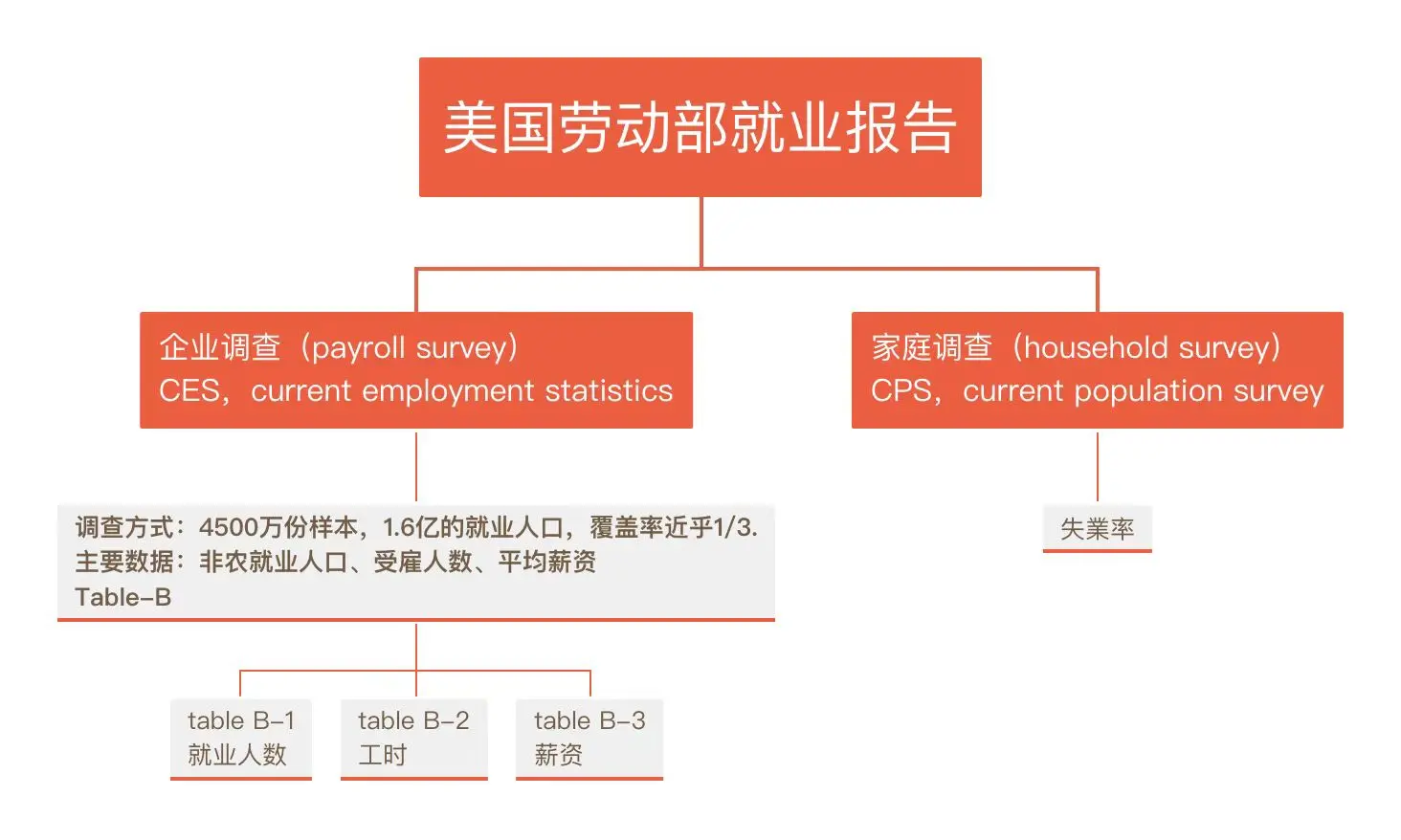
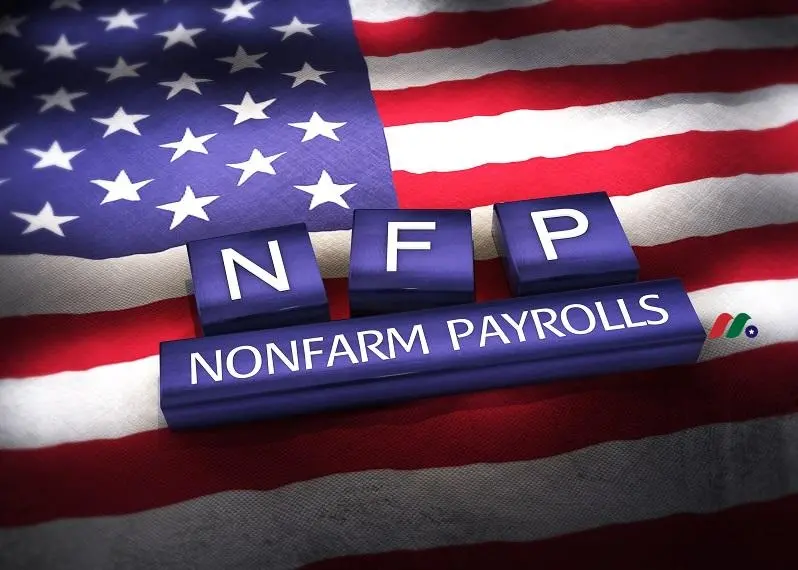
"Non-farm" refers to employment-related data that excludes the agricultural sector, self-employed individuals, and employees of non-profit organizations, which can essentially reflect the actual employment and economic situation in the U.S. It is released by the U.S. Bureau of Labor Statistics—published on the first Friday of each month, with U.S. release times at 8:30 AM Eastern Time (Daylight Saving Time) and 9:30 AM (Standard Time), corresponding to 8:30 PM and 9:30 PM Beijing Time.
In short, non-farm data is the monthly change data of the U.S. non-agricultural employment population, including employment numbers, unemployment rates, etc.
It is like a "weather forecast" in the financial world, allowing us to sense the "sunshine and rain" of the economy in advance.
Why say this? Employment can be understood as the "barometer" of the economy. When the employment situation is good, everyone has jobs, money in their pockets, and consumption increases, leading to economic prosperity; conversely, when employment is poor, everyone has to tighten their belts, and the economy seems to have "caught a cold."
In the stock market, when non-farm data shows strong performance, corporate profit expectations increase, and stock prices often rise, making investors feel like "generals who have won a battle, unable to hide their joy." In the bond market, strong non-farm data may lead to a decline in bond prices because the market expects interest rates to rise. This is akin to a "grand performance" in the financial market, where non-farm data serves as the key "Director," controlling the direction of the plot.

PS:
What is small non-farm data—small non-farm data is released by Automatic Data Processing (ADP), which provides private sector non-farm data. The employment numbers they release are considered authoritative. The ADP National Employment Report is sponsored by ADP and maintained by Macroeconomic Advisers. Small non-farm data is released once a month, generally on the first Wednesday of each month. This data is published at 9:15 PM (Standard Time: November - March) and 8:15 PM (Daylight Saving Time: April - October). Generally speaking, small non-farm data has a certain predictive effect on non-farm data.
Differences between large non-farm and small non-farm—First, small non-farm mainly refers to private sector non-farm data, while large non-farm includes statistics from all industries across the U.S. Second, small non-farm data is released two days before the non-farm data, serving as a predictor; typically, the data from small non-farm and large non-farm does not differ significantly. People use small non-farm data to predict large non-farm data.
Why Does Non-Farm Data Serve as a Prelude?
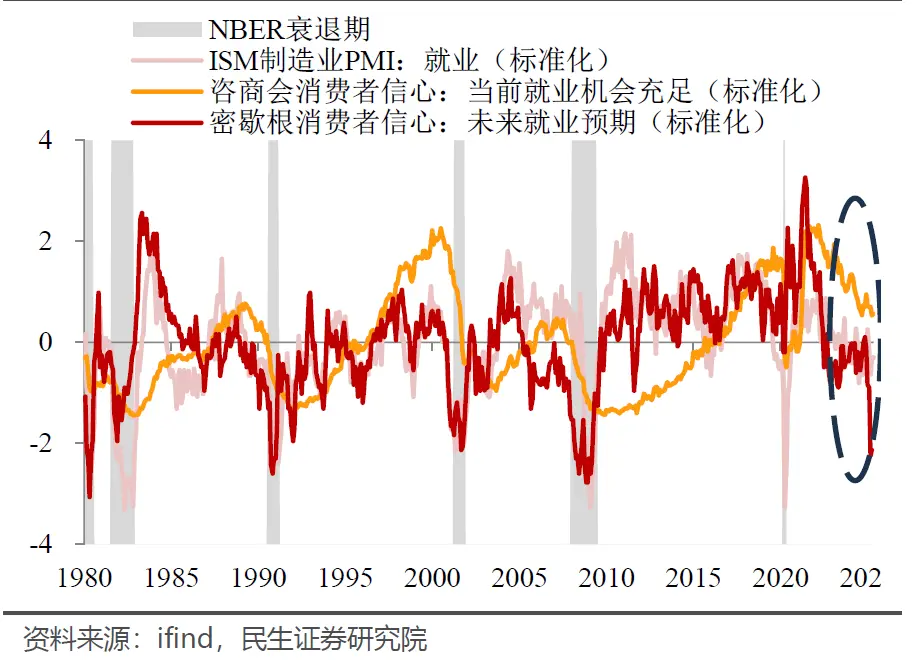
Non-Farm Employment Data is an Important Indicator for Judging Economic Cycles
Definition of recession: A sustained slowdown in economic activities such as industrial output, employment, and real wages for several months, indicating that the economy is between peaks and troughs.
From this, it can be seen that the key to determining whether the economy is expanding or contracting lies in observing monthly economic data. Since industrial output data is usually released quarterly and has weaker timeliness, the monthly data that can measure overall employment—non-farm employment data—becomes the most important indicator for judging economic cycles.
For example, if the economy has been in recession for six months, but non-farm data shows that employment has recovered and exceeded previous lows, then from the perspective of economic cycles, the economy has reversed, with the previous low being the trough, and future economic performance is likely to improve, greatly boosting market confidence.
Non-Farm Employment Data is Highly Correlated with Economic Performance
From the simplest basic economic knowledge, good non-farm data indicates a good economy.
The non-farm sector accounts for 80% of total U.S. output, and an increase in non-agricultural employment indicates that businesses are expanding production and willing to hire more workers. These new employees will have more funds for spending and consumption. U.S. economic growth is mainly driven by domestic demand, with consumption accounting for as much as 70% of U.S. GDP; therefore, an increase in consumer spending directly reflects an overall improvement in the U.S. economy.
Thus, non-farm data is a key indicator for predicting economic growth and CPI levels.
Market Participants Use Non-Farm Data as the Basis for Economic Forecasts
Non-farm data is the most important parameter in the economic modeling process.
The Federal Reserve refers to non-farm data to determine future interest rate policies, institutional investors adjust their positions and scales based on it, and economists and analysts use this data to predict future economic trends. As a key economic indicator, non-farm data is a core input variable for decision-making across the board, serving as a market barometer. Whenever actual non-farm data is released, it rings the prelude, stirring the market's nerves, and the difference between expected and actual values can create a market amplification effect— the greater the difference, the stronger the amplification effect, which may even trigger significant fluctuations in the capital market.
What is the Impact of Non-Farm Data?

For U.S. dollar exchange rates—when non-farm employment increases, indicating a strong U.S. economy, it usually leads to a rise in the dollar; conversely, a decrease in employment may trigger a depreciation of the dollar.
For Federal Reserve monetary policy—good non-farm data may lead the Federal Reserve to consider raising interest rates to curb inflation; conversely, if the data is poor, the Federal Reserve may maintain low interest rates to stimulate the economy.
For global stock markets—good non-farm data typically boosts investor confidence, driving global stock markets up; while poor data may lead to declines in the stock market.
For the bond market—when non-farm data performs well, optimistic market expectations for the economy lead to rising bond yields and falling bond prices; poor non-farm data may lead to declining bond yields and rising bond prices.
For the foreign exchange market—foreign exchange markets are very sensitive to non-farm data. The dollar usually strengthens when non-farm data is strong and weakens when the data is poor.
For the commodity futures market—changes in non-farm data can affect the prices of dollar-denominated commodity futures, such as gold and crude oil. A stronger dollar typically depresses gold prices, as gold is priced in dollars, making it more expensive for investors holding other currencies.
For market sentiment—after the data is released, market sentiment becomes more volatile, and investors' expectations regarding future economic trends and monetary policy directions may diverge.
For capital flows—changes in non-farm data may trigger adjustments in global capital flows, thereby impacting the A-share market. Strong non-farm data may enhance global investors' confidence in dollar assets, leading some funds to flow back from emerging markets to the U.S. market.
Why is There a Paradox in the Crypto Market Under Non-Farm Data in July?
Generally speaking, strong non-farm data would reinforce expectations for a rate hike by the Federal Reserve (at least not a rate cut), putting pressure on risk assets.
However, Bitcoin's performance that night resembled a discordant note among the otherwise harmonious melodies: it rose 1.1% in the 24 hours before the data release, and after the rate cut expectations were dashed, Bitcoin not only did not pull back but continued to climb, breaking through the $110,000 mark.
This seemingly contradictory trend actually reveals the cognitive differences between the crypto market and traditional financial markets.
Some professional institutions have analyzed that Bitcoin's rise before the data release partly stemmed from market bets on weak data. Due to the erratic trade policies, many industry employers have recently adopted a wait-and-see attitude, hesitant to increase hiring. Therefore, many traders expected non-farm data to perform poorly and preemptively positioned themselves in safe-haven assets.
However, this explanation fails to answer a key question—why did Bitcoin play its own symphony after the data far exceeded expectations?
In-depth analysis reveals that Bitcoin's counter-trend rise has certain market logic:
First, although the non-farm data is strong, the breakdown shows that growth is concentrated in specialized services and finance, while sectors of the real economy such as healthcare and trade continue to shrink. This structural contradiction raises doubts about the authenticity of the economy. Especially in recent years, various data have undergone significant revisions multiple times, and the release of various data seems to be a cover for other political purposes. The credibility of the data is gradually eroding.
Second, the Federal Reserve's statement last week that "if the labor market weakens significantly, a rate cut may come sooner than expected" has been interpreted by the market as a sign that the long-term easing tone remains unchanged, and single-month data is unlikely to overturn this expectation. After all, with trillions of dollars in U.S. debt, the annual interest is nearing U.S. military spending, making it difficult to change the trend toward rate cuts.
The most decisive factor is that many institutional investors are viewing Bitcoin as "digital gold" to hedge against dollar credit risk. From risk assets to digital gold, Bitcoin has gradually become a "safe-haven asset" favored by mainstream economies. Recent asset performance seems to suggest that whether it is "good news" or "bad news," it can always be transformed into a reason for Bitcoin to surge again. With small price fluctuations, quick recovery from negative news, and consistently good liquidity, a consensus has gradually formed in the Bitcoin market.
Data shows that within one hour after the non-farm release, net inflows into Bitcoin spot ETFs reached $230 million, proving that traditional capital is reconstructing asset allocation logic. When the market does not believe that the Federal Reserve will maintain the current high interest rates and is also worried about structural economic issues, Bitcoin becomes the best liquidity haven.
In a market with significant discrepancies in news, putting money into Bitcoin may have already become a good choice.
Seeking BTC in Non-Farm Data? "Searching for a Sword in a Boat" May No Longer Apply

Looking back at the market reaction when the non-farm data was released in December 2024, a similar phenomenon occurred—at that time, the addition of 256,000 jobs far exceeded expectations, yet Bitcoin rose 12% in the following week. This "good news is bad news, bad news is good news" abnormal correlation reflects that the crypto market has already formed an independent pricing logic.
The transmission mechanism of the Federal Reserve's monetary policy is undergoing subtle changes. Comparing the expectations of July this year (as shown in the figure), the strong non-farm data from last December led to heightened expectations of "maintaining interest rates unchanged for the year," precisely because the market discerned the structural contradiction between employment growth and productivity improvement.
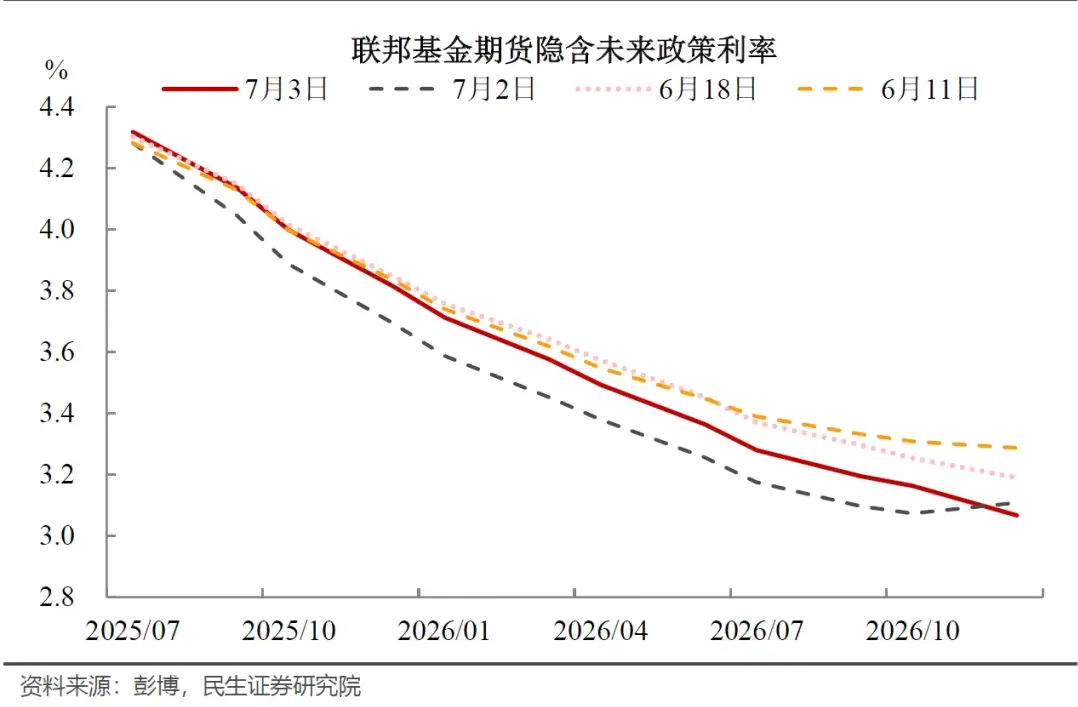
Clearly feeling that the current situation is quite poor, yet the data appears exceptionally resilient, this leads people to doubt the credibility of the data.
Currently, Bitcoin's strength is essentially a vote of confidence in the credibility of Federal Reserve policies—when the market believes that the central bank is caught in a dilemma between inflation and growth, decentralized assets naturally gain a premium.
Ultimately, it is that people no longer trust traditional financial institutions like the Federal Reserve. After all, human intervention is not beyond control.
When the yield on ten-year U.S. Treasuries approaches 5% yet still fails to stop capital outflows, the market is using real money to reconstruct a pricing system that transcends sovereign currencies.
Against the backdrop of diminishing marginal credit in the dollar system, cryptocurrencies have already undergone a transformation from risk assets to alternative reserve assets.
Is it a flower, or is it not a flower? It comes at midnight and leaves at dawn. Does it come like a spring dream that lasts not long? Does it leave like morning clouds with no trace?
Recommended Reading:
The "Beautiful Big Bill" narrowly passes, a look at the power struggles behind the 869-page text
OpenAI "Debunks" Robinhood: Unveiling the Four Major Controversies Behind Stock Tokenization
 Risk warning
 Risk warning


Popular articles





