Binance 2025 Mid-Year Research Report: Bitcoin Exhibits High Beta Characteristics, Stablecoin Mainstreaming Accelerates

 In the second half of the year, focus on the Federal Reserve's policy shift, the advancement of U.S. cryptocurrency legislation, the wave of mergers and acquisitions between TradFi and crypto, the penetration of stablecoin payments, and RWA, etc.
Original Title: Half-Year Report 2025
Compiled by: Chopper, Foresight News
In the first half of 2025, the crypto market exhibited a "first suppression and then rise" oscillating pattern: the total market capitalization fell by 18.61% in the first quarter, rebounded by 25.32% in the second quarter, and ultimately achieved a slight year-on-year growth of 1.99%.
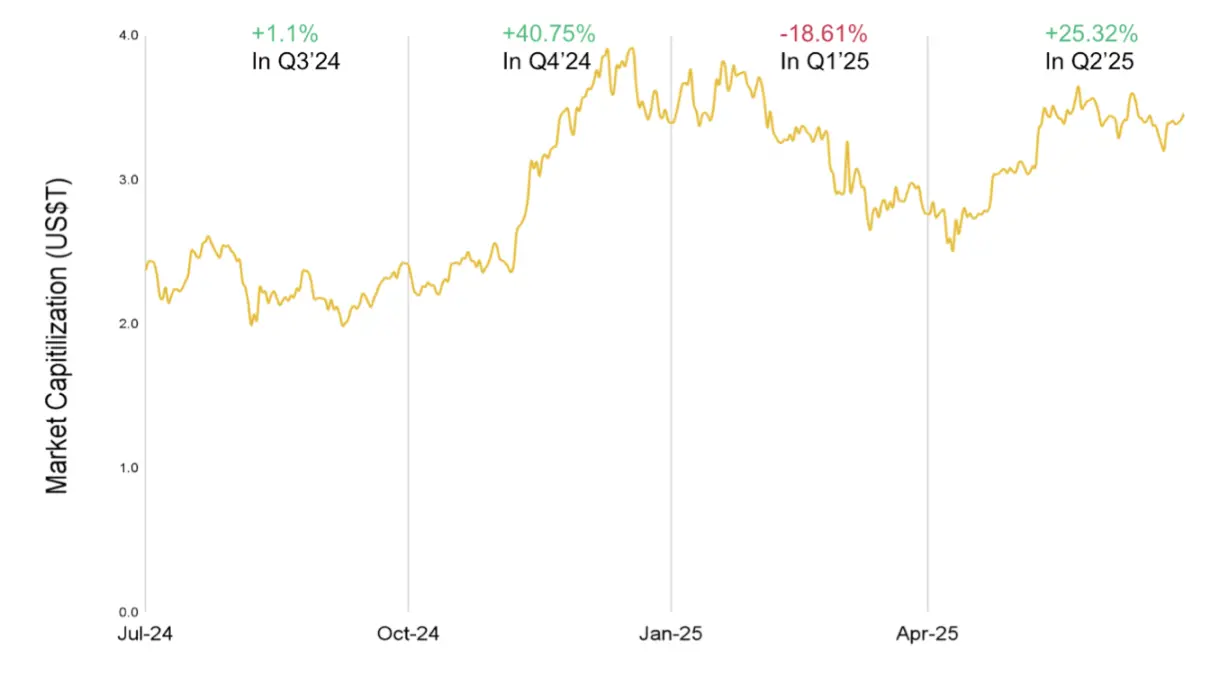
Since the beginning of the year, the total market capitalization of the crypto market has increased by 1.99%.
This dynamic stems from multiple factors:
- Expectations of interest rate cuts by the Federal Reserve in the second half of 2024 and regulatory easing after the U.S. elections drove the market to a peak of $3 trillion;
- Early 2025 saw sticky inflation, weak economic data, and the widespread tariffs implemented by the Trump administration in April dampening market sentiment;
- Recent tariff pauses and improved regulatory clarity for stablecoins and DeFi have spurred market recovery.
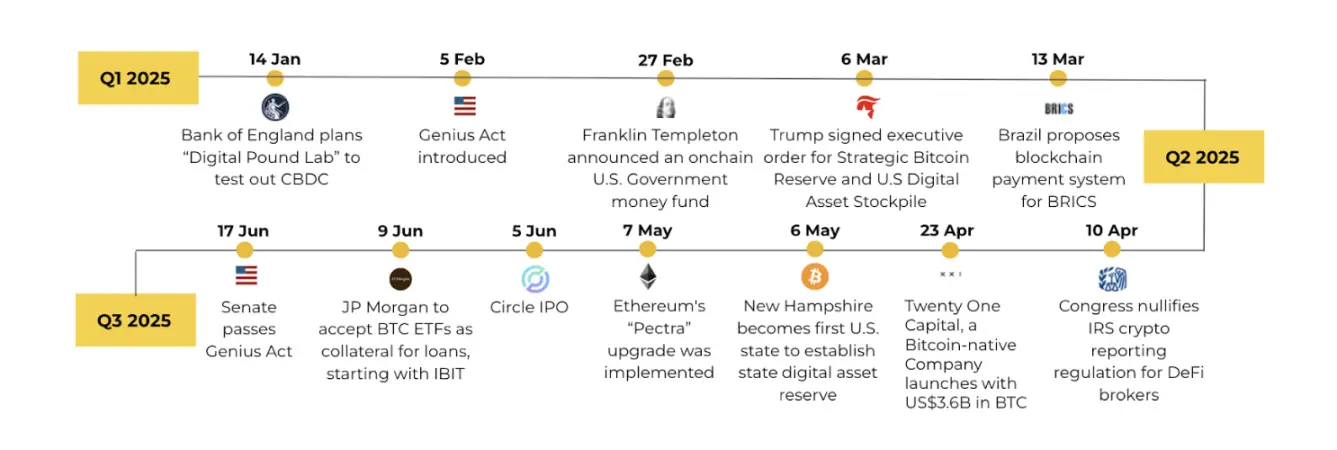
Important Event Timeline for the First Half of 2025
The core narrative of the crypto market in the first half of the year focused on Bitcoin investment tools, stablecoins, AI agents, and tokenized real-world assets (RWA). Looking ahead, global monetary policy, trade tariff dynamics, institutional entry, the integration of cryptocurrencies and AI, as well as a new round of crypto IPOs following Circle will be key points of interest.
I. Macroeconomic Background and Market Performance
Global Economic "Divergence"
Economic trends are diverging: the U.S. economy is gradually slowing, with an unemployment rate stabilizing at 4.1% but a cooling job market; China's GDP grew by 5.4% year-on-year in the first quarter, exceeding expectations, benefiting from stimulus policies; the Eurozone and Japan are steadily recovering.
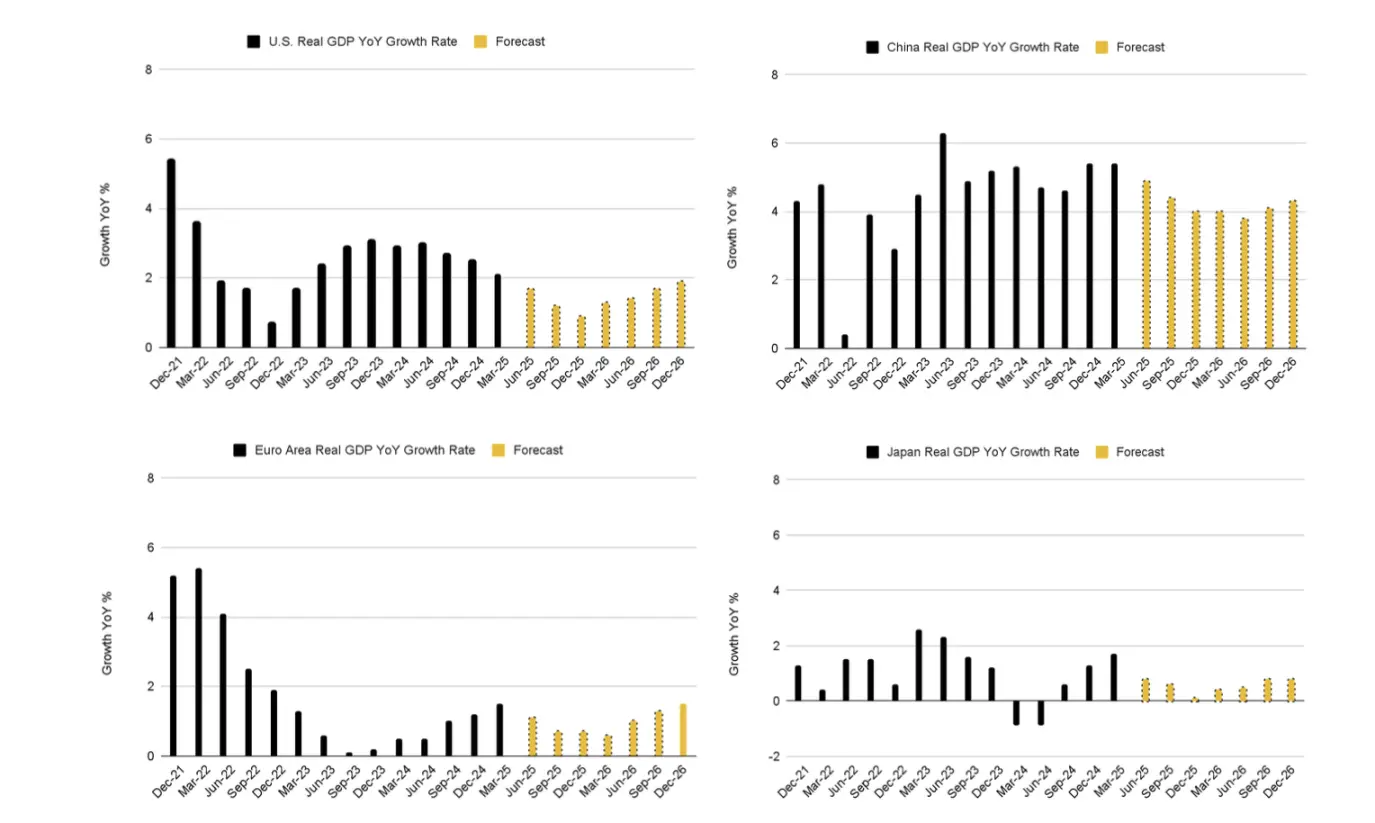
Quarterly GDP Performance and Market Forecast of G4 Countries
Liquidity easing: The total money supply of the four major economies (U.S., China, Europe, Japan) increased by $5.5 trillion, the largest half-year increase in four years, boosting risk asset sentiment.
Geopolitical shocks: The brief trade war between the U.S. and China led to tariffs soaring to 145%, exacerbating market volatility.
Bitcoin's "High Beta Attribute"
Bitcoin's return rate has reached 13% since the beginning of the year, outperforming most traditional stock indices, with a market capitalization consistently above $2 trillion. Its price cycle is viewed as a leading indicator of the global manufacturing cycle (leading by 8-12 months), suggesting potential opportunities in the second half of 2025.
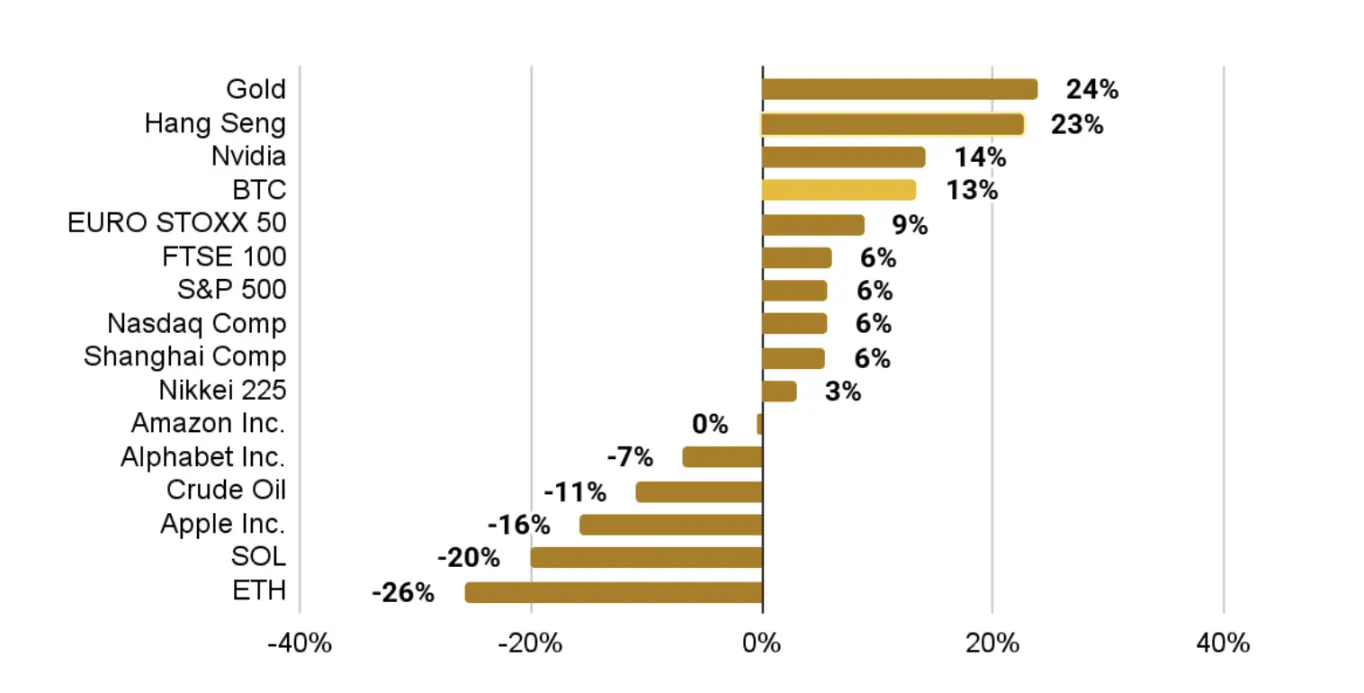
Return Rates of Major Global Assets Since the Beginning of the Year
II. Core Asset Performance: Bitcoin and Public Chain Ecosystems
Maturation of the Bitcoin Ecosystem
Accelerated institutional entry: Spot ETFs have seen a cumulative net inflow of over $13.7 billion, with BlackRock's IBIT dominating the market; over 140 listed companies hold 848,000 BTC, an increase of over 160% from last year.
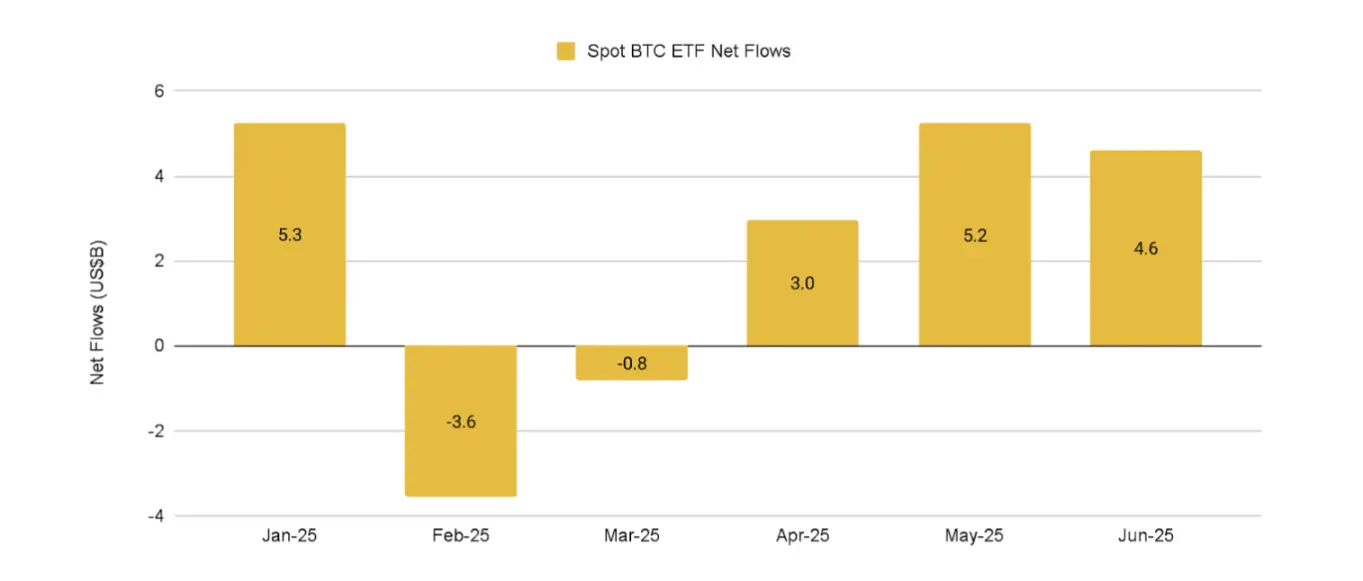
Spot Bitcoin ETFs have attracted over $13.7 billion in net inflows since the beginning of the year
Ecosystem innovation and differentiation: Layer 2 solutions (such as Stacks, BitVM) are advancing scalability, with total locked value (TVL) in BTCFi reaching $6.5 billion, a year-on-year increase of 550%; however, speculation in Bitcoin-native assets like Ordinals and Runes has cooled, with daily trading volume dropping to an 18-month low.
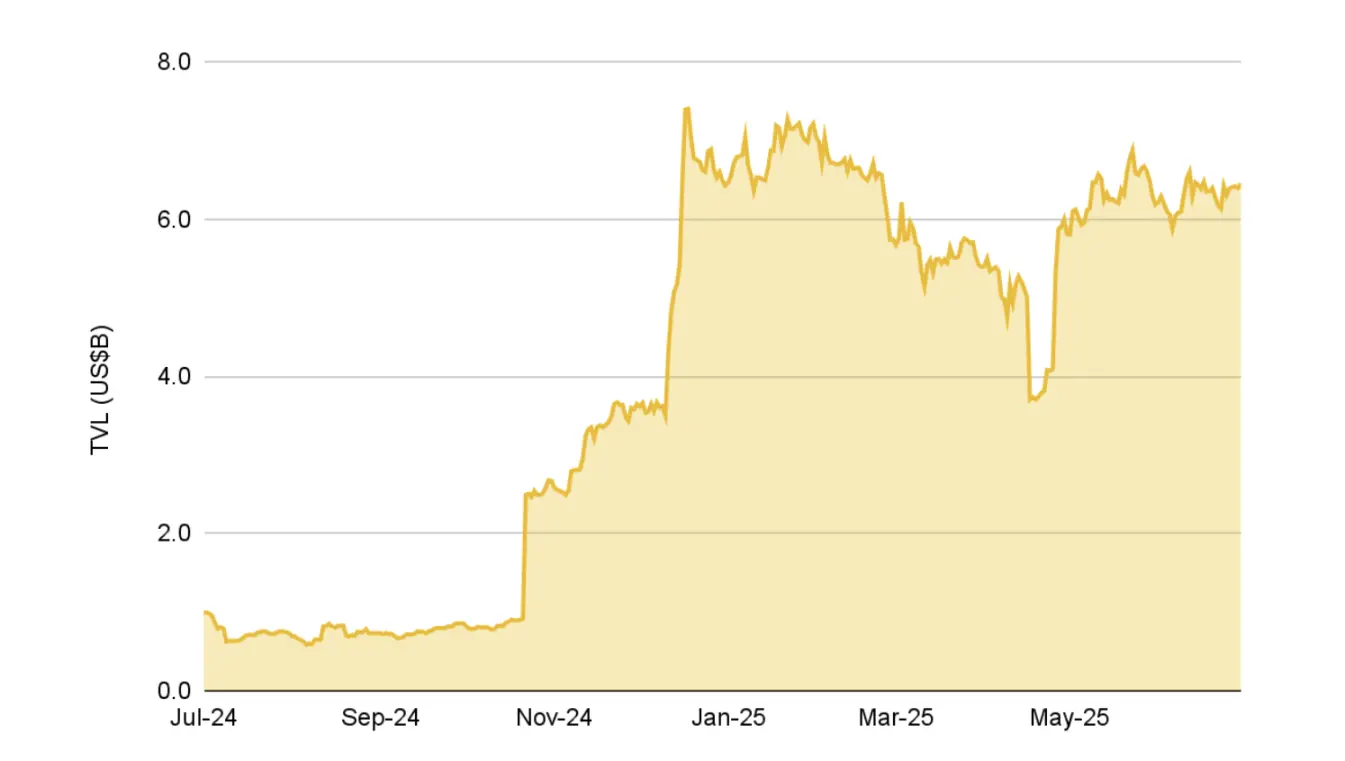
Market dominance: Bitcoin's dominance peaked at 65.1%, a four-year high, highlighting its status as a core asset.
Mainstream Public Chain Dynamics
Ethereum: ETH price fell by 26%, but ecosystem resilience is evident. The Pectra upgrade improved staking efficiency (the maximum balance per validator node increased from 32 ETH to 2048 ETH), with staking volume reaching 35.4 million ETH (accounting for 29.3% of circulation); Layer 2 (Base, Arbitrum, etc.) processed over 90% of transactions, becoming the main scalability vehicle.
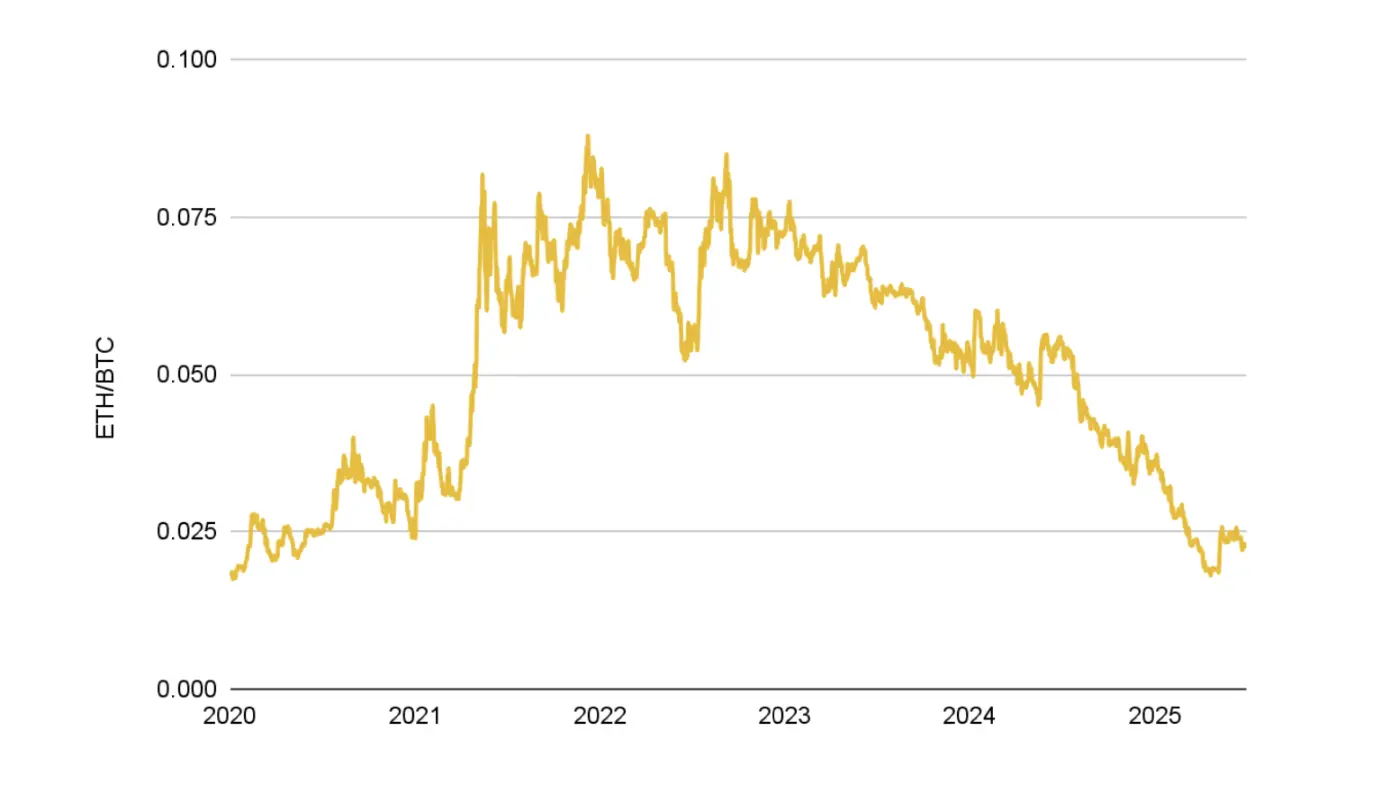
The Ethereum to Bitcoin exchange rate fell to 0.023, reaching a multi-year low, data as of June 30, 2025
Solana: Continues to maintain high throughput (daily average of 99 million transactions), with a stablecoin market cap of $10.9 billion, surpassing BNB Chain; institutional interest has increased, with several asset management companies applying for spot SOL ETFs, expected to be approved by mid-year.
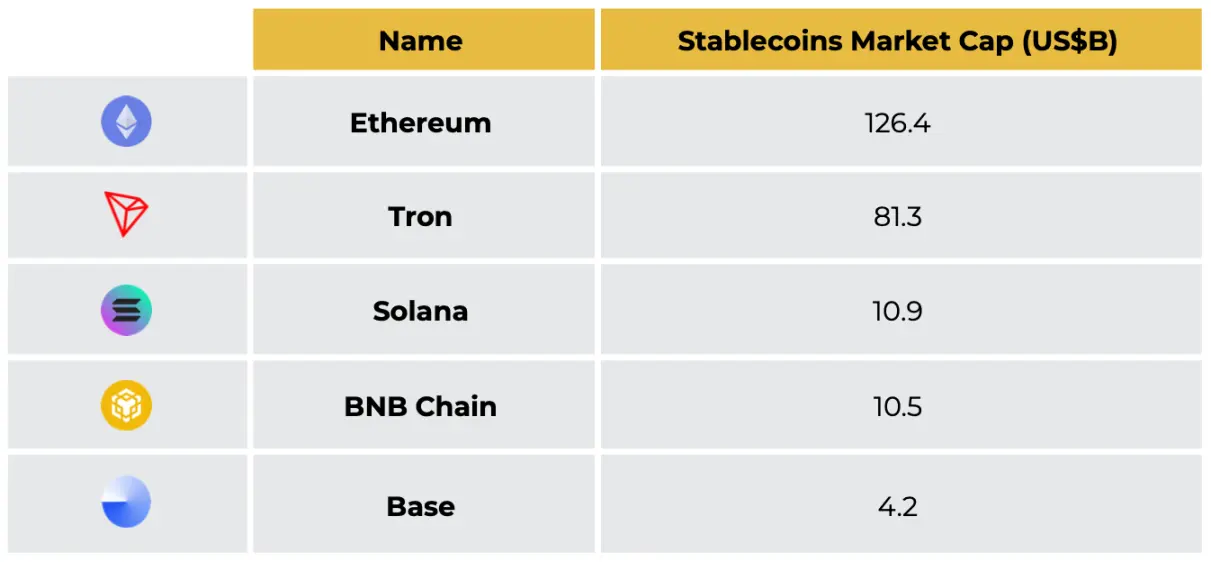
Market capitalization of stablecoins on major public chains, data as of June 30, 2025
BNB Chain: DEX trading volume reached an all-time high, with PancakeSwap contributing over 90%; through upgrades like Pascal and Lorentz, block time has been reduced to 0.8 seconds, expanding the ecosystem into Memecoin, RWA, and AI fields, with daily active addresses reaching 4.4 million.
III. DeFi and Stablecoins: From Speculation to Practicality
DeFi Enters a Mature Stage
Core data: TVL stabilized at $151.5 billion, with monthly active users reaching 340 million (year-on-year +240%), and DEX spot trading volume share rising to 29%, reaching a historical high.
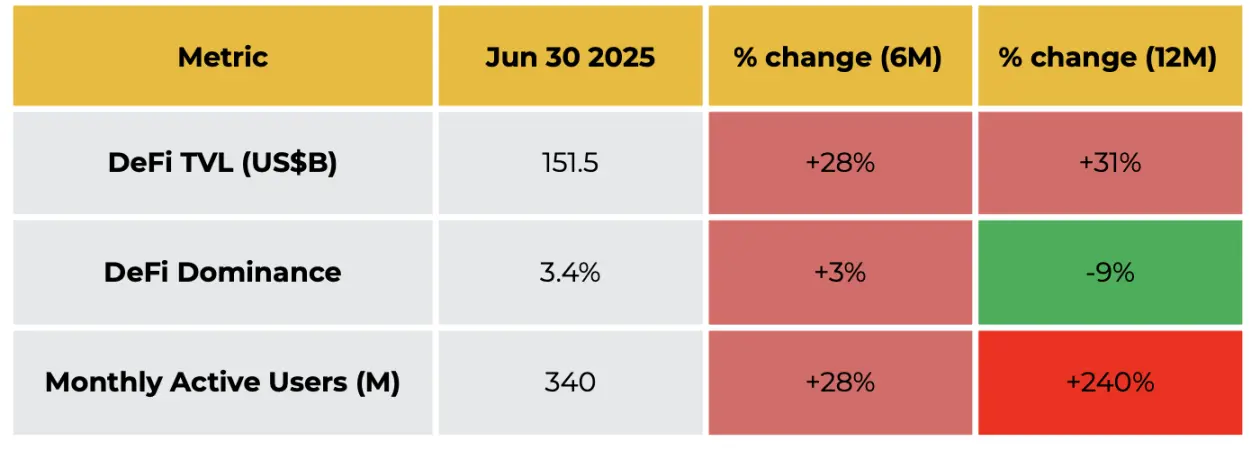
Changes in Major DeFi Indices over Six Months and One Year
Key trends:
- RWA explosion: The on-chain value of real-world assets reached $24.4 billion, with private credit accounting for 58%, becoming an important bridge connecting TradFi and DeFi.
- Breakthrough in prediction markets: Polymarket partnered with social platform X, with June trading volume exceeding $1.1 billion and monthly active users at 400,000, becoming an information analysis tool.
- Liquidity layering: Ethereum dominates institutional-level assets (heavy staking, RWA), Solana focuses on retail trading, and BNB Chain attracts traffic through Memecoin and zero gas fee activities.
Acceleration of Stablecoin Mainstreaming
Market landscape: Total market capitalization surpassed $250 billion, with USDT ($153-156 billion) and USDC ($61.5 billion) forming a dual oligopoly, accounting for 92.1% combined.
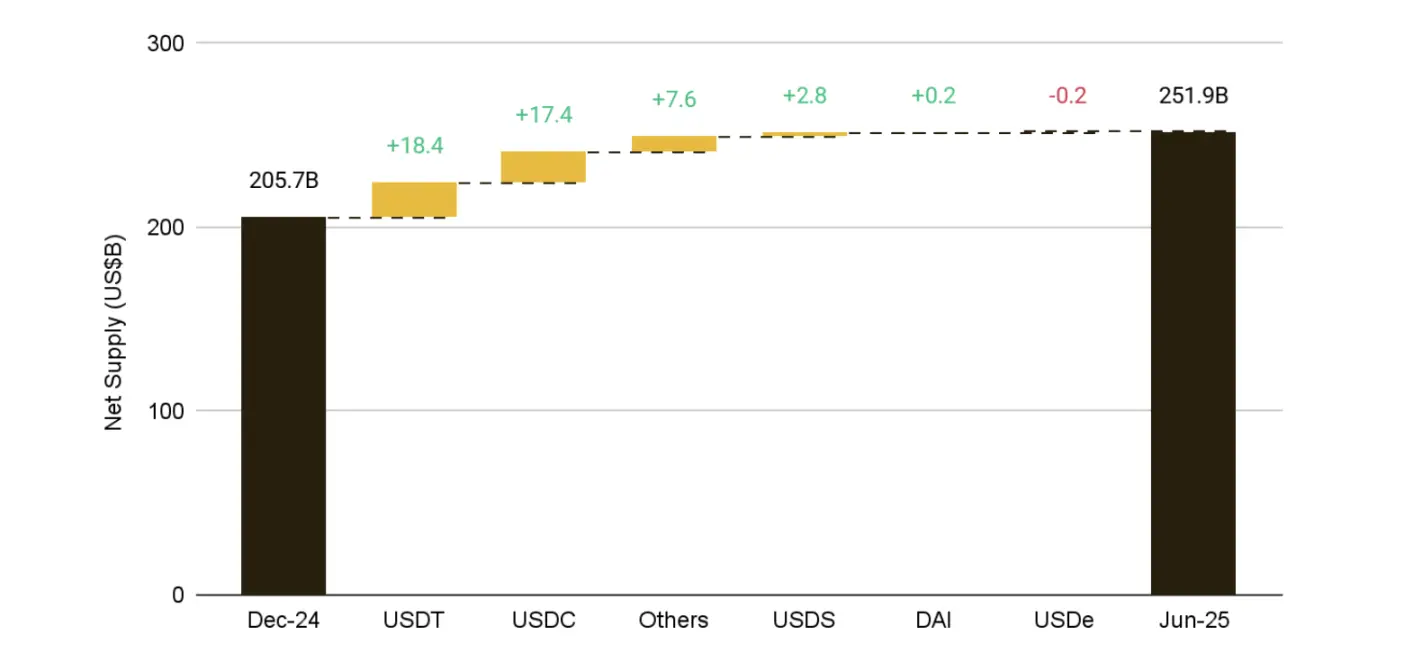
This year, the total supply of stablecoins has grown by over 22%, reaching a new high.
Key developments:
- Institutional adoption: Circle went public on the NYSE through an IPO, raising over $600 million; JPMorgan, Société Générale, and others launched bank-based stablecoins; Walmart and Amazon are exploring proprietary stablecoins to reduce payment costs.
- Regulatory clarity: The U.S. "GENIUS Act" was passed, and the EU's MiCA was fully implemented, providing a compliance framework for stablecoins and promoting their use as cross-border payment and settlement infrastructure.
IV. Institutional Entry
TradFi integration: 60% of Fortune 500 companies are laying out blockchain strategies; JPMorgan launched a deposit token JPMD based on Base; Apollo Global Management tokenized $785 billion in credit funds to Solana.
Asset tokenization: The on-chain acceleration of traditional assets like stocks and bonds, with Backed Finance's xStocks and Dinari's dShares supporting 24/7 trading, and Robinhood launching synthetic stock derivatives in the EU.
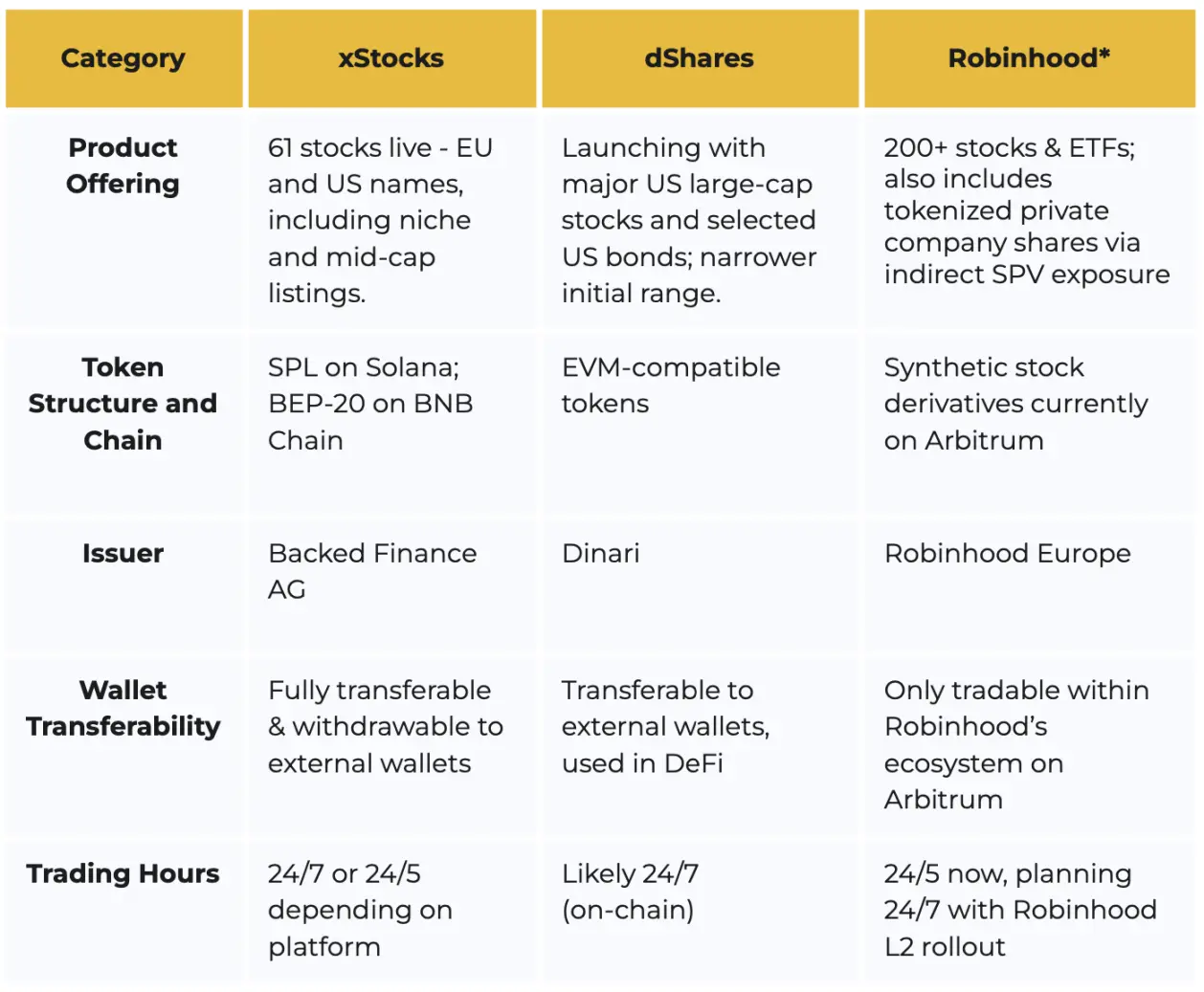
Comparative Analysis of xStocks, dShares, and Robinhood's Tokenized Stock Issuance
V. Regulatory Landscape
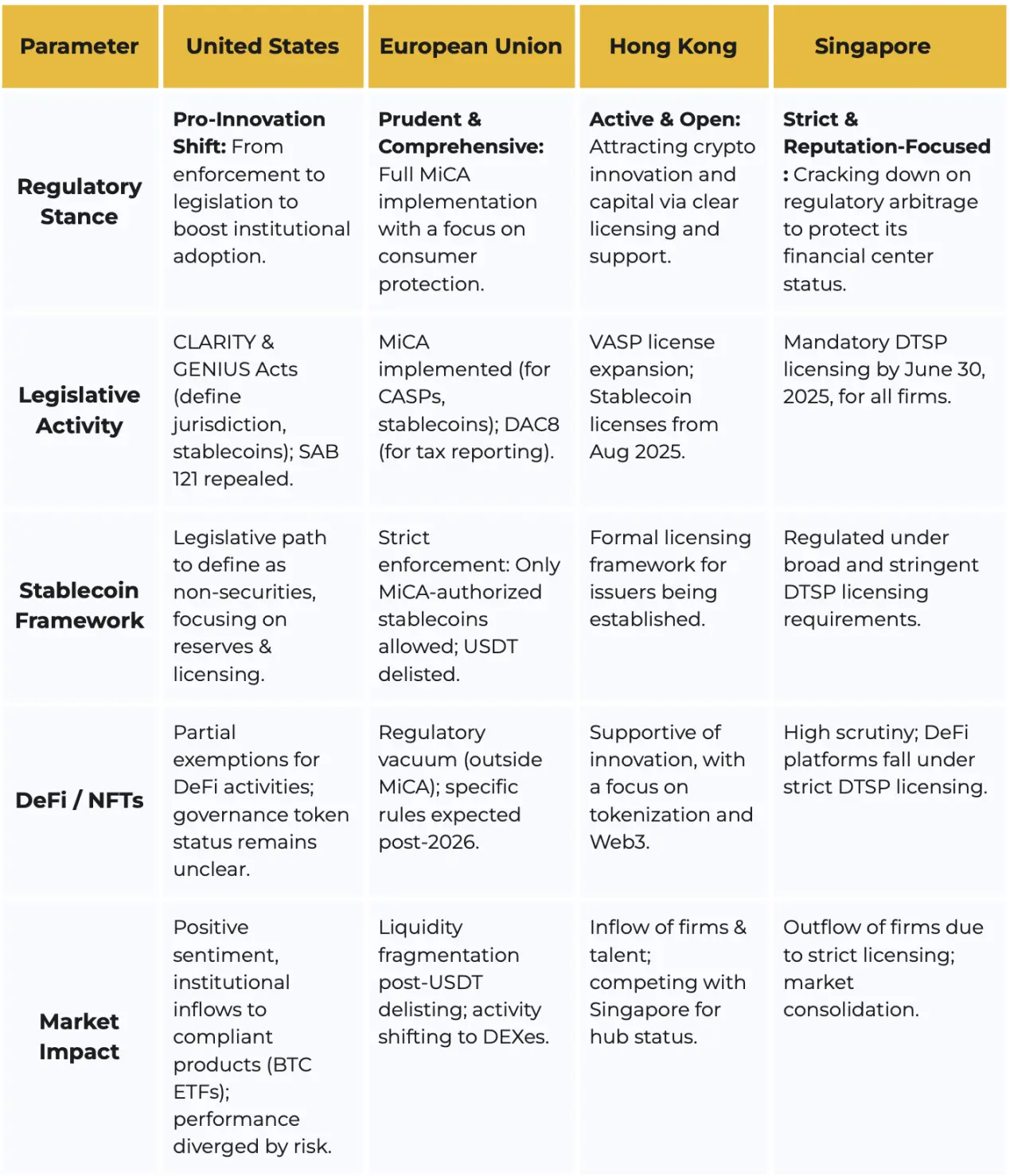
Major Cryptocurrency Regulatory Policies in the First Half of 2025
- U.S.: Transitioning from "enforcement regulation" to "legislative leadership," the "CLARITY Act" and "GENIUS Act" clarify digital asset classifications and stablecoin rules, promoting institutional compliance.
- EU: MiCA fully implemented, with USDT delisted from some exchanges for non-compliance, while compliant stablecoins like USDC gained market share.
- Asia: Hong Kong attracts innovation through open licenses and tax incentives; Singapore cracks down on regulatory arbitrage, leading to corporate migration.
Outlook for the Second Half of the Year
The Fed's policy shift, advancement of U.S. crypto legislation, a wave of mergers between TradFi and crypto, penetration of stablecoin payments, and the explosion of RWA will dominate the direction of the crypto market in the second half of the year.
 Risk warning
 Risk warning



Popular articles