








XRP breaks new highs, the fierce old coins behind the parallel crypto world
 Old coins do not die, and they must have something extraordinary.
Author: Deep Tide TechFlow
Between the ups and downs of each round of the cryptocurrency market, familiar names repeatedly appear on the list of top gainers.
XRP, XLM, ADA… These projects, considered "futures-less" in the mainstream crypto world, are still making a comeback in the new wave of bull markets.
They are not newly innovative public chains, nor are they the trendy darlings of current narratives, let alone having strong ecosystems or technological breakthroughs. But at some stage of the bull market cycle,
they always manage to rise, inexplicably, against the trend, returning to the center of attention, and even breaking new highs like XRP.
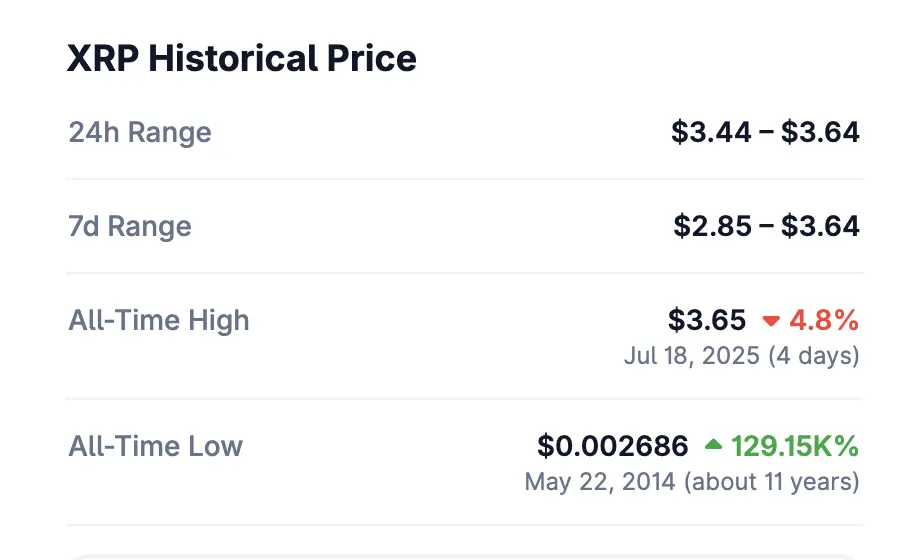
This is not merely the "speculative inertia" of financial markets; it resembles a hidden parallel world existing within the crypto industry.
In this parallel world, XRP is the future of cross-border payments, XLM is the hope for global micropayments, and ADA represents a new order for smart contract governance.
Old coins do not die; they must be extraordinary.
The Crypto Parallel World
If the crypto market is a stage filled with hot rotations and technological innovations, then the survival soil of old coins often exists behind this stage—a world almost parallel to the mainstream crypto community.
We are used to discussing new narratives and projects in Twitter, Discord, Telegram, and WeChat communities, accustomed to switching between the Ethereum, Solana ecosystems, or meme coins.
Yet we rarely realize that these assets referred to as "old coins" also possess large and stable communities behind them; they simply do not thrive in the circles we are familiar with.
XRP, XLM, ADA, HBAR… Users of these old coins are never active figures in crypto Twitter, nor are they speculators within communities who buy coins solely based on KOL promotions.
They have their own information channels, community networks, and judgment logic—or more directly, they do not care about what is currently popular in the industry.
The community of XRP is active in WhatsApp groups, Line groups, and Facebook communities in Japan, the United States, and even Latin America.
These users are largely indifferent to the technical logic behind crypto, not chasing industry trends, but they are familiar with XRP's cross-border payment story and recognize Ripple's collaboration model with banks, even viewing XRP as a "long-term asset of financial innovation."
Whether it's SEC litigation against XRP or various pessimistic voices in the market, the beliefs of these users remain largely unaffected.
The same goes for the Stellar (XLM) community.
In some developing countries, partnerships between Stellar and local financial service providers have created a genuine user base. They may not know about Staking, DeFi, or even be ignorant of the innovative ecosystem on the chain, but for them, Stellar has become a leading brand and asset in their perception.
Cardano (ADA) exhibits a more typical "die-hard fan" phenomenon.
In Japan, Africa, Eastern Europe, and parts of English-speaking countries, Cardano's education, governance, and community projects have amassed a large number of loyal users. Even in China, there is an ADA community led primarily by programmers from major internet companies.
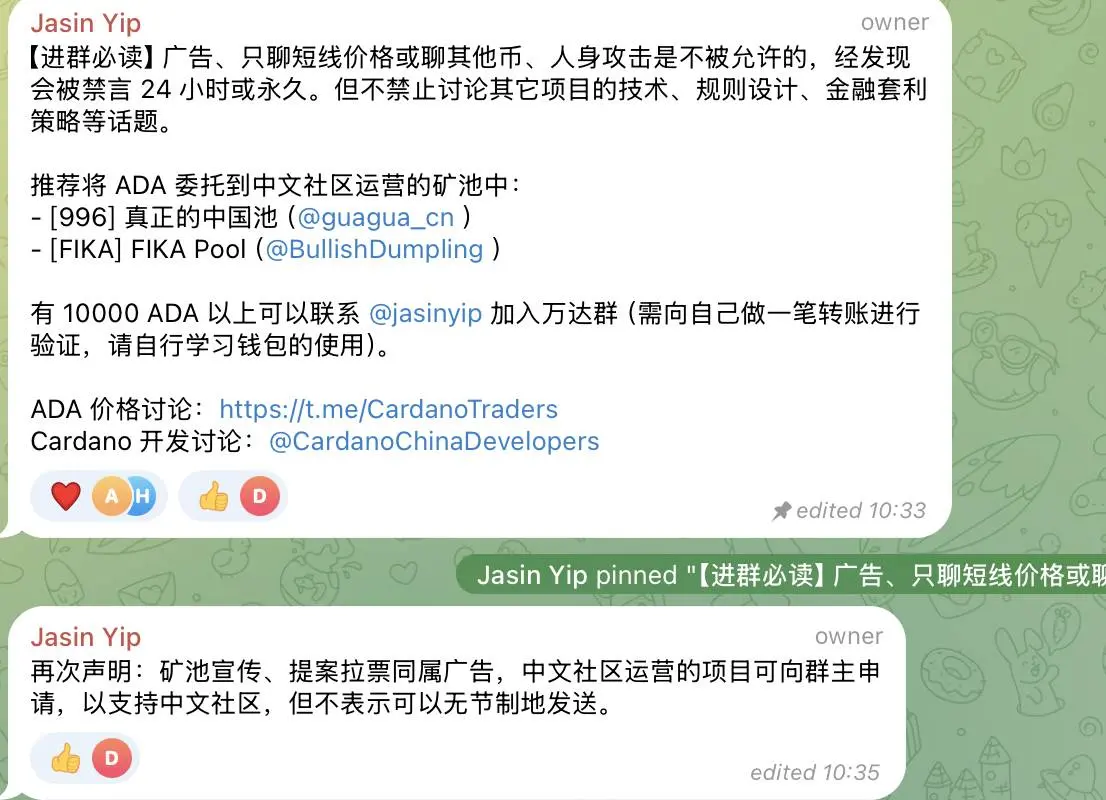
These individuals are active on Reddit, Telegram, and local forums, well-versed in Cardano's technical roadmap and the speeches of founder Charles Hoskinson. Even as the ecological development is slow and criticism is rampant in the industry, they remain steadfast in their holdings.
To the outside world, this understanding might seem disconnected from reality, but it constitutes a deeply ingrained reason for holding coins.
All of this forms an ecosystem that runs parallel to the mainstream crypto world.
Messari analyst Sam stated, crypto Twitter always looks down on those "old coins," because compared to the new technology being applied on their chains, these coins seem outdated. Their judgment is not wrong, but average retail investors do not really understand what modern on-chain technology is; they just buy the coins they are familiar with (like XRP, ADA, XLM, DOGE).
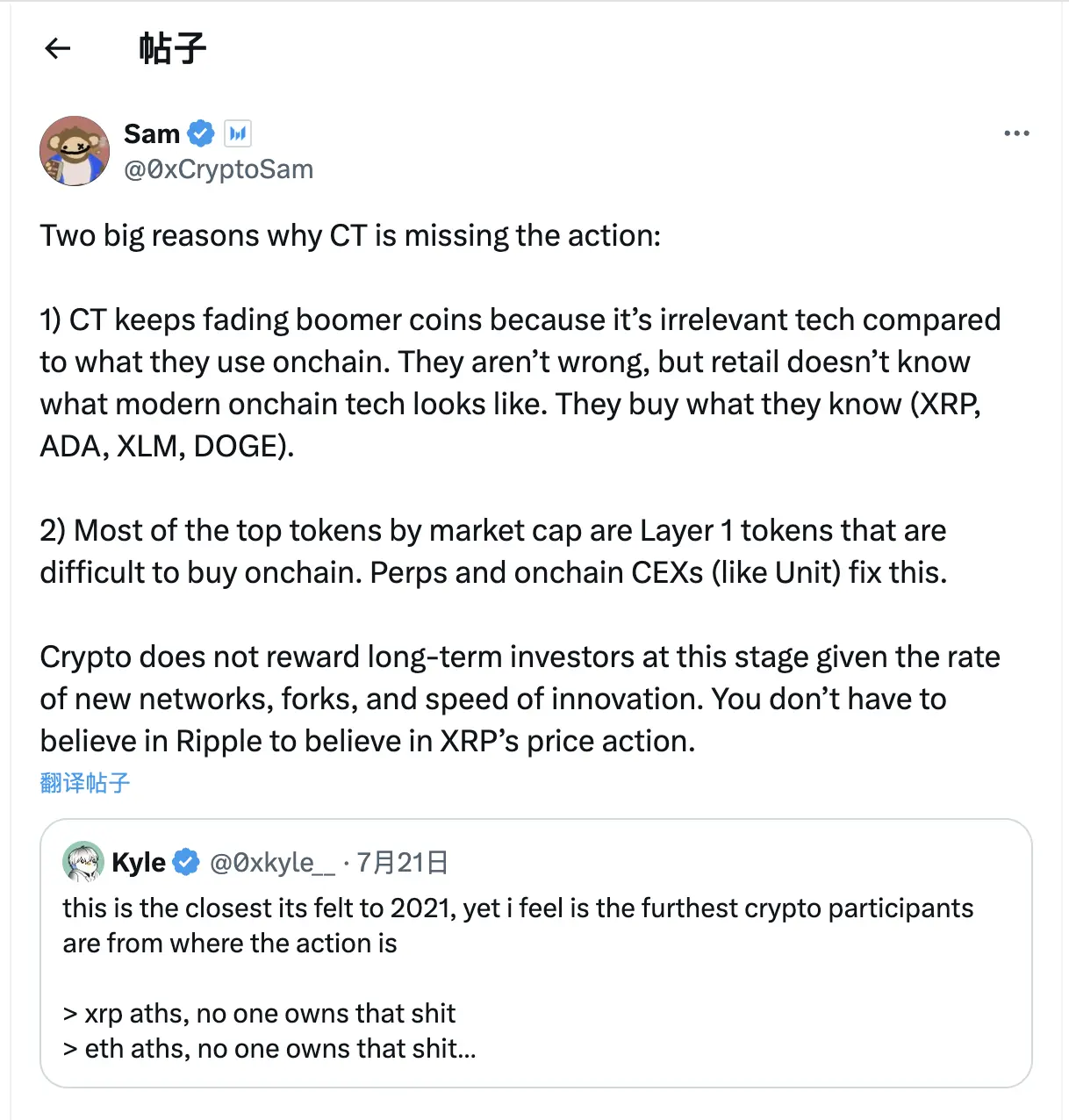
They do not survive on popularity, nor do they rise and fall with market narratives; the community operation logic of these old coins resembles the user culture of the Web2 era: brands, habits, emotional identification, and even the psychological inertia of "being used to it."
The survival of old coins has never relied on the mainstream stage of the industry; their vitality is hidden in those "secret corners" overlooked by the mainstream crypto world.
It's precisely for this reason that no exchange would easily delist XRP, XLM, or ADA.
The trading volume, active users, market depth, and hedging demand they generate are all vital components for trading platforms.
Even if the projects themselves have no technological breakthroughs, old coins still hold significant positions on trading lists for spot, leverage, and perpetual contracts.
They have become a part of the market, fitting into the habits of passive capital allocation and even being "old friends" in the minds of speculators—as long as the market kicks off, capital will always flow back in.
Not Just Capital, But Politics
Beyond users and communities, the economic and political power of these project teams significantly exceeds external perceptions.
The reason these so-called "outdated" crypto projects still shine is not only due to the presence of old users but also because they have already secured a foothold in traditional finance and political capital.
Taking XRP as an example, Ripple is not an isolated technology and business organization but a long-time "old player" that participates in traditional finance and policy-making.
Ripple's founding team and executives frequently appear as speakers at international payment forums, U.S. Congressional hearings, and fintech summits, and they have deep connections with the Trump administration.
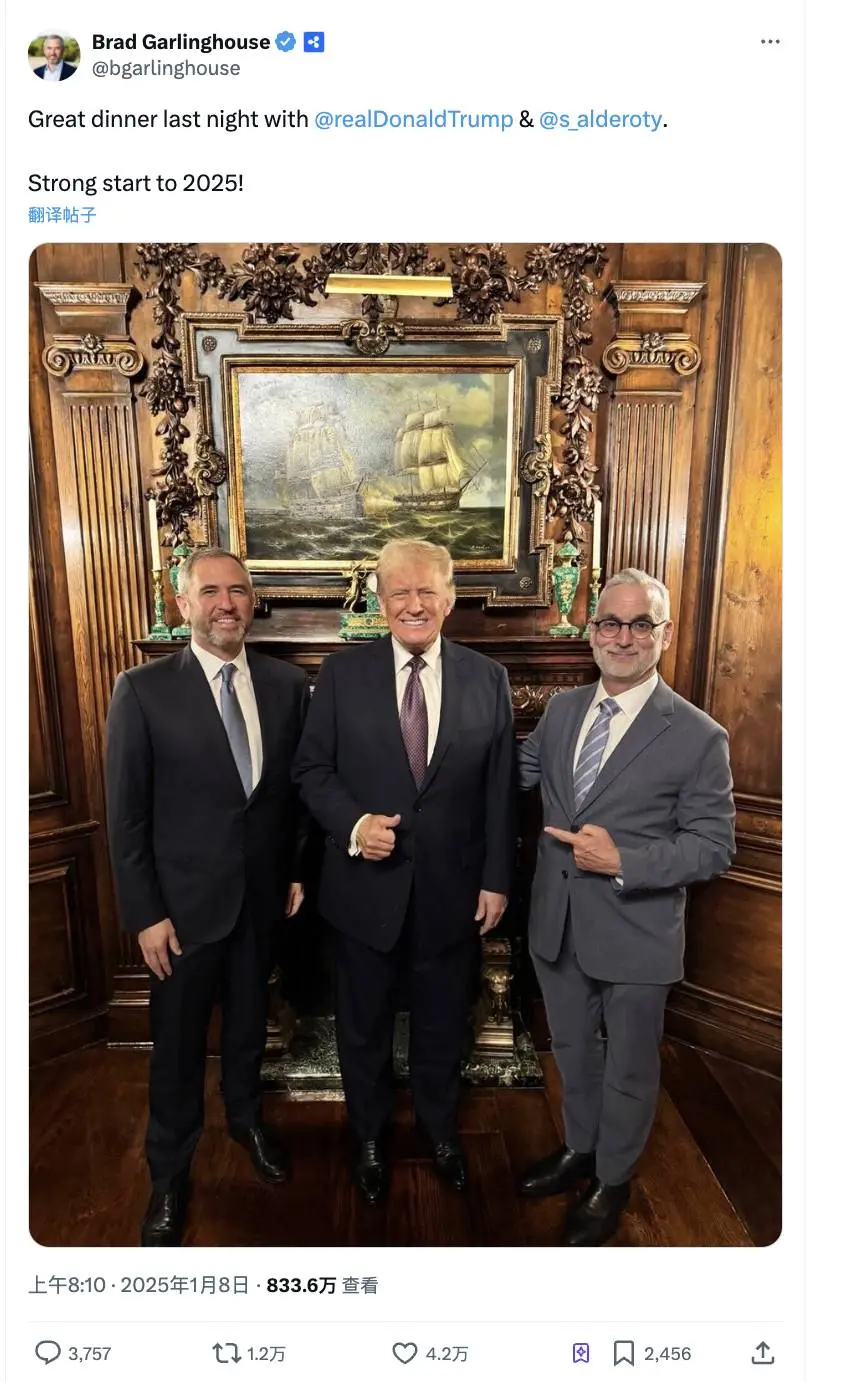
In January 2025, Ripple CEO Brad Garlinghouse was invited to a Trump dinner at the Mar-a-Lago resort in Florida, posting a photo of the event on Twitter with the caption "Strong start to 2025!"
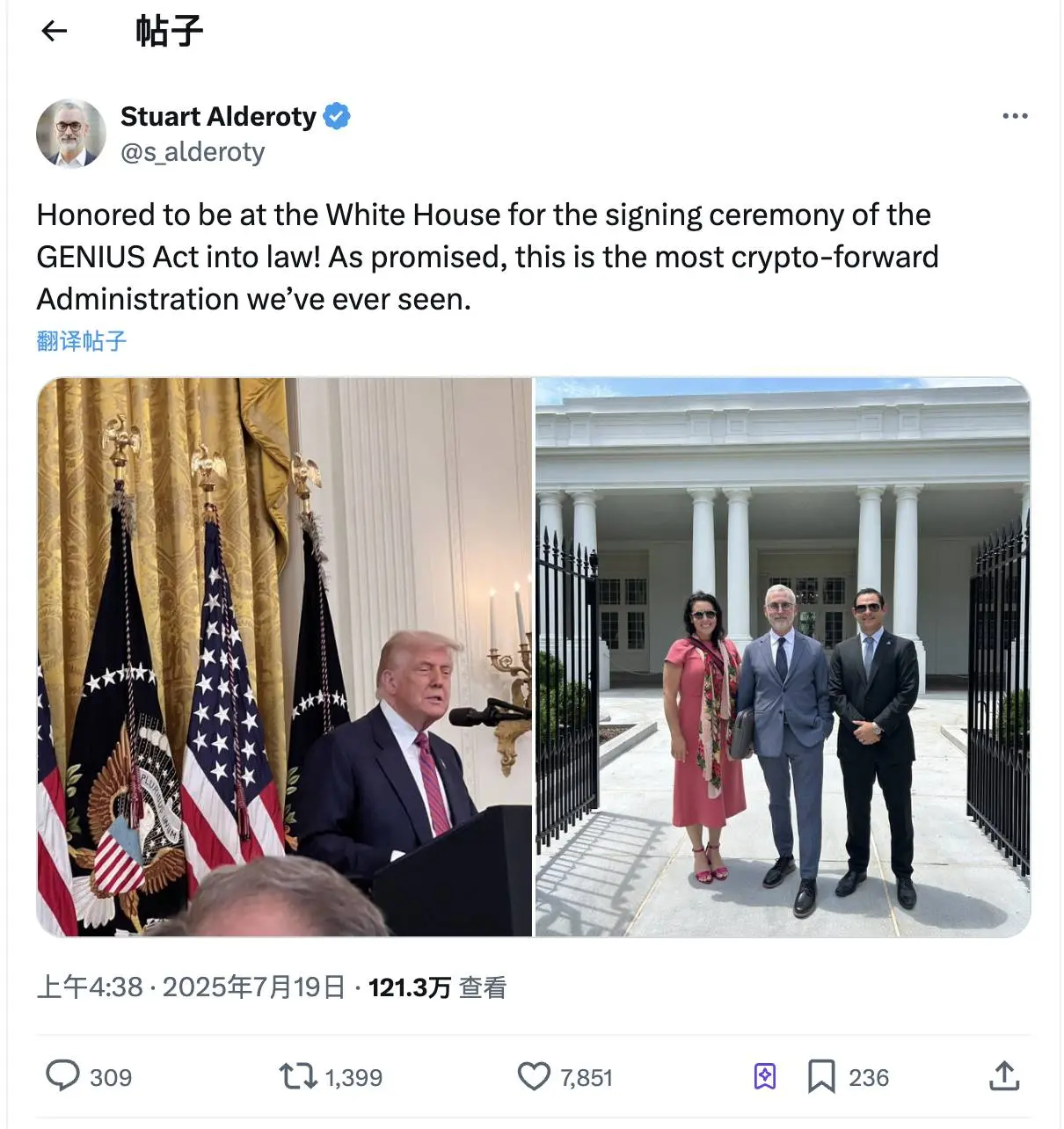
On July 19, Trump officially signed the "Genius Act" at the White House, and Ripple's Chief Legal Officer Stuart Alderoty was invited to the event, being one of the few witnesses from the cryptocurrency industry.
In the long-term lawsuit by the SEC against Ripple, Ripple not only avoided defeat but also obtained favorable outcomes, further consolidating its political standing in discussions about "compliant crypto assets."
Moreover, Ripple has collaborated with hundreds of financial institutions worldwide over the years, including traditional finance giants like Santander, PNC, Standard Chartered, and SBI Holdings. This extensive business network serves as a crucial support for market confidence in XRP.
Cardano is promoting blockchain education and digital identity projects in countries like Ethiopia and Rwanda, aligning with local national policies and governance.
Hedera's governing council is composed of globally recognized companies such as Boeing, Google, IBM, and Deloitte, and has frequently participated in discussions on digital asset and distributed ledger policies in the U.S. The board member Brian Brooks is a former acting Comptroller of the Currency and a close associate of current SEC Chairman Paul Atkins.
These projects do not just operate within the crypto sphere; they are building solid foundations in the multifaceted realms of political systems, compliance consulting, and business collaboration. They possess the capacity to influence policy, seek regulatory compromises, and attain a "chosen" status through political and capital networks.
Thus, when people question these old coins from a technological and narrative perspective, they often overlook the "moat" they have long established at policy and capital levels.
Within this framework, these old coins do not represent technological backwardness but rather a different strategy of "surviving long and stable"—the real trump cards lie in capital, business resources, and political shields.
So, the next time you see XRP, XLM, ADA, HBAR, and others on the trading leaderboard again, do not be surprised, nor should you rush to explain using technology and narratives.
They do not need to be recognized; they just need to survive, and that is enough.
Sometimes, simply "lasting long enough" already constitutes an underestimated competitive advantage.
 Risk warning Risk warning


Popular articles





