








Macroeconomic Outlook for the Cryptocurrency Market in the Second Half of 2025: "Coin-Stock Strategy" Activates Market Enthusiasm, Sustainability to Be Observed

 The market is like a vast ocean; we cannot predict the storms, we can only adjust the sails in the storm.
Author: IOBC Capital
In the first half of 2025, the Crypto market has been significantly influenced by various macro factors, among which three aspects are particularly critical: the tariff policy of the Trump administration, the Federal Reserve's interest rate policy, and geopolitical conflicts in Ukraine and the Middle East.
Looking ahead to the second half of the year, the Crypto market will continue to navigate through a complex and changing macro environment, with the following major macro factors continuing to play an important role:
1. The Derivative Impact of Trump's Tariff Policy is Inflation Expectations
Tariffs are an important policy tool for the Trump administration, which aims to achieve a series of economic goals through tariff negotiations: first, to expand U.S. exports and reduce trade barriers in other countries; second, to maintain a base tariff of over 10% to increase U.S. fiscal revenue; third, to enhance the domestic competitiveness of specific industries and stimulate the return of high-end manufacturing.
As of July 25, the tariff negotiations between the U.S. and major world economies have made varying degrees of progress:
Japan: An agreement has been reached. U.S. tariffs on Japanese goods will decrease from 25% to 15% (including auto tariffs), while Japan has committed to investing $550 billion in the U.S. (covering semiconductors and AI), opening its automotive and agricultural markets, and increasing the import quota for U.S. rice.
European Union: The deadline is August 1. EU negotiators arrived in the U.S. on July 23 for final consultations, but the results of the negotiations have not yet been made public.
China: The third round of trade negotiations will be held in Sweden from July 27 to 30. After the first two rounds of negotiations, U.S. tariffs on China decreased from 145% to 30%, while China's tariffs on the U.S. dropped from 125% to 10%; reports indicate that the deadline for U.S.-China tariff negotiations will be extended by another 90 days, and if no new agreement is reached in the third round, the possibility of tariff adjustments may be postponed.
Additionally, the U.S. has reached tariff agreements with the Philippines and Indonesia. The most closely watched is the third round of tariff negotiations between the U.S. and China. Although the uncertainty of tariff policies is gradually decreasing, the possibility of failing to achieve substantial progress in negotiations with key economies cannot be ruled out, which may lead to greater shocks in the financial markets.
From an economic theory perspective, tariffs represent a negative supply shock and have a "stagflation" effect. In international trade, while the tax subject of tariffs is enterprises, they often pass this tax burden onto U.S. consumers through price transmission mechanisms. Therefore, it is expected that the U.S. may experience a round of inflation in the second half of the year, which could significantly impact the Federal Reserve's interest rate cut pace.
In summary, the impact of Trump's tariff policy on the U.S. economy in the second half of the year may manifest as a phase of rising inflation. Unless data indicates that inflationary pressures are low, this will lead to a slowdown in the pace of interest rate cuts.
2. The Weak Dollar Phase of the Dollar Tide Cycle is Beneficial for the Crypto Market
The dollar tide cycle refers to the systematic outflow and inflow of the dollar globally. Although the Federal Reserve did not cut interest rates in the first half of the year, the dollar index has weakened: it has dropped from a peak of 110 at the beginning of the year to 96.37, showing a clear "weak dollar" state.
The weakening of the dollar may have multiple reasons: first, Trump's tariff policy has suppressed the trade deficit, disrupting the dollar's circulation mechanism, while tariff barriers have weakened the attractiveness of dollar assets, raising concerns about the stability of the dollar system; second, fiscal deficits have burdened credit, with the continuous increase in the scale of U.S. debt and repeated rises in U.S. debt rates deepening market doubts about fiscal sustainability; third, the expiration of the petrodollar agreements has not been renewed, with global central banks' dollar reserves dropping from 71% in 2000 to 57.7%, while gold reserves have increased, triggering attempts at "de-dollarization"; additionally, the policy direction reflected in the rumored "Mar-a-Lago Agreement" may also play a role in this.
Based on past dollar tide cycles, the strength and weakness of the dollar index have almost dominated the trend of global liquidity changes. Global liquidity often follows a complete dollar tide cycle of 4-5 years, exhibiting cyclical fluctuations. The weak dollar cycle generally lasts about 2 to 2.5 years; if calculated from June 2024, this round of weak dollar cycle may last until mid-2026.
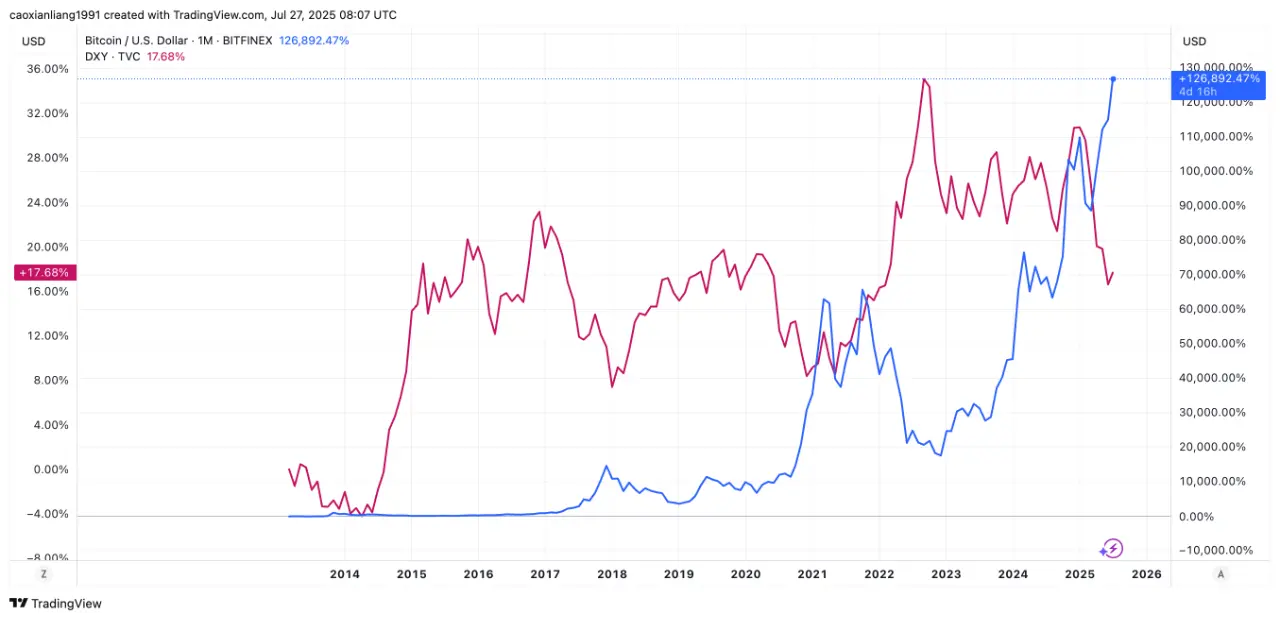
Illustration: IOBC Capital
As seen in the above chart, Bitcoin's price often shows a negative correlation with the dollar index. When the dollar weakens, Bitcoin typically performs strongly. If the "weak dollar" cycle continues in the second half of the year, global liquidity will shift from tight to loose, continuing to benefit the crypto market.
3. The Federal Reserve's Monetary Policy May Remain Cautious
There will be four Federal Open Market Committee meetings in the second half of 2025. According to the CME "FedWatch" tool, the probability of interest rate cuts 1-2 times in the second half of the year is relatively high. Among them, the probability of maintaining the interest rate in July is as high as 95.7%; the probability of a 25 basis point cut in September is 60.3%.
Since Trump took office, he has repeatedly criticized the Federal Reserve's slow pace of interest rate cuts on the X platform, even directly accusing Fed Chairman Powell and threatening to fire him, which has put some political pressure on the Fed's independence. However, in the first half of the year, the Fed withstood the pressure and did not implement any interest rate cuts.
According to the normal term arrangement, Fed Chairman Powell will officially step down in May 2026. The Trump administration plans to announce a new chairman nominee in December 2025 or January 2026. In this context, the voices of the main dovish members within the Fed have gradually attracted market attention, seen as a potential reflection of "shadow chairman" influence. Nevertheless, the market generally believes that the meeting on July 30 will maintain the current interest rate level.
The prediction of delayed interest rate cuts is based on three core reasons:
- Continued inflationary pressures—affected by Trump's tariff policy, the U.S. CPI rose by 0.3% month-on-month in June, and core PCE inflation rose to 2.8% year-on-year. It is expected that the tariff transmission effect will further push up prices in the coming months, and the Fed believes that the return to the 2% inflation target is hindered and requires more data to confirm the trend;
- Economic growth slowdown—expected growth rate of only 1.5% in 2025, but short-term data such as retail sales and consumer confidence exceeded expectations, alleviating the urgency for immediate interest rate cuts;
- Resilience in the job market—the unemployment rate remains low at 4.1%, but corporate hiring has slowed, and the market predicts that the unemployment rate may rise slightly in the second half of the year, with projected unemployment rates for Q3 and Q4 at 4.3% and 4.4%, respectively.
In summary, the probability of an interest rate cut on July 30, 2025, is extremely low.
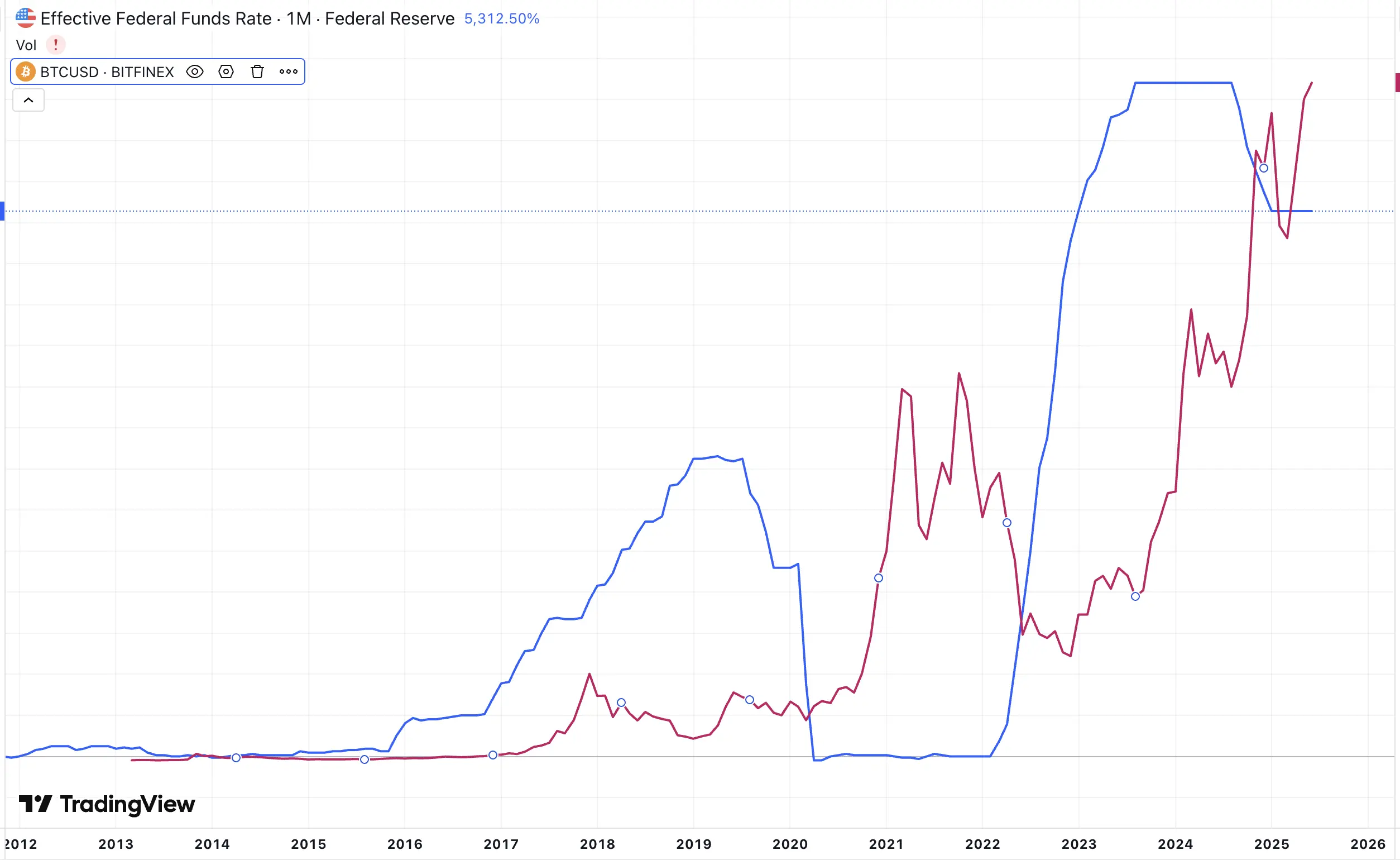
Illustration: IOBC Capital
Overall, it is expected that the Federal Reserve's monetary policy will remain cautious, with the total number of interest rate cuts for the year likely to be 1-2 times. However, observing the historical charts of Bitcoin and Federal Reserve interest rates, there is actually no significant correlation between the two. Compared to changes in Federal Reserve interest rates, the global liquidity under a weak dollar state may have a greater impact on Bitcoin.
4. Geopolitical Conflicts May Temporarily Impact the Crypto Market
The Russia-Ukraine war is currently in a stalemate, with bleak prospects for a diplomatic resolution. On July 14, Trump proposed a "50-day ceasefire deadline," stating that if Russia does not reach a peace agreement with Ukraine within 50 days, the U.S. will impose a 100% tariff and secondary tariffs on it, and provide military assistance to Ukraine, including "Patriot" air defense missiles, through NATO. However, Russia has already assembled 160,000 elite troops, planning to focus on key strongholds along the Ukrainian Donbas front. Meanwhile, Ukraine has also been active, launching a large-scale drone attack on Moscow's airport on July 21. Additionally, Russia announced its withdrawal from a thirty-year military cooperation agreement with Germany, completely fracturing Russia-EU relations.
Given the current situation, achieving a ceasefire by September 2 seems challenging. If a ceasefire is not reached by then, Trump's sanctions may trigger market turmoil.
5. Crypto Regulatory Framework Taking Shape, Industry Welcomes Policy Honeymoon Period
The U.S. "GENIUS Act" has been implemented as of July 2025, stipulating that "no interest shall be paid to token holders, but the reserve interest belongs to the issuer and must be disclosed." However, it does not prohibit issuers from sharing interest income with users, such as Coinbase's USDC offering an annualized 12%. The prohibition on paying interest to token holders restricts the development of "yield-bearing stablecoins," originally intended to protect U.S. banks from losing trillions of dollars from traditional bank deposits, as these deposits support loans to businesses and consumers.
The U.S. "CLARITY Act" clearly defines that the SEC regulates security tokens, while the CFTC regulates commodity tokens (such as BTC and ETH). It introduces the concept of a "mature blockchain system," allowing for regulatory conversion through certification—decentralized, open-source, and automated blockchain projects based on preset rules can be recognized as "mature" after certification (such as submitting materials proving no centralized control), thus completing the regulatory compliance transition from "security" to "commodity," with regulatory authority fully belonging to the CFTC, and the SEC no longer exercising securities regulatory authority over them. Additionally, it provides some exemptions for DeFi—activities such as writing code, running nodes, providing front-end interfaces, and non-custodial wallets are generally not considered financial services, exempting them from SEC regulation. They only need to comply with basic provisions such as anti-fraud and anti-manipulation.
Overall, the accelerated advancement of the "GENIUS Act," "CLARITY Act," and "Anti-CBDC Surveillance National Act" marks the transition of the U.S. approach to cryptocurrencies from a "regulatory ambiguity" phase to a "sunshine regulation" era. It also reflects its policy intent to "maintain the dollar's status as the global trade currency." As the regulatory framework gradually improves, the stablecoin market size is expected to expand further, benefiting those stablecoin projects and DeFi protocols that can meet compliance requirements.
6. "Coin-Stock Strategy" Activates Market Enthusiasm, Sustainability to be Observed
As MicroStrategy completes an epic transformation with its "Bitcoin strategy," a revolution in crypto asset reserves led by publicly traded companies is sweeping the capital markets. From ETH to BNB, SOL, XRP, DOGE, HPYE, TRX, LTC, TAO, FET, and more than a dozen mainstream altcoins have become new anchor points for corporate treasuries, and this "coin-stock strategy" is becoming the market trend this year.
A brief analysis of this capital alchemy using MicroStrategy's "triple flywheel":
- Stock-Coin Resonance Flywheel: The stock price has a long-term premium relative to net asset value (currently 1.61x), creating a low-cost financing channel; fundraising → increasing BTC holdings → driving up coin prices → amplifying the gold content per share → feeding back into valuation, forming a spiraling upward closed loop.
- Stock-Debt Synergy Flywheel: Zero-interest convertible bonds cleverly convert debt pressure, with no principal repayment burden, and the conversion rights remain with the company; attracting hedge funds for arbitrage capital, injecting low-cost liquidity.
- Coin-Debt Arbitrage Flywheel: Using depreciating fiat currency debt to replace appreciating crypto assets, completing long-cycle arbitrage layouts.
Moreover, the use of a tiered sales strategy precisely captures three types of capital: preferred shares lock in fixed-income investors, convertible bonds attract arbitrage funds, and stocks carry risk speculation. For specific logic, refer to "Understanding MicroStrategy's Bitcoin Strategy in One Article."
Since the beginning of this year, more and more publicly traded companies have adopted the "coin-stock strategy" (i.e., allocating crypto assets as reserve assets on their balance sheets), with the scale of asset reserves continuously expanding and asset allocation showing a trend of diversification. According to incomplete statistics: 35 listed companies have collectively reserved over 920,000 BTC; 13 listed companies have collectively reserved over 1.48 million ETH; and 5 listed companies have collectively reserved over 2.91 million SOL. The details of other projects will be elaborated in the next article.
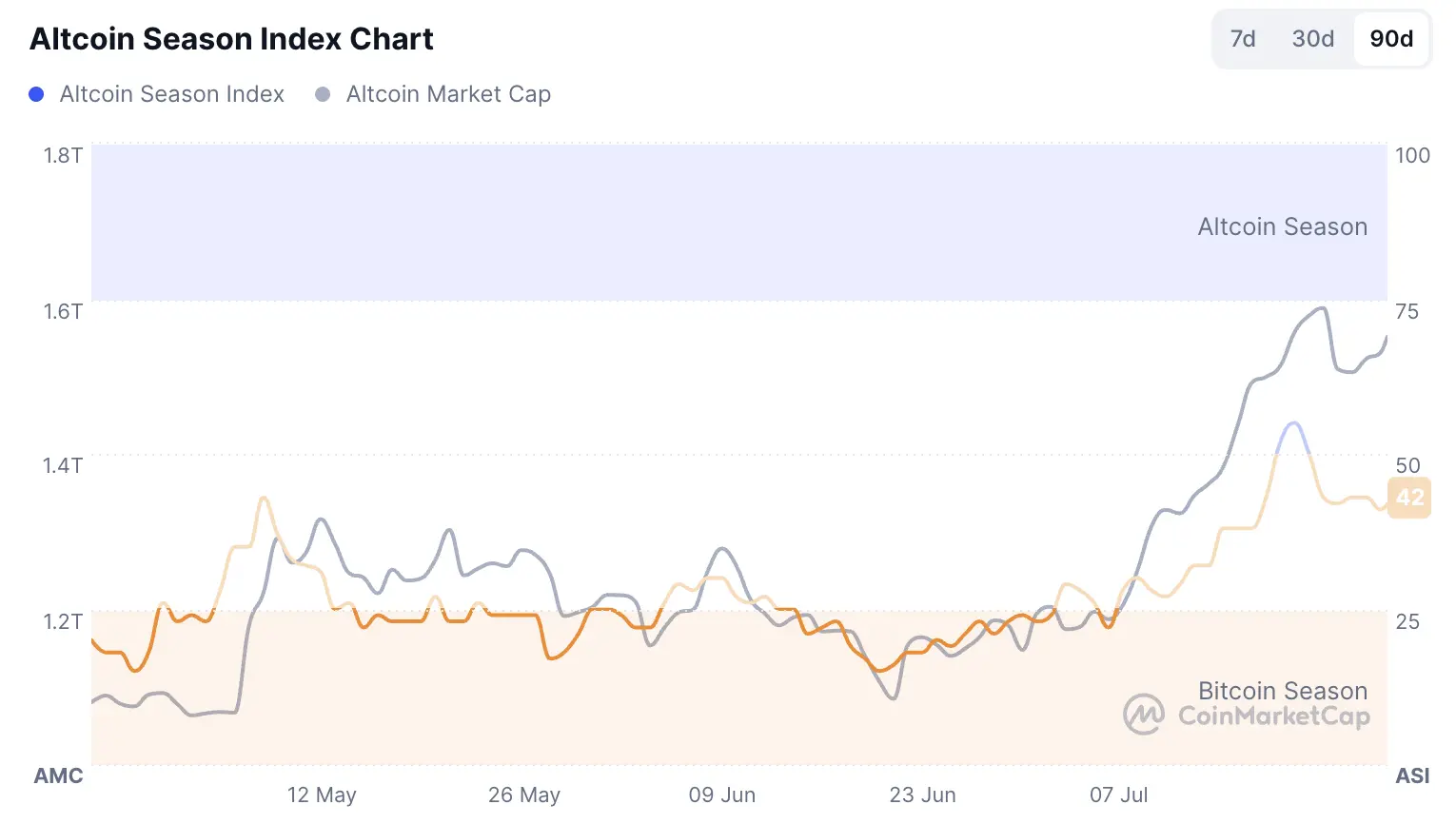
The integration of traditional finance and the crypto world is a unique market variable in this cycle. As publicly traded companies transform their balance sheets into platforms for crypto assets, we must also be cautious of the risks when the tide goes out.
Conclusion
If we simulate the foreseeable macro events in chronological order, the second half of the year can be divided into the following stages:
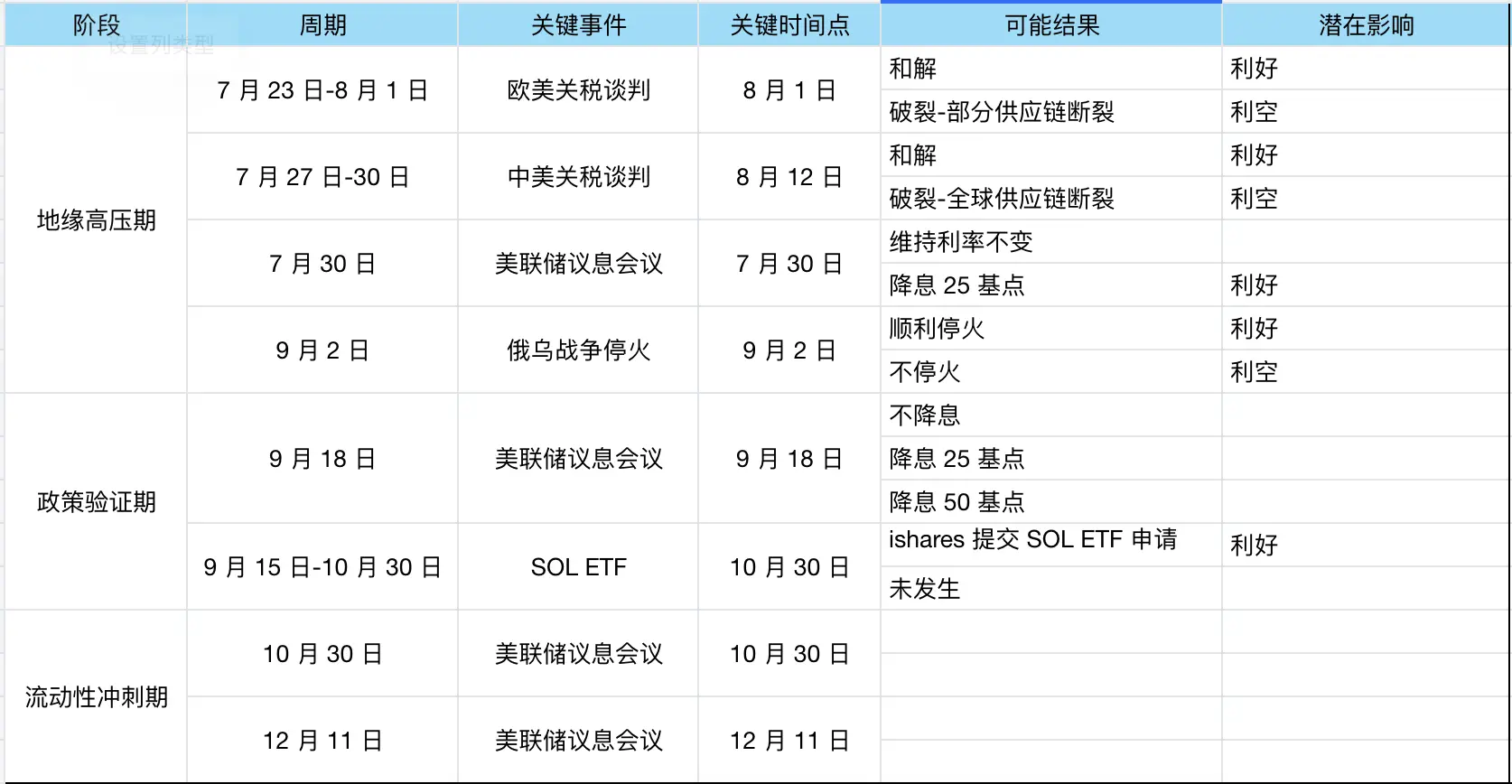
Illustration: IOBC Capital
The market is like a vast ocean; we cannot predict the storms, only adjust the sails during the storms.
Recommended Reading:
Solana and Base Founders Start Debate: Does Content on Zora Have "Intrinsic Value"?
The Fall Trilogy of Pump.fun: Legal Hunting, Price Halving, Trust Collapse
 Risk warning
 Risk warning



Popular articles





