The underlying logic of the profound transformation of currency and payment

 The transition towards a stage of total supply that can be fully provided, with units that can be infinitely refined, is an inevitable direction for the development of currency in terms of virtualization, digitization, and intelligence.
Author: Wang Yongli
With the advancement of information technology, currency and payment will undergo profound changes. The inevitable direction of currency development is to move towards a stage that is intangible, digital, and intelligent, where the total supply is sufficient and the unit can be infinitely refined. Utilizing advanced technology to maximize the expansion of payment and clearing platforms while reducing clearing intermediaries to achieve direct point-to-point payments between payers and payees is the necessary direction for the development of payment and clearing.
Currency Must Accelerate Its Move Towards Digitalization and Intelligence
The essential attribute of currency is the measure of value (unit of account), its core function is as a medium of exchange (payment tool), and its fundamental manifestation is the strongest liquidity (which requires the highest authority or highest credit endorsement or protection) of value tokens (transferable value rights). These are the three indispensable elements for understanding currency, which have remained unchanged throughout (if they change, it ceases to be currency). However, the carrier or form of currency (such as shells, coins, paper money, deposits, electronic wallets, digital currencies, etc.) and its operation methods need continuous improvement to enhance efficiency, reduce costs, and tighten risk control, thereby better fulfilling the role of currency in promoting exchange, trade, and economic and social development. Therefore, it is essential to have an accurate understanding of the essence of currency and its operational methods.
First, as a measure of value, the most fundamental requirement for currency is to maintain the basic stability of its value. This requires that the total amount of currency must change in accordance with the changes in the total value of tradable wealth priced and settled in currency, maintaining a basic stability in the overall correspondence between the total amount of currency and the total value. From a societal perspective, the total amount of currency and the total value of tradable wealth overlap, where wealth value is the real foundation, and currency is merely a representation of that wealth value (unit of measurement), representing the claim to wealth value; currency is not wealth itself. Therefore, the economic form represented by the generation and operation of wealth is referred to as the "real economy," while the economic form represented by the issuance and operation of currency (including derived financial activities) is referred to as the "virtual economy." Without the value support of real wealth, currency would be worthless. Of course, for individuals in society, currency represents a claim to value and indeed belongs to their assets. This dual attribute of currency, being "overall virtual but individual real," can indeed confuse people's understanding of currency and requires careful explanation and accurate grasp.
To maintain the basic stability of currency value, all physical assets acting as currency with limited supply (such as gold with limited reserves on Earth) or virtual assets (such as Bitcoin, whose total and phase-incremental amounts are completely locked by the system and cannot be adjusted) will severely constrain exchange and economic development because their supply cannot keep up with the infinite growth in demand for tradable wealth value, which does not meet the essential requirements of currency and will inevitably exit the currency stage, returning to its original role as tradable wealth. Currency must completely withdraw from specific physical items, truly manifesting as a measure of value, medium of exchange, and value token, ensuring that its total amount can change in accordance with changes in tradable wealth value. Thus, it can be affirmed that currency has evolved from the initial natural physical currency to regulated metal coins, then to metal-backed paper currency, and further to pure credit currency that is detached from any specific physical items, constantly shedding physical forms and highlighting essential characteristics, ultimately breaking free from any physical forms and quantity limitations, moving towards a stage that is intangible, digital, and intelligent, where the total supply is sufficient and the unit can be infinitely refined, is the inevitable direction of currency development. Therefore, we can conclude:
Credit currency no longer needs to be anchored to any specific assets, nor does it require specific reserves as value support. Currency is supported by the overall wealth value; gold reserves, foreign exchange reserves, etc., are relatively limited compared to the total amount of currency (total wealth value) and are merely tools for central banks to adjust market fluctuations beyond expectations, making it difficult to support the value of the entire currency total. The notion of re-seeking an anchor (specific anchoring assets) for currency is erroneous and a regression rather than an innovation.
Cash (paper money and coins), like the shells and coins that once served as currency, are merely carriers or forms of currency, not currency itself, and will ultimately have to exit the currency stage. Now, the form of currency is increasingly shifting to deposit accounts (electronic wallets are also a type of deposit account), and currency payments are increasingly transitioning from direct "cash payment settlement" to "transfer payment/accounting clearing" of deposit accounts. The proportion of cash and cash payments in the total amount of currency and total currency payments has become very low and will continue to decrease. Therefore, equating currency with cash, and equating currency payments with cash transactions, has completely deviated from the essence of currency and social reality, which is very erroneous.
Second, as a medium of exchange, the tools and methods of payment and clearing must be continuously improved to enhance efficiency, reduce costs, and tighten control. The methods of currency payment and clearing are increasingly shifting from traditional cash transactions to "transfer payments/accounting clearing" of deposit accounts (including bank card accounts, electronic wallets, etc.), which is also an inevitable direction for currency development. Transfer payments/accounting clearing can replace cash payments, reduce cash demand, tighten payment monitoring, and move towards intelligent accounts, with deposit accounts becoming the new carriers or forms of currency. Deposit accounts can include essential information needed for management, such as account holder identity information, currency symbols, account passwords (public and private keys), and smart contracts, no longer requiring encryption of cash (such as paper money), but rather encrypting the entire process of account and transfer payments, allowing for transfers without relying on dedicated communication lines or local area networks, but rather utilizing public internet or blockchain platforms, even transcending national borders, achieving the broadest coverage of users worldwide, allowing users to register directly on the platform (registration equals account opening, and the registration address serves as the user account) without needing clearing institutions as intermediaries (de-intermediation), realizing point-to-point instant payment clearing between payers and payees on the same platform, thereby reducing intermediate links, significantly improving efficiency, lowering costs, and tightening risk control.
Furthermore, as the strongest liquidity value token, currency implies that there must be competition among different currency carriers or forms and their operational methods, and only currency that receives the highest authority or credit protection can survive in competition. The highest credit protection has been necessary since the birth of currency, becoming one of its main characteristics.
In today's world, which is still fundamentally composed of sovereign independent countries or regions, and where the United Nations cannot replace national sovereignty, the highest authority or credit is national sovereignty and national credit. Therefore, currency ultimately manifests as national sovereign currency or legal tender, even if the world becomes highly unified and forms a single global village, the currency at that time will still be the world sovereign currency.
In cross-border economic and trade exchanges, the first step is to determine which currency will be used for pricing and clearing. If the domestic currency is not an important international currency, it is also necessary to consider which currency to reserve for international payments. This inevitably leads to mutual comparisons and competition among national currencies, with the most important standard being the comprehensive comparison of "safety, liquidity, and profitability," which is backed by the global ranking of the comprehensive national strength of the currency-issuing country, especially its international influence. Only the currency of the country with the strongest comprehensive national strength and international influence is likely to become the world's central currency or the number one international currency.
Thus, in the case of national independence, promoting the denationalization of currency or supranationalization, including creating a supranational world currency structurally linked to multiple sovereign currencies (such as SDRs), is difficult to replace sovereign currency and is hard to successfully implement. The euro is not a supranational currency but a type of "regional sovereign currency," because after the official launch of the euro, the original sovereign currencies of its member states completely exited (transferred monetary sovereignty), and the two cannot coexist.
Of course, in emerging or specific fields where legal (sovereign) currency cannot meet certain special needs, tokens can emerge that are issued and operated at a fixed ratio backed by legal currency. For example, in China, the renminbi is the legal currency, but there are still meal tickets/cards in schools and institutional cafeterias, shopping vouchers/cards in malls, and points/tokens on e-commerce platforms (which can be exchanged for goods as agreed), which are essentially tokens of the renminbi in specific fields and must be regulated by monetary authorities, not allowed to circulate freely beyond the set scope (otherwise it would impact the management of legal currency). At the same time, legal currency also needs to actively improve its operational methods, enhance efficiency, reduce costs, and meet various emerging or special payment needs as much as possible, replacing various tokens.
Payment Clearing Will Move Towards De-Intermediation and Point-to-Point Transactions
Under the transfer payment/accounting clearing system, the payment clearing between payers and payees first requires the opening of real deposit accounts at payment clearing institutions (such as banks) and maintaining sufficient deposits (currency stock) for payments. The traditional approach is:
In the case where clearing accounts have been opened between the banks of the payers and payees, the payer sends a payment notification to their bank, specifying the payer's name, deposit account number, company seal or payment password, as well as the payee's name, bank, deposit account number, transaction contract number, and other elements. After the bank verifies that everything is correct, it deducts the corresponding amount from the payer's account according to the notification and sends a deduction notification to the payer (which becomes the payer's accounting basis), while also sending a transfer notification to the payee's bank and increasing the payee's bank's deposit (or reducing its own deposit at the payee's bank). Once the payee's bank receives the transfer notification and verifies it is accurate, it increases its deposit at the payer's bank (or reduces the payer's bank's deposit at its own bank), while also increasing the payee's deposit and sending a funds entry notification to the payee (which becomes the payee's accounting basis). Thus, through the adjustment records of the deposit accounts by the relevant parties, the payment clearing of currency (funds) can be completed, thereby replacing the flow of cash with the transfer of currency ownership, significantly reducing costs and risks associated with cash printing, distribution, payment, and management. In this process, banks and other clearing institutions must not only efficiently complete the transfer payment/accounting clearing but also meet regulatory requirements such as anti-money laundering, anti-bribery, and anti-terrorism financing, curbing the illegal use of currency.
If there are no clearing accounts opened between the banks of the payers and payees, they will need to bridge through a bank that opens a clearing account together, ensuring that the accounts can connect and complete the transfer of funds. Therefore, most countries generally implement a "centralized account opening system" among banks, where each bank opens an account at the clearing center, allowing for mutual account connectivity, thereby significantly reducing the number of clearing accounts opened and the difficulty of management.
In cross-border payment clearing, the situation becomes much more complex. It not only involves the issue of account opening between clearing banks but also, due to the sovereign nature of currency, the clearing accounts are subject to the supervision of various countries, making it difficult to implement a centralized account opening system internationally. Without directly opening clearing accounts, sometimes multiple clearing banks (clearing intermediaries) are needed to transfer funds to ultimately complete the transfer from the payer's account to the payee's account. Additionally, there are differences in language, customs, time zones, regulations, and efficiency between different countries, and if the payment notifications and their encryption methods are not standardized and unified, processing will be very troublesome, requiring a long time and incurring high costs. Therefore, in the case where centralized account opening for clearing accounts is difficult, there needs to be an internationally professional, shared, neutral, and secure payment message management and processing system, such as the Society for Worldwide Interbank Financial Telecommunication (SWIFT), which can greatly improve efficiency and reduce costs.
With the advancement of communication and encryption technologies, payment clearing is shifting from the original paper message transmission and manual processing by relevant institutions to telegrams, telecommunications, the internet (computer system connections), and mobile terminals for information transmission, with the initiator entering payment information and passwords on terminal devices (including mobile phones), and the receiving party's computer automatically processing after verifying the password's accuracy, continuously improving methods and processes, thereby enhancing efficiency, reducing costs, and tightening risk control. As long as both payers and payees have accounts at the same bank, all institutions within the bank are interconnected to form a unified clearing platform, and payment clearing can basically achieve instant (second-level) arrival.
From this, it can be seen that the payment clearing of currency from the payer to the payee, apart from direct cash transactions, involves at least the following elements:
First, there must be real and accurate deposit accounts. To meet regulatory requirements such as KYC (Know Your Customer) and AML (Anti-Money Laundering), deposit accounts must have the account holder's real, accurate, and complete identity information. After a deposit account has received or made payments, it should promptly complete the entry and change the account balance.
Second, there needs to be a telecommunications channel or network platform for fund transfer and remittance, forming a unified and standardized encryption method and operational rules. The more this network platform can utilize open and shared infrastructure, the broader its coverage, the more registered users it has, and the lower its operational costs, the stronger its advantages will be, making it more competitive and viable.
Third, promote asset securitization (standardization), digitalization, and tokenization (Tokenization; tokens should not be called代币), to achieve online global 7x24 hour highest efficiency trading and clearing.
Now, the integration of blockchain and encryption technology enables a single platform to achieve global coverage without borders, embedding the platform's operational rules within the system ("coding is the rule"), no longer requiring platform controllers as operational intermediaries (decentralization). Users register and open accounts on a unified platform without needing to register with clearing institutions, eliminating the need for clearing institutions as transfer intermediaries (de-intermediation), allowing the payer to perform payment operations directly, achieving point-to-point direct payments with the payee, with the platform system participating in distributed verification, storage, and accounting, ensuring the entire process is open, transparent, traceable, and difficult to falsify. This can greatly improve efficiency and reduce costs (if cross-platform transfers are needed, or if platform currency needs to be converted into other currencies, additional operations and costs will be required), especially compared to the traditional cross-border payment clearing system dominated by banks and SWIFT, whose advantages are very apparent, bringing a huge impact on the traditional payment clearing system.
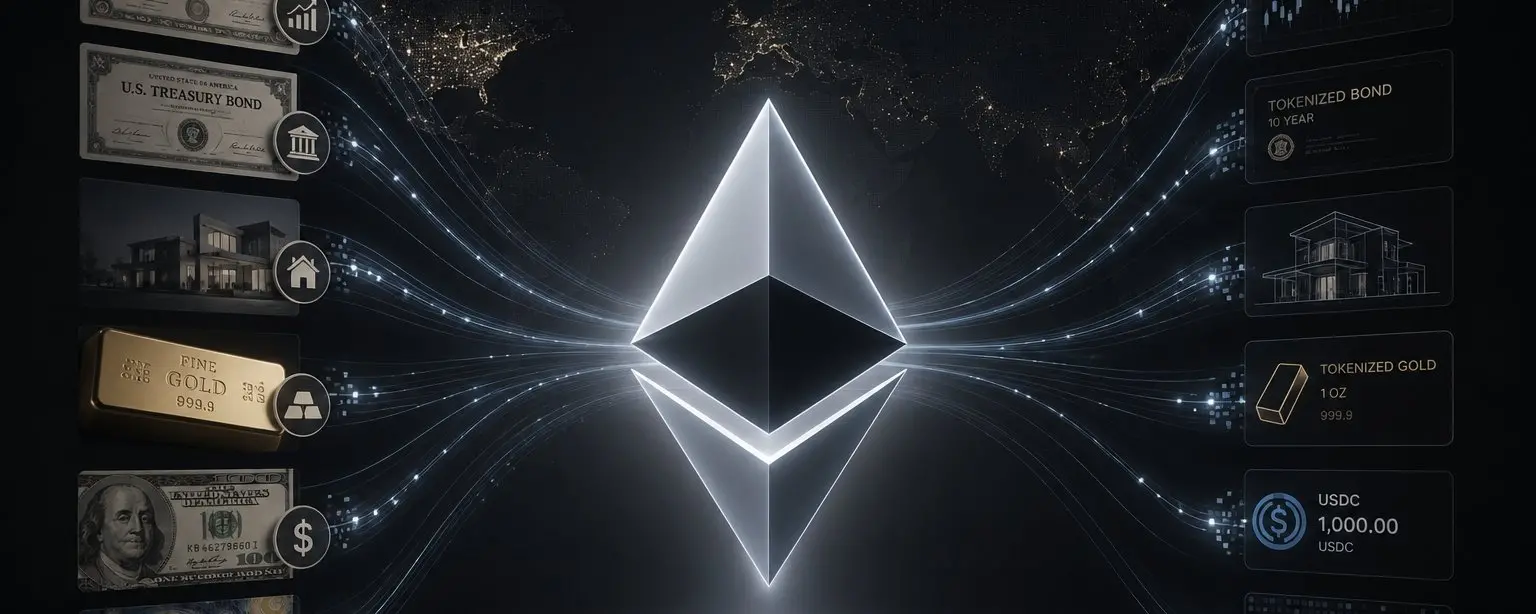
This brand new blockchain technology and platform can now promote blockchain-native encrypted assets (such as Bitcoin, Ethereum, etc.), as well as blockchain-derived encrypted assets issued through ICOs (various altcoins), various stablecoins (especially fiat stablecoins pegged to legal tender), non-fungible tokens (NFTs), real-world asset tokens (RWAs, including real data asset tokens RDA), and even tokenized stocks, tokenized bonds, and tokenized money market funds, achieving continuous trading and clearing on public (non-permissioned) blockchain platforms 7x24 hours, thus giving rise to a new borderless "encrypted world" and accelerating its development, which requires close attention.
Fourth, in the case where multiple trading and clearing platforms coexist, and the same product needs to operate on multiple trading and clearing platforms, it is necessary to achieve connectivity or bridging between different blockchain platforms to solve the transfer clearing of funds and information aggregation across platforms. Of course, this cross-platform processing will increase costs and reduce efficiency. If a single platform has a wide coverage, allowing users and products from across the country or even globally to register and operate on the same platform, then cross-platform connectivity or bridging will no longer be necessary. Therefore, having more trading and clearing platforms is not necessarily better; it should promote as much concentration, unification, professional sharing, and fairness as possible.
It is certain that utilizing advanced technology to maximize the expansion of payment and clearing platforms while reducing clearing intermediaries to achieve direct point-to-point payments between payers and payees is the inevitable direction for the development of payment and clearing. Of course, de-intermediation should not equate to de-regulation; blockchain platforms, as important financial infrastructure, must meet regulatory requirements such as anti-money laundering, anti-bribery, and anti-terrorism financing, and cannot simply pursue efficiency and cost reduction at the expense of financial regulation.
In summary, with the advancement of information technology, currency and payment will continue to undergo profound changes. However, the transformation must adhere to its essence and principles, aiming to promote the healthy and efficient operation of currency and play a better role. It is particularly important to point out that currency is a very important concept that should be quite rigorous, and non-currency assets should not be casually labeled as "currency" or "coin". However, the current use of "coin" is very chaotic and not serious, referring to various encrypted assets as cryptocurrencies or digital currencies, translating NFTs as "non-fungible tokens" (coins must be fungible, divisible, and aggregable; non-fungible items cannot be called coins at all), translating RWAs as "real-world asset tokens," and various tokenized securities, tokenized funds, tokenized deposits, etc., are all very inaccurate and non-standard, and should be corrected and accurately defined. The term "Token" should only be translated as "通证," which is an asset, not currency.
Recommended Reading:
Stablecoins Breaking Through: In-Depth Analysis of 12 Countries' Stablecoin Regulatory Policies
 Risk warning
 Risk warning