








Trump selected the chief designer of the "Mar-a-Lago Agreement" to initiate the "MAGA-ization" of the Federal Reserve?

 U.S. President Trump nominated his chief economic advisor Stephen Miran to the Federal Reserve Board, officially taking the first step in reshaping the Federal Reserve.
Author: The Wall Street Journal
U.S. President Trump has nominated his chief economic advisor Stephen Miran to the Federal Reserve Board, officially taking the first step in reshaping the Fed.
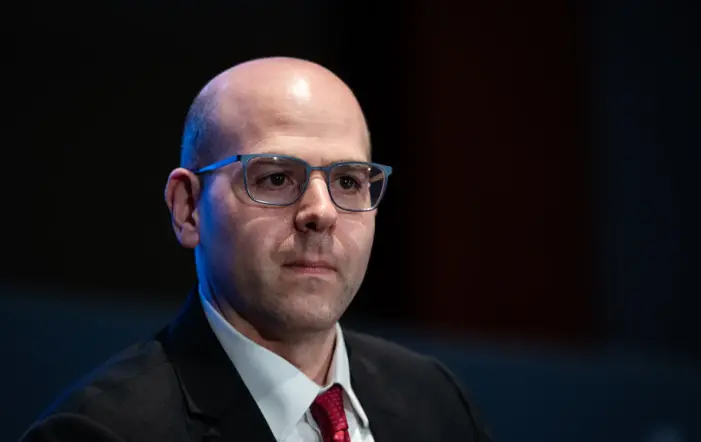
On Thursday local time, Trump announced via his social media platform that he would nominate Stephen Miran, the chairman of the White House Council of Economic Advisers, to fill the vacant seat on the Federal Reserve Board left by Adriana Kugler's early resignation.
Trump praised Miran's expertise in economics as "unparalleled" and stated that he has "been with me since the beginning of my second term." Kugler's term was originally set to end in January 2026.
Miran has authored the influential "Mar-a-Lago Accord" paper, advocating for the U.S. to take measures to lower the long-term value of the dollar. Additionally, he has publicly questioned the independence of the Federal Reserve and supported significant reforms, including allowing all Fed officials to vote at every meeting and giving the White House the authority to dismiss central bank officials at any time.
This nomination is seen as Trump's first substantive action to reshape the leadership of the Federal Reserve during his second term. Analysts believe that Miran's addition will provide a strong supporter for Trump's calls for interest rate cuts and financial deregulation within the FOMC, undermining the authority of current Chairman Powell and accelerating the "MAGA-ification" of the Fed.
However, Miran's appointment is only temporary. Trump indicated that he plans to nominate a second candidate for the board in January, who will serve a 14-year term and is expected to succeed current Fed Chairman Powell.
There are differing opinions in the market regarding whether Miran will participate in the September Federal Open Market Committee meeting. Some analysts believe that due to the Senate confirmation process typically taking 4-8 weeks, combined with the Senate's August recess, the new board member will likely be unable to assume office in time for the September meeting. However, some investors think this could be a recess appointment that does not require Senate confirmation.
1. Proposer of the "Mar-a-Lago Accord," who has repeatedly questioned the Fed
Stephen Miran is an economist who graduated from Harvard University. Before joining Trump's second administration as CEA chairman, he served as a senior advisor at the Treasury Department during Trump's first term. He is best known for his policy advocacy stemming from an influential paper he published in November 2024.
In that paper, Miran envisioned a trade and monetary agreement he called the "Mar-a-Lago Accord," which centers on advocating for the U.S. to take measures to suppress the long-term value of the dollar. Although Miran later stated that the paper does not represent government policy, it has become a distinctive label for his personal policy inclinations.
More notably, he has publicly questioned the independence of the Federal Reserve. In a column titled "The Fed Is Not as Independent as It Seems" written for Barron's in 2024, Miran explicitly pointed out that "the wall between fiscal and monetary policy has partially broken down, and the independence of the central bank has been exaggerated." He believes that the Fed has never truly been isolated from other government departments, especially the Treasury.
This viewpoint is consistent with his recent statements on social media, where he defended Trump's pressure on the Fed to cut rates, claiming the president has a "strong record in both dovish and hawkish directions" on interest rates.
Miran also argued that the Fed adopted overly flexible inflation targets in 2022, ultimately damaging its credibility and placing it on "thin ice." He warned that if the central bank fails to properly fulfill its responsibilities, "it will face the risk of Congress revising the Federal Reserve Act or future presidents using this as a reason to dismiss board members."
In 2023, when high interest rates led to the sudden collapse of Silicon Valley Bank, Miran criticized the Fed again. He pointed out that the Fed's policies "have created an expectation in the market that no matter how high inflation is, it will take aggressive easing measures whenever the economy faces a downturn."
2. Advocated for comprehensive reform of the Fed
Before joining the current administration, Miran co-authored a far-reaching report for the Manhattan Institute in 2023 with his co-author Daniel Katz (currently Chief of Staff to Treasury Secretary Scott Bessent), proposing a series of radical reform proposals for the Federal Reserve.
The report criticized the "pretense" that officials with political backgrounds can make unbiased decisions. They argued that "pretending that someone can easily switch between highly politicized and so-called non-political roles without allowing political bias to influence policy is, at best, naive and, at worst, insidious."
The structural reform blueprint proposed in the report includes:
All Federal Reserve officials—including all regional Fed presidents—should have voting rights at every FOMC meeting.
State governors should have control over local oversight committees that select regional Fed presidents.
All senior Federal Reserve officials—including board members and regional Fed presidents—should be subject to dismissal by the White House at any time.
Board members should be prohibited from serving in the executive branch for four years after their term ends.
The Federal Reserve's operating budget should be appropriated by Congress, rather than remaining independent as it is now.
3. Mixed reactions on Wall Street, focus on September rate meeting
Reactions on Wall Street to Miran's nomination have been notably divided. Some investors believe he will be beneficial for the market, while others express concerns about his qualifications and political stance.
Tom Di Galoma, Managing Director at Mischler Financial, believes that Miran's addition is a "good thing" for the Fed because he "may lean towards lowering interest rates." John Velis, an Americas macro strategist at BNY Mellon, also thinks that Miran is likely to be a "reliable dove."
However, Andrew Brenner, head of international fixed income at NatAlliance Securities, bluntly stated that Miran is "highly controversial" and questioned whether he could be confirmed by the Senate, citing that he "lacks market experience, lacks business experience, and is always involved in politics."
There are differing views in the market regarding whether Miran will participate in the September FOMC meeting.
Barron's pointed out that the nomination requires Senate confirmation, a process that could take 4 to 8 weeks, making it "unlikely" for him to be in place in time. However, Velis from BNY Mellon believes this could be a "recess appointment," thus not requiring Senate confirmation.
Regardless, most analysts, such as Ryan Sweet from Oxford Economics and Marc Chandler from Bannockburn Global Forex, have stated that this nomination will not change their expectations for an imminent rate cut by the Fed.
4. The beginning of the "MAGA-ification" of the Fed?
If confirmed, Miran will serve the remainder of Kugler's term until the end of January next year. This means he may have only a few opportunities to vote at interest rate decision meetings. Given the signs of economic cooling, the likelihood of the Fed cutting rates in September is already high, so Miran's addition may have limited direct impact on the short-term interest rate path.
Although his term may be short, Trump's nomination of Miran is seen as the beginning of his long-term plan to reshape the Federal Reserve.
Unlike some of Trump's nominees during his first term, Miran is viewed as a representative who is "fully committed to the MAGA cause." During his time in the White House, he published analytical reports asserting that despite tariffs, the prices of imported goods were still declining, experiences that have prepared him for future debates at the FOMC.
In the July rate meeting, two board members appointed by Trump voted against immediate rate cuts. Miran's addition will strengthen this "dovish coalition," accelerating the end of the Fed's long-standing tradition of striving to communicate with "one voice."
Media commentary points out that Miran's joining the Fed carries significant symbolic meaning, as it brings a firm "MAGA perspective" into the Federal Open Market Committee and is interpreted as the beginning of Trump's systematic infusion of his economic ideas into the U.S. central bank, signaling profound changes in the Fed's operational methods and policy discourse.
 Risk warning
 Risk warning

Popular articles





