








RWAfi Industry Research: The Technological Evolution and Market Landscape of Trillion-Dollar Real World Asset Tokenization

 The essence of the RWAfi concept is to reorganize the flow of value in the real world using blockchain technology. If successfully realized, it could fundamentally improve asset liquidity. However, achieving this vision requires the collaborative advancement of technological innovation, policy support, and market education.
Industry Background: Digitalization Anxiety in Traditional Finance
BCG's latest report indicates that the RWA (Real World Assets) market is expected to grow from $3.1 trillion in 2025 to $16 trillion by 2030—this means a need for more than fivefold growth in the next five years. This figure reflects not only market opportunities but also the structural challenges faced by the traditional financial industry.
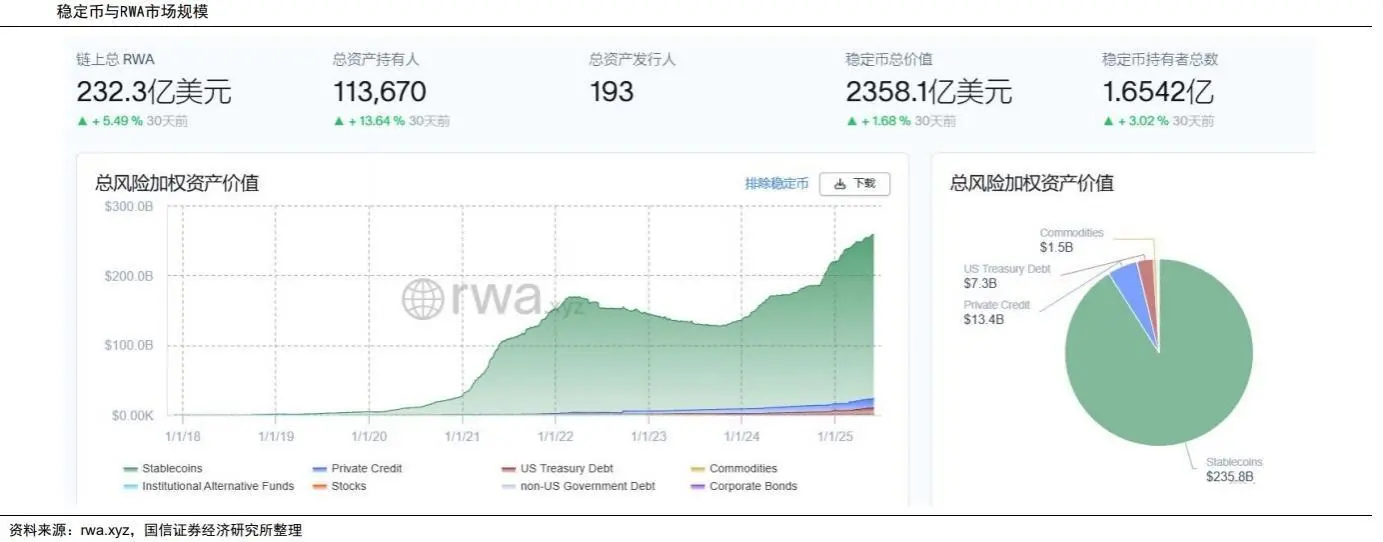
The core issue currently faced by traditional financial institutions is insufficient asset liquidity. Physical assets represented by real estate, infrastructure, and commodities often have high value but low liquidity. A $10 million solar power station, under traditional frameworks, can only be traded as a whole, and this "all-or-nothing" model severely limits the efficiency of asset utilization.
From a regulatory perspective, multiple jurisdictions are accelerating the formulation of RWA-related policies. Singapore's Monetary Authority's Project Guardian, Hong Kong's RWA regulatory sandbox, and the EU's MiCA legislation are all attempting to establish a regulatory framework for the tokenization of digital assets. In the U.S., the Trump administration's crypto-friendly stance is, in fact, a strategic consideration to avoid being outpaced by other countries in standard-setting.

Technical Path Analysis of RWAfi: Engineering Challenges from Concept to Implementation
In this context, RWAfi is in a period of technical path exploration and breakthrough, currently facing three levels of technical challenges in RWA projects:
Choice of Underlying Architecture: Most projects choose to build on existing L1s like Ethereum, which has lower development costs but faces issues such as high gas fees, slow confirmation speeds, and difficulty in deeply optimizing for RWA scenarios. An alternative path is to build a dedicated RWA chain, which, although more complex to develop, allows for native design addressing compliance, cross-chain, and asset management needs at the architectural level.
Compliance Integration Challenges: The core pain point of RWA lies in how to meet regulatory requirements while maintaining the openness of blockchain. Technical aspects that need to be addressed include: balancing identity verification and privacy protection, automating compliance checks, and adapting to cross-border transaction regulations. Current mainstream solutions include on-chain KYC systems, programmable compliance modules, and API integration with traditional financial infrastructure.
Asset Bridging Mechanism: Accurately mapping the rights of off-chain assets to on-chain tokens is a core technical difficulty in RWA projects. This involves the digital reconstruction of multiple links such as asset valuation, custody verification, and clearing and settlement.
Competitive Landscape: Differentiated Positioning and Market Division
Currently, a large number of high-quality RWAfi projects have emerged in the market, and different projects exhibit clear differentiated positioning:
Ondo Finance adopts an institutional-first strategy, collaborating with traditional asset management giants like BlackRock, managing over $500 million in OUSG products. The core differentiator is its focus on high-net-worth clients, with a minimum investment threshold of over $100,000, but product liquidity entirely relies on secondary market trading, posing liquidity risks during market fluctuations.
Securitize, as a pioneer in digital securities, has served over 200 companies, managing approximately $1.5 billion in assets, and has obtained an SEC ATS license. The core differentiator is its strong regulatory compliance capability, but it has a very low integration with the DeFi ecosystem, essentially being a digital packaging of traditional securities trading, lacking DeFi protocol integration.
Centrifuge focuses on the "real-world asset pool" model, tokenizing credit assets such as invoices and trade receivables, managing about $300 million in assets. The core differentiator is its deep collaboration with MakerDAO, leading in DeFi integration, but its business scope is the narrowest, limited to debt-type products, with limited support for equity, commodities, and other RWA types.
Polymath, an early player that entered the market in 2017, had the ST-20 standard as an industry benchmark and has served over 50 projects. The core differentiator is its most stable and mature technical architecture, but it lacks innovation momentum, lagging significantly in emerging fields such as DeFi integration and cross-chain interoperability, with a business model that relies solely on one-time service fees, raising questions about sustainability.
Plume is the world's largest RWA ecosystem chain, having attracted nearly 200,000 users, covering 50% of the global user base. The SEC has included it in the White House's "Digital Financial Technology Report" and is the only RWA public chain supported by the Trump family USD1. Recently, Plume has reached strategic cooperation with top global financial institutions such as China Merchants Bank International (CMBI), Apollo, and Invesco to jointly promote the digitalization of global assets.
Practical Exploration of Dedicated Chain Path: "Platform First" Reverse Thinking
In this context, some projects have chosen the technical path of building dedicated RWA chains, and their design philosophy is worth in-depth analysis.
From a product philosophy perspective, these projects attempt to address fundamental user experience issues in the RWA field. Traditional RWA projects typically adopt an "asset-first" approach, meaning they first have assets and then consider how to put them on-chain, which often leads to high technical barriers and complex processes. Dedicated chain projects have adopted a "platform-first" reverse thinking approach, simplifying complex smart contract development into configurable operations through templated asset tokenization services. This design has practical value for traditional financial institutions lacking blockchain technical capabilities, theoretically significantly reducing the creation costs and time cycles of RWA products.
From a technical architecture perspective, the core components of dedicated chains typically include no-code asset issuance engines and integrated compliance systems. The former is essentially a code generator that automatically generates smart contracts compliant with specific asset types through preset templates and parameter configurations, which, while lowering barriers, also faces trade-offs in flexibility. The latter chooses to integrate compliance checks at the wallet level, attempting to find a balance between user experience and regulatory requirements. From a technical implementation perspective, this design requires fine balancing across multiple dimensions such as privacy protection, performance optimization, and compliance accuracy.
From a policy perspective, dedicated chain projects typically adopt diversified regulatory strategies. By participating in policy dialogues and regulatory sandbox projects in different jurisdictions, these platforms attempt to gain a voice in the process of establishing compliance frameworks. This differentiated regional strategy reflects the current fragmented state of the global regulatory environment and shows the complex challenges dedicated chain projects face in compliance.
From a market performance perspective, dedicated chain projects often adopt a "familiar packaging" strategy for user acquisition, packaging traditional financial products into forms familiar to users in the DeFi space, thereby lowering cognitive barriers. This design approach somewhat addresses the user education challenges faced by RWA products but also requires finding a suitable balance between product complexity and user understanding.
Since the mainnet launch on June 5, 2025, Plume has rapidly developed into the world's leading RWA (Real World Assets) blockchain network. The platform currently gathers over 191,639 asset holders, ranking first globally in the number of RWA asset holders, while attracting over 200 applications and protocols to build within the Plume ecosystem. According to the latest real-time data from the global RWA data dashboard rwa.xyz, from July 19 to the present, the user holder growth rate of Plume has reached 24.09%, and the total asset value has increased by approximately 16%, both ranking first across the network, demonstrating strong development momentum.
Overall Risk Assessment and Development Prospects of the Industry
The core risks currently faced in the RWA field are mainly concentrated in four areas: technological maturity, regulatory uncertainty, potential competition from traditional financial giants, and user education costs. Dedicated chain projects need to meet production-level standards in performance, security, and interoperability, while most current projects are still in the testing phase. More critically, although multiple jurisdictions have shown a friendly attitude toward RWA, the specific implementation of policies still has uncertainties. Once RWA is validated as a viable business model, traditional financial giants like BlackRock and JPMorgan may enter directly, leveraging their advantages in funding, regulatory relationships, and customer resources to form a dimensional attack.
From a temporal perspective, the development of the RWA field may go through three stages: in the short term (6-12 months), it will mainly rely on policy promotion and early adopter drives, with successful projects likely to achieve rapid growth in user scale and asset management scale; in the medium term (1-3 years), as technological maturity improves and asset types diversify, there may emerge benchmark cases of traditional asset management companies directly using blockchain platforms to issue products; in the long term (3-5 years), if the RWA market truly reaches a scale of $16 trillion, there will be a significant concentration effect at the top, where technological depth and ecosystem building capabilities will become decisive competitive factors.
Overall, RWA tokenization is at a critical juncture of transitioning from concept validation to large-scale application. The leap from $23 billion to $16 trillion is not only a quantitative growth but also a fundamental reconstruction of business models and infrastructure. Whether one can seize this window period to establish irreplaceable technological advantages and network effects will determine the final position of each project in the trillion-dollar market.
Conclusion: The Dawn of a Trillion-Dollar Track
RWA tokenization is not merely a technical concept but an inevitable result of the digital transformation of traditional finance. The current market size of $23 billion indeed has significant growth potential compared to the expected target of $16 trillion.
From a technical perspective, the competition between dedicated infrastructure and general platforms will continue, but the ultimate deciding factor may lie in who can better balance technical capabilities, user experience, and regulatory compliance. In terms of market dynamics, the core challenge faced by early projects is to establish sufficient technological moats and network effects before traditional financial giants realize the opportunity and enter the market en masse.
The essence of the RWAfi concept is to reorganize the value flow of the real world using blockchain technology, and if successfully realized, it could fundamentally improve asset liquidity. However, achieving this vision requires the collaborative advancement of technological innovation, policy support, and market education.
At the current stage, RWAfi is still at the starting point of a trillion-dollar marathon, and the final market landscape will be jointly determined by execution efficiency, technological depth, and ecosystem building capabilities.
 Risk warning Risk warning
Popular articles





