A New Round of Financial Revolution: Why Cryptocurrency Stocks Are the Next Future?

 Digital currency stocks are absolutely not a digital mapping of traditional stocks, and the new round of financial revolution is definitely not an empty phrase from the government. It represents faster trading and settlement, higher returns and risks, and lower participation thresholds.
Author: Airis.N
Our regulatory framework should not be bound by past experiences— that would be ruthless towards the new era. The future is rushing in, and the world will not wait. ------ Content from Paul Atkins' speech for Project Crypto.
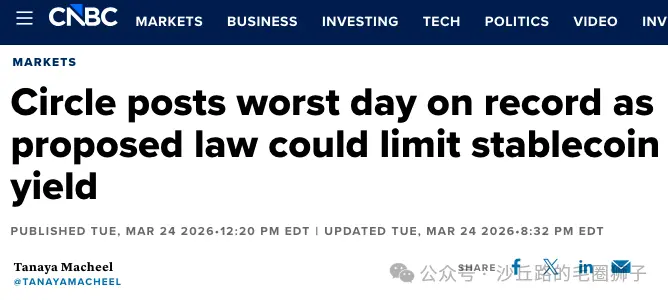
This year, we all witnessed the successful listing of Circle, but who remembers that just two years ago, it experienced a significant de-pegging, with USDC once dropping to $0.87.
At that time, Circle had $3.3 billion in reserves deposited at SVB (Silicon Valley Bank), which faced a financial crisis on March 8, with its stock price plummeting 60% that day, triggering a chain panic among Silicon Valley startups and institutional investors. In the following 48 hours, investors in SVB's stock experienced a series of blows from trading halts, suspensions, and regulatory takeovers, ultimately leading to the bank's closure on March 10. This caused Circle to suffer as well, with USDC following suit in de-pegging.
However, those who held SVB stock could only watch helplessly as the market value in their accounts evaporated each night. Quick-reacting investors might have cut their losses on Thursday morning, while slower ones were forced to zero out. In contrast, USDC holders were in a different situation; during the weekend of SVB's closure, people in web3 were frantically arbitraging through platforms like AAVE and Curve. For example, one wallet address managed to earn $16.5 million during this period by exchanging USDT for USDC/DAI price differences. Oh right, it was Sun's wallet.

This comparison of "same source storm, different outcomes" is precisely what Paul Atkins wanted to express in the introduction: the deficiencies of traditional financial markets and the efficiency revolution of a new round of financial markets, yes, I am referring to tokenized stocks.

Limitations of Traditional Stock Markets
Time limitations: Taking US stocks as an example, trading is only allowed from Monday to Friday, 9:30 AM to 4:00 PM (EST), with limited liquidity for pre-market and after-hours options. Often, many significant events occur outside of trading hours, leading to "gaps" at the opening, leaving investors with no opportunity to react in real-time.
Geographical limitations: Overseas investors wishing to participate in US stocks must navigate complex compliance processes and cross-border brokerage accounts. Many friends in the domestic market should be well aware of this.
This structure was reasonable in the past because securities trading relied on physical locations and centralized settlement systems. But in the face of blockchain? Forget it.
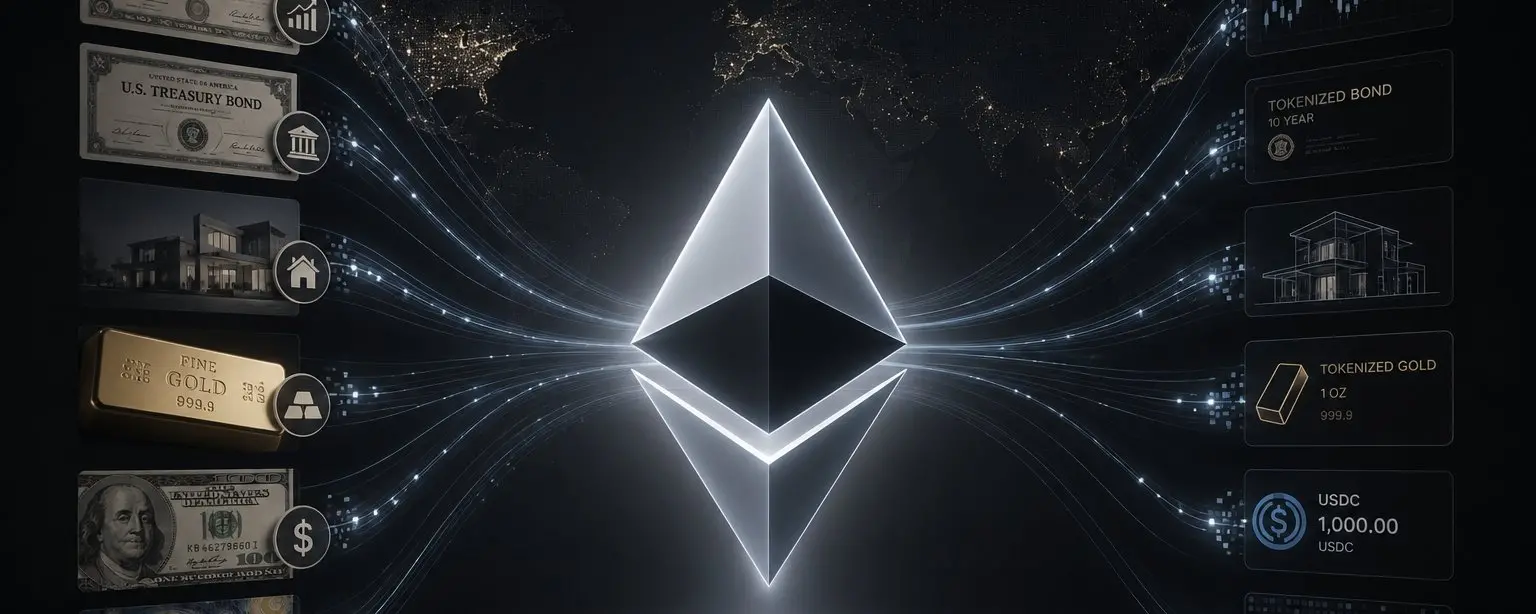
Why Tokenized Stocks Are the Future?
- Higher capital efficiency and liquidity
The biggest breakthrough of tokenized stocks lies in 24/7 uninterrupted trading. This means:
- Global investors can enter or exit the market at any time, without having to stay up all night or wait until the next day in the face of black swan events.
- Market sensitivity significantly increases; just yesterday, before US stocks even started to rally, E-guardians were already on their way to pick up their cars.
Of course, higher liquidity can also lead to over-trading, enticing retail investors to incur losses. But regardless, more efficient pricing and rights confirmation are the fundamental differences between tokenized stocks and traditional stocks.
- Higher leverage and potential returns
Tokenized stock trading platforms are likely to offer higher leverage. Traditional brokers can only provide 2-4 times leverage, but for friends in web3, 10 times leverage is just like dropping a chip on a roulette. In other words:
- For risk-loving investors, tokenized stocks provide a new casino;
- For arbitrage funds and quantitative funds, tokenized stocks offer more flexible risk hedging methods;
More dangerous? Yes, as a certain mob boss once said------

- Lower participation thresholds
For many investors living in the mainland, the difficulty of opening a US stock account is well known. Now, we can directly open accounts on platforms like @xStocksFi and @stablestock using crypto wallets. This means:
- Investors no longer need to go through cumbersome cross-border brokerage account opening processes; one wallet can access US stocks.
- For the US, global capital can more easily enter US stock trading, thus opening channels for overseas capital investment.
And with more widespread crypto adoption and higher market capitalization.

Let’s return to the SVB example; what would happen if this event occurred on a tokenized stock platform?
At the moment SVB announced its losses, the tokenized stock market would not halt trading, and global investors could immediately react, either quickly selling off or shorting, or arbitraging using on-chain price differences, etc. Countless trading experts on-chain are living examples—anyone can act quickly in a 24/7 market without passively waiting for the next trading day to open.
Tokenized stocks are definitely not just a digital mapping of traditional stocks, and this new round of financial revolution is certainly not just empty talk from the government. It represents faster trading and settlement, higher returns and risks, and lower participation thresholds.
This is the future that finance needs.
Click to learn about job openings at ChainCatcher
Recommended reading:
Backroom: Information Tokenization, a Solution for Data Redundancy in the AI Era? | CryptoSeed
 Risk warning
 Risk warning