








ETH Takes the Stage: The Real Opening of the Second Half of the Bull Market

 Considering the overall market structure, capital flows, on-chain data, and policy environment, our judgment is very clear: Ethereum is gradually replacing Bitcoin as the core asset in the second half of the bull market.
Author: Proton Capital Research Team
As we enter the third quarter of 2025, the digital asset market is at a critical turning point. Bitcoin has played the role of a "risk asset anchor" in past cycles, but its dominance is gradually weakening. We firmly believe that Ethereum is taking over from Bitcoin to become the leading force in the second half of the bull market.
In the short term, the current market adjustment is more a result of seasonal factors and macro uncertainties rather than a trend reversal. The Federal Reserve's moderate signals at the central bank annual meeting provide marginal support for risk assets; meanwhile, the Treasury's trillion-dollar financing plan and low overnight reverse repurchase balance indicate that dollar liquidity is still under some pressure. This pattern of "policy moderation coexisting with liquidity tightening" has led the market into a "halftime" phase.
More critically, the baton for the second half has been passed to Ethereum. Whether it is capital inflows, on-chain capital accumulation, derivatives market structure, or policy narratives such as stablecoin legislation and financial on-chain initiatives, all signals are gradually converging. For investors, this is not just a switch in asset prices, but a re-pricing process of capital logic and institutional dividends. For retail investors, this means that Bitcoin's high growth period has largely passed, while Ethereum is opening a new window for wealth accumulation; for institutions, ETH is not only a type of asset in the crypto market but also the core foundation for stablecoins, RWA, and compliant financial infrastructure. Whether to timely allocate ETH will determine the performance differentiation in the coming years. In other words, Ethereum's rise is related to the reconstruction of the entire crypto financial landscape.
In this context, we provide a mid-term benchmark price forecast: by the end of 2025, the target price for BTC is $130,000, and for ETH, it is $11,000.
Halftime Break - Macro Disturbances
Recently, the market has experienced a certain degree of adjustment, which is not uncommon in seasonal patterns. Summer is typically a low point for trading activity, with traders in major European and American markets on vacation, combined with macro policy uncertainties, leading to overall liquidity being relatively scarce and risk appetite naturally becoming cautious. In this context, the market's reaction to short-term news has been amplified, resulting in increased price volatility.
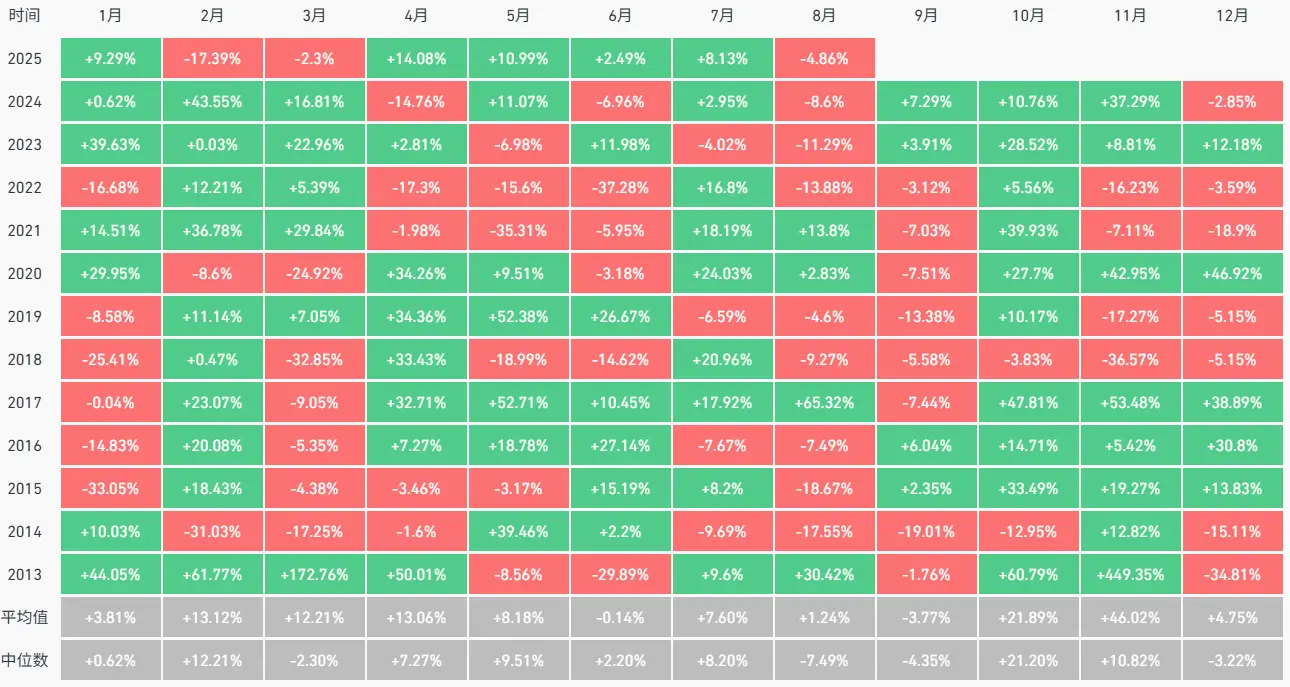
Figure 1. BTC Seasonal Performance (Source: Coinglass)
From a macro perspective, the fluctuations in investor expectations regarding the Federal Reserve's interest rate cuts have become the core driving factor for recent price movements. Notably, at the central bank annual meeting held at the end of August, Chairman Powell released relatively moderate signals, suggesting that the Federal Reserve may gradually shift towards a more accommodative policy stance based on an assessment of economic and inflation progress. This statement has somewhat alleviated market concerns about excessive tightening of monetary policy and provided marginal positive support for risk assets.
However, in contrast to the moderate shift in monetary policy, there is liquidity pressure from the Treasury's financing operations. According to the U.S. Treasury's Q3 financing plan, the expected financing scale for the third quarter will reach $1 trillion. Assuming the TGA balance increases to $850 billion by the end of September (currently at $526 billion), the market will inevitably need to absorb a large amount of new Treasury bond issuance. Meanwhile, the overnight reverse repurchase (ON RRP) account balance, acting as a "reservoir of excess liquidity," has dropped to a historical low of less than $40 billion. In this environment, the Treasury's bond issuance siphoning effect may partially offset the positive impact brought by the Federal Reserve's shift in policy stance, creating short-term pressure on the dollar funding market.
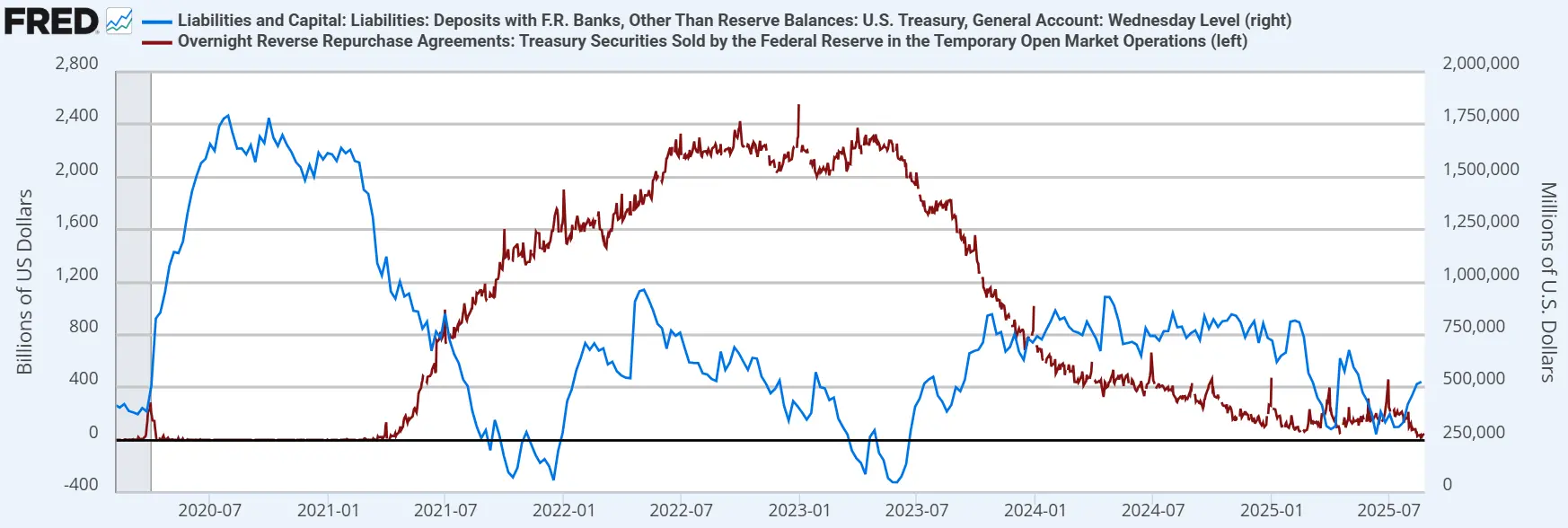
Figure 2. U.S. Treasury TGA Account Balance and Overnight Reverse Repo Account Balance (Source: FRED)
Despite the mixed signals at the macro level, we firmly believe that this resembles a "halftime break" in a bull market rather than a trend reversal. First, from the long-term market indicators we track internally, BTC currently does not exhibit the characteristic signals corresponding to historical peaks, and the market structure is still some distance from a cyclical top. Second, the overall policy path of the Federal Reserve remains accommodative, and the probability of the U.S. economy achieving a "soft landing" is increasing, providing solid support for the medium to long-term upward trend of risk assets. In other words, while short-term macro disturbances may bring volatility, they do not alter the fundamental logic of the bull market continuation.
Market Structure Signals: BTC Retreats, ETH Rises
BTC.D has decreased from 66% in June 2025 to about 59% currently. From the perspective of traditional four-year cycles, this typically indicates that the bull market may be entering its second half. ETH will take over the baton and lead the market, and the overall market performance from July to August 2025 corroborates this view. Although the market has slightly retreated this week, it is merely a halftime break, and ETH is expected to continue its strong performance after a brief adjustment.
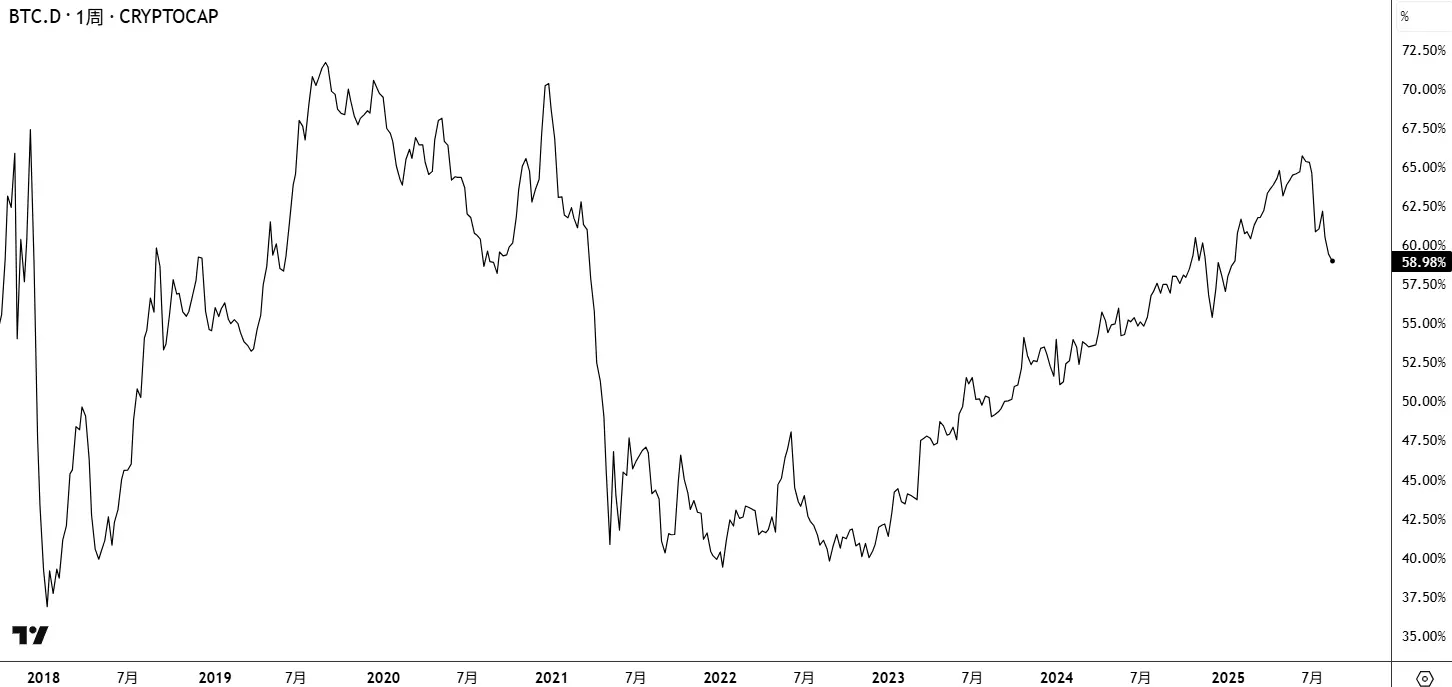
Figure 3. BTC.D Weekly Chart (Source: Tradingview)
The ETH/BTC price ratio has officially broken through the 60-week moving average on the weekly chart, confirming the end of the price bear market since 2022. From the position of the price ratio, we are still in the early stages of reverting to the historical mean, and market consensus is just beginning to form. After significant adjustments in regulatory policies, holding structures, and chip structures over the past few months, as more practical policies are implemented, ETH will enter the next phase: value discovery.
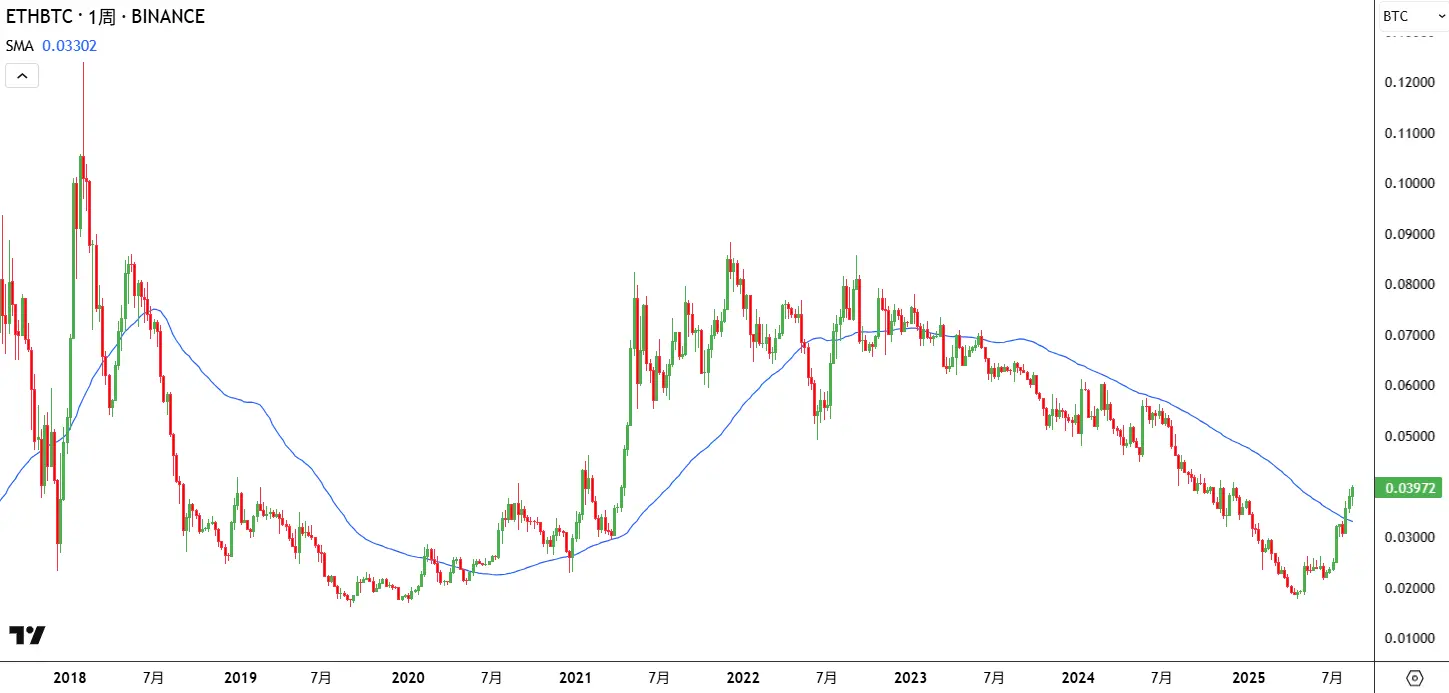
Figure 4. ETH/BTC Weekly Chart (Source: Tradingview)
Exchange Liquidity Changes
Observing exchange data, we can see that the supply structure of ETH is undergoing changes similar to those of BTC in the past. Over the past two months, the stock of ETH on exchanges has continued to hit historical lows, indicating that selling liquidity is rapidly decreasing. This process was seen during the BTC bull market and ultimately triggered supply tightening and accelerated price increases. Since July 1, the influx of institutional funds has become the key driver behind the decline in exchange balances: publicly listed companies represented by BMNR have cumulatively purchased 2.9 million ETH (approximately $13 billion); ETFs have added 2.22 million ETH during the same period. This indicates that institutional buying is rapidly changing the liquidity landscape of ETH. As more funds shift towards long-term locking (corporate treasuries, ETFs, staking), the circulating supply will further shrink, and this tightening on the supply side will have a significant marginal impact on prices.
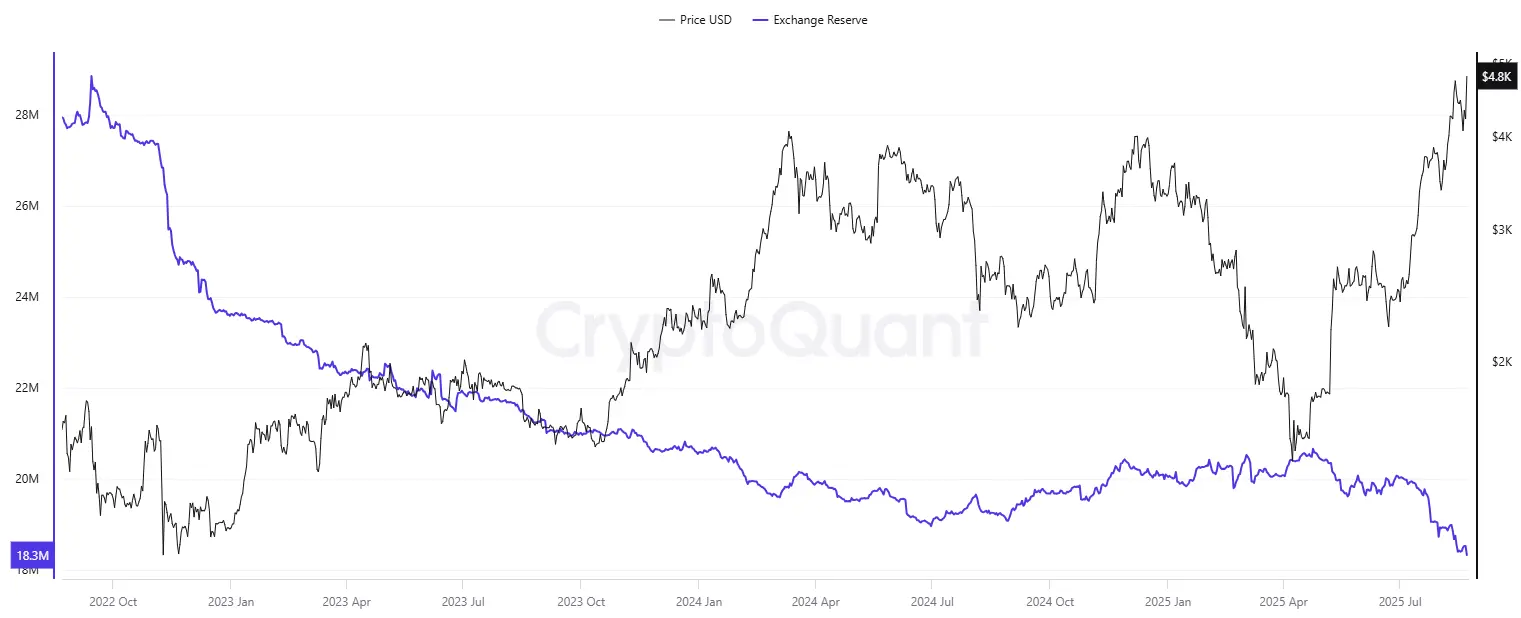
Figure 5. ETH Exchange Balance (Source: CryptoQuant)
Institutional Holding Structure: Significant Incremental Space Remains
Currently, the overall institutional penetration rate of ETH is 8.74% (ETF holdings 5.34% + corporate treasury 3.40%), which is still significantly lower than BTC's 10.89%. In other words, if the institutional holding ratio of ETH aligns with that of BTC, there is at least a passive incremental demand for 2.6 million ETH in the market. This gap not only indicates that the current level of institutionalization of ETH is still in its early stages but also suggests that there is considerable room for catching up in the future.
At the same time, the potential landing of staking-type ETFs and the expectations for long-term funds such as pensions (e.g., 401(k)) entering the market will become new driving forces for institutional buying in the future. Combined with the supply contraction effect brought about by ETH's own staking mechanism, it can be expected that institutional funds will continue to play a leading role in the ETH ecosystem in the future.
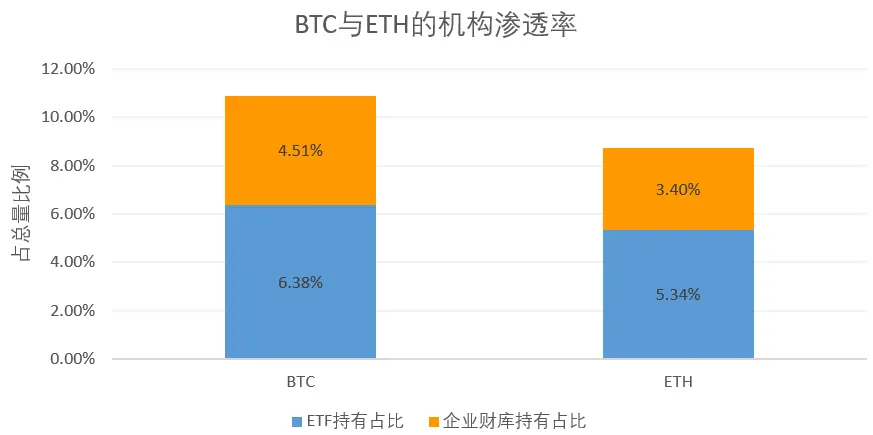
Figure 6. Institutional Holding Proportions of BTC and ETH
Derivatives Market: Leverage and Liquidity are Migrating
The structural changes in the derivatives market also clearly point towards ETH. According to Glassnode data, the trading volume of ETH perpetual contracts has recently surged. The trading volume of ETH perpetual contracts relative to BTC has reached a historical high of 67%, indicating that market speculation interest in altcoins is rising. Another data point—open interest in perpetual contracts—shows that ETH's dominance is also rapidly increasing and approaching BTC, currently nearing 45%. In the overall market, the total open contracts of major altcoins (ETH, SOL, XRP, and DOGE) have recently reached a new high of $60.2 billion, reflecting a comprehensive shift in market risk appetite and capital flow. This means that in terms of capital allocation, ETH has become the core target for market risk pricing and speculative activities, while BTC plays more of a "value anchor" role.
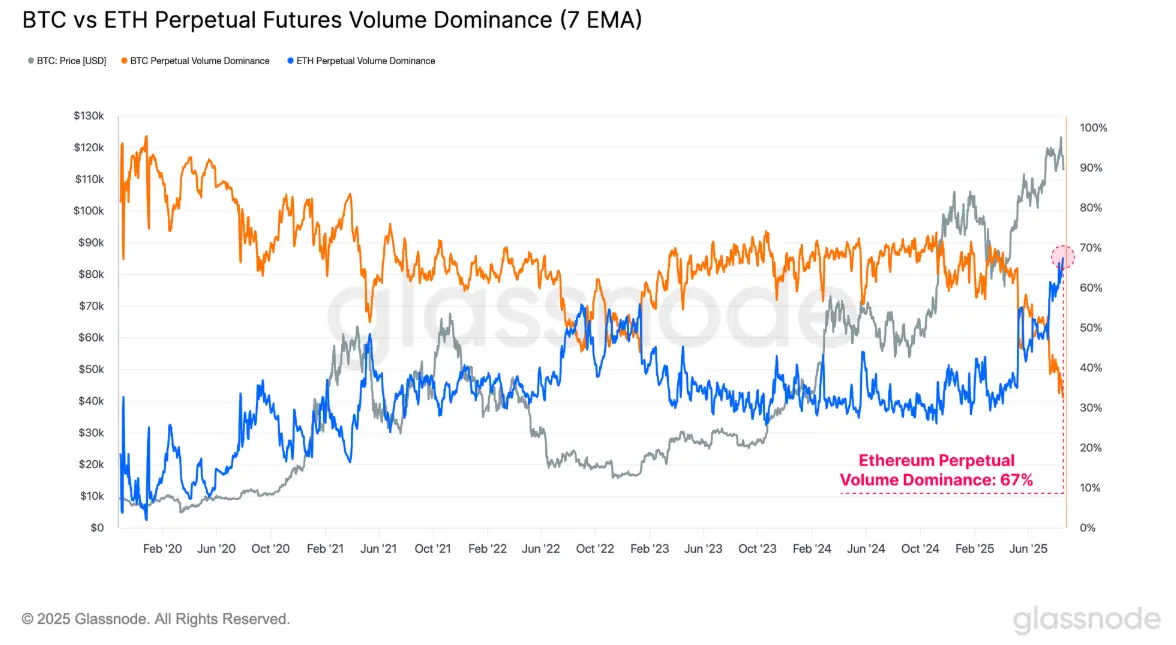
Figure 7. Dominance of BTC and ETH Perpetual Contract Trading Volume (Source: Glassnode)
On-Chain Data: Real Capital Inflows
From the perspective of on-chain capital accumulation, ETH's performance also surpasses that of other mainstream assets. Realized Cap is an important indicator for measuring real capital inflows on-chain, calculated by summing the value of each token based on its last on-chain transfer price. As of August, ETH's Realized Cap has maintained a stable and rapid growth trend since July, while BTC and SOL have shown sideways or declining performance. This indicates that the process of capital accumulating on-chain is clearly leaning towards ETH. This not only means a larger scale of capital inflow but, more importantly, reflects that these funds represent an accumulation of "real costs," indicating that ETH's position in investors' asset allocation is systematically rising.
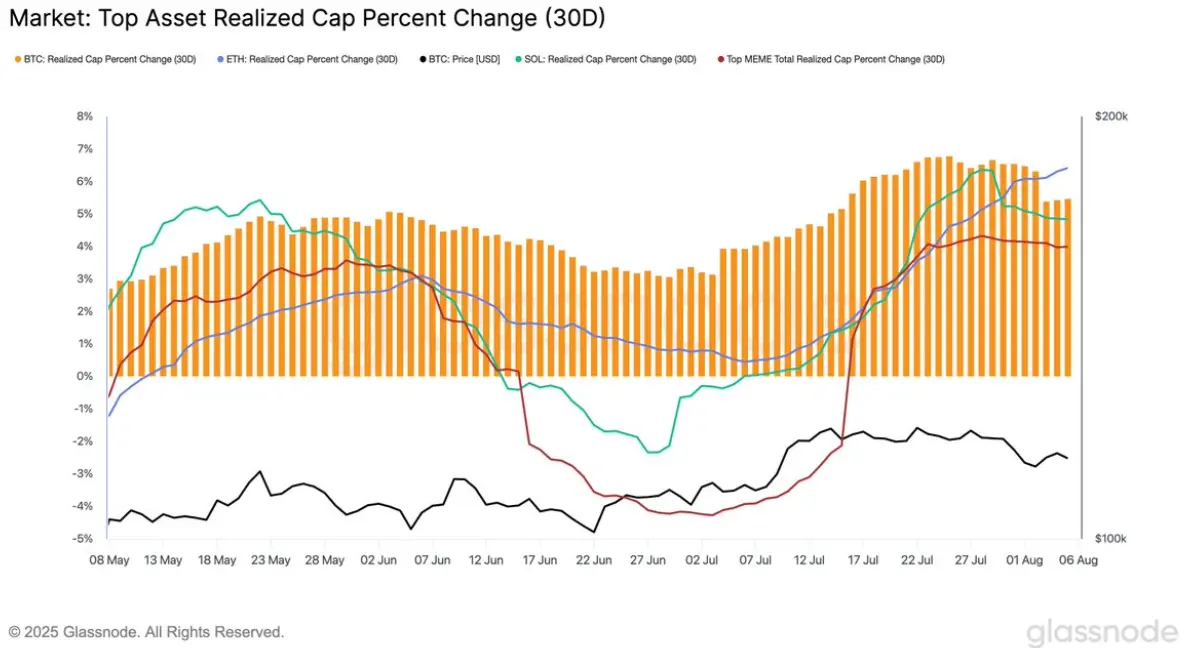
Figure 8. Realized Market Capitalization of Major Crypto Assets (Source: Glassnode)
Policies and Narratives: Accelerated Release of Institutional Dividends
Recent policies and narratives have also injected strong momentum into the medium to long-term development of Ethereum. In July 2025, the U.S. officially passed the GENIUS Act, the first federal legislative framework for stablecoins. This bill not only clarifies compliance issuance, reserve, and audit requirements but also provides institutional guarantees for the long-term development of dollar-pegged stablecoins. As regulatory uncertainties gradually dissipate, market confidence has significantly improved. Considering that currently over half of stablecoin issuance is on the Ethereum network, we expect the total market capitalization of stablecoins to further expand to nearly a trillion dollars, with Ethereum being the most direct beneficiary.
At the same time, the progress of Ethereum network expansion is also providing practical support for this narrative. Benefiting from the rapid development of layer-two networks, Ethereum's daily transaction volume has recently reached new highs, while Gas fees remain relatively low. This not only ensures the network's scalability under high-intensity usage but also provides a stable operating environment for the future implementation of more application scenarios, especially for large-scale use of financial assets on-chain and stablecoin payments.
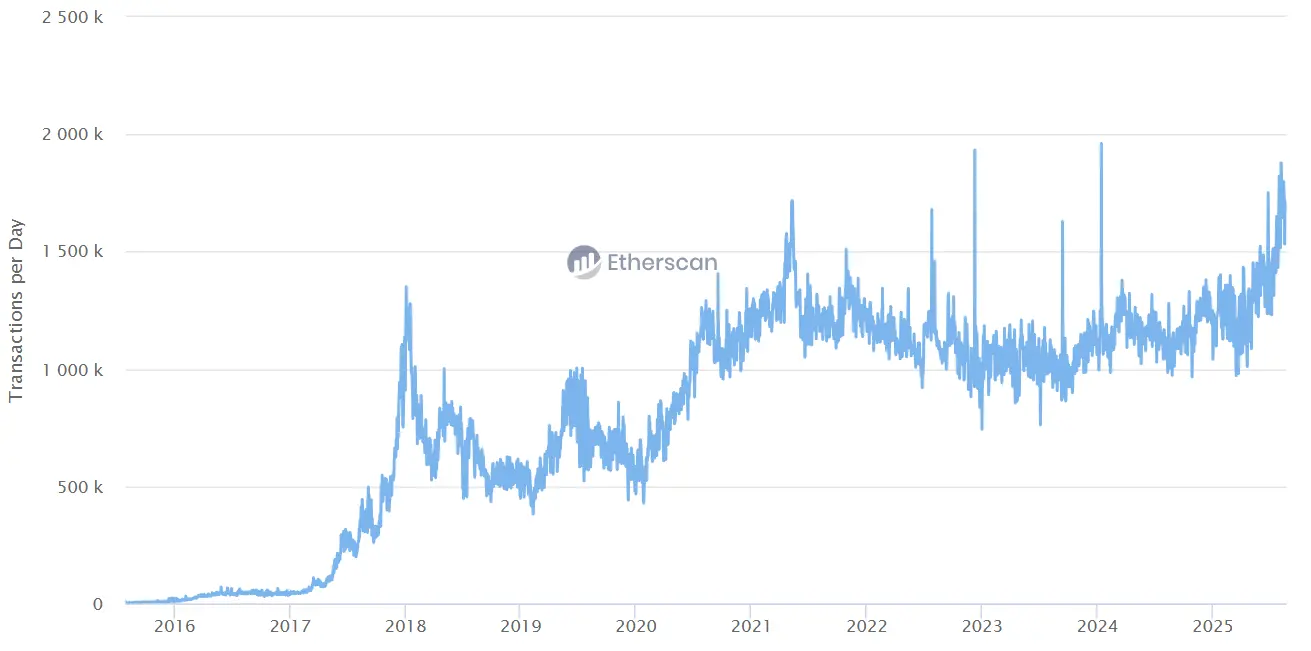
Figure 9. Daily Transaction Volume on the ETH Network (Source: Etherscan)
Another major catalyst on the policy front comes from the "Project Crypto" plan launched by the Trump administration in August 2025. The goal of this plan is to systematically revise existing securities laws and promote the gradual migration of capital markets to an on-chain environment. If implemented, this will effectively reduce compliance barriers between traditional finance and crypto finance, allowing the U.S. to establish capital market infrastructure for crypto assets ahead of the rest of the world. Such institutional dividends directly benefit real-world assets (RWA) and decentralized finance (DeFi) sectors. In fact, leading protocols in the ETH ecosystem, such as AAVE, ETHENA, and PENDLE, have recently seen accelerated growth in total locked value (TVL), reflecting positive feedback from capital expectations regarding the institutional environment.
From a longer-term perspective, if future pension channels such as 401(k) allocate crypto assets, ETH is likely to become the only core target that can be included besides BTC. This means that under the dual drive of institutions and capital, Ethereum is not only maintaining its dominant position in terms of technology and ecosystem but is also gradually establishing its strategic position in the global financial market.
Conclusion
Considering market structure, capital flow, on-chain data, and the policy environment, our judgment is very clear: Ethereum is gradually taking over from Bitcoin to become the core asset in the second half of the bull market. Short-term fluctuations and corrections will not change the long-term trend; on the contrary, they create a valuable window for capital to reposition.
From the perspective of investor structure, the market is shifting from the single narrative of BTC to the diversified ecosystem of ETH, which means that the next stage of wealth opportunities will be more concentrated in Ethereum. For funds, whether to timely establish and increase positions in ETH will directly determine their relative performance in industry competition over the next few years. Missing this phase may lead to a significant gap with peers. The role of ETH is transcending that of a public chain itself; it is gradually becoming a core infrastructure deeply bound to stablecoins, RWA, and compliant financial markets, representing the inevitable direction of financial systems moving on-chain.
Therefore, we maintain our mid-term benchmark forecast: by the end of 2025, the target price for BTC is $130,000, and the ETH/BTC price ratio will further rise to 0.08, with a target price for ETH of $11,000. This is not just a price figure but a reflection of the evolution of market structure and the realization of institutional dividends. As capital continues to flow in, circulating supply is compressed, and the policy environment becomes clearer, the revaluation of ETH has just begun, and the stage for the second half has been set, with ETH becoming the undisputed protagonist.
 Risk warning
 Risk warning




Popular articles





